Sperm Whales Off Saint Lucia: What A Whale Cruise Can Find
Sperm whales live in the deep water off Saint Lucia's west coast all year, but they are occasional visitors to any one trip. Here is what the official wording actually says, and how to pick the boat and the season that give a sperm whale search its best chance.
Short answer
Yes, sperm whales are considered resident in the region and occasionally sighted in deeper waters off Saint Lucia, with no season restricted to them. Deep water lies close to the west coast, so boats from Castries reach it quickly. Sightings are always a chance, never a promise, and dolphins are the more frequent encounter.
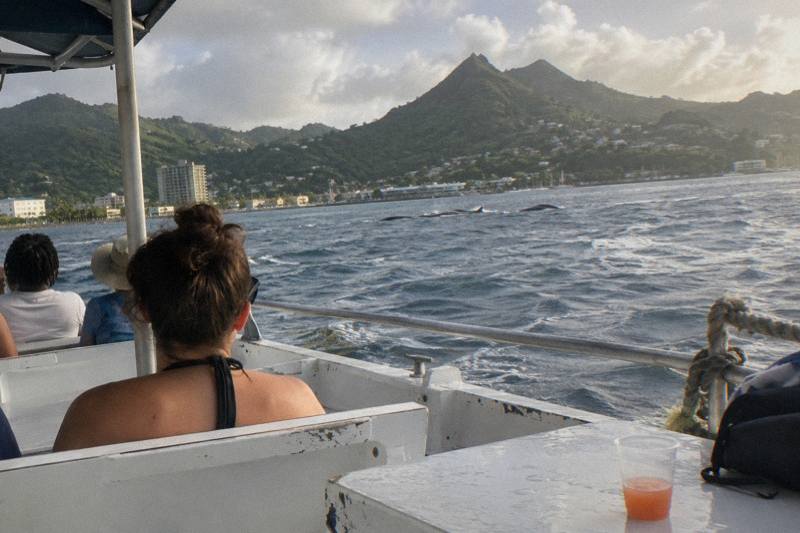
Sperm whales are the deep-water prize of Saint Lucia's whale watching, and the island's geography is unusually kind to anyone hoping for them. The tourism board's official wording is careful: sperm whales are "considered resident in the region and occasionally sighted in deeper waters." That is an honest sentence, and it tells you three things at once. They are here in the wider area through the year. They favor deep water rather than the shallows. And any single sighting is an occasion, not an expectation. This guide works through what that means for a real trip: where the deep water sits, which boat suits a sperm whale search, what to ask before booking, and how to keep your expectations anchored to what the sources actually say.
Are There Sperm Whales Off Saint Lucia?
Yes. The Saint Lucia tourism board describes sperm whales as "considered resident in the region and occasionally sighted in deeper waters," which means they are present around the Eastern Caribbean through the year rather than passing through on a migration. No count for Saint Lucia's waters is published, and no operator can promise one on a given morning, so a sperm whale encounter is always a genuine chance rather than a scheduled event.
That official phrasing deserves a closer read, because it is more informative than it first sounds. Residence in the region means the animals are not a seasonal bonus the way humpbacks are: humpbacks pass through between about February and April, while sperm whales are part of the year-round backdrop of deep offshore water. Occasionally sighted is the honest counterweight. The boats that leave Castries each morning see dolphins far more often than sperm whales, and any operator who suggests otherwise is promising something the published sources do not.
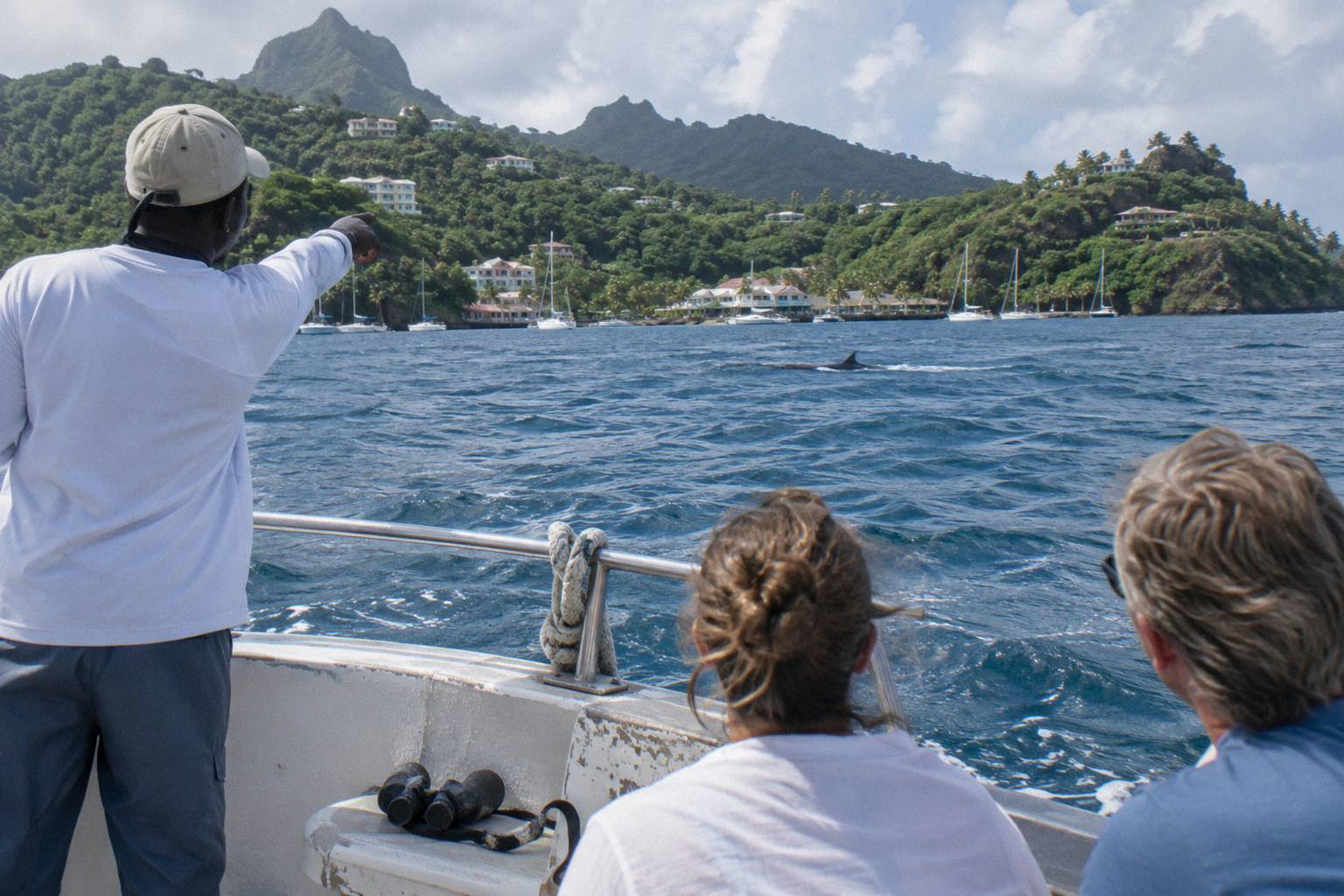
What the deep water holds, besides sperm whales, is a resident cast that fills most trips. Spinner dolphins are frequently sighted year-round, pantropical spotted and bottlenose dolphins are common, and pilot whales, in close family groups, can sometimes be seen through the year. Fraser's, Risso's and striped dolphins are recorded less often, and orcas are rare visitors only. A cruise that sets out for sperm whales and finds a pilot whale pod instead has not failed; that is simply the usual arithmetic of the sea. The tourism board's whale and dolphin watching page is the source for the resident and seasonal wording used here.
| Species | How often the sources say it is seen | Where it fits on a trip |
|---|---|---|
| Spinner dolphin | Frequently sighted year-round | The most likely encounter of any morning |
| Pantropical spotted and bottlenose dolphins | Common | Regular sightings, especially on the west coast |
| Pilot whale | Resident pods, sometimes seen through the year | Family groups; the most likely large dark cetacean |
| Sperm whale | Considered resident in the region, occasionally sighted in deeper waters | The deep-water chance, never a promise |
| Humpback whale | Passes through about February to April | The seasonal bonus window |
| Orca | Rare visitor only | A noted possibility, nothing more |
The species question also trips people up on identification. Pilot whales are dark, travel in tight groups, and are sometimes confused with other large dark cetaceans, a topic covered in more detail in our guide to pilot whales and the false killer whale question. The practical answer on the water is that a guide identifies what is in front of the boat, and you should feel free to ask how a call was made. On the shared morning cruise, the marine expert aboard names sperm whales among the species the trip looks for, alongside humpbacks in season, pilot whales, and the dolphin species. You can read the full trip details on the shared whale and dolphin watching cruise page.
Why Does Deep Water Close To Shore Matter?
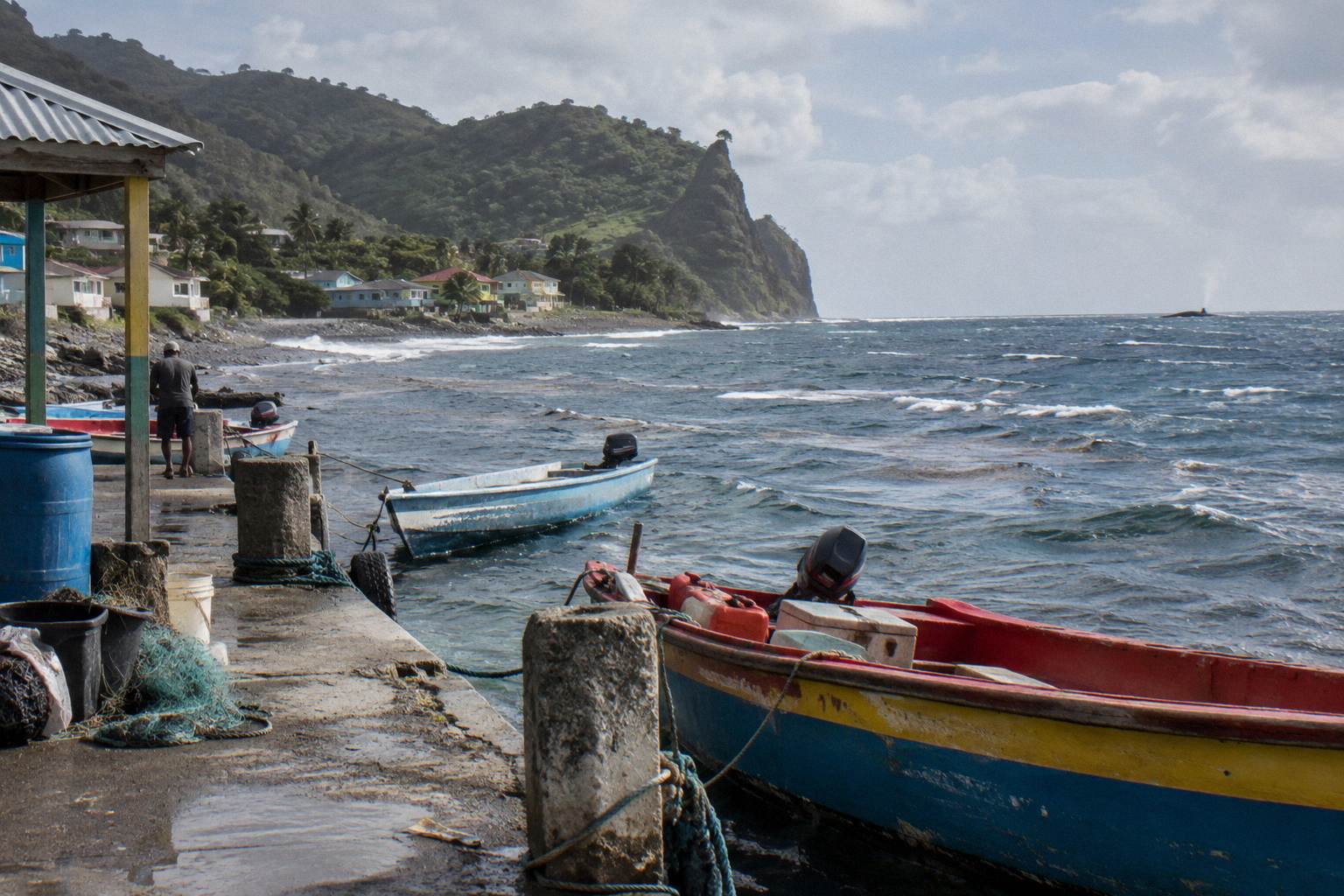
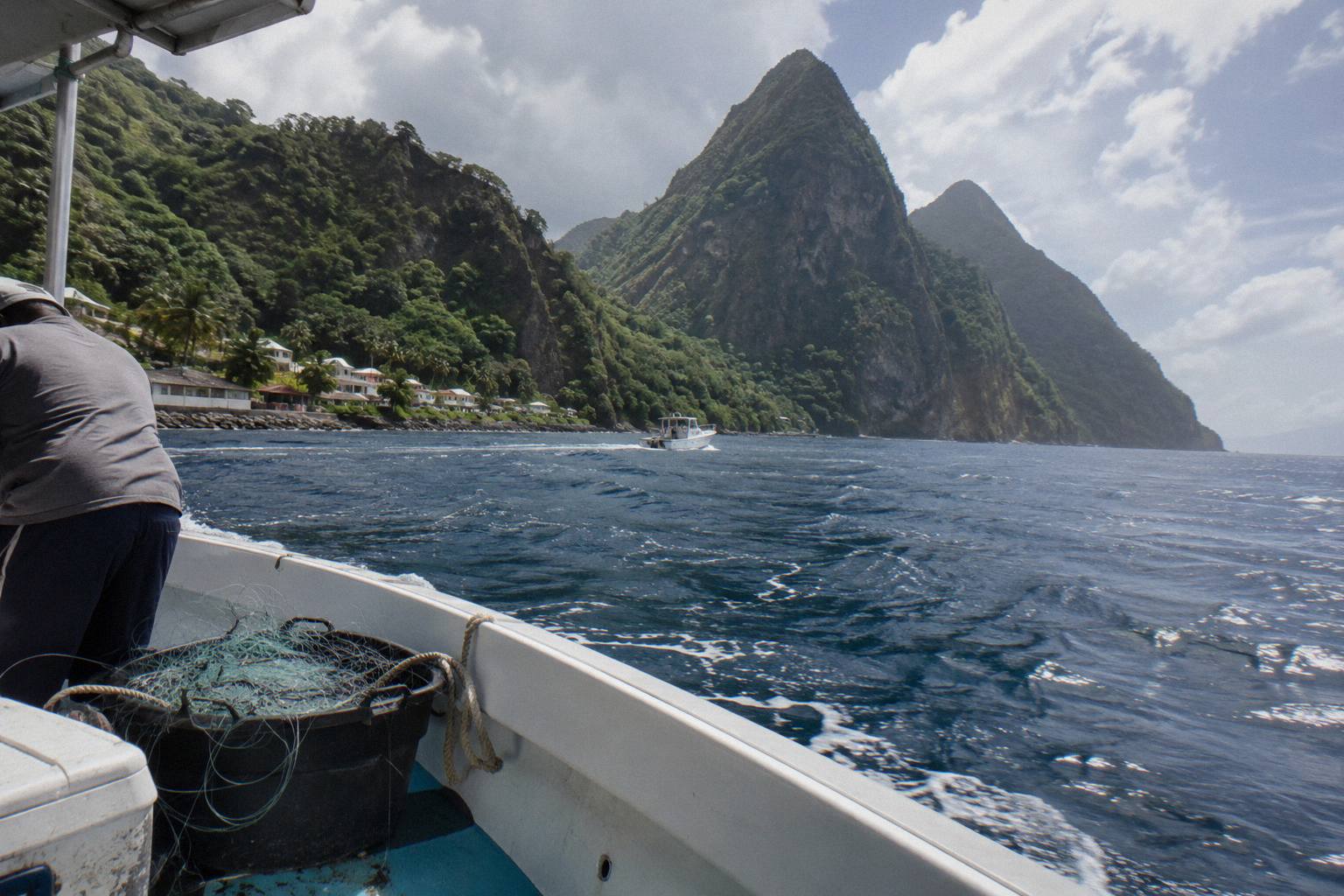
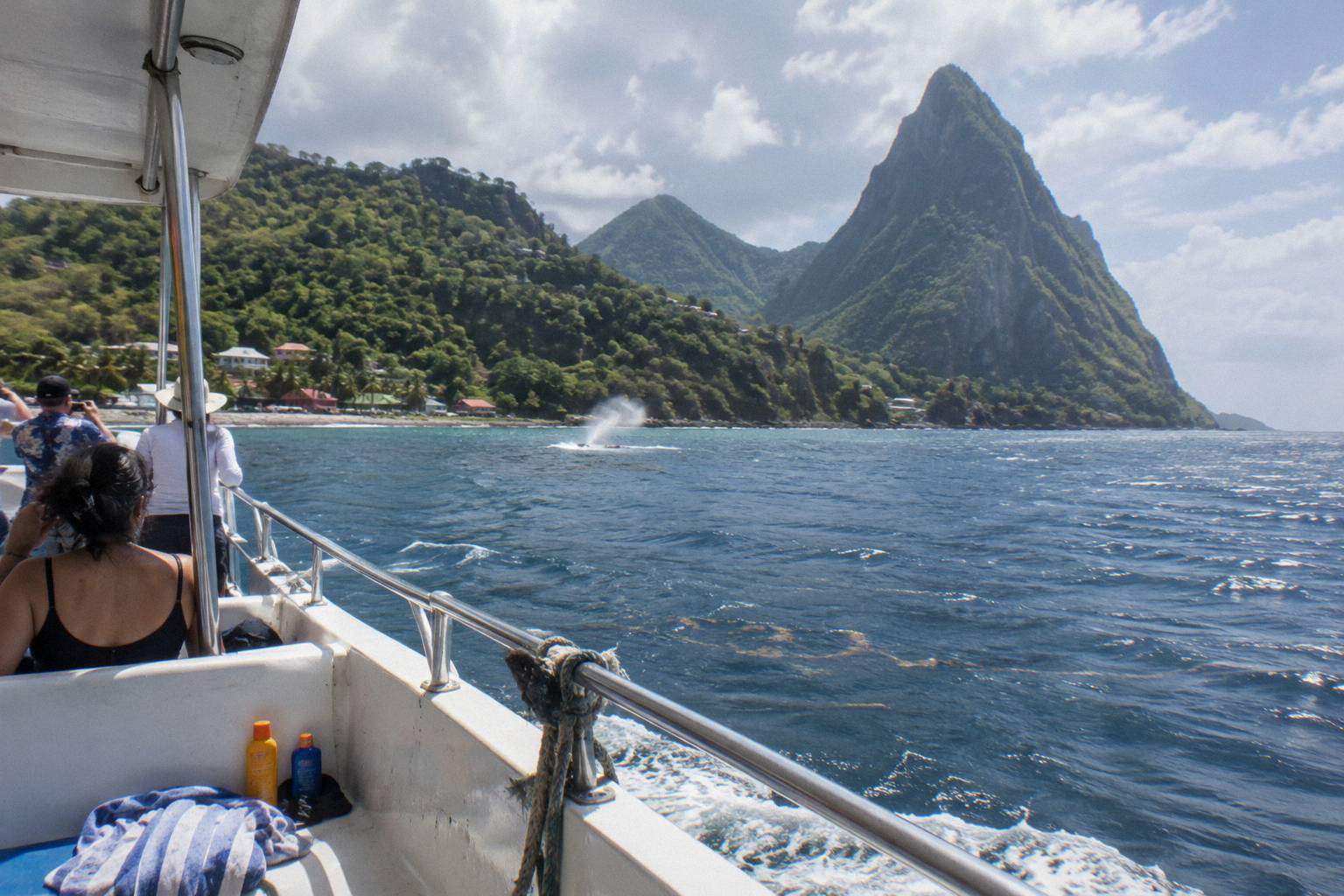
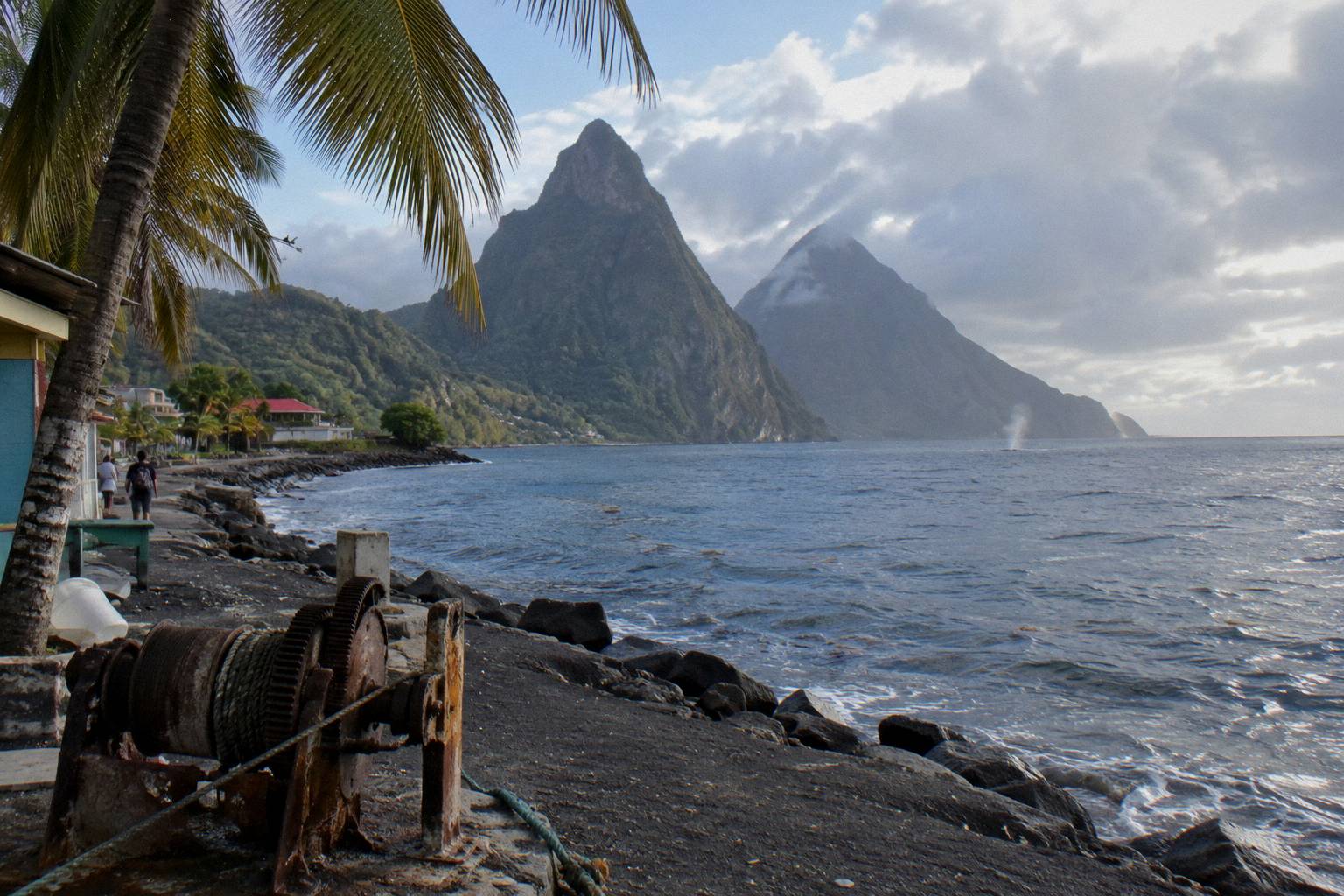
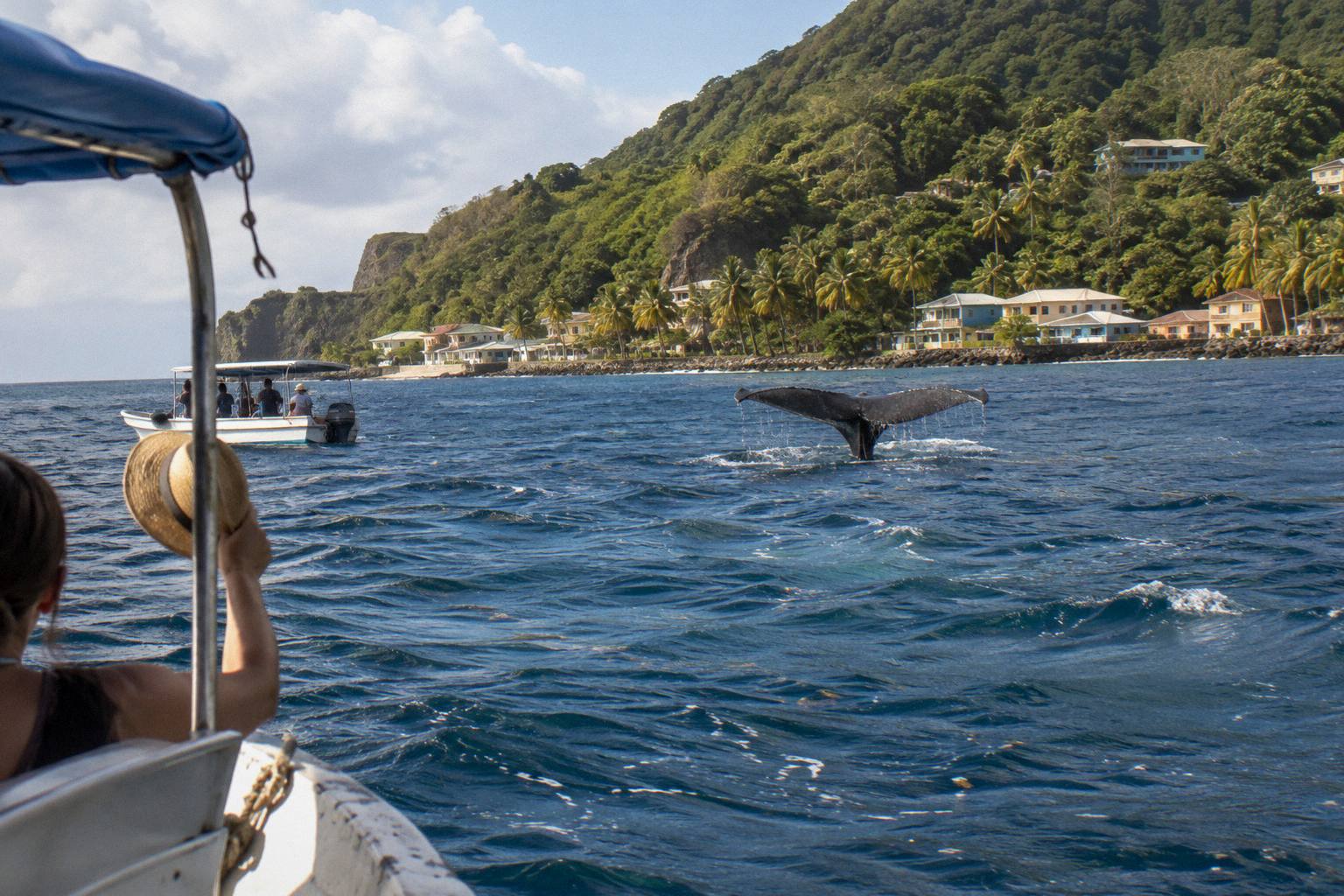
Saint Lucia's west coast drops into deep Caribbean water unusually quickly, and the tourism board notes that these deep coastal waters increase the likelihood of encounters close to shore. For a sperm whale search this is the single most useful geographic fact on the island: a boat leaving Castries does not need hours of motoring to reach the depth that matters, which is why trips of roughly three to four hours are viable at all.
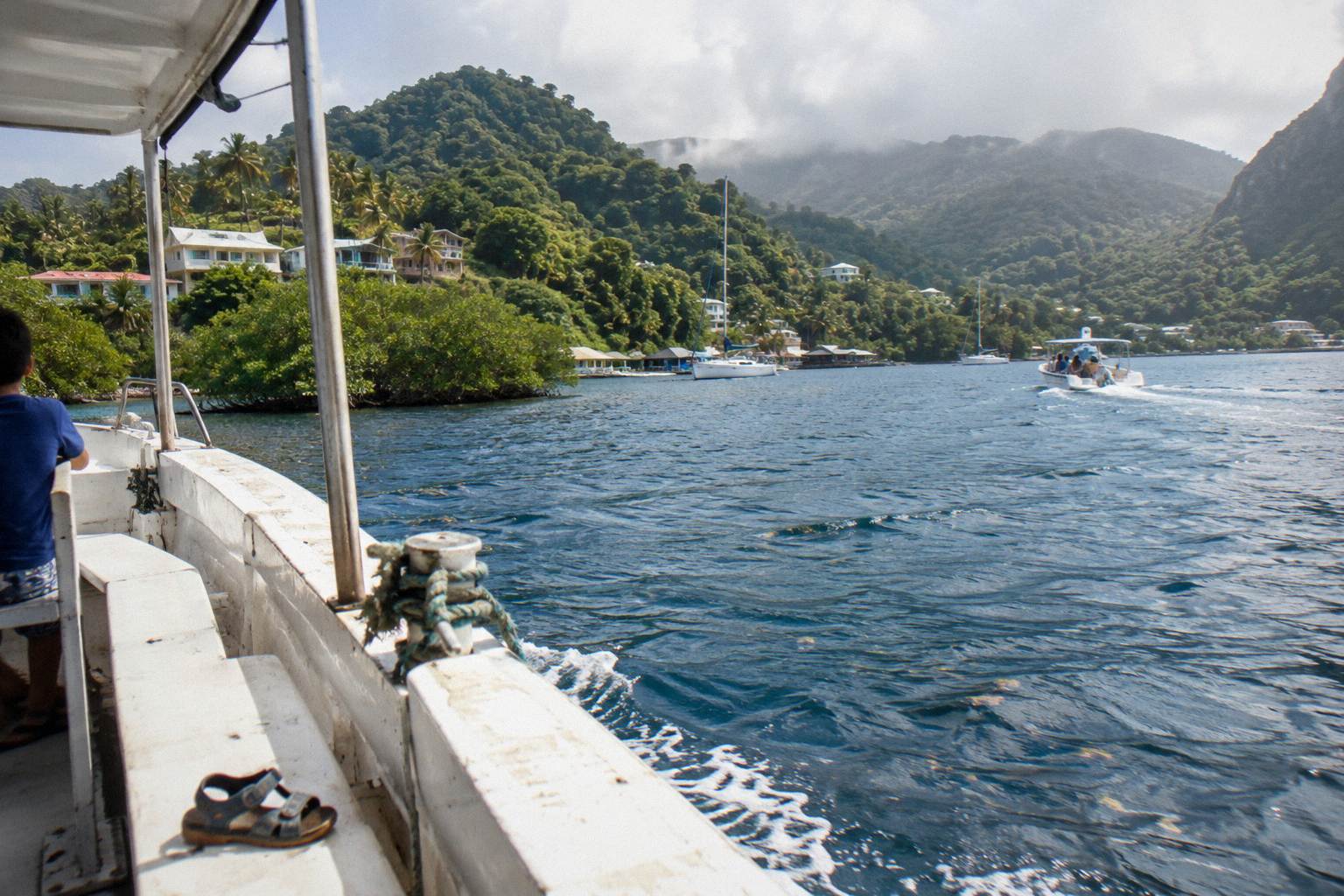
Sperm whales are animals of deep water, so the shape of the sea floor decides where the boats go. The official trip pattern confirms it: trips usually leave in the morning from the north-west around Rodney Bay and Castries, last about three to four hours, and follow the Caribbean coast rather than heading out to some distant bank. The deep water sits within reach of the shore, and the skipper works along that edge. Both trips covered on this site depart Vigie Marina in Castries Harbour, beside the island's George F. L. Charles airport, and the shared cruise is a short distance from the Pointe Seraphine cruise terminal, with taxis readily available.
This geography shapes the whole character of the outing. Instead of a long transit followed by a brief watch, the boat is effectively searching from early in the trip, which matters if your interest is the deep-water species rather than just being at sea. It also means the west coast scenery stays in view throughout, which is the secondary pleasure of these cruises. Our dolphin species and where to look guide covers the same coastline from the dolphins' point of view, and the logic is identical: the animals are where the deep water meets the island.
For planning purposes, the practical takeaway is simple and worth stating plainly. A sperm whale search off Saint Lucia is a short-range search. You do not need a full-day expedition, an overnight boat, or a passage to distant grounds; you need a morning, a competent operator, and realistic expectations. That is what both local trips sell.
Two options cover this ground from Castries. The shared cruise runs about 3.5 hours on a custom 60 ft boat with a local marine expert aboard, from US$65 per person, rated 4.5 from 200 reviews. The private safari runs about 4 hours on a 50 ft catamaran for one group of up to 40, from US$2,550.65 per boat, rated 4.5 from 75 reviews. Prices vary by date and group, and the booking page confirms the live figure. Both follow the west coast toward the same deep water.
What Is The Eastern Caribbean Sperm Whale Population?
The sperm whales found off Saint Lucia belong to a wider Eastern Caribbean population, one studied by the Dominica Sperm Whale Project, a long-running research program based in the neighbouring island nation. No head count for Saint Lucia's own waters exists in the published sources here, and no population estimate should be trusted from any tour marketing. The regional framing is the honest one, and it is what the official sources support.
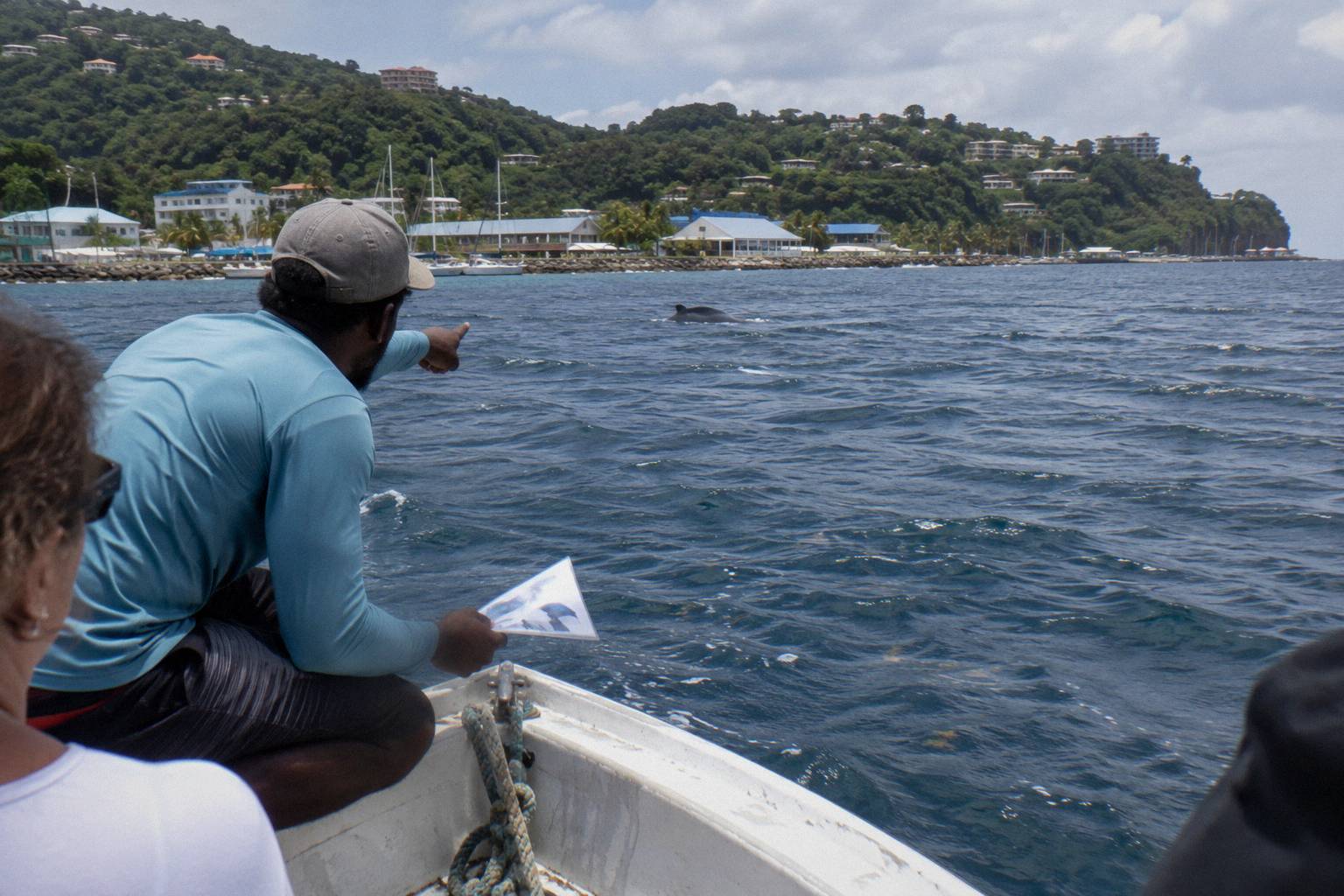
The research connection matters more than it might seem. The Dominica Sperm Whale Project has spent years identifying individual whales and tracking family groups across the Eastern Caribbean, and its work is the reason scientists can speak of a regional population at all rather than scattered sightings. The same animals that researchers document near Dominica are part of the wider pool that occasional Saint Lucia encounters draw from. If you want to understand the animals you are hoping to meet, the Dominica Sperm Whale Project's own site is the primary source, and it is fascinating reading on its own terms.
Why does no one count the Saint Lucia whales specifically? Because sperm whales do not respect island boundaries. A family group working the deep water between islands this month may be elsewhere next month, and a per-island tally would be an artificial number that changes with every survey. The tourism board's careful phrase, resident in the region, is exactly as precise as the science allows. Any page that quotes a firm number of sperm whales off Saint Lucia, or a sighting rate, is inventing a certainty that does not exist.
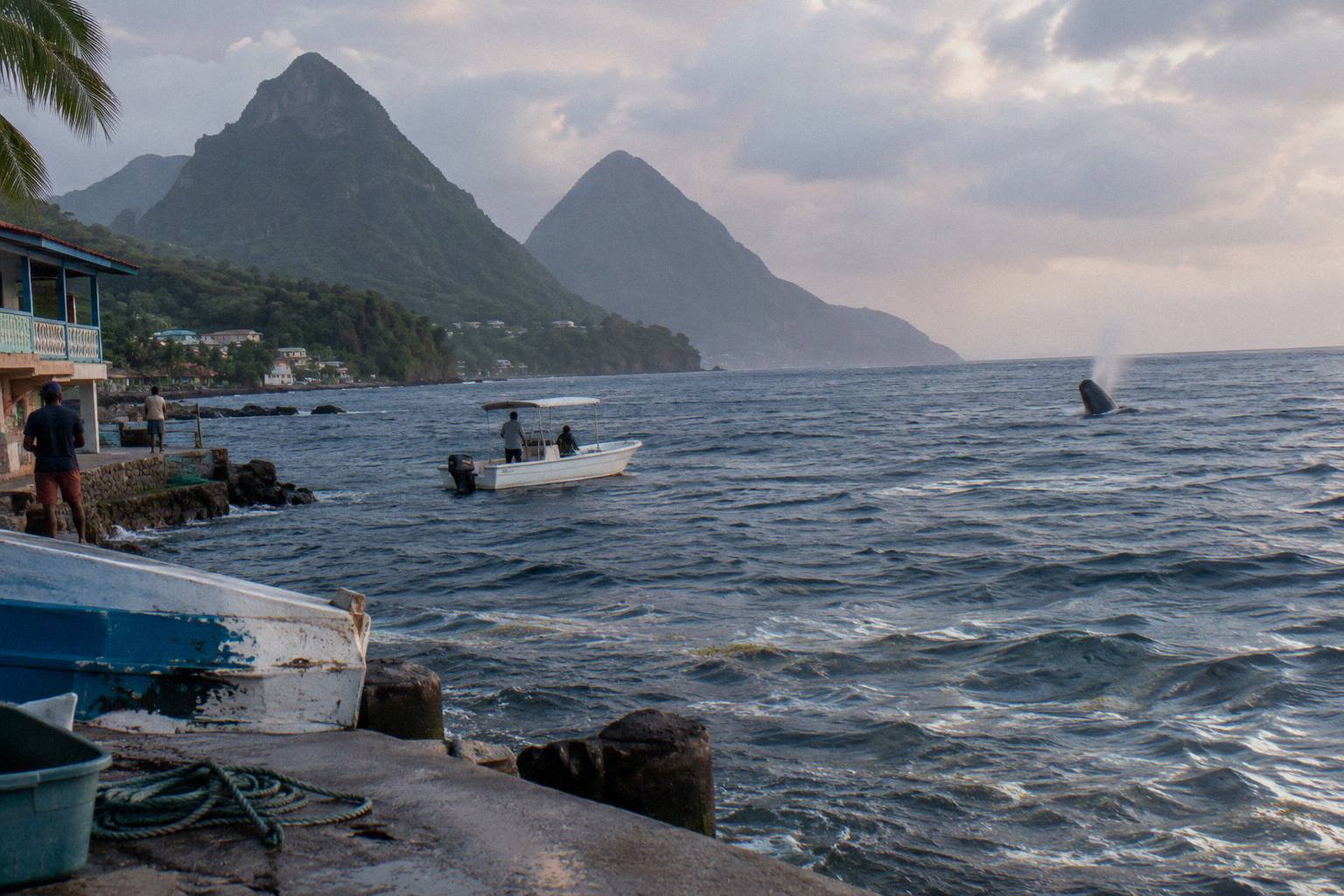
For a visitor, the regional framing has one practical consequence worth dwelling on. Nothing about your calendar guarantees sperm whales, and nothing rules them out. They are not a February-to-April phenomenon the way humpbacks are. If a sperm whale is your specific hope, choose your trip for the quality of the search, the sea state, and the guide, not for a season that applies to a different species. Our month-by-month whale season guide unpacks the calendar in full, including which windows belong to which animals.
Does A Cruise Look For Sperm Whales Or Dolphins First?
Realistically, dolphins come first in frequency, and sperm whales are the deep-water possibility the crew works toward when conditions and luck align. Spinner dolphins are frequently sighted year-round and pilot whales can sometimes be seen through the year, while sperm whales are occasionally sighted in deeper waters, so most trips deliver dolphin encounters and treat a sperm whale as the day's bonus rather than its promise.
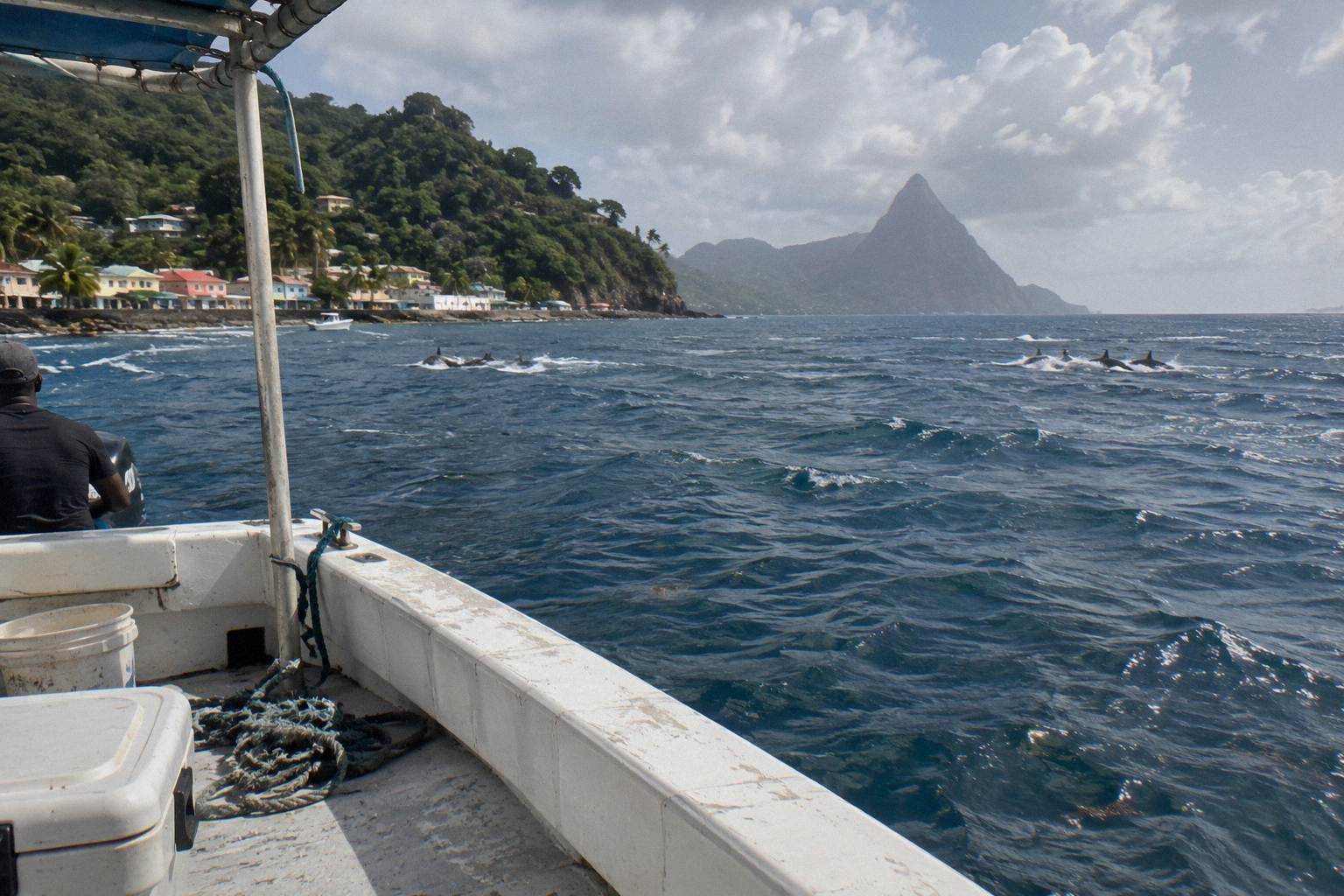
The sequencing on a typical morning is driven by where the animals are, not by a script. The boat leaves Vigie Marina, works along the coast, and responds to what is on the water: a spinner dolphin bow wave, a pilot whale resting at the surface, a distant blow worth investigating. The shared cruise's own species list names sperm whales, humpbacks in season, pilot whales, and spinner, spotted, Fraser's and common dolphins, which tells you the trip is a general marine search, not a single-species hunt. That breadth is the right design for these waters, because no operator can predict which animals will be within range.
A good crew is also honest in real time about what they are doing. If the boat turns offshore and slows, the guide may be working toward deep water where sperm whales are possible; if it stays along the coast, dolphins and pilot whales are the likelier quarry. Asking the guide what the plan is, and why, is one of the better parts of these trips, and on the shared cruise the marine expert aboard is there precisely for that conversation. Children travel with an adult on board, and there is no published minimum age, so ask the operator when booking if you have young sailors in tow. Group size on the shared trip is not published.
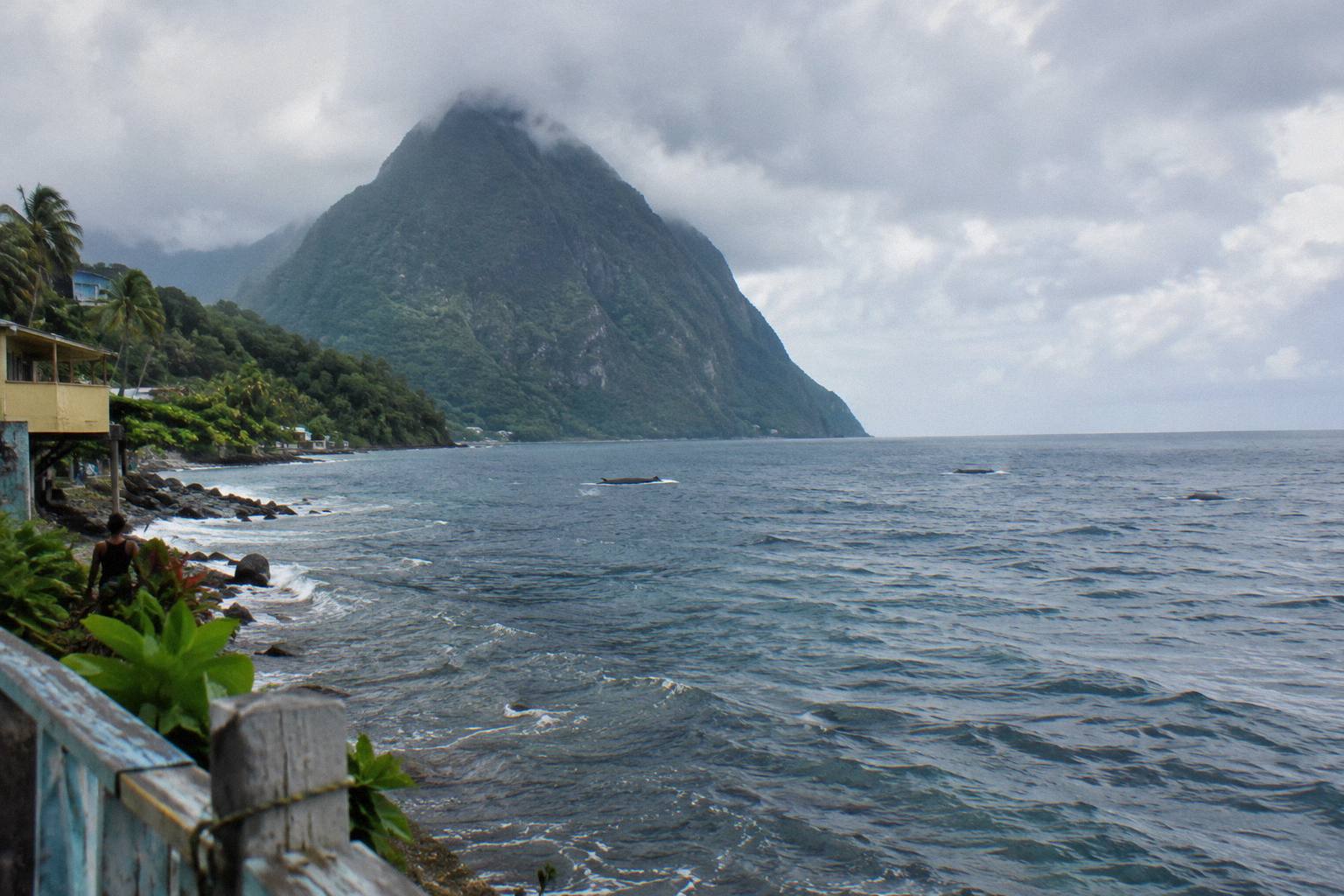
Keep the etiquette of the encounter in mind too. Licensed operators follow regulated distance guidelines, limit time near the animals, and provide life jackets and safety briefings. The responsible standard is a slow approach, no chasing, no touching or feeding, and space for the animals to move on, standards covered in more depth in our responsible whale watching guide. Swimming with whales or dolphins is not offered on either trip, and it should not be on your mind as an option.
Which Boat Suits A Sperm Whale Search?
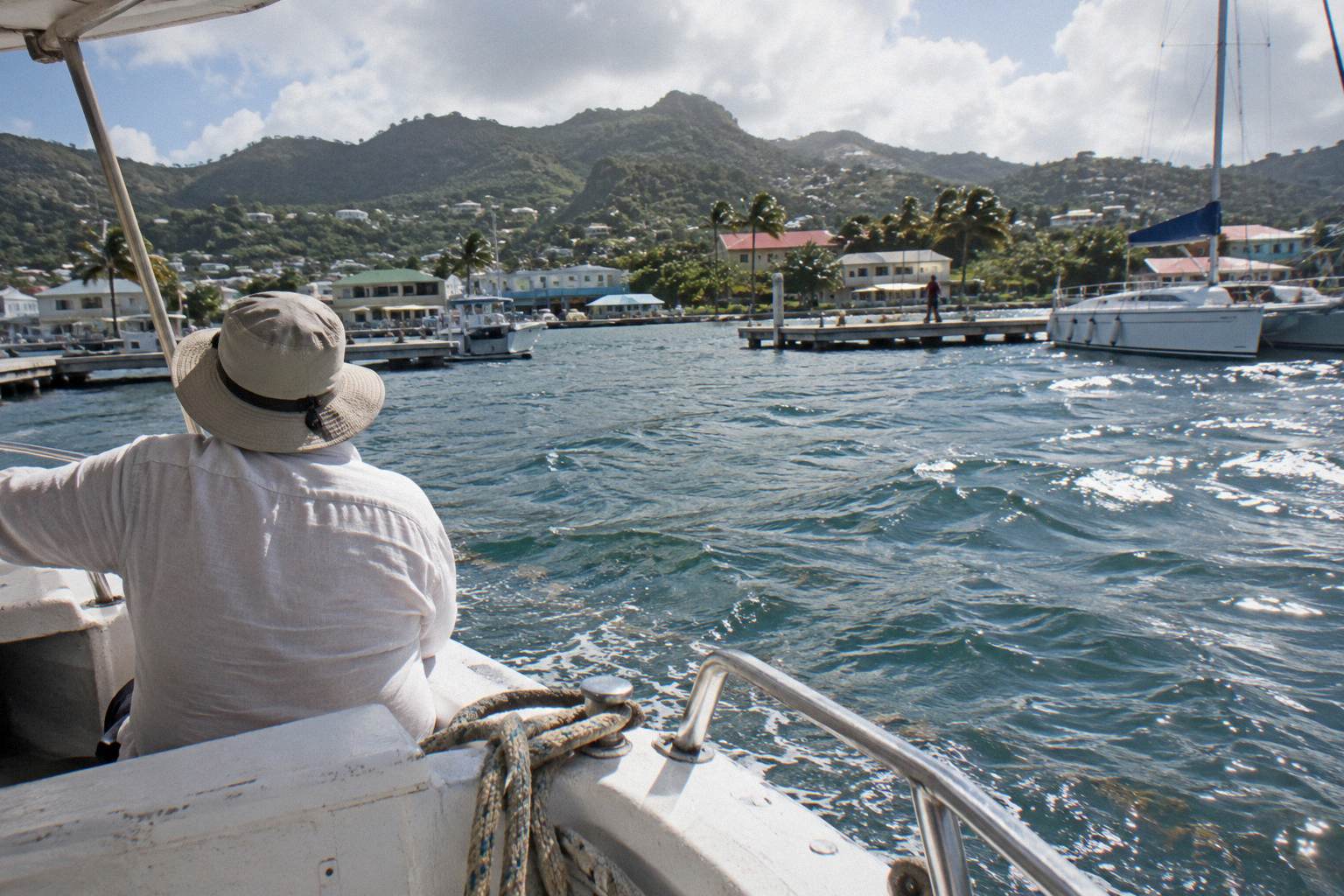
The two boats from Vigie Marina suit two different buyers. The shared cruise, a custom 60 ft vessel about 3.5 hours from US$65 per person, maximizes value and social energy for a sperm whale chance. The private safari, a 50 ft catamaran about 4 hours for up to 40 guests from US$2,550.65 per boat, buys a charter devoted entirely to your group's priorities, including a longer, deeper search.
The shared cruise is the rational default. It departs in the morning, carries a local marine expert, includes bottled water, soft drinks and rum punch, and offers free cancellation up to 24 hours before departure with instant confirmation. Gratuities and hotel pick-up are not included, and there is no hotel pick-up on this trip, so you make your own way to Vigie Marina. The operator, Captain Mike's, says it has over 60 years of experience and belongs to the Hackshaw family, which is its own statement and worth weighing as such. Rated 4.5 from 200 reviews, it is the established way to do this trip. The price basis is per person: for illustration, not a quote, US$65 per person is US$130 for 2, US$260 for 4, US$390 for 6.
The private safari, run by Hackshaw's Boat Charters, is a different purchase. The operator says it has run since 1953 and is World Cetacean Alliance certified, and the trip includes a guide, soft drinks, coffee, tea, water, light snacks, rum punch and local fruit, plus cruise ship pier pick-up and drop-off; hotel pick-up and drop-off are not included. Free cancellation applies up to 24 hours before departure, and the trip is cancelled free for bad weather. Confirmation is not instant, the operator confirms. The start time is arranged with the operator, so a group focused on sperm whales can discuss timing directly. For illustration, not a quote: US$2,550.65 shared by 4 guests is about US$637.66 each; by 6 about US$425.11; by 8 about US$318.83; by 12 about US$212.55. The two tours are different products at different scales and are not ranked against each other. You can compare both on the private whale and dolphin safari page, and check availability on the shared cruise if that is the one that fits.
| Feature | Shared Whale And Dolphin Watching Cruise | Private Whale And Dolphin Safari |
|---|---|---|
| Price basis | From US$65 per person | From US$2,550.65 per boat |
| Rating | 4.5 from 200 reviews | 4.5 from 75 reviews |
| Duration | About 3.5 hours | About 4 hours |
| Vessel | Custom 60 ft boat | 50 ft catamaran, up to 40 guests |
| Departure | Morning, Vigie Marina, Castries | Time arranged with operator, Vigie Marina |
| Included | Marine expert, water, soft drinks, rum punch | Guide, drinks, snacks, fruit, pier pick-up and drop-off |
| Cancellation | Free up to 24 hours before | Free up to 24 hours before, and for bad weather |
How Do Season And Sea State Affect Your Chances?
Sperm whales have no dedicated season off Saint Lucia, but sea state does have one: the sources say conditions are typically calmer from December to May, which makes those months the more comfortable window for a deep-water watch. Dolphins and pilot whales are year-round, humpbacks add their passage from about February to April, and hurricane season officially runs June 1 to November 30.
The distinction between species seasons and sea seasons is where most planning goes wrong, so it is worth separating them cleanly. The humpback window, about February to April as the official wording has it, with some operators reporting them from December, belongs to a migrating species and adds nothing specific to sperm whale odds. The calm-water window, December to May, is about your comfort and the crew's ability to spot distant blows, and that helps every species including the deep-water ones. A flatter sea makes a distant surfacing easier to see, plain and simple.
| Period | What the sources say | What it means for a sperm whale hope |
|---|---|---|
| December to May | Seas typically calmer | Best viewing comfort; easier spotting at distance |
| February to April | Humpbacks pass through | Year-round species unchanged; humpbacks are the seasonal bonus |
| June to November | Hurricane season, officially June 1 to November 30 | Trips still run; rougher days are possible and trips can be weather-cancelled |
| Any month | Dolphins and pilot whales year-round | Most trips see dolphins; sperm whales remain a chance |
Weather cancellations are part of the honest picture. The shared cruise operator says that if the captain cancels for unsafe weather there is an alternative date or a refund, and the private safari is cancelled free for bad weather. Neither tour has a rebook-if-no-sighting policy, and you should not expect one: the animals decide. If you are travelling in the wetter half of the year, our piece on hurricane season and whale cruises works through that trade-off in detail.
What Should You Ask The Operator Before Booking?
Ask five things before you commit: what the route covers that morning, how the crew decides when to go offshore, what the guide will explain about identification, what the cancellation terms are in practice, and what the boat and group size mean for your comfort. A good operator answers all five plainly, and the answers tell you more than any review score about whether the trip suits a sperm whale hope.
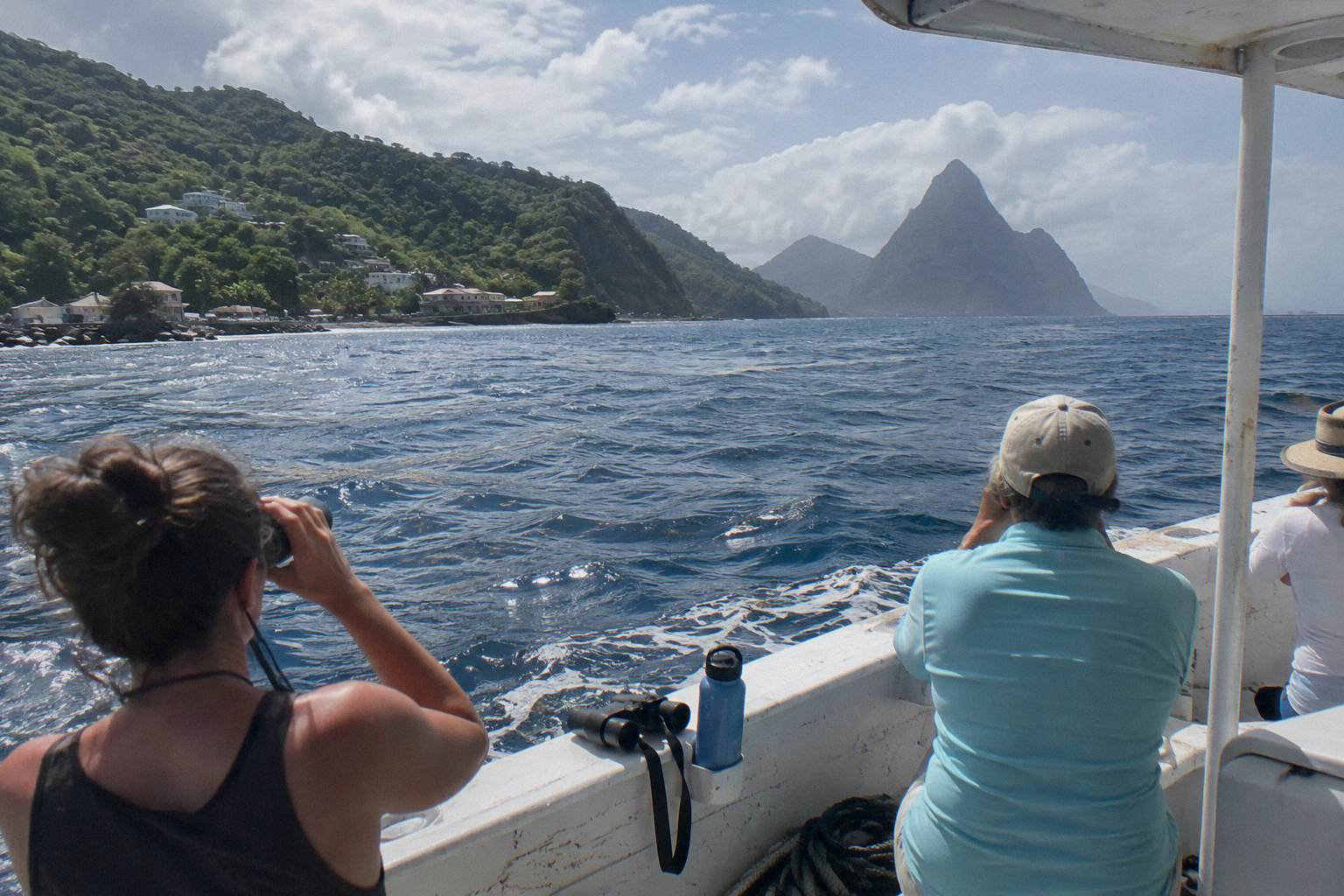
The first questions are about the search itself. No stop-by-stop route is published for either trip, so ask the operator how they work the coast and the deep water, and what the plan is if there are no early dolphin encounters. Ask how the guide identifies what the boat finds, especially in pilot whale territory where dark animals in family groups invite confusion. A guide who says "we identify what is in front of the boat" is giving you the honest answer, not a dodge.
| Question to ask | Why it matters for a sperm whale hope |
|---|---|
| How will you work the coast and the deep water today? | Tells you whether the search actually reaches the deep water where sperm whales are possible |
| How does the guide identify what the boat finds? | Dark family-group cetaceans invite confusion; a guide explains the call |
| What is the price basis and the live figure? | Shared cruise is per person, private safari is per boat; the booking page confirms |
| What are the cancellation terms in practice? | Free up to 24 hours before on both; the private safari is cancelled free for bad weather |
| What does the boat mean for motion sickness? | A 60 ft boat and a 50 ft catamaran behave differently in a swell |
The next questions are commercial. Confirm the price basis you are buying: per person on the shared cruise, per boat on the private safari, with the live figure on the booking page since prices vary by date and group. Confirm the cancellation window, up to 24 hours before departure on both trips, and note that the private safari's confirmation is not instant. If you are prone to motion sickness, ask about boat size; the shared cruise runs a 60 ft vessel and the private a 50 ft catamaran, and a catamaran's width behaves differently in a swell. Our what to bring guide covers the packing side: sun protection, a hat, a light layer for spray, a camera.
The last questions are the ones cruise passengers must not skip. Check your ship's all-aboard time and ask the operator about timing directly; the private safari includes pier pick-up and drop-off, while the shared cruise departs Vigie Marina a short distance from the terminal with taxis readily available, and trip lengths of about 3.5 and 4 hours exclude getting to the marina. The tourism board's trip expectations blog sets out the official pattern for timing and route. If you are weighing a shared seat against a charter for a cruise day, our shared cruise or private charter comparison does that math in full.
Common Mistakes When Hoping For Sperm Whales
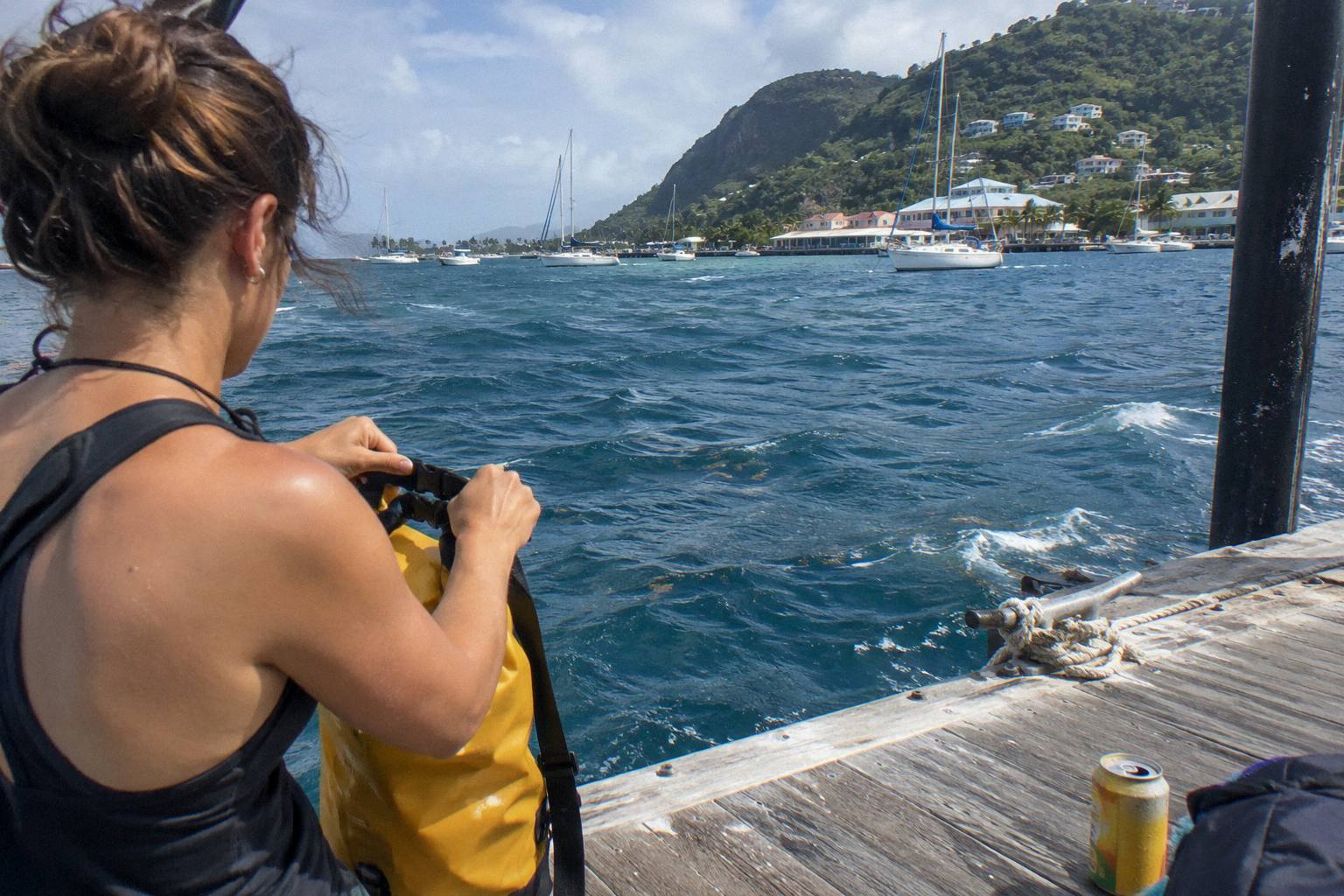
The recurring mistakes are treating sperm whales as a seasonal guarantee, comparing the two local trips as if both were priced per person, expecting hotel pick-up that neither includes, booking without checking the cancellation window, and reading any sighting percentage as fact. Each one is avoidable with one honest fact, and each one routinely turns a good trip into a disputed one.
The first mistake is calendar thinking. Sperm whales are residents of the region, not a February-to-April event, so choosing that window for sperm whales specifically borrows a humpback logic that does not apply. The related mistake is the mirror image: assuming a calm December-to-May morning guarantees anything. Sightings depend on weather, season and the animals' movements, and no month-by-month sighting rate exists in the sources, so no percentage anyone quotes you is real.
The second family of mistakes is arithmetic and logistics. The shared cruise is priced from US$65 per person and the private safari from US$2,550.65 per boat for the whole group; comparing the two headline numbers as if they shared a basis produces a meaningless figure. On logistics, neither trip includes hotel pick-up, the private safari includes pier pick-up and drop-off for cruise passengers, and the shared cruise does not include any pick-up at all. Gratuities are extra on both. Booking without noting the 24-hour free cancellation window, or assuming instant confirmation on the private safari when the operator confirms manually, creates avoidable stress.
The third mistake is expecting the wrong deliverable. There is no swimming with whales on either trip, no rebook-if-no-sighting policy, and no published group size on the shared cruise. The deliverable is a well-run morning on deep water with a crew that knows where the animals can be, drinks included, and an honest chance at something extraordinary. Readers who want the fuller expectation-setting can start with St Lucia Whale Watching and our guide to whether the whale and dolphin excursion is worth it, which confronts exactly this question.
Common Questions About Sperm Whales Off Saint Lucia
Are There Sperm Whales Off Saint Lucia?
Yes. The official wording is that sperm whales are "considered resident in the region and occasionally sighted in deeper waters," which places them in the Eastern Caribbean year-round rather than on a seasonal migration. No count exists for Saint Lucia's own waters, and every sighting is a chance rather than a promise.
What Is The Eastern Caribbean Sperm Whale Population?
The sperm whales off Saint Lucia belong to a wider Eastern Caribbean population studied by the Dominica Sperm Whale Project. No Saint Lucia head count or population estimate is published, and any number quoted in tour marketing should be treated with suspicion. The regional framing is the accurate one.
Does A Cruise Look For Sperm Whales Or Dolphins First?
Dolphins come first in frequency, not in priority. Spinner dolphins are frequently sighted year-round and pilot whales can be seen through the year, while sperm whales are occasionally sighted in deeper waters, so the crew works the water in front of them and treats a sperm whale as the day's genuine bonus.
How Do Season And Sea State Affect Your Chances?
Sperm whales have no dedicated season off Saint Lucia. Seas are typically calmer from December to May, which improves viewing comfort and distant spotting, while humpbacks pass through about February to April and hurricane season officially runs June 1 to November 30. Dolphins and pilot whales are year-round.
Which Boat Suits A Sperm Whale Search?
The shared cruise from US$65 per person, about 3.5 hours on a 60 ft boat, suits most travellers. The private safari from US$2,550.65 per boat, about 4 hours on a 50 ft catamaran for up to 40 guests, suits a group that wants its own charter and a start time arranged with the operator. Both depart Vigie Marina in Castries.
What Should You Ask The Operator Before Booking?
Ask how the crew works the coast and the deep water, how the guide identifies what the boat finds, what the price basis and cancellation terms are in practice, what the boat means for motion sickness, and, for cruise passengers, how the timing fits your ship's all-aboard time. A good operator answers all five plainly.