Pilot Whales And False Killer Whales On A Saint Lucia Whale And Dolphin Cruise
Pilot whales are the resident cetaceans a west coast whale cruise most often has a chance of finding, and the false killer whale question is one a guide answers on the water, not on a checklist.
Short answer
Yes, pilot whales can sometimes be seen off Saint Lucia all year, travelling in close-knit family pods. The shared cruise runs about 3.5 hours from US$65 per person and the private safari about 4 hours from US$2,550.65 per boat, and both depart Vigie Marina in Castries.
The animals a west coast whale cruise most often has a chance of finding are not the giant baleen whales most visitors picture. They are pilot whales, resident cetaceans that live off Saint Lucia in close family pods, and the dolphins that share the same water. The false killer whale, a name that comes up in every search on the subject, is a different question, and an honest answer has to start with what the official record actually says rather than what a hopeful checklist implies. The same deep water that keeps those pods nearby also matters for sperm whales, and the guide to sperm whales off Saint Lucia and what a cruise can actually find explains why they show up so close to shore.
This page lays out what the Saint Lucia tourism board states about resident pilot whale pods, why the deep water close to the west coast matters, how a guide on the boat tells one dark-backed animal from another, and what the two whale and dolphin trips that actually depart Castries offer in time, price and format. Sightings on any given day are a chance, never a promise, and nothing on this page should be read as one.
Are Pilot Whales Seen All Year Off Saint Lucia?
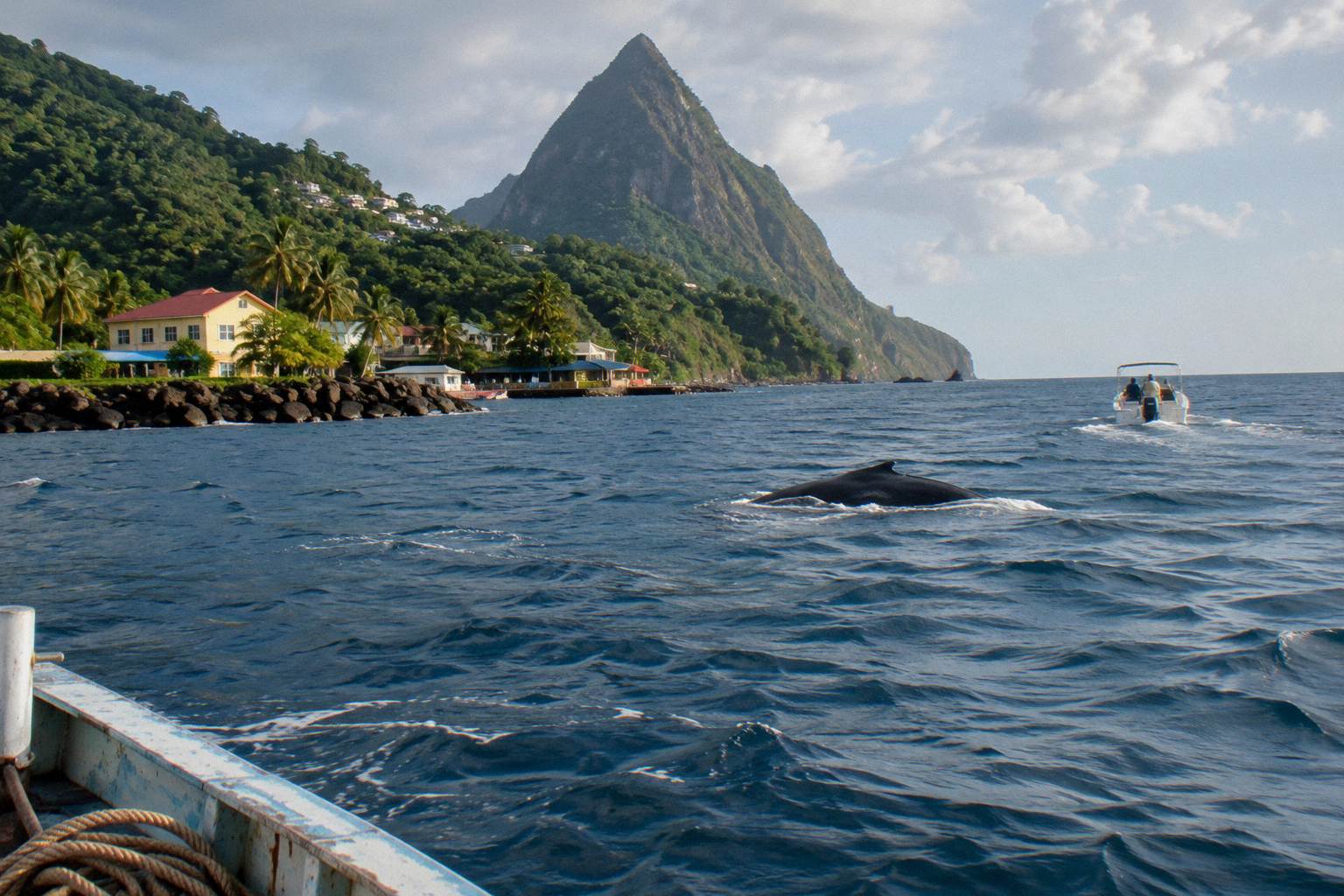
Yes. The Saint Lucia tourism board describes pilot whales as resident, with pods that can sometimes be seen throughout the year, travelling in close-knit family groups. That makes them, alongside the year-round dolphin species, the most reliable category of animal a whale cruise off this island goes looking for, though every sighting remains a chance dependent on weather, season and the animals' own movements.
That single sentence carries a lot of weight for planning. Humpback whales pass through the region between about February and April, the official migration window, and some operators report them from December, but from May to November humpbacks should be treated as unlikely. Pilot whales do not migrate away in the off season. The pods live in the region, and the boats that work the west coast can encounter them in any month of the year.
What "can sometimes be seen" means in practice is worth being clear about. It is not a sighting rate, and no percentage is printed anywhere in the official material or on this page, because operator claims conflict and none can be verified. It means the animals are present in the area and the trips have a genuine chance of finding them, alongside the spinner dolphins that are frequently sighted year-round and the pantropical spotted and bottlenose dolphins that are common in the region. Sperm whales, by contrast, are described by the tourism board as "considered resident in the region and occasionally sighted in deeper waters," a deliberately cautious phrase for animals that live further out.
The seasonal picture that matters for a visitor is therefore simple. Dolphins and pilot whales are the year-round baseline. February to April adds the chance of humpbacks. Seas are typically calmer from December to May, which is a comfort consideration rather than a wildlife one, and hurricane season runs officially from June 1 to November 30, a fact the Saint Lucia Meteorological Service states plainly. More on choosing a month appears in the site's month-by-month planning guide, and the question of how likely any sighting is gets its own honest treatment elsewhere.
The reason a three to four hour morning trip can plausibly find these animals at all is geography. Deep water lies close to the west, Caribbean coast of Saint Lucia, so the animals can be encountered not far off shore, and the boats follow that coast rather than steaming for hours to reach productive water. That short run from marina to deep water is the quiet advantage this island has over places where the shelf stretches far out.
What Do Resident Pods Look Like In The Facts?
Resident pilot whale pods off Saint Lucia are described in official tourism board wording as close-knit family groups that can sometimes be seen through the year. The record says nothing about pod sizes, population numbers or sighting frequencies for this island, and no honest source prints a Saint Lucia pilot whale count, so any number you see elsewhere should be treated with caution.
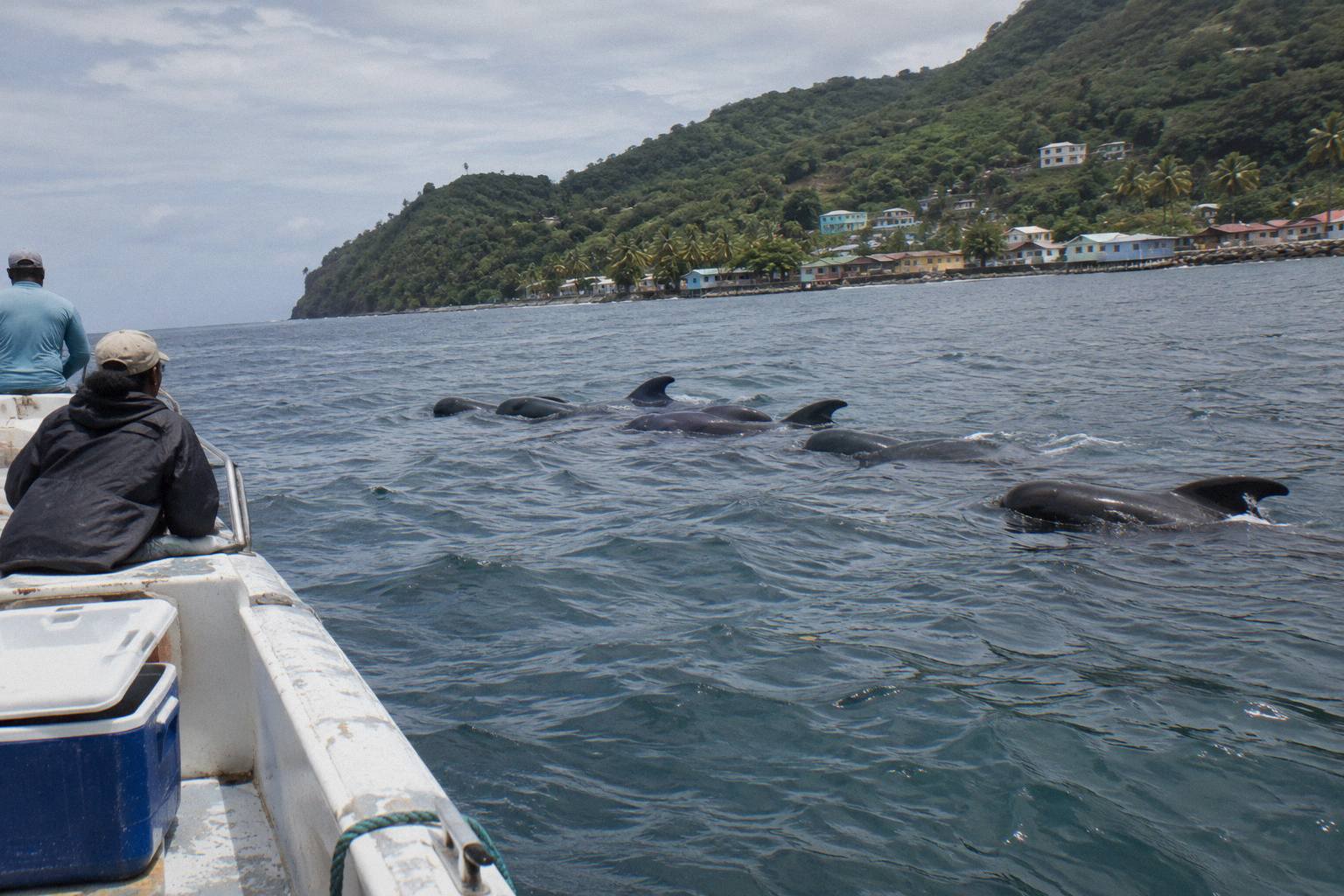
The family-group detail is more than decoration. Pilot whales are known for strong social structure, and the tourism board's phrasing, resident pods in close-knit family groups, matches what a boat actually encounters: not scattered single animals but groups moving together, often surfacing in loose formation. When a cruise finds pilot whales, it usually finds a pod, which is why the encounter tends to be one of the more memorable on a west coast trip.
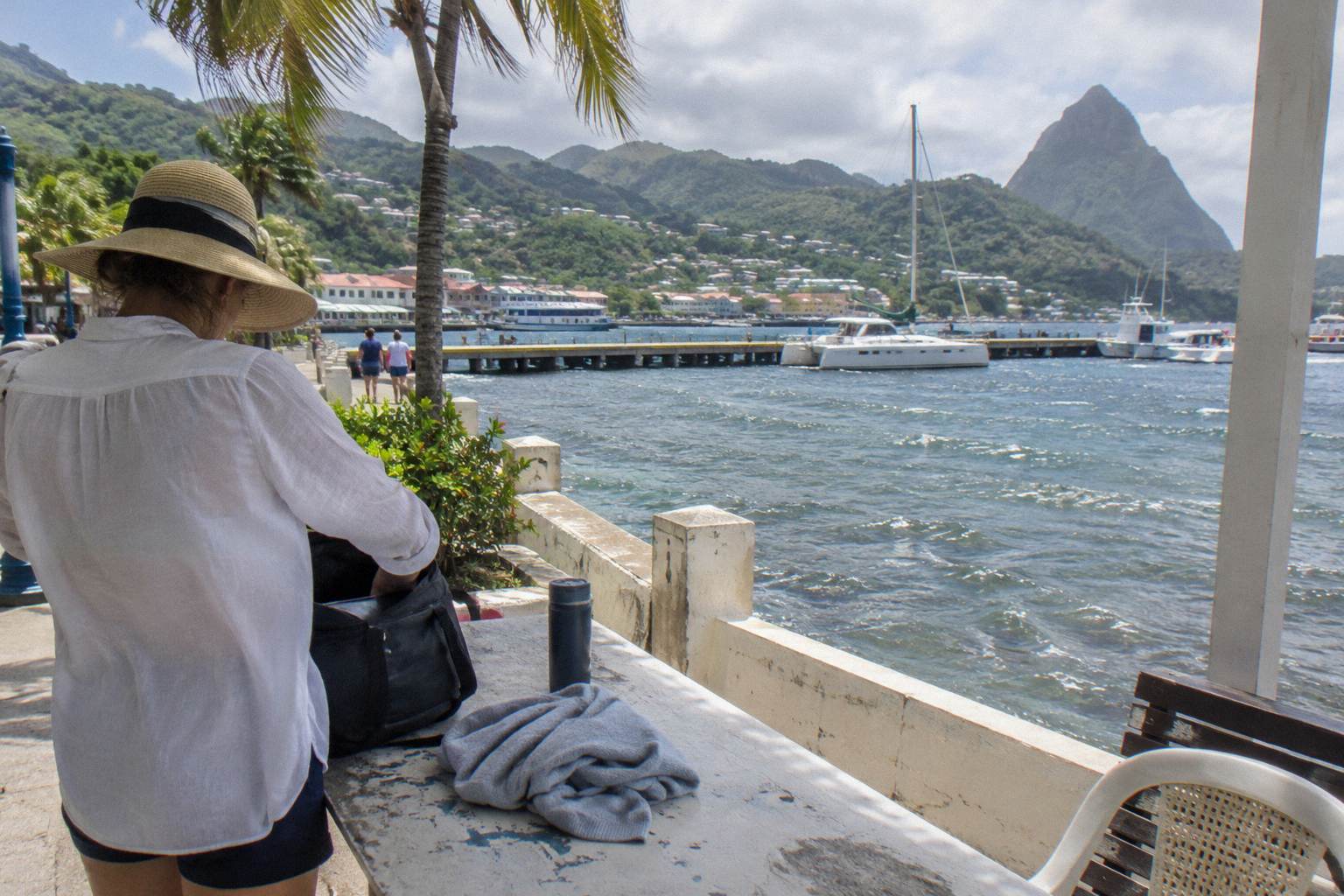
What the official record does not say matters just as much. There is no published head count for pilot whales in Saint Lucian water, no population estimate, and no month-by-month sighting rate. The sperm whales of the region belong to the wider Eastern Caribbean population that the Dominica Sperm Whale Project studies, a research effort that has individually identified whales across these islands, but that project's work is not a Saint Lucia census and this page does not pretend otherwise. Orcas are recorded as rare visitors only.
For a visitor weighing a booking, the practical read is this: the resident species are the reason whale watching here runs year-round, while the migratory species are a seasonal bonus. The two trips covered on this site both list pilot whales among the animals they go looking for. The shared cruise, run by Captain Mike's, names sperm whales, humpbacks in season, pilot whales and spinner, spotted, Fraser's and common dolphins on its live listing, alongside west coast views.
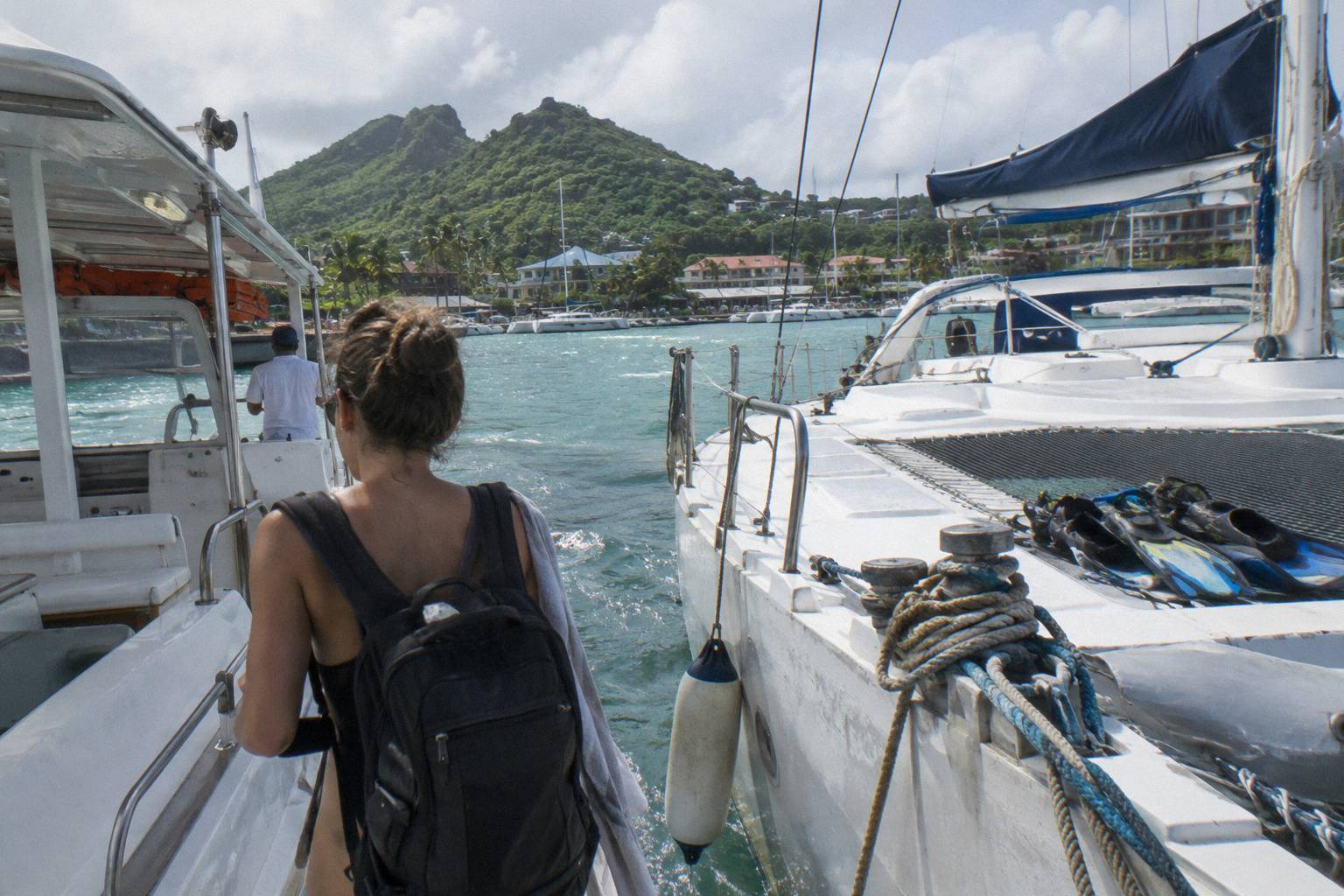
Both boats depart Vigie Marina in Castries Harbour, beside the island's George F. L. Charles airport, and both work the same deep west coast water. The differences are format, length and price basis, and they are set out in full further down this page. Whichever you lean toward, the animal you are most likely to spend time with on an ordinary morning is a dolphin or a pilot whale, not a humpback.
How Does A Guide Tell One Whale From Another At Sea?
At sea, identification is done by the guide on the boat, in the moment, using what is actually in front of the vessel: body shape, dorsal fin position and size, group behaviour and surfacing rhythm. The false killer whale question is answered exactly this way. A guide identifies what is in front of the boat, and the published record for Saint Lucia lists false killer whales nowhere as a likely sighting.
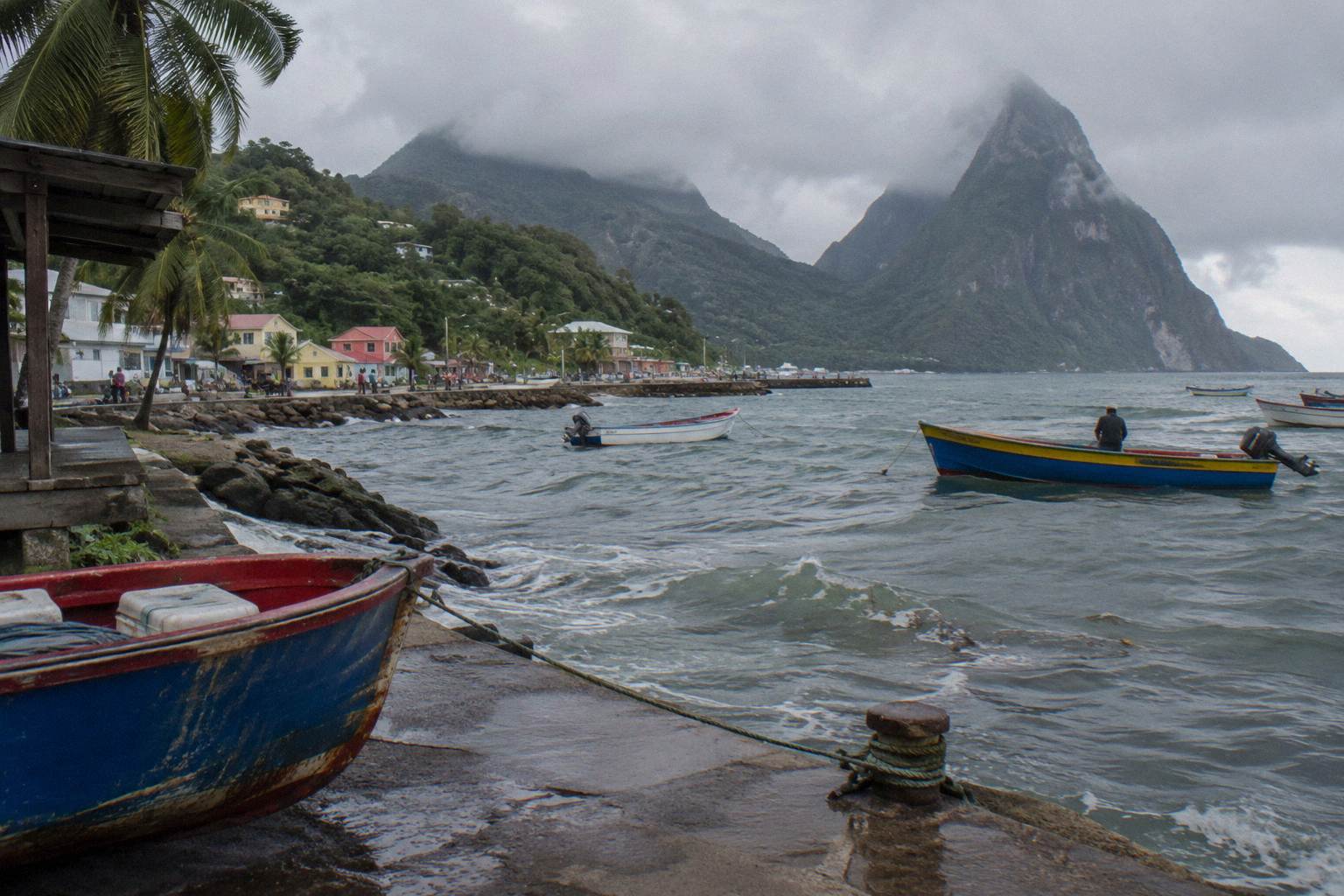
That last clause deserves plain language. Some whale watching destinations do list false killer whales among regular sightings. The official Saint Lucia tourism board material for this island does not, and neither do the live listings for the two trips covered here. So when a visitor asks whether that dark animal off the bow was a false killer whale, the honest answer is that the resident species on the record is the pilot whale, and the person qualified to name the animal in the water is the guide looking at it, not a webpage written in advance. For readers who want to make that call themselves, this species comparison explains why telling the two apart is harder than it looks.
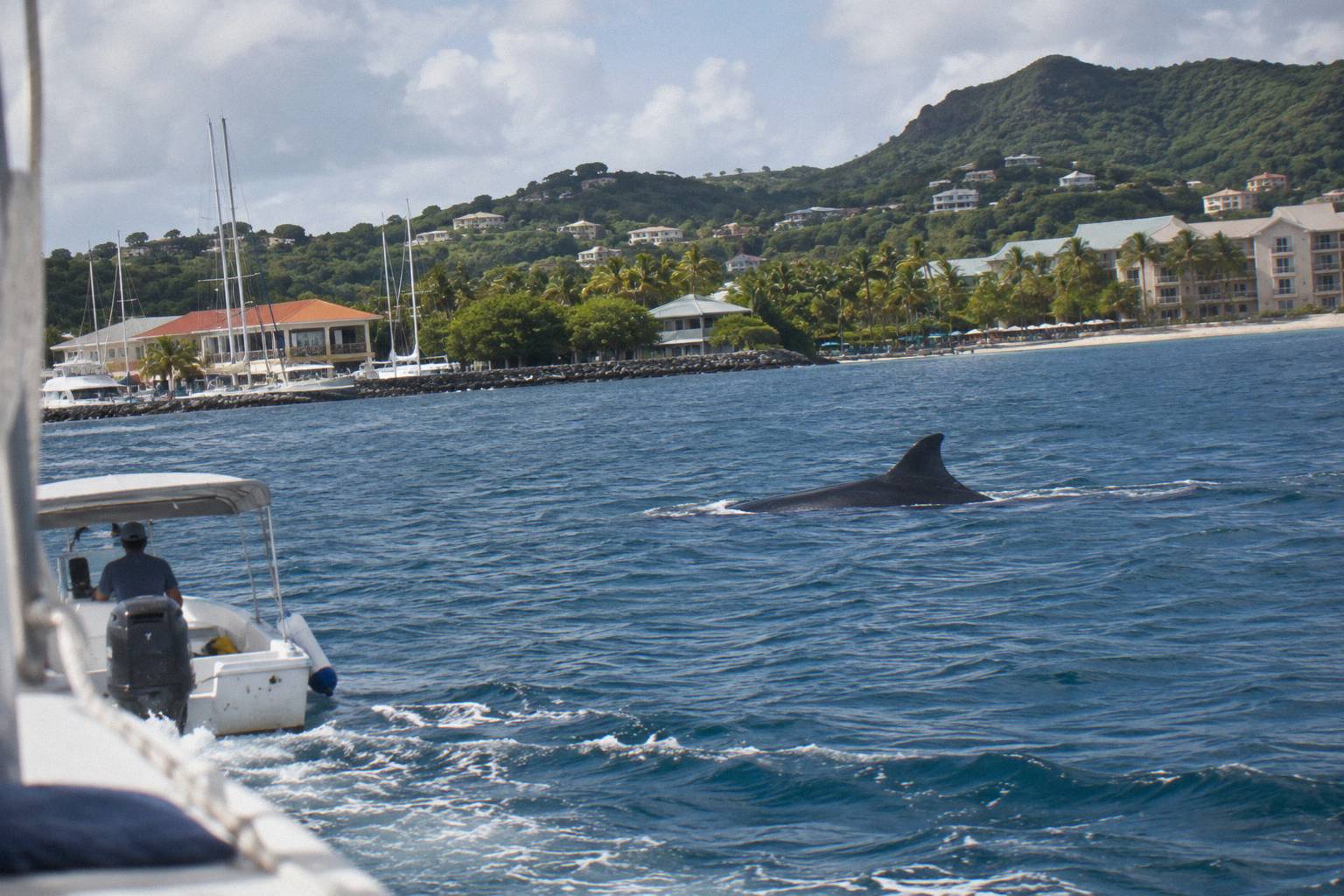
The same principle covers every look-alike question. Melon-headed whales, Bryde's whales and other species appear in Caribbean field guides but not in the official facts for this island, so this site does not name them as likely sightings. What the record does support is a short list of year-round residents, dolphins and pilot whales, a deeper-water occasional resident in the sperm whale, a February to April passage of humpbacks, and rare orca visitors. A guide on a licensed boat sorts the rest on the day, and the site's piece on telling a pilot whale from a false killer whale works through the identification question in the same spirit.
This is where the human on board earns their place. The shared cruise carries a local marine expert whose role includes exactly this kind of in-the-moment identification, and the private safari carries a professional guide doing the same job for one group. It is also why responsible viewing rules exist: licensed operators follow regulated distance guidelines, limit time near the animals, provide life jackets and safety briefings, monitor sea conditions, and approach slowly without chasing, touching or feeding anything. The official guidance is built around giving the animals space to move on, and no regulated distance in metres is published for this island.
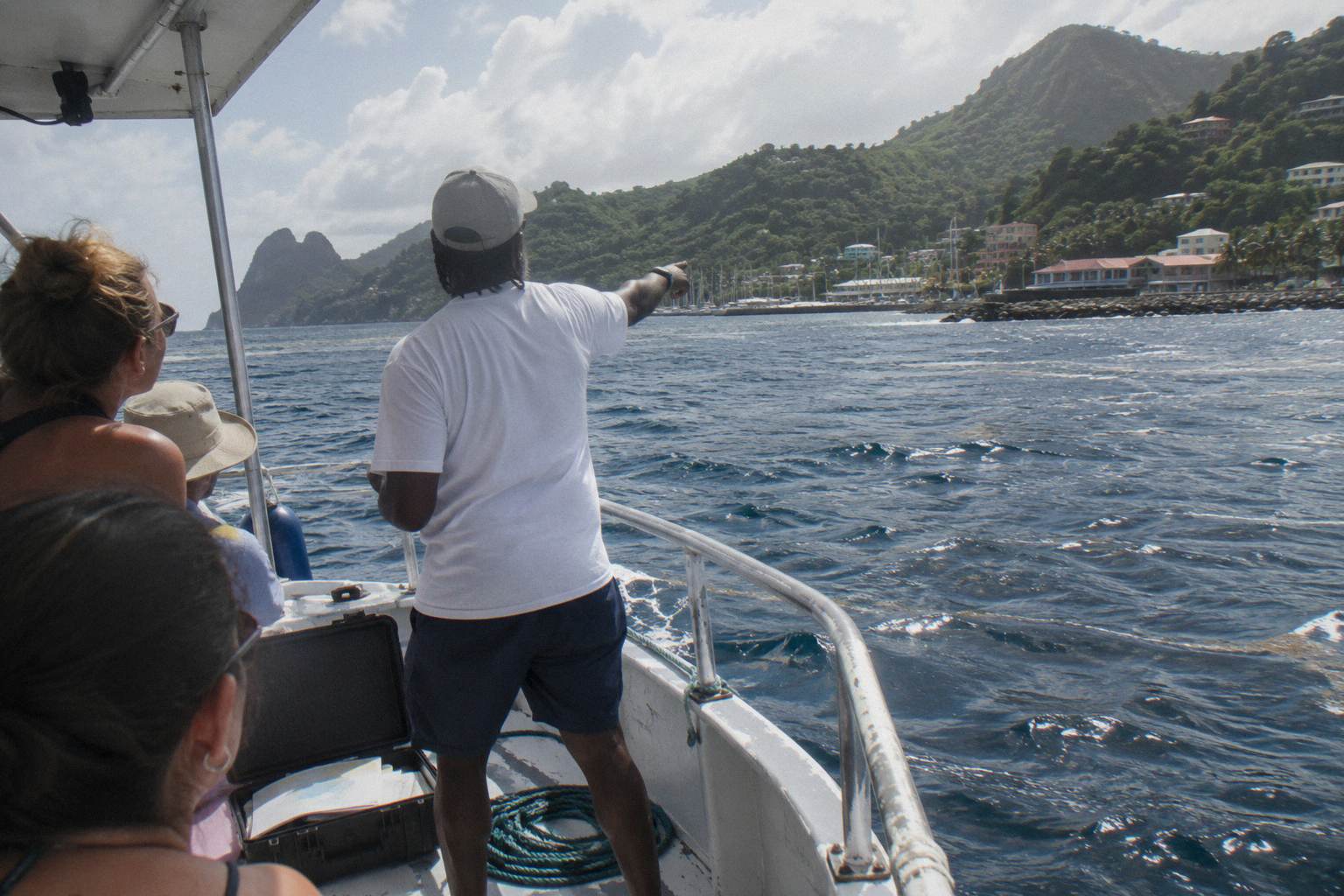
For visitors who want to sharpen their own eye, the practical starting points are few and reliable. Watch the dorsal fin: its size and position along the back separates the dolphin species from the larger dark whales. Watch the group: tight family clusters moving together point toward pilot whales. And watch the water depth: the tourism board notes that deeper waters offshore are where sperm whales are occasionally sighted, while the dolphins and pilot whales work water the west coast boats reach quickly. The marine life of the whole west coast, including the turtles, is covered in its own guide on this site.
Where Does The Boat Look For Pilot Whales?
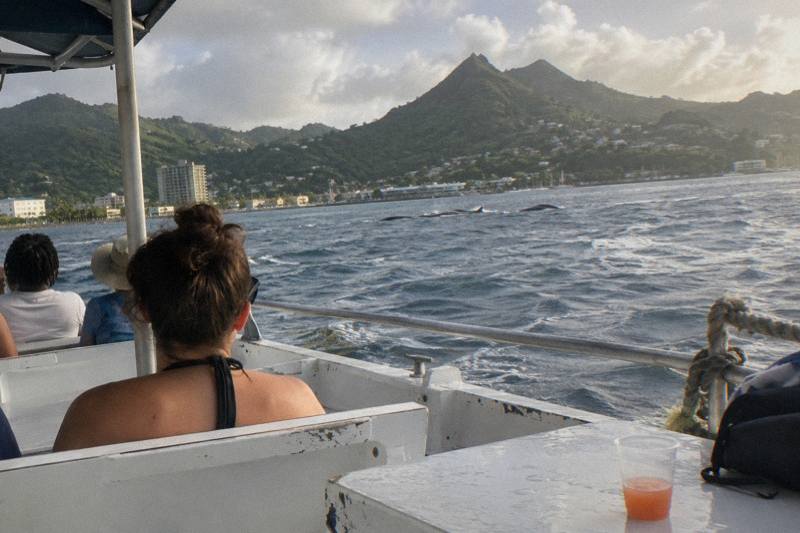
The boats work the west, Caribbean coast of Saint Lucia, where deep water lies close to shore, so pilot whale and dolphin encounters can happen not far from land. Both trips covered on this site depart Vigie Marina in Castries, follow the coast, and run about three to four hours, which is the official trip pattern for the island's north-west departures.
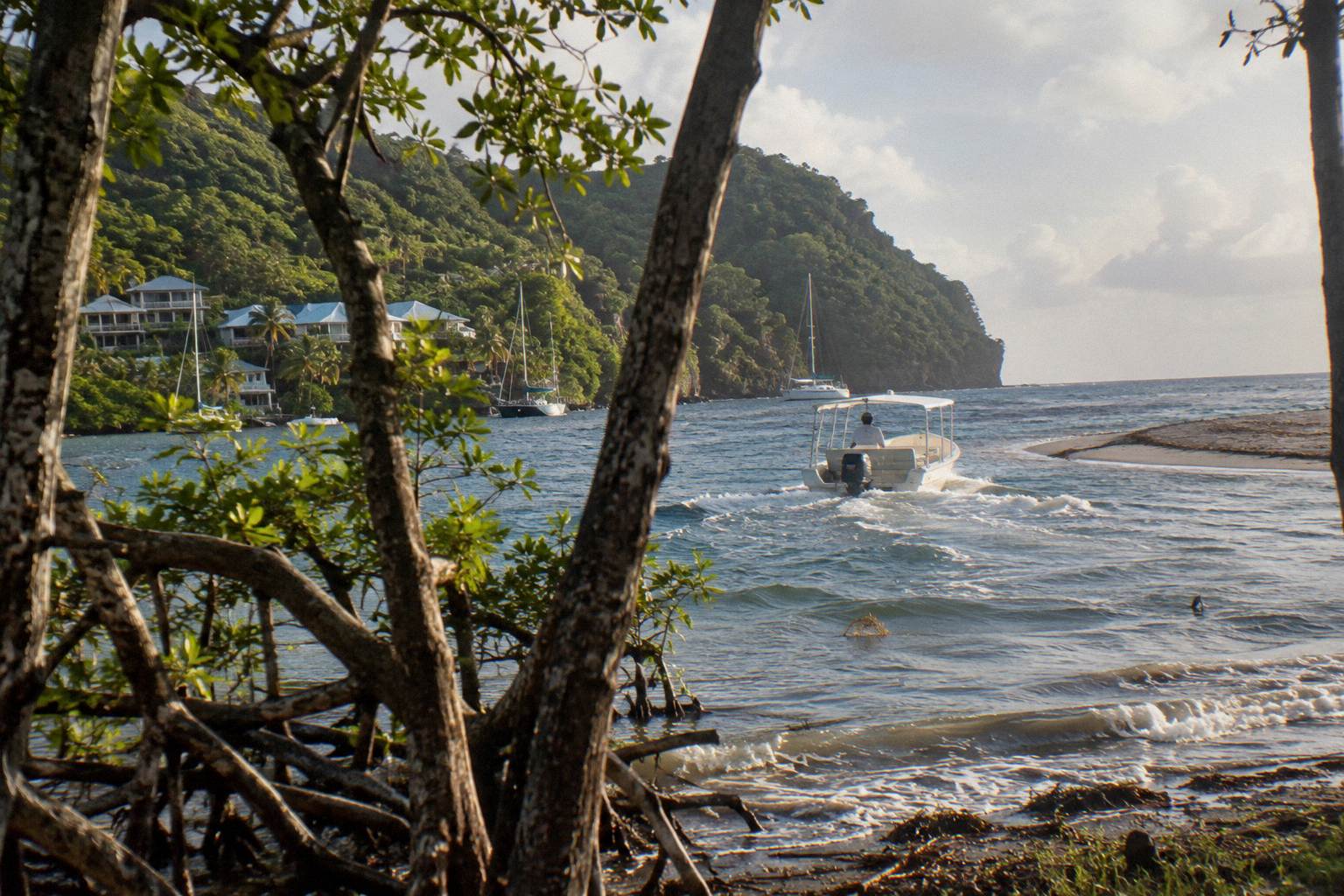
Geography does most of the work here. Saint Lucia's west coast drops into deep Caribbean water within a short run of the shoreline, and that is the single fact that makes a morning whale cruise viable as a half-day activity rather than an all-day expedition. The official tourism board material notes that these deep coastal waters increase the likelihood of encounters close to shore, which is why the boats follow the Caribbean coast rather than heading around to the Atlantic side, where conditions and distances both work against a short trip.
Vigie Marina sits in Castries Harbour, in the Ganters Bay area at Vigie, beside George F. L. Charles airport and a short distance from the Pointe Seraphine cruise terminal. Taxis are readily available between the terminal and the marina, and no road time is printed here because none is published. Trips usually leave in the morning from the island's north-west, around Rodney Bay and Castries in general terms, but both specific trips on this site depart Vigie Marina, and neither is a Rodney Bay departure.
| Leg of the morning | What the official record says |
|---|---|
| Departure point | Vigie Marina, Castries Harbour, for both trips |
| Direction of travel | Along the west, Caribbean coast |
| Why this coast | Deep water close to shore brings animals near land |
| Typical trip length | About three to four hours, morning departure |
| What the boats seek | Year-round dolphins and pilot whales, seasonal species by month |
Within that pattern, no stop-by-stop route is published, and none is invented here. The crew reads the water on the day: bird activity, surface splashes, the behaviour of other boats, and the local knowledge of where pods have been working recently. A private charter has the same sea to search but more flexibility in how long to stay with an encounter, subject always to the responsible viewing guidelines that limit time near the animals.
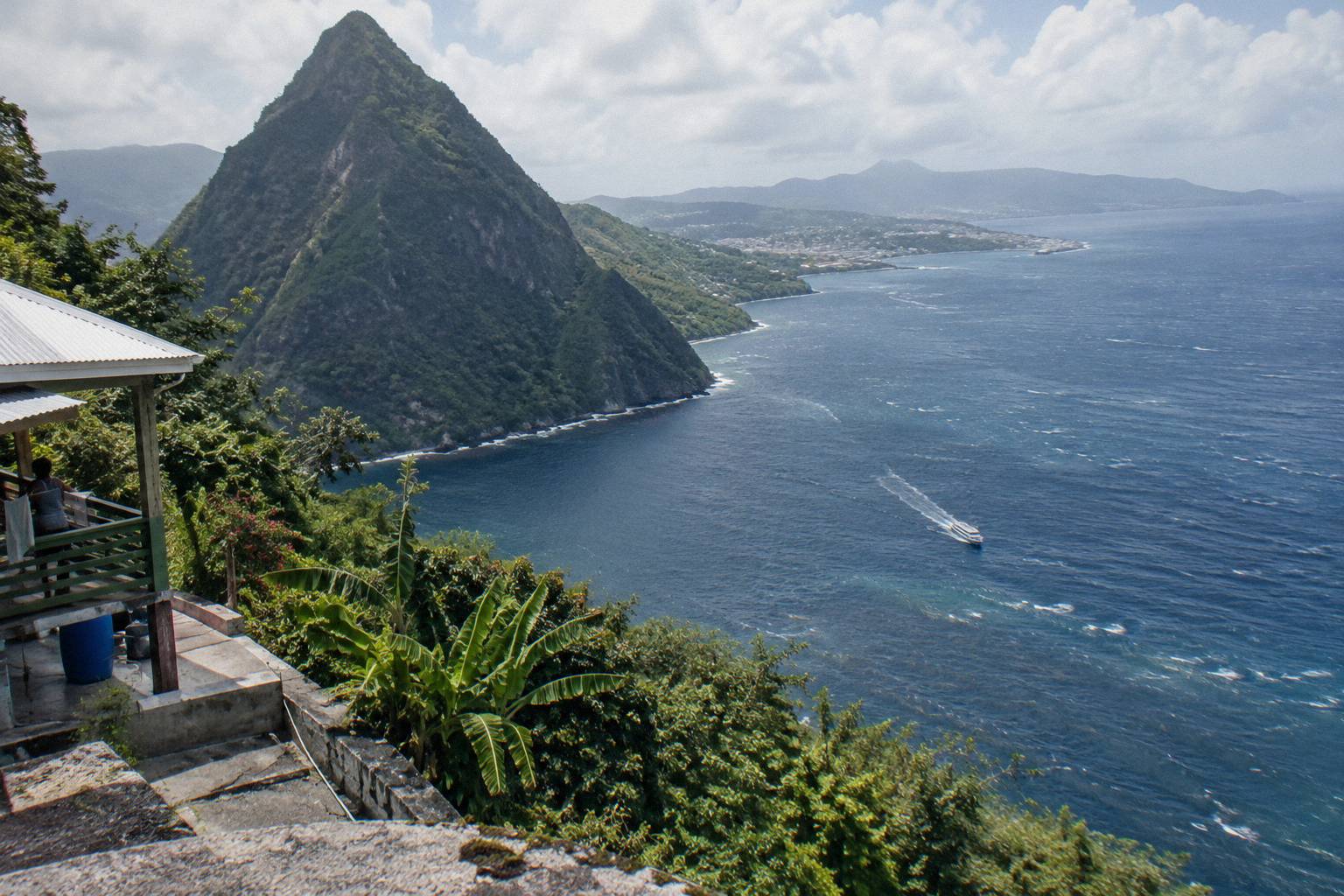
The west coast the boats travel is also the island's scenic showpiece, running down toward Soufriere and the Pitons on longer itineraries, and the shared cruise's listing promises west coast views as part of the trip. The route toward Soufriere and what you see along it has its own page on this site for readers planning the bigger picture of a Castries-based day.
Which Trip Gives More Time At Sea?
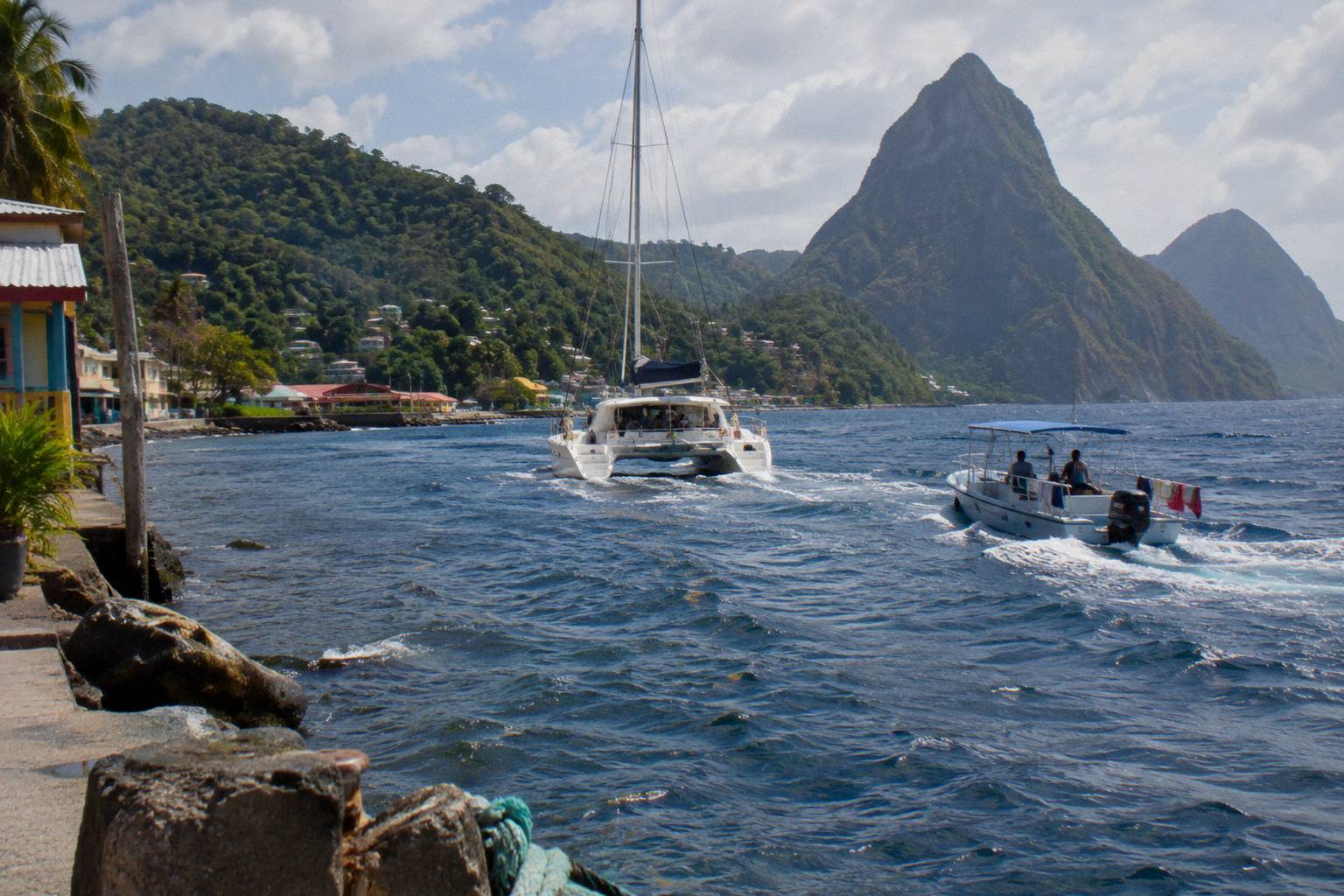
The private safari runs about four hours against the shared cruise's about 3.5 hours, both before accounting for getting to the marina. The private trip is a charter for one group of up to 40 on a 50 ft catamaran, from US$2,550.65 per boat. The shared cruise is a per-person seat on a custom 60 ft boat, from US$65 per person, with a morning departure.
The two formats serve different travellers, and the price bases must never be confused, because one is per person and one is for the whole boat. For illustration, not a quote: US$2,550.65 shared by 4 guests is about US$637.66 each; by 6 about US$425.11; by 8 about US$318.83; by 12 about US$212.55. The shared cruise at US$65 per person is US$130 for 2, US$260 for 4, US$390 for 6. Prices vary by date and group, and the live listing confirms the current figure for your dates.
| Shared Whale And Dolphin Watching Cruise | Private Whale And Dolphin Safari | |
|---|---|---|
| Format | Shared boat, price per person | Private charter, price per boat |
| From price | From US$65 per person | From US$2,550.65 per boat |
| Length | About 3.5 hours | About 4 hours |
| Departure | Morning, Vigie Marina, Castries | Vigie Marina, Castries, start arranged with the operator |
| Vessel | Custom 60 ft boat | 50 ft catamaran, up to 40 guests |
| Rating | 4.5 from 200 reviews | 4.5 from 75 reviews |
| Included | Local marine expert, bottled water, soft drinks, rum punch | Guide, soft drinks, coffee, tea, water, light snacks, rum punch, local fruit, cruise ship pier pick-up and drop-off |
| Not included | Gratuities, hotel pick-up | Gratuities, hotel pick-up and drop-off |
| Cancellation | Free up to 24 hours before | Free up to 24 hours before, and for bad weather |
| Confirmation | Instant | Not instant, the operator confirms |
The inclusions tell their own story. The shared cruise is a straightforward morning on the water with drinks included and a marine expert aboard, rated 4.5 from 200 reviews, run by Captain Mike's, an operator that says it has over 60 years of experience and belongs to the Hackshaw family. The private safari, run by Hackshaw's Boat Charters, which says it has run since 1953 and is World Cetacean Alliance certified, adds pier pick-up and drop-off for cruise passengers and a longer window at sea. Neither trip includes hotel pick-up, so plan your own way to the marina. The full comparison of shared versus private formats, with the cruise-port angle, is worked through in the site's shared-or-private guide.
Group size on the shared cruise is not published, and this page says so once rather than guessing. The private safari's cap of 40 guests is published. Neither trip offers swimming with whales or dolphins, and no responsible operator here suggests it.
How Do Dolphins And Pilot Whales Share The Same Water?
Dolphins and pilot whales are both year-round residents off Saint Lucia's west coast, feeding in the deep water that lies close to shore, and the tourism board records them together as the animals a trip can encounter in any month. Spinner dolphins are frequently sighted year-round, pilot whales live in resident family pods, and the two groups overlap in the same offshore habitat rather than competing for separate territories.
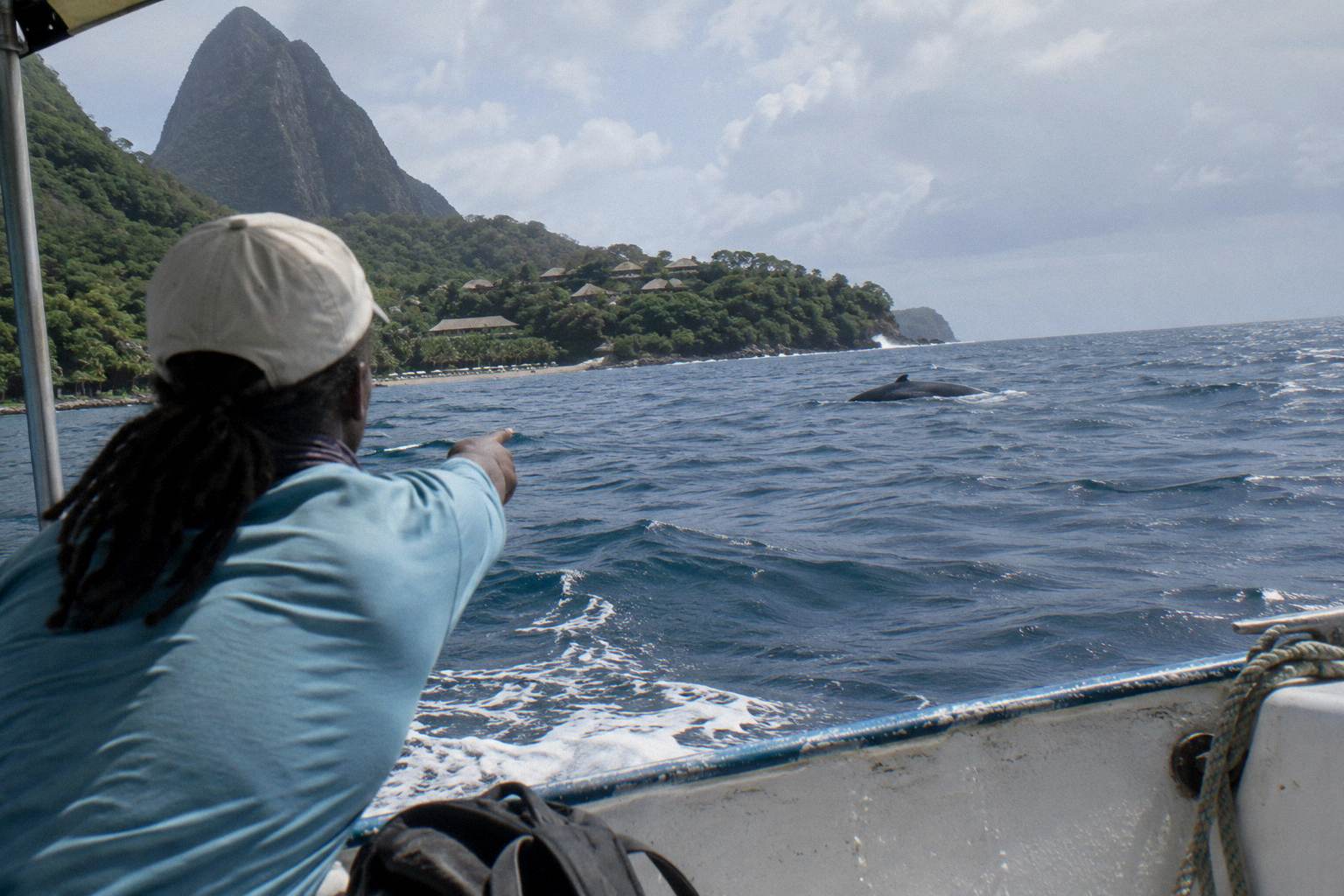
The official species wording groups them deliberately: dolphins and pilot whales can be seen all year. The dolphin record is the richest, with spinner dolphins frequently sighted year-round, pantropical spotted and bottlenose dolphins common, and Fraser's, Risso's and striped dolphins recorded less often. Pilot whales sit alongside as the resident large-cetacean presence, in those close-knit family pods. A single morning on the water can therefore move between a bow-riding dolphin group and a resting pilot whale pod without the boat covering an unreasonable distance.
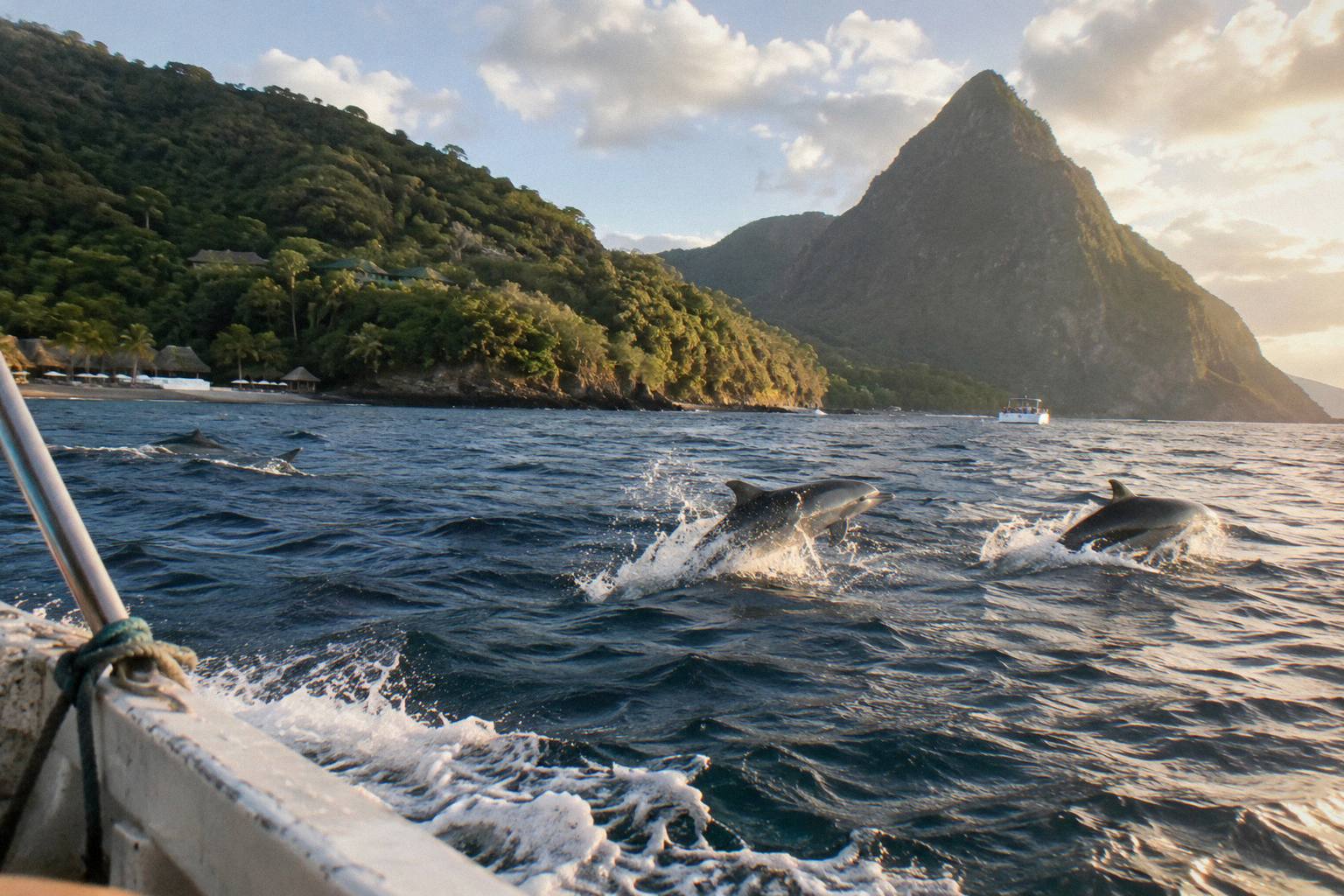
Deeper offshore, the cast changes. Sperm whales, considered resident in the region and occasionally sighted in deeper waters, belong to the Eastern Caribbean population the Dominica Sperm Whale Project studies, and the shared cruise's listing names them among the animals it seeks. Humpbacks join between about February and April. Orcas appear as rare visitors only. The full species picture, including the less commonly recorded dolphins, is laid out in the site's species-and-where-to-look guide.
Responsible viewing applies to all of it, and the official guidance is worth repeating because it shapes how the encounters feel. Slow approach, no chasing, no touching or feeding, and space for the animals to move on, with licensed operators following regulated distance guidelines, limiting time near animals, providing life jackets and safety briefings, and monitoring sea conditions. No distance in metres is published for Saint Lucia, and none is invented here. The ethics of the activity have their own discussion on this site for readers who want it.
What Should You Ask Before Booking?
Before booking, ask what the price basis is, per person or per boat; what is included, since neither trip covers hotel pick-up or gratuities; what the cancellation terms are, with free cancellation up to 24 hours before on both; how you reach Vigie Marina; and, if cruising, whether the trip's length fits your all-aboard time.
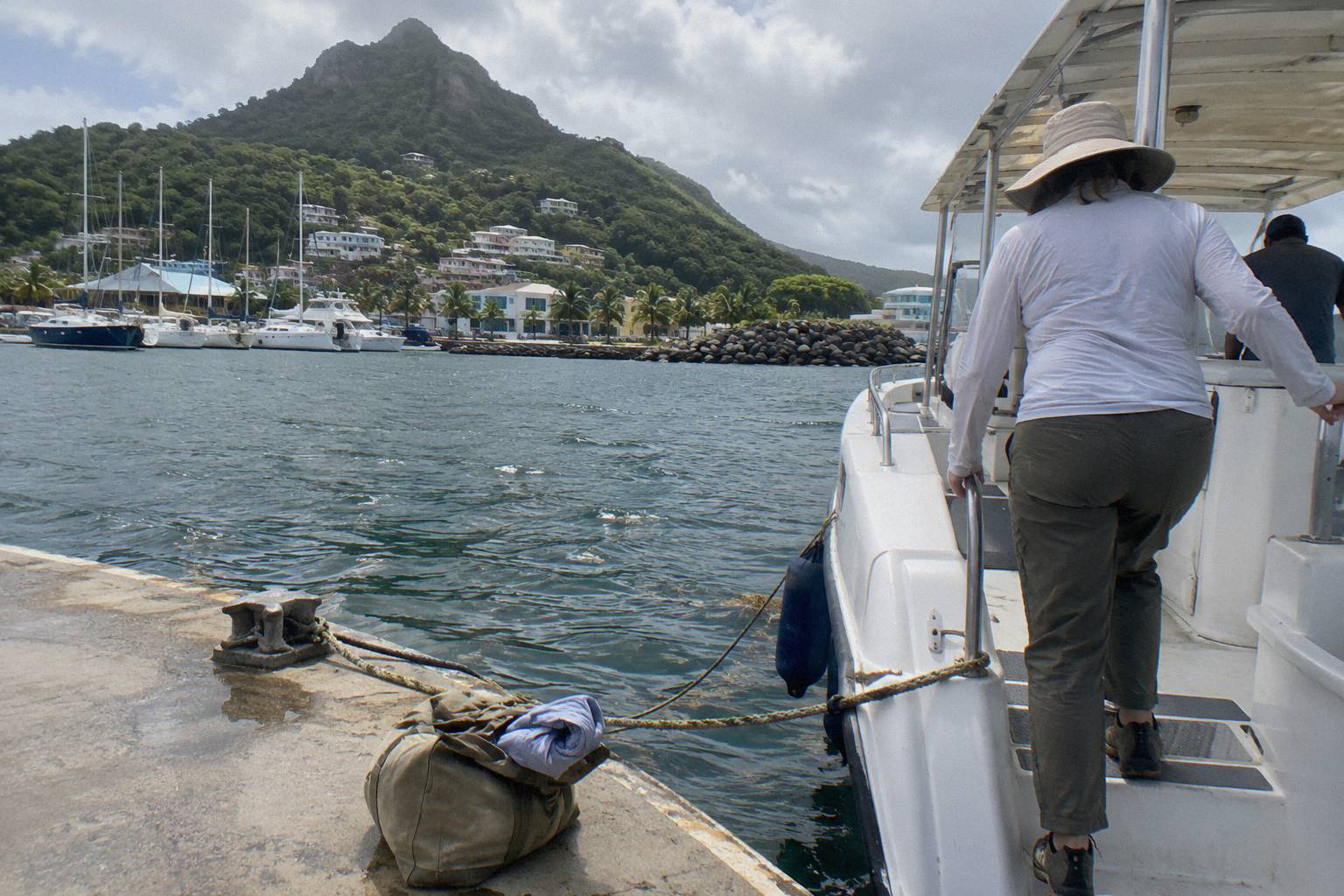
The booking-page facts answer most of this in advance, and the live listing confirms the current price for your dates. Both trips cancel free up to 24 hours before departure, and the private safari is additionally cancelled free for bad weather. The shared cruise's operator says that if the captain cancels for unsafe weather there is an alternative date or a refund, which is the operator's own statement. Confirmation is instant on the shared cruise and not instant on the private safari, where the operator confirms, a detail that matters more on a short visit than a long one.
| Question to ask | Why it matters | Where the answer stands |
|---|---|---|
| Price basis: per person or per boat? | The two trips are priced on different bases | Shared from US$65 per person; private from US$2,550.65 per boat |
| Hotel pick-up included? | Neither trip includes it | Arrange your own transport to Vigie Marina |
| Cruise pier pick-up? | Only the private safari includes it | Shared cruise departs a short distance from Pointe Seraphine |
| Cancellation window? | Plans change, weather changes | Free up to 24 hours before on both |
| Children welcome? | No minimum age is published | Children travel with an adult; ask the operator when booking |
| Swimming offered? | It is not, on either trip | Viewing only, per responsible guidelines |
Two practical notes complete the picture. Children's minimum age is not printed on the shared listing, so the honest line is that children travel with an adult and you ask the operator when booking. And if you are prone to motion sickness, the official advice is to ask about boat size when you book, bring sun protection, a hat, a light layer for spray and a camera. The full packing list for a whale cruise has its own page on this site, and the question of seasickness is treated honestly in a separate post.
For the wider trip-planning frame, Saint Lucia requires a passport valid for the stay plus proof of onward travel, with no visa for US, UK or Canadian citizens, and air arrivals are encouraged to complete the online immigration form up to 3 days before travel, per the official entry guidance. Currency is the Eastern Caribbean dollar, fixed at EC$2.70 to US$1, and US dollars are widely accepted. Neither fact changes which animals you see, but both smooth the day that gets you to the marina.
Common Mistakes When Identifying Whales
The most common mistakes are calling false killer whales a likely Saint Lucia sighting when the official record does not support it, expecting humpbacks outside the February to April window, trusting any sighting percentage that no published source actually provides, and deciding what an animal was from a photo afterwards instead of asking the guide who watched it surface. A guide on the boat is the only authoritative identification you will get.
Mistake one is the checklist problem. Visitors arrive with a Caribbean-wide species list and are disappointed when the boat finds "only" pilot whales and spinner dolphins, when those are precisely the resident animals the official tourism board describes for this island. The realistic expectation is the year-round baseline plus a seasonal bonus, not a field guide's full cast.
Mistake two is the confident misidentification. A dark back, a swept dorsal fin and a size guess from a moving boat add up to very little, and false killer whales, melon-headed whales and Bryde's whales are the usual names claimed from the deck. None of them is listed as a likely sighting in the official facts for Saint Lucia. The pilot whale is the resident dark whale on the record, and the guide's call on the day outranks any later guess.
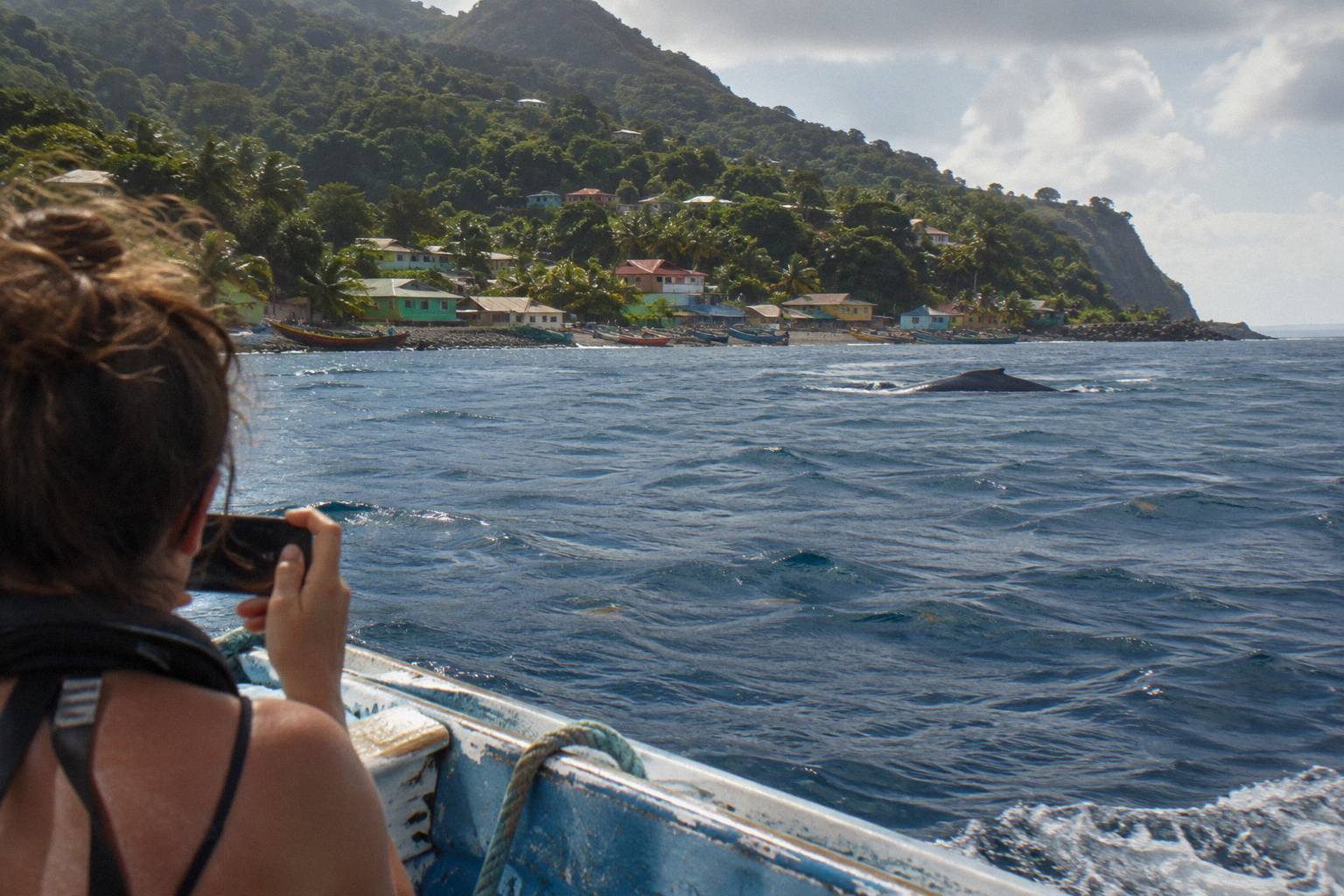
Mistake three is overreading seasonality in either direction. Expecting humpbacks in July ignores the official February to April window. Writing off a November trip ignores that dolphins and pilot whales are year-round residents and that trips run in every month. Mistake four is trusting a sighting rate. No percentage is published for any operator here, and where operator claims conflict, this site prints none of them. Mistake five is treating the trip as a promise. Sightings depend on weather, season and the animals' movements, and the honest framing on St Lucia Whale Watching is the one used throughout this page: a genuine chance, never a guarantee.
Common Questions About Pilot Whales Off Saint Lucia
Are Pilot Whales Seen All Year Off Saint Lucia?
Yes. The official tourism board wording describes resident pods that can sometimes be seen throughout the year, travelling in close-knit family groups. Every sighting remains a chance dependent on weather and the animals' movements, but there is no month when the species is absent from the region.
Are False Killer Whales A Likely Sighting In Saint Lucia?
They are not listed as a likely sighting in the official or published record for this island. The resident dark whale on the record is the pilot whale. If a visitor believes they saw a false killer whale, the answer is the one used throughout this page: a guide identifies what is in front of the boat.
How Does A Guide Tell One Whale From Another At Sea?
By watching what is actually in front of the boat: body shape, dorsal fin size and position, group behaviour and surfacing rhythm. The shared cruise carries a local marine expert and the private safari a professional guide, and either is better placed to name the animal than any checklist written in advance.
Where Does The Boat Look For Pilot Whales?
Along the west, Caribbean coast, where deep water lies close to shore. Both trips covered on this site depart Vigie Marina in Castries and follow that coast, with trips usually lasting about three to four hours in the morning.
Which Trip Gives More Time At Sea?
The private safari runs about four hours against the shared cruise's about 3.5 hours. The private trip is a charter for one group, from US$2,550.65 per boat on a 50 ft catamaran taking up to 40 guests. The shared cruise is from US$65 per person on a custom 60 ft boat, with the price confirmed on the live listing.
When Are Humpback Whales Possible?
The official window is about February to April, with some operators reporting them from December. From May to November, treat humpbacks as unlikely, and plan around the year-round dolphins and resident pilot whale pods instead.