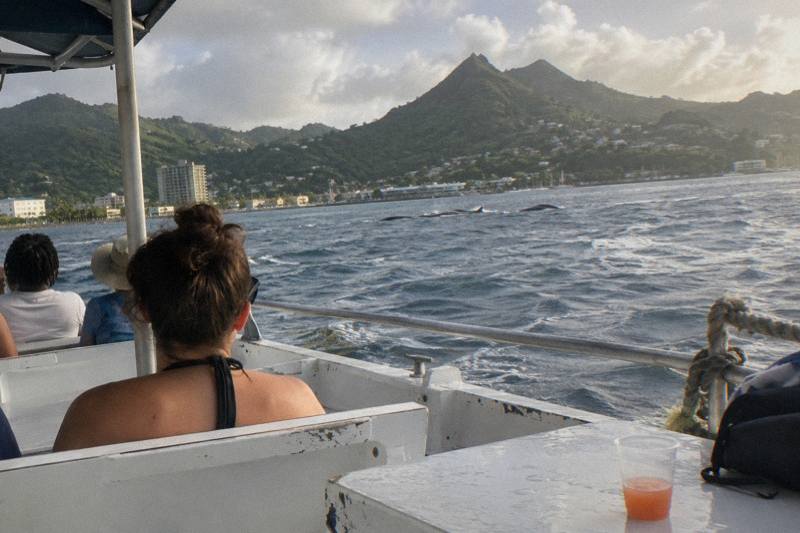
How Can You Tell A Pilot Whale From A False Killer Whale?
Pilot whales are the resident blackfish off Saint Lucia, and a guide identifies what is in front of the boat. What the official sources say, and why confident species IDs at sea are harder than they look.
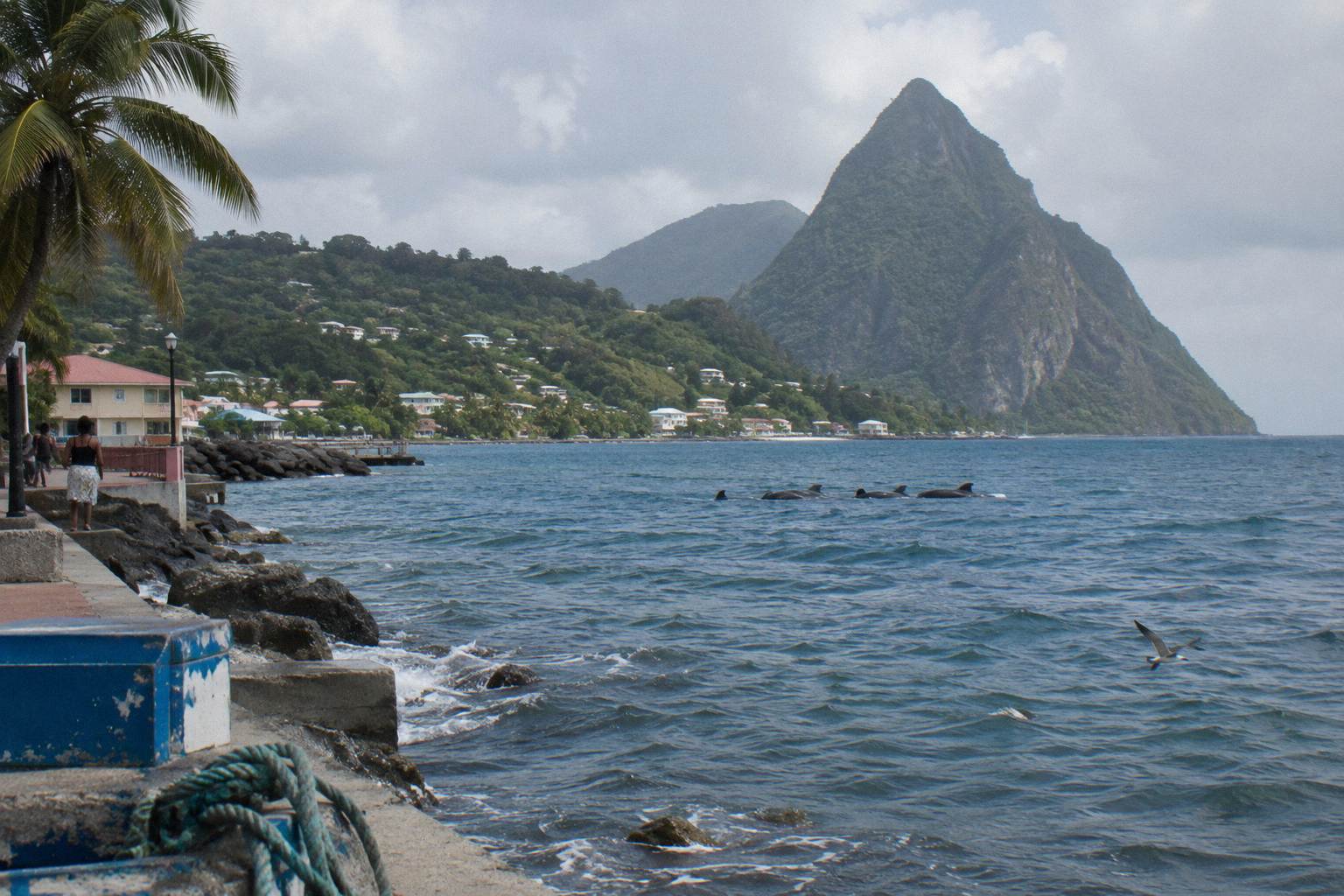
Honestly, at sea and without an expert beside you, the two are hard to separate, and the published sources for Saint Lucia describe only pilot whales as the resident animals in these waters. False killer whales are not listed among the likely sightings here, so the reliable identification comes from the guide on your boat, who names what is actually in front of you.
That answer frustrates people who want a checklist, but it is the truthful one, and it is worth understanding why. Both species are what researchers call blackfish: dark-bodied, medium-sized members of the dolphin family with a tall dorsal fin and no obvious markings. From a moving deck, at a distance, in the time it takes an animal to surface and dive, even experienced observers hedge. The Saint Lucia tourism board's own species pages do not include false killer whales among the animals you might see on a trip here, and this site does not invent field marks the sources do not supply.
What the official sources do say is specific and useful. Pilot whales off Saint Lucia live in resident pods that can sometimes be seen through the year, in close-knit family groups. That behavioural note, animals travelling together in coordinated clusters rather than alone or in loose scatter, is one of the things a guide uses on the day, alongside fin shape, body length, surfacing rhythm and the animals' reaction to the boat. A guest with a camera and ten seconds of viewing time rarely gathers all of that.
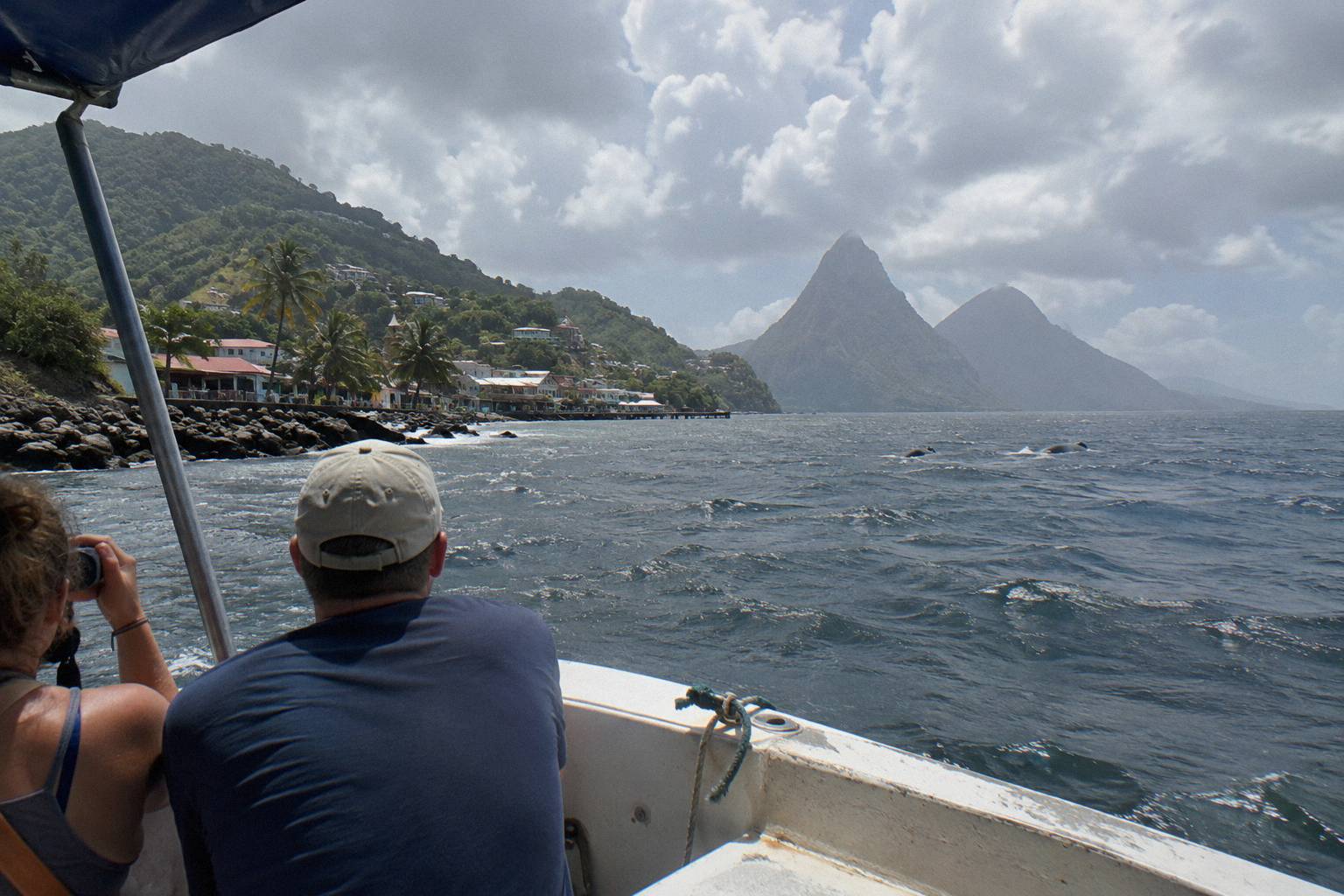
So the practical advice is twofold. First, treat pilot whales as the resident possibility in these waters and false killer whales as a name you might hear elsewhere in the Caribbean rather than an expected sighting here. Second, book a trip with a knowledgeable crew and ask them, out loud, what they are seeing and how they know. On either of the two trips covered on this site, that question is part of what you are paying for, and on both the crew's identification is far better evidence than any guess made afterwards from a photograph.
If you want to put yourself in front of the resident pods with a guide who can name them, these are the two trips that run from Castries:
The shared cruise and the private safari are the only whale and dolphin trips on this site's roster, and both put a guide between you and the identification problem.
What Do The Sources Say About Pilot Whales?
The Saint Lucia tourism board describes pilot whales as resident, with pods that can sometimes be seen throughout the year travelling in close-knit family groups. That is the full official picture: present all year, social, chance-based, and never guaranteed, with false killer whales absent from the list of likely sightings entirely.
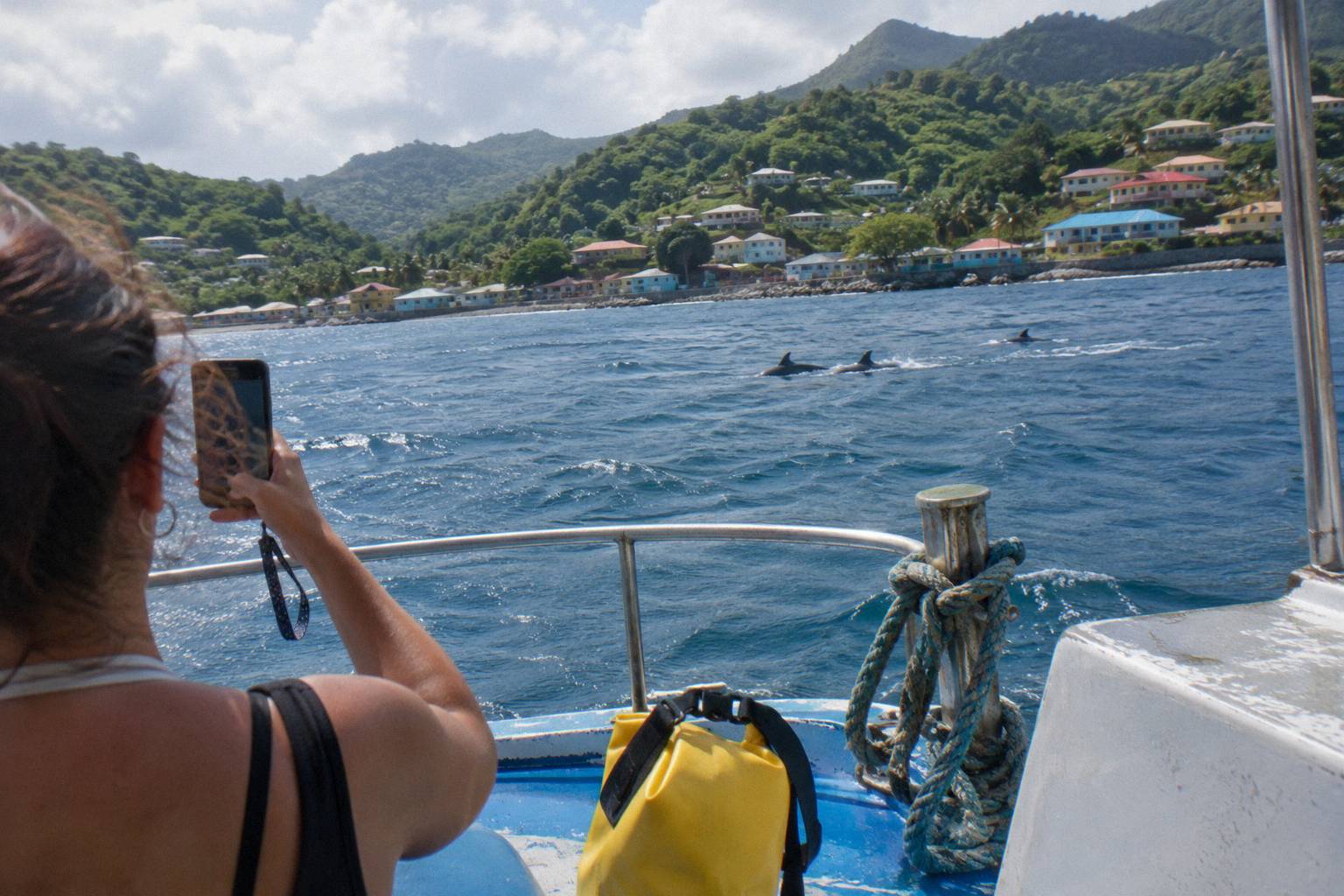
The tourism board's whale and dolphin watching page is the primary source for what lives in these waters, and its wording deserves quoting almost exactly, because the qualifiers are the truth. Pilot whales are resident, pods "can sometimes" be seen through the year, and they move in close family groups. Nothing in that sentence promises an encounter on any given morning. Sightings depend on weather, season and the animals' own movements, which is why no honest operator or publication prints a sighting rate for them.
Around the pilot whales, the same page places the year-round dolphins: spinner dolphins frequently sighted, pantropical spotted and bottlenose common, with Fraser's, Risso's and striped dolphins recorded less often. Sperm whales are described as "considered resident in the region and occasionally sighted in deeper waters", and orcas appear only as rare visitors. Humpbacks pass through between about February and April, the official migration window, with some operators reporting them from December. Notice what is missing: false killer whales, melon-headed whales and Bryde's whales are not on the list, which is why this site does not present them as animals you should expect off Saint Lucia.
| What the official sources list | Status off Saint Lucia |
|---|---|
| Pilot whales | Resident pods, sometimes seen year-round, close family groups |
| Spinner dolphins | Frequently sighted year-round |
| Pantropical spotted and bottlenose dolphins | Common |
| Fraser's, Risso's and striped dolphins | Recorded less often |
| Sperm whales | Resident in the region, occasionally sighted in deeper water |
| Humpback whales | Pass through about February to April |
| Orcas | Rare visitors only |
| False killer whales | Not listed among likely sightings |
One more line from the official material matters to anyone hoping for a deeper story. The sperm whales sighted here belong to the wider Eastern Caribbean population that the Dominica Sperm Whale Project studies, a research effort you can read about directly at the Dominica Sperm Whale Project. No Saint Lucia head count or population estimate exists in the sources, and any site that prints one is guessing.
The deeper background on the resident pods themselves is covered in the site's guide to pilot whales and false killer whales off Saint Lucia, which sits alongside a longer piece on the dolphin species around Saint Lucia and where to look. Both stick to the same official facts.
Why Do People Confuse Whale Species At Sea?
Because almost everything a land-based observer uses to identify an animal is missing at sea: size is hard to judge without a reference, colour flattens in bright light, and a whale shows perhaps a tenth of its body for a few seconds. Dark cetaceans converge on the same silhouette, so the brain fills the gap with whatever name it already knows.
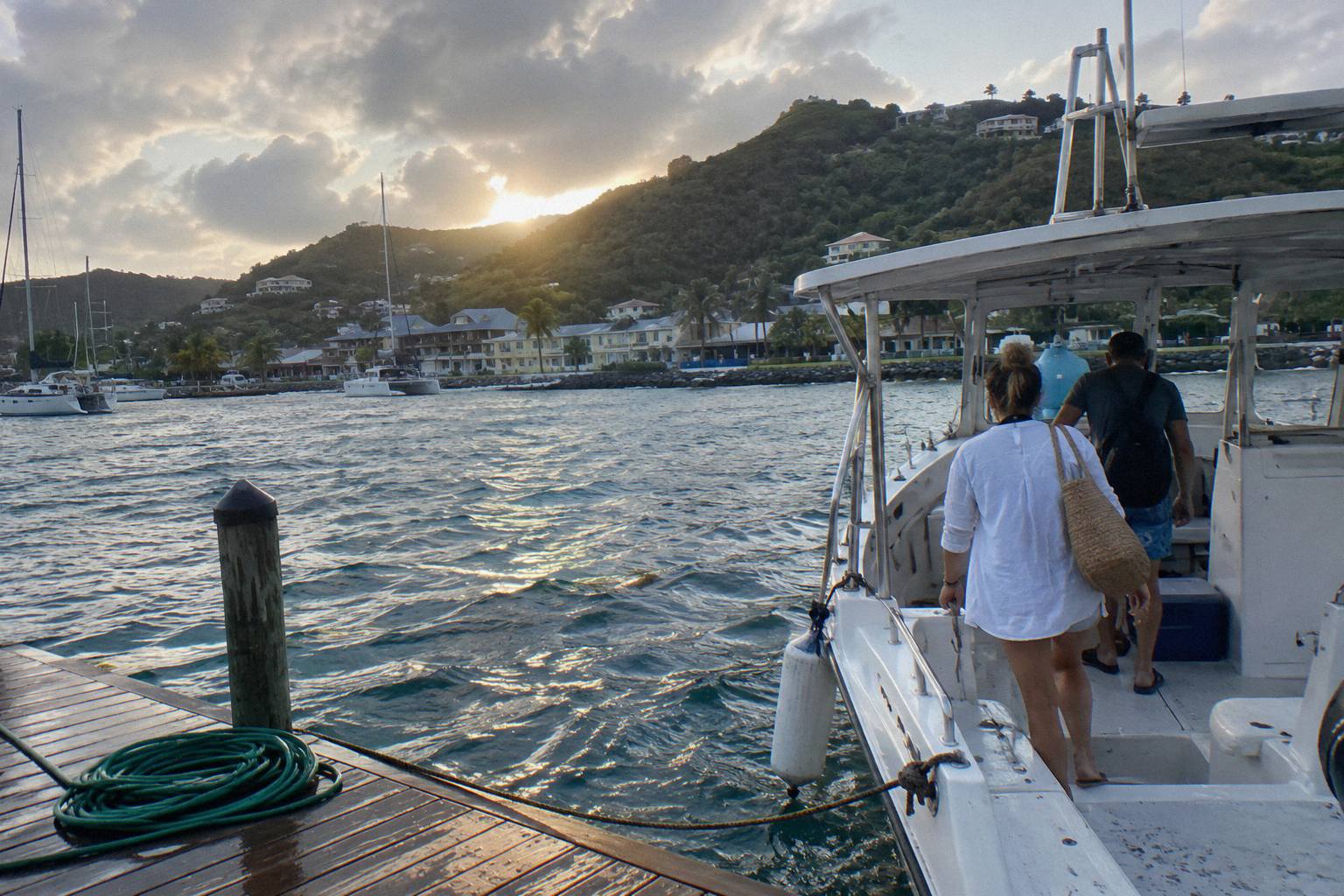
Consider what you actually see. A dark back, a dorsal fin, a burst of breath, maybe a tail stock as the animal dives. There is no scale in open water: a fin that looks enormous beside a dinghy looks modest beside a 60 ft boat, and the same animal can look like two different species depending on whether it surfaces towards you or away. Light does the rest. The tropical sun flattens colour contrasts, so the subtle shading that separates one blackfish from another in a photograph often simply is not visible from a deck.
Then there is expectation, which is the strongest distorting force of all. A passenger who read about false killer whales the night before will see false killer whales, because the mind matches what it sees to the category it holds. This is not a criticism of tourists; it is how human perception works under time pressure, and it is why logbooks from trained observers record uncertainty far more often than casual accounts do. Group behaviour helps, since pilot whales travel in coordinated family pods, but a scattering of animals at distance erases even that clue.
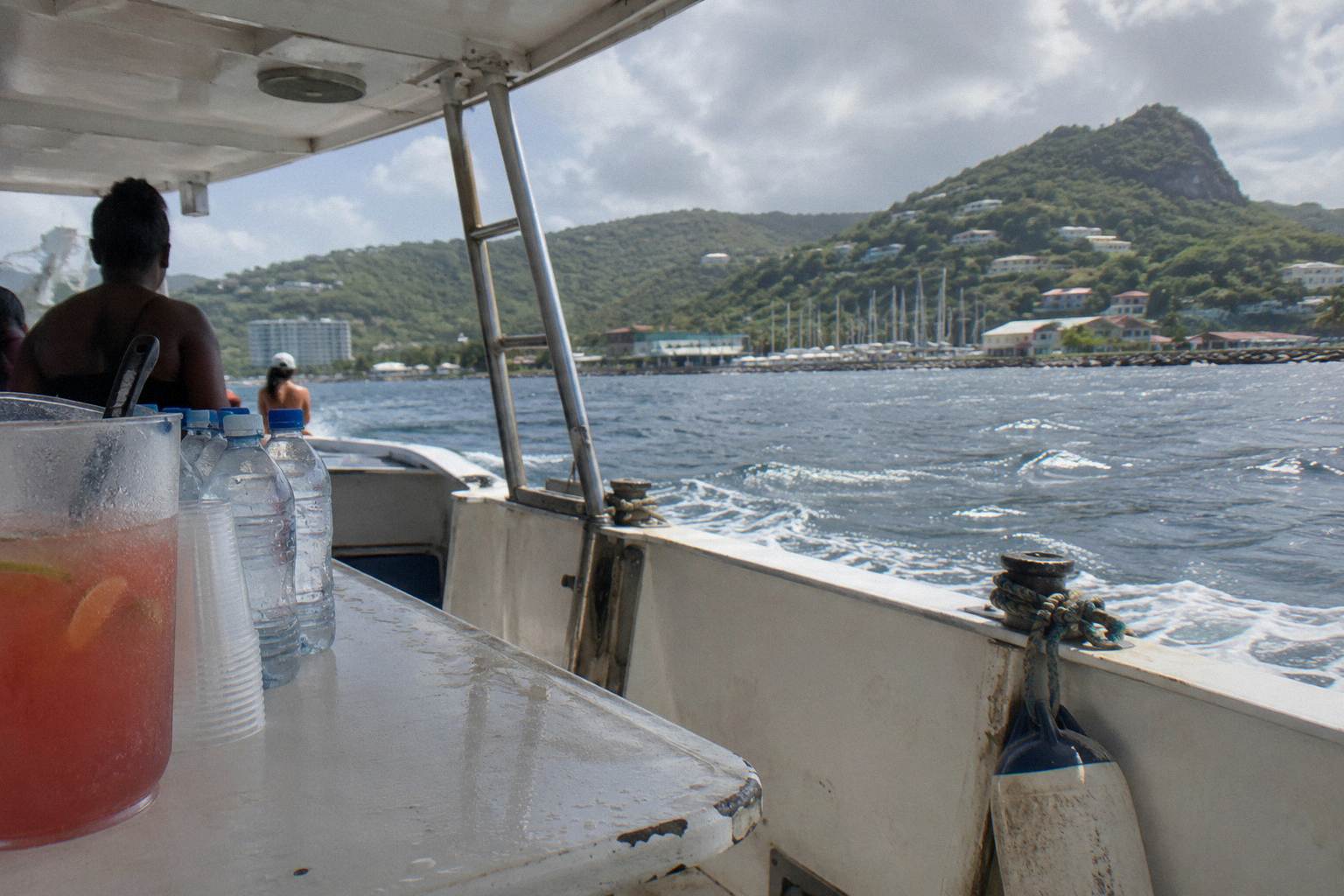
The conditions themselves add noise. Spray, glare, chop and the boat's own movement blur the view, and by the time a camera is raised the animal is usually under. Even the best photo from a moving deck can be ambiguous, which is exactly why researchers rely on dorsal fin shape catalogues and repeated encounters rather than single sightings. For a visitor, the practical takeaway is simple: hold your identification loosely, and weight the crew's call far above your own first instinct.
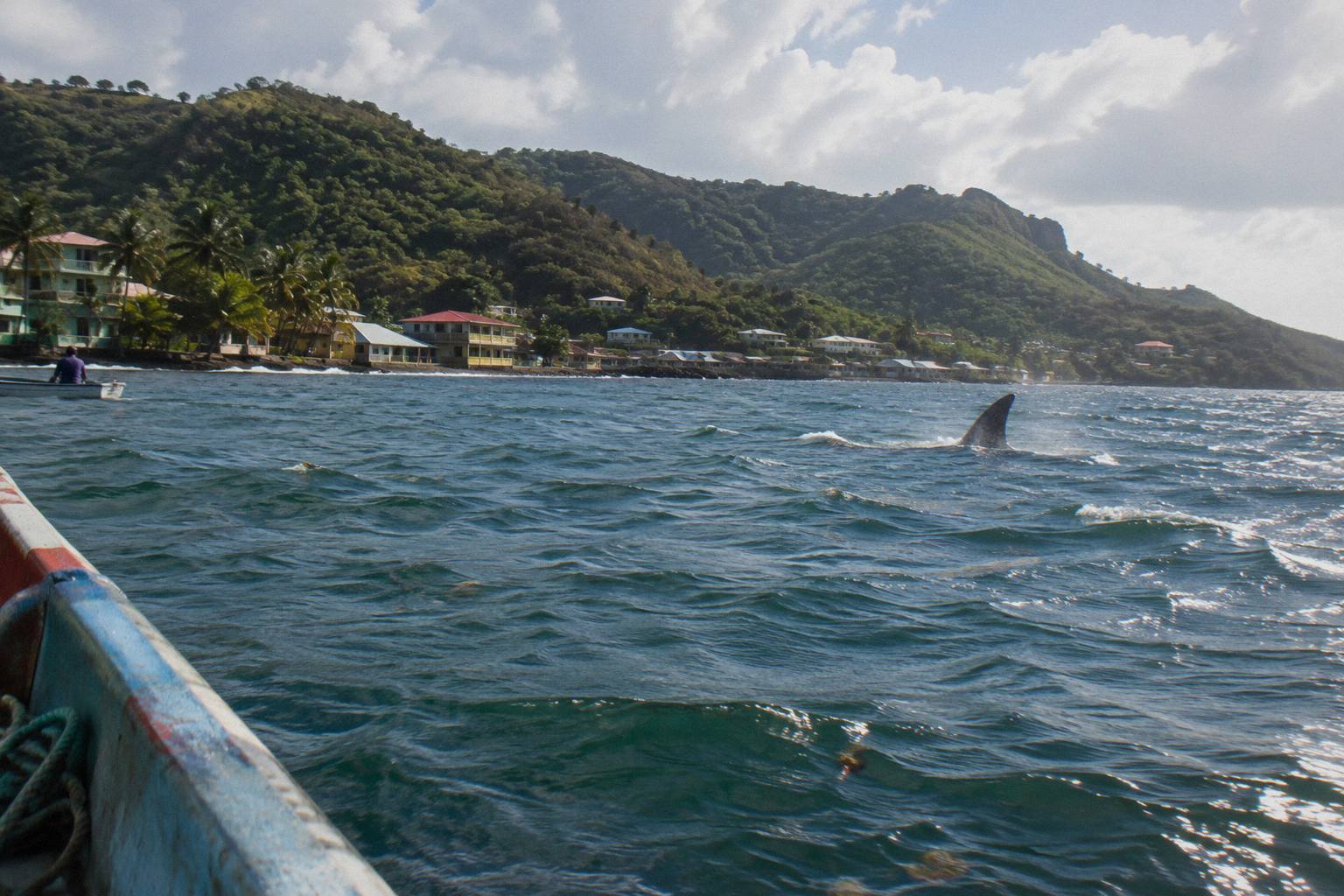
There is a small consolation in all this difficulty. The uncertainty is part of what makes a whale trip feel like wildlife watching rather than a zoo visit, and the moment a guide names the animals, the whole scene reorganises itself around that answer.
What Can A Guide Tell You On The Day?
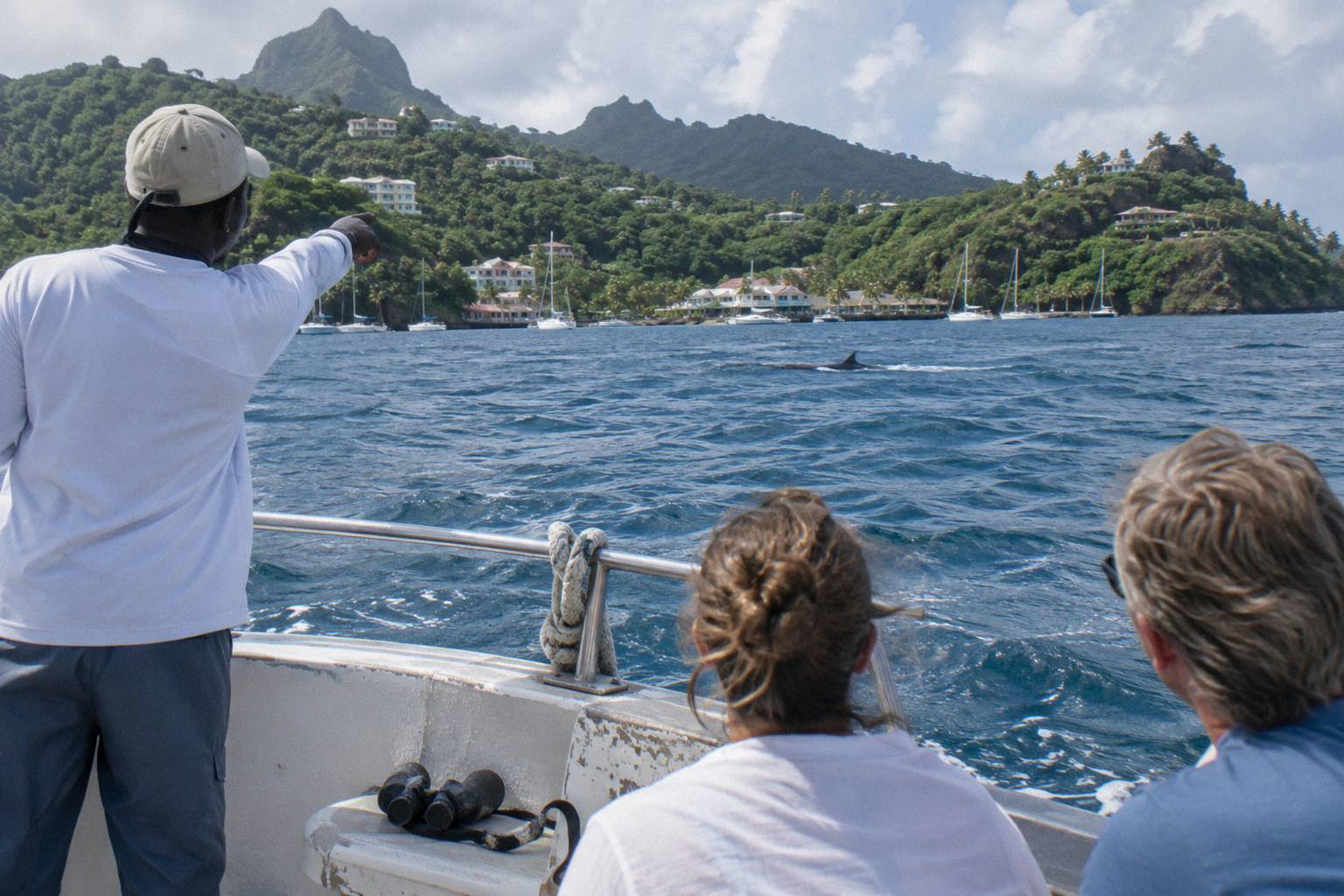
A guide can tell you what is actually in front of the boat, using fin shape, group structure, surfacing rhythm and behaviour read together in real time, and that call is more reliable than any after-the-fact identification from passenger photos. On both trips covered here, a named expert is aboard precisely for this job.
On the Shared Whale And Dolphin Watching Cruise, a local marine expert is part of the crew, listed among the inclusions alongside bottled water, soft drinks and rum punch. On the private safari, a professional guide is included the same way. This is not decorative. The identification question this article opened with is answered by exactly these people, on the day, with the animals visible, and the difference between their call and a passenger's guess is the difference between evidence and inference.
A guide's read combines several signals at once. Dorsal fin shape and position on the back, the angle and rhythm of surfacing, whether the animals travel in a tight coordinated cluster or spread loosely, how they respond to the boat's slow approach, and what the guide knows about which species have been in the area that week. No single signal is conclusive, and a good guide will say so, sometimes out loud: "dark animal, big fin, traveling in a group, likely pilot whales" is a more honest sentence than a confident species declaration. The tourism board's own trip-expectations article stresses that sightings depend on weather, season and the animals' movements, and guides frame their identifications with the same caution.
The shared cruise is the natural first choice for this kind of learning. It runs about 3.5 hours on a custom 60 ft boat from Vigie Marina in Castries Harbour, departs in the morning, and costs from US$65 per person. It is rated 4.5 from 200 reviews, and free cancellation applies up to 24 hours before departure. The species named for the trip include sperm whales, humpbacks in season, pilot whales, and spinner, spotted, Fraser's and common dolphins, with views of the west coast, and you can read the full shared whale and dolphin cruise details on its tour page. The price varies by date and the booking page confirms it.
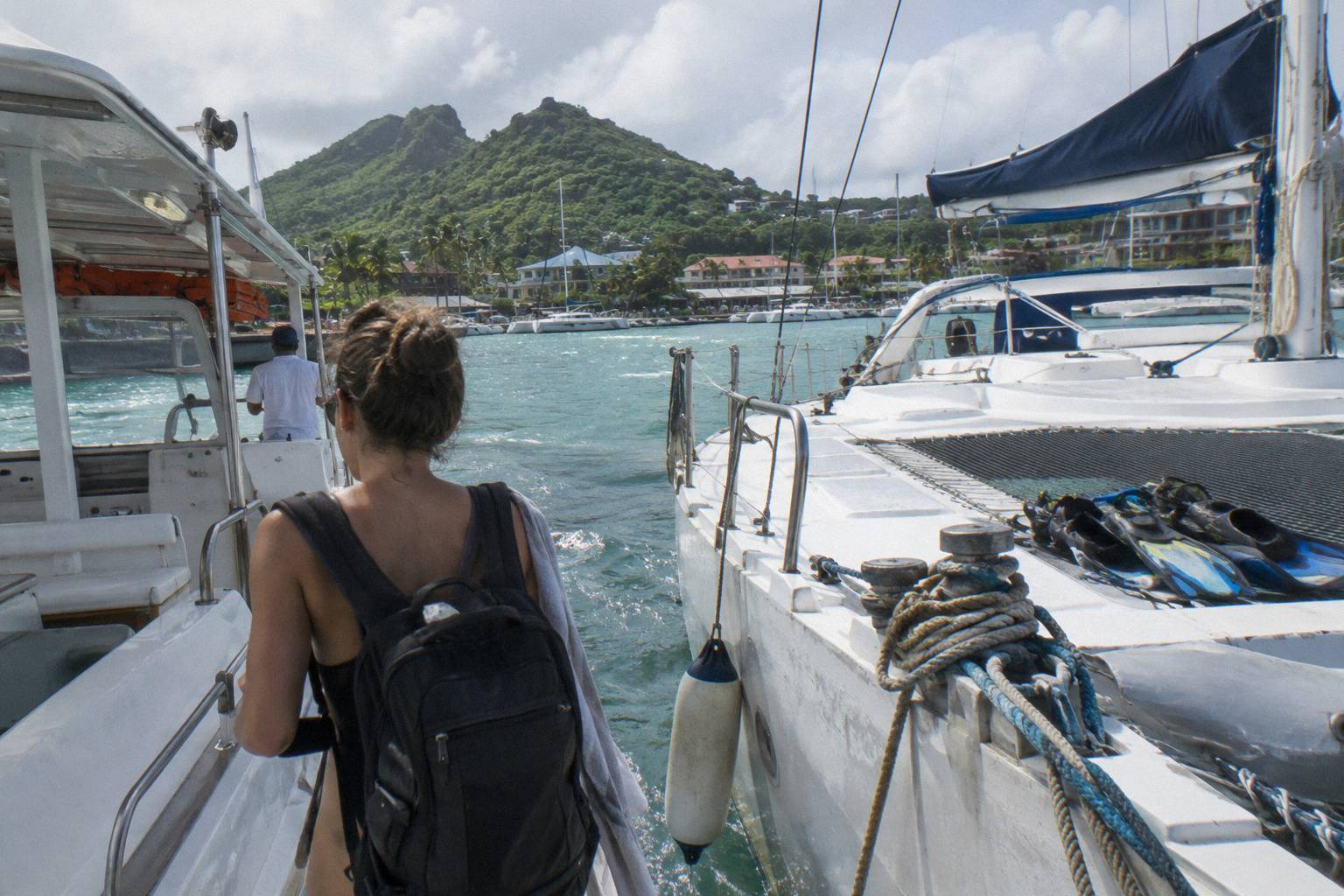
Asking questions is part of the deal. A guide who is asked "how do you know it's a pilot whale?" will usually walk through the reasoning, and that explanation is often the most memorable part of the trip, more so than the sighting itself.
Which Trip Gives More Guide Time?
The private safari gives a guide to your group alone for about 4 hours on a 50 ft catamaran taking up to 40 guests, while the shared cruise spreads one marine expert across a shared boat for about 3.5 hours. Neither publishes a per-passenger guide ratio, but on a private charter every question you ask is the priority.
This is one of the few real, factual differences between the two trips, and it matters most to people who care about the identification question rather than just the sighting. On a shared boat, the expert is answering questions from everyone, moving along the rail, calling out what is visible. That works well, and many passengers prefer the shared atmosphere. But if your interest is specific, say you want to understand exactly how the crew distinguishes a pilot whale from anything else dark with a fin, a private charter lets that conversation run as long as you like. Everything else covered here is indexed on St Lucia Whale Watching.
| Shared Whale And Dolphin Watching Cruise | Private Premium Whale And Dolphin Safari | |
|---|---|---|
| Format | Shared boat, price per person | Private to your group, price per boat |
| Length | About 3.5 hours | About 4 hours |
| Vessel | Custom 60 ft boat | 50 ft catamaran, up to 40 guests |
| Expert | Local marine expert aboard | Professional guide for your group |
| Included drinks and food | Bottled water, soft drinks, rum punch | Soft drinks, coffee, tea, water, light snacks, rum punch, local fruit |
| Departure point | Vigie Marina, Castries | Vigie Marina, Castries |
| Rating | 4.5 from 200 reviews | 4.5 from 75 reviews |
| Price basis | From US$65 per person | From US$2,550.65 per boat |
| Cancellation | Free up to 24 hours before | Free up to 24 hours before, and for bad weather |
| Confirmation | Instant | Not instant, the operator confirms |
The private safari's from-price is US$2,550.65 per boat, never per person. For illustration, not a quote: US$2,550.65 shared by 4 guests is about US$637.66 each; by 6 about US$425.11; by 8 about US$318.83; by 12 about US$212.55. The shared cruise at US$65 per person is US$130 for 2, US$260 for 4, US$390 for 6. Both prices vary by date and group, and the booking page confirms the live figure. The operator of the private safari, Hackshaw's Boat Charters, says it has run since 1953 and is World Cetacean Alliance certified, statements worth weighing alongside the numbers.
The safari also includes cruise ship pier pick-up and drop-off, which the shared cruise does not, and its start time is arranged with the operator rather than printed in advance. If you are weighing the two against each other in full, the site's comparison of a shared whale cruise versus a private charter in Saint Lucia works through the decision in detail. You can also check availability if a dedicated guide for your group is the part that appeals.
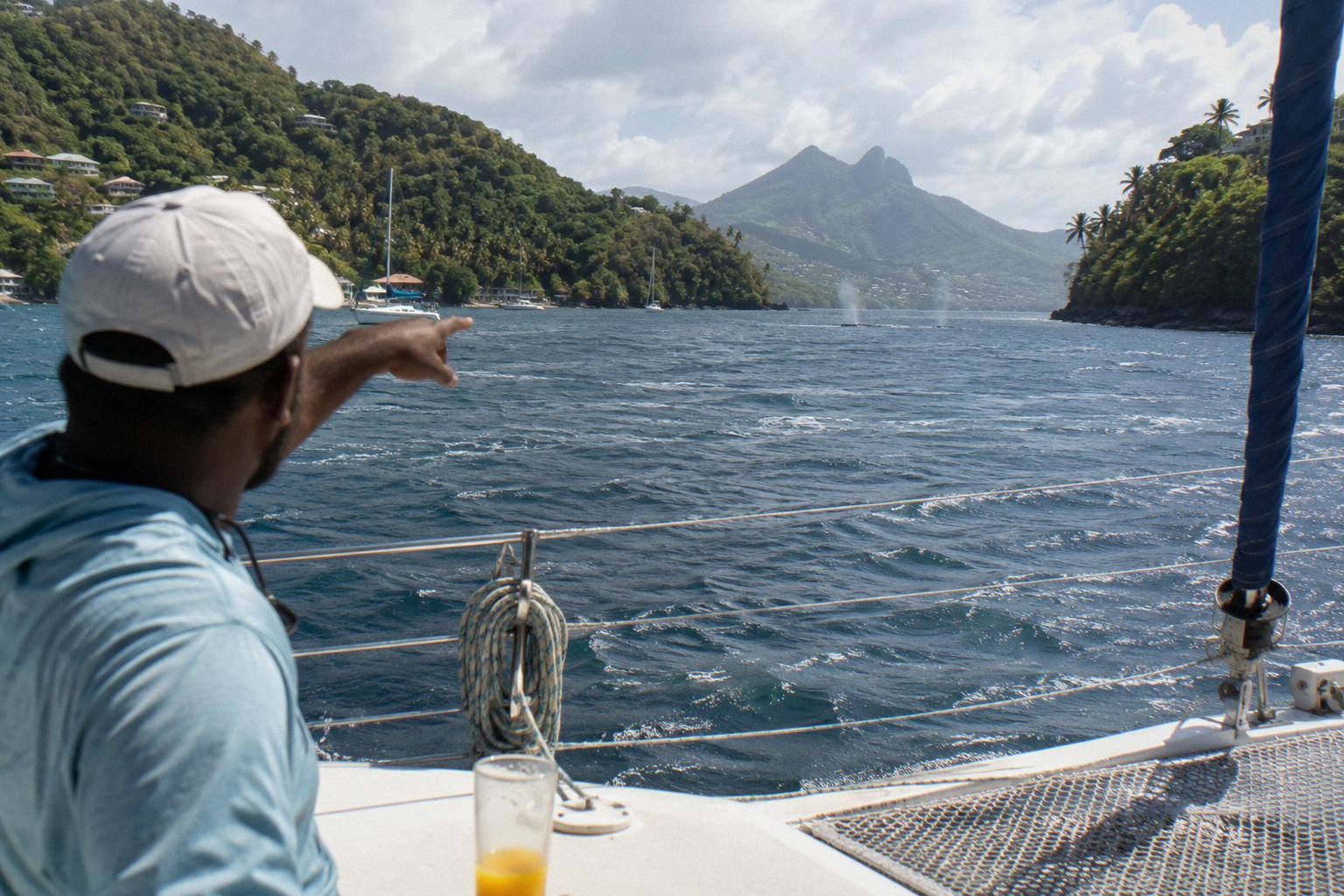
Whichever you choose, the guide is the identifier. The boat, the price and the snacks change how comfortable the morning is, but the person naming the animals is the same kind of asset on both decks.
What Should You Ask The Operator?
Ask what species have been seen this week, who names the animals on board and how, what happens to the trip in bad weather, and what is genuinely included, because the published listings answer some of these and leave others to a quick question before you book. The two operators' policies overlap but differ in ways worth knowing in advance.
The cancellation rules are the clearest example. Both trips cancel free up to 24 hours before departure. The private safari is additionally cancelled free for bad weather, and the shared cruise's operator says that if the captain cancels for unsafe weather there is an alternative date or a refund. Confirmation differs too: the shared cruise confirms instantly, while the private safari does not, because the operator confirms the arrangement directly. If you are booking close to your travel date, that difference is worth a question.
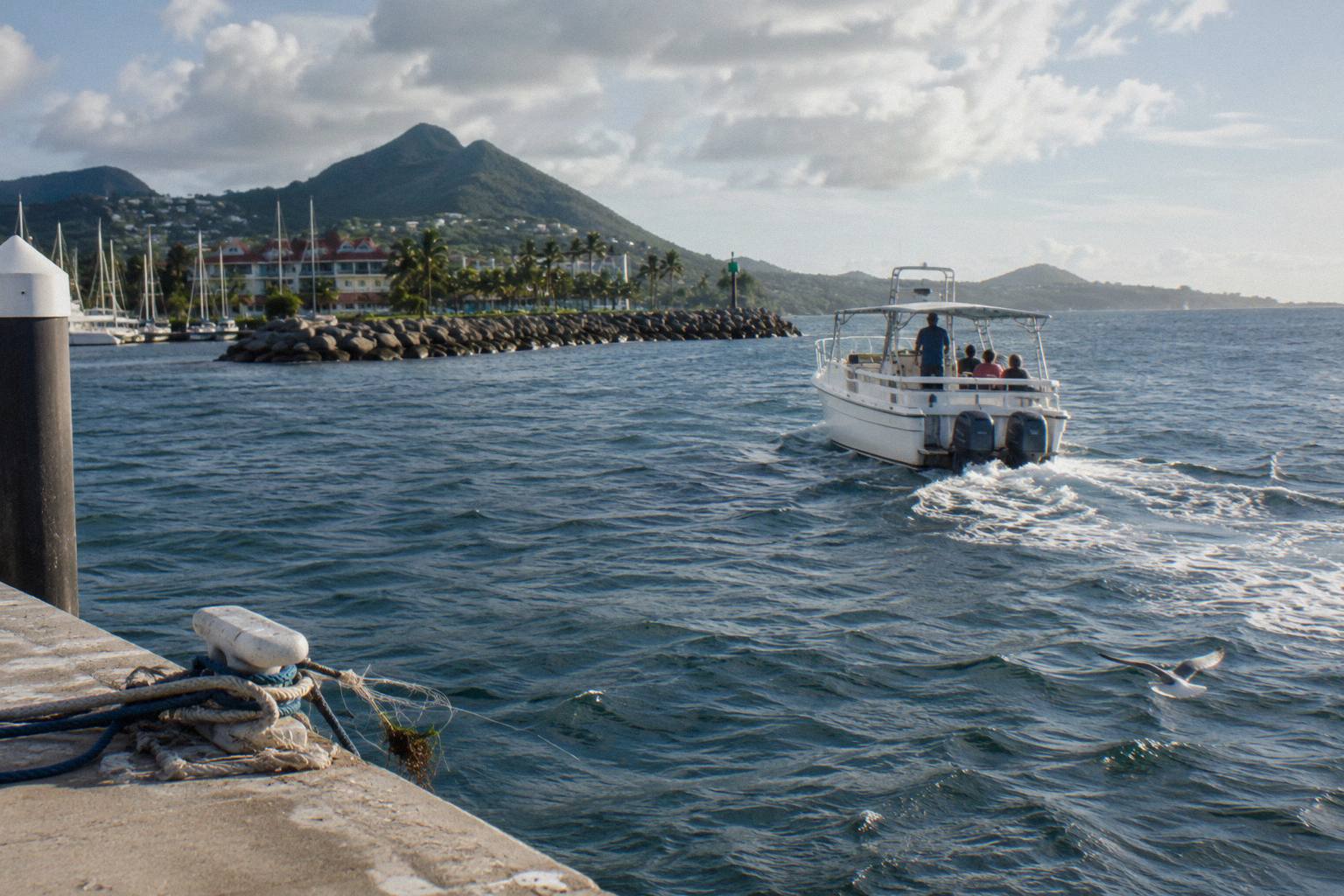
Then ask about the identification itself. Which species have been around lately is a fair question, and so is "who will be calling out what we see?" On the shared cruise, the listing names a local marine expert aboard; on the private safari, a guide. Group size on the shared cruise is not published, so if a smaller deck matters to you, ask when booking rather than assuming. The same goes for children: no minimum age is printed for the shared cruise, so say that children travel with an adult and ask the operator directly about ages when booking.
A few practical questions round it out. Neither trip includes hotel pick-up, and the private safari lists hotel pick-up and drop-off explicitly as not included while including cruise ship pier transfers, so ask about getting to Vigie Marina in Castries if you are unsure. Gratuities are extra on both. If anyone in your party is prone to motion sickness, ask about boat size, which is the official tourism board's own advice. And if you want the seasonal background before you ask anything, the site's month-by-month guide to the best time to see whales in Saint Lucia sets out the February to April humpback window and the calmer December to May seas.
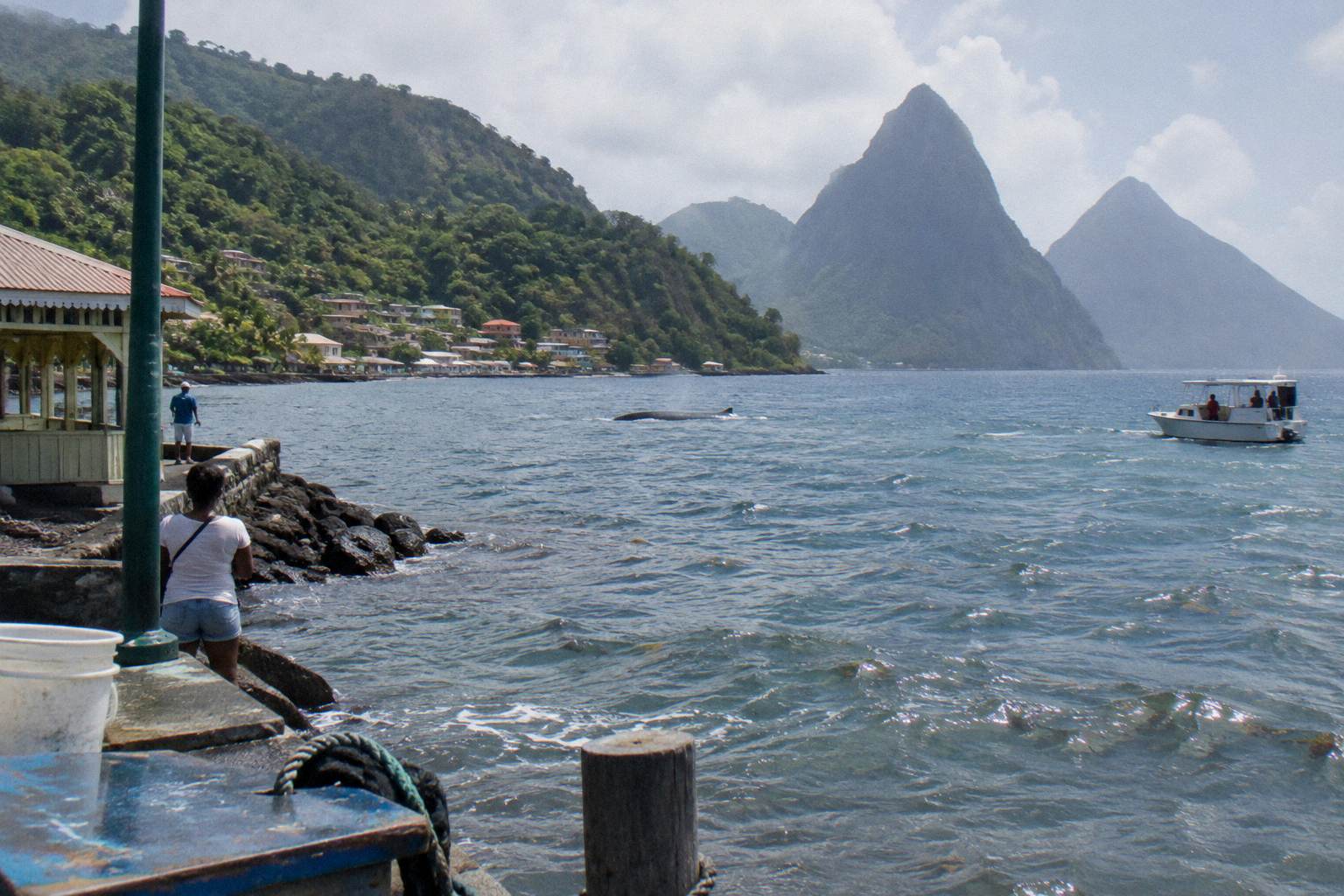
None of these questions is unreasonable, and none should take more than a minute to answer. Operators who run year-round in these waters have heard all of them before.
What Else Might Be Mistaken For Pilot Whales?
Almost anything dark with a dorsal fin: sperm whales at a glance, orcas on a bad view, and the larger dolphins, especially bottlenose in low light. The official sources give each of these its own status off Saint Lucia, and the guide's real-time read is what separates them on the water.
Sperm whales are the classic mix-up from a distance, because a big dark body and a visible dorsal area can read as a blackfish before the animal shows its distinctive left-angled blow or its enormous square head. The tourism board calls them "considered resident in the region and occasionally sighted in deeper waters", so an encounter is possible but not the everyday event that the dolphin species are. The site's longer treatment of sperm whales off Saint Lucia covers what is actually known about them.
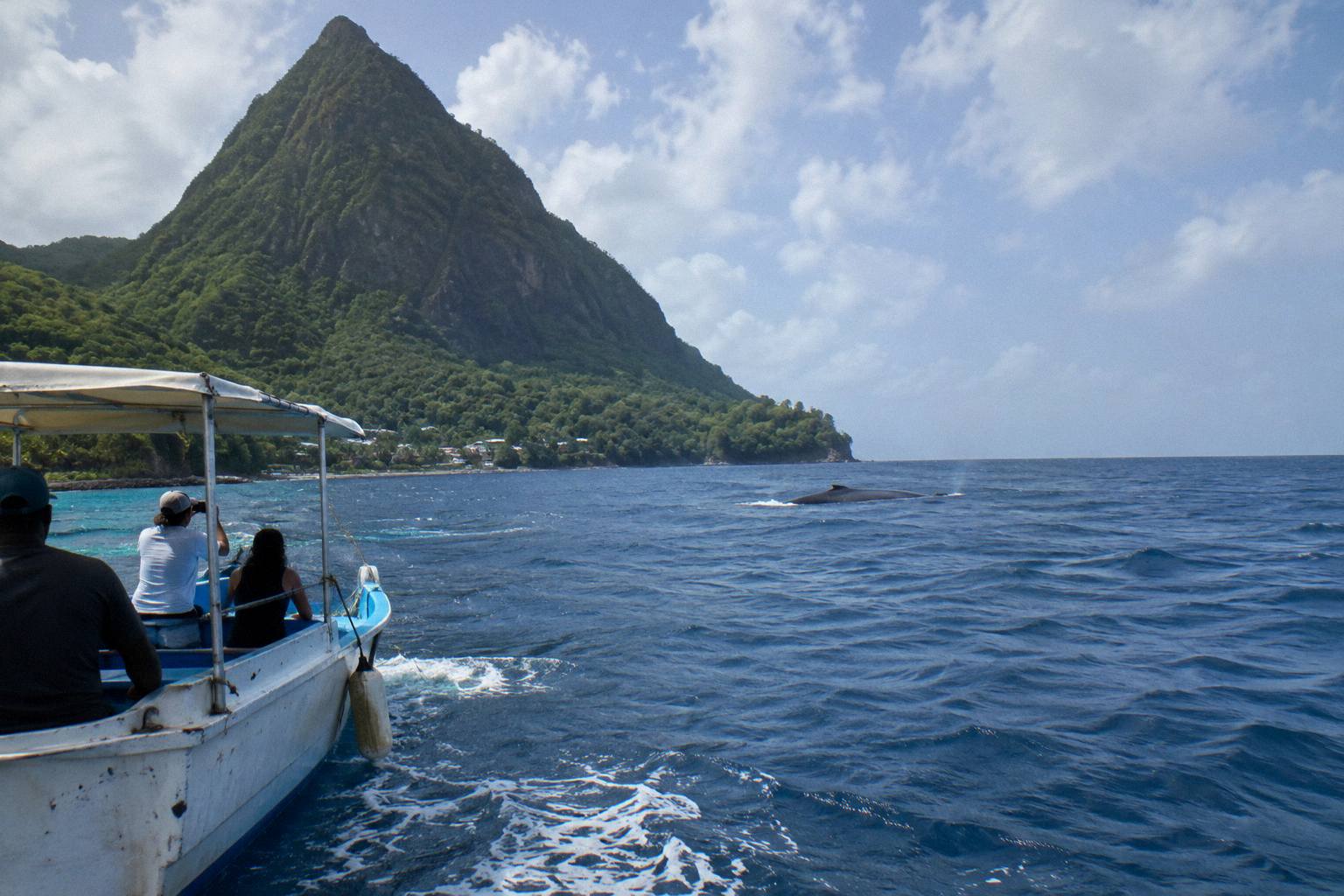
Orcas are the reverse case: unmistakable when seen well, and vanishingly rare here. The sources list them as rare visitors only, so an orca report off Saint Lucia is an event, not an expectation. The larger dolphins are the most frequent impostors. Bottlenose dolphins are common in these waters and, seen briefly and alone, a big individual can suggest something larger. Spinner and pantropical spotted dolphins usually give themselves away by travelling in energetic groups and, in the spinners' case, by leaping. Fraser's dolphins are recorded less often and are stockier and darker than most, which earns them a place on the confusion list.
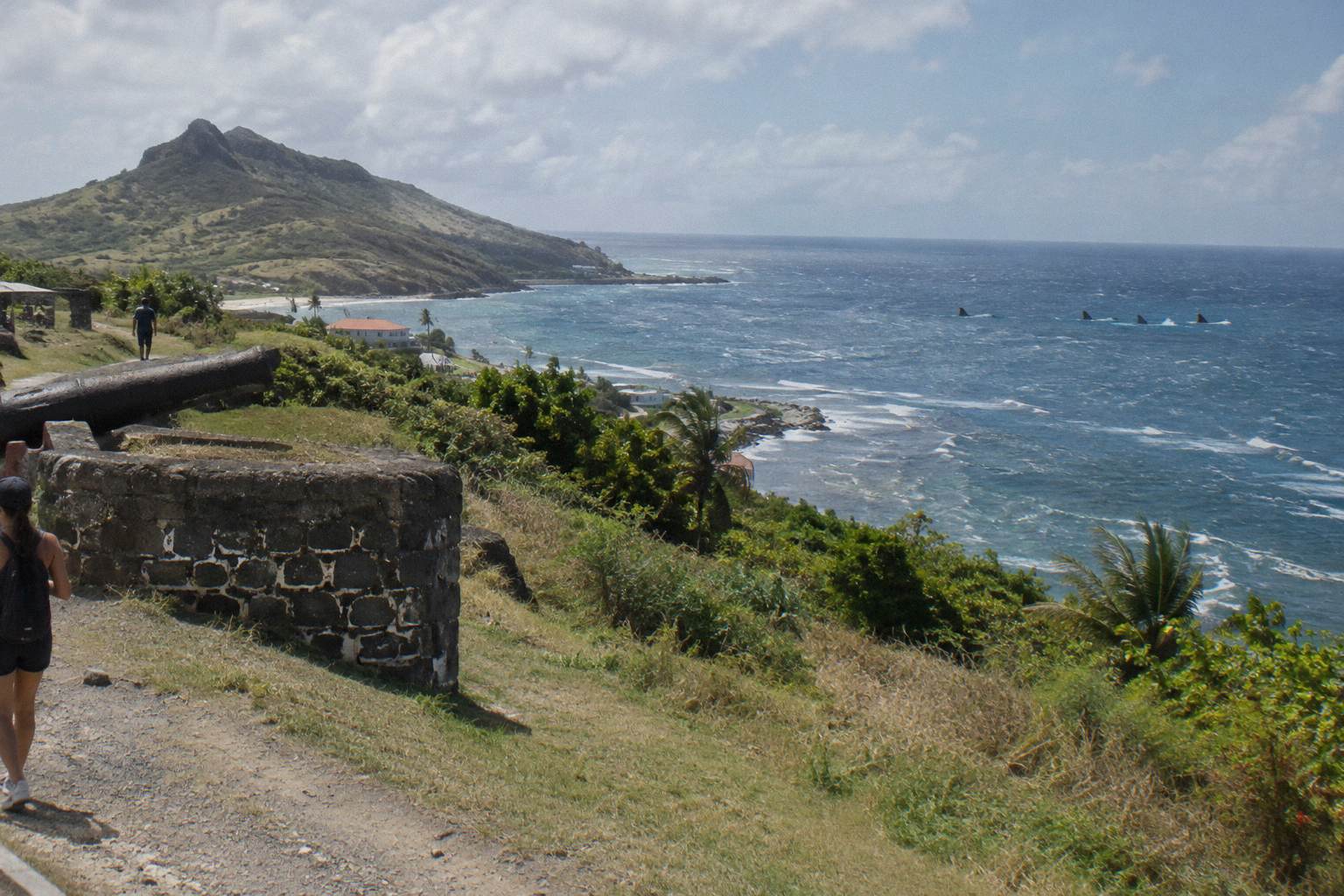
The pattern in every one of these cases is the same. The animal on the surface for a few seconds supports several names; the guide watching the whole sequence, approach, group shape, surfacing rhythm, supports one. That is why the official whale and dolphin watching guidance from the tourism board centres on licensed operators following regulated distance guidelines, limiting time near the animals and monitoring sea conditions: the responsible trip is also the one where the crew is close enough to the process to identify it.
Common Mistakes When Naming Whales
The recurring errors are naming from a single photo, trusting an app over the guide, treating rare species as expected, and repeating a confident label heard on another boat. Each mistake feels like certainty, and each is built on thinner evidence than the person making it realises.
Naming from one photo is the most common. A distant dark back with a fin, shot from a moving deck, honestly supports two or three identifications, and the photo's apparent authority makes people forget that. Apps compound the problem: image recognition trained on clear, close, research-grade photographs struggles with the blurry realities of a tourist snapshot, and its confident output gets repeated as fact. The guide's hedged verbal call, "likely pilot whales, travelling as a family group", is less satisfying and more accurate.
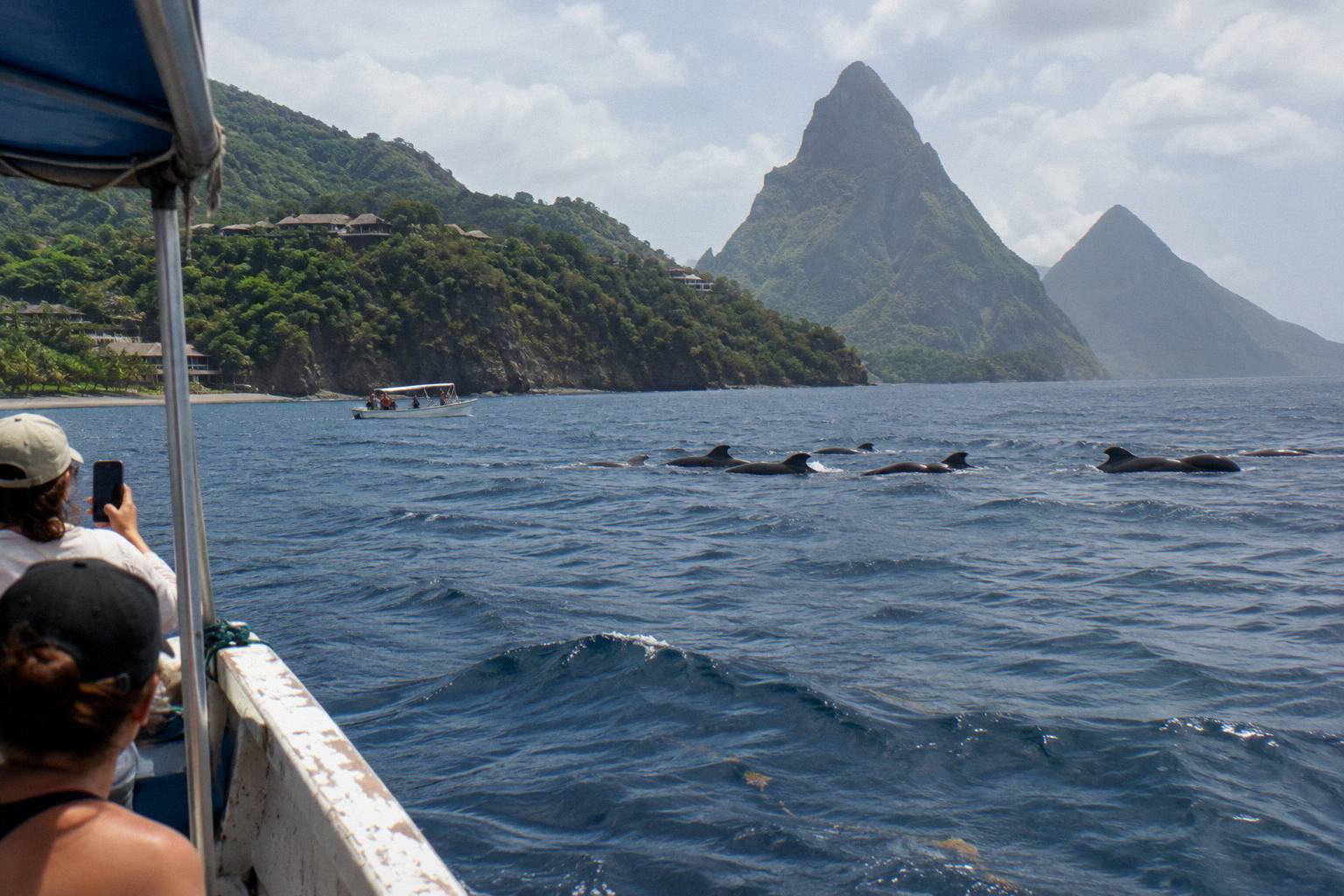
Treating rare species as expected is the second error, and false killer whales sit right at the centre of it in the Caribbean. Because the name circulates in regional whale literature, visitors arrive expecting it, then see it. The Saint Lucia sources do not list false killer whales among the likely sightings, and this site will not stretch the facts to make a neater story. The same caution applies to orcas: rare visitors only, in the official wording, not part of anyone's realistic morning. Repeating another boat's label is the third error, since a call made in different conditions, at a different distance, transfers badly.
The last mistake is subtler: treating a sighting as owed. No sighting percentage is printed anywhere in the official material, because operator claims conflict and none can be verified. Every encounter is a chance, dependent on weather, season and the animals' movements. The honest mindset, and the one that makes the trip better, is to go out for the morning with a crew who can name what appears, and to let the identification be their answer, given to you on the water.
Common Questions About Telling Pilot Whales From False Killer Whales
How Can You Tell A Pilot Whale From A False Killer Whale?
At sea, only reliably with an expert's eye. The official Saint Lucia sources describe pilot whales as the resident animals in these waters, travelling in close family pods through the year, and do not list false killer whales among the likely sightings. The guide on your boat identifies what is actually in front of you, using fin shape, group structure and surfacing behaviour together.
Are False Killer Whales Common Off Saint Lucia?
No. They are not listed among the likely sightings in the official tourism board material for Saint Lucia, which is why this site does not present them as an expected encounter. Pilot whales, by contrast, are described as resident, with pods sometimes seen year-round.
Can The Guide On The Boat Identify The Species For Me?
Yes, and that is a large part of what you are booking. The shared cruise includes a local marine expert aboard and the private safari includes a professional guide, and their real-time identification, based on several signals read together, is far more reliable than an after-the-fact guess from a passenger photo.
What Else Could I Mistake For A Pilot Whale?
Sperm whales at a distance, since a big dark body reads as a blackfish before the head or blow is visible; orcas, which are rare visitors only; and the larger dolphins such as bottlenose, which are common here. A guide separates these using the whole sequence of behaviour, not a single glance.
Which Trip Is Better If I Care About The Identification?
Both carry an expert. The shared cruise runs about 3.5 hours with a marine expert aboard from US$65 per person; the private safari gives a guide to your group alone for about 4 hours, from US$2,550.65 per boat for up to 40 guests. If sustained questions about what you are seeing matter most, the private format serves that best.
Are Pilot Whale Sightings Guaranteed On These Trips?
No sighting is guaranteed on any trip. Sightings depend on weather, season and the animals' movements, and no honest source prints a sighting rate. Dolphins and pilot whales can be seen year-round off Saint Lucia, but every encounter is a chance, never a promise.