Dolphin Watching In Saint Lucia: Which Species You Will See
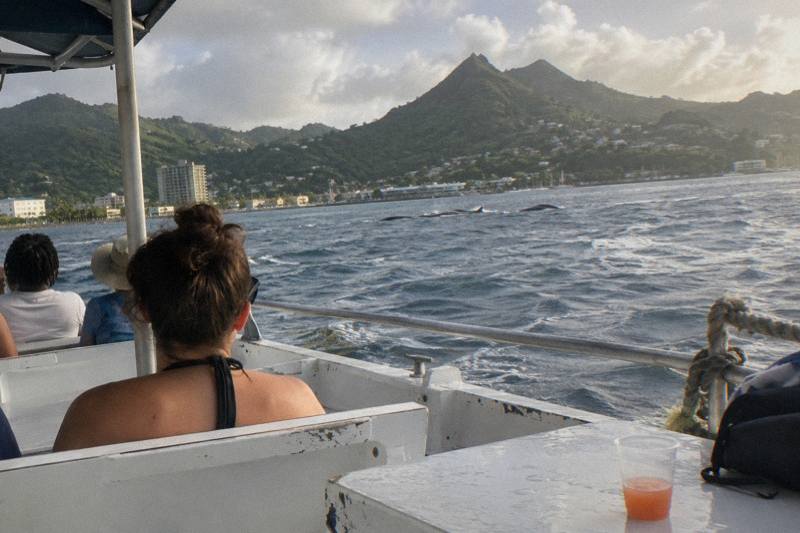
Saint Lucia's dolphin watching is unusually close to shore: deep water hugs the west coast, so spinner, spotted and bottlenose dolphins are found minutes from the marina. Here is which species the sources name, where the boats look, and what the two Castries trips actually do.
Short answer
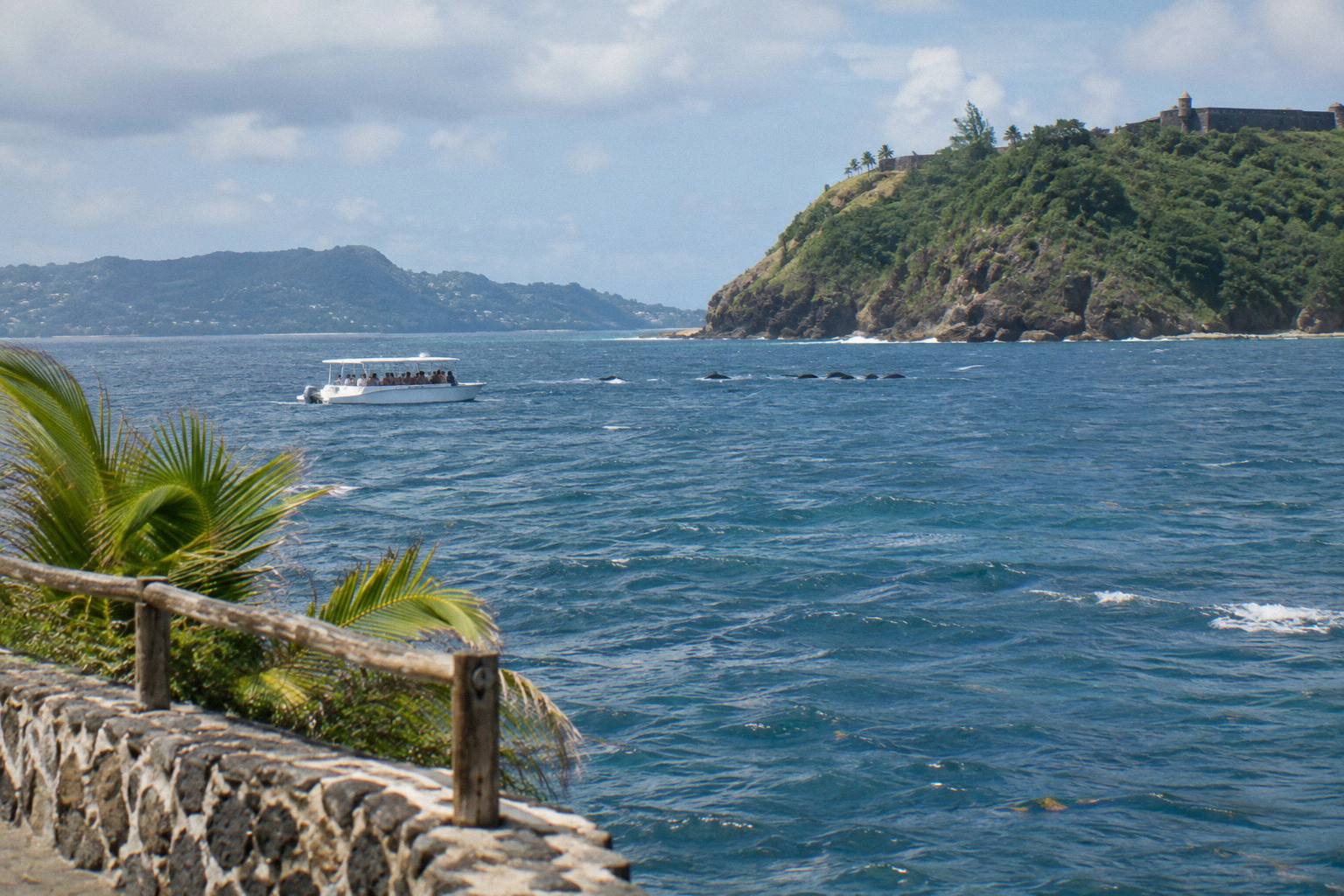
Three dolphin species are commonly seen off Saint Lucia: spinner dolphins are frequently sighted year-round, with pantropical spotted and bottlenose dolphins also common; Fraser's, Risso's and striped dolphins are recorded less often. Dolphins can be seen all year. Boats depart Vigie Marina in Castries and follow the Caribbean coast, where deep water lies close to shore.
Which Dolphins Live Off Saint Lucia?
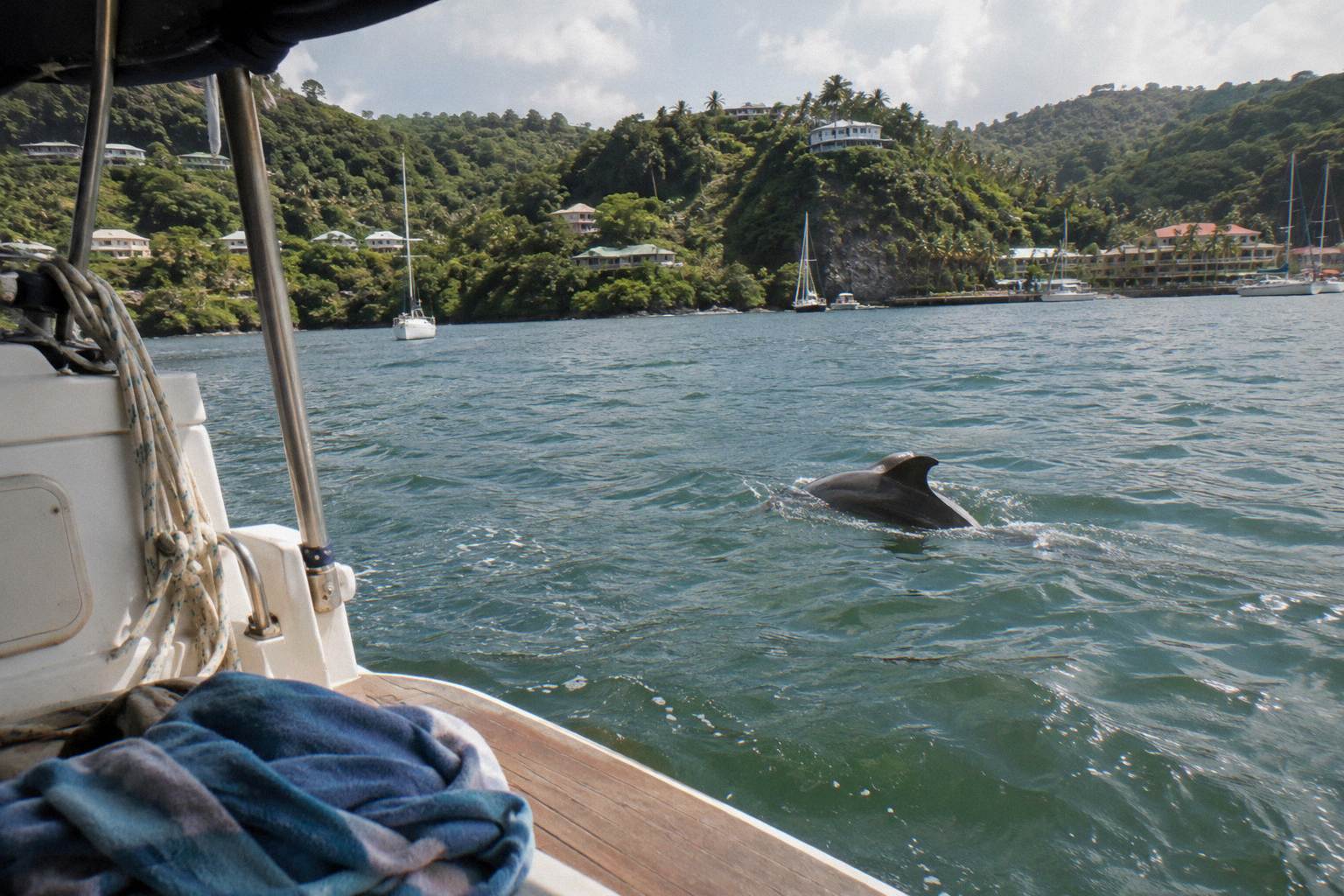
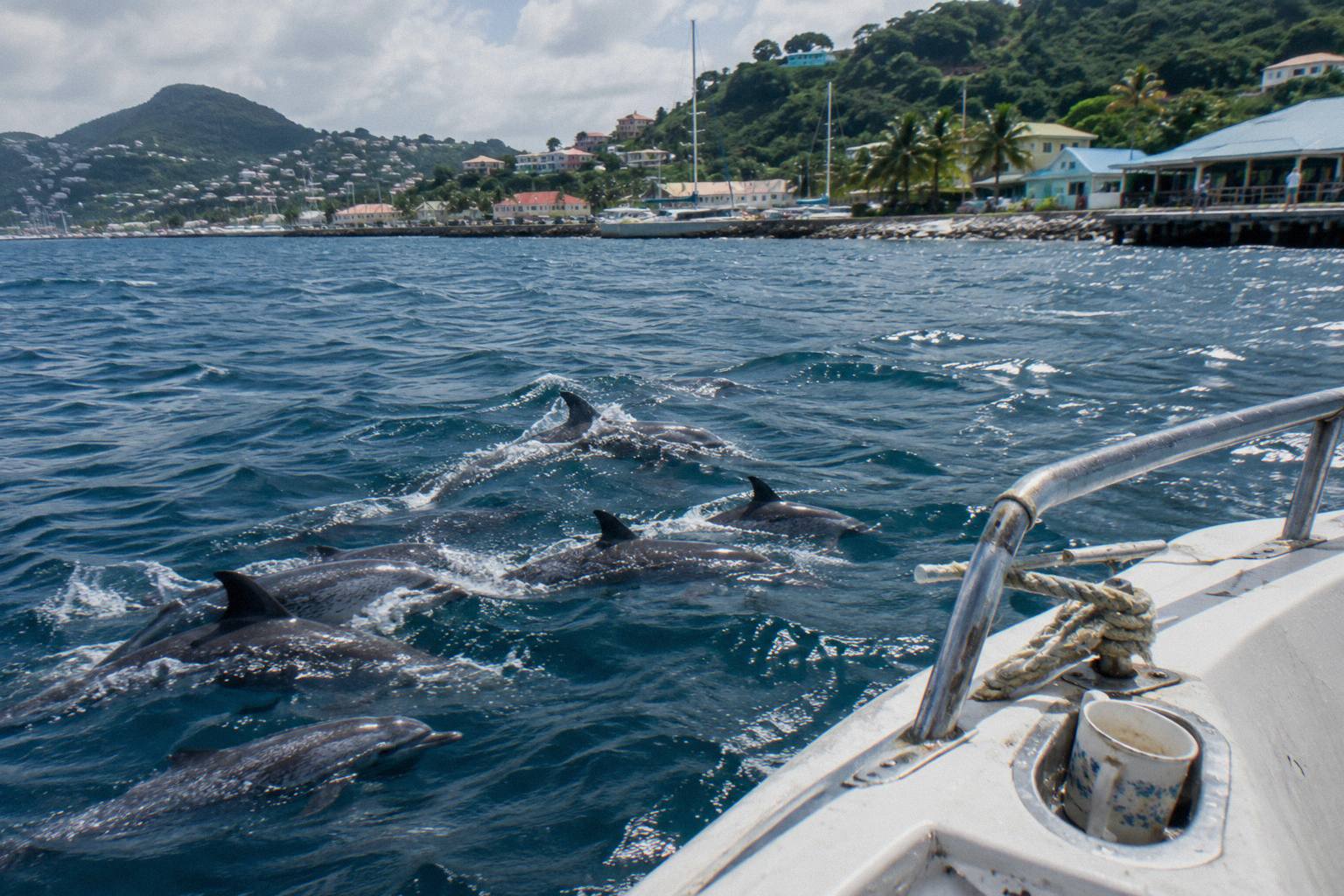
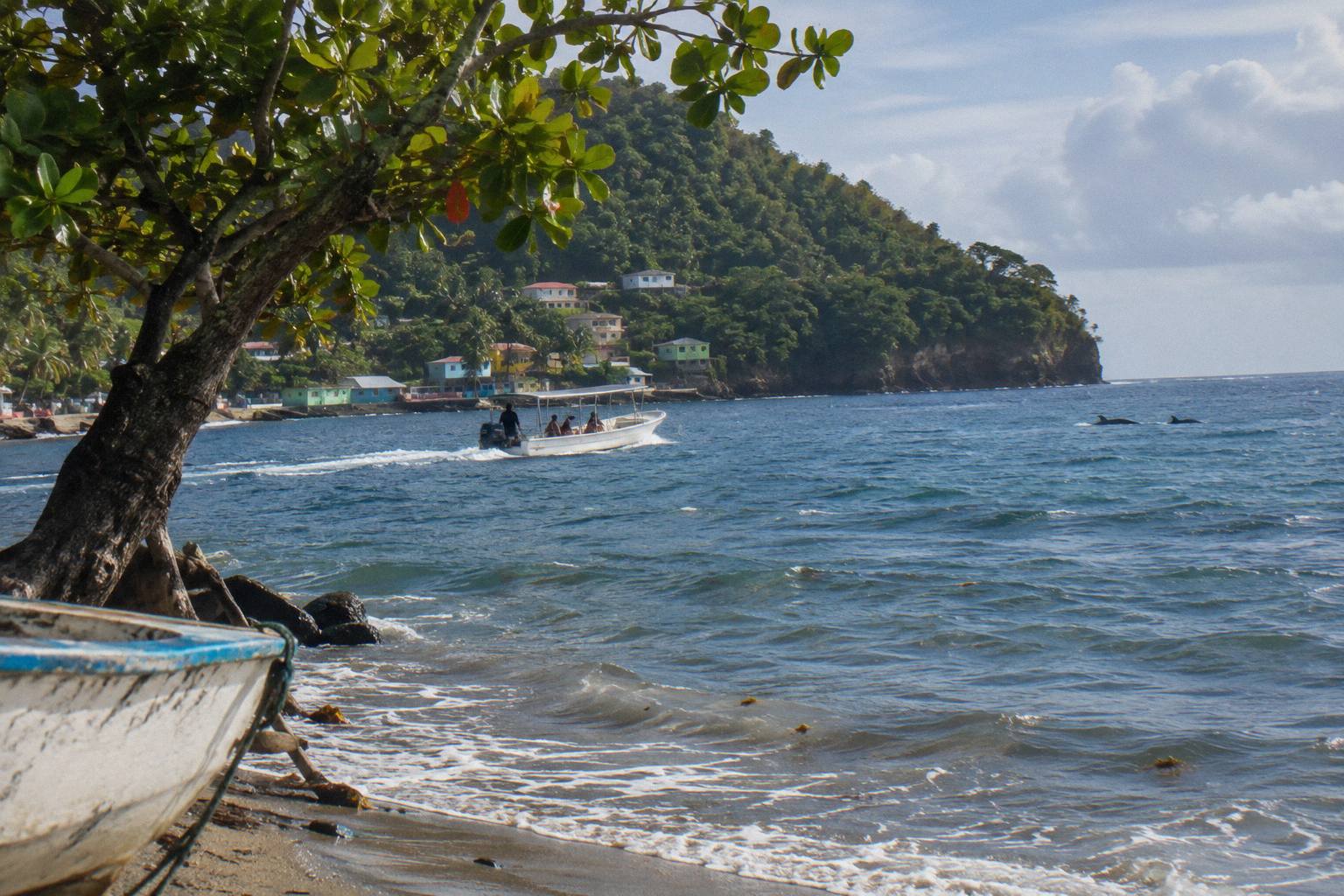
Three dolphin species dominate the sightings off Saint Lucia: the official tourism board describes spinner dolphins as frequently sighted year-round, with pantropical spotted and bottlenose dolphins also common. Fraser's, Risso's and striped dolphins are recorded less often, so a trip that meets any of them is a genuinely lucky day rather than a typical one.
That official wording matters, because it is a statement of likelihood, not a promise. The tourism board's whale and dolphin watching page, which is the primary source for everything on species in this guide, frames every encounter as a chance shaped by weather, season and the animals' own movements. Spinner dolphins lead the list because they are seen most often, in all months of the year. The rarer records, Fraser's, Risso's and striped dolphins, exist in the islands' waters but appear irregularly enough that no operator can build a trip around them.
The booking page for the shared cruise names its own species list: sperm whales, humpbacks in season, pilot whales, and spinner, spotted, Fraser's and common dolphins. That list is the operator's own claim about what the trip looks for, and it lines up well with the official record, with one wording difference worth noticing. The tourism board says "bottlenose" where the operator's list says "common dolphins"; both are ordinary ways of grouping the animals most often met, and the guide aboard identifies what is actually in front of the boat.
A practical note on reading any species list, including the one below: it is a menu of possibilities, not a checklist the boat works through in order. A given morning might deliver one species, three, or a calm sea and good conversation, and the honest operators say so plainly. What the list does tell you is which names are worth knowing before you board, so that when the call goes up you have some idea of what you are looking at.
Here is how the species stack up, using only the official facts:
| Species | How often it is seen off Saint Lucia | Notes from the official record |
|---|---|---|
| Spinner dolphin | Frequently sighted year-round | The most reliable dolphin encounter |
| Pantropical spotted dolphin | Common | Prefers warm offshore water, especially along the west coast |
| Bottlenose dolphin | Common | Named by the tourism board among the regulars |
| Fraser's dolphin | Recorded less often | Irregular, never promised |
| Risso's dolphin | Recorded less often | Irregular, never promised |
| Striped dolphin | Recorded less often | Irregular, never promised |
| Pilot whale | Resident pods seen sometimes through the year | A large dolphin family member, in close family groups |
| Sperm whale | Considered resident in the region, occasionally sighted in deeper water | Belongs to the wider Eastern Caribbean population |
| Humpback whale | Passing through roughly February to April | Some operators report them from December |
| Orca | Rare visitor | The least likely animal on the list |
A few identification pointers help once you are on the water. Spinner dolphins earn their name with acrobatic leaps and spins above the surface, often in coordinated bursts across a whole pod, so watch for airborne rotations rather than just dorsal fins. Pantropical spotted dolphins develop their spots with age, and adults show the heavier speckling that sets them apart from the plainer spinner. Pilot whales travel in tight family groups and are noticeably larger than any dolphin on this list, moving in slow, deliberate lines rather than energetic bursts.
Timing and location also shape what you might see. Dolphin trips run year-round because the headline species are present in every month, while humpback sightings cluster in the February to April window, with some operators reporting arrivals as early as December. Sperm whales, though occasionally sighted in deeper water, sit outside what a typical dolphin trip plans for, so treat any encounter with them as a bonus rather than the day's purpose.
If you are weighing this island against its neighbour for a sperm whale trip, the comparison piece on St Lucia Whale Watching covers the Saint Lucia or Dominica question for whale watching in detail, including what each island's deep water actually offers.
Are Dolphins Seen All Year?
Yes. Dolphins and pilot whales can be seen in every month off Saint Lucia, which is what makes the island's dolphin watching different from its whale watching. Humpback whales pass through only between about February and April, but the dolphin species named above carry no season at all, and the calmer seas from December to May simply make the searching easier.
That year-round pattern is the single most useful planning fact on this page. A family visiting in July has the same core dolphin cast available as one visiting in March; the difference is sea state, not species. The tourism board puts it plainly: whale and dolphin watching runs year-round, and February to April adds the chance of humpbacks. Seas are typically calmer from December to May, which matters for comfort and for how long a boat can sensibly stay out looking.
The month table below is a planning table only. It records what the sources say about the humpback window, the calmer-sea stretch and the year-round dolphin and pilot whale presence, and nothing more; no month-by-month sighting rates exist for Saint Lucia, and any percentage you see quoted elsewhere should be treated with caution. Sightings always depend on weather, season and the animals' movements.
| Months | Dolphins and pilot whales | Humpback whales | Sea conditions |
|---|---|---|---|
| December to January | Seen year-round | Some operators report humpbacks from December | Typically calmer |
| February to April | Seen year-round | Official humpback migration window | Typically calmer |
| May | Seen year-round | Treat humpbacks as unlikely | Transition month |
| June to November | Seen year-round | Unlikely | Hurricane season runs June 1 to November 30 |
For a fuller treatment of the calendar, including what a shoulder-season booking really means, read the month-by-month guide to the best time to see whales, which unpacks each stretch of the year with the same official facts.
Both trips above run year-round, so the dolphin cast is on the table whenever you travel. The choice between them is really about how you want to spend the hours when a pod is found, and the next sections cover that in detail.
Where Along The Coast Do The Boats Look?
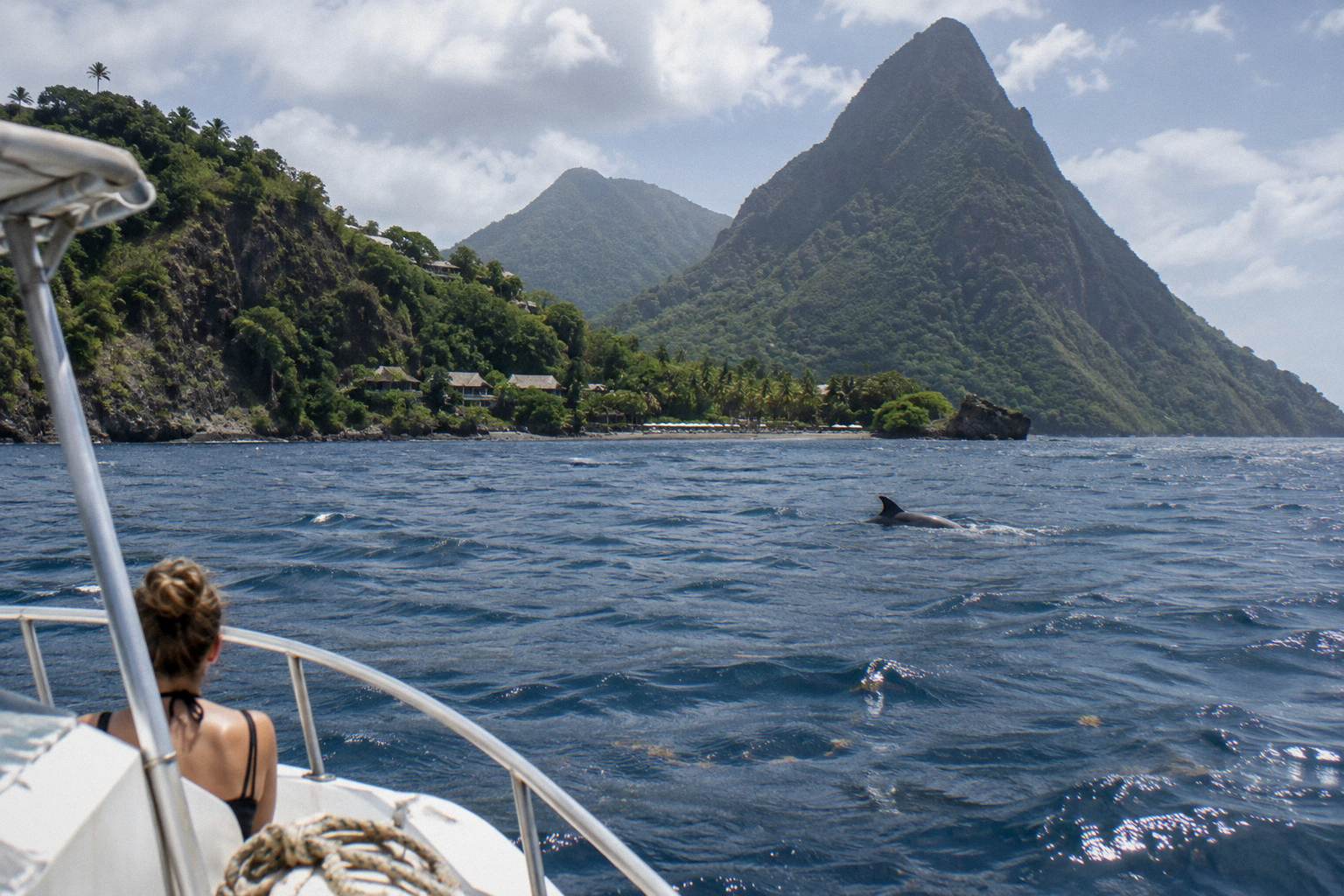
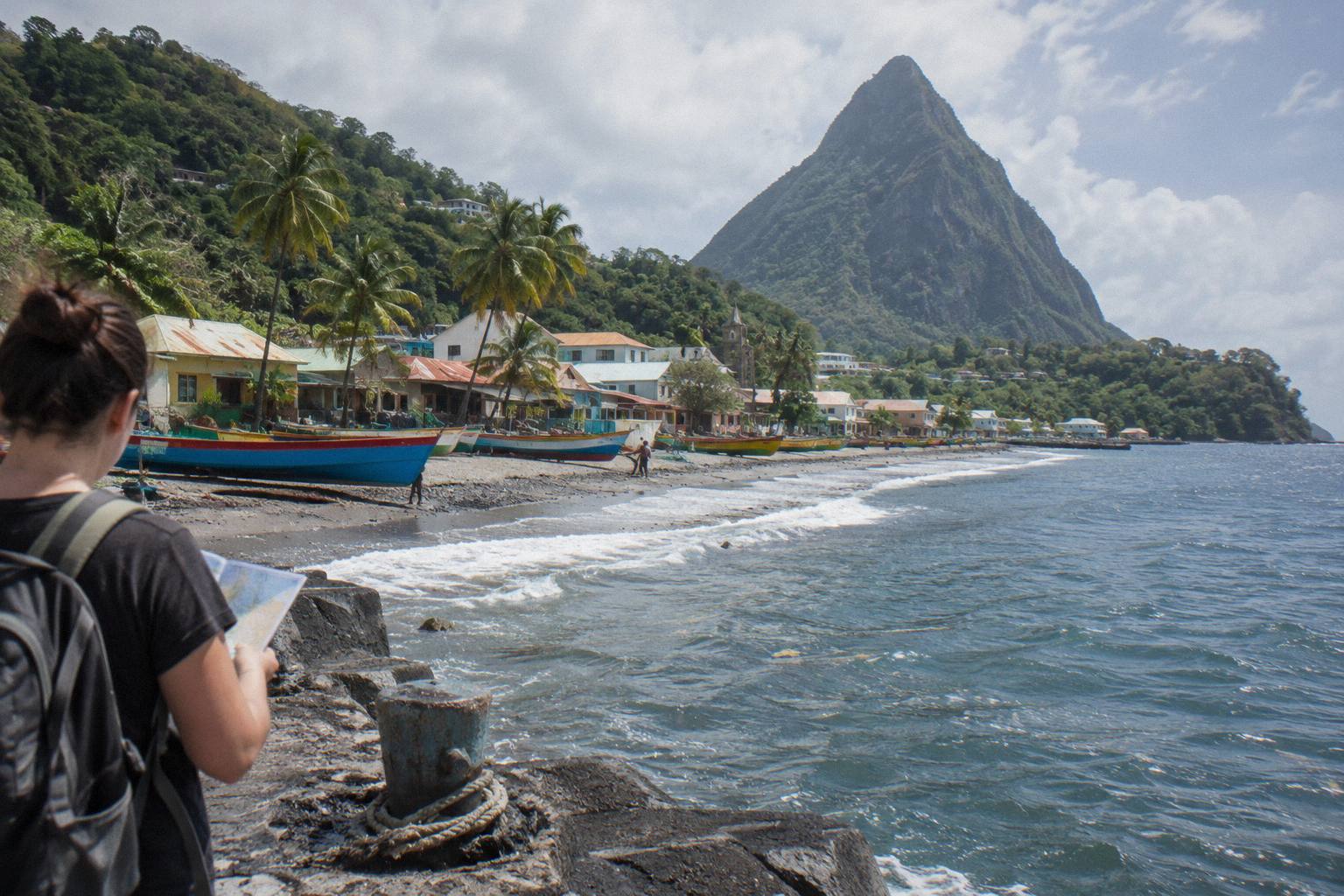
The boats work the west, Caribbean coast, because deep water lies unusually close to shore there, which is why dolphins and whales can be met not far from land. Trips usually leave in the morning from the north-west around Castries and last about three to four hours, following the coast rather than steering far out into open ocean.
This geography is the quiet advantage of Saint Lucia's dolphin watching and the reason a roughly half-day trip is enough. On many islands a whale boat has to run for an hour or more before reaching productive water. Here the sea floor drops away near the shoreline, so the spinner and spotted dolphins that favour warm offshore water are effectively brought to the boat's doorstep. The official trip description has the boats following the Caribbean coast, scanning the same deep blue lanes the animals use.
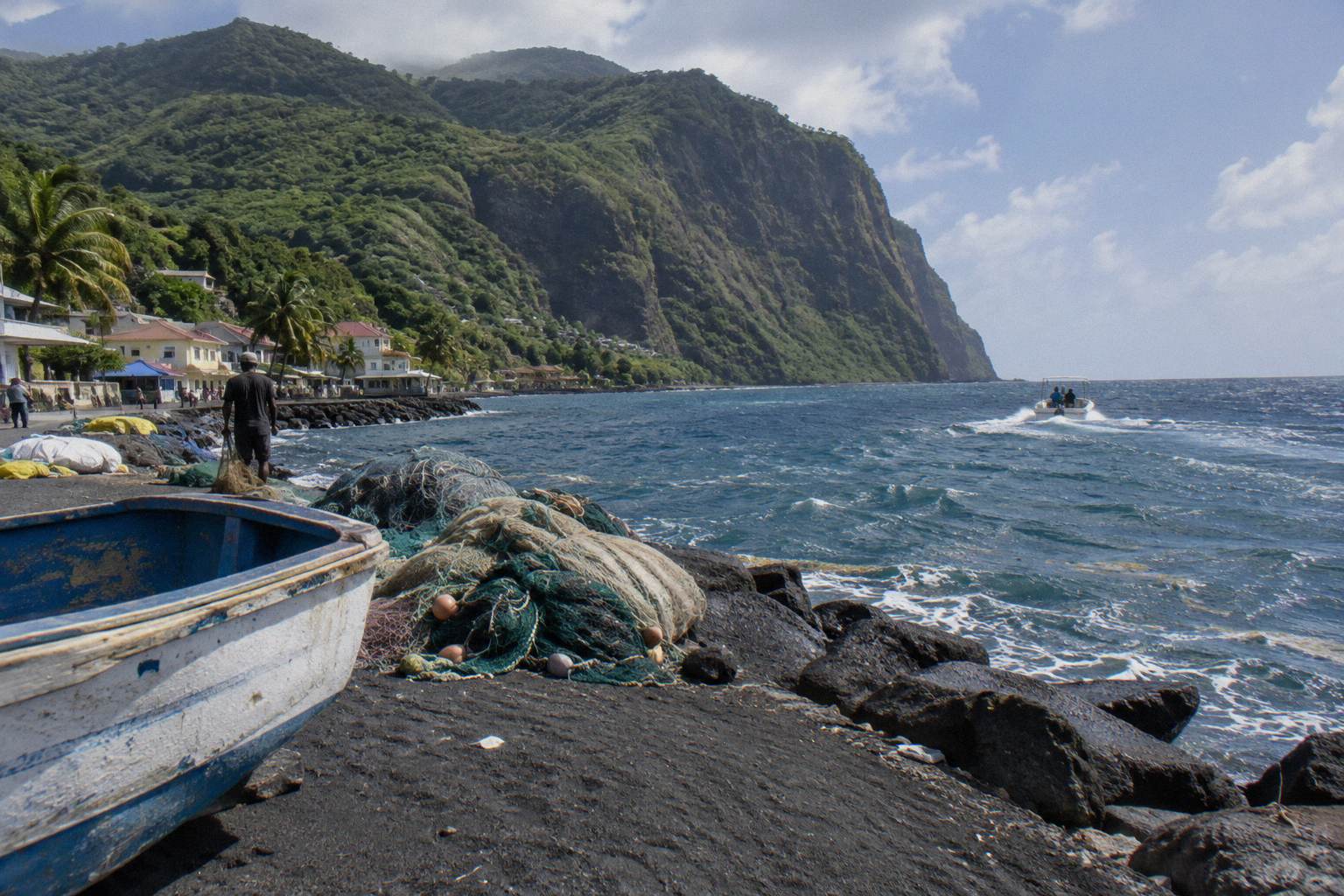
Both tours covered on this site depart Vigie Marina in Castries, on the north-west corner of the island. The marina sits in Castries Harbour beside the island's George F. L. Charles airport, a convenient spot for hotel guests and cruise passengers alike, and a short distance from the Pointe Seraphine cruise terminal with taxis readily available. If you have seen references to Rodney Bay departures, that reflects the general pattern for trips from the north-west, but these two specific trips sail from Vigie Marina. The guide to Castries cruise port departures covers the port-side logistics for ship visitors.
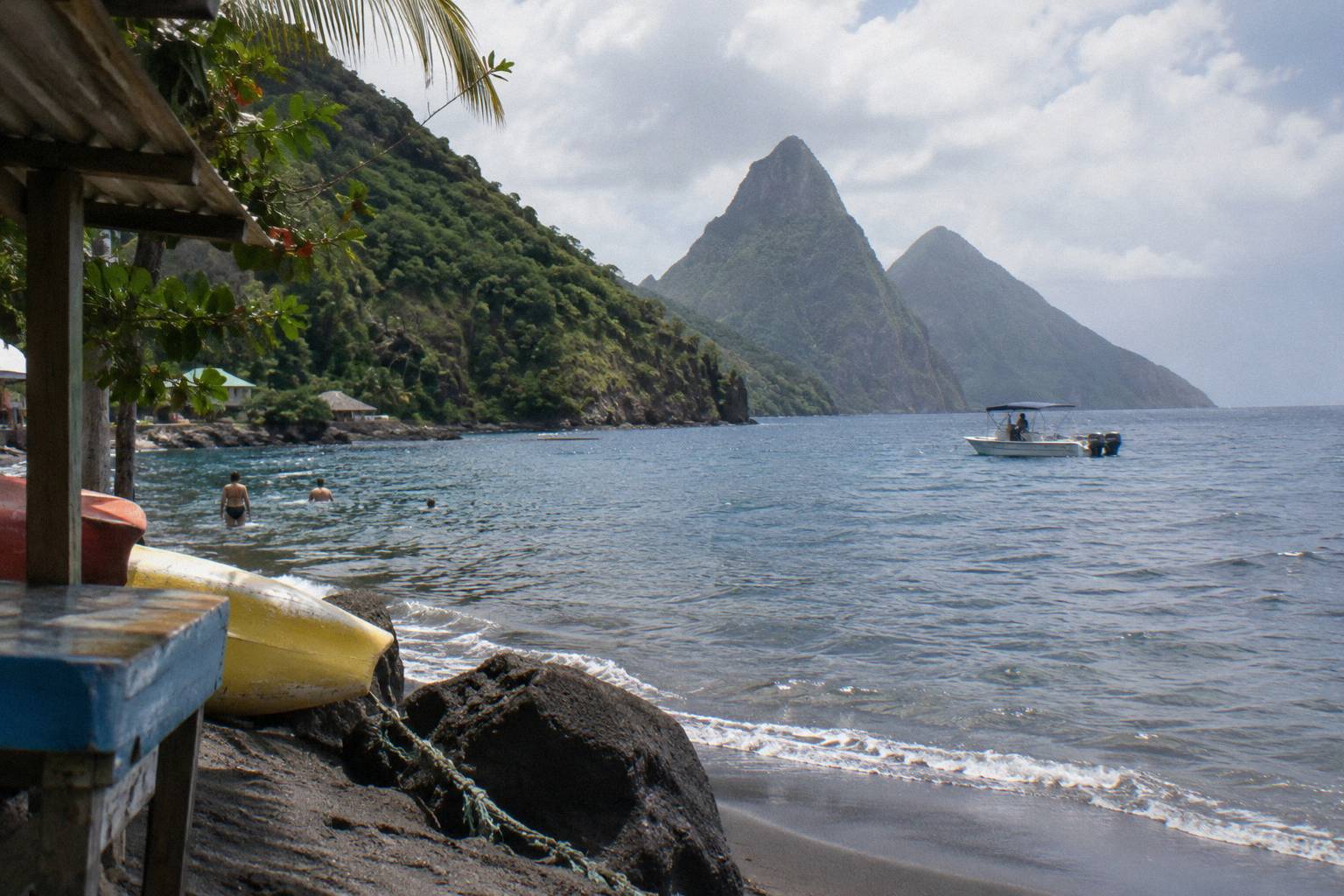
No stop-by-stop route is published for either trip, and none should be expected: the boat goes where the animals are that morning, guided by experience and by reports from other boats on the water. The west coast views, including the coastline rolling south toward Soufriere and the Pitons, are part of what the trip passes along the way, and the west coast route description explains what that scenery involves.
How Does The Shared Cruise Look For Dolphins?
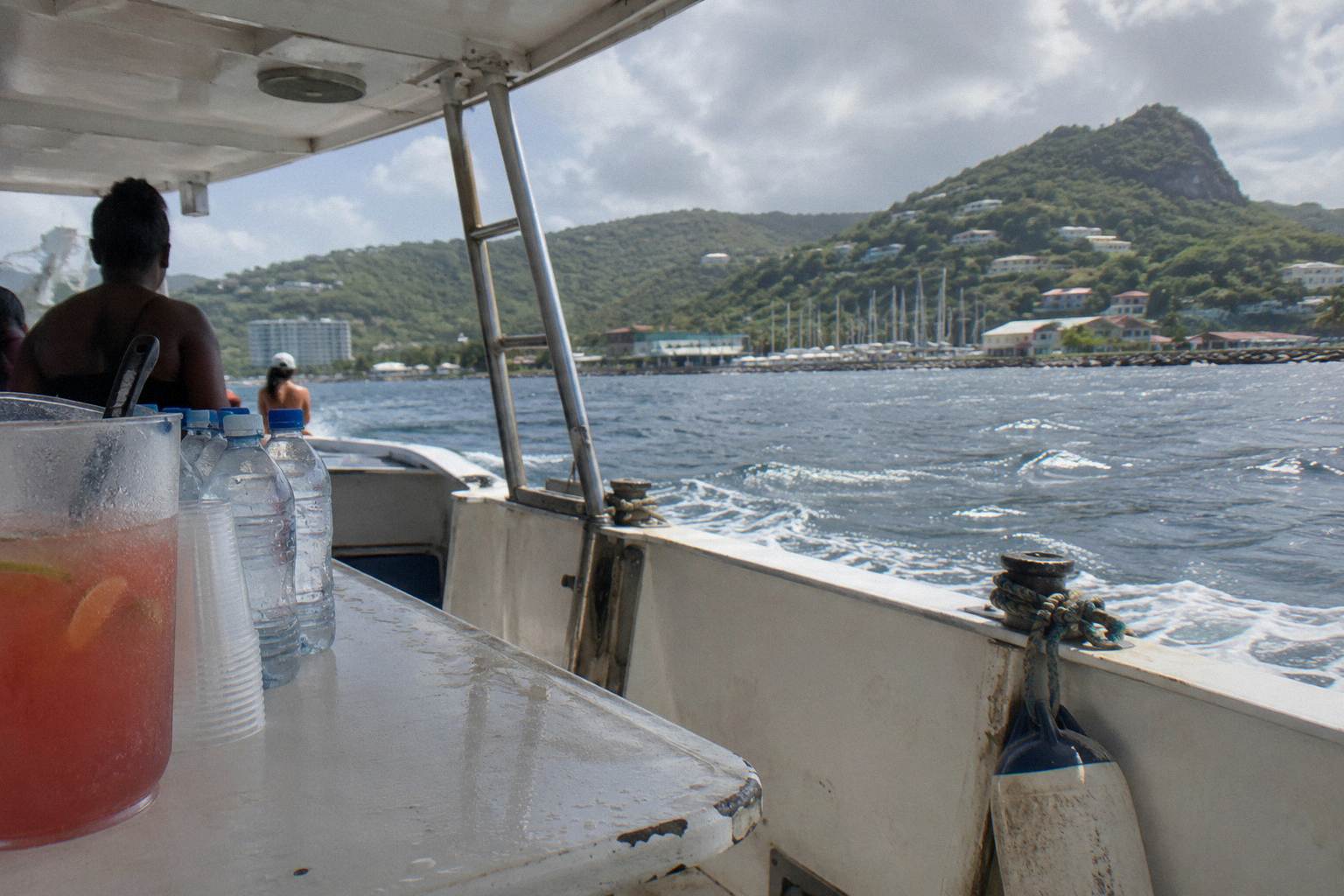
The Shared Whale And Dolphin Watching Cruise spends about 3.5 hours on the water on a morning departure from Vigie Marina, aboard a custom 60 ft boat with a local marine expert scanning alongside the passengers. It costs from US$65 per person, holds a 4.5 rating from 200 reviews, and confirms instantly when you book.
The mechanics matter less than the method: a shared boat with more eyes on the water and a marine expert whose job is to read the sea. Dolphins announce themselves in the usual ways, and on a 60 ft vessel with a deck full of watchers, the first cry usually comes from a passenger rather than the crew. The trip includes bottled water, soft drinks and rum punch; gratuities and hotel pick-up are not included, so you make your own way to Vigie Marina. The operator, Captain Mike's, says it has over 60 years of experience and belongs to the Hackshaw family, which is the same family behind the private safari further down this page.
Children travel with an adult, and since no minimum age is printed anywhere, the right move is to ask the operator when booking if you have very young sailors in the group. Group size on the shared trip is not published, so plan for a sociable boat rather than an intimate one. For a deeper look at the value question, the shared cruise versus private charter comparison works through the trade-offs with real numbers.
For illustration, not a quote: the shared cruise at US$65 per person is US$130 for 2, US$260 for 4, US$390 for 6. The price varies by date and the live listing confirms it. Free cancellation applies up to 24 hours before departure, and the operator says that if the captain cancels for unsafe weather there is an alternative date or a refund. If that combination of price, length and flexibility fits your plans, you can read the full shared whale and dolphin cruise details and decide from there.
Does A Private Safari Change Your Chances With Dolphins?
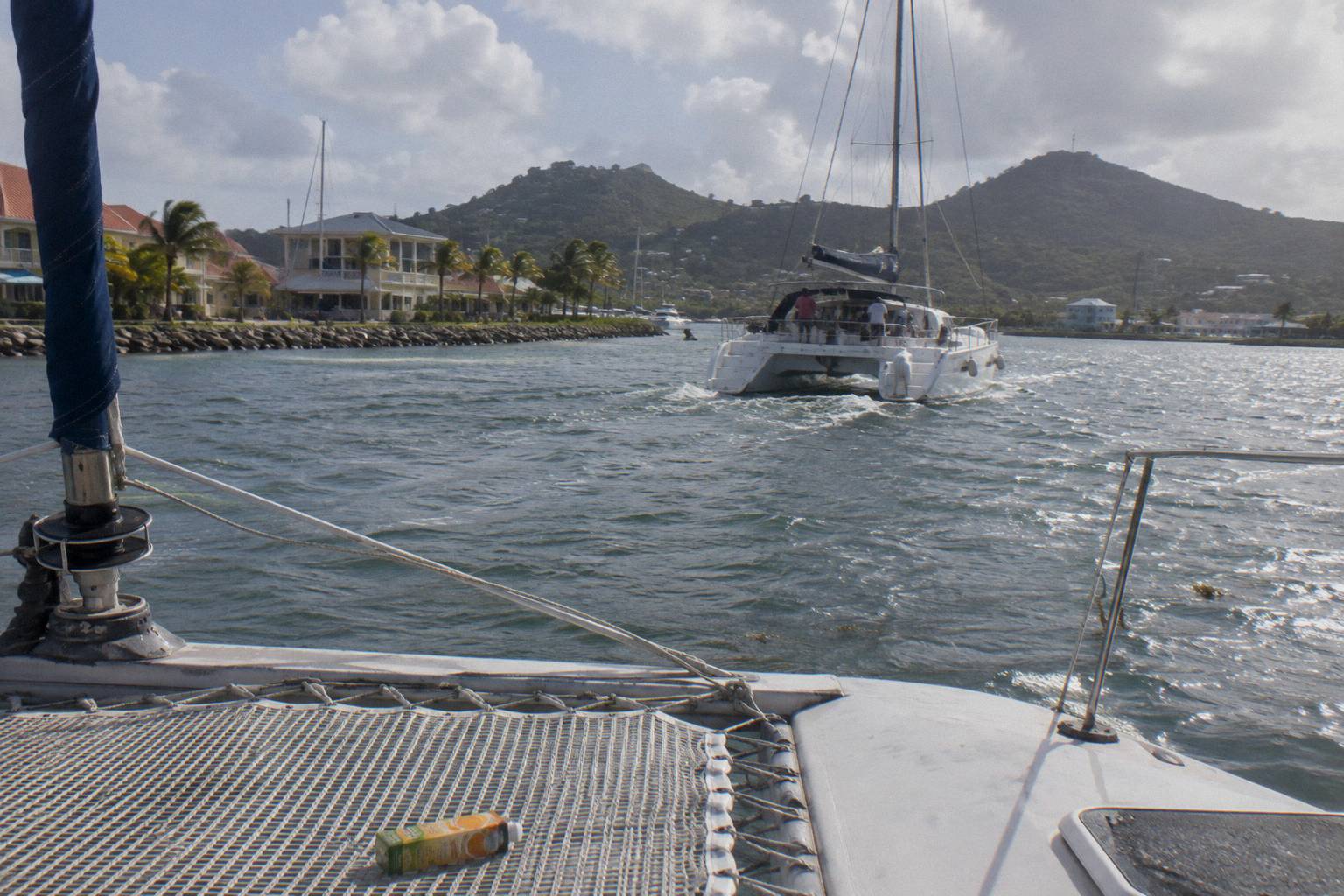
A private charter does not change which dolphins are in the water, but it changes the experience of finding them: the Private Whale And Dolphin Safari gives one group about 4 hours on a 50 ft catamaran with a dedicated guide, from US$2,550.65 per boat for up to 40 guests. It rates 4.5 from 75 reviews.
The honest framing is that dolphins do not know which boat is which. What the private format buys is time, flexibility and a smaller ratio of strangers: about 4 hours against about 3.5, a start time arranged with the operator rather than fixed to a morning slot, and a guide whose attention belongs entirely to your group. The catamaran carries soft drinks, coffee, tea, water, light snacks, rum punch and local fruit, and cruise ship pier pick-up and drop-off is included, which the shared cruise does not offer. Confirmation is not instant; the operator confirms the booking.
For illustration, not a quote: US$2,550.65 shared by 4 guests is about US$637.66 each; by 6 about US$425.11; by 8 about US$318.83; by 12 about US$212.55. The price varies by date and group and the booking page confirms it. Free cancellation applies up to 24 hours before departure, and the safari is cancelled free for bad weather. If the per-boat arithmetic is what decides it for you, the blog post on whether a private whale and dolphin charter is worth it in Saint Lucia works through the same question in depth.
The operator, Hackshaw's Boat Charters, says it has run since 1953 and is World Cetacean Alliance certified, which speaks to the responsible-viewing standards covered below. Both trips link naturally to the pages we keep for them, so you can read the private whale and dolphin safari details or the shared cruise tour page before committing, and check availability on whichever suits your group.
Whichever hull you choose, the dolphin species on offer are identical, because both boats work the same deep-water lane off the same coast from the same marina. The decision is about comfort, group and budget, not about biology. A private group that wants to linger when the spinner dolphins arrive simply has more say in how the hours are spent.
What Else Might You See Alongside Dolphins?
Alongside the dolphins, the same waters hold pilot whales in resident pods that can sometimes be seen through the year, sperm whales considered resident in the region and occasionally sighted in deeper water, humpbacks passing through roughly February to April, and rare orca visitors. Turtles and seabirds share the west coast water too.
Pilot whales deserve their own sentence because they are the animal most often misidentified from a distance. They travel in close-knit family groups, they are large, dark and surface-rolling, and members of the public frequently call them false killer whales, a name that does not appear in Saint Lucia's published record as a likely sighting. The guide on the boat identifies what is actually in front of it; if the identification question interests you, the pilot whale or false killer whale identification piece covers exactly this confusion.
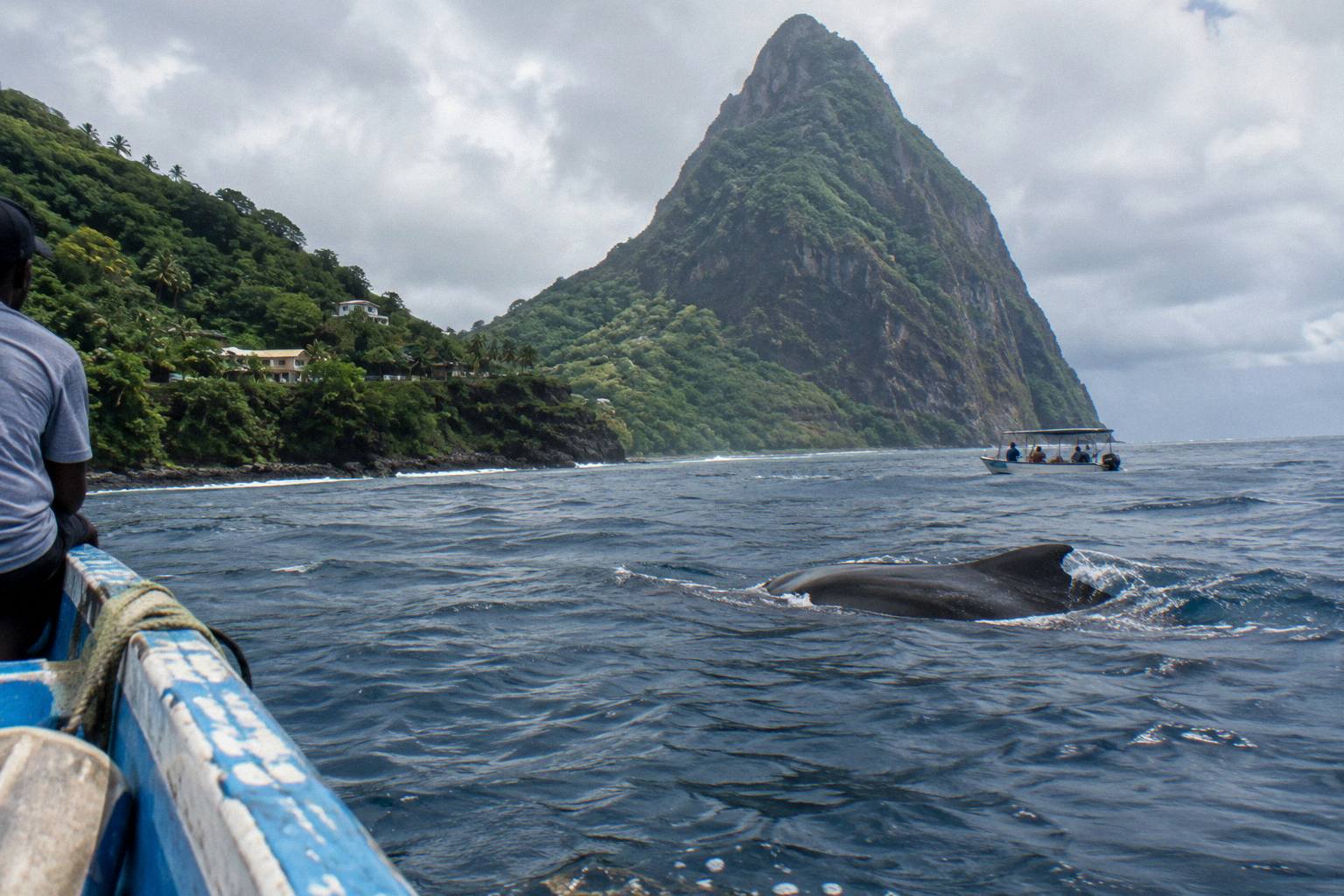
Sperm whales are the deep-water prize, and the population here belongs to the wider Eastern Caribbean stock that the Dominica Sperm Whale Project studies; no Saint Lucia head count exists, and no population estimate is printed anywhere honest. Humpbacks are a seasonal bonus between about February and April, with some operators reporting them from December, and May to November should treat them as unlikely. The full species picture, including the turtles, sits in the marine life guide to the Saint Lucia west coast.
Every one of these animals is a chance, never a promise. The official tourism board whale and dolphin page states it directly: sightings depend on weather, season and the animals' natural movement patterns, which is why no legitimate operator quotes a sighting rate. Planning around the animals that are actually in the water each month, rather than around a promised headline, is the difference between a good trip and a disappointed one.
How Should Boats Behave Around Dolphins?
Licensed operators in Saint Lucia follow regulated distance guidelines, limit the time spent near animals, provide life jackets and safety briefings, and monitor sea conditions. The conduct rules are a slow approach, no chasing, no touching or feeding, and leaving the animals space to move on. Swimming with whales or dolphins is not offered on either tour here.
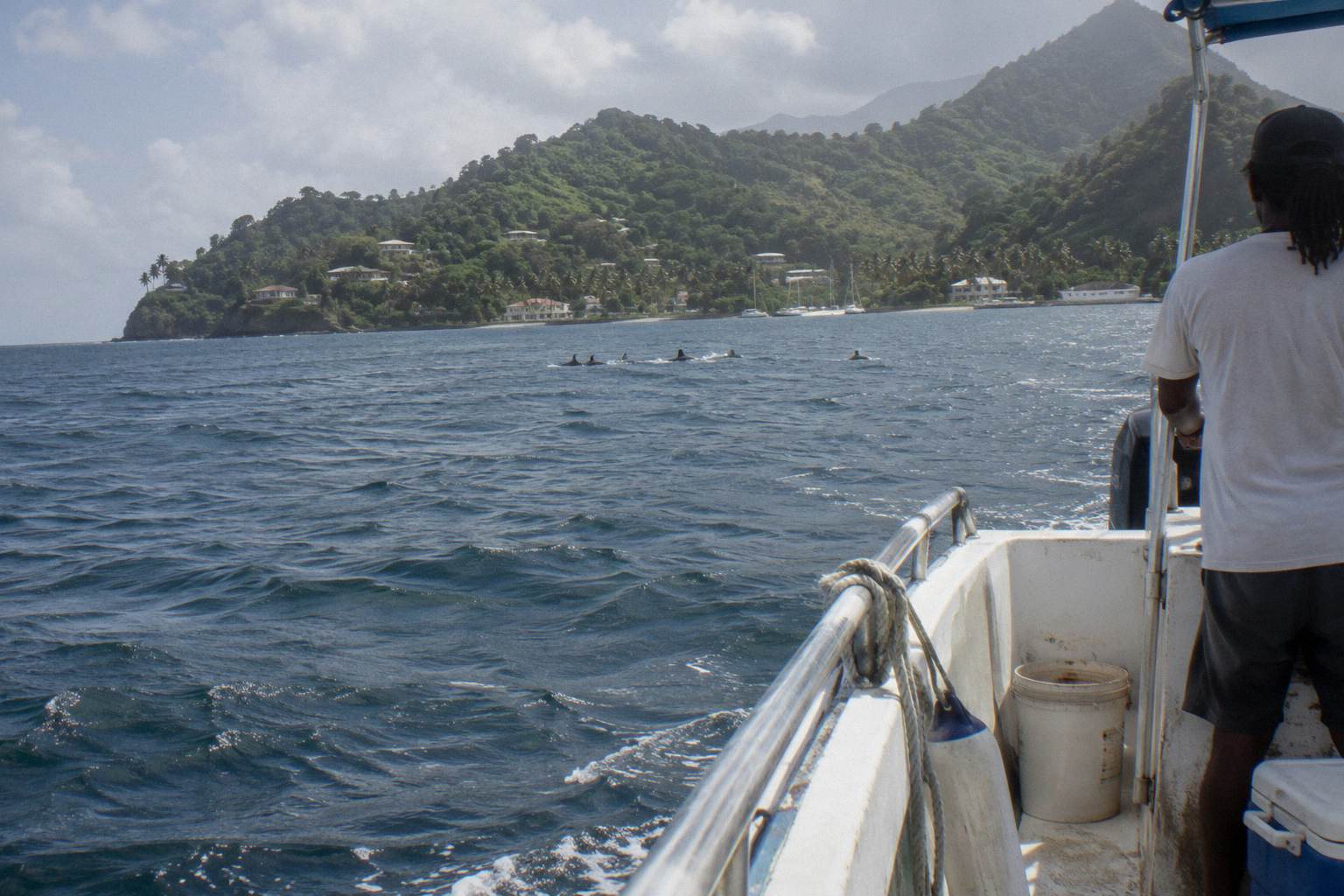
That responsible-viewing framework comes from the official tourism board, which publishes it without a metre figure attached; no distance number is given, and none is invented here. What it means in practice is that a well-run boat does not cut across a pod's path or hold station over dolphins until they dive away. Time near the animals is limited on purpose, the approach is slow, and the animals always have an open route out. Both trips in this guide carry life jackets and run safety briefings as standard.
Passengers have a part in this too. The official guidance says visitors should not touch or feed the animals, which on a dolphin trip mostly means keeping hands, hats and cameras inside the boat rather than trailing them over the side. If responsible watching is a topic you care about, the longer responsible whale and dolphin watching guide examines the ethics, and the blog post on whether whale watching is bad for whales takes the question further.
One point worth repeating because it closes a common line of searching: neither the shared cruise nor the private safari offers swimming with dolphins or whales, and this site never suggests it. The encounter is a watching encounter, from the deck, with a guide naming what surfaces.
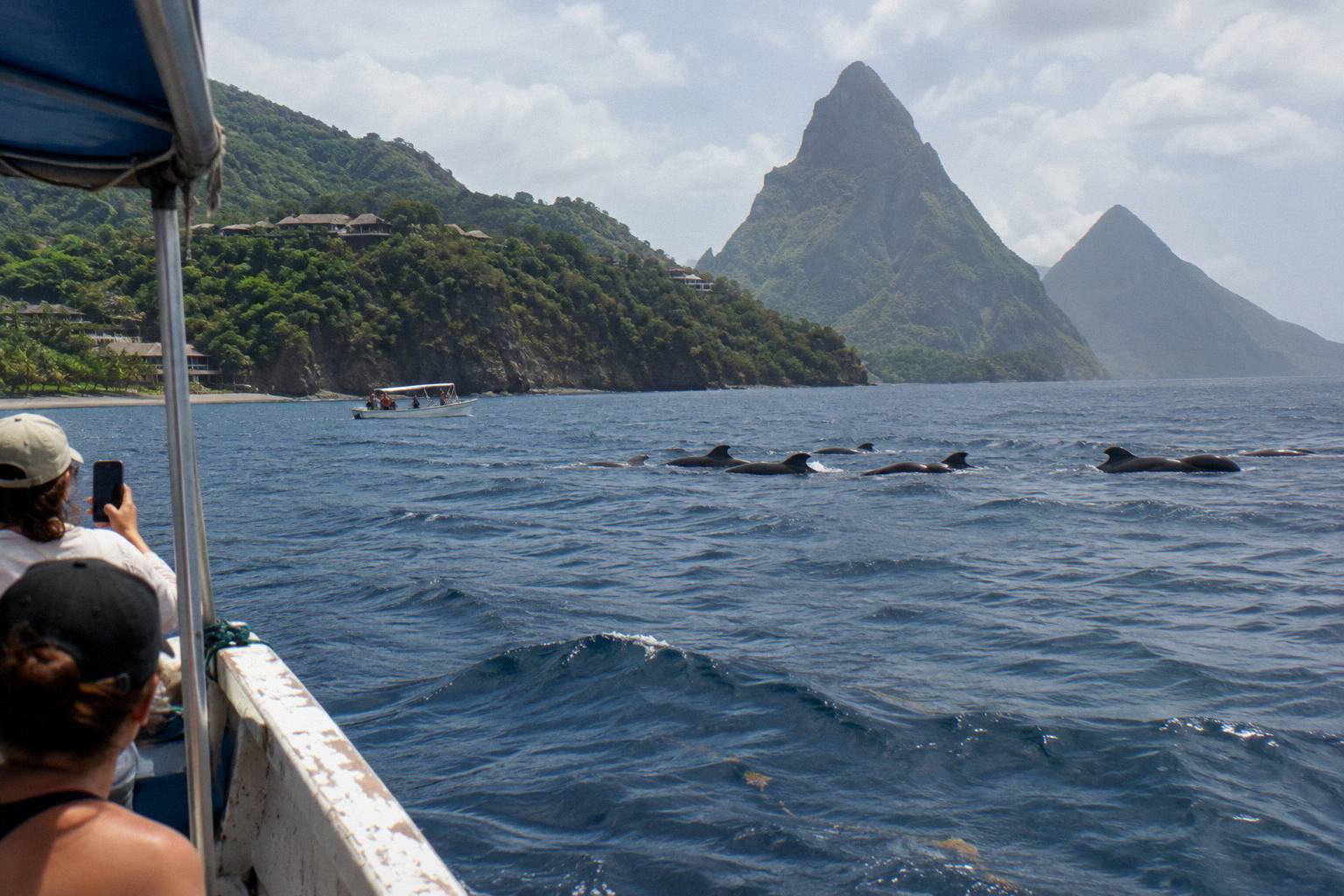
Common Mistakes When Expecting Dolphins
The recurring mistakes are expecting a guarantee, expecting humpbacks outside February to April, arriving without sun protection or a light layer for spray, assuming hotel pick-up is included, and confusing pilot whales with rarer species. None of the dolphin species off Saint Lucia comes with a promise, and the trips' inclusions are narrower than many travellers assume.
The first mistake is the big one. No sighting is guaranteed, no percentage exists in the published record, and any operator claiming otherwise is going beyond what the official sources support. The second is seasonal: a July visitor hoping for humpbacks is hoping against the calendar, though the dolphins are still there. The third is practical, and the official what-to-bring advice covers it: sun protection, a hat, a light layer for spray, a camera, and a question about boat size if anyone aboard is prone to motion sickness, which the seasickness post addresses directly.
| Mistake | The reality |
|---|---|
| Expecting a guaranteed dolphin sighting | Sightings depend on weather, season and the animals' movements; no rate is published |
| Hoping for humpbacks outside Feb-Apr | The official window is about February to April; May to November treat them as unlikely |
| Assuming hotel pick-up is included | Neither trip includes hotel pick-up; the private safari does include cruise pier pick-up |
| Confusing pilot whales with false killer whales | Pilot whales are the resident, regularly seen animal; a guide identifies what is there |
| Swimming with dolphins | Not offered on either tour, and never suggested |
| Forgetting seaspray gear | Official advice: sun protection, a hat, a light layer for spray |
Families should also note that no minimum age is printed for the shared cruise, so the move is to ask when booking rather than assume; the family guide to the whale and dolphin cruise and the post on whether whale watching suits young children cover the practicalities. And if your dates fall inside June to November, the hurricane season and whale cruises guide explains what that officially means, which is only that seas are typically calmer from December to May.
Common Questions About Dolphin Watching In Saint Lucia
Which Dolphins Live Off Saint Lucia?
Spinner dolphins are frequently sighted year-round, and pantropical spotted and bottlenose dolphins are also common. Fraser's, Risso's and striped dolphins are recorded less often, so the realistic expectation is one of the three regular species.
Are Dolphins Seen All Year In Saint Lucia?
Yes. Dolphins and pilot whales can be seen in every month, which is why whale and dolphin watching runs year-round here. Only the humpback whales carry a season, roughly February to April. Seas are typically calmer from December to May.
Why Are Dolphins Found So Close To Shore In Saint Lucia?
Deep water lies close to the west, Caribbean coast, so the offshore species that favour warm deep water are met not far from land. Boats follow the Caribbean coast rather than steaming far out to sea, which is why a trip of about three to four hours is enough.
Where Do The Dolphin Boats Depart From?
Both tours covered here depart Vigie Marina in Castries, beside the George F. L. Charles airport and a short distance from the Pointe Seraphine cruise terminal. Trips generally leave in the morning and last about three to four hours. Hotel pick-up is not included on either trip.
Is A Dolphin Sighting Guaranteed?
No. Sightings depend on weather, season and the animals' movements, and no sighting percentage is published anywhere in the official record. Dolphins are the most likely encounter, but every sighting is a chance, never a promise.
Can You Swim With The Dolphins In Saint Lucia?
No. Swimming with whales or dolphins is not offered on either the shared cruise or the private safari, and it is never suggested as an option. The encounter is a watching one, from the deck, with a guide identifying the animals.