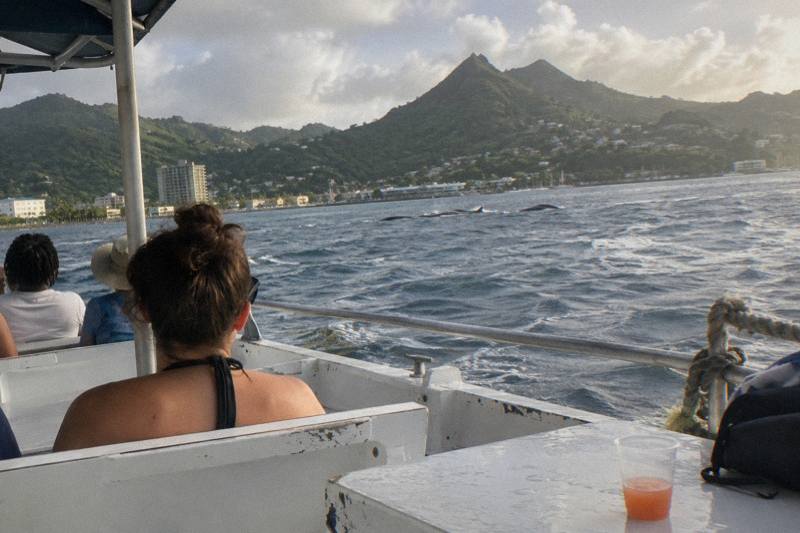
The West Coast Route Of A Whale And Dolphin Cruise, Toward Soufriere
No stop-by-stop route is published for Saint Lucia whale and dolphin cruises, and that honesty matters when you compare boat days. What the sources do say: boats follow the Caribbean coast, deep water lies close to shore, and both trips covered here depart Vigie Marina in Castries.
Short answer
Whale and dolphin cruises in Saint Lucia follow the Caribbean, west coast out of Castries, because deep water lies close to shore there. Trips usually last about three to four hours, with no published stop-by-stop route. Neither a Soufriere stop nor Piton views are promised; ask the operator what your trip covers.
No published itinerary exists for a Saint Lucia whale and dolphin cruise. That single fact shapes everything on this page, because the route is exactly what a buyer compares when weighing a whale cruise against other boat days on the island, and the honest answer is that operators do not publish a stop-by-stop route for these trips. What the official tourism board and the operators' own pages do say is enough to plan around: boats follow the Caribbean coast, deep water lies close to the west coast, and trips usually leave in the morning from the north-west and last about three to four hours. Since the route stays flexible, what the crews actually search for matters more, and which dolphins and whales these trips look for by season covers that side of the trip in detail.
This guide walks through what that means in practice, including the question almost every visitor arrives with: does the boat go south toward Soufriere and the Pitons? The short answer is that no source promises it, and the right move is to ask the operator directly before booking. The two trips this site covers, the shared whale and dolphin cruise and the private safari, both depart Vigie Marina in Castries, and their route behaviour is described below with only the facts that can be printed.
What Route Does A Whale And Dolphin Cruise Follow?
A Saint Lucia whale and dolphin cruise follows the Caribbean, west coast rather than crossing open ocean, because the deep water the animals use lies unusually close to shore on that side of the island. The official tourism board describes trips leaving in the morning from the north-west, around Castries and Rodney Bay, and lasting about three to four hours. Beyond that pattern, no stop-by-stop route is published by any operator.
The west coast is the working side of the island for this trip, and the reason is bathymetry rather than scenery. Deep coastal water sits close to the shore, which increases the likelihood of encounters relatively near land, so the boats hug the Caribbean coast instead of steaming far out to sea. That is why a trip of only about three and a half or four hours can plausibly reach the water where sperm whales, pilot whales and several dolphin species actually live.
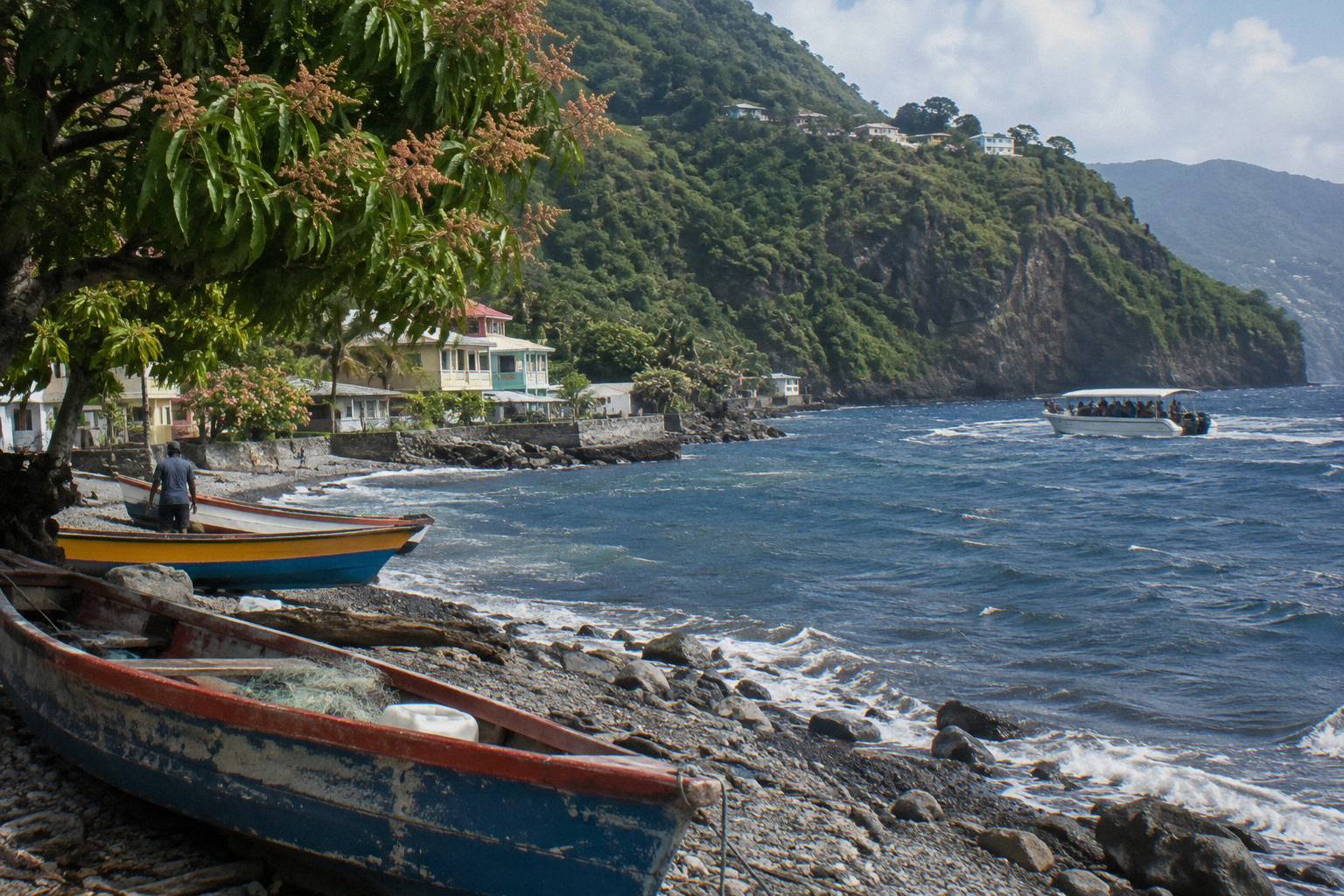
Both tours covered on this site depart from Vigie Marina in Castries Harbour, beside the island's George F. L. Charles airport and a short distance from the Pointe Seraphine cruise terminal. The official trip pattern mentions departures from the north-west generally, around Rodney Bay and Castries, but neither of these two specific trips leaves from Rodney Bay. If you are staying in the north of the island, the departure point for both is the same marina in the capital.
What the route is not, is a published list of waypoints. There is no official stop list, no confirmed run to a named bay, and no promised photo stop under the Pitons. The boat goes where the animals and the sea conditions of that morning allow, within the coastal pattern described above. Sightings along the way depend on weather, season and the natural movements of the animals, so every encounter is a chance and never a promise, a point the tourism board itself makes plainly on its whale and dolphin watching page.
For orientation on which animals live in that nearshore deep water through the year, the species guide on this site covers what the official wording actually claims, and it is worth reading before you tie route expectations to any particular animal.
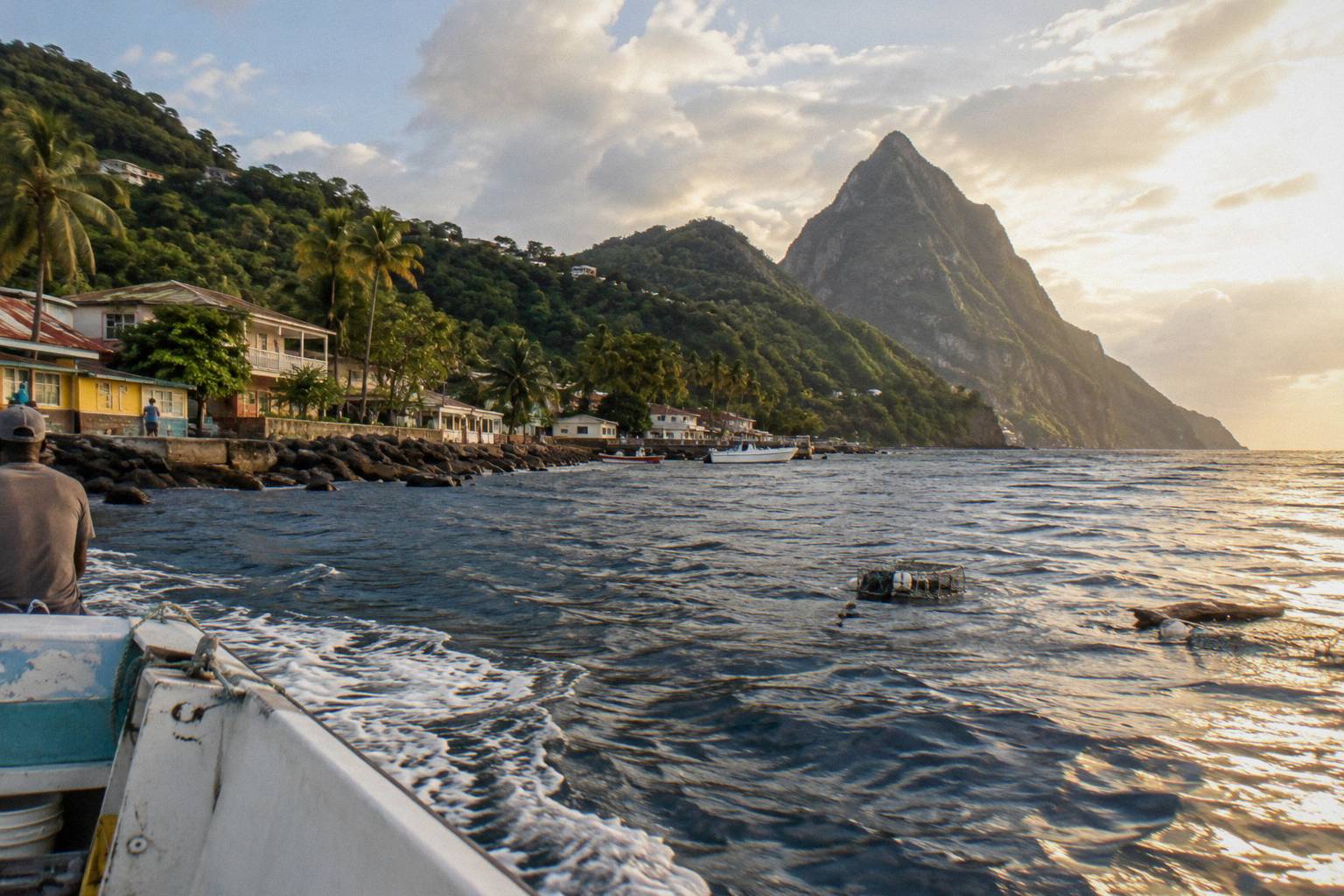
Why Does The West Coast Suit This Trip?
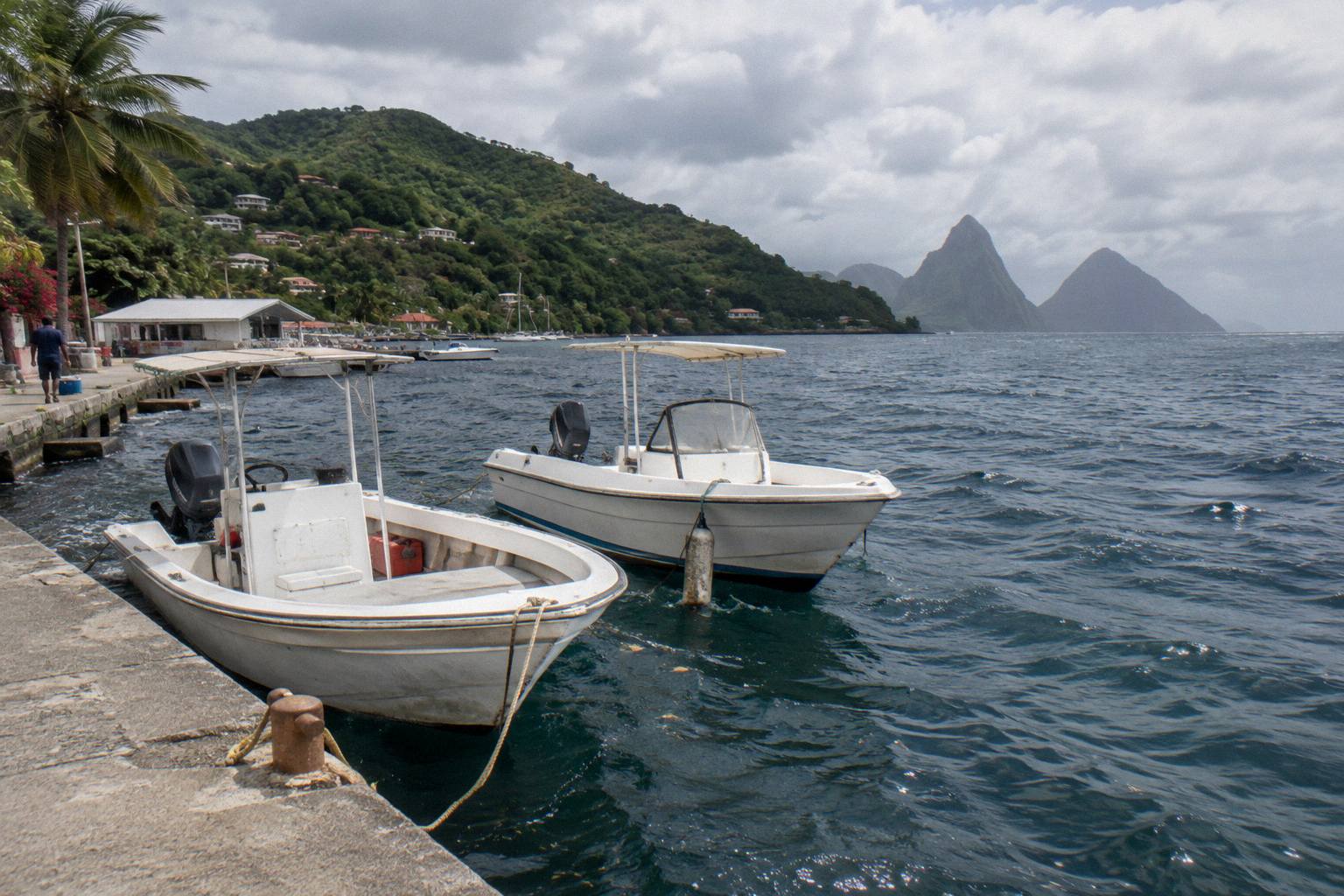
The west coast suits whale and dolphin watching because deep water lies close to the Caribbean shore, so the animals' habitat begins not far from land. Spinner dolphins are frequently sighted year-round, pilot whale pods can sometimes be seen through the year, and sperm whales are considered resident in the region and occasionally sighted in deeper waters, all within a short run of the coast.
This is the geographic fact that makes a half-day trip viable at all. On many islands a whale cruise means hours of transit before reaching productive water. In Saint Lucia the drop-off sits near the shoreline on the Caribbean side, so the search can begin soon after the boat clears the harbour. The boats follow the coast rather than heading out into the Atlantic, which is rougher water on the island's other side and not part of this trip pattern.
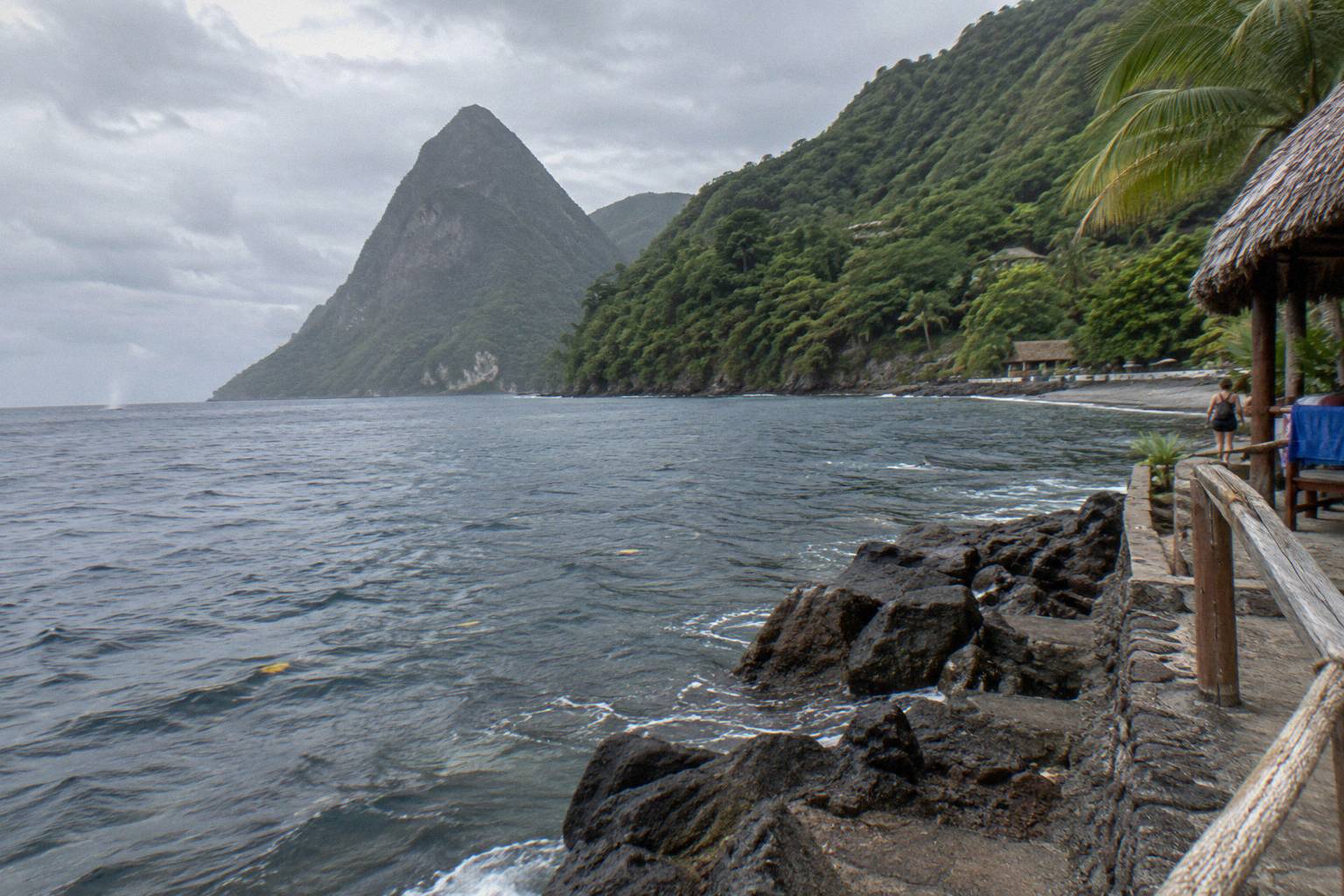
The species the tourism board names for this coast are worth listing, because they explain why the route is about water depth rather than destinations. Spinner dolphins are frequently sighted year-round, pantropical spotted and bottlenose dolphins are common, and Fraser's, Risso's and striped dolphins are recorded less often. Pilot whales move in resident pods that can sometimes be seen through the year in close family groups. Sperm whales, the deep-water specialists, are described in official wording as considered resident in the region and occasionally sighted in deeper waters. Orcas are rare visitors only.
The shared Whale And Dolphin Watching Cruise by Captain Mike's runs this pattern: about 3.5 hours, a morning departure, a custom 60 ft boat out of Vigie Marina, with a local marine expert aboard and water, soft drinks and rum punch included, from US$65 per person, rated 4.5 from 200 reviews. It names sperm whales, humpbacks in season, pilot whales and spinner, spotted, Fraser's and common dolphins, plus west coast views, among the species and sights it searches for. Group size is not published, and there is no printed minimum age, so children travel with an adult and it is worth asking the operator when booking. For a fuller picture of the animals you may pass over, the guide to St Lucia Whale Watching species and where to look sits elsewhere on this site, including the dolphin species page.
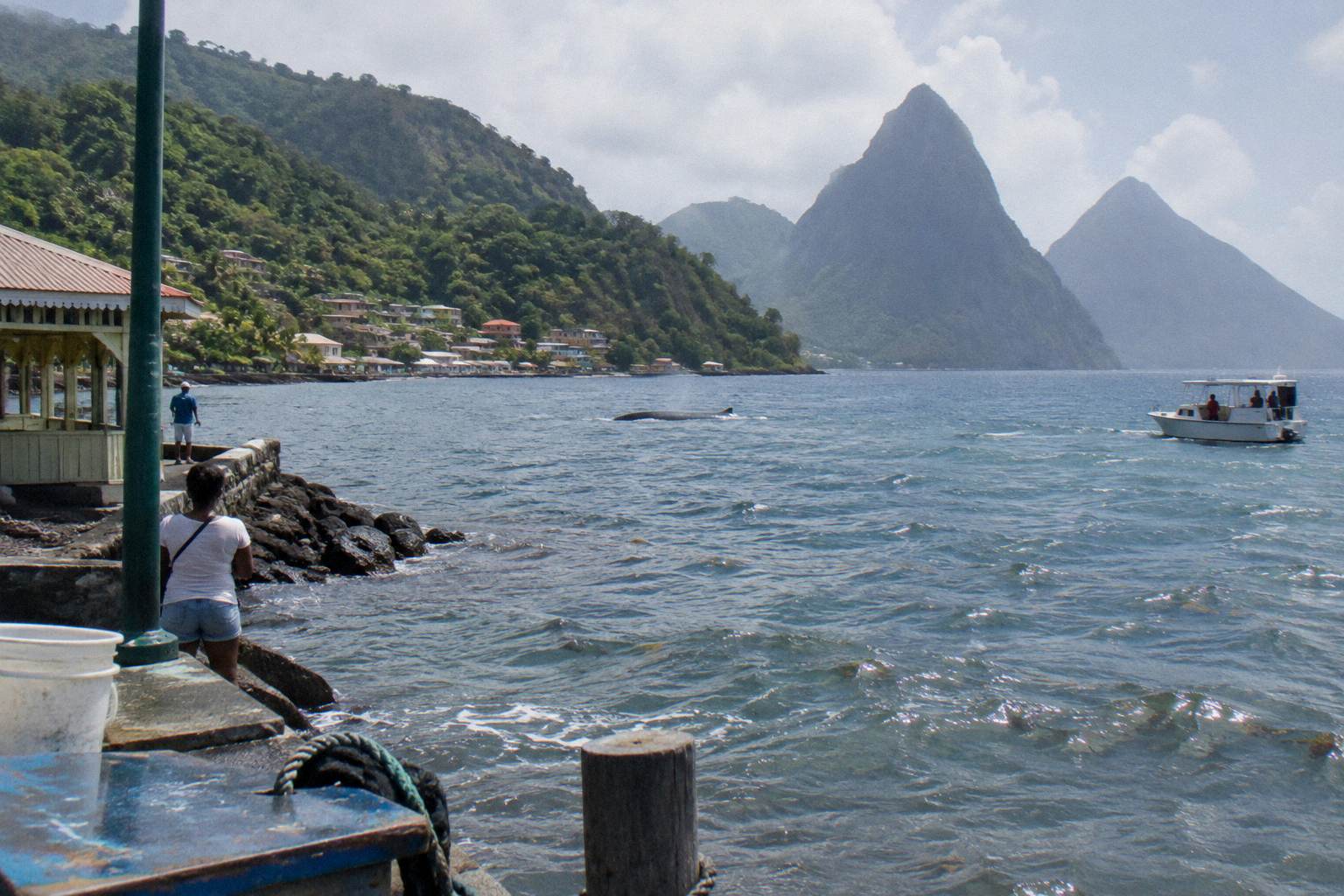
One more note on why the coast matters: the operator of the shared cruise says it belongs to the Hackshaw family and has over 60 years of experience on exactly this stretch of water. That is the operator's own statement rather than an independent assessment, but local knowledge of where animals hold along a coastline is the kind of thing years on the water tends to build, and the coast here is where that knowledge is applied.
Does The Boat Go Toward Soufriere And The Pitons?
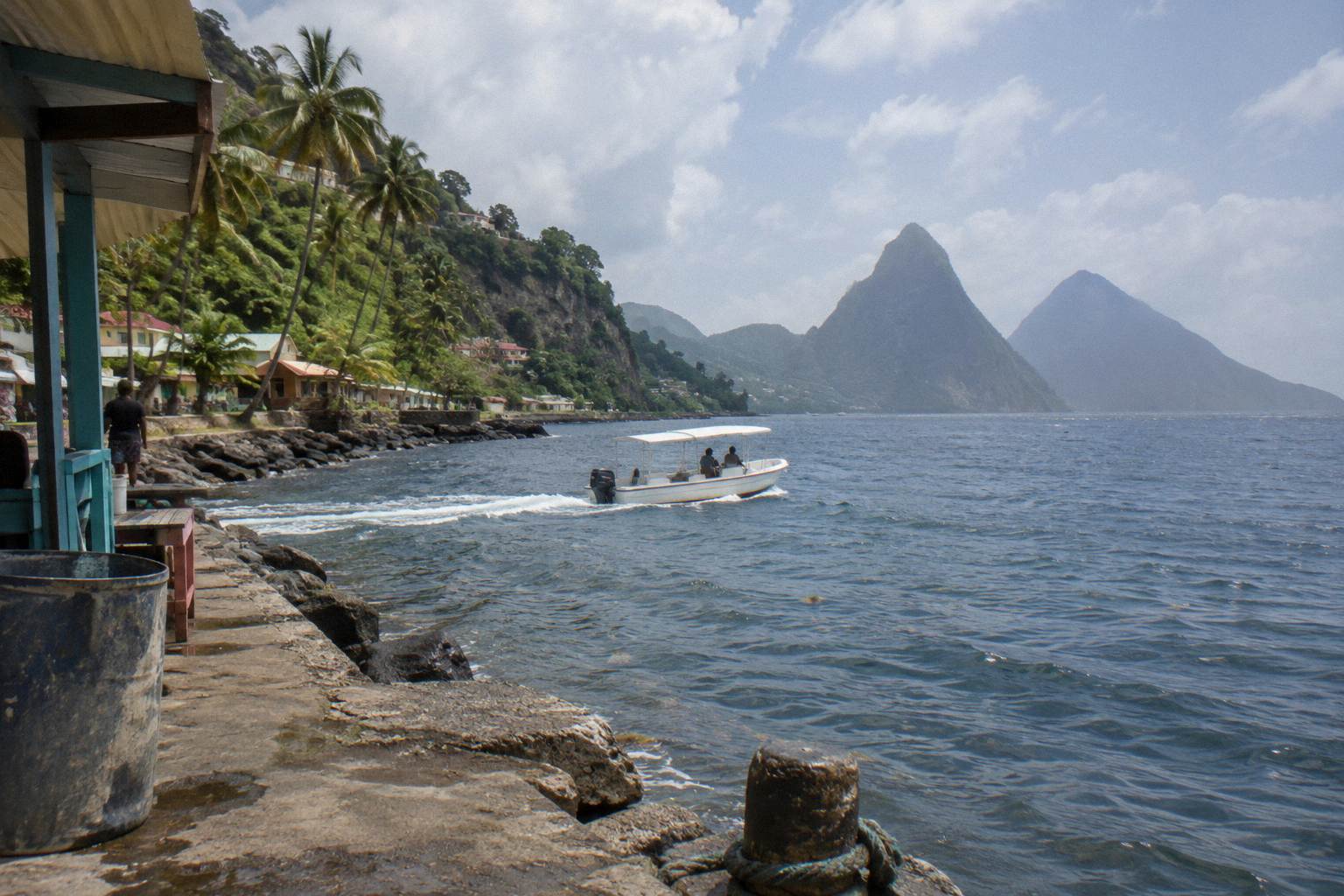
No published route promises a run to Soufriere or views of the Pitons, and neither trip covered here advertises a stop in the south. The honest position is that no stop-by-stop route is published at all. If seeing Soufriere or the Pitons from the water matters to you, ask the operator directly before booking whether your trip's route that day reaches that far south.
Soufriere and the Pitons sit well down the island's west coast, and it is tempting to assume a boat following the Caribbean coast keeps going until the famous peaks loom overhead. The sources do not support that assumption. The official pattern says only that trips last about three to four hours and follow the coast; the tour pages for the shared cruise mention west coast views without naming a southern turning point. Rough water, animal activity and the clock all shape how far south any given departure actually travels.
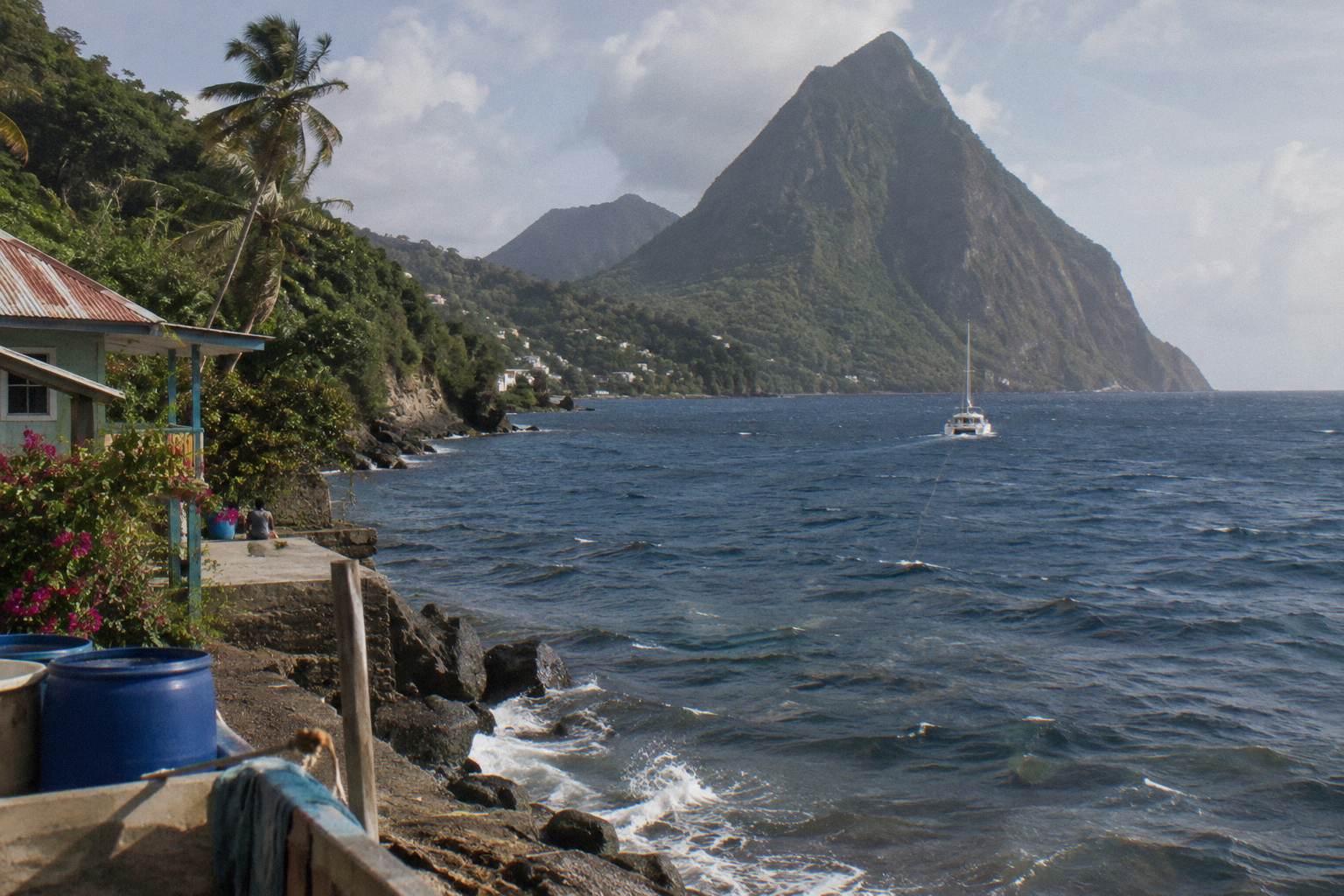
The practical advice is therefore a question, not a promise. When you book, ask the operator two things: how far south the trip typically runs, and whether the day's conditions change that. A private charter has more flexibility on paper, since the route and start time are arranged with the operator rather than fixed to a shared schedule, but even a private trip is not a published Soufriere run. This site's comparison of a shared cruise against a private charter covers the format differences in more depth.
The private option in detail: the Private Whale And Dolphin Safari by Hackshaw's Boat Charters is about 4 hours on a 50 ft catamaran, private to your group, up to 40 guests, from US$2,550.65 per boat, rated 4.5 from 75 reviews. For illustration, not a quote: US$2,550.65 shared by 4 guests is about US$637.66 each; by 6 about US$425.11; by 8 about US$318.83; by 12 about US$212.55. It includes a guide, drinks, snacks, local fruit and cruise ship pier pick-up and drop-off, with free cancellation up to 24 hours before and for bad weather, though confirmation is not instant. The price varies by date and group and the booking page confirms it.
How Long Is The Time At Sea On Each Trip?
The shared Whale And Dolphin Watching Cruise runs about 3.5 hours from a morning departure, and the Private Whale And Dolphin Safari runs about 4 hours, in both cases before any time getting to and from Vigie Marina. The official pattern for the island generally describes trips of about three to four hours leaving in the morning, which both of these fit.
Trip length matters more on a route with no published stops, because the clock is the only fixed boundary. On the shared cruise, the morning departure and the roughly 3.5 hour window mean you are back with the bulk of the day left, which suits hotel guests and some cruise passengers, though cruise visitors should check the ship's all-aboard time and ask the operator about timing before committing. The shared cruise at US$65 per person is US$130 for 2, US$260 for 4, US$390 for 6.
The private safari's extra time is partly a function of its format: with only your group aboard, the guide works the coastline at the pace the group and the animals set, and the start time is arranged with the operator rather than printed. Neither trip includes hotel pick-up, so build in your own transfer to Vigie Marina; the marina sits beside George F. L. Charles airport and a short distance from Pointe Seraphine, and taxis are readily available.
A table keeps the two trips straight:
| Shared Cruise | Private Safari | |
|---|---|---|
| Time at sea | About 3.5 hours | About 4 hours |
| Departure | Morning | Arranged with the operator |
| Boat | Custom 60 ft boat | 50 ft catamaran |
| Group | Shared boat | Private, up to 40 guests |
| Price basis | From US$65 per person | From US$2,550.65 per boat |
| Rating | 4.5 from 200 reviews | 4.5 from 75 reviews |
| Departure point | Vigie Marina, Castries | Vigie Marina, Castries |
What Should You Ask About The Route?
Ask the operator how far south the trip typically runs, whether Soufriere or the Pitons are ever in view on that route, how the day's conditions change the plan, and what happens to the route when animals are found early. No operator publishes a stop list, so these questions are the only way to match the route to your expectations before you pay.
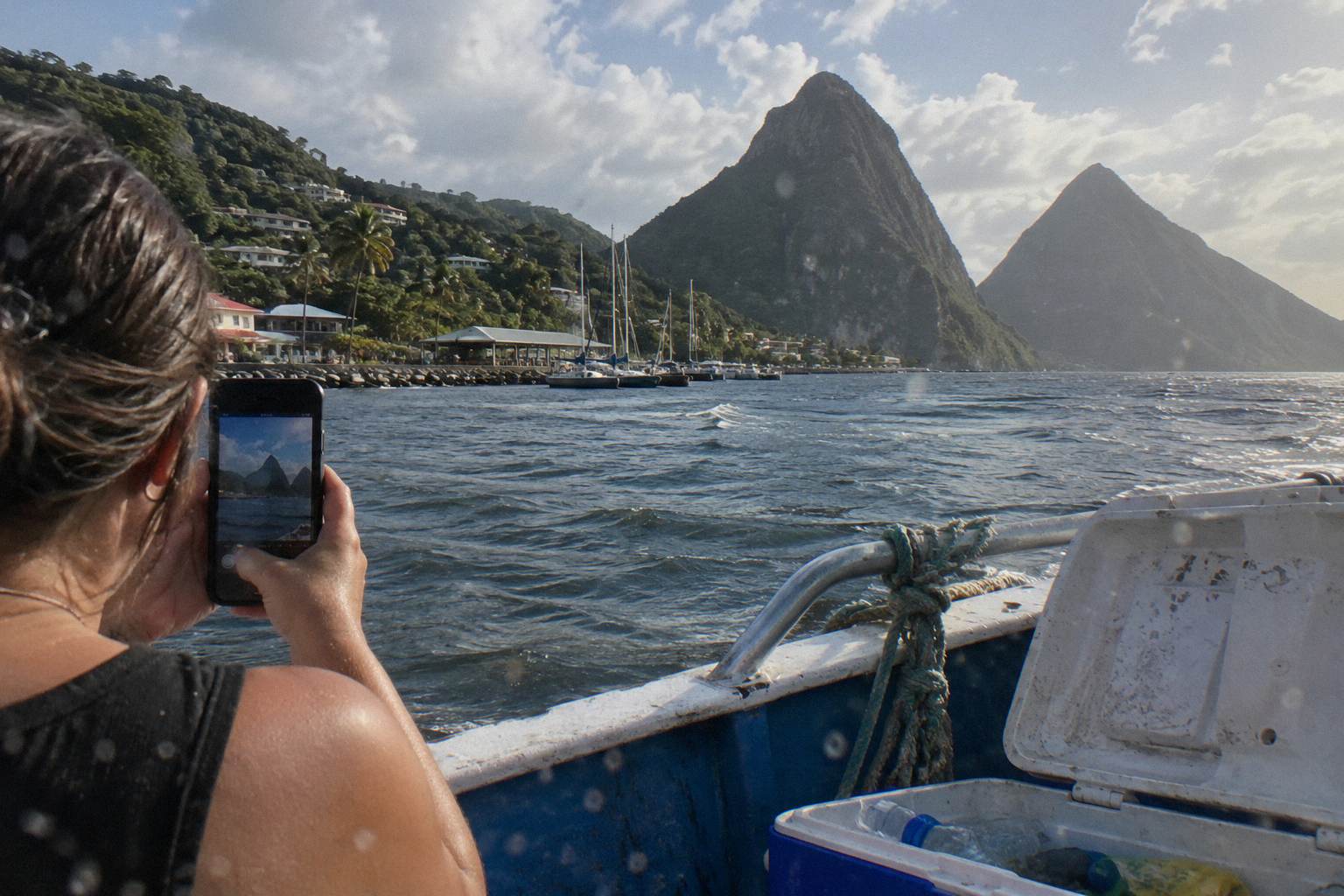
The route question is the biggest gap between what buyers imagine and what operators publish, and it is entirely fair to ask it in a message before booking. Both trips here carry free cancellation up to 24 hours before departure, so an answer that disappoints still leaves room to change plans. The private safari is also cancelled free for bad weather, and the shared cruise's operator says the captain offers an alternative date or a refund when a trip is cancelled for unsafe weather, which is the operator's own statement. Everything else covered here is indexed on St Lucia Whale Watching.
Other route-adjacent questions worth asking: where along the coast the boat turns, whether the trip stays north of Castries or works south, and how the marine expert aboard decides where to search. The last one matters because the search pattern is driven by where animals have been, not by scenery, and a guide's read of the water is the working tool on a route with no waypoints. For more on the ethical side of how boats behave near animals, this site's page on responsible whale and dolphin watching covers the official guidelines, which include slow approaches, no chasing, no touching or feeding, and space for the animals to move on.
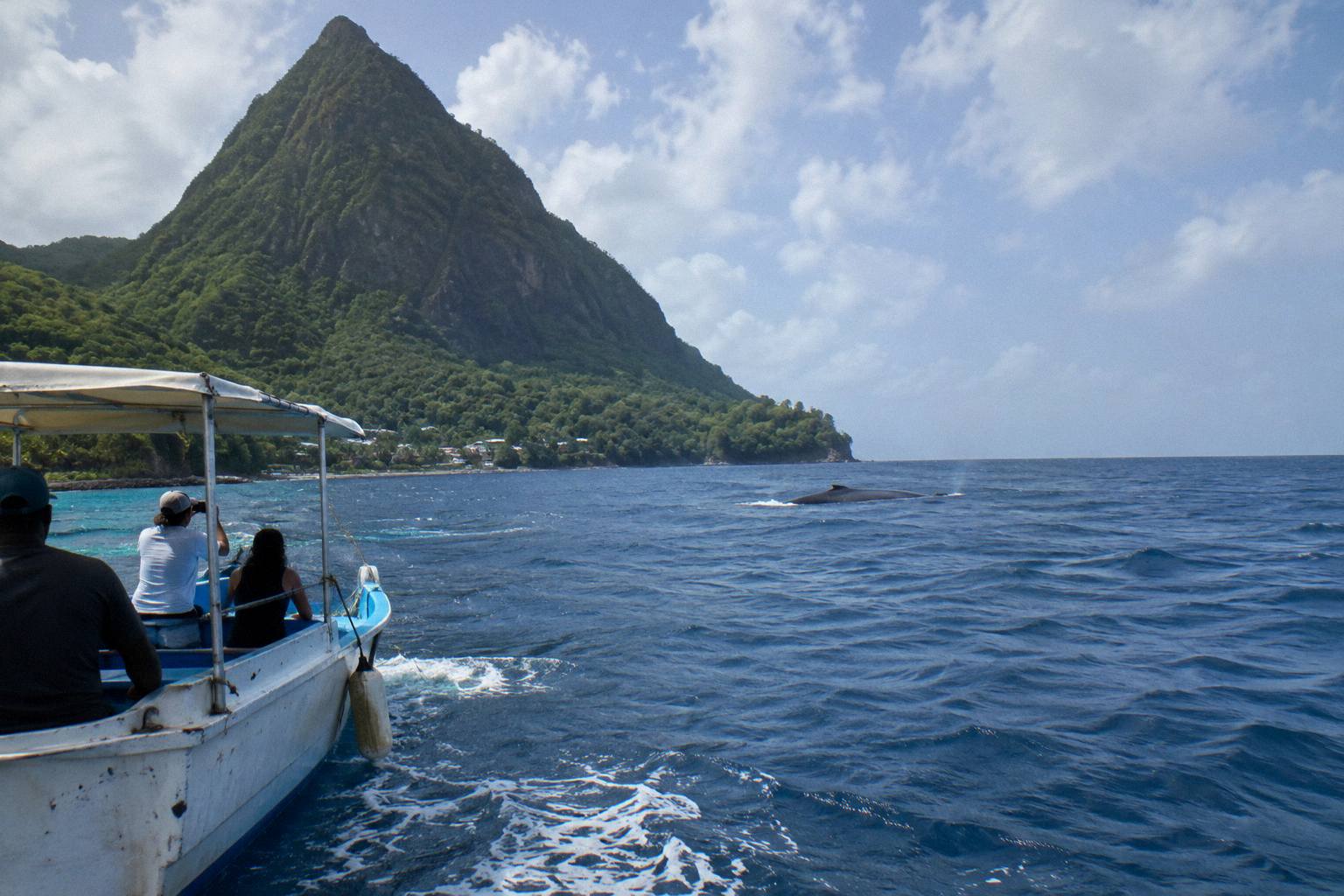
The questions differ slightly by format. On the shared cruise you are one passenger among many, so the route is set by the crew; your question is what that route usually looks like. On a private charter the route is arranged with your group, so your questions can shape it: how far south, how long at each stretch of water, and whether the group wants the search weighted toward a particular species. Neither format turns into a published itinerary, but the private one bends further.
Which Season Changes The Sea Along The Coast?
Seas along Saint Lucia's west coast are typically calmer from December to May, which is also when some operators begin reporting humpback whales, ahead of the official February to April window. The Atlantic hurricane season runs June 1 to November 30, and from May to November humpbacks should be treated as unlikely, though dolphins and pilot whales are present all year.
Season affects this route twice over: it changes the water you travel on and it changes which animals might be in it. The calmer-sea window of December to May is when the coastal run is at its most comfortable, particularly for anyone prone to motion sickness, and the official sources link calmer conditions to this stretch of months rather than to any guarantee about individual days. The Saint Lucia Meteorological Service publishes the formal end of hurricane season each year in its season release.
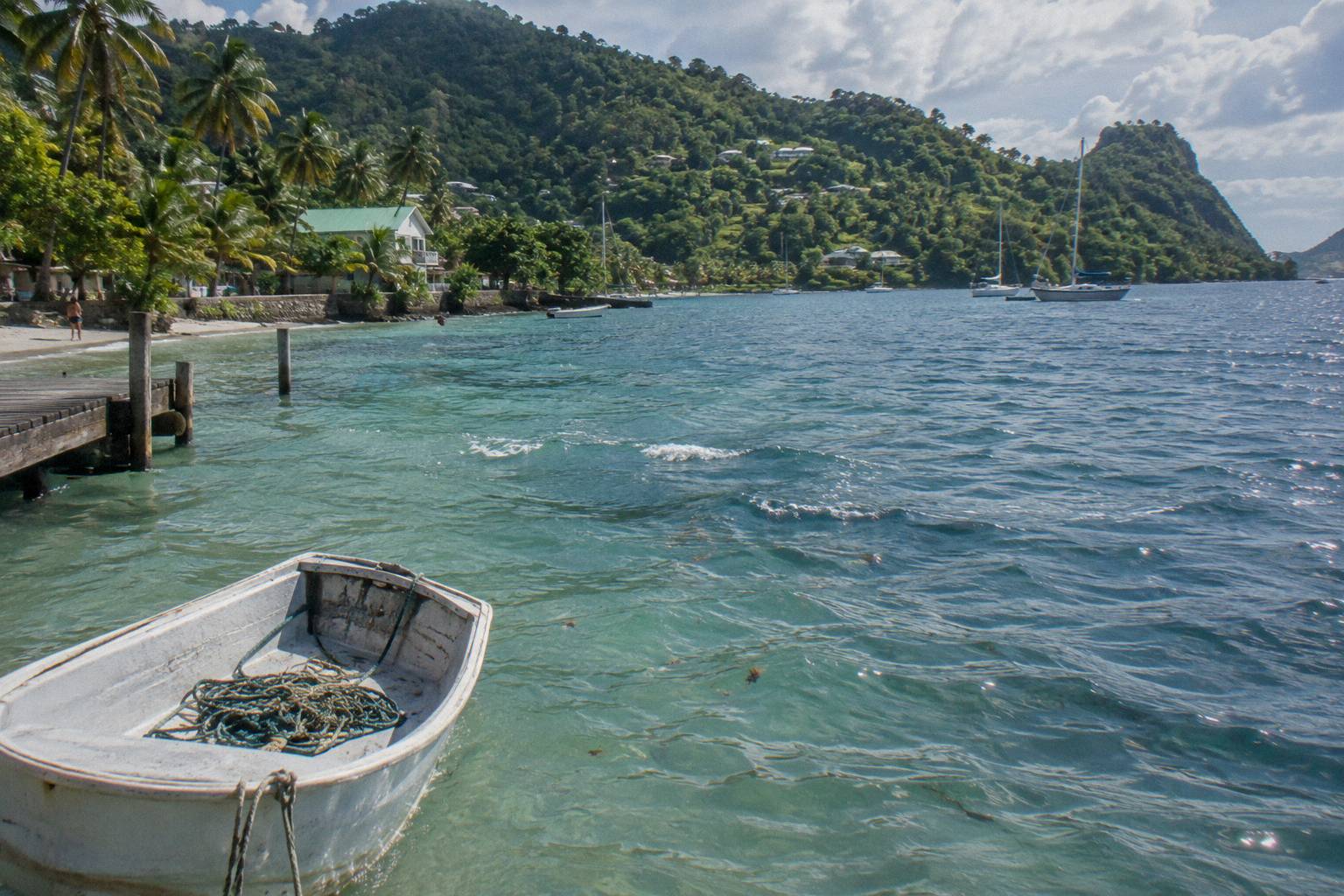
The planning table below is exactly what the sources say and nothing more, because no month-by-month sighting rates exist:
| Period | What the sources say |
|---|---|
| December to May | Seas are typically calmer |
| February to April | Official window for humpback whales passing through |
| From December | Some operators report humpbacks |
| May to November | Treat humpbacks as unlikely |
| All year | Dolphins and pilot whales can be seen |
Dolphins and pilot whales do not leave, which is why this trip runs year-round: spinner dolphins are frequently sighted year-round and pilot whale pods can sometimes be seen through the year. Humpbacks are the seasonal addition between about February and April, with some operators reporting them from December. Sperm whales are considered resident in the region and occasionally sighted in deeper waters, and the Eastern Caribbean population they belong to is studied by the Dominica Sperm Whale Project. If you are weighing months, the month-by-month guide on this site works through the same window in more detail.
How Do You Combine The Trip With A Day On Land?
A morning whale cruise of about 3.5 to 4 hours leaves the rest of the day free, and both trips here return you to Vigie Marina in Castries, close to the airport and the cruise terminal rather than to a hotel door. Neither trip includes hotel pick-up, so plan your own transfer and treat the marina as the fixed point around which the rest of the day is built.
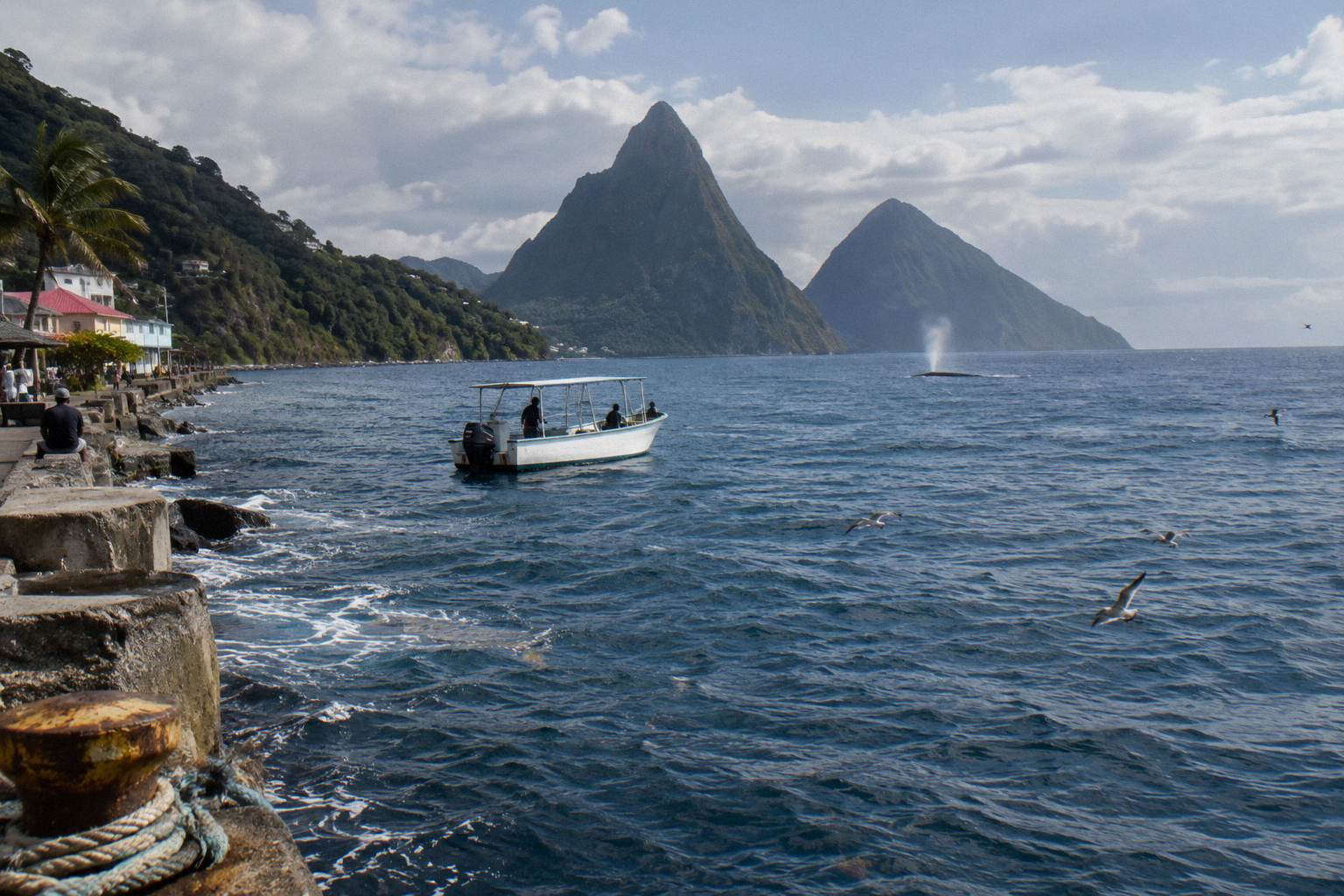
The geometry is simple. Vigie Marina sits beside George F. L. Charles airport, a short distance from the Pointe Seraphine cruise terminal, and taxis are readily available, though this page prints no road minutes because none are published. A morning on the water ends back at the same spot it began, and Castries is the natural place to pick up lunch before deciding whether the afternoon goes north toward Rodney Bay's beaches or south toward the interior. On that point the honest answer returns: any onward run toward Soufriere and the Pitons is a separate land decision, not part of the cruise route, and no source lets this page promise otherwise.
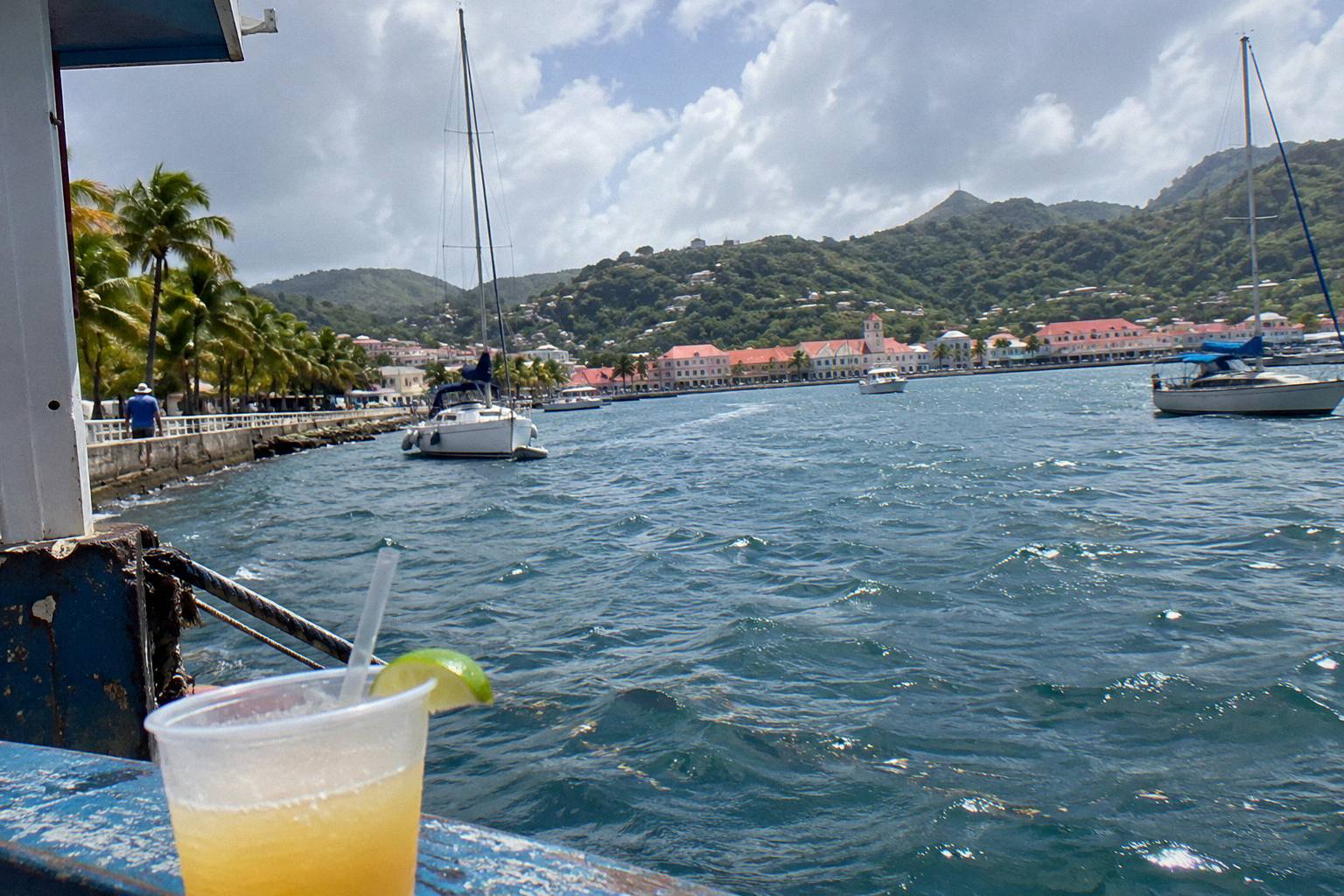
Cruise passengers have the tightest version of this puzzle, and the private safari is built for it: cruise ship pier pick-up and drop-off are included, which removes the transfer question entirely, in exchange for a per-boat price rather than a per-person one. The shared cruise does not include any pick-up, so cruise guests walk or taxi the short distance from Pointe Seraphine to the marina. Either way, check the ship's all-aboard time and ask the operator about timing before booking; this page prints no return-time promise because none can be made.
What to carry for the coastal hours, in the official wording: sun protection, a hat, a light layer for spray, and a camera, plus a question about boat size if you are prone to motion sickness. The full packing rundown is on this site's what to bring page.
Common Mistakes About The Route
The most common mistake is assuming a published route exists, then booking with a mental map of Soufriere stops and Piton photo pauses that no operator advertises. Other repeat errors include expecting a guaranteed sighting, treating the trip as a cruise-line shore excursion with pier-to-pier transfers on the shared boat, and assuming the season does not matter because the trip runs year-round.
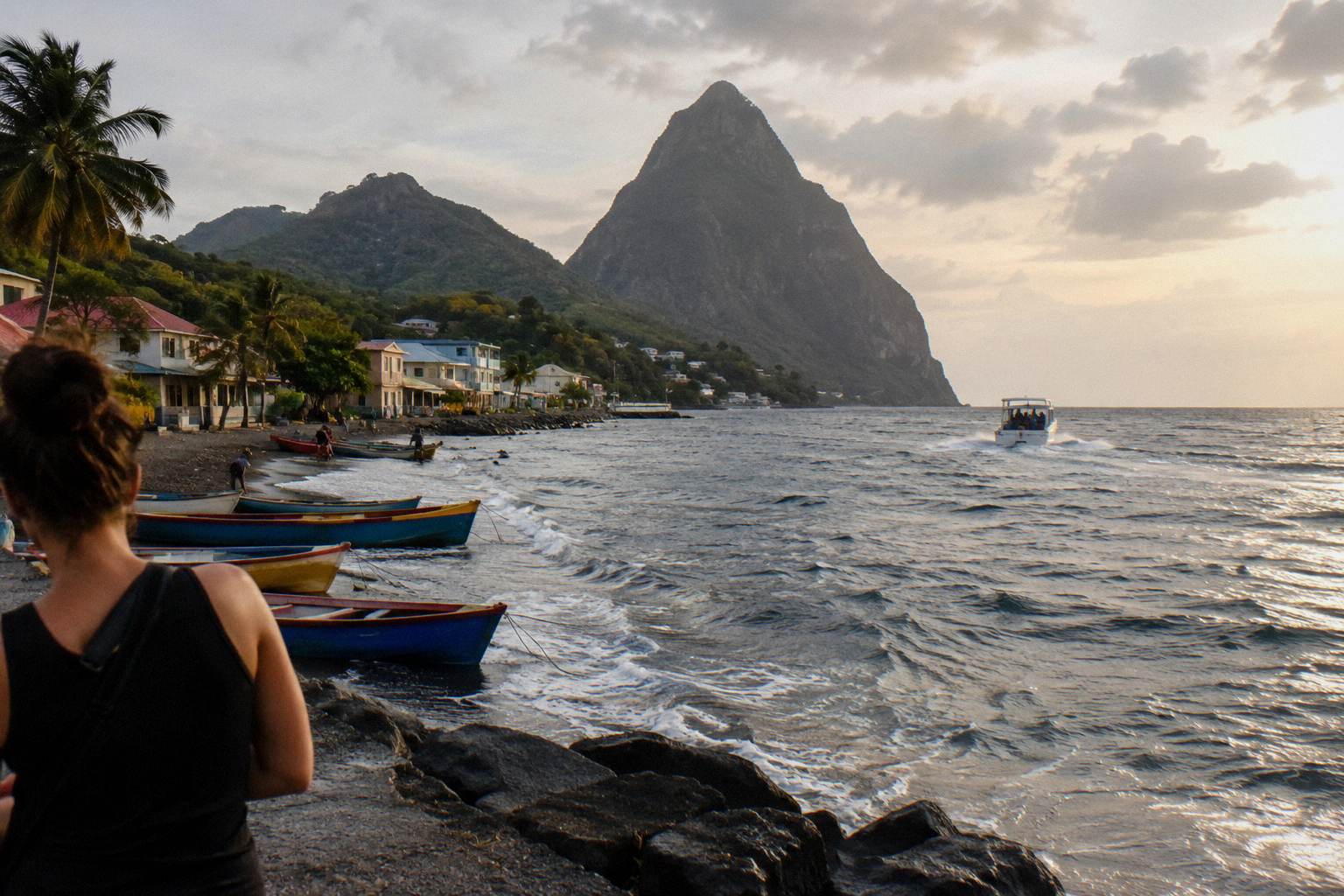
Each mistake deserves one honest correction. First, no stop-by-stop route is published: the boat follows the Caribbean coast for the length of the trip, and the only way to know how far south it goes is to ask. Second, sightings are chances governed by weather, season and the animals' movements, never guarantees, and no sighting percentage exists that any honest page could print. Third, the shared cruise includes no pick-up of any kind, while the private safari includes pier pick-up and drop-off for cruise passengers; neither includes hotel transfers. Fourth, season changes both the sea and the cast: December to May is typically calmer, February to April adds the humpback chance, and dolphins and pilot whales carry the rest of the year.
A compact view of the mistakes:
| Mistake | The honest correction |
|---|---|
| Assuming a Soufriere stop or Piton views | No published route promises either; ask the operator |
| Expecting a guaranteed sighting | Sightings depend on weather, season and animals |
| Expecting hotel pick-up | Neither trip includes it; plan your own transfer |
| Ignoring the season | Calmer seas December to May; humpbacks February to April |
| Mixing up the price bases | Shared is per person, private is per boat |
The last row is worth underlining because it catches careful readers too. The shared cruise at US$65 per person and the private safari at US$2,550.65 per boat are different bases and are never compared here as if both were per person. For illustration, not a quote: US$2,550.65 shared by 4 guests is about US$637.66 each; by 6 about US$425.11; by 8 about US$318.83; by 12 about US$212.55. Prices vary by date and group, and the operator's live listing confirms them.
The deeper fix for every mistake on this list is the same: message the operator before booking, ask the route question directly, and use the 24-hour free cancellation window if the answer changes your mind. That habit costs nothing and replaces every assumption this page has had to correct.
Common Questions About The West Coast Route
What Route Does A Whale And Dolphin Cruise Follow?
Boats follow the Caribbean, west coast out of Castries, because deep water lies close to shore there. Trips usually leave in the morning and last about three to four hours. No stop-by-stop route is published by any operator.
Does The Boat Go Toward Soufriere And The Pitons?
No published route promises a run to Soufriere or views of the Pitons. Ask the operator directly how far south your trip typically runs and whether conditions change that before you book.
Why Does The West Coast Suit This Trip?
Deep water lies close to the Caribbean shore, so the animals' habitat starts near land. Spinner dolphins are frequently sighted year-round, pilot whale pods can sometimes be seen through the year, and sperm whales are considered resident in the region.
How Long Is The Time At Sea On Each Trip?
The shared cruise runs about 3.5 hours from a morning departure, and the private safari about 4 hours with the start time arranged with the operator. Neither figure includes your transfer to Vigie Marina.
What Should You Ask About The Route?
Ask how far south the trip typically runs, whether Soufriere or the Pitons are ever in view, how the day's conditions change the plan, and how the guide decides where to search. Both trips carry free cancellation up to 24 hours before departure.
Which Season Changes The Sea Along The Coast?
Seas are typically calmer from December to May, and the official humpback window is February to April, with some operators reporting humpbacks from December. Hurricane season runs June 1 to November 30, and dolphins and pilot whales can be seen all year.