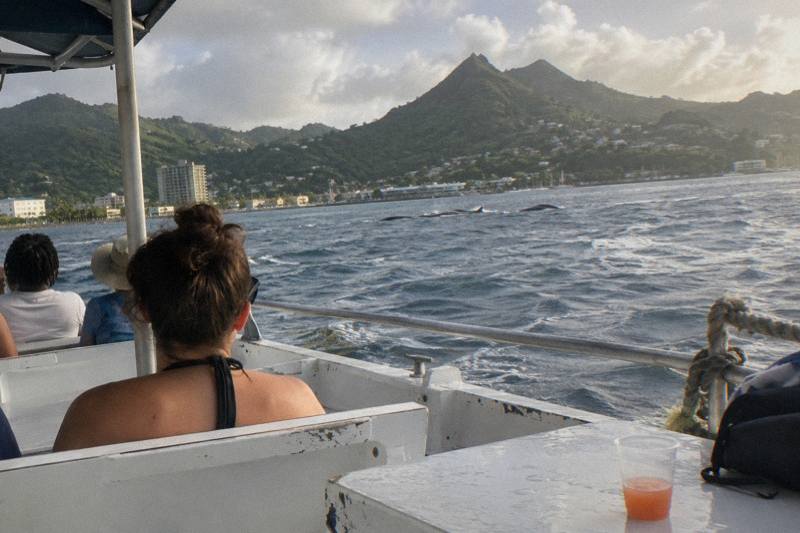
Whale Watching In The Caribbean: Saint Lucia Compared With Dominica
Two Eastern Caribbean islands, one shared population of sperm whales, and a decision most travellers make the wrong way round: which island actually fits the trip you are planning.
Short answer
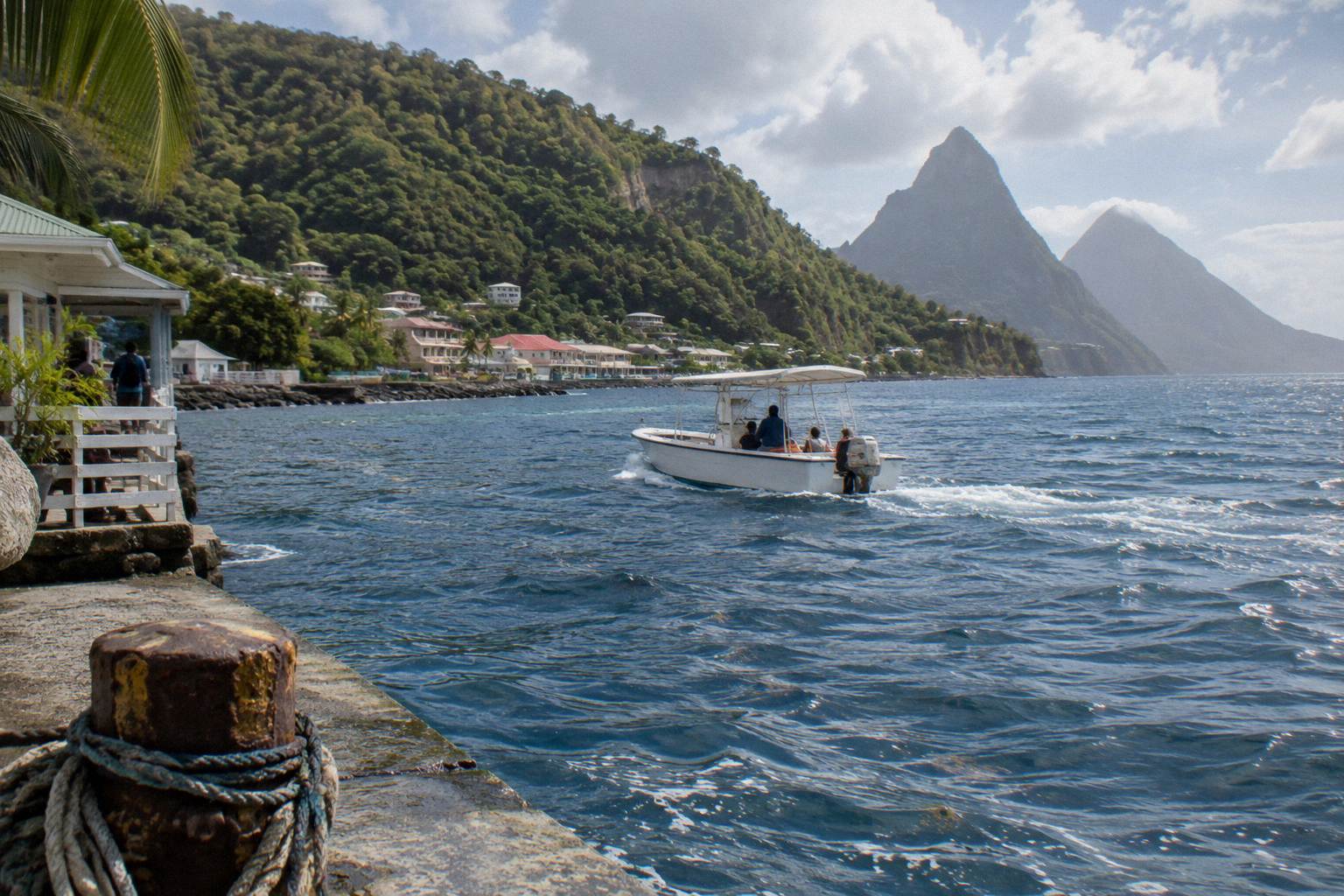
Saint Lucia runs whale and dolphin cruises year-round from Vigie Marina in Castries, from US$65 per person on a shared boat. Dolphins and pilot whales are seen all year, humpbacks pass through roughly February to April, and sperm whales are occasionally sighted offshore. Dominica's sperm whales belong to the same Eastern Caribbean population the Dominica Sperm Whale Project studies.
Whale Watching In The Caribbean: What Makes Saint Lucia A Fit?
Saint Lucia fits a whale watching plan because its trips run all year, its deep water sits close to the west coast, and the animals on the list, spinner, spotted and bottlenose dolphins plus resident pilot whales, are present in every month. Humpback whales add a passing window from about February to April. Both trips covered here depart Vigie Marina in Castries and last roughly half a day.
The comparison with Dominica usually starts from a travel-forum framing: one island for sperm whales, the other for everything else. That framing is too neat to be useful, and this page does not rank the two islands against each other. What it does instead is lay out, from verified sources, exactly what a Saint Lucia trip offers, and give you a fair checklist for judging any other island, because the honest answer to "which one" depends on your dates, your budget and what you want from a morning on the water.
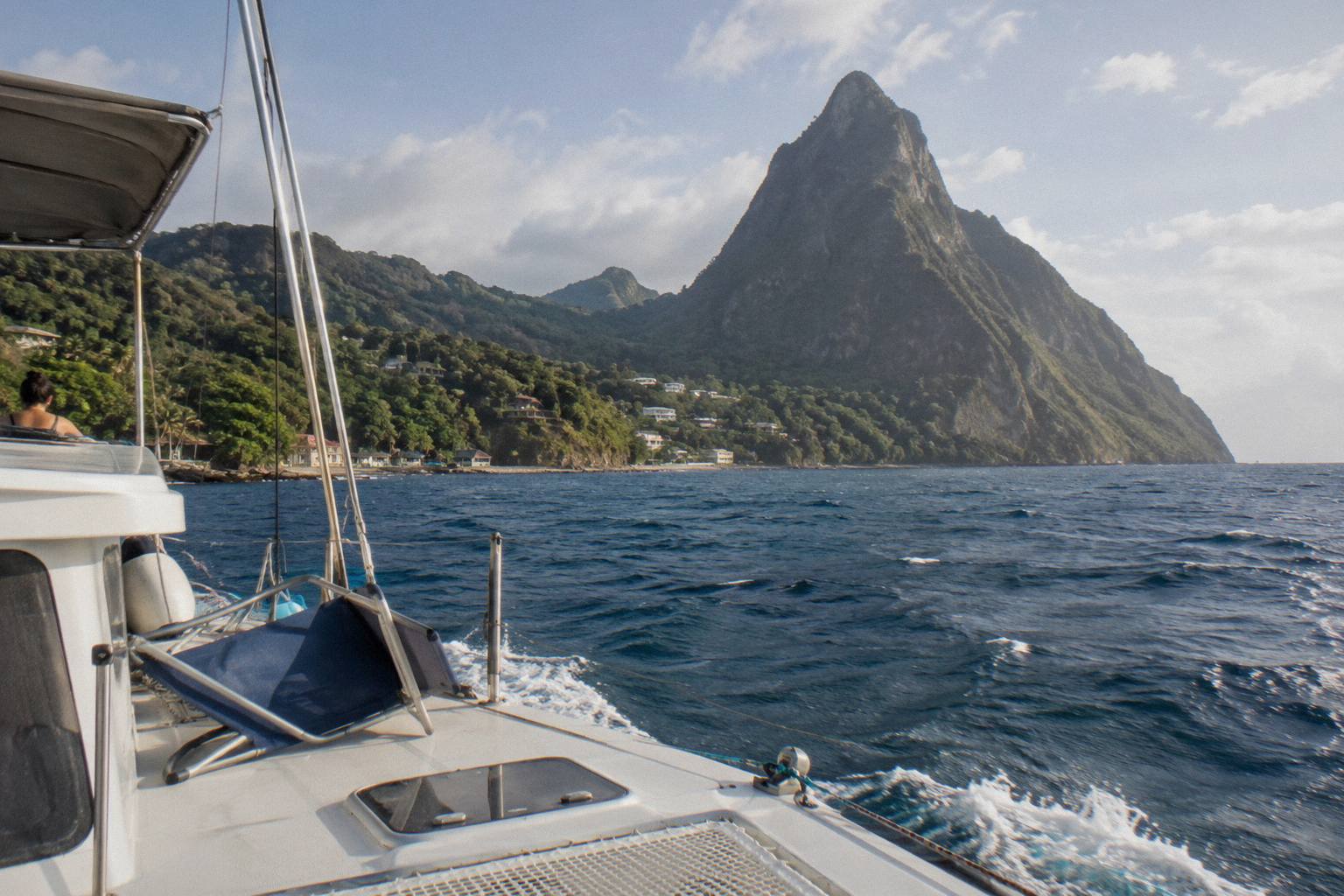
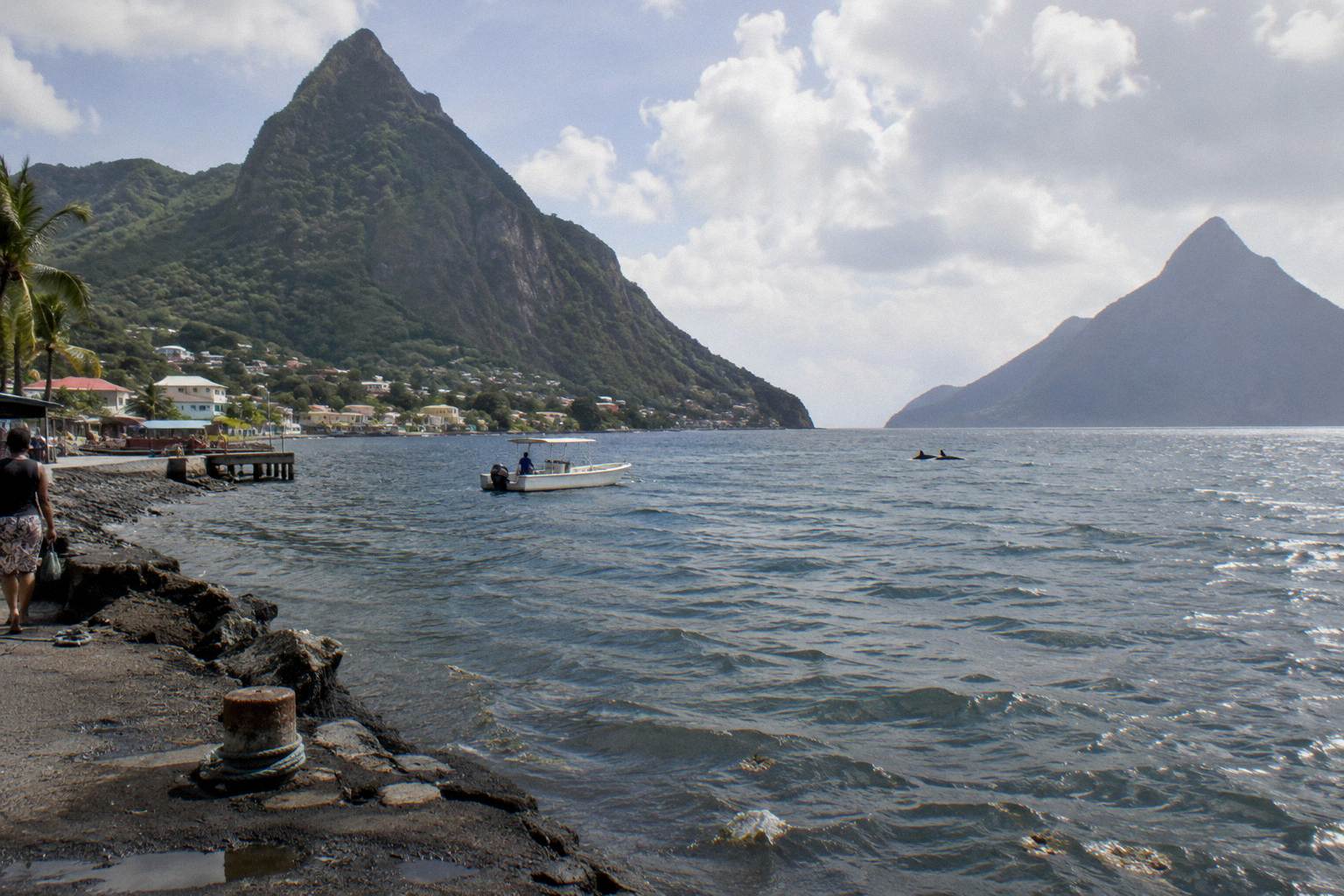
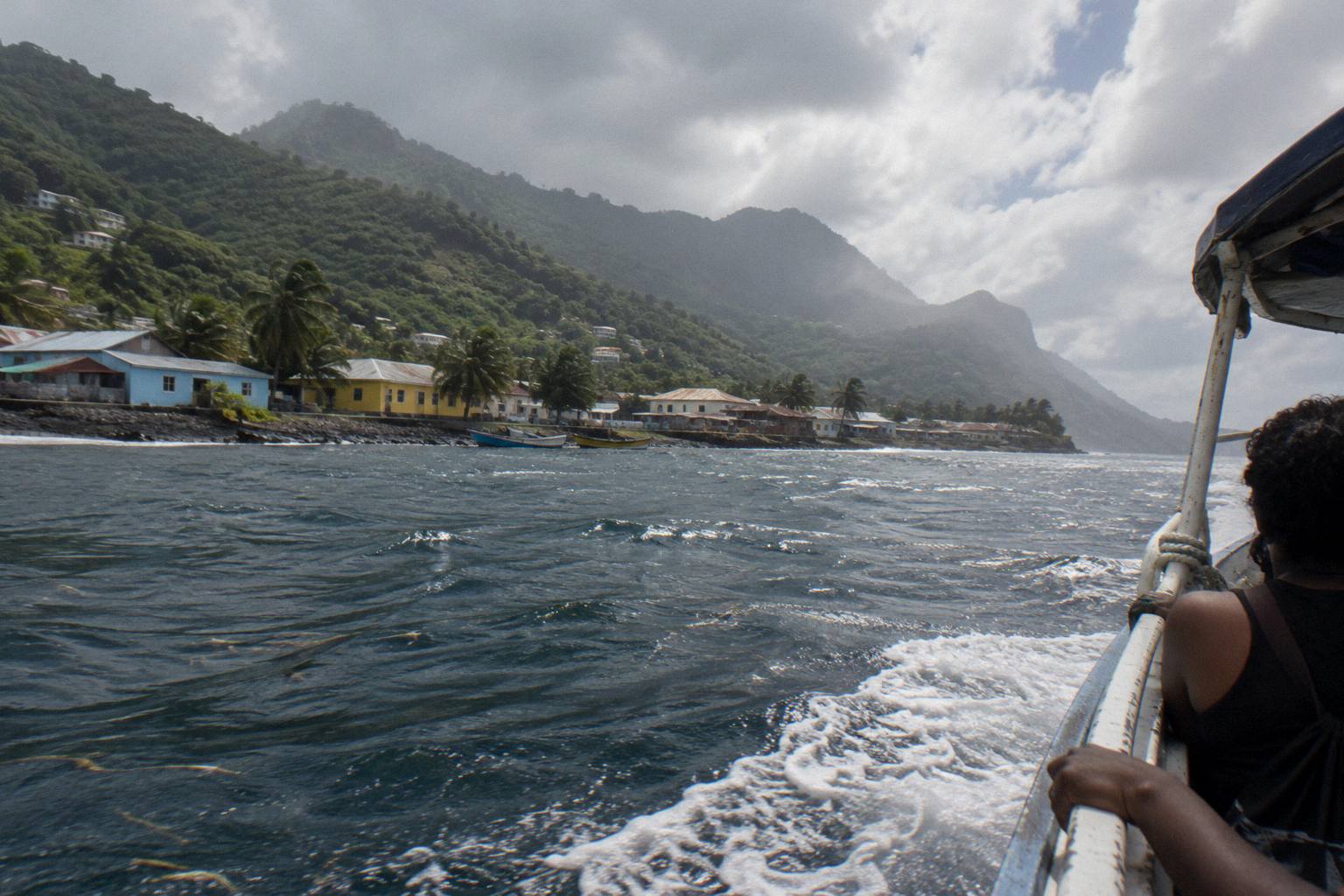
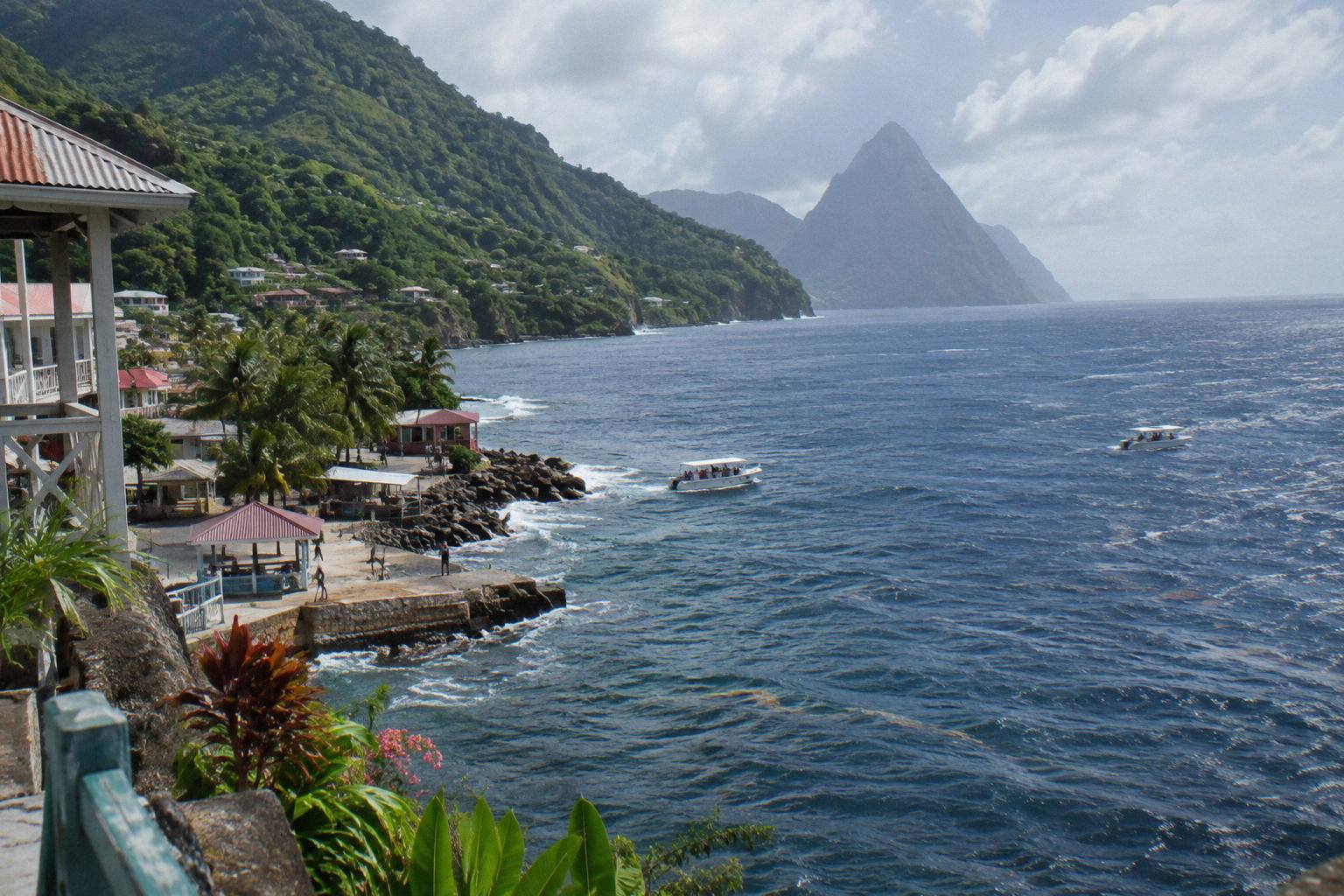
The geography does a lot of the work here. Deep water lies close to the west, Caribbean-facing coast, so animals can be seen not far off shore rather than after a long haul to a distant feeding ground. Boats follow the Caribbean coast, and the official trip pattern is a morning departure from the north-west lasting about three to four hours. That is a half-day commitment, not a full-day expedition, which matters if you are building a trip around beaches, hikes or a cruise ship stop.
For travellers deciding whether a Saint Lucia cruise is enough, the practical anchors are these. The St Lucia Whale Watching site covers the two trips that actually operate from Castries: the shared whale and dolphin watching cruise from US$65 per person, and a private charter priced per boat. Sightings on either are chances, never promises, and that is true on every island in the region, whatever a listing implies.
What Is Shared Between Saint Lucia And Its Neighbours?
The islands of the Eastern Caribbean share one body of water, one set of migrating humpbacks, and one population of sperm whales, so the animals do not respect borders. What differs is departure logistics, trip length, price and how each island's boats are run. The species list for Saint Lucia is published by its tourism board and is a chance-based list, not a menu.
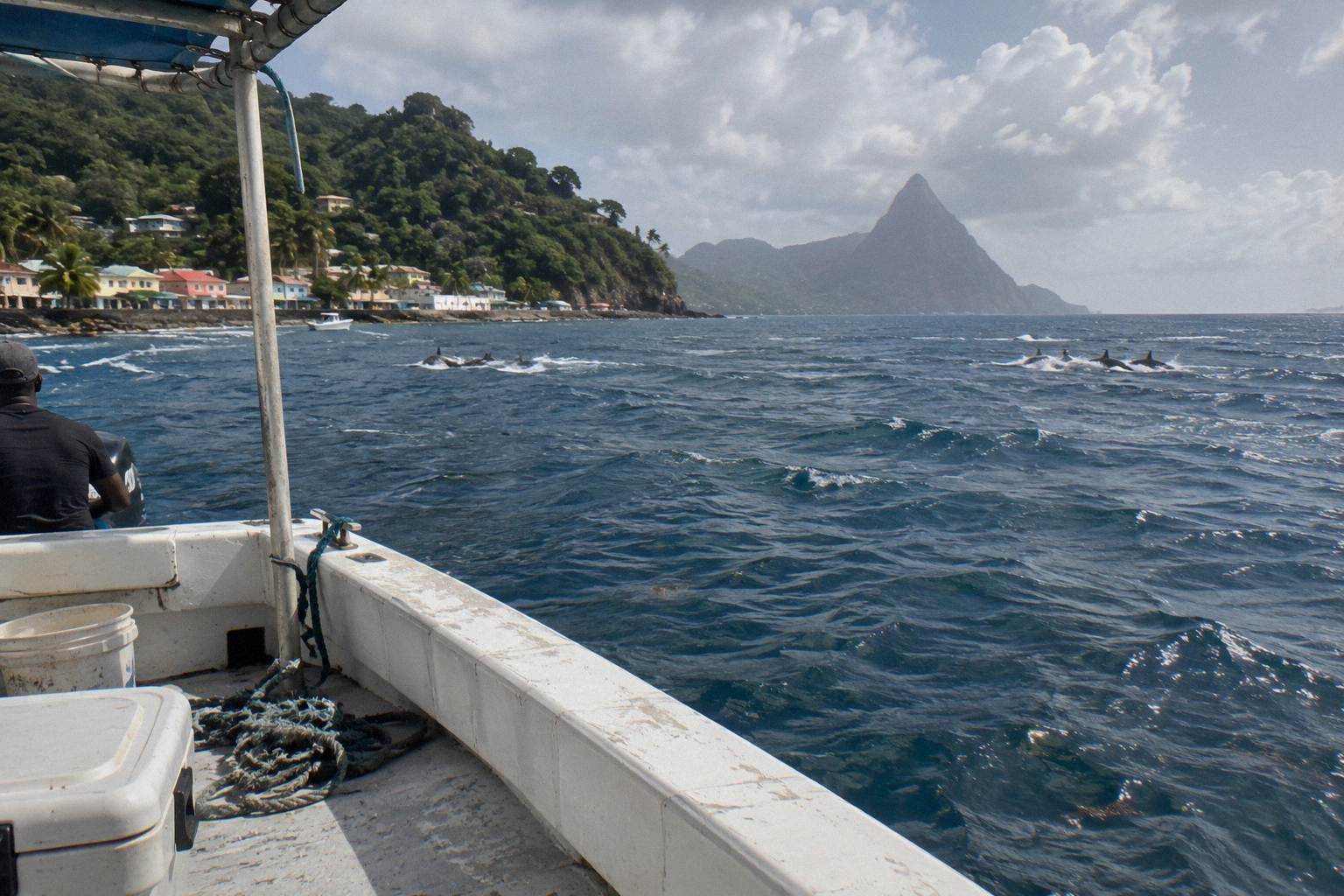
Start with what is genuinely common, because it prevents a common mistake: paying for a second island trip expecting completely different animals. Spinner dolphins are frequently sighted year-round around Saint Lucia; pantropical spotted and bottlenose dolphins are common; Fraser's, Risso's and striped dolphins are recorded less often. Pilot whales live in resident pods that can sometimes be seen through the year in close family groups. Humpbacks migrate through the wider region between about February and April, and some operators report them from December.
That regional picture means a February traveller choosing between islands is, in wildlife terms, choosing between the same passing humpbacks and the same resident dolphins, seen from different harbours with different operators. The deciding factors are practical ones: where the boat leaves from, how long it runs, what it costs, and what happens if the weather turns. For Saint Lucia those answers are concrete. Both trips here depart Vigie Marina in Castries, beside the island's George F. L. Charles airport, and last about 3.5 hours shared or about 4 hours private.
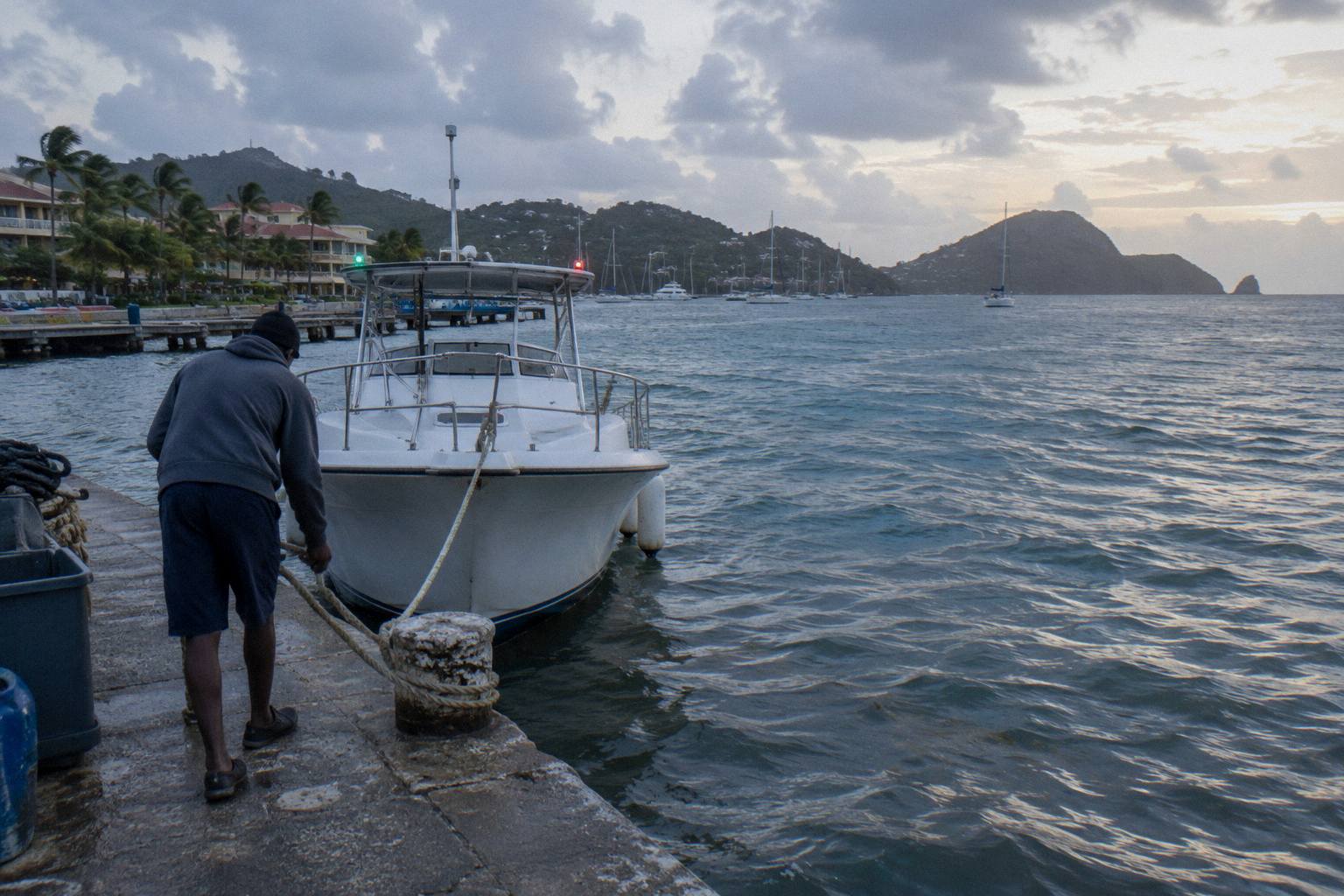
The two Saint Lucia options also illustrate how the same water can be sold two ways. The shared cruise is a per-person seat on a custom 60 ft boat with a local marine expert aboard, from US$65 per person. The private safari is a 50 ft catamaran chartered for one group of up to 40 guests, from US$2,550.65 for the whole boat. For illustration, not a quote: US$2,550.65 shared by 4 guests is about US$637.66 each; by 6 about US$425.11; by 8 about US$318.83; by 12 about US$212.55. Prices vary by date and group, and the booking page confirms them. If you want the fuller side-by-side, the guide on shared cruise versus private charter breaks down the differences.
The point for an island comparison is that this spread, a per-person shared trip and a per-boat private trip, is itself a comparison axis. When you research another island, check whether it offers both formats or only one, because that shapes both the price floor and the kind of day you get. An island with only private charters will feel expensive for couples; an island with only shared boats will frustrate a family wanting the boat to themselves.
What Does The Dominica Sperm Whale Project Study?
The Dominica Sperm Whale Project studies the Eastern Caribbean sperm whale population, the same population the sperm whales off Saint Lucia belong to. It is a long-running research programme, not a tour operator, and it publishes no island-by-island sighting counts, prices or schedules. No page should quote a Saint Lucia head count, because none exists.
This is the one Dominica fact that belongs on a Saint Lucia site, and it is worth getting right. Sperm whales around Saint Lucia are, in the official tourism board wording, "considered resident in the region and occasionally sighted in deeper waters." They belong to the wider Eastern Caribbean population studied by the Dominica Sperm Whale Project, a research effort that has followed these animals across the region for years. What the project does not publish, and what no traveller should expect to find, is a count of how many sperm whales live off any one island, or a promise of how often they surface beside a boat.
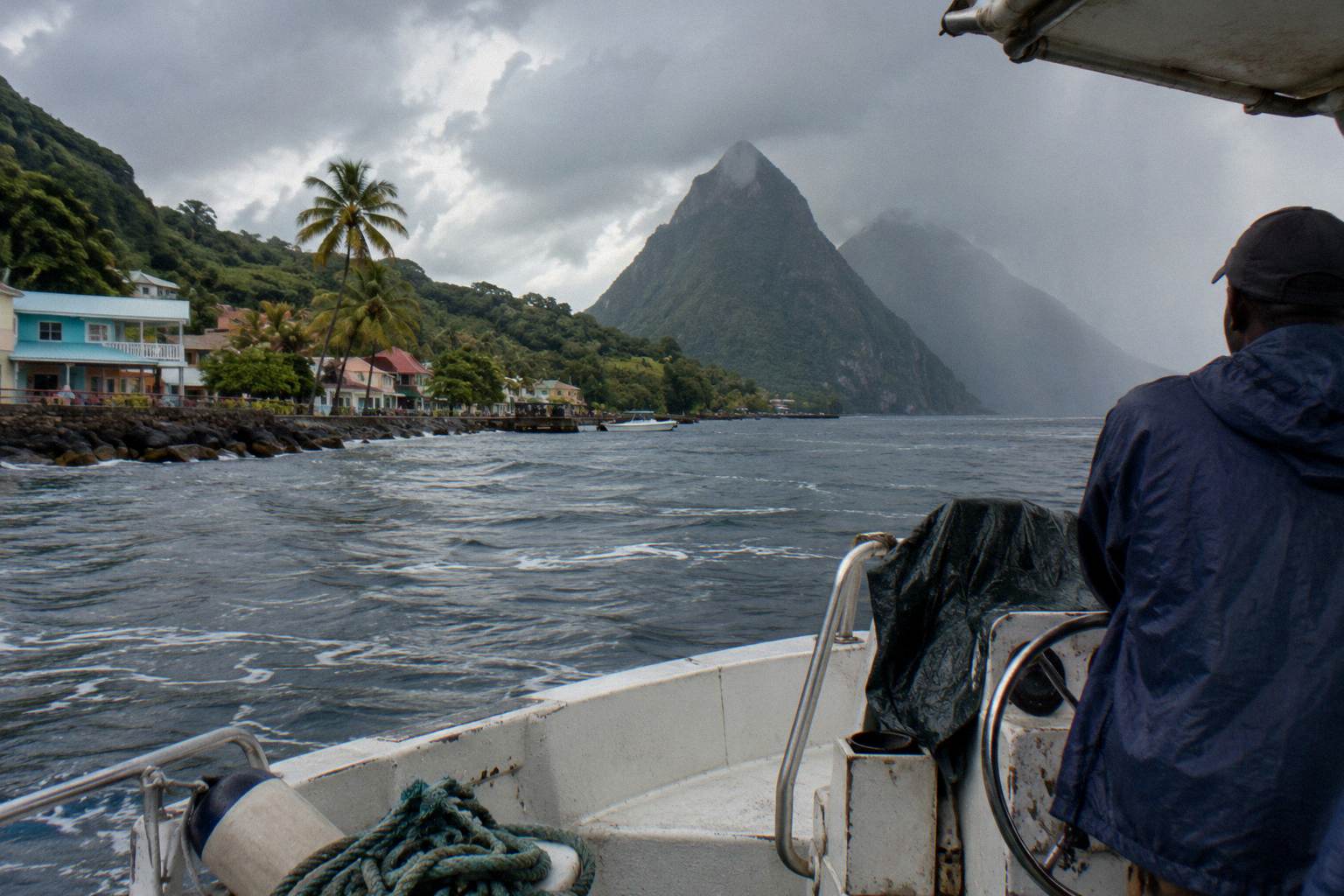
Why does this matter for your decision? Because the marketing shorthand "Dominica has sperm whales, Saint Lucia has dolphins" collapses a regional population into an island competition. The sperm whales off both islands are the same animals, moving across the same deep water. What you can honestly compare is the trip: Saint Lucia's cruises name sperm whales, humpbacks in season, pilot whales and spinner, spotted, Fraser's and common dolphins among the species seen, with a marine expert aboard who identifies what is in front of the boat. Whether a sperm whale appears on any given morning depends on weather, season and the animals' own movements, exactly as it does everywhere in the region. If the resident-population angle interests you, the guide on whether sperm whales live off Saint Lucia all year goes deeper on what the official wording does and does not claim.
A research project is also a useful filter when you read claims elsewhere. Any listing or article that prints a sighting percentage, a population figure or a guarantee for any Caribbean island is printing something the official sources do not support. The Saint Lucia tourism board's own species page states its sightings as chances, and this site follows that standard. Hold any other island's claims to the same bar before you book.
Which Season Suits Which Animals?
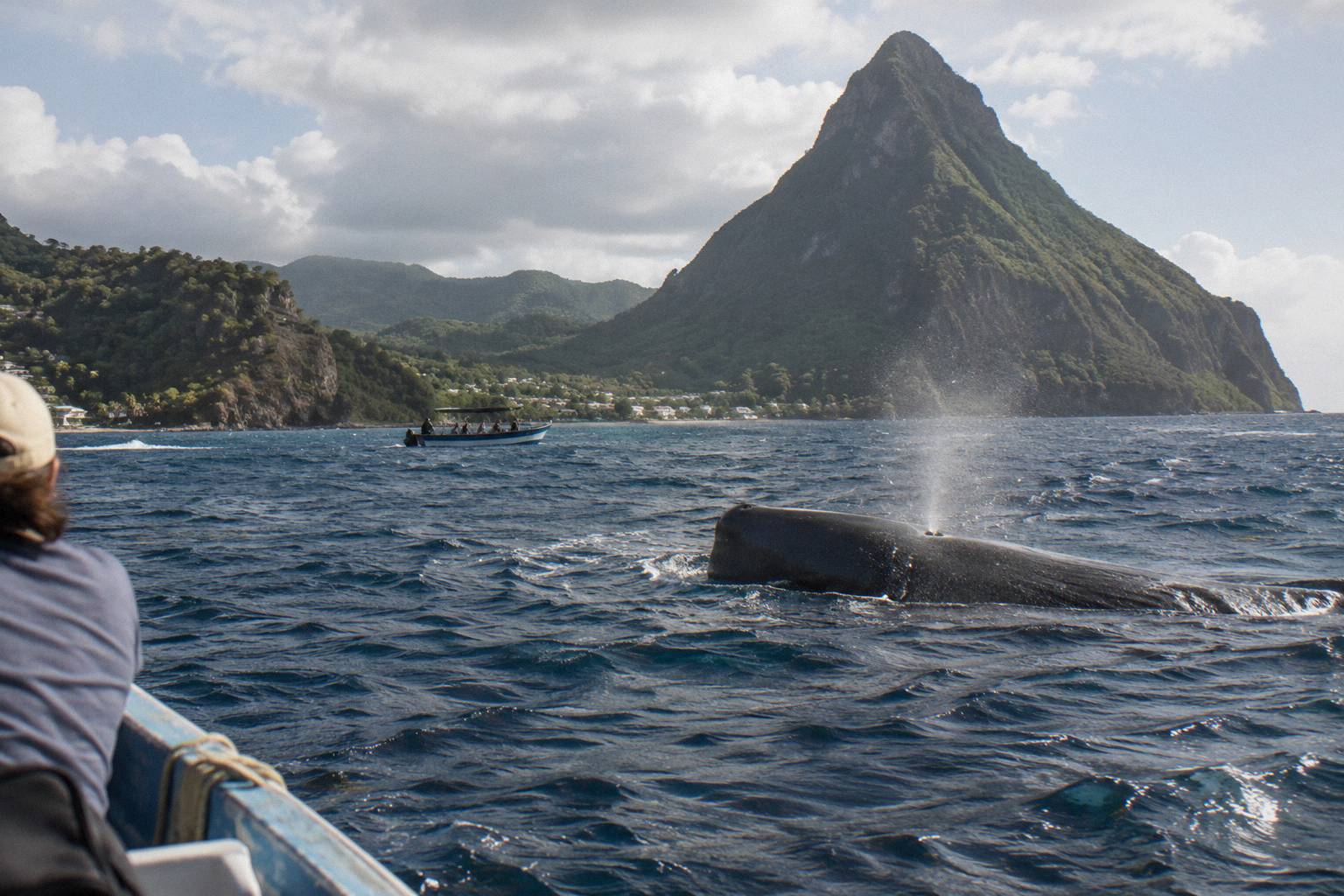
Dolphins and pilot whales are seen off Saint Lucia in every month, so any departure date works for them. Humpback whales pass through roughly February to April, with some operators reporting them from December; treat them as unlikely from May to November. Seas are typically calmer from December to May, which overlaps the humpback window neatly.
Season is where island comparisons go wrong fastest, because travellers assume the Caribbean has one whale season. It has several overlapping patterns. The year-round layer, dolphins and pilot whales, is always available. The migrating layer, humpbacks, is a late-winter to spring phenomenon. The comfort layer, calmer seas, runs December to May. A traveller who only cares about being on the water in good conditions can go in almost any month outside the official Atlantic hurricane season of June 1 to November 30, which the Saint Lucia Meteorological Service defines.
| Period | What the sources say | Planning note |
|---|---|---|
| February to April | Official humpback migration window | Best fit if humpbacks are the priority |
| December to May | Seas typically calmer | Comfortable conditions overlap the humpback window |
| December to January | Some operators report humpbacks early | Treat as a bonus, not a plan |
| May to November | Humpbacks unlikely; dolphins and pilot whales still present | Year-round species carry the trip |
| June 1 to November 30 | Official Atlantic hurricane season | Weather, not wildlife, is the variable |
The table is a planning table of what the sources say, nothing more. No month-by-month sighting rates exist for Saint Lucia, and none are printed here. Sightings depend on weather, season and the animals' movements, so every sighting is a chance and never a promise, in every month, off every island. If you are weighing a specific month, the guide to the best time to see whales in Saint Lucia month by month walks through the same calendar in more detail.
For the island comparison, season cuts both ways. If your travel dates are fixed to, say, a July school holiday, the humpback question is closed everywhere in the region and your real comparison is which island gives you the better dolphin and pilot whale trip. If your dates are flexible and humpbacks are the goal, February to April in Saint Lucia puts you in the window with calmer seas, and you can verify the equivalent claim for any other island against its own official tourism sources rather than operator advertising.
What Does A Saint Lucia Trip Include?
The shared cruise from Vigie Marina runs about 3.5 hours on a custom 60 ft boat with a local marine expert aboard, and includes bottled water, soft drinks and rum punch, from US$65 per person. The private safari runs about 4 hours on a 50 ft catamaran for up to 40 guests, with drinks, snacks, local fruit, a guide and cruise pier pick-up included, from US$2,550.65 per boat.
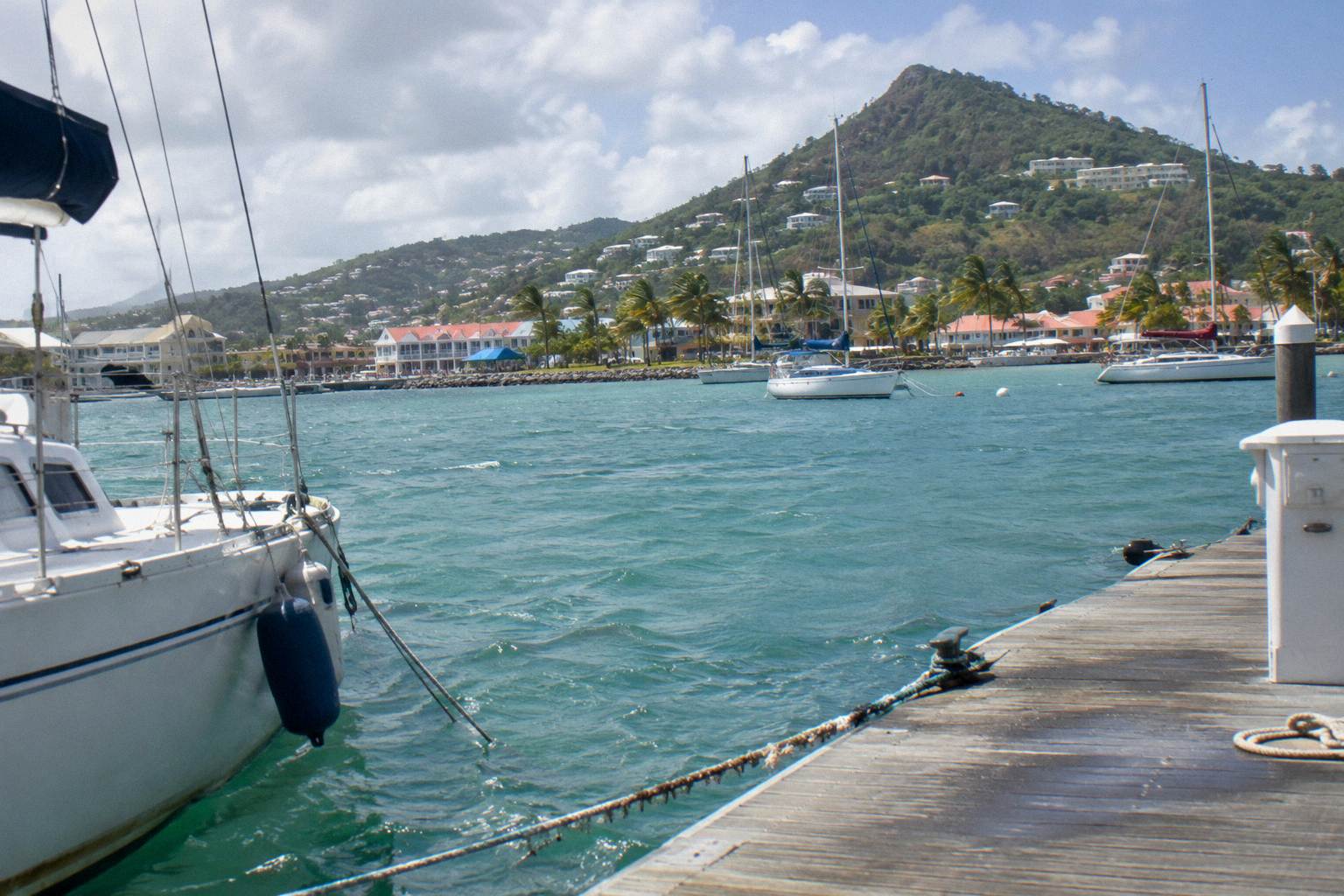
The inclusions tell you what you are actually buying, and they are worth reading closely before comparing islands, because two listings at similar price points can differ by a whole category of comfort. On the shared cruise, gratuities and hotel pick-up are not included, and there is no hotel pick-up on that trip at all: you make your way to Vigie Marina in Castries Harbour, which sits near the airport and a short distance from the Pointe Seraphine cruise terminal, with taxis readily available. On the private safari, hotel pick-up and drop-off are likewise not included, but cruise ship pier pick-up and drop-off are, which makes it the natural fit for a ship day.
| Feature | Shared Whale And Dolphin Watching Cruise | Private Whale And Dolphin Safari |
|---|---|---|
| Price basis | From US$65 per person | From US$2,550.65 per boat, whole group |
| Length | About 3.5 hours | About 4 hours |
| Boat | Custom 60 ft vessel | 50 ft catamaran, up to 40 guests |
| Departure | Vigie Marina, Castries, morning | Vigie Marina, Castries, time arranged with operator |
| Who else is aboard | Other guests, shared boat | Your group only |
| Drinks and food | Bottled water, soft drinks, rum punch | Soft drinks, coffee, tea, water, light snacks, rum punch, local fruit |
| Crew expertise | Local marine expert | Guide |
| Cruise pier pick-up | Not included | Included |
| Hotel pick-up | Not included | Not included |
| Cancellation | Free up to 24 hours before | Free up to 24 hours before, and for bad weather |
| Rating | 4.5 from 200 reviews | 4.5 from 75 reviews |
Two details deserve a flag. The private safari's confirmation is not instant: the operator confirms the booking, so if your dates are tight, book early rather than the night before. And the shared cruise's group size is not published, so if a crowded deck matters to you, that is a question for the operator when booking. Children travel with an adult on both trips, and no minimum age is printed, so families should ask about ages when booking; the family guide to a whale and dolphin cruise covers that planning in full.
The operator statements are worth framing correctly too. Captain Mike's, which runs the shared cruise, says it has over 60 years of experience and belongs to the Hackshaw family. Hackshaw's Boat Charters, which runs the private safari, says it has operated since 1953 and is World Cetacean Alliance certified. These are the operators' own statements, offered here as background rather than as independent rankings, and both trips are described without ranking one above the other.
How Do You Compare Two Islands Fairly?
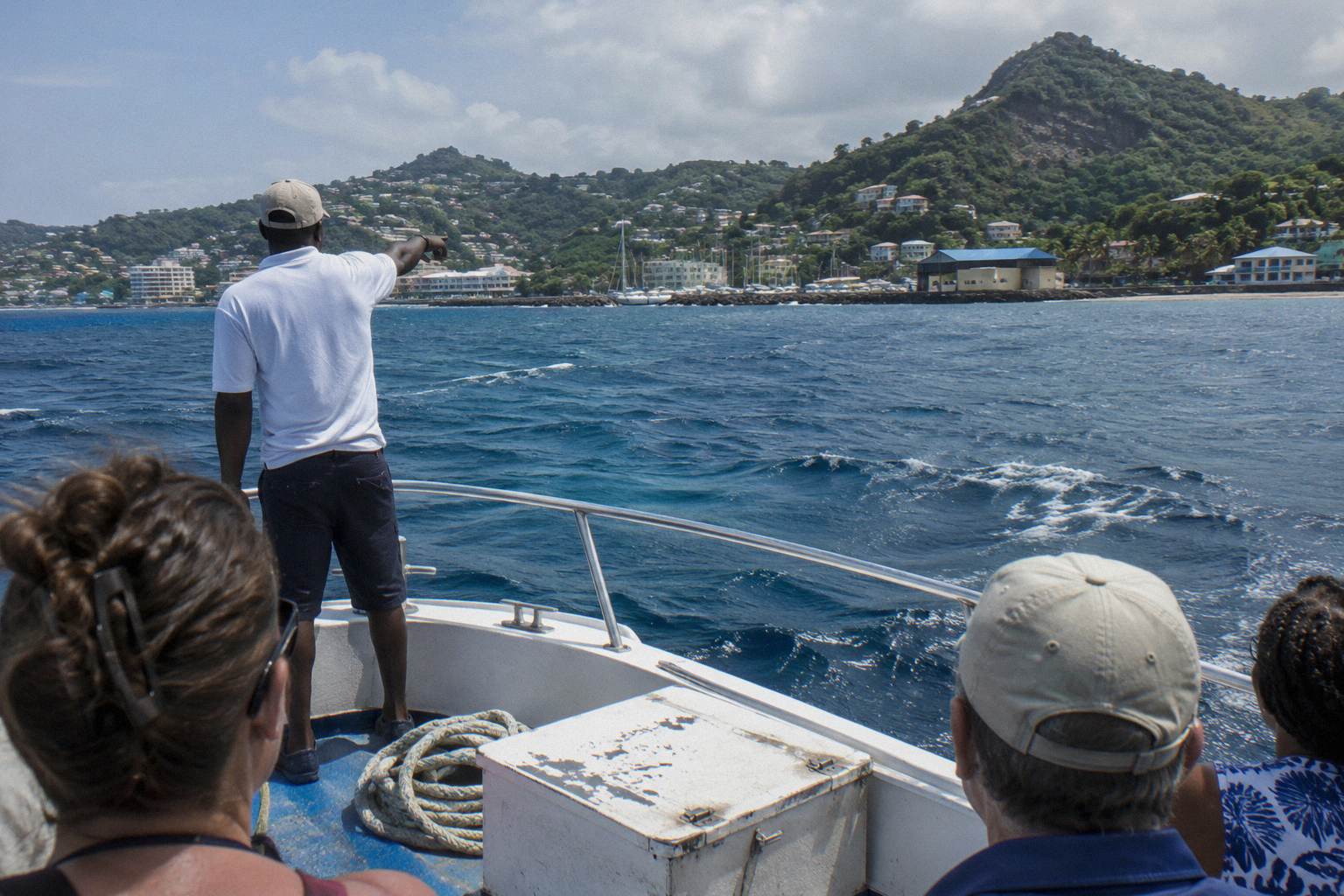
Compare islands on published, verifiable facts: what species the official tourism board names as chances, what season each source states, where boats depart, trip length, price with its basis stated, inclusions, and the cancellation terms. Never compare a per-person price against a per-boat price, and never accept a sighting percentage from either island, because no official source publishes one.
A fair comparison has a method, and the method matters more than the conclusion. The temptation is to read reviews from two islands and pick the one with better stories, but reviews describe individual mornings, and every morning on the water is a sample of one. The sturdier comparison uses the categories below, filled in only from official tourism sources and the operators' live listings, with anything unverifiable marked as a question to ask rather than a fact to assume.
| Comparison axis | What to look up | What Saint Lucia's sources say |
|---|---|---|
| Species list | Official tourism board page, stated as chances | Dolphins, pilot whales, sperm whales occasionally, humpbacks February to April |
| Season | Official migration window, not operator ads | Year-round trips; humpback window about February to April |
| Departure point | The actual marina, not the resort name | Both trips depart Vigie Marina, Castries |
| Trip length | Hours on the water, stated | About 3.5 hours shared, about 4 hours private |
| Price and basis | Per person or per boat, in the same sentence | From US$65 per person, or from US$2,550.65 per boat |
| Cancellation | Window and weather policy | Free up to 24 hours before; private also free for bad weather |
| Viewing standards | Licensed operators, regulated approach | Slow approach, no chasing, no touching or feeding |
The price trap deserves its own warning because it is the most common one. A shared per-person fare and a private per-boat charter are different products, and comparing US$65 with US$2,550.65 as though both were per-person figures is meaningless. If you want a per-person view of the charter, the form to use is labelled arithmetic: for illustration, not a quote, US$2,550.65 shared by 4 guests is about US$637.66 each, and by 12 about US$212.55. The shared cruise at US$65 per person is US$130 for 2, US$260 for 4, US$390 for 6. Prices vary by date and group, and the booking page confirms them.
Responsible viewing is a final, underrated axis. Licensed operators in Saint Lucia follow regulated distance guidelines, limit time near the animals, provide life jackets and safety briefings, and monitor sea conditions, according to the official tourism board. Boats approach slowly, never chase, and leave the animals space to move on; passengers do not touch or feed them. When you evaluate another island, look for the same statements from its official sources. The guide on responsible whale and dolphin watching in Saint Lucia explains what those practices look like from the deck.
Can You Build A Trip Around One Cruise?
Yes. A Saint Lucia whale cruise is a morning commitment of about 3.5 to 4 hours from Vigie Marina, which leaves the rest of the day free for beaches, hikes or a walk around Castries. Cruise passengers can make it work on a ship day, and the private safari includes pier pick-up and drop-off, but check your ship's all-aboard time and ask the operator about timing.
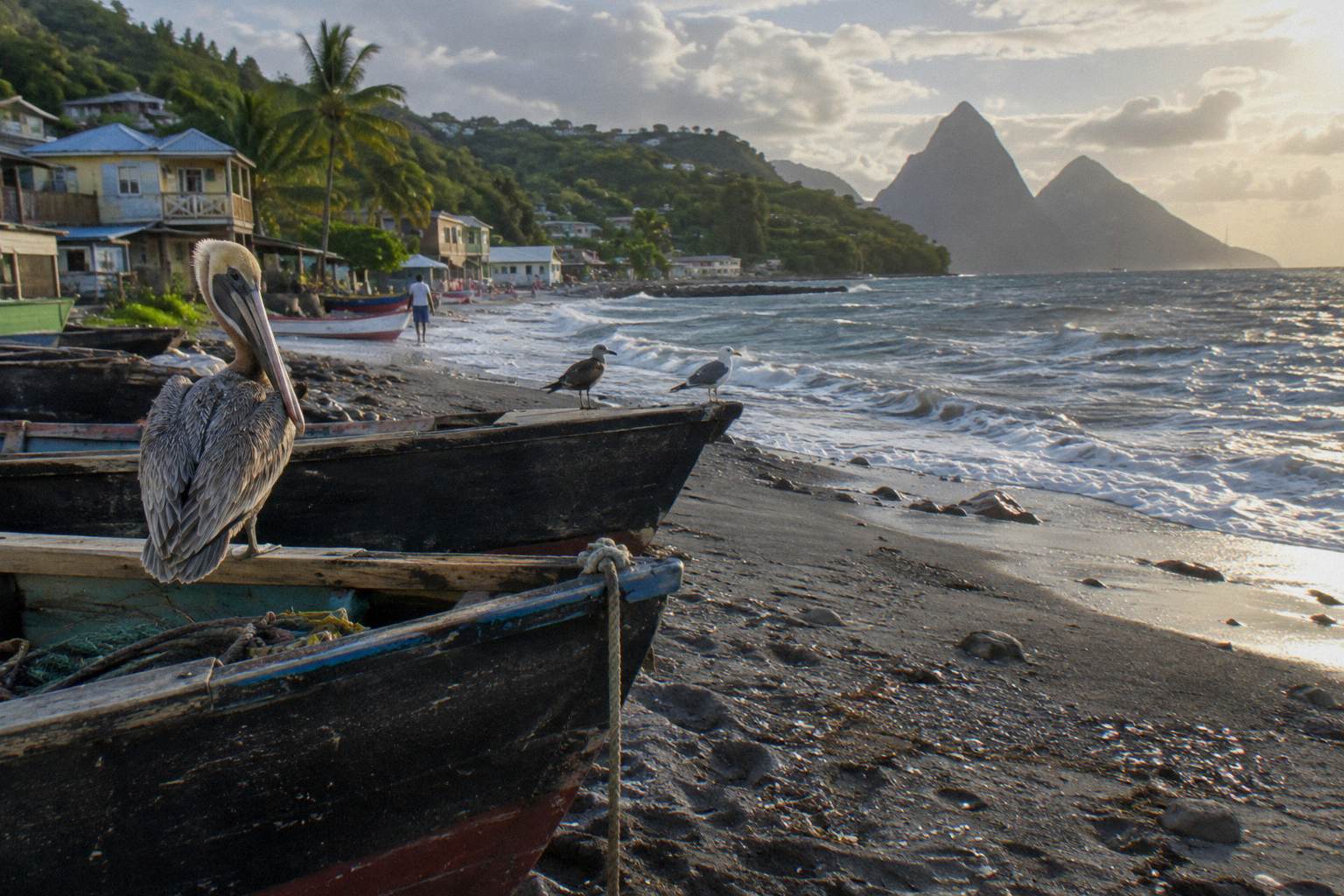
This is where the island comparison becomes practical. Half a day on the water is a component, not a destination, and Saint Lucia's trip structure makes it easy to slot into almost any itinerary. The shared cruise departs in the morning, so a hotel-based traveller can be back ashore by early afternoon with the day still ahead. For the arithmetic on budgeting the whole outing, the guide on what a whale and dolphin cruise costs in Saint Lucia works through the price picture, and the packing guide on what to bring on a whale and dolphin cruise covers sun protection, a hat, a light layer for spray and a camera.
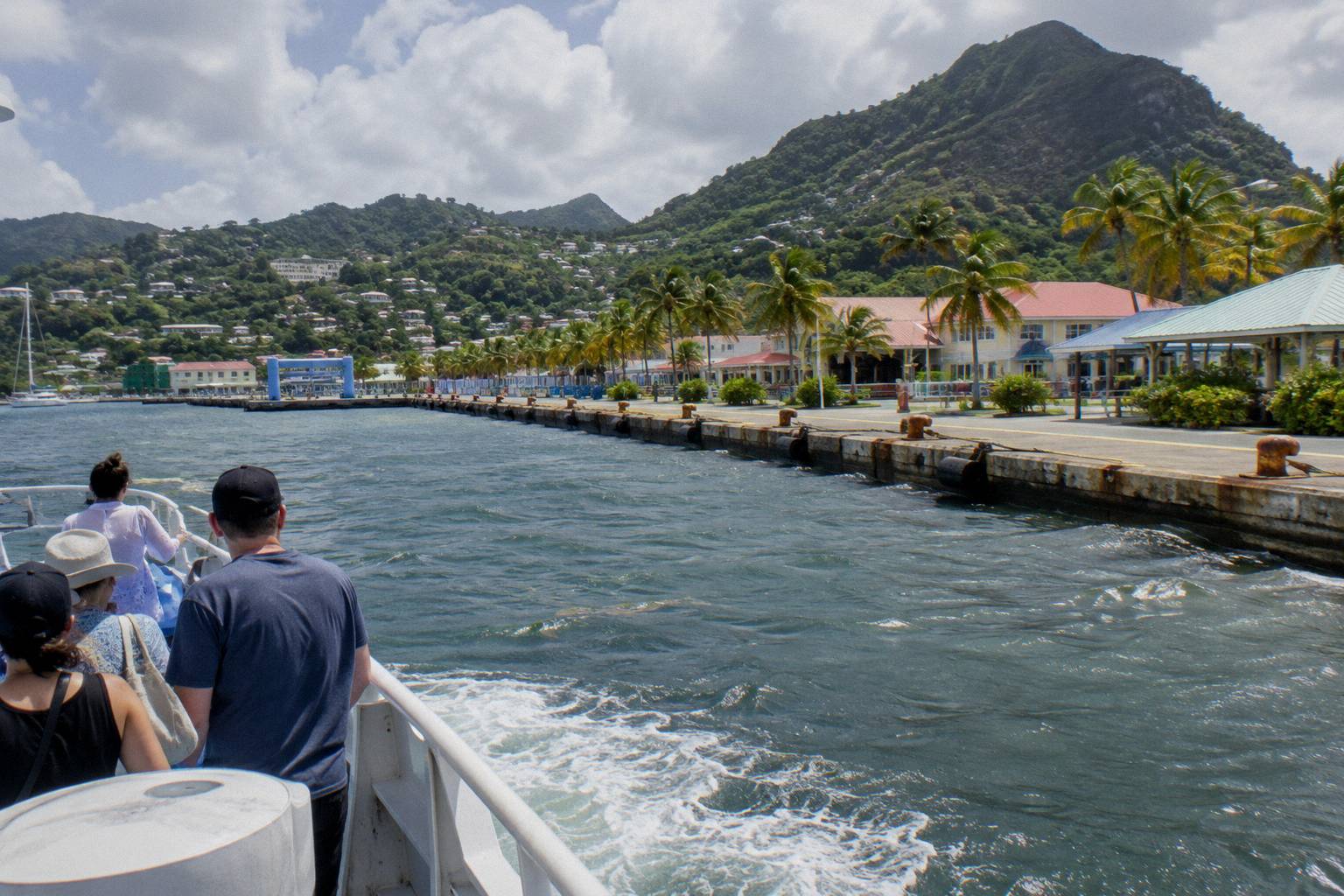
Cruise ship passengers have the tighter version of this question, and the honest answer is that it depends on your ship's schedule, which no tour page can know. The private safari includes cruise ship pier pick-up and drop-off, which removes the transfer question entirely. The shared cruise does not include any pick-up, but it departs Vigie Marina, a short distance from the Pointe Seraphine cruise terminal, with taxis readily available. Check the ship's all-aboard time against a roughly 3.5 or 4 hour trip length before you book either, and ask the operator about timing when you do. The guide on fitting a whale cruise between ship arrival and departure goes through the port logistics.
The comparison lesson is that "which island" often dissolves into "which trip fits my day." A traveller with one port day in Castries is not choosing between islands at all; they are choosing between a morning on the water and something else in Saint Lucia. A traveller with a week can, if they wish, take a whale cruise here and still have six and a half days for everything else the island offers. Only a traveller whose entire purpose is one species, on one schedule, is really making an island-for-island choice, and for them the right move is verifying the other island's claims against its own official sources, exactly as this page does for Saint Lucia.
Common Mistakes When Comparing Islands
The mistakes that skew island comparisons are comparing a per-person price against a per-boat price, trusting a sighting percentage no official source publishes, assuming the Caribbean has one whale season, booking a second island for animals the first one shares, and skipping the cancellation terms. Each one is avoidable with the checklist in this guide.
Most of these come from treating marketing shorthand as data. "Guaranteed sightings" does not exist anywhere in this region; sightings depend on weather, season and the animals' movements. A species total, a head count or a population estimate for any single island is not published by the official sources and should not appear in your decision. And the humpback season is regional, so a February trip anywhere in the Eastern Caribbean is a February humpback-window trip, while a July trip nowhere in the region is.
The per-person trap returns here because it is the expensive one. If a listing on another island quotes a charter price, establish the basis before comparing it with Saint Lucia's from US$65 per person fare, and remember that the private safari here, from US$2,550.65 per boat for up to 40 guests, is a different product entirely: a whole boat, a guide, pier transfers, drinks, snacks and fruit, arranged with the operator. Cancellation terms are the last check on both islands: free up to 24 hours before departure is the standard on both Saint Lucia trips, but verify the equivalent before paying anywhere else.
The quieter mistake is comparing reviews across islands as though they measured the same thing. A 4.5 from 200 reviews and a 4.5 from 75 reviews are both honest numbers, printed here with their counts, but they sample different travellers on different boats in different months. Reviews tell you how a trip is run; the species list, the season and the price tell you what you are buying. Weigh the second set first, and you will usually find the island question answers itself.
Before you leave the question behind entirely, it is worth settling what you would actually book on each side of the comparison. On the Saint Lucia side, the choice is between a shared morning cruise and a private charter, and both hold their own in a fair island comparison.
Common Questions About Whale Watching In The Caribbean
Is Saint Lucia Or Dominica Better For Whale Watching?
This site does not rank islands. Saint Lucia offers year-round cruises from Castries with dolphins, pilot whales, occasional sperm whales and a February to April humpback window; the sperm whales around both islands belong to the same Eastern Caribbean population the Dominica Sperm Whale Project studies. Compare trips on species lists, season, price basis, inclusions and cancellation terms.
When Is Whale Watching Season In The Caribbean?
It depends on the animal. Dolphins and pilot whales are seen off Saint Lucia all year. Humpback whales pass through the region roughly February to April, with some operators reporting them from December, and they are unlikely from May to November. Seas are typically calmer from December to May.
How Much Does A Whale Watching Cruise In Saint Lucia Cost?
The shared Whale And Dolphin Watching Cruise starts from US$65 per person for about 3.5 hours. The Private Whale And Dolphin Safari starts from US$2,550.65 per boat, for the whole group of up to 40 guests, for about 4 hours. Prices vary by date and group, and the booking page confirms them.
Can You See Sperm Whales In Saint Lucia?
Sperm whales are considered resident in the region and occasionally sighted in deeper waters, in the official tourism board wording. They belong to the wider Eastern Caribbean population studied by the Dominica Sperm Whale Project. No Saint Lucia head count is published, and every sighting is a chance, never a promise.
Is Whale Watching In Saint Lucia Good For Cruise Ship Passengers?
It can be. The private safari includes cruise ship pier pick-up and drop-off. The shared cruise departs Vigie Marina, a short distance from the Pointe Seraphine cruise terminal, with taxis readily available, but it includes no pick-up. Check your ship's all-aboard time against the trip length and ask the operator about timing before booking.
What Happens If You Don't See Any Whales?
There is no rebook-if-no-sighting policy on either trip, so never book expecting one. Both trips cancel free up to 24 hours before departure, and the private safari is also cancelled free for bad weather. The shared cruise operator says that if the captain cancels for unsafe weather, there is an alternative date or a refund.