Best Months For A Whale And Dolphin Cruise In Saint Lucia, Month By Month
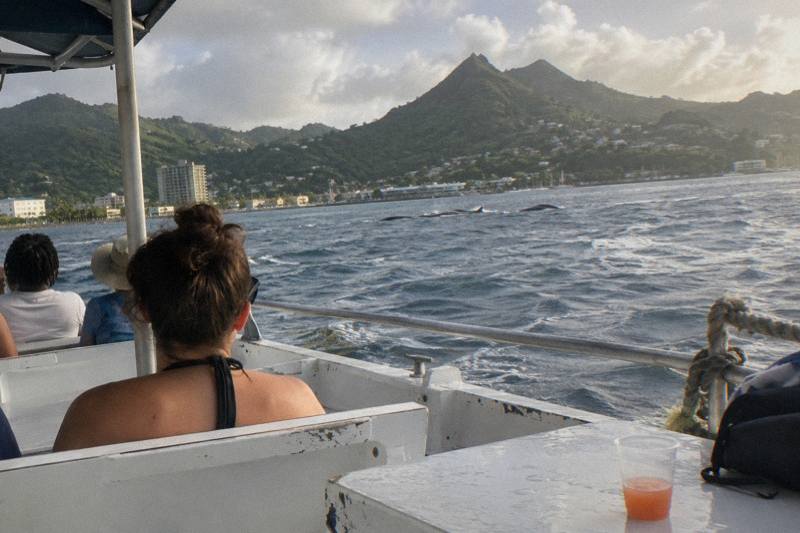
Dolphins and pilot whales swim off Saint Lucia's west coast every month of the year. The only thing the calendar changes is the chance of humpback whales, which pass through between about February and April, and how smooth the ride out is likely to feel.
Short answer
Dolphins and pilot whales can be seen all year, so any month works for a cruise. For humpback whales, the official window is about February to April, with some operators reporting them from December. Seas are typically calmer from December to May. May to November still offers dolphins and pilot whales, but treat humpbacks as unlikely.
What Is The Best Month For A Whale And Dolphin Cruise?
There is no single best month, because the answer depends on what you want from the water. Dolphins and resident pilot whale pods can be seen in every month of the year. Humpback whales pass through Saint Lucian waters between about February and April, so that official window is the strongest period for a chance of a humpback. Seas are typically calmer from December to May, which matters if the ride matters to you.
That is the whole decision in three lines, but the reasoning behind each line is worth understanding before you fix a date. The Saint Lucia tourism board's guidance splits the year into two overlapping patterns: a year-round population of small cetaceans, and a migratory season for humpbacks that adds a bigger animal to the possibilities for roughly a quarter of the year. Some operators report humpbacks from as early as December, ahead of the official window, and the shoulder weeks either side of February to April are where expectations should stay modest.
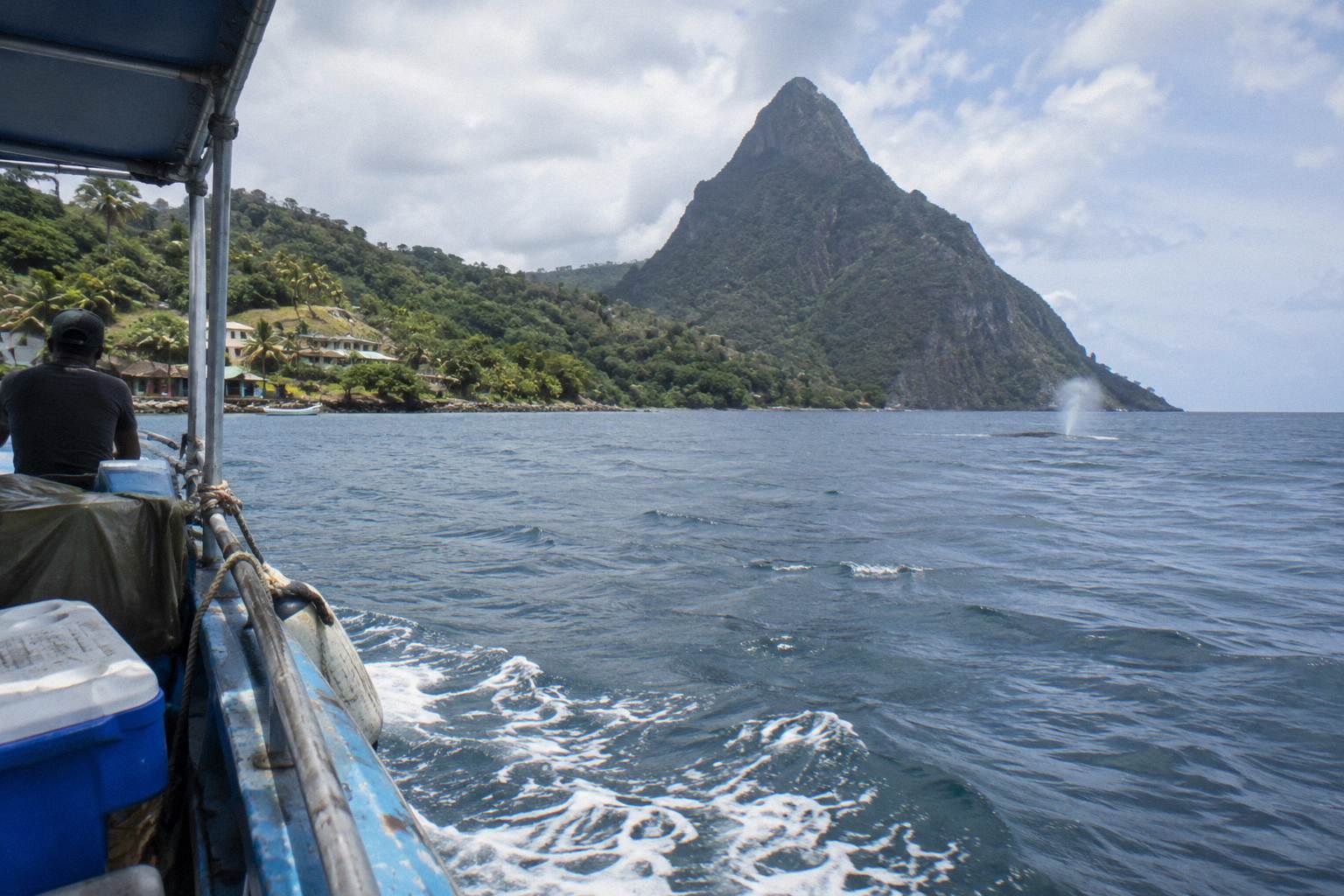
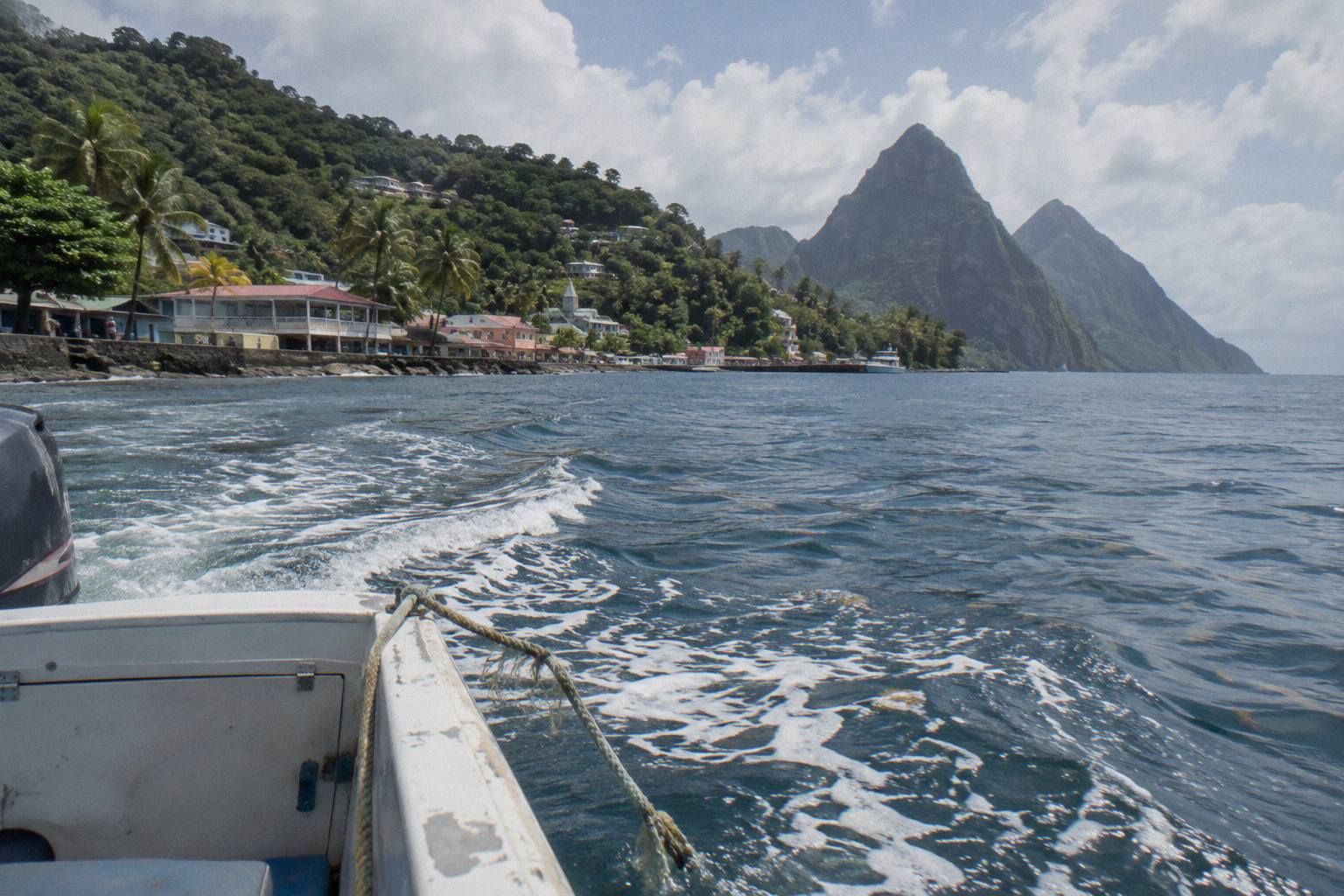
Deep water lies close to the west, Caribbean, coast of the island, which is why the animals can appear not far from shore and why the boats follow that coast rather than heading far out. Nothing about that geography changes with the calendar. What changes is which species are moving through the region and how the Atlantic side of the weather behaves.
The two trips covered on this site, the shared whale and dolphin cruise from Vigie Marina and the private safari, run year-round, so the month you choose is a wildlife and comfort decision rather than an availability one. If you are still weighing whether the excursion delivers value at all, the question of whether the whale and dolphin excursion is worth it is covered separately.
It also helps to frame the decision the way the official sources frame it, as a question of what is added rather than what is missing. A March trip is not a better version of a July trip; it is the same dolphin-and-pilot-whale experience with a humpback possibility stacked on top, and usually with smoother water underneath. A July trip, in turn, is not a diminished version; it is the resident show with fewer boats sharing it. Planners who grasp that framing early tend to pick months that match their expectations instead of fighting them.
What Can You See From February To April?
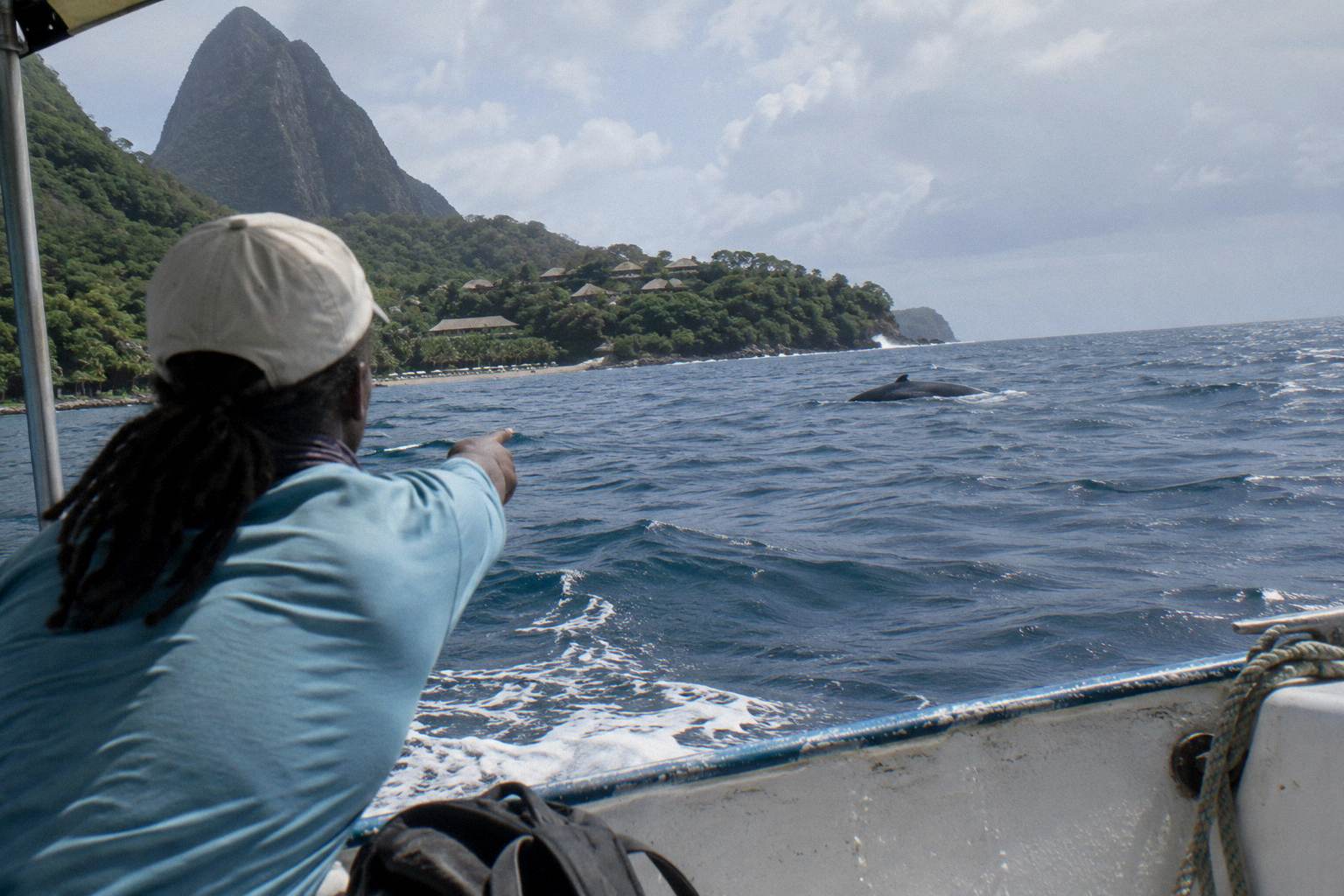
February to April is the official humpback migration window, and it is the period when a Saint Lucia cruise carries a genuine chance of a large baleen whale alongside the year-round residents. Dolphins, pilot whales and the offshore sperm whales remain possible in exactly the same way as any other month. Every sighting in this window is still a chance, never a promise, because the animals move on their own schedule.
The humpbacks that pass through the region between February and April are migrating animals, not residents, and the tourism board's wording is deliberately careful: they pass through. Some operators report humpbacks from December, which means the early weeks of the year can occasionally deliver a surprise, but the official guidance a planner should rely on is the February to April window. For a fuller picture of that species and its schedule, see the guide to humpback whales in Saint Lucia from February to April.
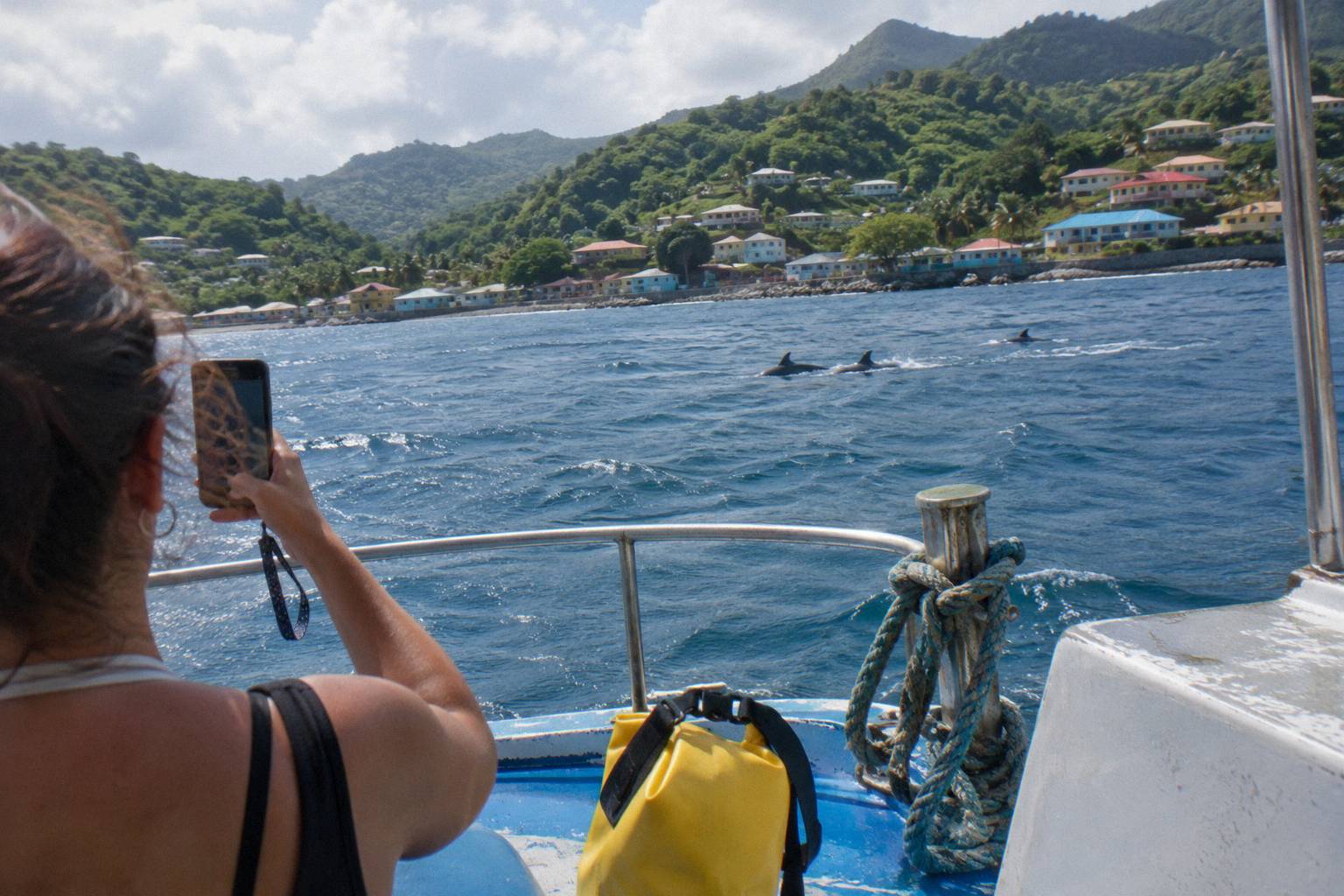
Alongside the migrants, the resident cast does not change. Spinner dolphins are frequently sighted year-round, pantropical spotted and bottlenose dolphins are common, and pilot whale pods can sometimes be seen through the year in close family groups. Sperm whales are considered resident in the region and occasionally sighted in deeper waters, a phrasing worth remembering when any listing implies they are a routine encounter. Fraser's, Risso's and striped dolphins are recorded less often.
February to April also sits inside the December to May stretch when seas are typically calmer, so this window tends to deliver two things at once: the widest species possibilities and a comfortable ride. That combination is why these months are the busiest for whale watching in the eastern Caribbean, and why booking ahead matters more here than in the quiet summer months. The shared cruise keeps its morning departure and its roughly 3.5 hour length all year, but seats on a shared boat are finite, and the private safari's operator-confirmed booking process adds a step that rewards early arrangement.
The shared cruise is the straightforward way to sample the window: about 3.5 hours on a custom 60 ft boat with a local marine expert aboard, from US$65 per person, rated 4.5 from 200 reviews, with water, soft drinks and rum punch included.
If your February or March dates are locked to a ship schedule rather than a hotel week, the planning question shifts slightly, and the page on fitting a whale cruise into a Castries port day works through the timing constraints.
What Can You See From May To November?
May to November is dolphins and pilot whales, with the year-round sperm whale chance in deeper water, and humpbacks treated as unlikely. The tourism board's season guidance is explicit on this point, and no honest operator or writer should dress the summer months up as humpback season. Seas can also be livelier, because the Atlantic hurricane season officially runs June 1 to November 30.
That is not a reason to skip the summer. Spinner dolphins are frequently sighted year-round, and the resident pilot whale pods do not migrate away. A summer cruise still goes out over the same deep coastal water, with the same marine expert aboard pointing at the same species list, and it does so with fewer boats around and a quieter marina. Families travelling in the northern-hemisphere summer holidays often find this the practical option regardless of the humpback question, and the question of whether whale watching is worth it in hurricane season has its own detailed answer.
What changes is expectation management. Between May and November, a humpback encounter would be an exception rather than a pattern, and any listing that implies otherwise is selling something the official sources do not support. The sperm whales that live in the region's deeper waters remain an occasional possibility, phrased exactly as the tourism board phrases it: resident in the region, occasionally sighted. Orcas, for completeness, are rare visitors only, in any month.
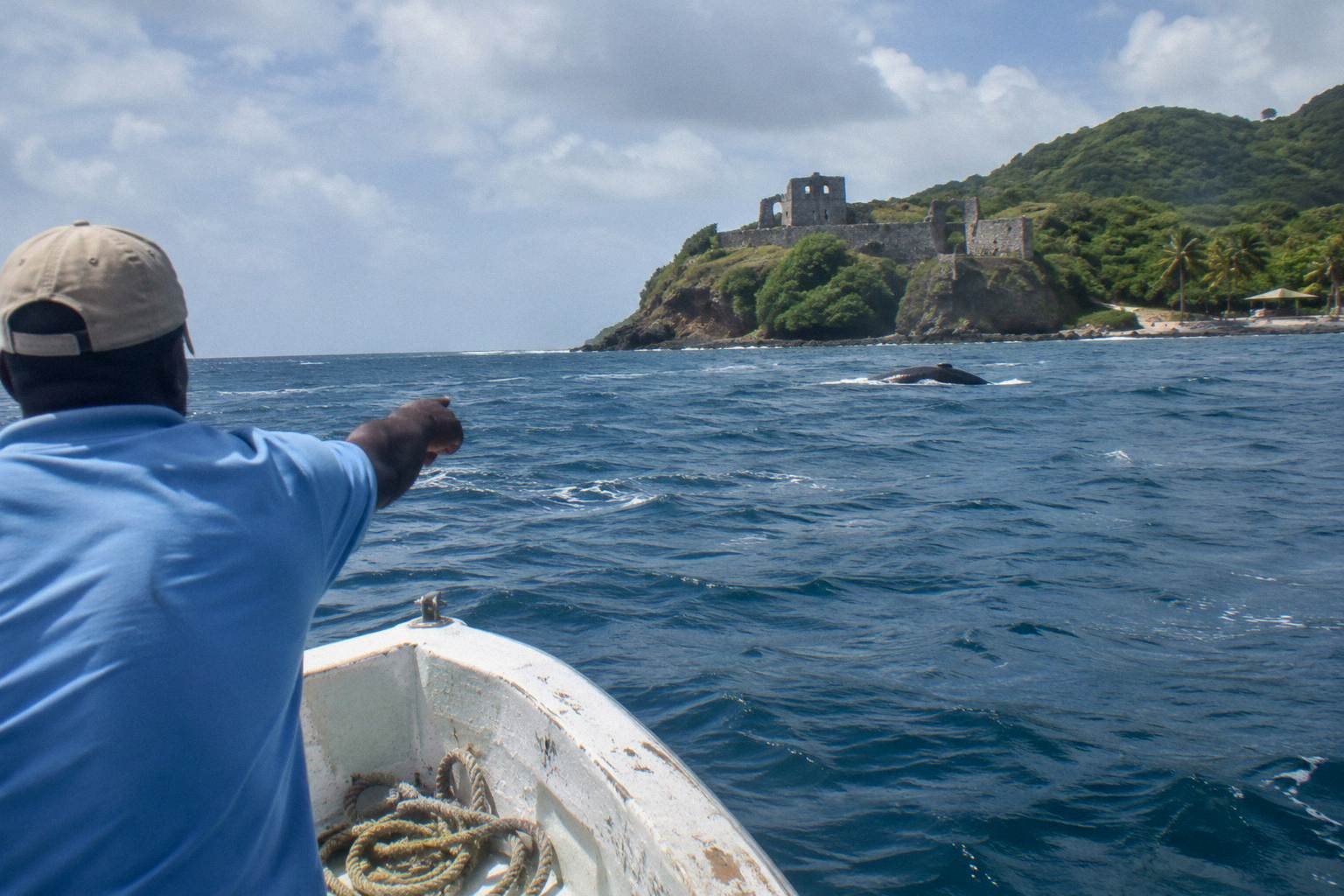
Weather is the second consideration. The hurricane season's official dates come from the Saint Lucia Meteorological Service, which marks the season as running from the beginning of June to the end of November, and the calmer-sea stretch is December to May. Neither fact says a summer trip will be rough or cancelled, only that the odds of flat water tilt toward the first half of the year. Operators monitor sea conditions, and the shared cruise operator states that if the captain cancels for unsafe weather there is an alternative date or a refund.
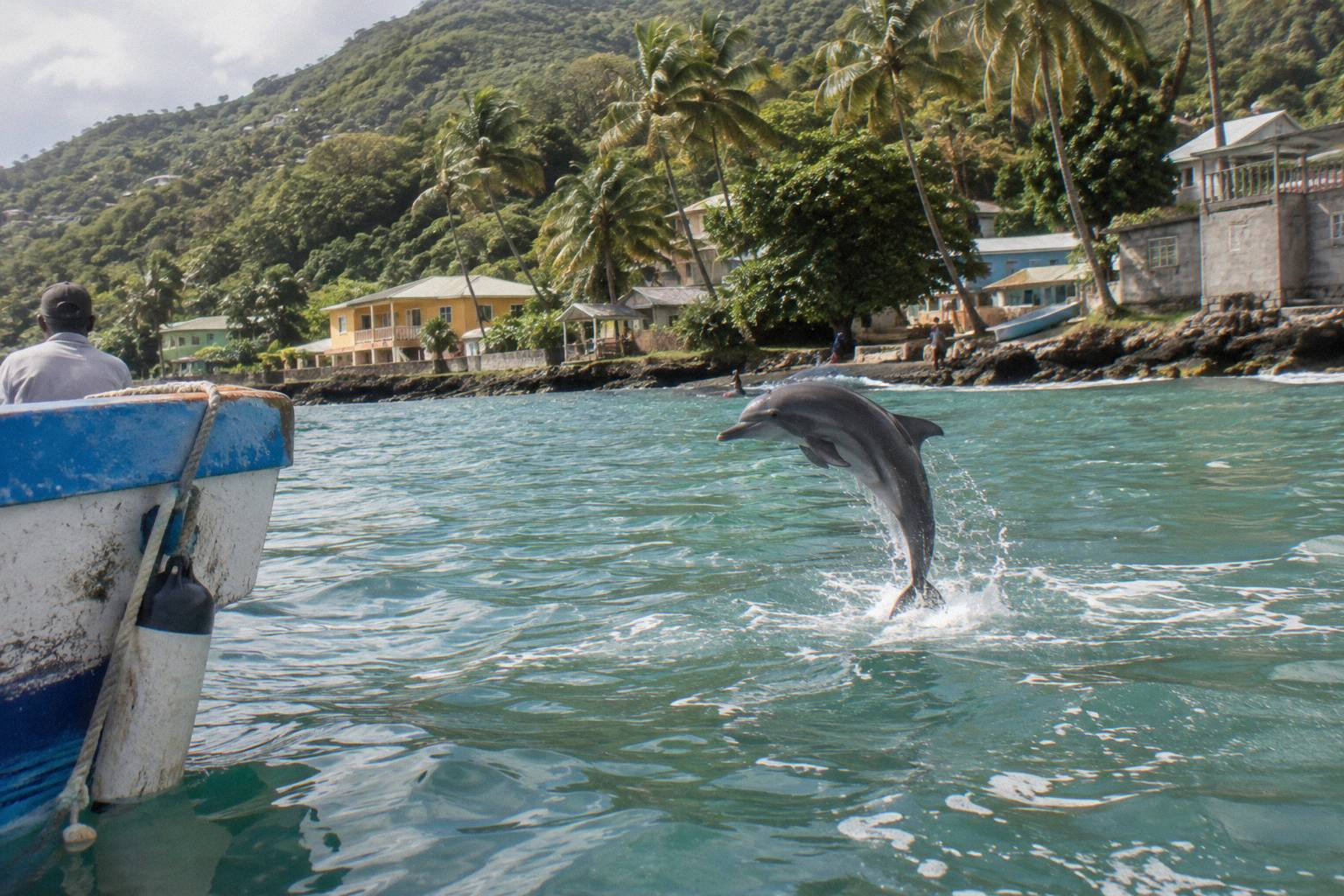
Which Months Have The Calmest Seas?
Seas around Saint Lucia are typically calmer from December to May, according to the tourism board's season guidance. That stretch covers the humpback window of February to April entirely, and it sits outside the official Atlantic hurricane season of June 1 to November 30. Calmer does not mean flat every day, and rough does not mean cancelled, but the pattern favours the first half of the year.
For anyone who has never spent three and a half hours on open water, this is arguably the most important calendar fact on the page, more important than the humpback window itself. A cruise in choppy conditions is a different experience from the same cruise on glassy water, and the west coast's proximity to deep water means boats reach the animals quickly but are still exposed to swell once there. The advice from the official sources is practical: ask about boat size if you are prone to motion sickness, bring a light layer for spray, and remember that operators monitor sea conditions and provide safety briefings and life jackets.
The two boats handle conditions differently. The shared cruise runs on a custom 60 ft vessel, and the private safari uses a 50 ft catamaran, a hull form whose twin design generally steadies the ride. If calm water is the priority and your dates are flexible, December to May is the stretch to aim for, with February to April adding the humpback chance on top. The worry itself is common enough that whether you will get seasick on a Saint Lucia whale cruise deserves its own reading.
Can You See Whales Or Dolphins All Year?
Yes, whale and dolphin watching in Saint Lucia runs year-round, and dolphins plus pilot whales can be seen in every month. February to April adds the chance of humpbacks, which is the only calendar-driven change to the species list. Sperm whales are considered resident in the region and occasionally sighted in deeper waters throughout the year, and orcas are rare visitors only.
This is the fact that surprises visitors who arrive in July half-expecting an empty sea. The official tourism board guidance states plainly that whale and dolphin watching runs all year and that the February to April window simply adds humpbacks to what is already there. The reason is the island's west coast topography: deep water lies close to shore, so the resident and regional animals, spinner, spotted and bottlenose dolphins, pilot whale pods, and the deeper-water sperm whales, are within reach of a three to four hour trip in any season. The wider set of guides lives on St Lucia Whale Watching.
Trips usually leave in the morning from the north-west around Rodney Bay and Castries and follow the Caribbean coast, a pattern that holds across the calendar. Both tours covered on this site depart Vigie Marina in Castries Harbour. The shared cruise runs about 3.5 hours with a morning departure, and the private safari runs about 4 hours with the start time arranged with the operator.
| Month | Humpback chance | Dolphins and pilot whales | Sea conditions note |
|---|---|---|---|
| January | Possible, ahead of the official window | Year-round | Calmer-sea period |
| February | Official window begins | Year-round | Calmer-sea period |
| March | Peak of the official window | Year-round | Calmer-sea period |
| April | Official window ends | Year-round | Calmer-sea period |
| May | Unlikely | Year-round | End of the calmer-sea stretch |
| June | Unlikely | Year-round | Hurricane season begins |
| July | Unlikely | Year-round | Hurricane season |
| August | Unlikely | Year-round | Hurricane season |
| September | Unlikely | Year-round | Hurricane season |
| October | Unlikely | Year-round | Hurricane season |
| November | Unlikely | Year-round | Hurricane season ends November 30 |
| December | Some operators report humpbacks | Year-round | Calmer-sea period begins |
Read the table as a planning summary of what the sources say, nothing more. There are no month-by-month sighting rates anywhere in the official material, because none exist: sightings depend on weather, season and the animals' own movements, and every cell above is a chance rather than a statistic. November is a month people ask about specifically, and the page on the chance of seeing whales in Saint Lucia in November addresses it without inventing numbers.
The species list itself is worth setting beside the calendar, because the two together answer most planning questions in one glance. What follows is the same official guidance arranged by likelihood rather than by month.
| Species | Presence off Saint Lucia | Best months for a chance |
|---|---|---|
| Spinner dolphins | Frequently sighted year-round | Every month |
| Pantropical spotted dolphins | Common in warm offshore water, especially the west coast | Every month |
| Bottlenose dolphins | Common | Every month |
| Pilot whales | Resident pods sometimes seen through the year, in family groups | Every month |
| Sperm whales | Considered resident in the region, occasionally sighted in deeper waters | Every month, as a chance |
| Humpback whales | Migrate through the region | About February to April; some operators report from December |
| Fraser's, Risso's, striped dolphins | Recorded less often | No seasonal pattern given |
| Orcas | Rare visitors only | No seasonal pattern given |
How Does Season Change Which Boat To Book?
The season nudges the choice of trip more than it dictates it. In the February to April window, when demand is highest, the shared cruise's fixed morning departure and instant confirmation make it the easier ticket to secure. In quieter months, or for a group, the private safari's flexible start time, arranged with the operator, and its 50 ft catamaran for up to 40 guests become the more attractive package.
The two products sit at opposite ends of the price and structure scale, and neither is ranked above the other here. The Shared Whale And Dolphin Watching Cruise, run by Captain Mike's, is a per-person ticket: from US$65 per person, rated 4.5 from 200 reviews, about 3.5 hours on a custom 60 ft boat with a local marine expert aboard, water, soft drinks and rum punch included, gratuities extra, and no hotel pick-up. The shared cruise at US$65 per person is US$130 for 2, US$260 for 4, US$390 for 6. Group size is not published. The price varies by date and the booking page confirms it.
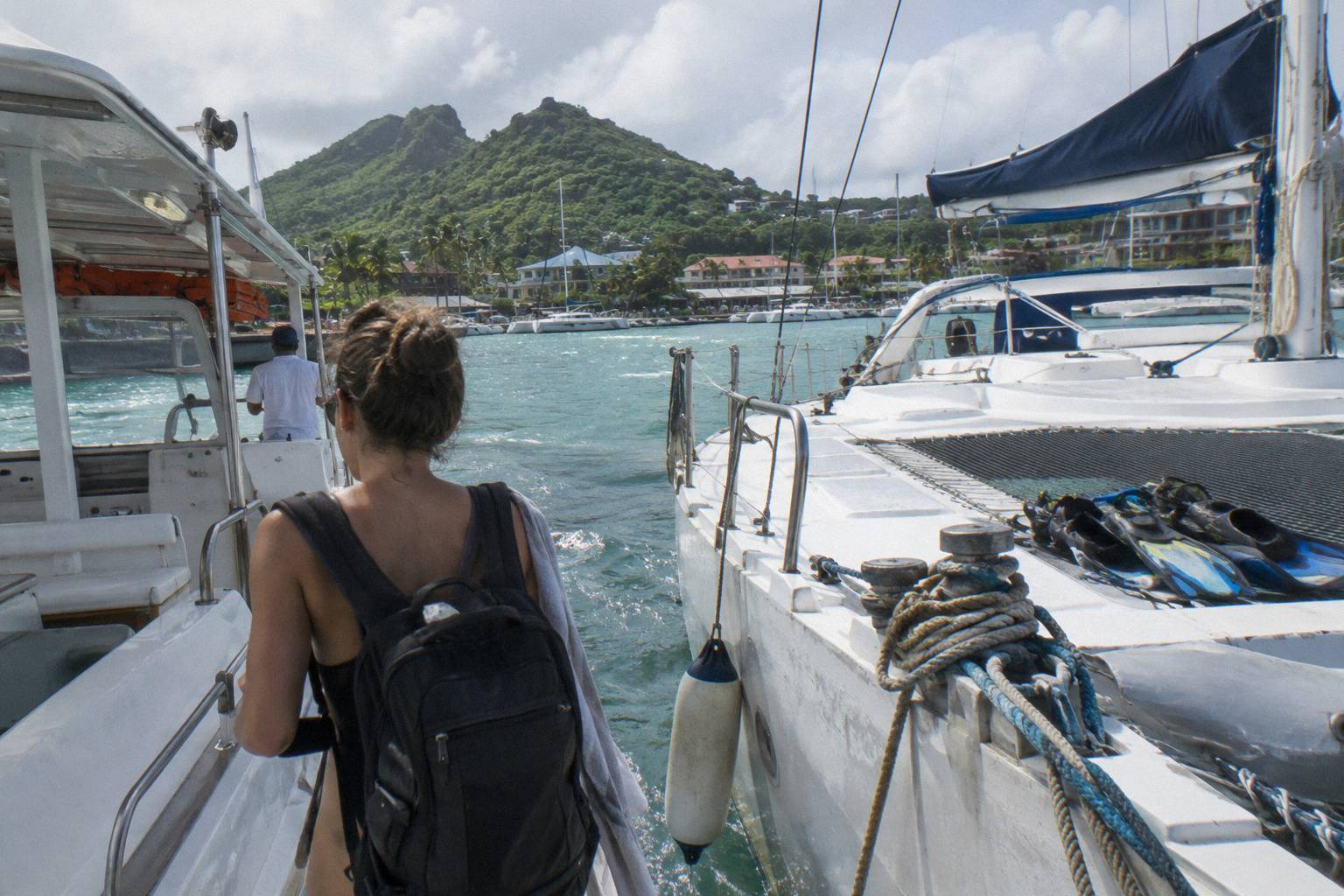
The Private Whale And Dolphin Safari, run by Hackshaw's Boat Charters, is priced per boat, not per person: from US$2,550.65 for the whole group on a 50 ft catamaran carrying up to 40 guests, rated 4.5 from 75 reviews, about 4 hours, with a guide, drinks, light snacks, rum punch and local fruit included, and cruise ship pier pick-up and drop-off included. For illustration, not a quote: US$2,550.65 shared by 4 guests is about US$637.66 each; by 6 about US$425.11; by 8 about US$318.83; by 12 about US$212.55. The price varies by date and group and the booking page confirms it. A fuller comparison lives in the guide to choosing a shared cruise or a private charter.
Season touches this choice in three ways. First, high-season February to April means more travellers competing for shared seats, so booking further ahead is sensible. Second, the private safari's confirmation is not instant, the operator confirms, which matters more when your dates are fixed to a specific week. Third, the cruise ship pier pick-up on the private trip is a genuine differentiator for port days, while the shared cruise departs Vigie Marina, a short distance from the Pointe Seraphine cruise terminal with taxis readily available.
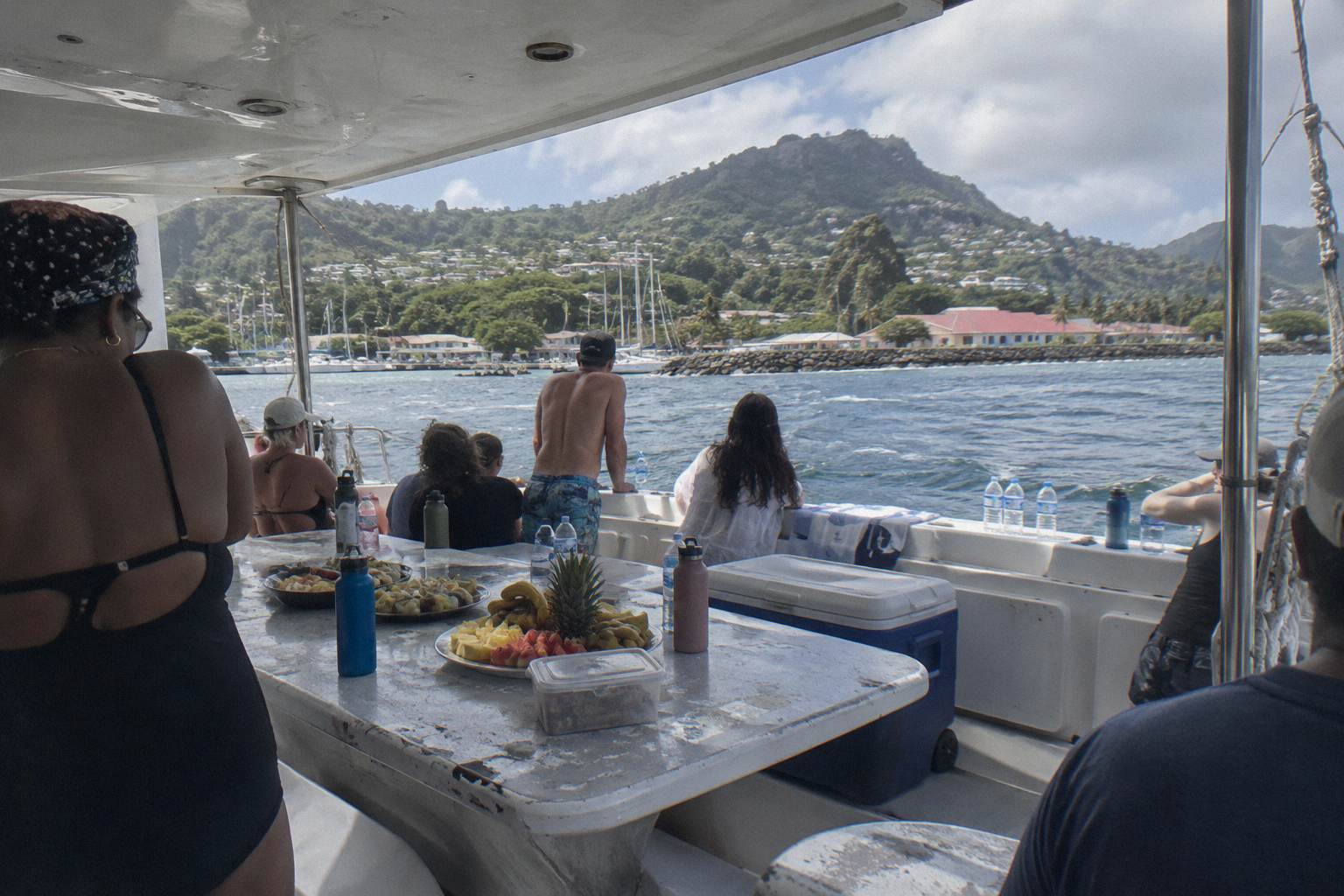
There is also a comfort argument that follows the sea table rather than the species table. A traveller who cares mainly about a steady ride and is flexible on dates can pair the calmer December to May stretch with the catamaran's twin hulls, and a traveller who cares mainly about the humpback window can accept whatever the sea gives that morning. Neither approach is wrong, and both boats run the same coastal waters regardless of month.
How Far Ahead Should You Plan Around A Month?
For February to April departures, book as early as your dates are fixed, because that window is the busiest on the water. For the rest of the year, a week or two of lead time is usually comfortable for the shared cruise, which has instant confirmation. The private safari needs a little more slack because the operator confirms the booking rather than the system doing it instantly.
Both trips carry free cancellation up to 24 hours before departure on the booking path, which changes the planning psychology considerably. You can lock a February seat months ahead without betting the fare on the weather, and the private safari is additionally cancelled free for bad weather. The shared cruise operator states that if the captain cancels for unsafe weather there is an alternative date or a refund. There is no rebook-if-no-sighting policy on either trip, and none should be inferred: the animals are wild, and every sighting is a chance.
Practical entry logistics also carry their own lead times, and they are worth folding into the same planning window. Air arrivals need a passport valid for the stay plus proof of onward travel, with no visa required for US, UK or Canadian citizens, and the tourism board encourages travellers to complete the online immigration form up to 3 days before travel, per the official Saint Lucia trip planning guidance. Currency is the Eastern Caribbean dollar, fixed at EC$2.70 to US$1, and US dollars are widely accepted, per the tourism board's currency and tipping guidance.
If your month is tied to a cruise rather than a flight, the constraint is the ship, not the season. Check the ship's all-aboard time and ask the operator about timing before booking, because trip lengths of about 3.5 and 4 hours do not include getting to the marina. The question of whether a whale cruise fits between ship arrival and departure in Castries is examined in detail elsewhere on this site.
Common Mistakes When Picking A Month
The most common mistake is assuming there is a dead season, when dolphins and pilot whales are present all year. The second is expecting humpbacks outside the February to April window, especially from May to November, when the official guidance treats them as unlikely. The third is ignoring the sea-condition pattern, calmer from December to May, and booking a summer trip expecting flat water.
A few more deserve naming, because they show up repeatedly in traveller questions. Expecting a guarantee is the biggest: no sighting is ever promised, no percentage exists in the official material, and any listing that implies certainty is overreaching what the sources support. Assuming a specific departure time is another: the shared cruise prints a morning departure and no clock time, and the private safari's start is arranged with the operator, so planning a day around an assumed hour leads to avoidable friction.
| Mistake | What actually happens | Better approach |
|---|---|---|
| Booking July expecting humpbacks | May to November treats humpbacks as unlikely | Aim for February to April, or enjoy the dolphins |
| Assuming a dead season in summer | Dolphins and pilot whales are year-round | Book any month for the resident species |
| Expecting calm summer seas | Calmer stretch is December to May | Ask about boat size if prone to motion sickness |
| Expecting a sighting guarantee | No operator or source promises sightings | Treat every sighting as a chance |
| Planning around an assumed clock time | Shared cruise prints morning only, private is arranged with the operator | Confirm timing with the operator when booking |
| Expecting hotel pick-up | Neither trip includes hotel pick-up | Plan your own transfer to Vigie Marina |
The deeper background on why these patterns hold, written by the marine researchers who study the region's sperm whale population, is available from the Dominica Sperm Whale Project, and the tourism board's own whale and dolphin watching page is the primary source for the season wording used throughout this guide. For what a trip actually feels like hour by hour, the guide to what to expect on a whale and dolphin watching trip covers the onboard sequence.
Common Questions About The Best Time To See Whales In Saint Lucia
What Is The Best Month For A Whale And Dolphin Cruise?
February to April is the strongest window, because the official humpback migration passes through then and the seas are typically calmer. Dolphins and pilot whales can be seen in every month, so the rest of the year still works if humpbacks are not the priority.
Can You See Whales Or Dolphins In Saint Lucia All Year?
Yes. Whale and dolphin watching runs year-round, with spinner, spotted and bottlenose dolphins plus resident pilot whale pods present in every month. Sperm whales are considered resident in the region and occasionally sighted in deeper waters.
When Can You See Humpback Whales In Saint Lucia?
Humpbacks pass through between about February and April, the official window, and some operators report them from December. From May to November, treat humpbacks as unlikely.
Which Months Have The Calmest Seas For A Cruise?
Seas are typically calmer from December to May. The Atlantic hurricane season officially runs June 1 to November 30, which is why the calmer pattern favours the first half of the year.
Is Whale Watching In Saint Lucia Worth It Outside The Humpback Season?
It can be, if you go for the dolphins and pilot whales, which are present all year. The trip, the marine expert aboard and the west coast scenery are the same in August as in March; only the humpback chance changes.
Are Whale Sightings Guaranteed In The Best Months?
No. Sightings depend on weather, season and the animals' own movements, and no operator or official source promises one. Every sighting, in every month, is a chance.