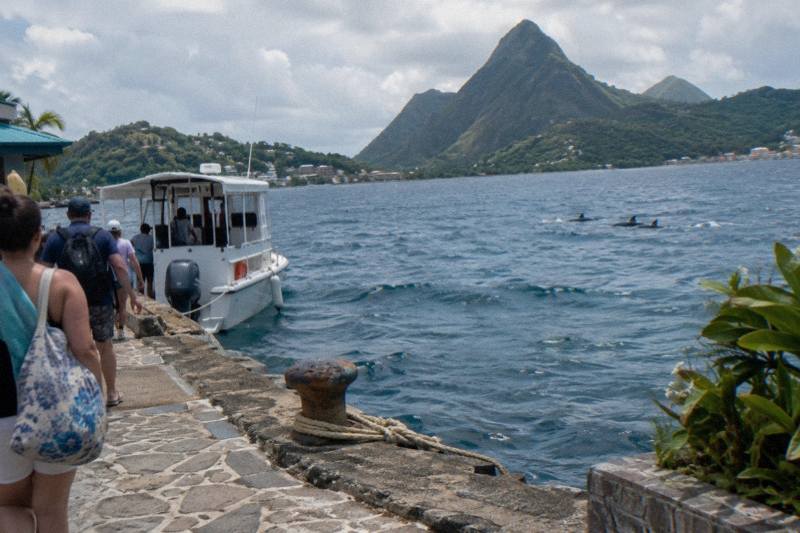
Whale And Dolphin Cruise On A Castries Cruise Ship Day
Two whale and dolphin trips depart Vigie Marina in Castries, and only one of them collects you at the cruise ship pier. Here is how each fits a port day, what each costs, and the timing questions worth asking before you book.
Short answer
The Private Premium Whale And Dolphin Safari includes cruise ship pier pick-up and drop-off, runs about 4 hours, from US$2,550.65 per boat for up to 40 guests, 4.5 from 75 reviews. The shared cruise from Captain Mike's runs about 3.5 hours from Vigie Marina, from US$65 per person, 4.5 from 200 reviews, with no pick-up included.
A cruise ship day in Castries gives you one shot at the deep water that lies close to Saint Lucia's west coast, where spinner dolphins are frequently sighted year-round, pilot whales move through in family pods, and sperm whales are occasionally seen offshore. The island's official tourism board describes whale and dolphin watching as a year-round activity, with humpback whales adding a chance of an encounter between about February and April. The catch on a port day is not the wildlife, it is the clock: your ship has an all-aboard time, and the trip you pick has to fit inside it.
Only two whale and dolphin trips operate out of Castries on the booking paths this site covers, and they treat cruise passengers very differently. The Private Premium Whale And Dolphin Safari from Hackshaw's Boat Charters includes cruise ship pier pick-up and drop-off in its price, which removes the scariest part of any independent shore excursion. The Shared Whale And Dolphin Watching Cruise from Captain Mike's does not include any pick-up at all, but it departs Vigie Marina, a short distance from the Pointe Seraphine cruise terminal, and taxis are readily available between the two.
This guide walks through both options the way a port-day decision actually gets made: which trip suits your group, how the pier pick-up works, how the marina departure works, how much of your day each trip consumes, what to ask before booking, what to carry ashore, and what happens if the weather turns. Everything here comes from the operators' booking pages and the Saint Lucia tourism board's own published guidance. For a wider look at the whole island question, St Lucia Whale Watching covers species, seasons and routes in depth.
Which Whale And Dolphin Cruise Suits A Castries Port Day?
The deciding factors are pick-up, group size and budget, in that order. A party of six or more that wants the boat to itself takes the private safari, from US$2,550.65 per boat, which includes cruise ship pier pick-up and drop-off. A couple or small group on a per-person budget takes the shared cruise, from US$65 per person, which includes no pick-up and departs Vigie Marina near the cruise terminal.
Start with pick-up because it is the one difference that can make or break a shore excursion. The private safari's pier collection means you step off the ship, meet the operator's crew, and the logistics from the terminal to the boat are theirs to manage. The shared cruise asks you to make your own way to Vigie Marina in Castries Harbour, which the operator describes as a convenient spot for both hotel guests and cruise ship passengers, a short distance from the Pointe Seraphine cruise terminal, with taxis readily available. That is a manageable transfer, but it is a transfer you own, and it adds time on either side of the roughly 3.5 hours the trip itself runs.
Then look at what the price actually buys, because the two figures are built on completely different bases and are never ranked against each other here. The shared cruise is priced per person, from US$65, currently rated 4.5 from 200 reviews. The private safari is priced per boat, from US$2,550.65, private to your group of up to 40 guests on a 50 ft catamaran, rated 4.5 from 75 reviews. For illustration, not a quote: US$2,550.65 shared by 4 guests is about US$637.66 each; by 6 about US$425.11; by 8 about US$318.83; by 12 about US$212.55. The shared cruise at US$65 per person is US$130 for 2, US$260 for 4, US$390 for 6. Prices vary by date and group, and the live listing confirms the current figure.
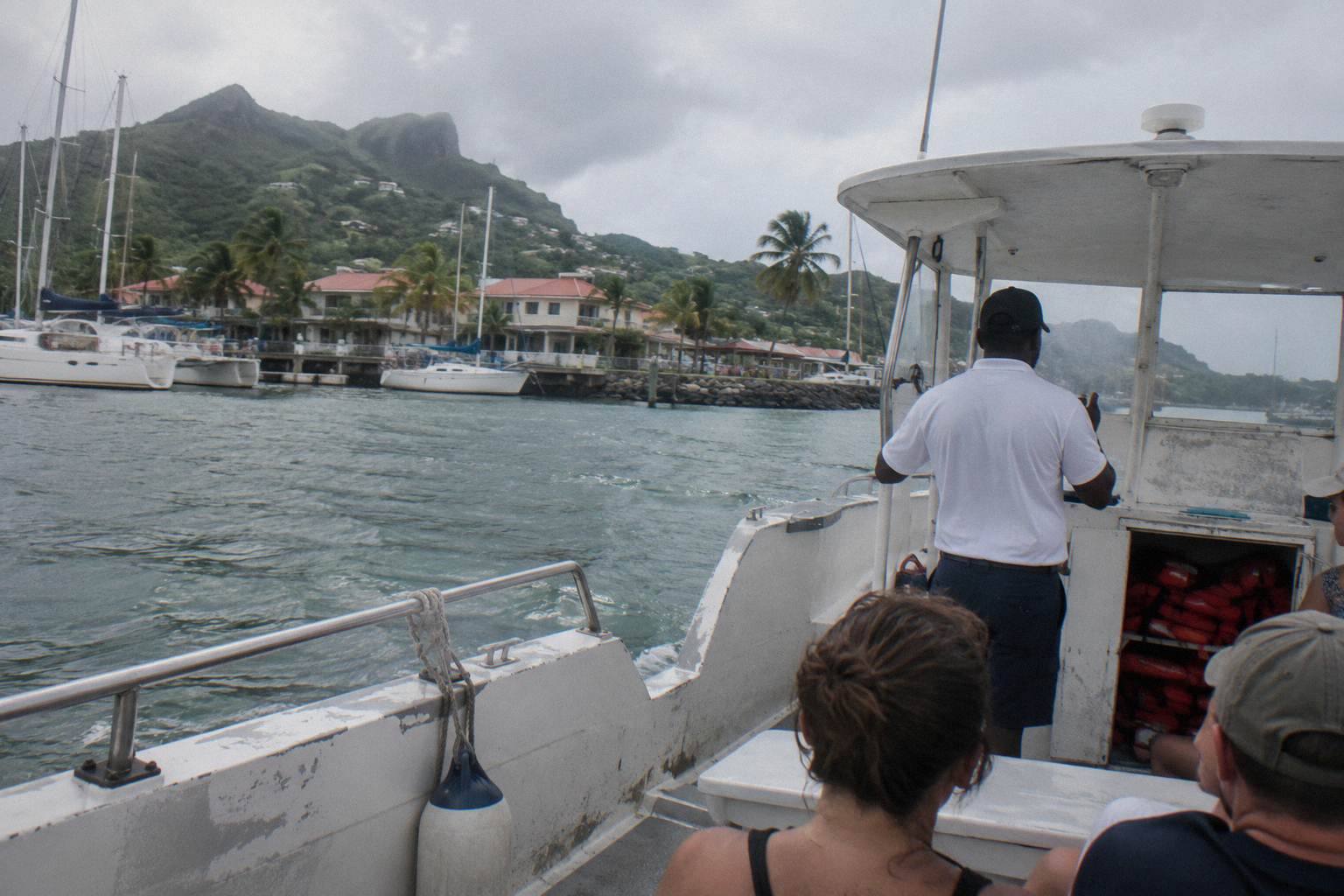
There is also a character difference that matters on a port day. The shared cruise puts you on a custom 60 ft boat with a local marine expert aboard, alongside other passengers, on a fixed morning departure. The private safari gives your group the whole 50 ft catamaran, a dedicated guide, and a start time you arrange directly with the operator, which on a cruise day is the single most valuable feature of the trip: you are not bending your port schedule around a published departure slot. The trade-off is that confirmation is not instant on the private trip, the operator confirms, so it needs to be booked further ahead of your sailing.
If you are still weighing the decision in principle rather than for a specific port day, the site's broader comparison of a shared whale cruise or a private charter in Saint Lucia covers the same trade-offs without the cruise-clock pressure.
How Does The Private Safari Handle Pier Pick-Up?
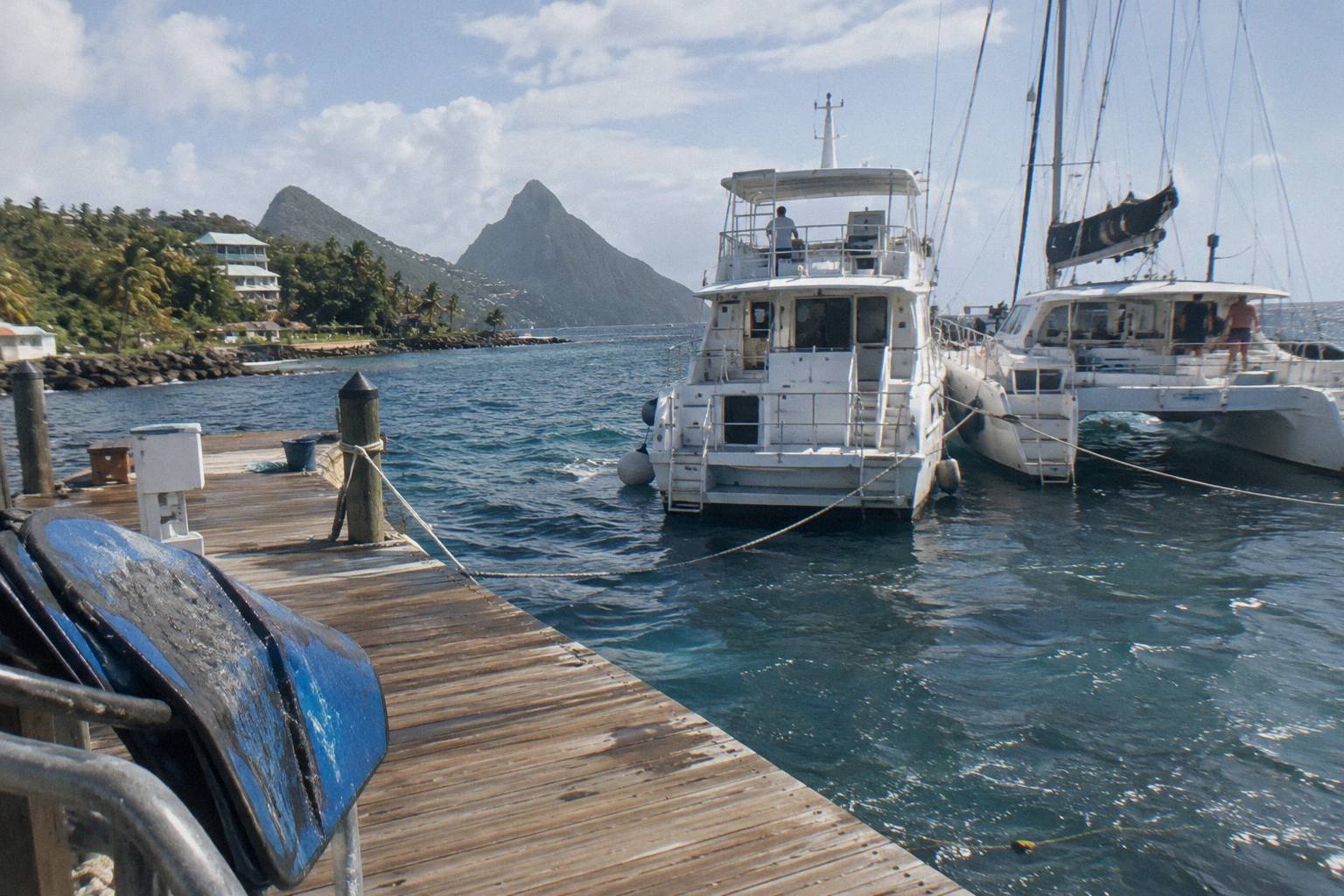
The Private Premium Whale And Dolphin Safari includes cruise ship pier pick-up and drop-off in the listed price, the only one of the two Castries whale trips that does. The trip runs about 4 hours on a 50 ft catamaran for up to 40 guests, departs Vigie Marina, and its start time is arranged directly with the operator rather than published as a fixed slot.
The inclusion is stated plainly on the booking page: cruise ship pier pick-up and drop-off, alongside a guide, soft drinks, coffee, tea, water, light snacks, rum punch and local fruit. What is not included is equally plain: gratuities, and hotel pick-up and drop-off. On a cruise day that second exclusion is irrelevant, and the first is ordinary practice, tips for the crew are at your discretion and not baked into the from-price.
The pier collection changes the risk profile of booking an independent excursion instead of a ship-sold one. The classic fear is the transfer failing, a taxi that never comes, a marina you cannot find, a missed all-aboard. With pier pick-up, the operator is meeting you inside the port environment and returning you to it, which is the shape of service cruise passengers usually pay a premium for through the ship. Here it is part of a per-boat charter price that also covers the boat, the guide and the refreshments.
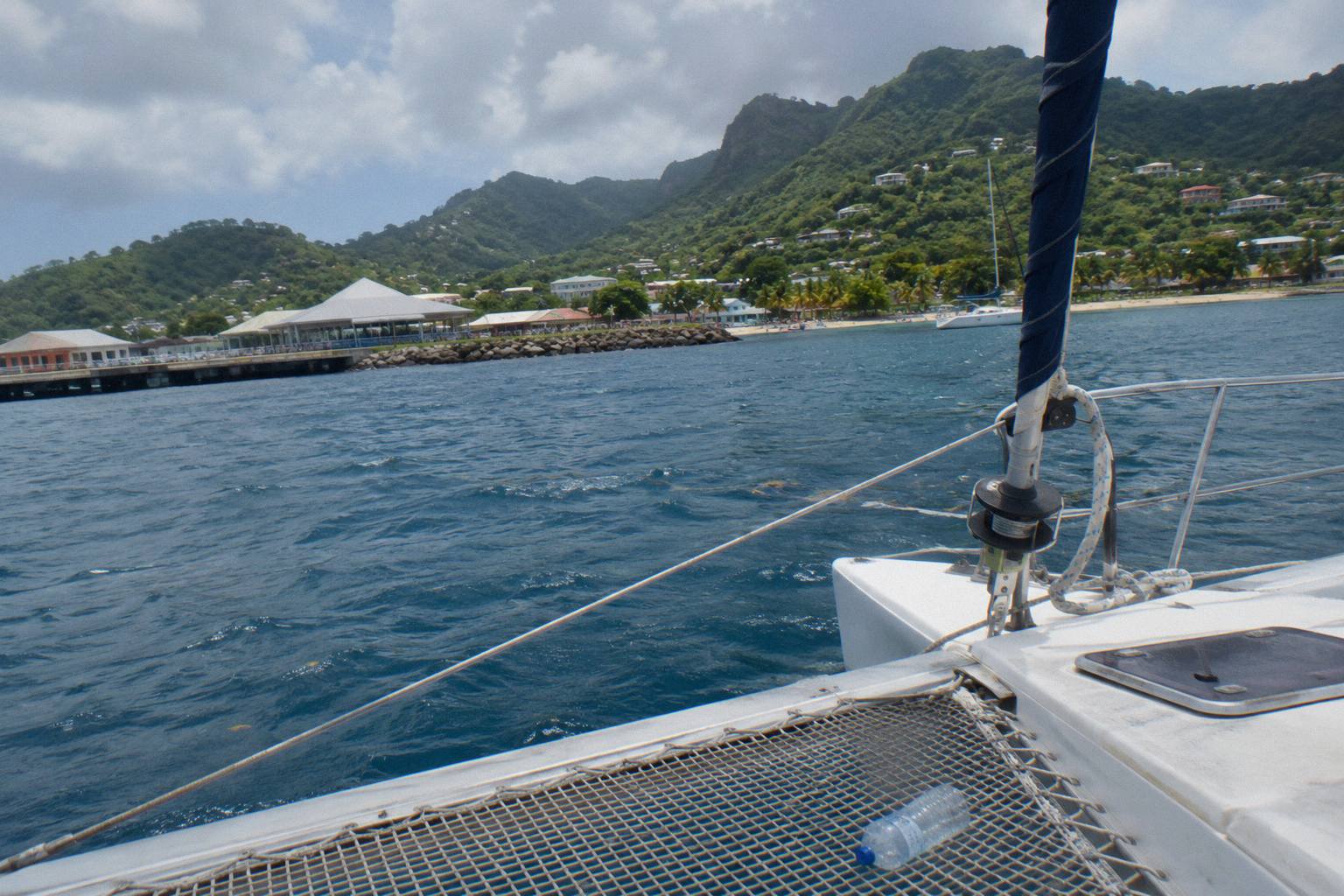
The start-time arrangement deserves a full paragraph because it is the feature that makes this trip genuinely port-friendly. No clock time is published for the safari, and none is invented here. Instead, the departure is agreed with the operator when you book. On a cruise day you tell them your ship's arrival and all-aboard times, and the start time is built around that window. The booking path also notes that confirmation is not instant, the operator confirms, which means this is a trip to arrange in the days before you sail rather than on the dockside that morning.
The operator behind the trip, Hackshaw's Boat Charters, says it has run since 1953 and is World Cetacean Alliance certified, both statements framed as the operator's own. Free cancellation applies up to 24 hours before departure, and the safari is cancelled free for bad weather. For cruise passengers, that weather clause matters more than it does for hotel guests: if the operator calls the trip off for sea conditions, you are not chasing a refund from a ship that has already left.
The island's tourism board publishes its own overview of what these trips involve at stlucia.org's whale and dolphin watching page, including the responsible-viewing practices licensed operators follow.
How Does The Shared Cruise Work From Vigie Marina?
The Shared Whale And Dolphin Watching Cruise departs Vigie Marina in Castries Harbour on a morning departure, runs about 3.5 hours on a custom 60 ft boat, and costs from US$65 per person, rated 4.5 from 200 reviews. It includes no pick-up of any kind: no pier collection, no hotel collection, just the boat, the marine expert and the drinks aboard.
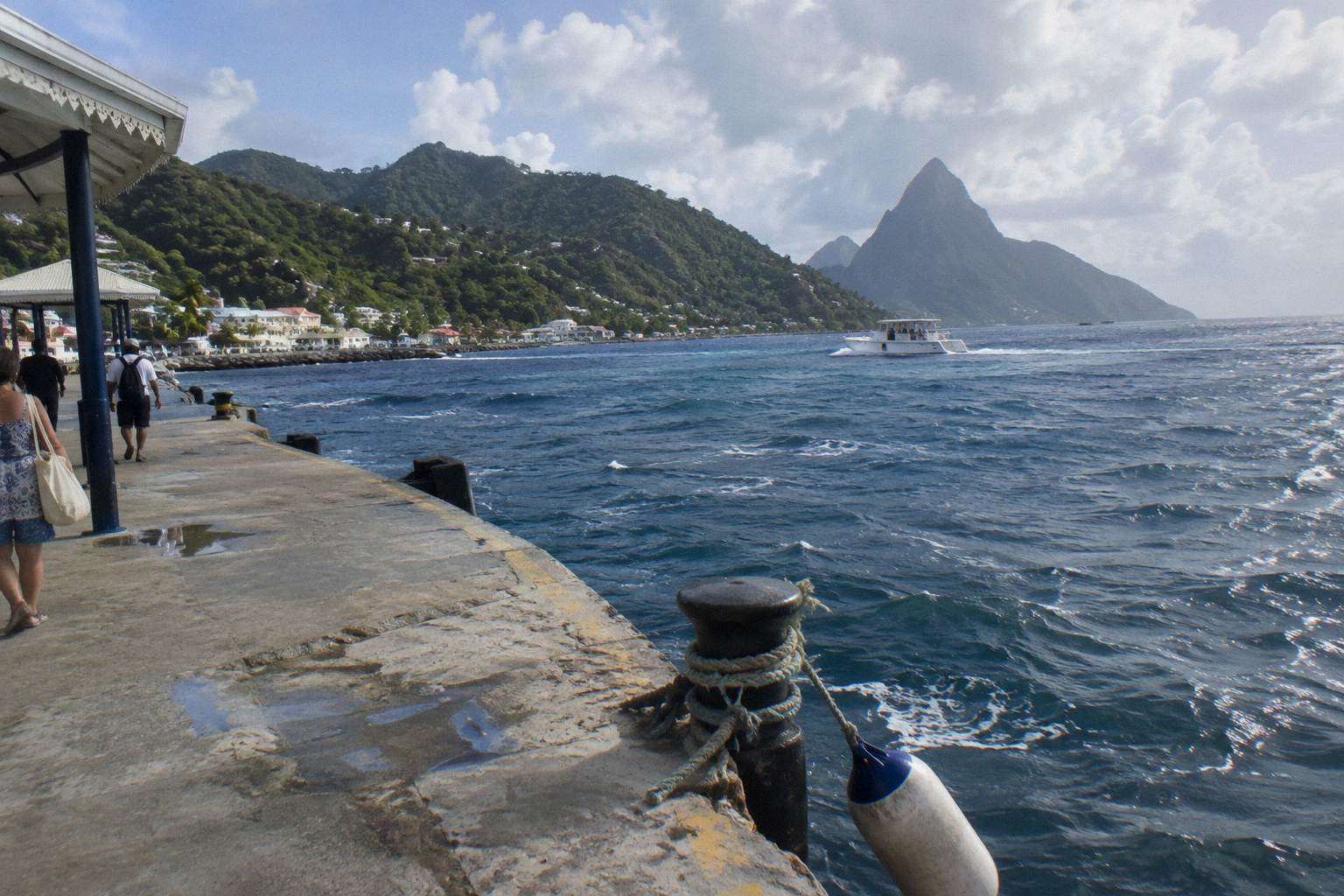
Vigie Marina sits in Castries Harbour, in the Ganters Bay area at Vigie, beside the island's George F. L. Charles airport. The operator describes it as a convenient spot for both hotel guests and cruise ship passengers, and it is a short distance from the Pointe Seraphine cruise terminal. No road minutes are printed because none are published; what is published is that taxis are readily available for the hop between terminal and marina. For a cruise passenger, the practical read is that the marina is close but the transfer is yours to arrange and to time.
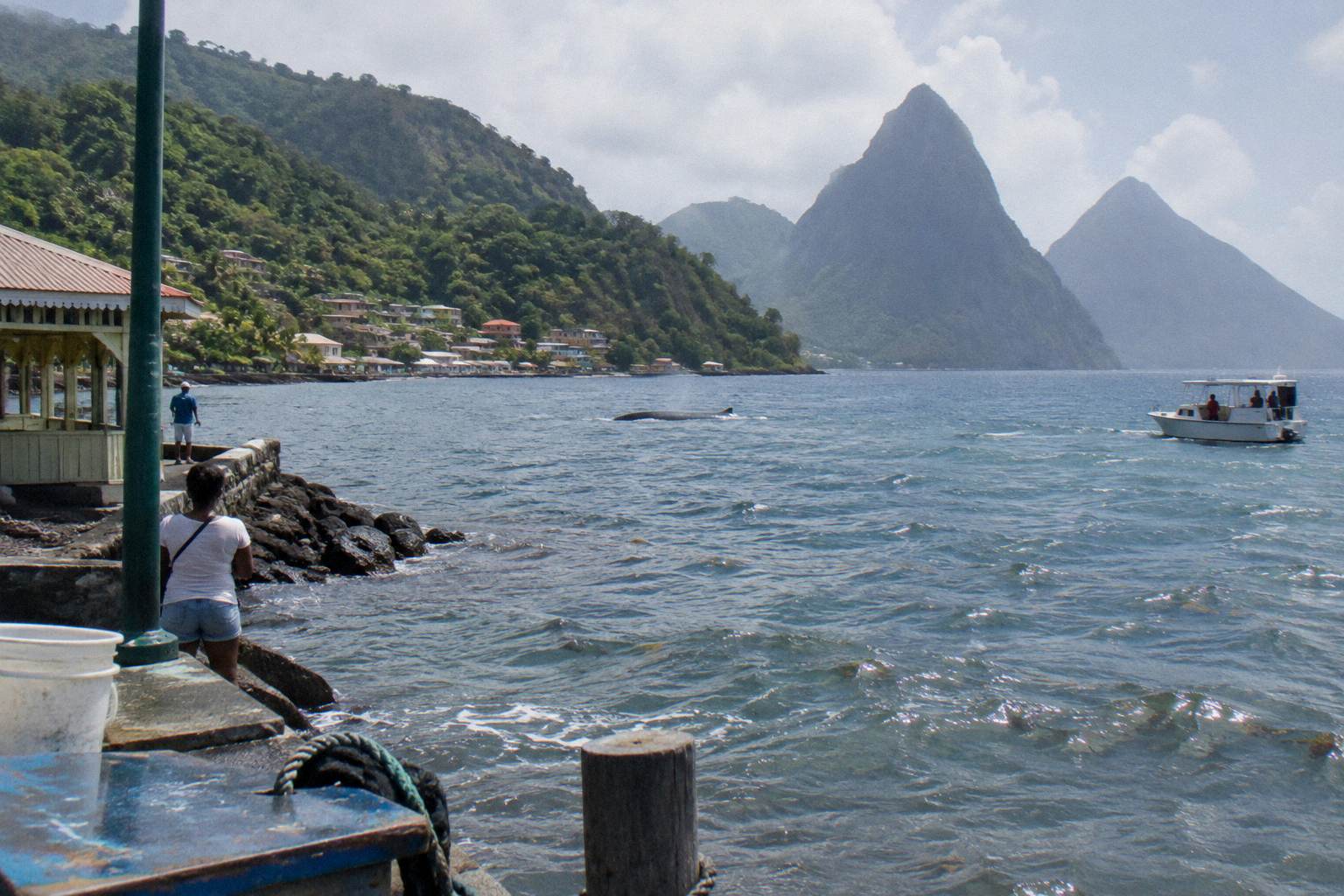
The trip itself is straightforward: a morning departure, no clock time printed, about 3.5 hours on the water, a local marine expert aboard, and bottled water, soft drinks and rum punch included. Gratuities are not included. The species named on the trip's own description are sperm whales, humpbacks in season, pilot whales, and spinner, spotted, Fraser's and common dolphins, with views of the west coast along the way. Group size is not published, so if a crowded deck is a concern, that is a question for the operator when booking. Children travel with an adult, and since no minimum age is printed, ask the operator when booking if you have young sailors in the party.
The operator, Captain Mike's, belongs to the Hackshaw family and says it has over 60 years of experience, again framed as the operator's own statement. The family connection between the two operators on this page is real but the trips are separate products with separate boats and separate pricing structures.
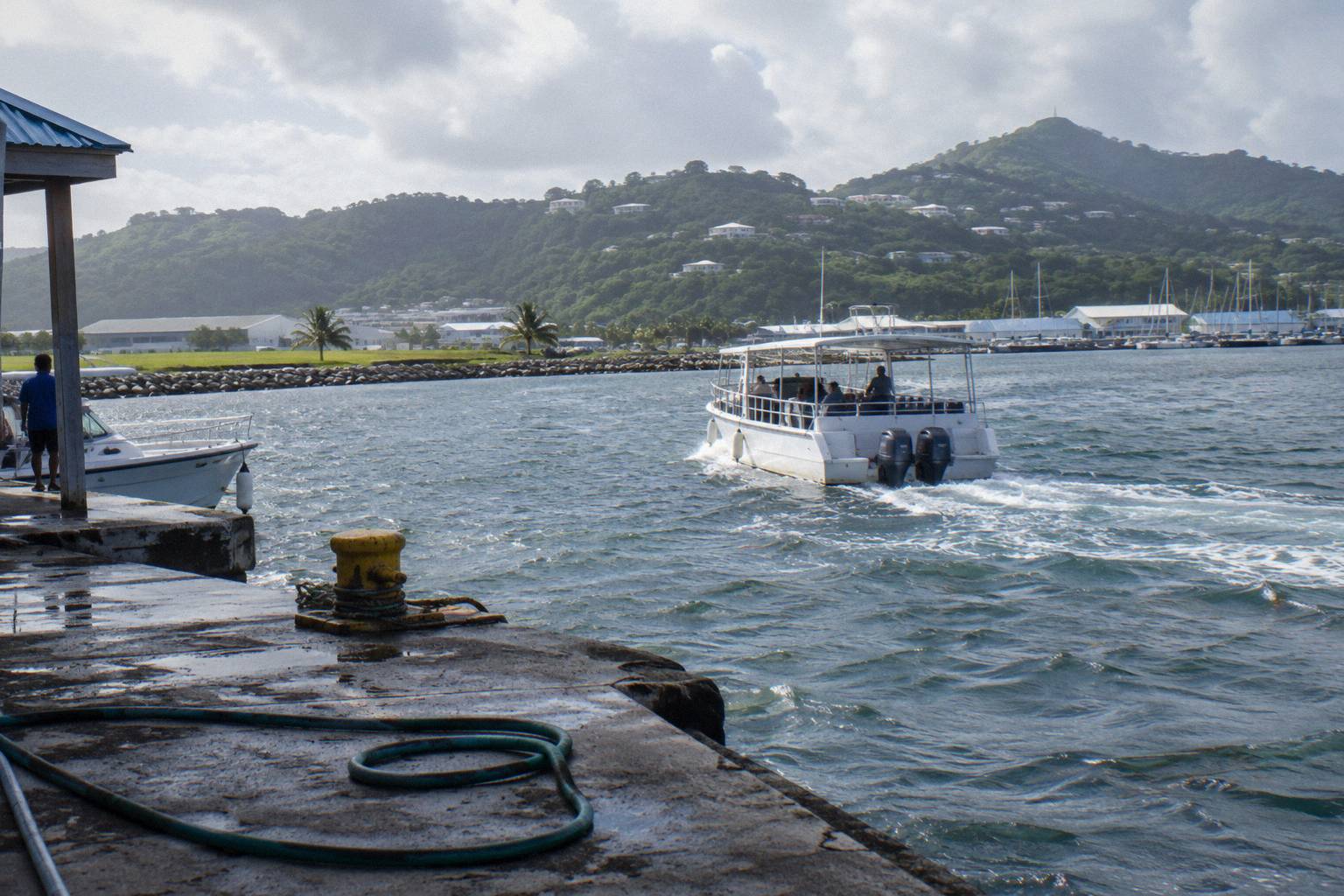
For cruise passengers the shared cruise has two structural constraints to weigh honestly. The first is the fixed morning departure: you cannot negotiate the start time, so your ship's arrival has to be early enough to clear the gangway, reach the marina and check in before the boat leaves. The second is the return: about 3.5 hours on the water plus the taxi back to the terminal has to sit comfortably inside your all-aboard time. Both constraints are answerable, but only you know your ship's schedule, which is why the timing questions in the section below exist.
If the per-person budget fits and the timing works, the shared cruise is the simpler, cheaper way onto the water, and it can be checked at the operator's live listing: Check availability.
How Much Of A Port Day Does Each Trip Use?
The tourism board describes the typical Saint Lucia whale trip pattern as a morning departure lasting about three to four hours, and both of these trips sit inside that envelope: 3.5 hours for the shared cruise, 4 for the private safari. What the port-day maths has to include is everything around those numbers. For the shared cruise, that is ship arrival, gangway clearance, the taxi to Vigie Marina, check-in, the trip, the taxi back, and a buffer before all-aboard. For the private safari, the pier pick-up and drop-off absorb the taxi legs, but the 4-hour water time is the longest single block of the two.
| Shared Whale And Dolphin Watching Cruise | Private Premium Whale And Dolphin Safari | |
|---|---|---|
| Time on the water | About 3.5 hours | About 4 hours |
| Price basis | From US$65 per person | From US$2,550.65 per boat, up to 40 guests |
| Rating | 4.5 from 200 reviews | 4.5 from 75 reviews |
| Pier pick-up | Not included | Included |
| Departure point | Vigie Marina, Castries Harbour | Vigie Marina, Castries |
| Start time | Morning departure, fixed | Arranged with the operator |
| Boat | Custom 60 ft boat | 50 ft catamaran, private to your group |
| Drinks aboard | Bottled water, soft drinks, rum punch | Soft drinks, coffee, tea, water, rum punch, local fruit, light snacks |
| Cancellation | Free up to 24 hours before | Free up to 24 hours before, and for bad weather |
| Confirmation | Instant | The operator confirms |
Notice what the table cannot tell you, and what no published source can: whether either trip fits your specific sailing. Ships differ in arrival hours and all-aboard times, and neither is printed here because cruise-line schedules are outside the verified facts. What can be said is the shape of the decision. The shared cruise is the shorter commitment but the earlier and less flexible one. The private safari is the longer commitment but the one whose start time moves to fit you. A family with a late-arriving ship and the budget for a charter may find the private safari is the only option that works at all; a couple on an early arrival may find the shared cruise leaves them half a day for the town besides.
The broader context on fitting boat days into an island schedule is covered in the site's guide to whether a whale cruise fits between ship arrival and departure, which works the same arithmetic from the port's perspective. Whichever way the arithmetic lands, the shared cruise's shorter water time is the feature that keeps the rest of your port day open, and that is worth weighing alongside the missing pier collection.
For a group that cannot make the fixed morning departure work at all, the private charter route below is the alternative, and its pier transfer means the comparison is about the clock rather than the logistics.
What Should You Ask About Timing Before Booking?
Ask four things before you pay: whether the trip's start time fits inside your ship's hours in port, whether the operator will hold the departure for a delayed ship, what the all-aboard buffer looks like on the return leg, and what happens to your money if the ship skips the call or the trip is cut short. None of these answers is published as a blanket policy, so they have to be asked.
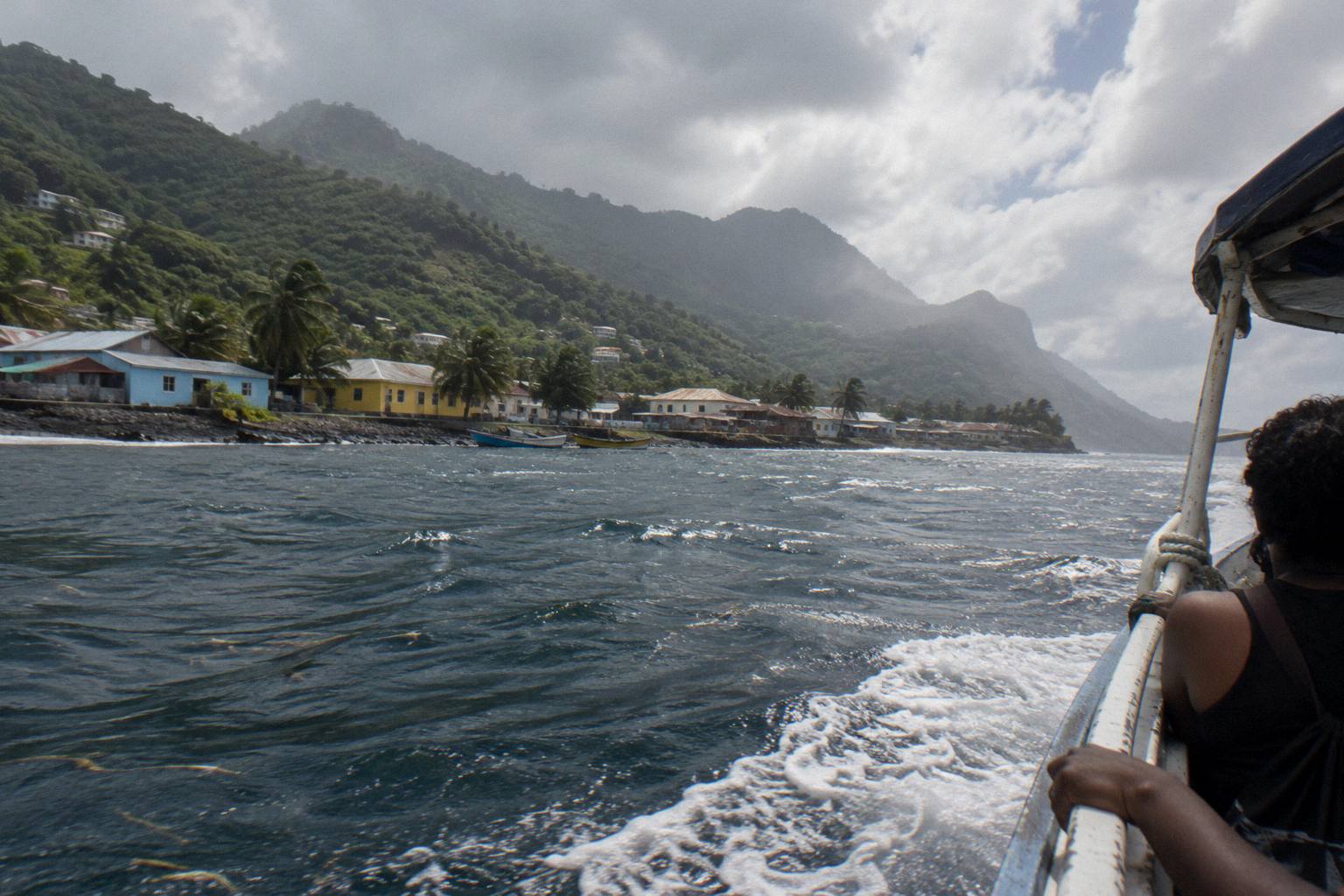
The all-aboard rule is the one cruise passengers most often get wrong, so it goes first. No cruise line is named here and no port timetable is printed, because those differ by sailing. The verified guidance is simply to check your ship's all-aboard time and ask the operator about timing. Ask it in those words. A good operator who works the cruise market will know the typical windows at Pointe Seraphine and will tell you plainly whether their trip is comfortable, tight, or not advisable for your schedule.
| Question to ask | Why it matters | Where the risk falls |
|---|---|---|
| Does your start time fit my ship's hours in port? | The shared cruise departs on a fixed morning schedule; only the private safari's start moves | On you, unless the operator advises against booking |
| Will you hold the departure for a delayed ship? | Ships are occasionally late, and the shared cruise will not wait | On you, since free cancellation ends 24 hours before |
| What time are we back, against all-aboard? | The trips run about 3.5 and 4 hours before the transfer back | On you, especially with the taxi leg on the shared cruise |
| What if the ship skips the call? | No published policy covers ship-side cancellations on either trip | Unknown, so get the answer in writing when booking |
The second question is about the ship being late. Ships are occasionally delayed, and the two trips handle lateness differently. The shared cruise has a fixed morning departure that will not wait, and the booking path's free-cancellation window runs up to 24 hours before departure, so a same-morning delay could cost the fare. The private safari's start time is arranged with the operator, which gives you a basis for the conversation: ask whether a delayed arrival shifts the departure or forfeits it. Confirmation on the private trip is not instant, which means there is a natural message exchange with the operator in which these questions get asked before anything is locked.
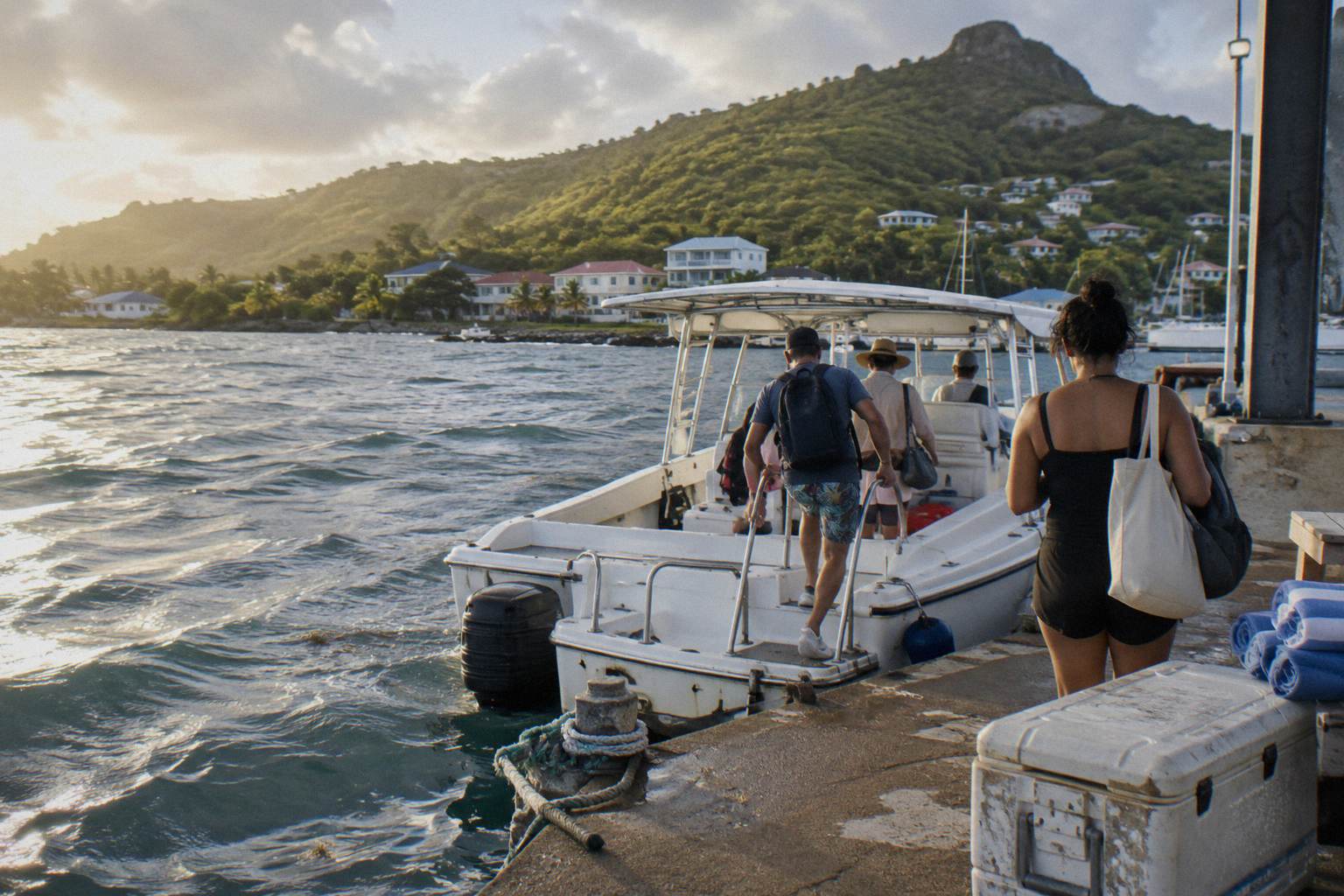
The third question is the return-side buffer. Ask the operator directly what time the boat is expected back at the marina or pier, and compare that against all-aboard yourself, remembering the taxi leg on the shared cruise. No return time is promised here, because none is published; the trip lengths are about 3.5 and about 4 hours, and the rest is port-specific.
The fourth is the skipped-call question. Weather diversions and itinerary changes happen, and the published facts cover only the operator side: both trips are free to cancel up to 24 hours before departure, and the private safari is cancelled free for bad weather. The shared cruise's operator says that if the captain cancels for unsafe weather there is an alternative date or a refund, an operator statement. What happens when the ship, not the boat, fails to appear is not a published policy on either path, so ask it in writing when booking. For a fuller framing of the whole buy-or-not decision, the site's piece on whether the whale and dolphin excursion is worth it is the companion read.
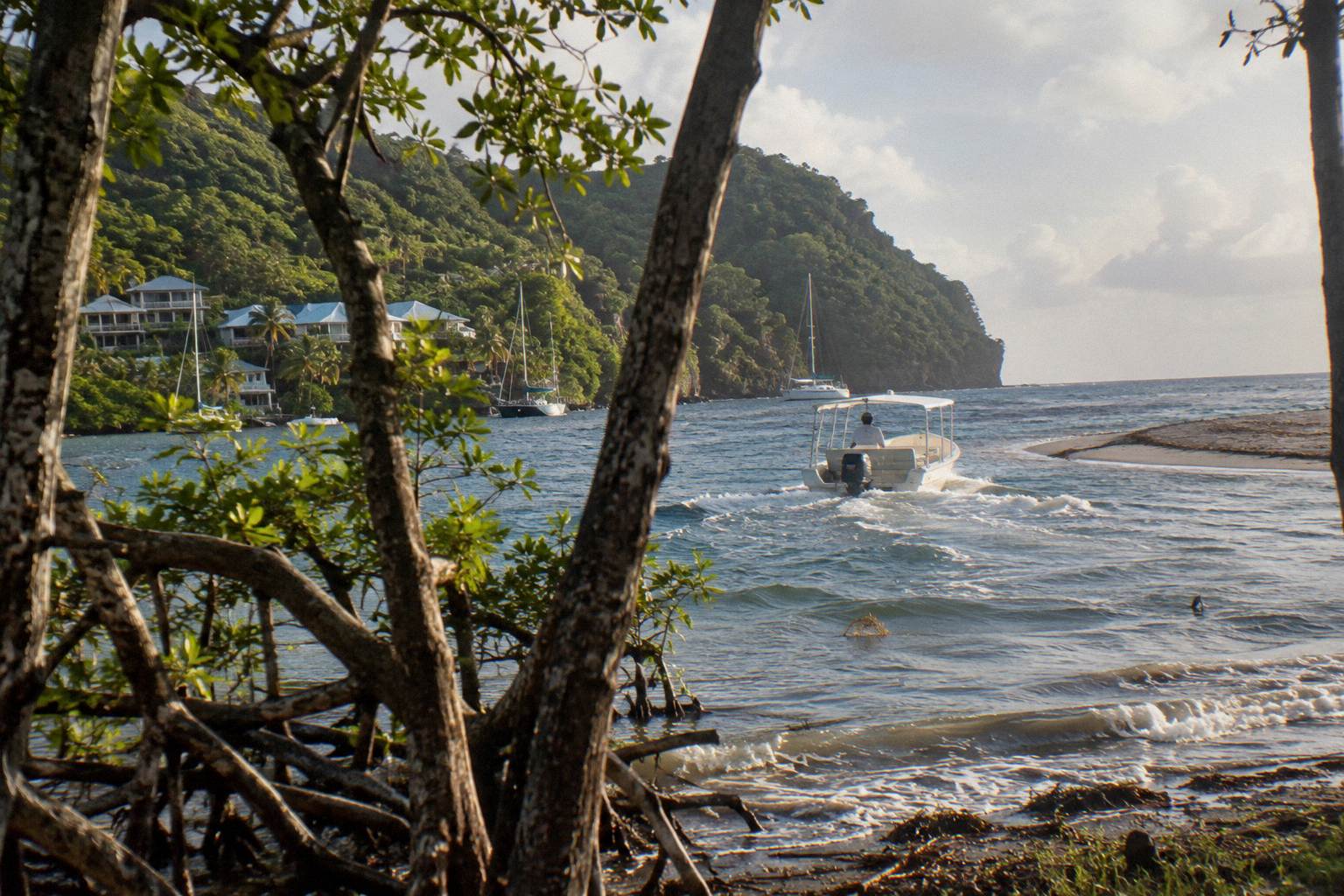
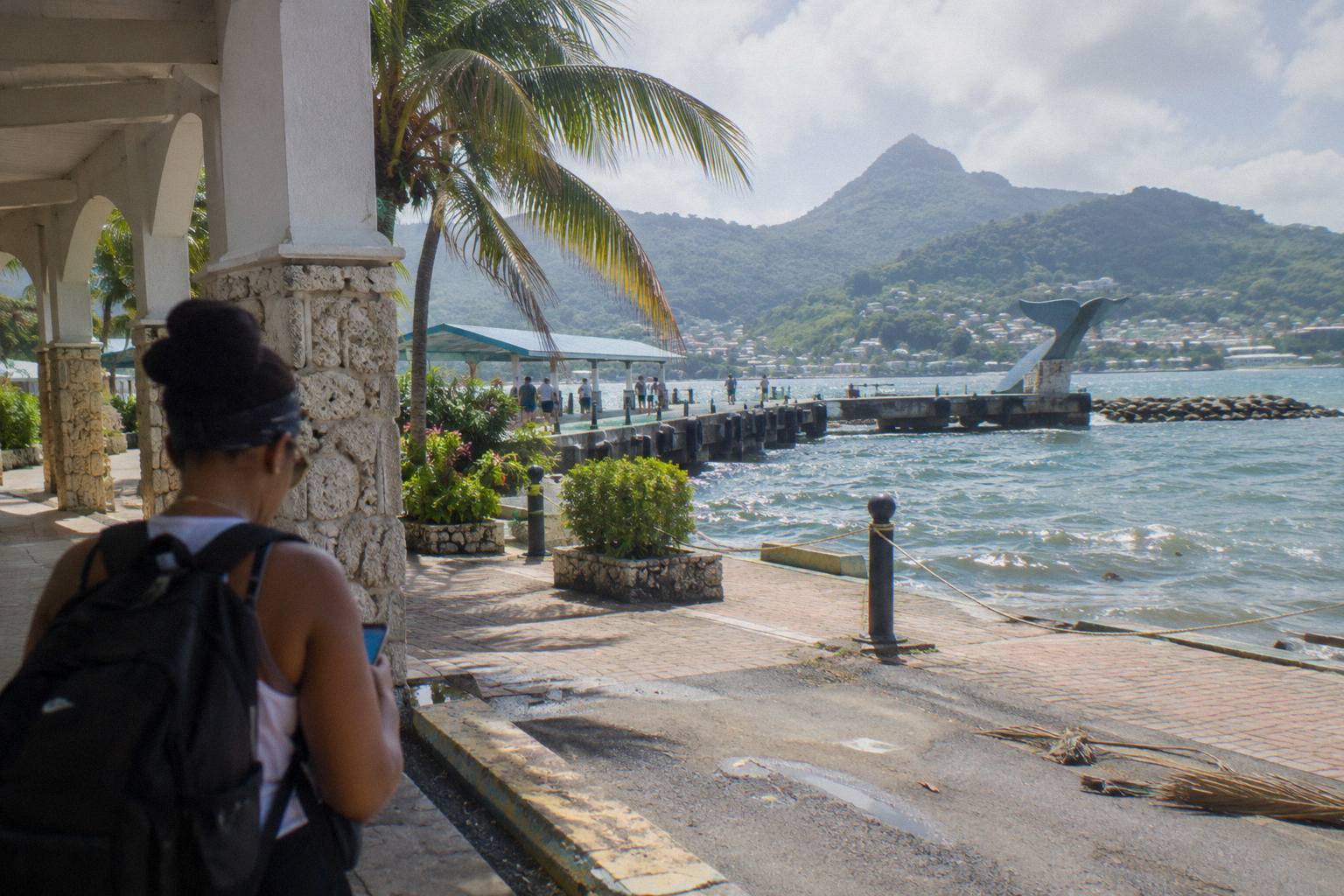
What Should You Carry Ashore?
Carry sun protection, a hat, a light layer for spray, and a camera, the tourism board's own checklist for a boat trip. Add your passport and proof of onward travel for the port day, some cash or a card for gratuities and taxis, and nothing that cannot survive salt spray. US dollars are widely accepted, so there is no need to change money first.
The packing list is short because the boats provide most of what a half-day on the water needs. Both trips include drinks aboard: bottled water, soft drinks and rum punch on the shared cruise, and soft drinks, coffee, tea, water, rum punch, light snacks and local fruit on the private safari. Food and drink are covered either way. Sun protection is not: the tropical morning sun off open water is stronger than on shore, and the tourism board's guidance puts sun protection, a hat, a light layer for spray and a camera at the top of the list.
The light layer deserves a word. Boats move, spray happens, and a wet T-shirt under a warm wind is the difference between a comfortable deck and a miserable one. The board also suggests asking about boat size if you are prone to motion sickness, and both boats are named here in fact: the shared cruise's custom 60 ft boat and the safari's 50 ft catamaran. No medical advice is offered on this site, but the question is worth asking the operator if motion sickness is a known issue for anyone in your party. The site's fuller breakdown is in what to bring on a whale and dolphin cruise.
Money is simpler than many cruise ports. The Eastern Caribbean dollar is fixed at EC$2.70 to US$1, and US dollars are widely accepted by hotels, restaurants, tour operators and taxis, with change often given in EC$. The tourism board's currency guidance covers this in detail at its cash, cards and tipping page. Gratuities are excluded on both trips, so bring something for the crew if the service earns it. Taxi fares between Pointe Seraphine and Vigie Marina on the shared-cruise route are paid locally, and no fare figure is printed here because none is published.
Entry formalities for cruise passengers are usually handled by the ship, but the official requirements are worth knowing: a passport valid for the stay plus proof of onward travel, with no visa required for US, UK or Canadian citizens, and air arrivals encouraged to complete the online immigration form up to 3 days before travel per the tourism board's trip planning page.
What Happens If The Weather Turns?
Both trips are free to cancel up to 24 hours before departure on the booking path, and the private safari is additionally cancelled free for bad weather. The shared cruise's operator says that if the captain cancels for unsafe weather, there is an alternative date or a refund. There is no rebook-if-no-sighting policy on either trip, and none is implied here.
Weather on a port day cuts in two directions: the operator's side and the ship's side. On the operator's side the policies are published and simple. The private safari is cancelled free for bad weather, full stop. The shared cruise's operator states that a captain's cancellation for unsafe weather leads to an alternative date or a refund, and on a cruise day, when an alternative date is impossible, the refund is the operative half of that sentence. Both facts are operator statements and are presented as such.
The seasonal context is worth understanding before you read any weather forecast. The Atlantic hurricane season officially runs June 1 to November 30, per the Saint Lucia Meteorological Service's own season release, and seas are typically calmer from December to May. That is the full extent of what is printed: no claim is made that sightings fail in any month, only that the sea state varies through the year.
| Time of year | What the sources say | Planning read for a cruise day |
|---|---|---|
| December to May | Seas typically calmer; some operators report humpbacks from December | The smoother-water window; best months for first-timers wary of swell |
| February to April | Official humpback migration window | Year-round dolphins plus the added chance of humpbacks |
| Year-round | Dolphins and pilot whales can be seen in all months | No sailing is excluded from the activity itself |
| June 1 to November 30 | Hurricane season officially runs; humpbacks unlikely | Watch forecasts, ask the operator about sea conditions |
The site's longer treatment of sailing in the rougher months is in whale watching in hurricane season.
The sighting question is separate from the weather question, and conflating them is the most common mistake cruise passengers make. Sightings depend on weather, season and the animals' movements, per the tourism board's own wording, and every encounter is a chance rather than a promise. No sighting percentage exists that is worth printing, operator claims conflict, so none appears here. Dolphins and pilot whales are seen year-round, sperm whales are described by the tourism board as considered resident in the region and occasionally sighted in deeper waters, and humpbacks add a chance between about February and April, with some operators reporting them from December. The honest framing of the odds is in how likely you are to see whales off Saint Lucia.
The ship's side of a weather turn is the one no tour operator controls. Ships reroute, arrive late, or skip calls, and when that happens the questions you asked before booking, about delayed ships and skipped ports, are what protect your money. That is why they live in the timing section above and why they are asked in writing.
Common Mistakes On A Cruise Ship Day
The recurring mistakes are booking without checking all-aboard against the return time, assuming pick-up exists on the shared cruise, treating the private price as per person, leaving the private booking too late for operator confirmation, and expecting a sighting guarantee that no honest operator offers. Each one is avoidable with a single question or a careful read.
The pick-up assumption comes first because it is the most damaging. The shared cruise includes no hotel pick-up and no pier pick-up; its convenience is that Vigie Marina sits a short distance from Pointe Seraphine with taxis readily available. Passengers who book it expecting to be collected at the gangway have a bad morning. The private safari is the only one of the two that collects at the pier, and that single difference justifies most of its premium on a port day.
The price-basis mistake follows. The private safari's from-price of US$2,550.65 is for the whole boat, never per person, and the two figures are never compared as if they shared a basis. Done correctly, the arithmetic is the labelled kind only: US$2,550.65 shared by 4 guests is about US$637.66 each; by 6 about US$425.11; by 8 about US$318.83; by 12 about US$212.55. The shared cruise at US$65 per person is US$130 for 2, US$260 for 4, US$390 for 6. Prices vary by date and group, and the booking page confirms the current figure.
The timing mistakes are covered above but bear repeating as a list of don'ts: don't book the fixed morning departure without checking your ship's arrival can beat it; don't book any whale trip without checking all-aboard against the return; don't assume a delayed ship is the operator's problem; and don't leave the private safari to the last minute, because its confirmation is not instant.
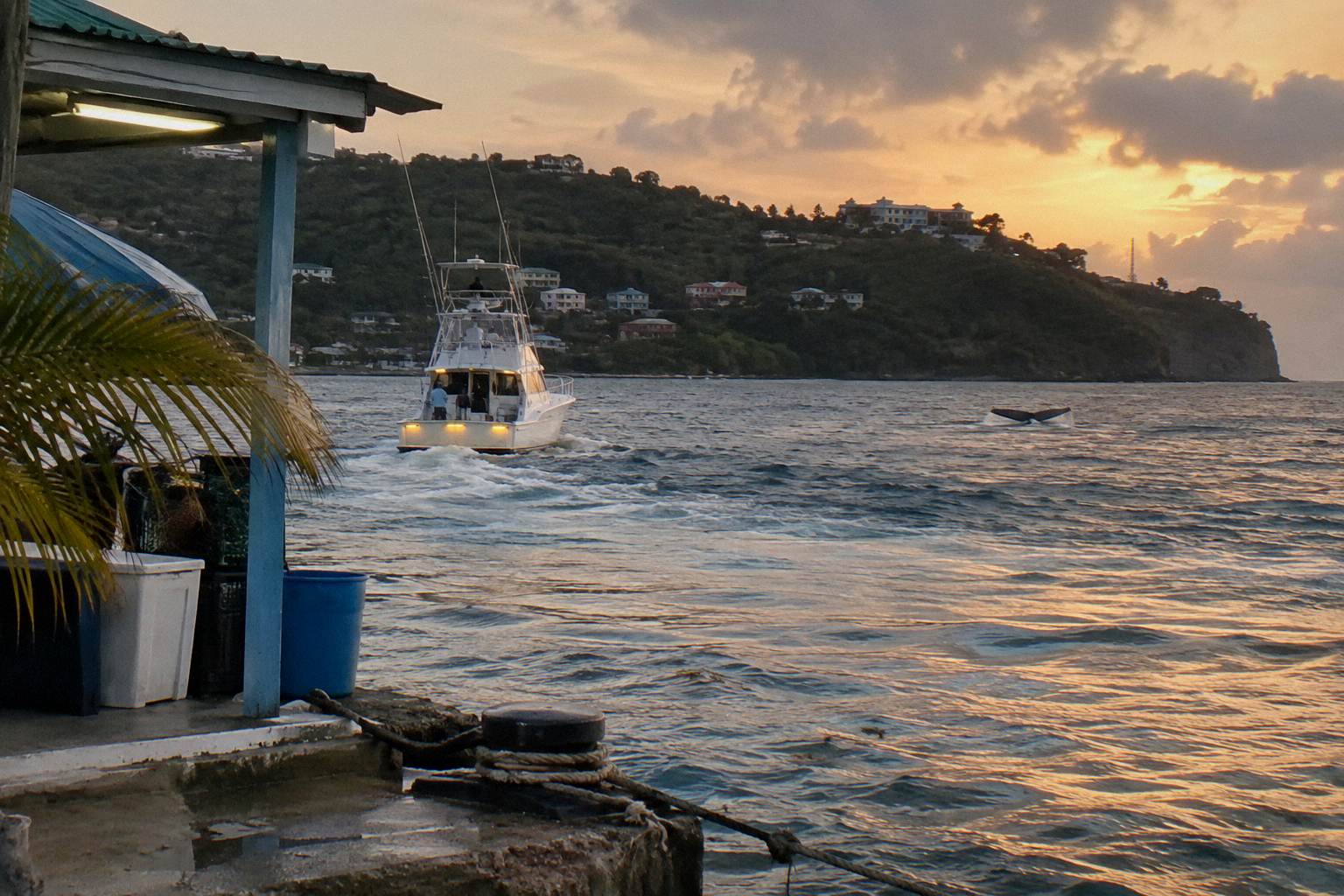
The last mistake is the oldest one in wildlife tourism: buying a sighting. No operator here promises one, this site never implies one, and the tourism board's own language is that sightings depend on weather, season and natural movement patterns. What you are buying is about 3.5 or 4 hours on the water off one of the better shorelines in the Caribbean for encounters, where deep water lies close to the west coast and the animals can appear not far from shore. The dolphins, in particular, are the reason the trip runs all year.
Common Questions About A Castries Cruise Ship Day
Is Whale Watching In Saint Lucia Good For Cruise Passengers?
Yes, with the right trip. The Private Premium Whale And Dolphin Safari includes cruise ship pier pick-up and drop-off, which makes it the most port-friendly option, and the shared cruise departs Vigie Marina, a short distance from the Pointe Seraphine cruise terminal with taxis readily available. Whale and dolphin watching runs year-round, so it works on sailings in any month.
How Long Is A Whale And Dolphin Cruise From Castries?
The shared cruise runs about 3.5 hours and the private safari about 4 hours, both before any time getting to the marina. The tourism board describes the typical island trip as a morning departure of about three to four hours following the Caribbean coast, and both of these trips sit inside that range.
Does Either Trip Pick You Up At The Cruise Ship Pier?
The private safari does, with pier pick-up and drop-off included in the per-boat price. The shared cruise includes no pick-up of any kind, no pier collection and no hotel collection, and you make your own way to Vigie Marina by taxi.
How Much Does A Whale And Dolphin Shore Excursion Cost In Saint Lucia?
The shared cruise is from US$65 per person, and the private safari is from US$2,550.65 per boat for your whole group of up to 40 guests. For illustration, not a quote: US$2,550.65 shared by 4 guests is about US$637.66 each; by 6 about US$425.11; by 8 about US$318.83; by 12 about US$212.55. Prices vary by date and group, and the live listing confirms the current figure.
Will I See Whales From A Castries Cruise Day?
Sightings are a chance, never a promise, and depend on weather, season and the animals' movements. Dolphins and pilot whales are seen year-round, sperm whales are occasionally sighted in deeper water, and humpbacks add a chance between about February and April. No sighting percentage is published, and no rebook-if-no-sighting policy exists on either trip.
Can I Cancel If My Plans Change Before The Ship Arrives?
Both trips are free to cancel up to 24 hours before departure on the booking path. The private safari is additionally cancelled free for bad weather, and the shared cruise's operator says a captain's cancellation for unsafe weather brings an alternative date or a refund. What happens if the ship itself skips the call is not a published policy, so ask before booking.