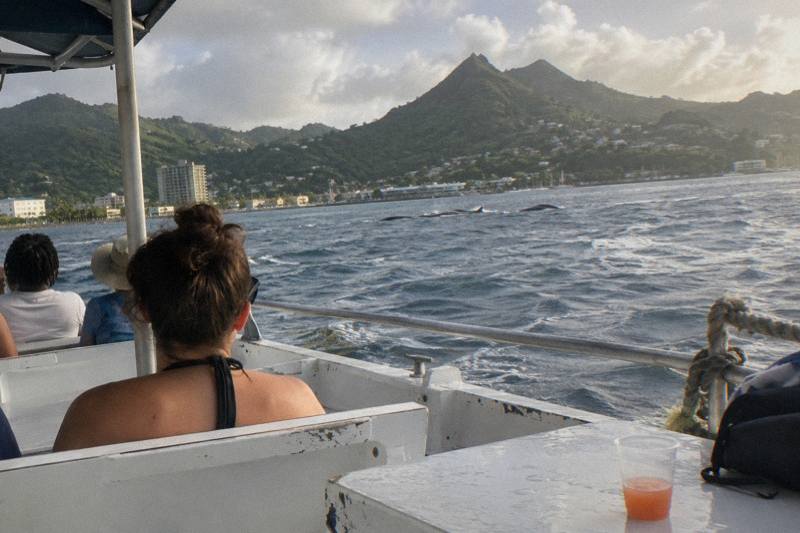
What To Bring On A Whale And Dolphin Cruise In Saint Lucia
Packing for a whale and dolphin cruise in Saint Lucia is a short list done well: sun protection, a hat, a light layer for spray, a camera, and a clear idea of what the boat already carries for you.
Short answer
Bring sun protection, a hat, a light layer for spray and a camera; both trips from Vigie Marina include drinks, and the private safari adds snacks and local fruit. Gratuities are extra on both. From US$65 per person on the shared cruise; the private safari is from US$2,550.65 per boat.
Trips usually leave Castries in the morning and last about three to four hours, which makes the packing question unusually simple: you are out for half a day, in tropical sun, on open water. The official Saint Lucia tourism guidance keeps the list short, sun protection, a hat, a light layer for spray, a camera, and adds one instruction that trips people up: ask about boat size if you are prone to motion sickness. This guide works through that list in detail, traveller type by traveller type, and separates what you carry from what the boat already provides.
Both trips covered here depart Vigie Marina in Castries Harbour. The shared cruise is the Whale And Dolphin Watching Cruise, from US$65 per person, about 3.5 hours, with bottled water, soft drinks and rum punch on board. The private option is the Private Whale And Dolphin Safari, from US$2,550.65 per boat, about 4 hours, with a longer drinks and snacks list and pier pick-up on cruise days. You can compare the two formats in the shared cruise or private charter decision guide. What follows is the day-bag question, answered properly.
What Should You Bring On A Whale And Dolphin Cruise?
Pack sun protection, a hat, a light layer for spray, a camera and any personal essentials in one small soft bag, because the boat already carries your drinks and, on the private safari, your snacks. Nothing on the official list is specialised gear, and nothing needs to be bought new: the trip is about three and a half to four hours on the water, and the boat does the rest. The mistake most first-timers make is overpacking, not underpacking. A morning on a 60 ft boat does not call for a suitcase, and deck space on any shared cruise is shared with everyone else's day bag.
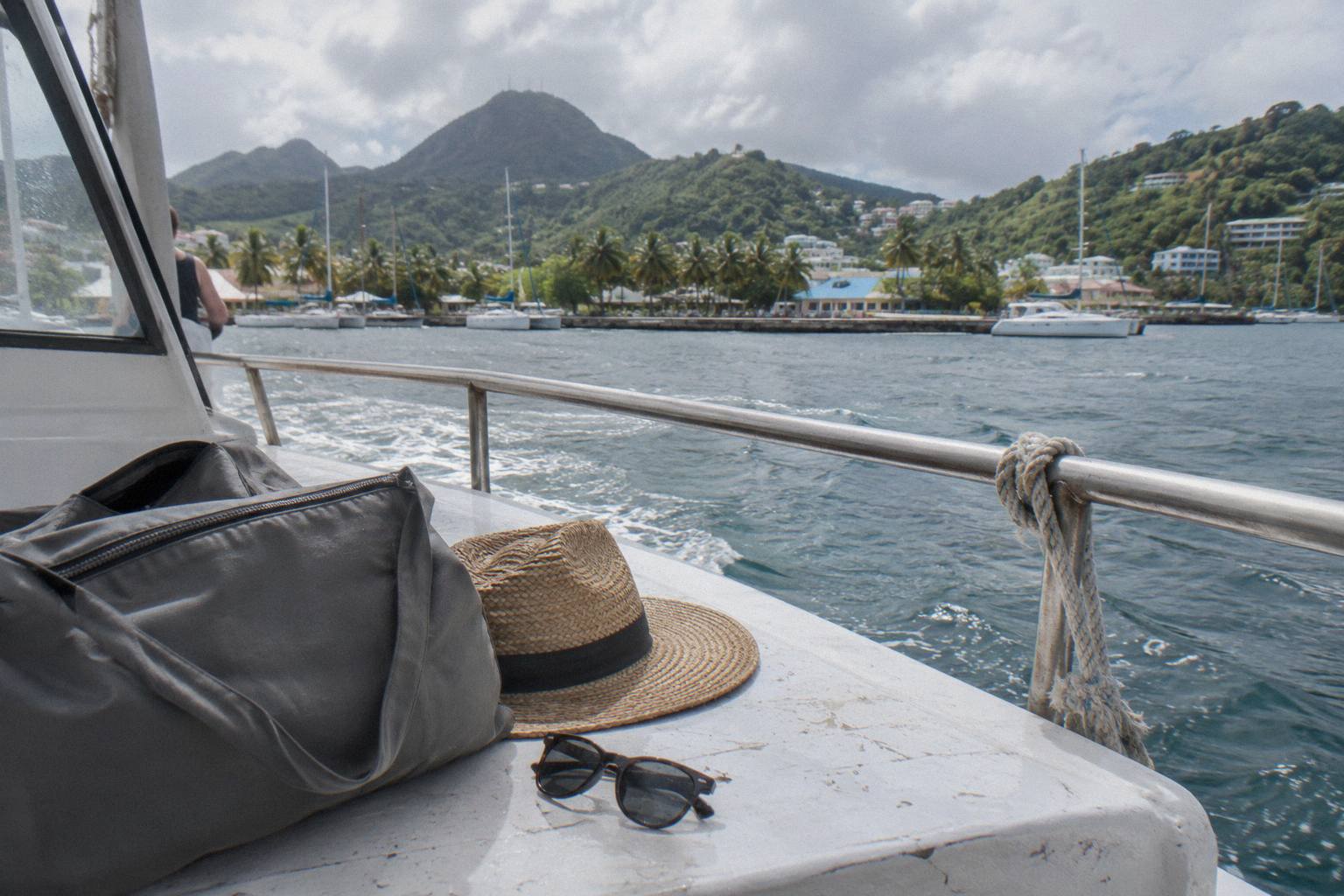
Start with the four official items and treat them as non-negotiable. Sun protection comes first because the Caribbean sun is direct even when the air feels cooled by the breeze on deck; a hat with a brim keeps the glare off your face while you scan the water. The light layer for spray matters more than people expect: the boat moves, the wind is constant, and a wet shirt in the wind is colder than the temperature suggests. A camera, or a phone you trust, is what the whole family will want the moment a spinner dolphin arc appears off the bow.
The rest of the bag is personal logistics, and it differs by traveller. Families with children carry a little more; photographers carry different priorities entirely. The table below splits the checklist so you can lift the column that fits your group and ignore the rest.
| Item | Solo or couple | Family with children | Photographer | Cruise ship visitor |
|---|---|---|---|---|
| Sun protection | Yes, apply before boarding | Yes, extra for children | Yes, plus lip balm | Yes, small bottle |
| Hat with brim | Yes | One per child, named | Yes, with a chin cord | Yes |
| Light layer for spray | Yes | Yes, one per child | Yes | Yes |
| Camera or phone | Either | Any, plus a spare battery | Camera plus dry bag | Phone or small camera |
| Sunglasses | Yes | Yes, cheap pairs for kids | Polarised help with glare | Yes |
| Cash for gratuities | Small bills | Small bills | Small bills | Small bills |
| Change of shirt | Optional | Yes | Optional | Optional, space permitting |
| Reusable water bottle | Optional, drinks are on board | Useful for children | Optional | Optional |
One point of honesty about the bag itself: soft is better than rigid, and smaller is better than larger. Nothing in the facts for either trip publishes a bag policy, so if you are travelling with anything larger than a day pack, ask the operator when booking. The shared cruise's group size is not published, which means you cannot predict how much deck room your bag will compete with; on the private safari, up to 40 guests fit on a 50 ft catamaran, so the same logic applies at your own group's scale.
Families should also note the age question early. No minimum age is printed for the shared cruise; children travel with an adult, and the right move is to ask the operator when booking rather than assume. The wider family guide to whale and dolphin cruises covers that decision in full, including what the day actually looks and feels like for younger children on the water.
What Is Already Included On Board?
The shared cruise includes bottled water, soft drinks and rum punch, and the private safari adds coffee, tea, light snacks, rum punch and local fruit, so you do not need to carry drinks or food for a three to four hour trip. The one cost neither boat covers is gratuities, which are excluded on both, and neither trip includes hotel pick-up. This section is where most of the bag-weight decisions get made, because everything the boat carries is something you can leave at the hotel.
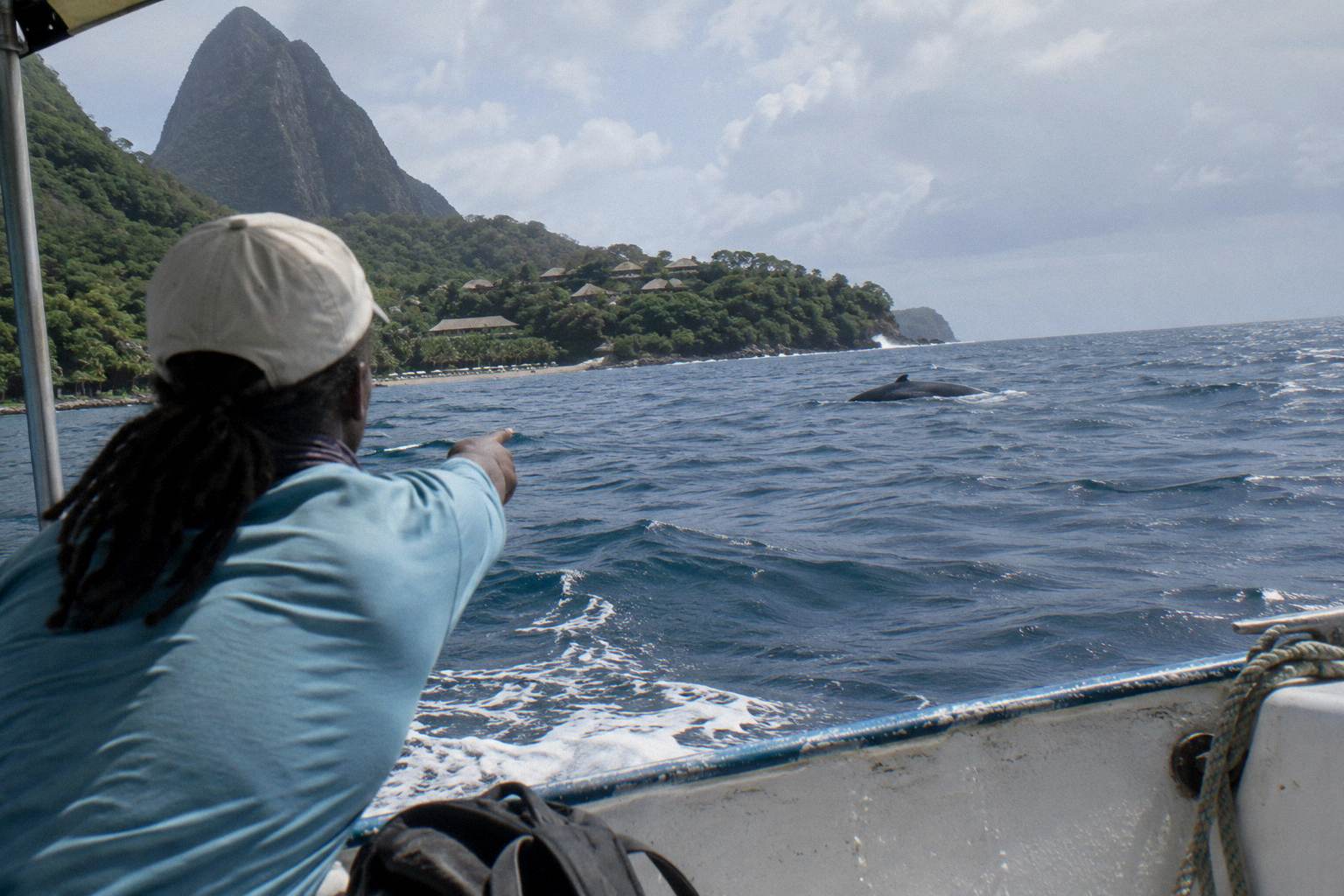
On the shared Whale And Dolphin Watching Cruise, a local marine expert is aboard, and the drinks list is bottled water, soft drinks and rum punch. That covers hydration and a celebratory punch for the sail home. On the Private Whale And Dolphin Safari, the list runs longer: a guide, soft drinks, coffee, tea, water, light snacks, rum punch and local fruit. The private safari also includes cruise ship pier pick-up and drop-off, which changes what a cruise visitor needs to plan at both ends of the day. Neither trip includes hotel pick-up or drop-off, and neither includes gratuities, so small bills for tipping belong in your bag on either boat.
The cleanest way to plan is a two-column read: what is on the boat, and what is on you. The differences between the trips are real but small, and they mostly matter to families with hungry children and to anyone whose caffeine routine is non-negotiable.
| On the boat | Shared cruise | Private safari |
|---|---|---|
| Drinking water | Yes | Yes |
| Soft drinks | Yes | Yes |
| Rum punch | Yes | Yes |
| Coffee and tea | No | Yes |
| Light snacks | No | Yes |
| Local fruit | No | Yes |
| Guide or marine expert aboard | Yes | Yes |
| Cruise ship pier pick-up and drop-off | No | Yes |
| Gratuities | Not included | Not included |
| Hotel pick-up | Not included | Not included |
Both trips can be cancelled free up to 24 hours before departure, which means the packing decision is genuinely low-risk: if the forecast or your plans change a day out, the booking does not cost you. The private safari is also cancelled free for bad weather. There is no rebook-if-no-sighting policy on either trip, so do not pack on the assumption of a free second attempt; sightings are always chances, never promises.
If you are still deciding between the formats, price arithmetic helps. For illustration, not a quote: US$2,550.65 shared by 4 guests is about US$637.66 each; by 6 about US$425.11; by 8 about US$318.83; by 12 about US$212.55. The shared cruise at US$65 per person is US$130 for 2, US$260 for 4, US$390 for 6. Prices vary by date and group, and the booking page confirms the live figure.
What Should You Wear On Deck?
Wear light clothing you do not mind getting sprayed, closed or secure footwear, and bring one light layer even on a hot morning, because wind and spray on a moving boat feel colder than the Castries air temperature suggests. A hat with a brim and sunglasses complete the official guidance, and a dry shirt left in your bag is the single most under-packed item. The tropical temptation is to dress for the beach, and the beach is exactly the wrong reference point: you are stationary on the water for hours, not moving between shade and swim.
Think in layers you can shed. A t-shirt under the light layer, shorts that dry quickly, and nothing so loose that wind turns it into a sail. Footwear should stay on your feet; decks are wet, and stairs between deck levels are the most common place to slip. The light layer for spray from the official list is usually a thin long-sleeve top or a light windbreaker, not a coat, and it lives in the bag until the boat picks up speed on the way out.
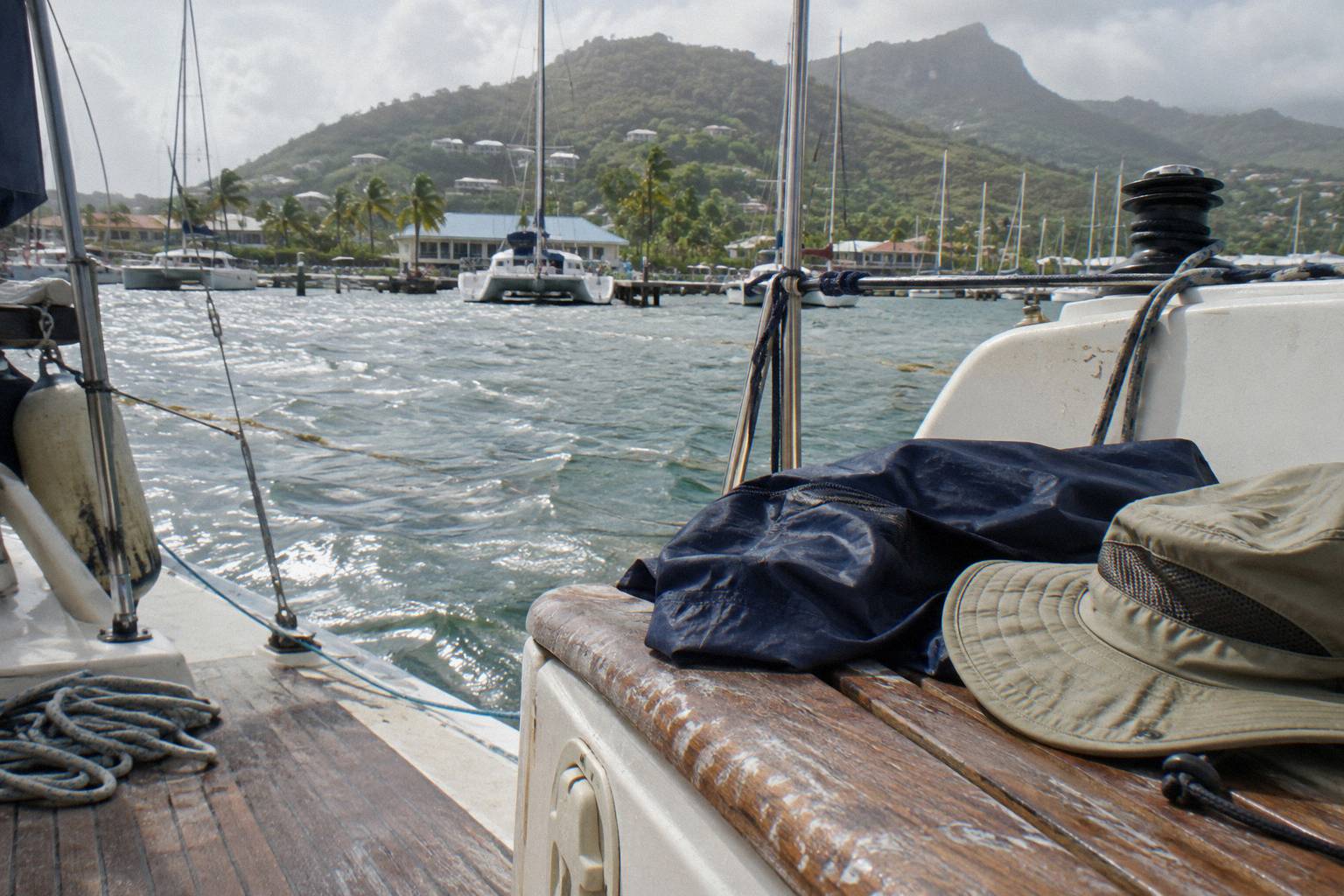
Colour is a minor but real consideration. Neutral, muted tones keep reflected glare manageable and show spray less; dark shirts absorb heat in direct sun. Swimwear is a personal choice, but note that neither tour offers swimming with whales or dolphins, and neither is a snorkel trip, so a swimsuit is only useful if you plan to swim elsewhere in the day. The full comparison of this trip against a catamaran and snorkel day is in the boat days compared guide, which clarifies what each format actually does.
Children need the same logic scaled up: a hat that stays on, a layer each rather than one shared, and a spare shirt per child. If your group is weighing whether younger children will enjoy the format at all, the question of whether it suits them is covered in is whale watching in Saint Lucia ok for young children, which is worth reading before you pack for the whole family.
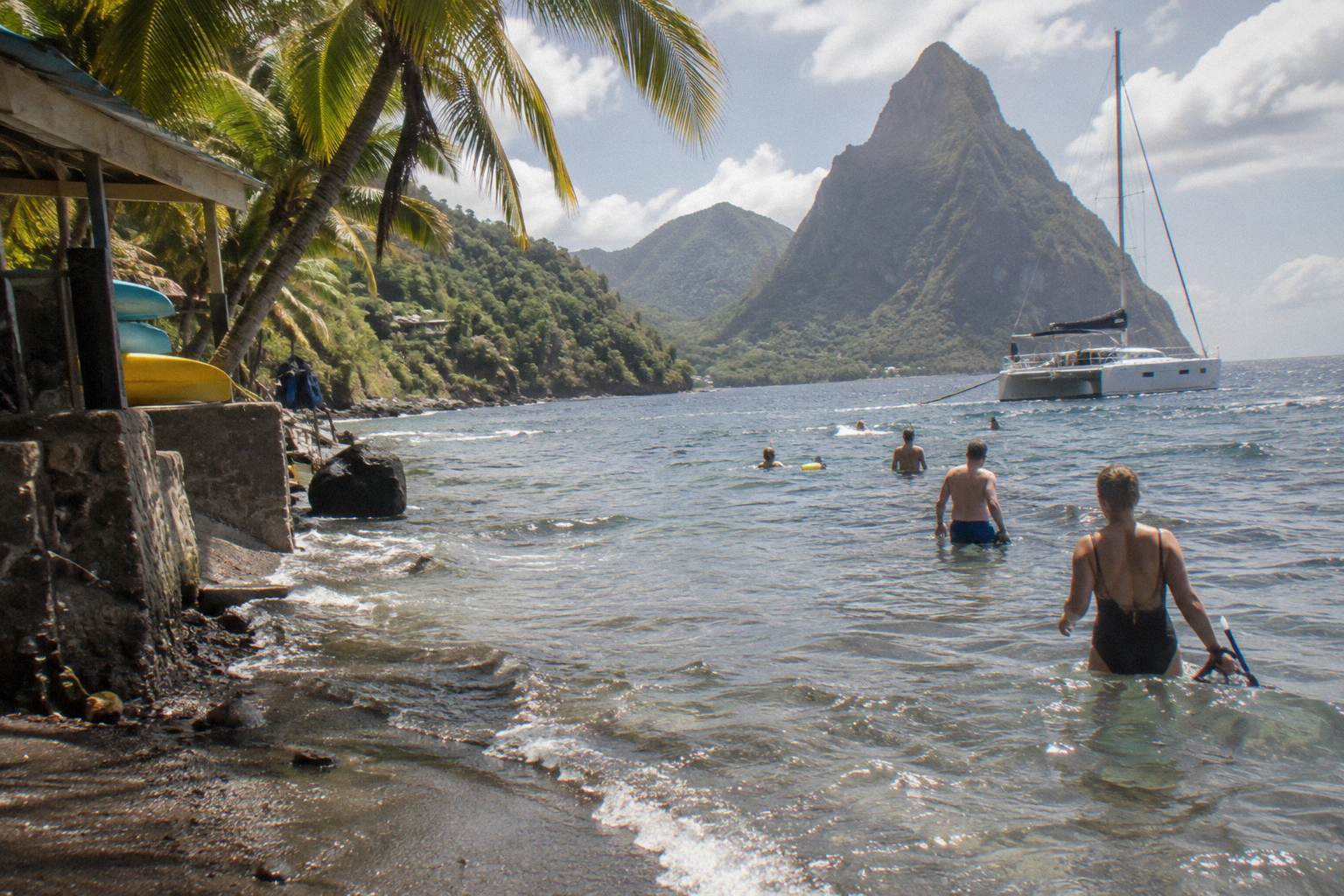
What About Cameras And Phones?
Bring whatever camera you will actually carry in one hand for three and a half to four hours, keep it on a strap, and protect it in a dry bag or zip pocket when the boat is moving, because spray and dropped phones are the two equipment risks on a whale cruise. The best camera for this trip is the one you can raise in two seconds when dolphins cross the bow, and long telephoto lenses only pay off if you are comfortable bracing them on a moving deck.
Phones have quietly become the default choice, and for good reason: they are always at hand, stabilised, and safe in a zip pocket. A spare battery or power bank is worth the bag space, since a morning of photos, video and screen brightness in the sun drains a charge faster than a normal day. If you carry a dedicated camera, a dry bag is cheap insurance; salt spray kills electronics faster than rain does. Lens cloths, more than one, because one will be wet within the hour.
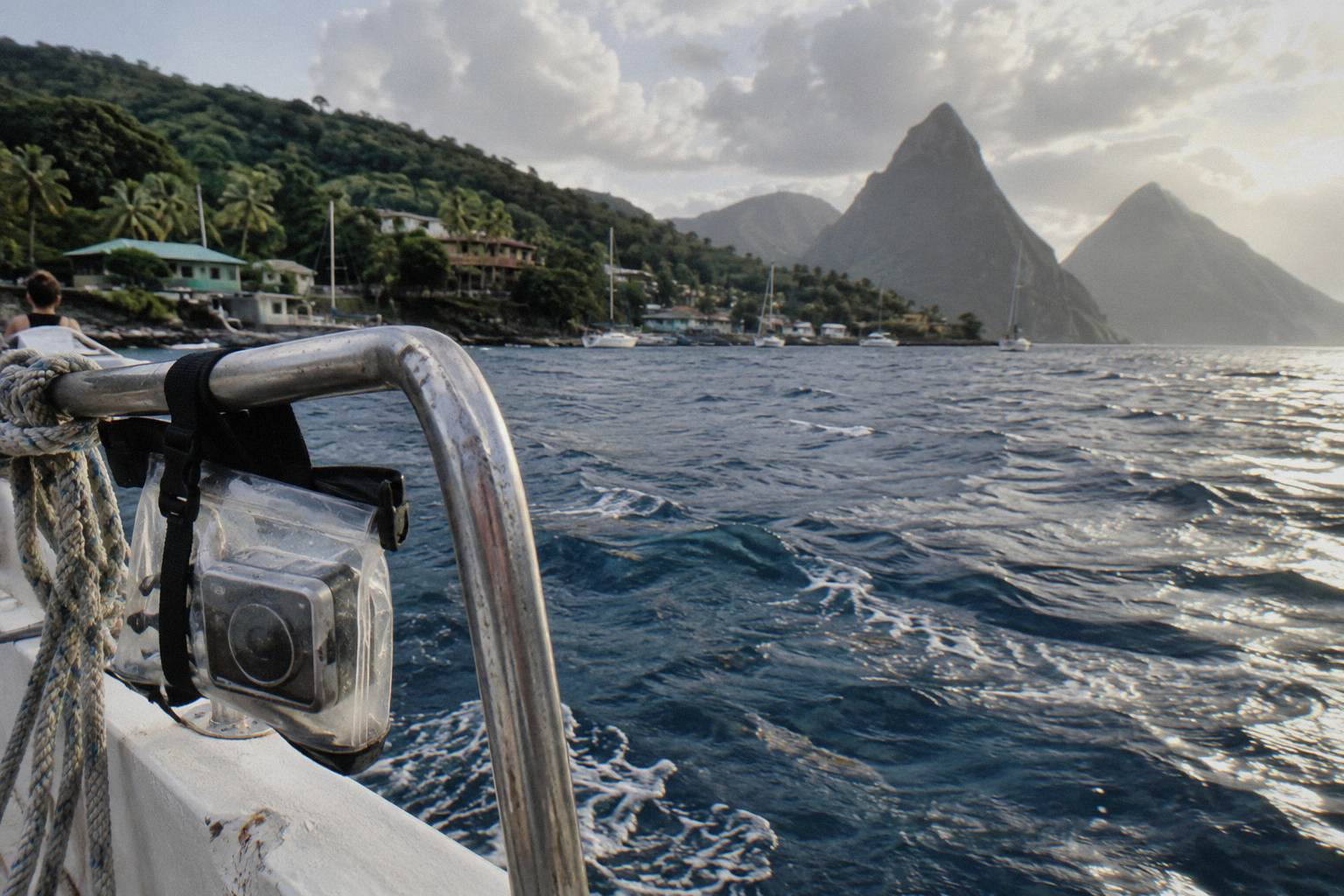
Composition expectations matter as much as equipment. The animals are wild and at a regulated distance, so frame for context: the animal against the water, the coastline behind, the boat's rail in the foreground. The west coast views are part of the trip on the shared cruise, and the coastline itself makes photographs worth taking even on a quiet wildlife morning. The species you have a chance of seeing, spinner, spotted, Fraser's and common dolphins, pilot whales, sperm whales in deeper water, and humpbacks between about February and April, are covered in the species and where to look guide.
One last camera-adjacent item: sunglasses. Polarised lenses cut surface glare and genuinely help you spot animals before other people do, which on a shared boat is the difference between a sighting and a story about a sighting. Cheap polarised pairs exist, and losing one over the side is a better day than losing the heirloom pair, so pack accordingly.
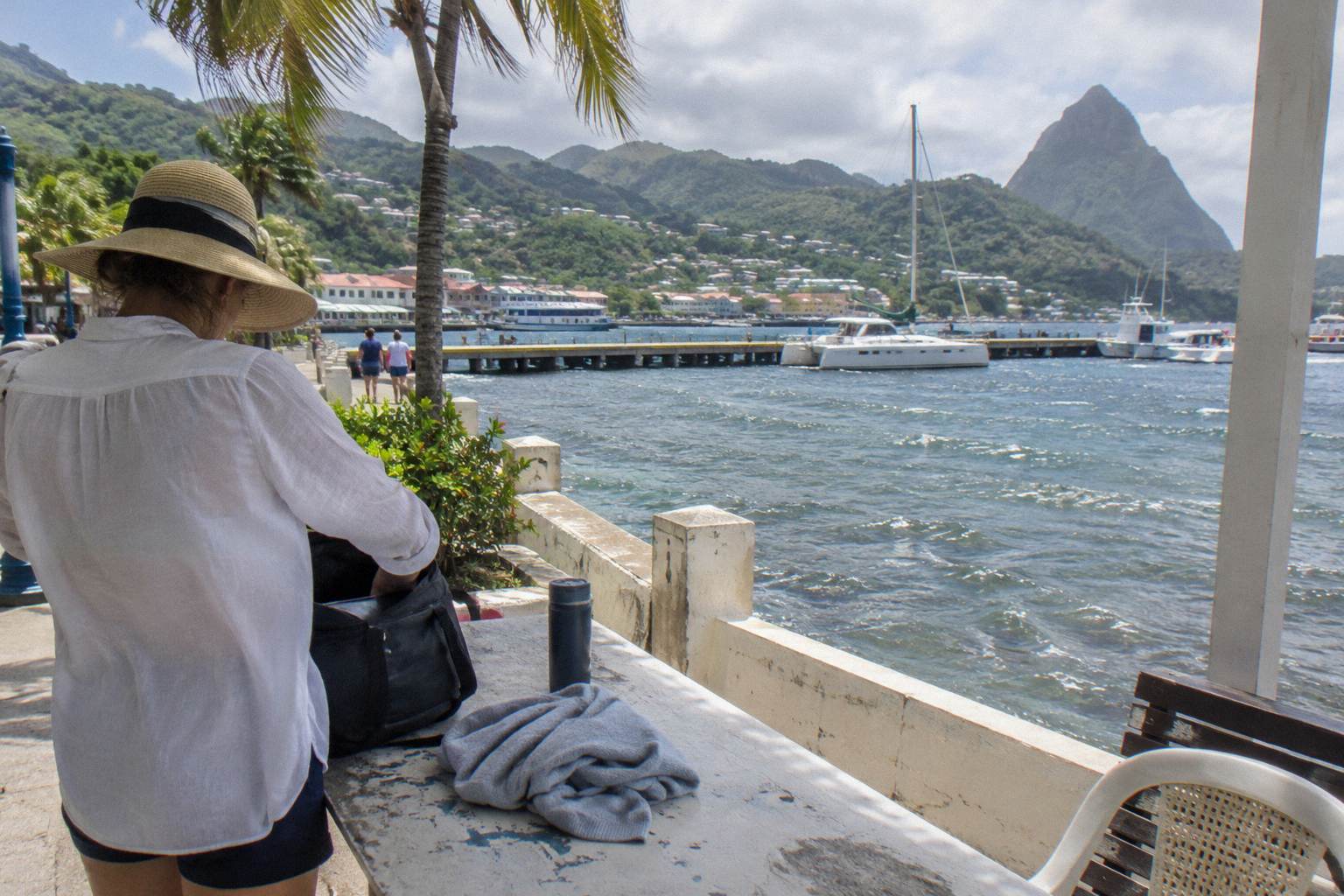
What About Motion Sickness And Boat Size?
The official advice is to ask about boat size if you are prone to motion sickness, and both facts are printable here: the shared cruise runs a custom 60 ft boat for about 3.5 hours, and the private safari a 50 ft catamaran for about 4 hours. No seasickness remedy is recommended on this page, because none appears in the official guidance. What you can do is ask the question the guidance tells you to ask, and pack around your own known history with boats.
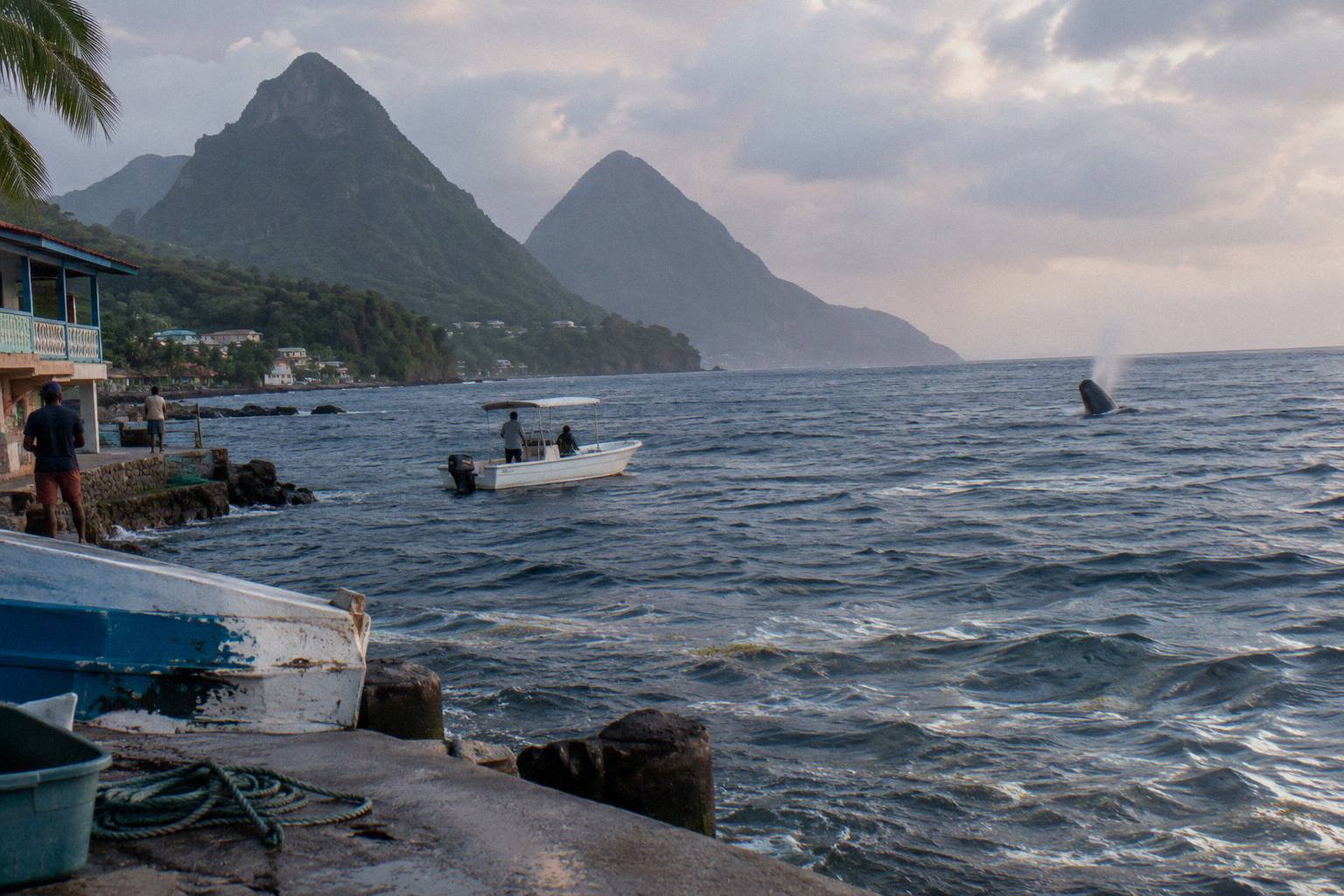
Boat size and stability are related but not identical: a longer hull generally handles swells differently than a smaller one, and a catamaran's twin hulls ride differently again. The honest position is that no source here rates one as smoother than the other, so your question to the operator should be specific: what is the boat, what is the forecast sea state, and where is the steadiest place to sit. Mid-boat, low, and away from the stern are the conventional answers, but the operator knows the day's conditions.
The worries people carry about this are common enough that the site covers them directly. If queasiness is your main hesitation, read will I get seasick on a Saint Lucia whale cruise, which works through the same official facts without medical claims. Packing-wise, the non-medical items that help are simple: a light layer, water, and something to focus on at the horizon. What you wear and carry can reduce how rough the motion feels; nothing in the packing list prevents it.
| Question to ask before you go | Why it changes your packing |
|---|---|
| What boat will run that day? | Official advice for anyone prone to motion sickness |
| How long is the trip, door to dock? | Shared about 3.5 hours; private about 4 hours |
| Where is the steadiest seating? | Decides whether the light layer stays in the bag |
| Is the morning the calm part of the day? | Trips usually leave in the morning |
| What is the sea state forecast? | Seas are typically calmer December to May |
Timing is also a packing input in a small way. Seas are typically calmer from December to May, and the Atlantic hurricane season officially runs June 1 to November 30, per the Saint Lucia Meteorological Service. None of this is a reason a sighting succeeds or fails; it is simply the background to how the water will feel under the hull, which is the part of the day your bag answers for.
What Do You Need For Entry And Money?
US, UK and Canadian citizens need no visa, but everyone needs a passport valid for the stay plus proof of onward travel, and air arrivals are encouraged to complete the online immigration form up to 3 days before travel; on the water, US dollars are widely accepted and the Eastern Caribbean dollar is fixed at EC$2.70 to US$1. For most visitors this section costs nothing to action, and everything on it is settled before the morning of the cruise.
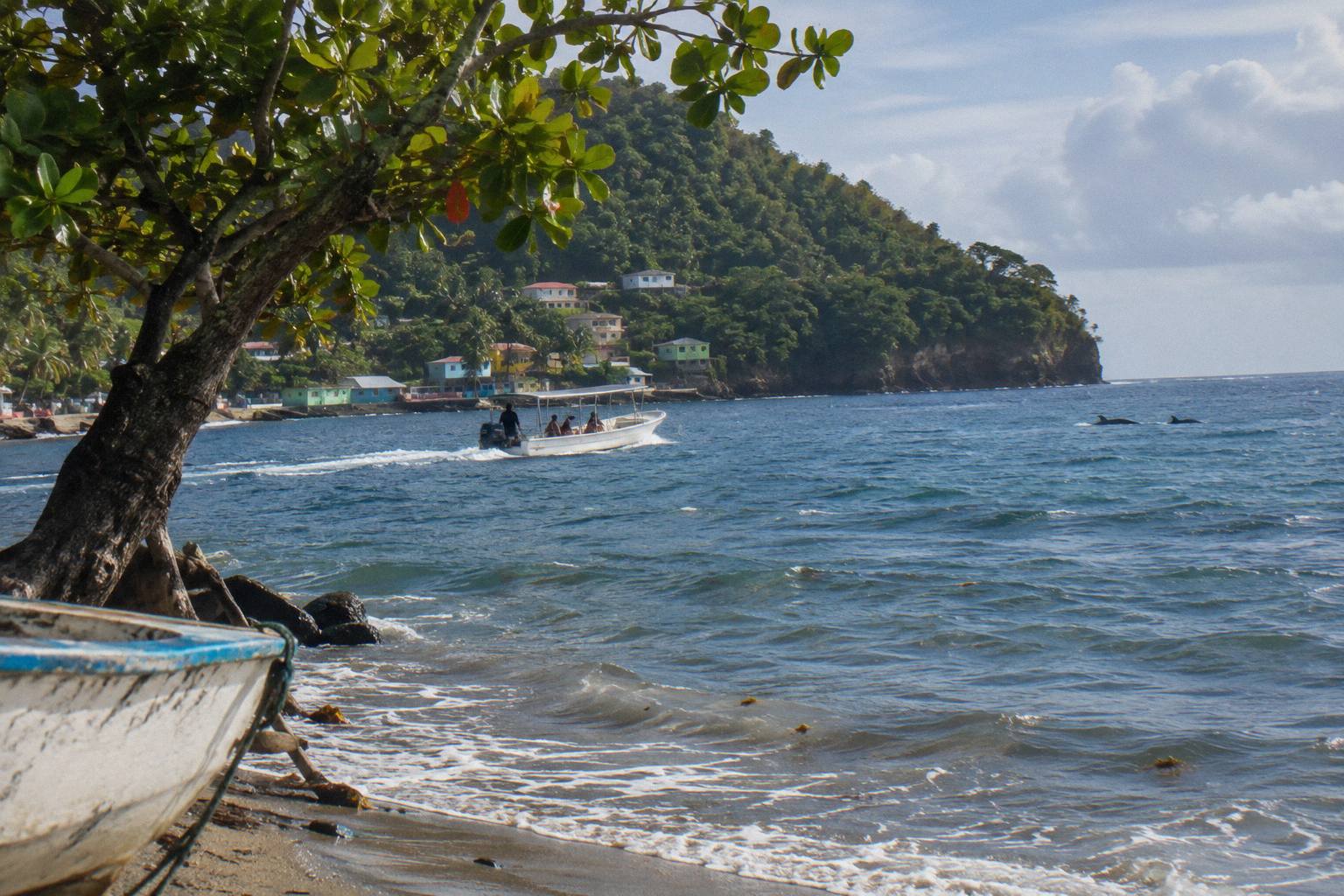
Entry formalities are the one part of the day you cannot fix with a day bag, so they belong first on a pre-trip list rather than the packing list. The details are on the official plan-your-trip page. Money is simpler than people fear: US dollars are widely accepted by hotels, restaurants, tour operators and taxis, with change often given in Eastern Caribbean dollars. The peg means mental arithmetic is straightforward if you want it, but no converted currency figure is needed for the cruise itself, since the booking is priced in US dollars.
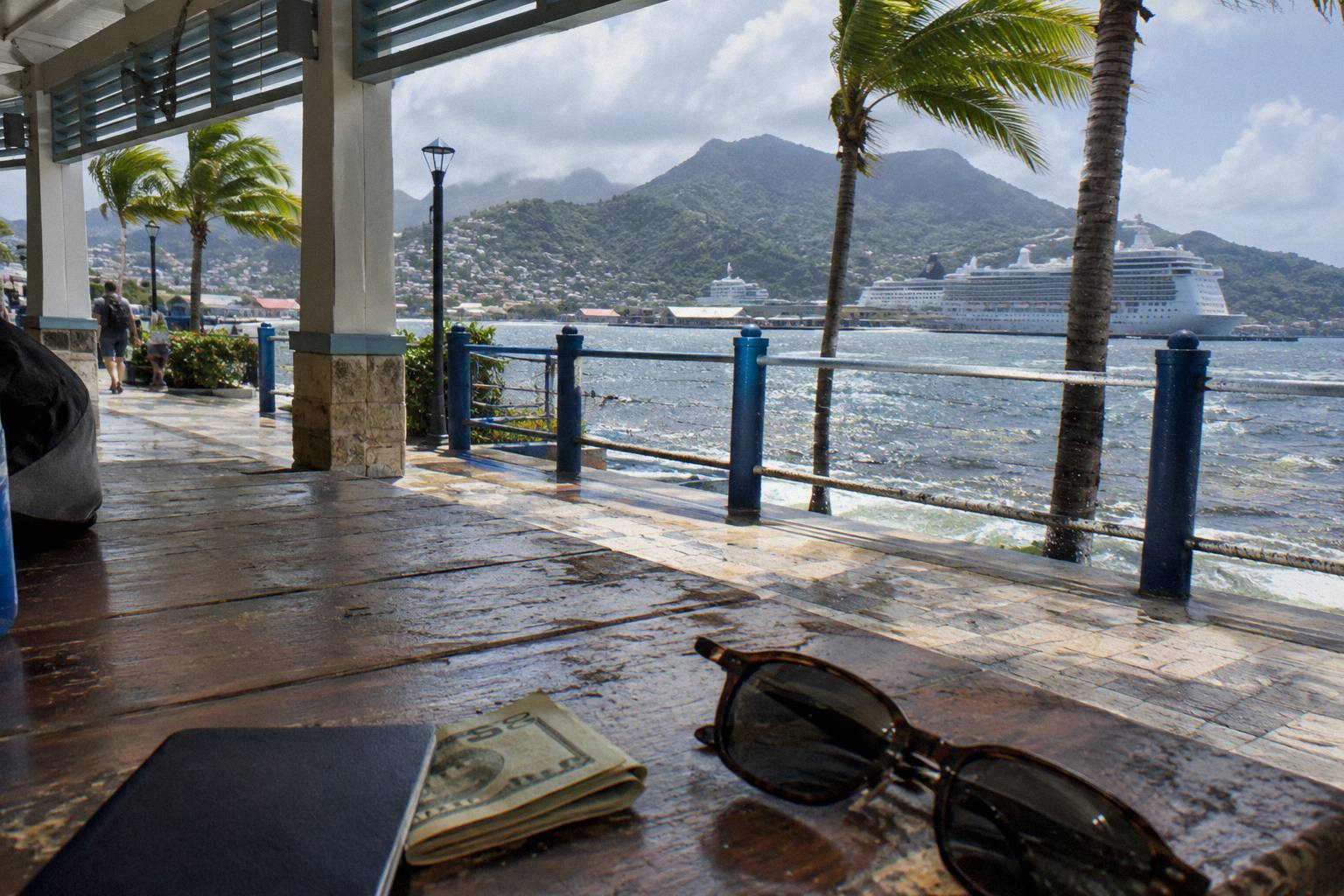
The practical cash question on the day is gratuities, excluded on both trips. Small US bills are the answer, in an accessible pocket rather than the bottom of the bag. Beyond tipping, the drinks and snacks on board mean you genuinely do not need spending money on the water itself. The tipping culture and cash-versus-card picture is laid out on the official currency and tipping page, which is the primary source for anything money-related on the island.
One reassurance worth carrying in your head rather than your bag: both trips offer free cancellation up to 24 hours before departure. The shared cruise operator also says that if the captain cancels for unsafe weather, there is an alternative date or a refund. That is the operator's own statement, and it is the context in which a small, over-prepared bag is fine and an anxious one is unnecessary.
What Do You Carry For A Cruise Ship Day?
Cruise visitors should carry the same core list, sun protection, hat, layer, camera, plus small bills, and rely on the fact that the private safari includes pier pick-up and drop-off while the shared cruise departs Vigie Marina, a short distance from the Pointe Seraphine cruise terminal where taxis are available. The bag is the same; the logistics at each end differ, and the difference is entirely about which trip you book.
On the private safari, your transport to and from the boat is part of the booking, so the packing question is purely the day bag. On the shared cruise, you make your own way to Vigie Marina in Castries Harbour, which sits near the island's airport and a short distance from the Pointe Seraphine cruise terminal; no road minutes are published, but taxis are available. Plan the margin yourself and confirm timing with the operator when booking.
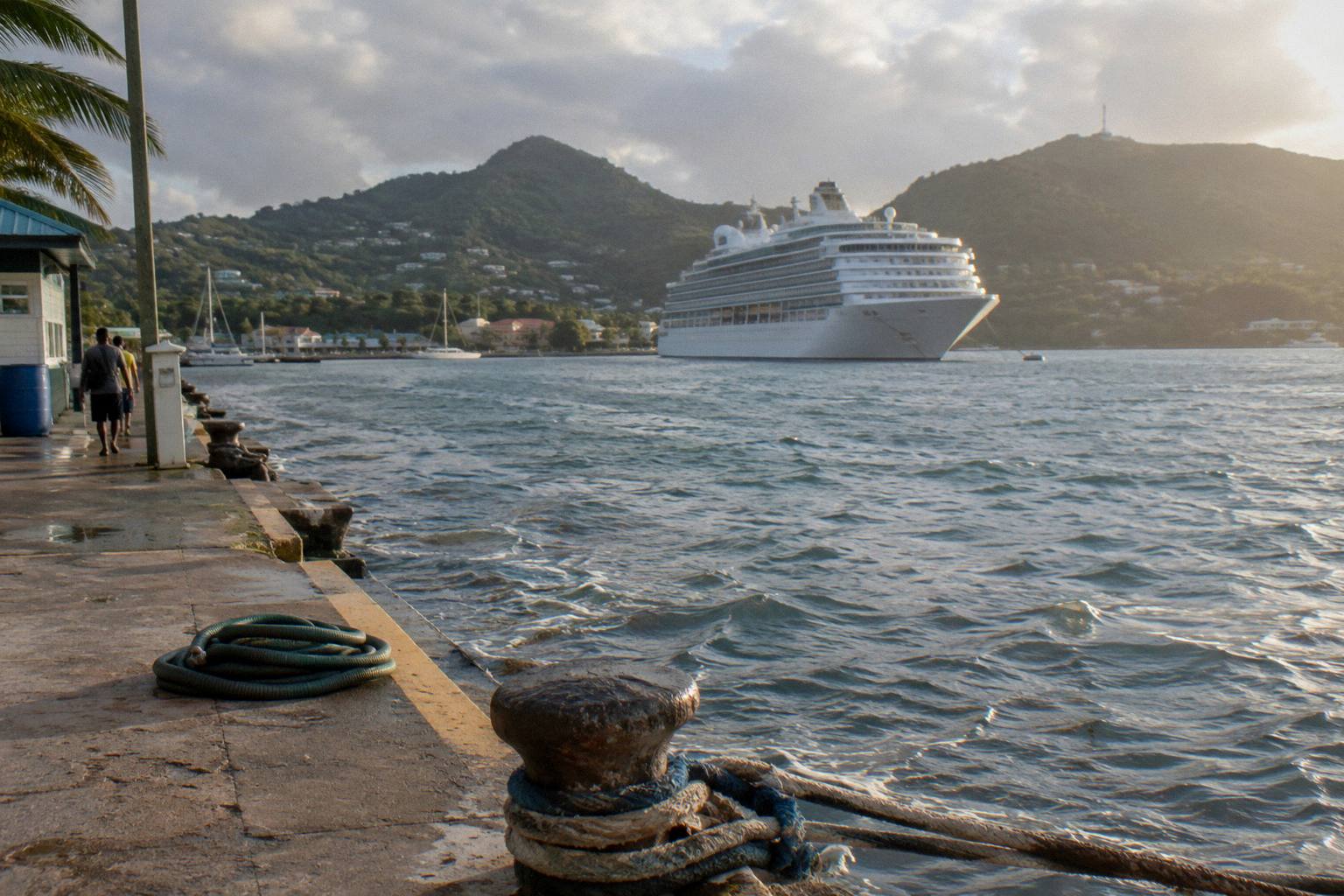
The one instruction that matters above all others on a ship day: check your ship's all-aboard time and ask the operator about timing before you book. No return time is promised here, because none can be. The trips run about 3.5 hours (shared) and about 4 hours (private), not counting the transfer to the marina, which is the honest arithmetic a cruise day has to absorb. The full feasibility question, including what a shore-day window allows, is worked through in can you do a whale cruise between ship arrival and departure.
For the bag itself, the cruise-day column in the first table is the short version: smaller rather than larger, phone over camera body, and nothing you would grieve losing over the side. Cruise cabins and terminal walks reward a light bag in a way hotel mornings do not, and everything the boat provides, drinks, and on the private safari snacks and fruit, means the only true essentials fit in one hand.
Common Mistakes When Packing
The recurring packing mistakes are overpacking, skipping the light layer because the morning feels hot, leaving gratuities out because drinks are included, and packing for a snorkel trip that neither tour is: no swimming with whales or dolphins is offered on either boat, and no hotel pick-up exists on either booking. Each mistake is avoidable the night before, and none is expensive to fix.
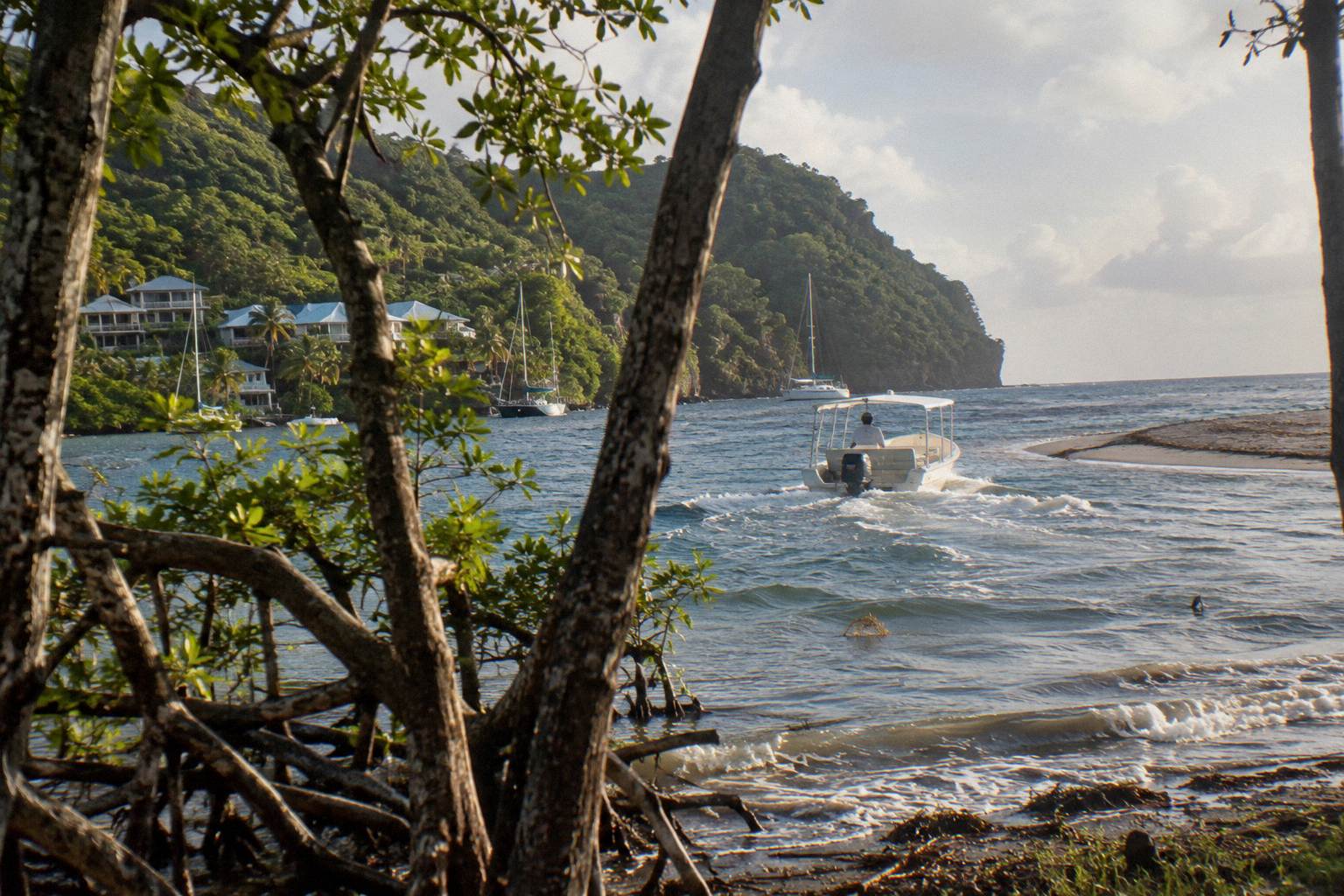
The overpacking mistake deserves its own sentence, because it compounds: a big bag takes deck space, gets in the way during a sighting, and slows your exit at the pier. The light-layer mistake is the most common on-water regret; the breeze that feels lovely at the dock feels cold at speed after an hour of spray. The gratuities mistake is a small awkwardness at the end of an otherwise good morning, easily prevented by small bills in a pocket you can reach without unpacking. The snorkel-trip mistake shows up as masks, towels and swimsuit-first outfits packed for a trip that watches animals from the deck at a respectful distance.
| Mistake | Why it happens | The fix |
|---|---|---|
| Packing a large rigid bag | Treating the cruise as a beach day | One small soft bag per group |
| No light layer | Hot morning at the dock | Pack it anyway; spray and wind change everything |
| No cash for gratuities | Drinks included reads as everything included | Small US bills in a pocket |
| Swimsuit and towel as essentials | Confusing the trip with a snorkel cruise | Neither tour offers swimming with the animals |
| Assuming hotel pick-up | Shared shuttles on other island tours | Neither trip includes hotel pick-up |
| One layer shared by a family | Saving bag space | One light layer per person |
The last mistake is quieter: assuming a weather problem will be your problem. The shared cruise operator says the captain cancels for unsafe weather with an alternative date or a refund, and the private safari is cancelled free for bad weather. Both trips cancel free up to 24 hours before. Pack for the animals being wild and the weather being the weather, and the bag takes care of itself. St Lucia Whale Watching keeps the practical picture, seasons, species and costs, alongside this packing list so the whole morning is planned from one place.
Common Questions About Packing For A Whale And Dolphin Cruise In Saint Lucia
What Should You Bring On A Whale And Dolphin Cruise?
Sun protection, a hat, a light layer for spray and a camera, in one small soft bag. Sunglasses, small bills for gratuities and a spare layer for children round out the list. Drinks are on the boat, and the private safari adds snacks and local fruit, so no food needs carrying.
Is Food Or Drink Included On The Boats?
The shared cruise includes bottled water, soft drinks and rum punch. The private safari includes soft drinks, coffee, tea, water, light snacks, rum punch and local fruit. Gratuities are not included on either trip, and neither includes hotel pick-up.
Do You Need A Towel And Swimsuit?
No. Neither tour offers swimming with whales or dolphins, and neither is a snorkel trip. A light layer for spray is the only water-related clothing the official guidance names.
What Should You Wear On Deck?
Light clothing you do not mind getting sprayed, secure footwear, a brimmed hat and a light layer you can pull on when the boat is moving. Swimwear is only useful if you plan to swim elsewhere in your day.
What About Motion Sickness And Boat Size?
The official advice is to ask about boat size if you are prone to motion sickness. The shared cruise runs a custom 60 ft boat and the private safari a 50 ft catamaran. Ask the operator about the day's sea state and where the steadiest seating is.
What Money Do You Need On The Day?
Small US bills for gratuities are the only cash requirement. US dollars are widely accepted, and the Eastern Caribbean dollar is fixed at EC$2.70 to US$1. The booking itself is priced in US dollars, from US$65 per person on the shared cruise and from US$2,550.65 per boat on the private safari.