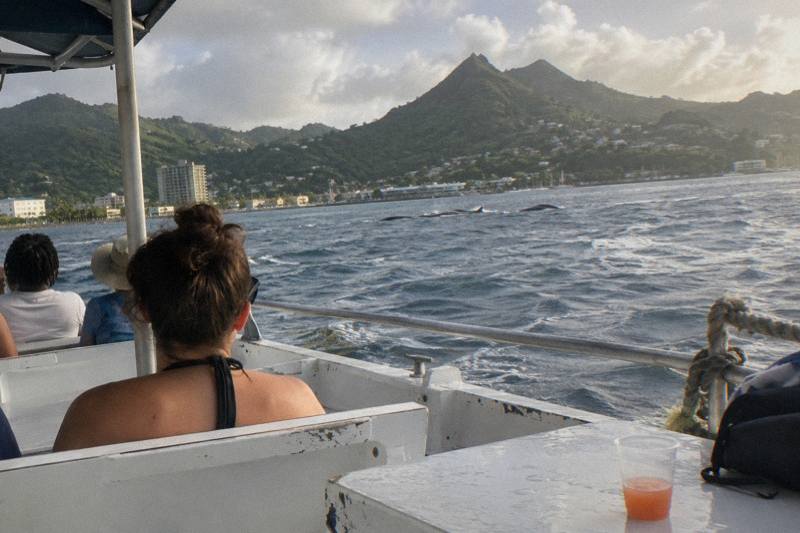
Responsible Whale And Dolphin Watching Off Saint Lucia
Saint Lucia's whales and dolphins live year-round in deep water just off the west coast, and the way a boat behaves around them decides whether a trip helps or harms. Here is what responsible viewing actually looks like, what licensed operators follow, and how to choose a trip you can feel good about.
Short answer
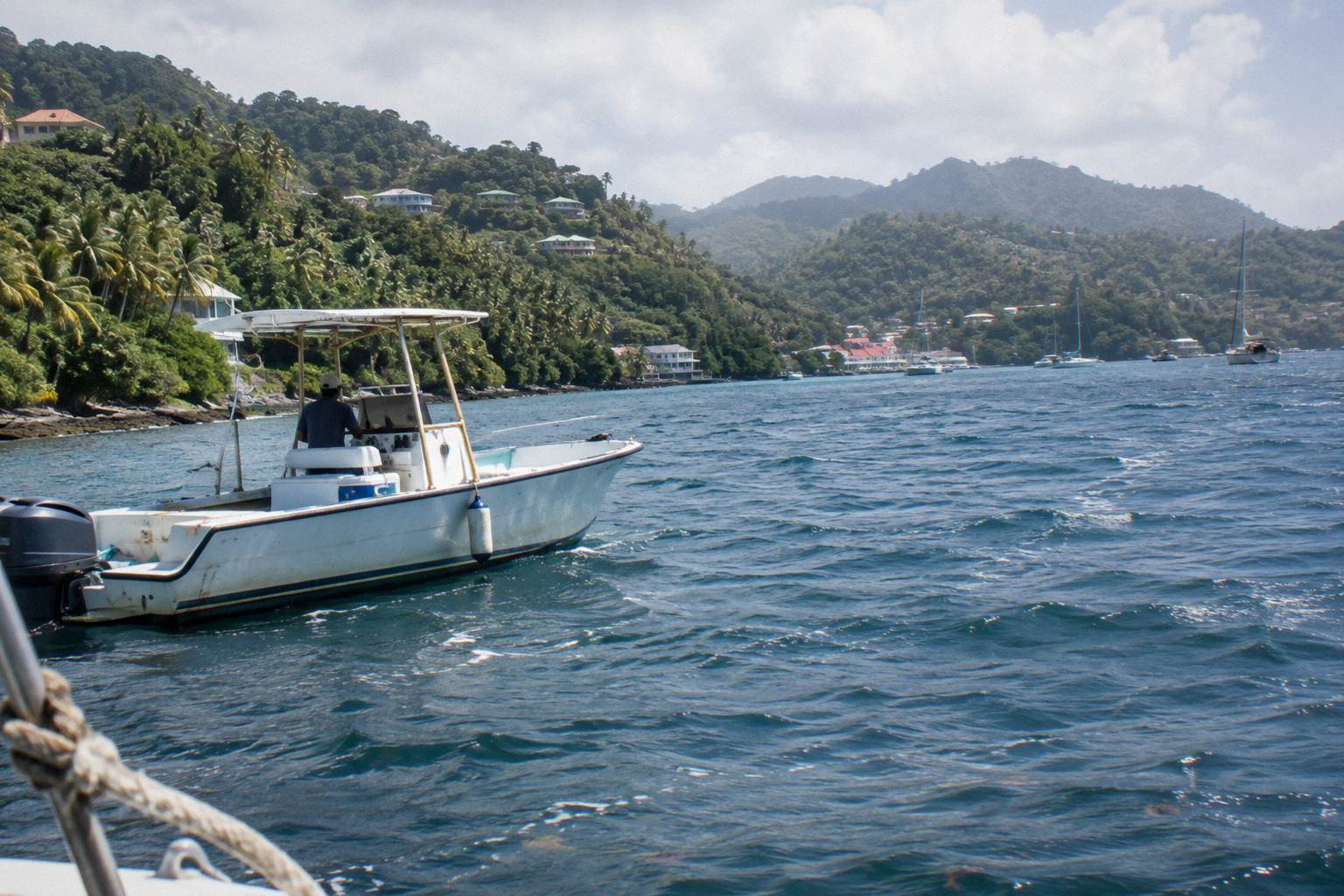
Responsible whale watching in Saint Lucia means licensed operators that follow regulated distance guidelines, limit time near animals, brief guests on safety and never chase, touch or feed them. Dolphins and pilot whales are seen year-round, humpbacks pass through about February to April, and sightings are always a chance, never a promise.
Whale watching only works, long term, if the whales keep coming back. Saint Lucia's west coast drops into deep Caribbean water close to shore, which is why spinner dolphins, pilot whales and the region's resident sperm whales can appear on a morning trip out of Castries at almost any time of year. That same closeness is exactly why how a boat behaves matters: the animals are near enough that a careless approach can disrupt feeding, resting and resting with calves. The good news is that the framework for doing this well is simple, and it is easy to check before you book. This guide covers the official responsible-viewing wording, the practical rules licensed operators follow, what guests themselves should and should not do, and how the two tours available from Castries compare on those points. Wherever you sit on the animal-welfare spectrum, from casually curious to firmly principled, the same few signals separate a trip that respects wildlife from one that treats it as a prop.
What Does Responsible Whale And Dolphin Watching Mean?
Responsible whale and dolphin watching means watching animals on their own terms: a licensed boat using a slow approach, keeping to regulated distance guidelines, limiting time near the animals, and always leaving them room to move on, while guests never touch, chase or feed them. It is a simple idea with real substance behind it. The Saint Lucia tourism authority's own guidance for the activity centres on licensed operators who follow regulated distance guidelines, limit the time spent near animals, provide life jackets and safety briefings, and monitor sea conditions before and during a trip. Guests are asked not to touch or feed the animals, and boats are expected to give the animals space rather than pressuring them.
None of this is decorative. Whales and dolphins are feeding, travelling, socialising or resting, sometimes with calves alongside, and a boat that crowds or chases them forces them to change behaviour, spend energy, or move away from the very areas they use. A responsible trip gets you close enough to see the animals clearly, holds that position politely, and then leaves. The experience is usually better for it, because a relaxed pod of spinner dolphins stays at the surface and plays; a pressured one scatters and dives.
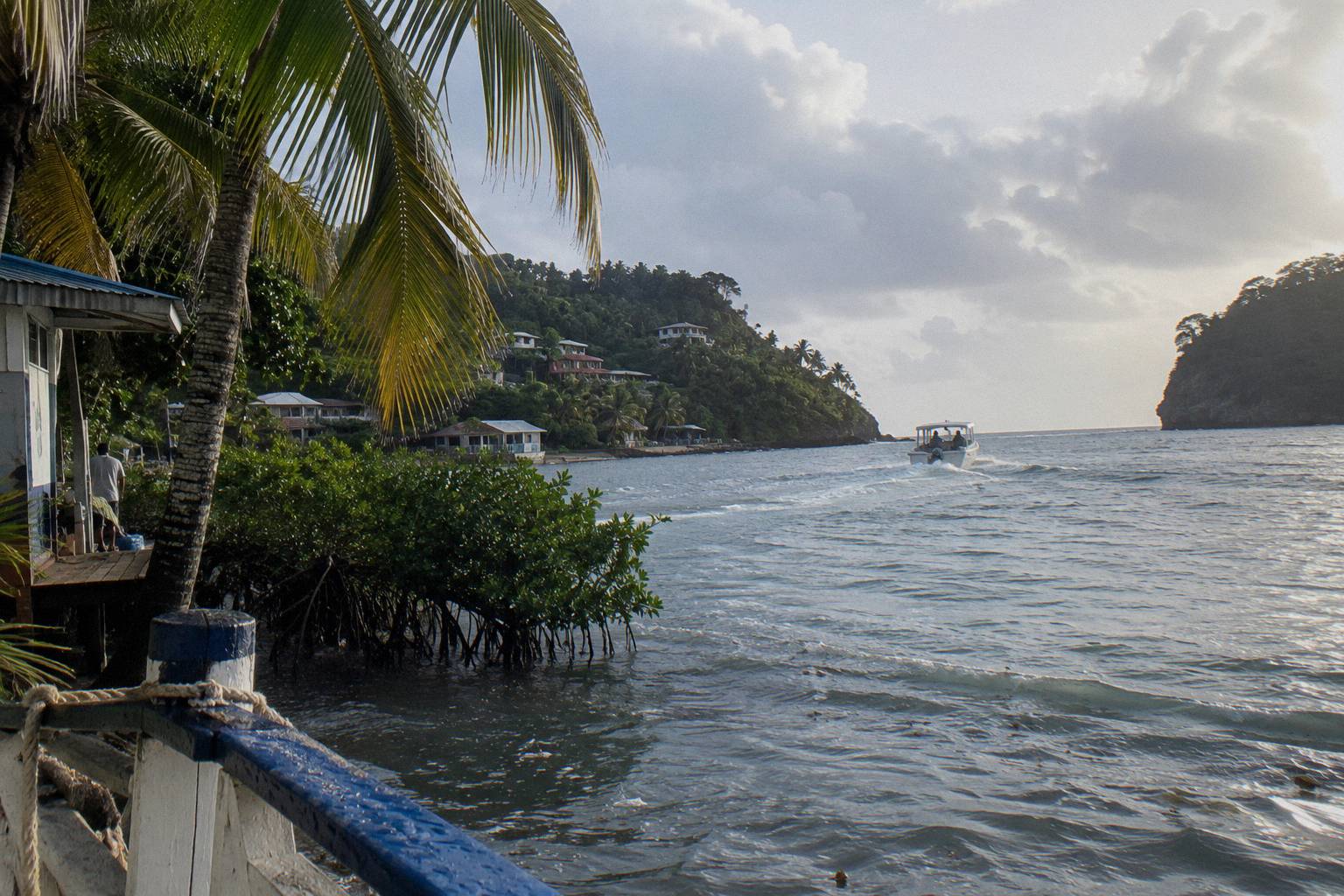
It also shapes what you should expect from the day. Sightings depend on weather, season and the animals' own movements, so every sighting is a chance and never a promise, and a good operator says so plainly rather than implying a guarantee. If a trip is advertised as a sure thing, that is a warning sign in itself, both for your expectations and for the animals. The rest of this page covers the welfare side.
What Do Licensed Operators Follow?
Licensed operators in Saint Lucia follow regulated distance guidelines when approaching whales and dolphins, limit the time a boat spends near any group of animals, provide life jackets and full safety briefings for everyone aboard, and monitor sea conditions throughout the trip so that tours stay within the rules set for responsible wildlife watching. That wording comes from the official tourism guidance on the activity, which also asks that animals never be touched or fed and that they always have space to move on. No distance in metres is published in that guidance, which is itself worth noticing: the rules are framed as principles a crew applies with judgement, not a number a boat can technically satisfy while still behaving badly.
For a guest, the practical signs are concrete. A licensed operator briefs everyone on board before leaving the marina, hands out life jackets, and calls off or reschedules a trip when sea conditions make it unsafe or unpleasant. The shared whale and dolphin watching cruise runs with a local marine expert aboard, which matters here: someone whose job is to read the animals' behaviour, not just to find them. The operator, Captain Mike's, says it has over 60 years of experience and belongs to the Hackshaw family, which is the operator's own statement about its background.
On the private side, Hackshaw's Boat Charters says it has run since 1953 and is World Cetacean Alliance certified, again framed as the operator's own statement. Certification claims are worth hearing, but the tourism authority's guidance is the baseline that applies to licensed operators regardless of badges. The official whale and dolphin watching page lays out that baseline, and it is a reasonable thing to read before you hand over money to anyone.
| What licensed operators follow | What it looks like on the water |
|---|---|
| Regulated distance guidelines | The boat holds back from the animals rather than sitting on top of them |
| Limited time near animals | After a viewing period, the boat moves off |
| Life jackets and safety briefings | A briefing before departure, jackets available to all |
| Monitored sea conditions | Rough seas mean a reroute or a cancellation, not a gamble |
| No touching or feeding | Guests watch from the boat, hands stay out of the water near animals |
| Space for the animals to move on | The boat never blocks the direction the pod is travelling |
Both tours available from Castries carry free cancellation up to 24 hours before departure on the booking path, which sits comfortably with the welfare picture: an operator that will not sail you into bad conditions, and will let you out cleanly if your plans change, is an operator taking the framework seriously.
How Should A Boat Approach Animals?
A boat should approach animals slowly and steadily from a sensible angle, staying within regulated distance guidelines and limiting how long it remains with a group, while always leaving the animals a clear escape route so they can move away freely. There is no chasing, no herding, no running ahead to cut off a pod's path, and no circling tightly around a group with calves. The official practice list is short and plain: slow approach, no chasing, no touching or feeding, space for the animals to move on. Everything a good crew does on the water follows from those four points.
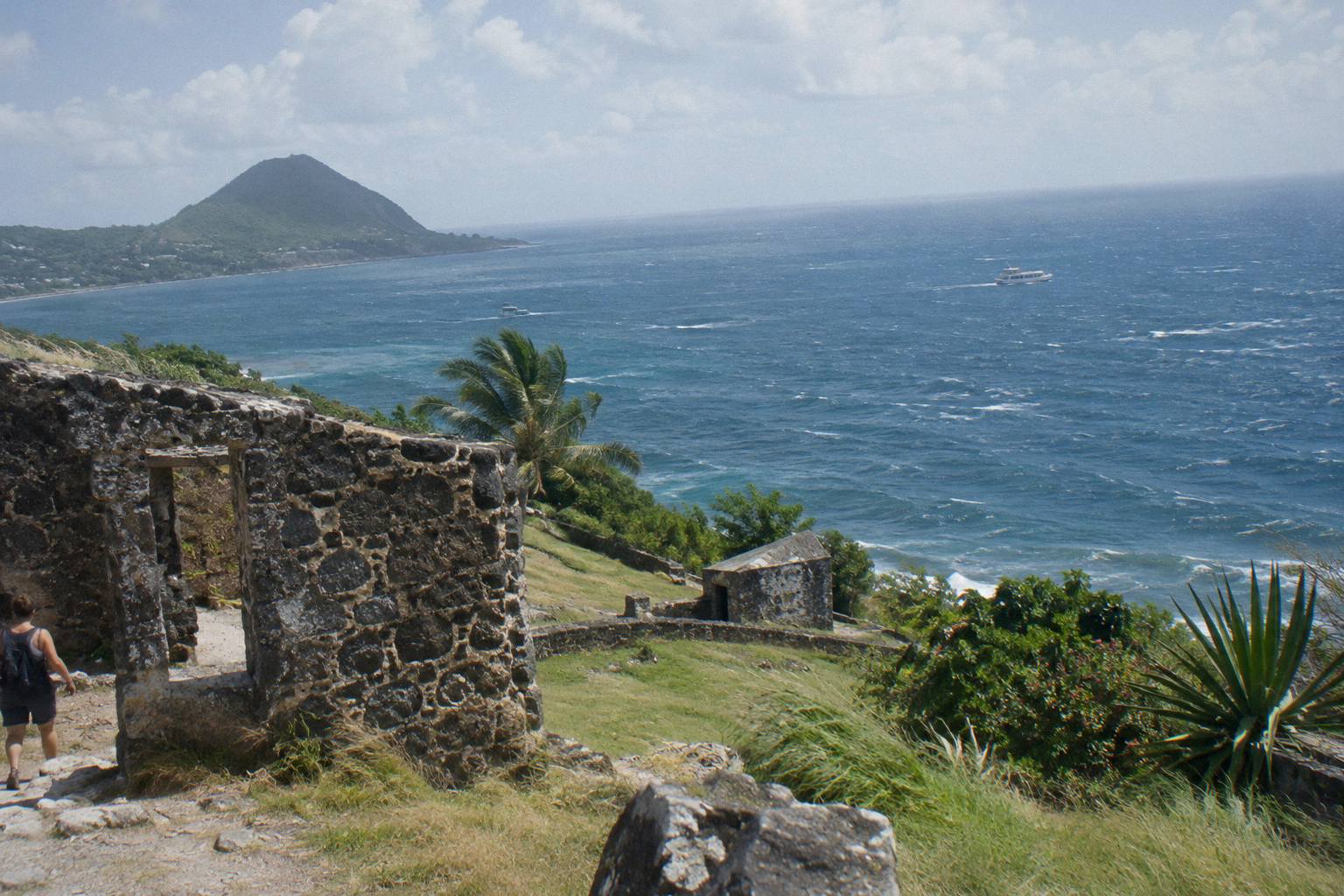
You will see the difference within minutes if you know what to watch for. A boat that respects dolphins eases its speed down as it nears the pod, matches the animals' direction rather than crossing it, and stops its engines or drops them to idle when the animals come to the boat on their own. Spinner dolphins, which are frequently sighted year-round off Saint Lucia, often bow-ride and leap on their own terms; the boat does not need to make them do it. Pilot whales, which travel in resident family pods sometimes visible through the year, are quieter animals, and a slow, patient approach is what lets them surface alongside calmly.
Sperm whales are a different case again. The official wording is that they are "considered resident in the region and occasionally sighted in deeper waters", and a boat that finds one typically gives it enormous respect, because a sperm whale's deep dive is a fixed schedule the whale will not change for anyone. These animals belong to the wider Eastern Caribbean population that the Dominica Sperm Whale Project studies, and no Saint Lucia head count or population estimate is published, so treat any number a promoter gives you with suspicion.
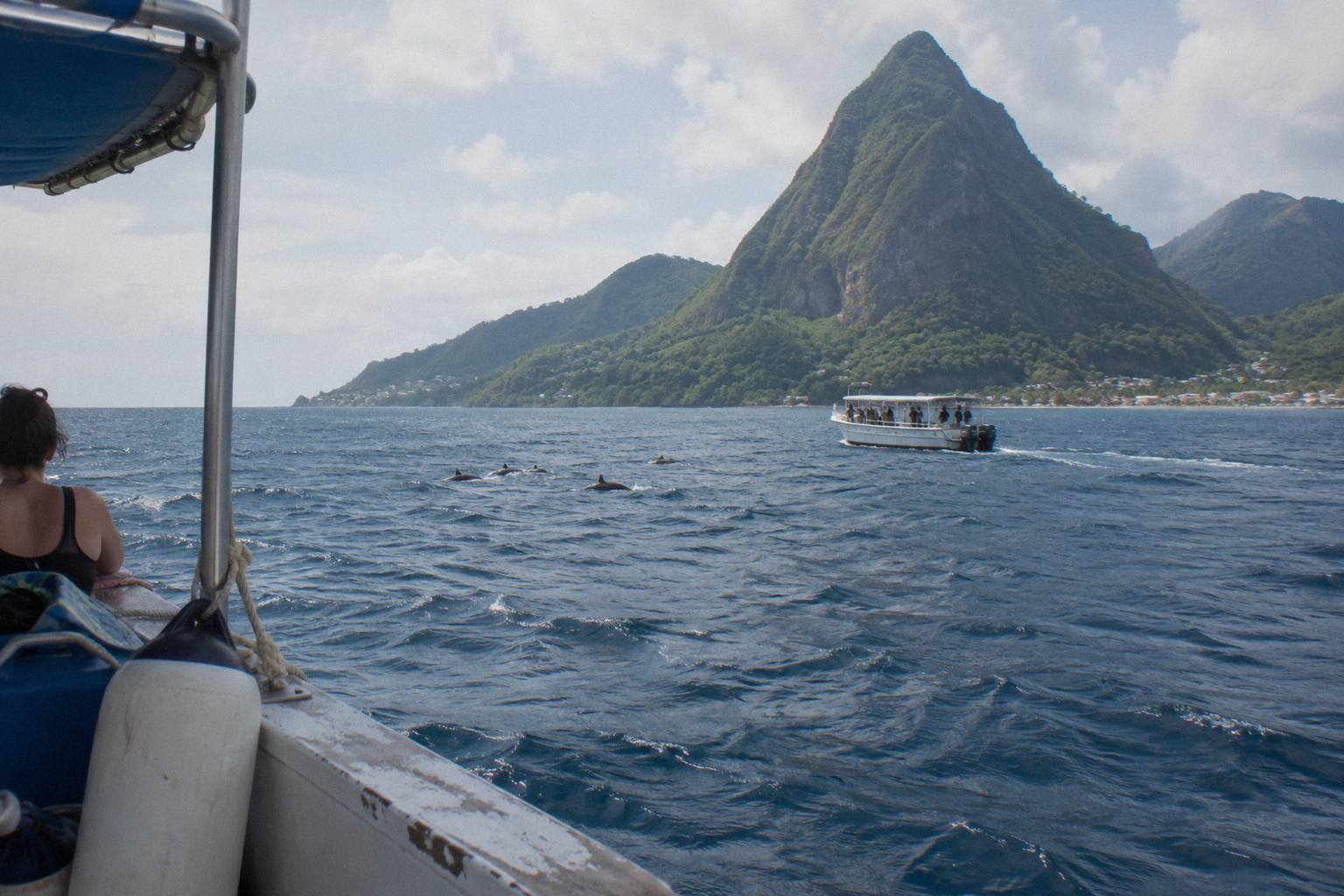
The same patience applies to humpbacks. They pass through the region between about February and April, the official window, with some operators reporting them from December, and from May to November they should be treated as unlikely. A boat that presses a humpback mother and calf for a closer photo is doing exactly what the guidelines exist to prevent. If you want to read more about the seasonal side, the month-by-month breakdown in when whale watching season runs in Saint Lucia covers the whole year.
What Should Guests Never Do?
Guests should never touch, chase or feed whales or dolphins, never ask the crew to get closer than the guidelines allow, never throw anything overboard near animals, and never pressure the boat to stay longer once the viewing period ends. The responsibility does not stop with the operator. A crew can follow every rule and still be pushed into a bad decision by passengers demanding more, and the official guidance is explicit that visitors should not touch or feed the animals.
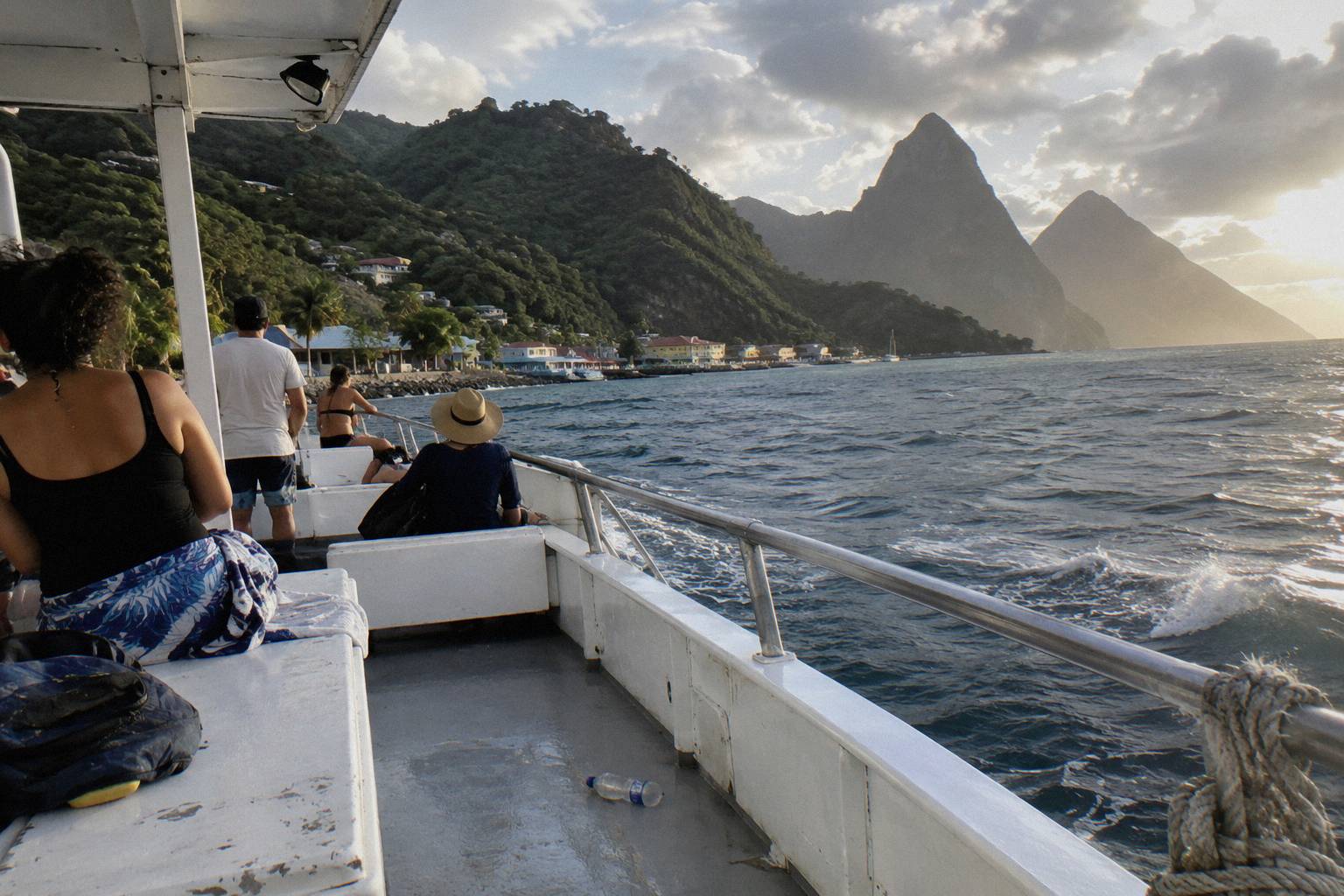
The most common form of pressure is innocent: everyone wants the great photo, and someone asks the crew to move in just a little closer. The answer to that request tells you a lot about a trip. A good crew declines politely and explains why, and the marine expert aboard makes the explanation part of the day's education rather than an awkward refusal. Guests who understand the guidelines before boarding are far less likely to put a crew in that position, which is a good reason to read this page before you go rather than on the dock.
There is one absolute among the nevers: swimming with whales or dolphins is not offered on either tour available from Castries, and it is not something to seek out in Saint Lucia. In the water you are no longer a viewer keeping a respectful distance; you are an unpredictable large presence in the animals' space, and the practice sits outside everything the official guidance describes. If a swim-with offer ever surfaces anywhere on your travels, treat it as the opposite of the framework on this page, not a premium version of it.
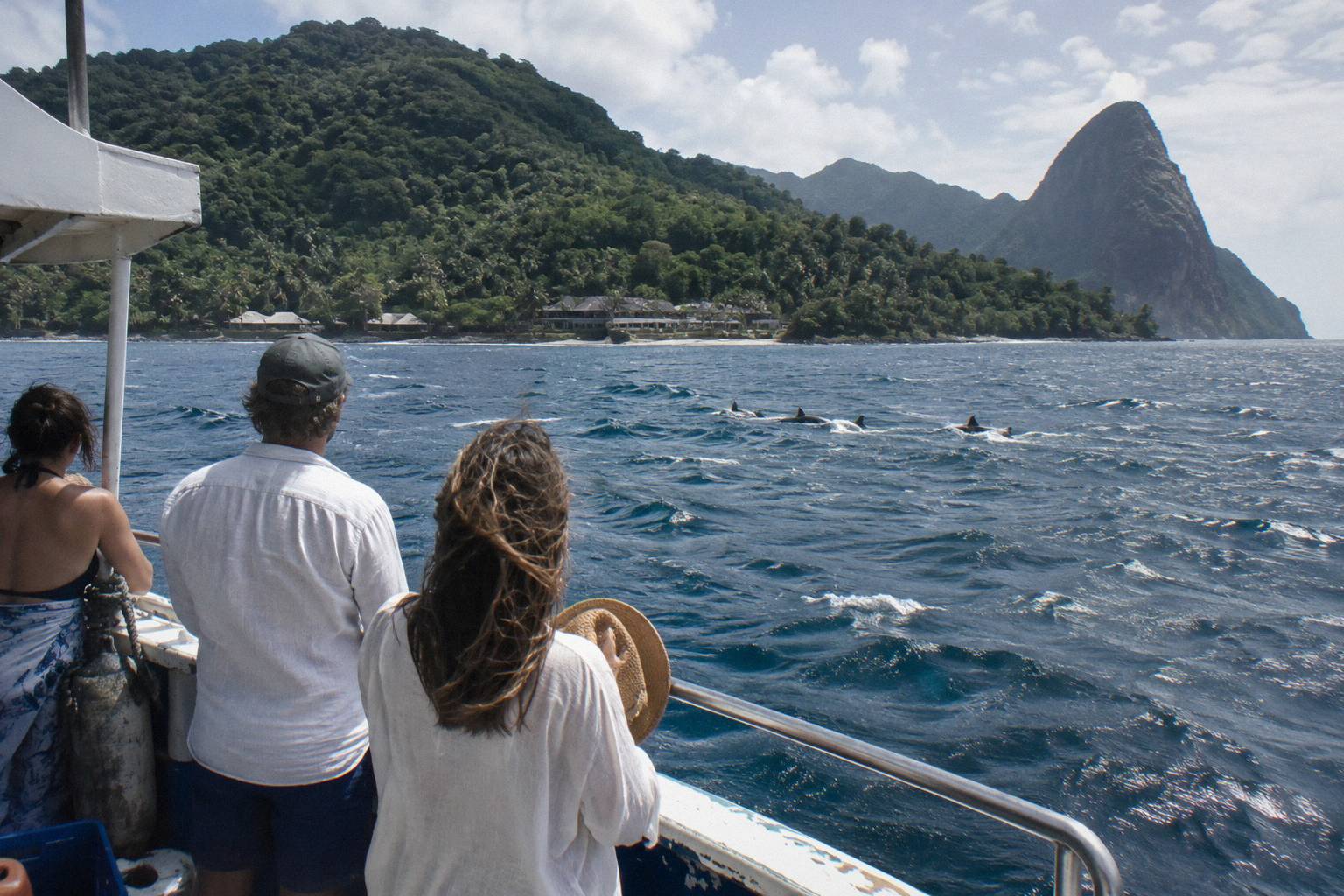
Beyond the animals, guest behaviour affects the trip's other halves: the sea and the crew. Litter overboard is out, full stop, because the west coast's deep water is the animals' home before it is your viewpoint. And the crew's instructions about where to stand, when to hold on and how to move around the boat exist because the sea conditions are monitored continuously, and a boat that changes course for safety needs passengers who comply immediately. The page on what to pack for a whale watching cruise in Saint Lucia covers the practical side, including the light layer for spray and asking about boat size if you are prone to motion sickness.
What Does The Private Safari Change?
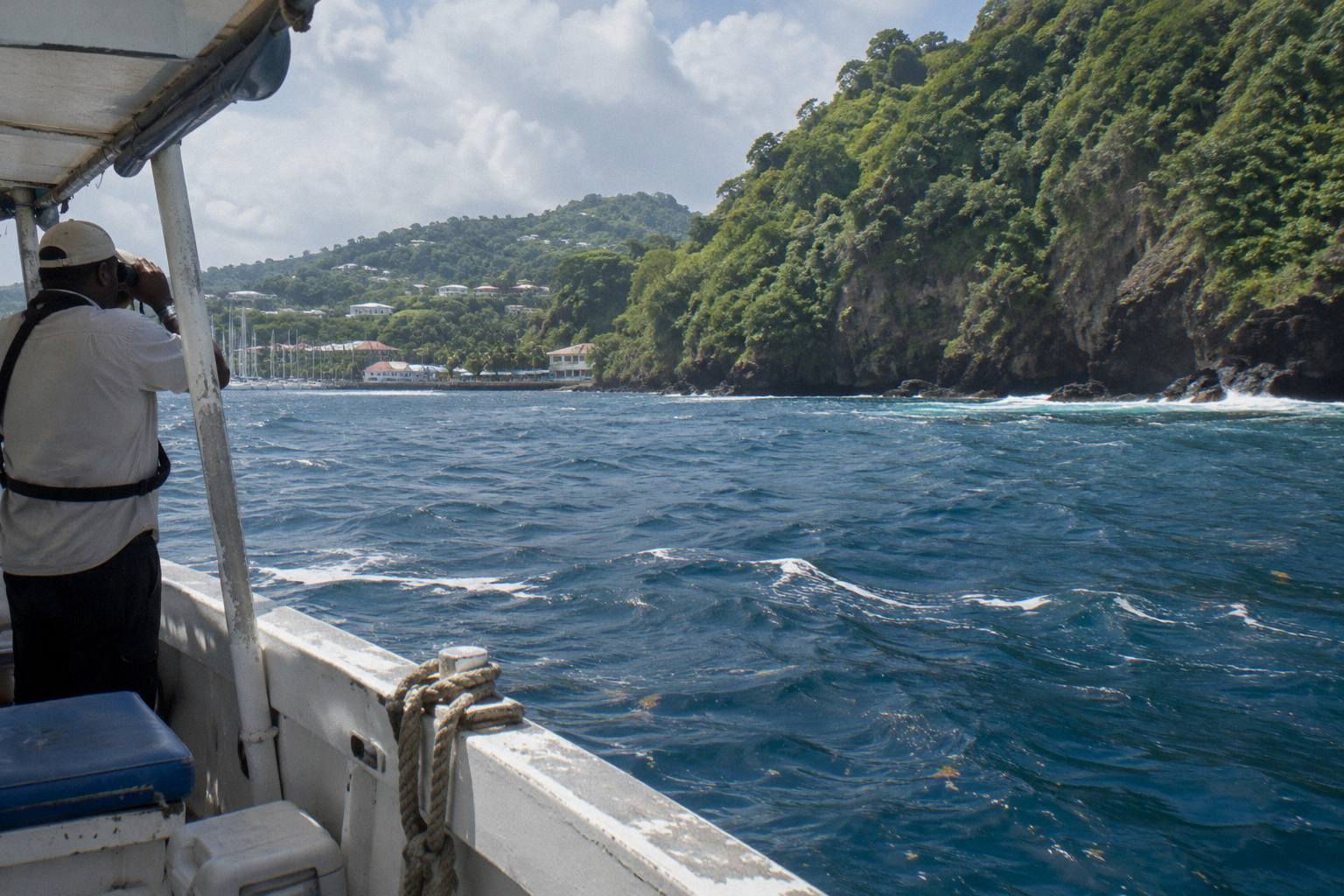
The private safari changes who controls the pace: one group, up to 40 guests on a 50 ft catamaran with a dedicated guide, so the approach decisions are made for your trip alone rather than around a full shared boat. That is the honest welfare difference, and it is a modest one. The same regulated distance guidelines, the same slow approach and the same limits on time near animals apply whether a boat carries forty strangers or one family. What changes is the social dynamic: nobody is competing for rail space, nobody is urging the captain closer, and the guide can take time to explain the animals' behaviour to your group specifically.
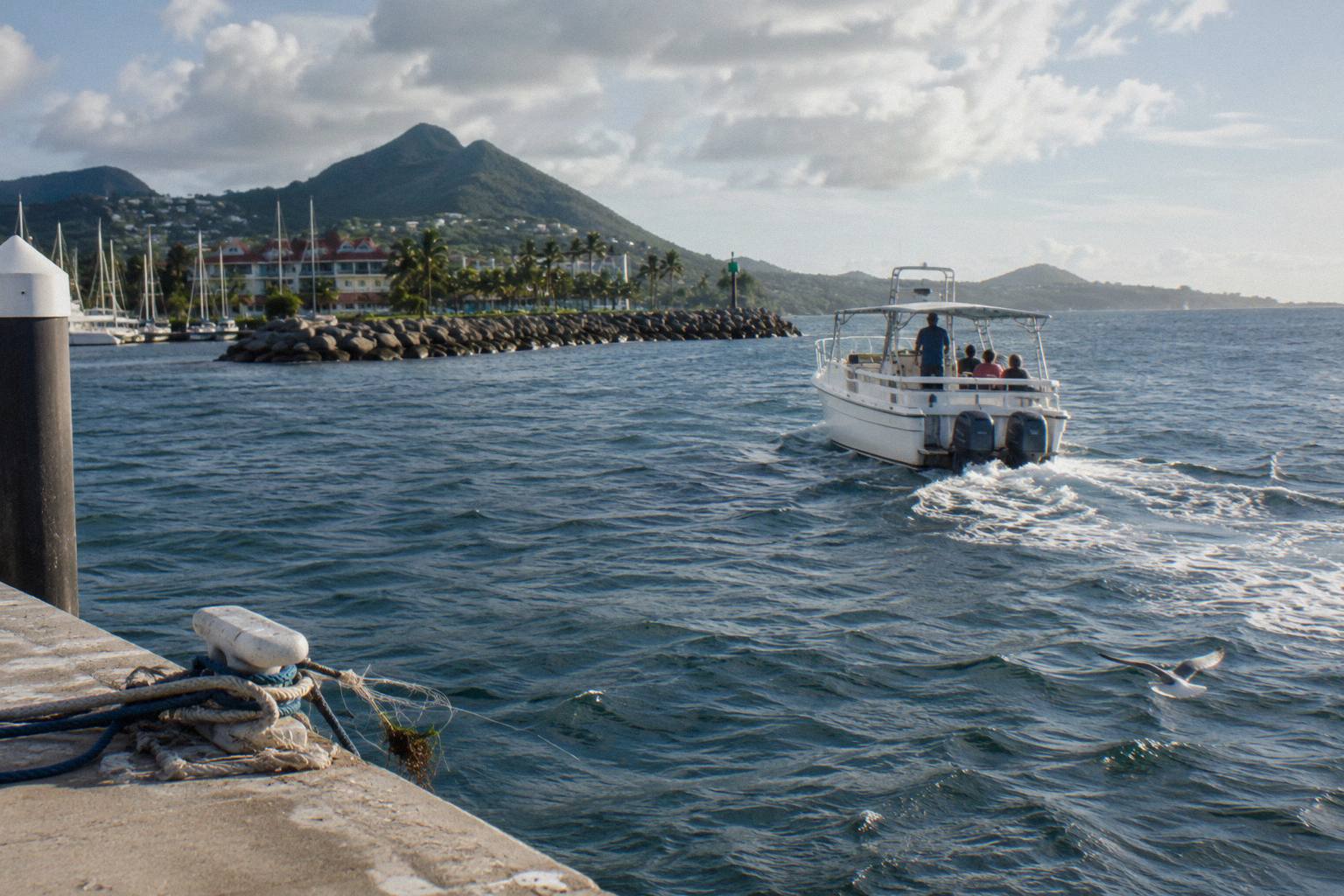
The Private Whale And Dolphin Safari run by Hackshaw's Boat Charters is a charter priced per boat, not per person: from US$2,550.65 for the whole group, about 4 hours, departing Vigie Marina in Castries. For illustration, not a quote: US$2,550.65 shared by 4 guests is about US$637.66 each; by 6 about US$425.11; by 8 about US$318.83; by 12 about US$212.55. The price varies by date and group, and the booking page confirms it. It carries a rating of 4.5 from 75 reviews, and the live listing carries the current figures. Included are a guide, soft drinks, coffee, tea, water, light snacks, rum punch and local fruit, plus cruise ship pier pick-up and drop-off; gratuities and hotel transfers are extra. Free cancellation applies up to 24 hours before departure, and the trip is cancelled free for bad weather; confirmation is not instant, the operator confirms.
The shared cruise, by contrast, is from US$65 per person on a custom 60 ft boat, about 3.5 hours with a morning departure, and the same arithmetic looks like this: US$130 for 2, US$260 for 4, US$390 for 6. It holds a rating of 4.5 from 200 reviews. Never compare the two headline prices as if both were per person, because they are not the same basis at all: one is a seat, the other is the whole boat.
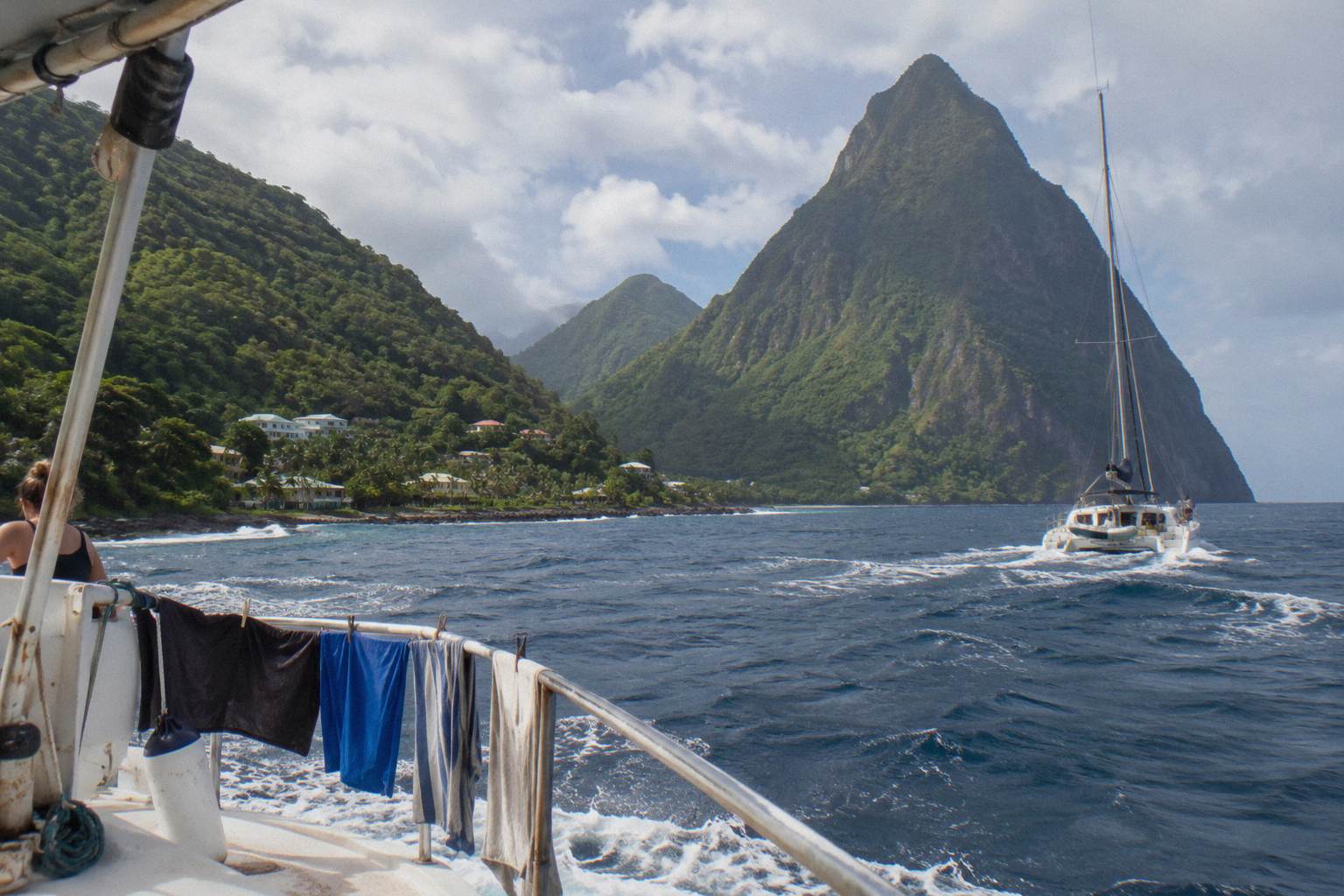
From a wildlife standpoint, neither format is inherently kinder. A shared boat with a marine expert aboard can run an exemplary approach; a private charter can be talked by its own passengers into a poor one. What the private format buys you is control of the human variables. If your group includes children whose questions you want answered properly, or photographers who want the guide's patience rather than a queue at the rail, the private whale and dolphin safari is the format that delivers it. Check availability if that balance suits your group, alongside the shared cruise link earlier on this page.
How Do You Choose A Responsible Trip?
Choose a trip that states plainly what it does: a licensed operator, a slow approach, no chasing or feeding, life jackets and a safety briefing, and honest language that sightings are chances, because a boat that overpromises to you will overpromise to the animals too. The tells are consistent across operators and easy to check in a few minutes of reading before you book. Start with the language. "Chances to see" is the responsible phrasing; "guaranteed sightings" is not, and no sighting percentage should be treated as reliable, because operator claims conflict and none is published by the tourism authority.
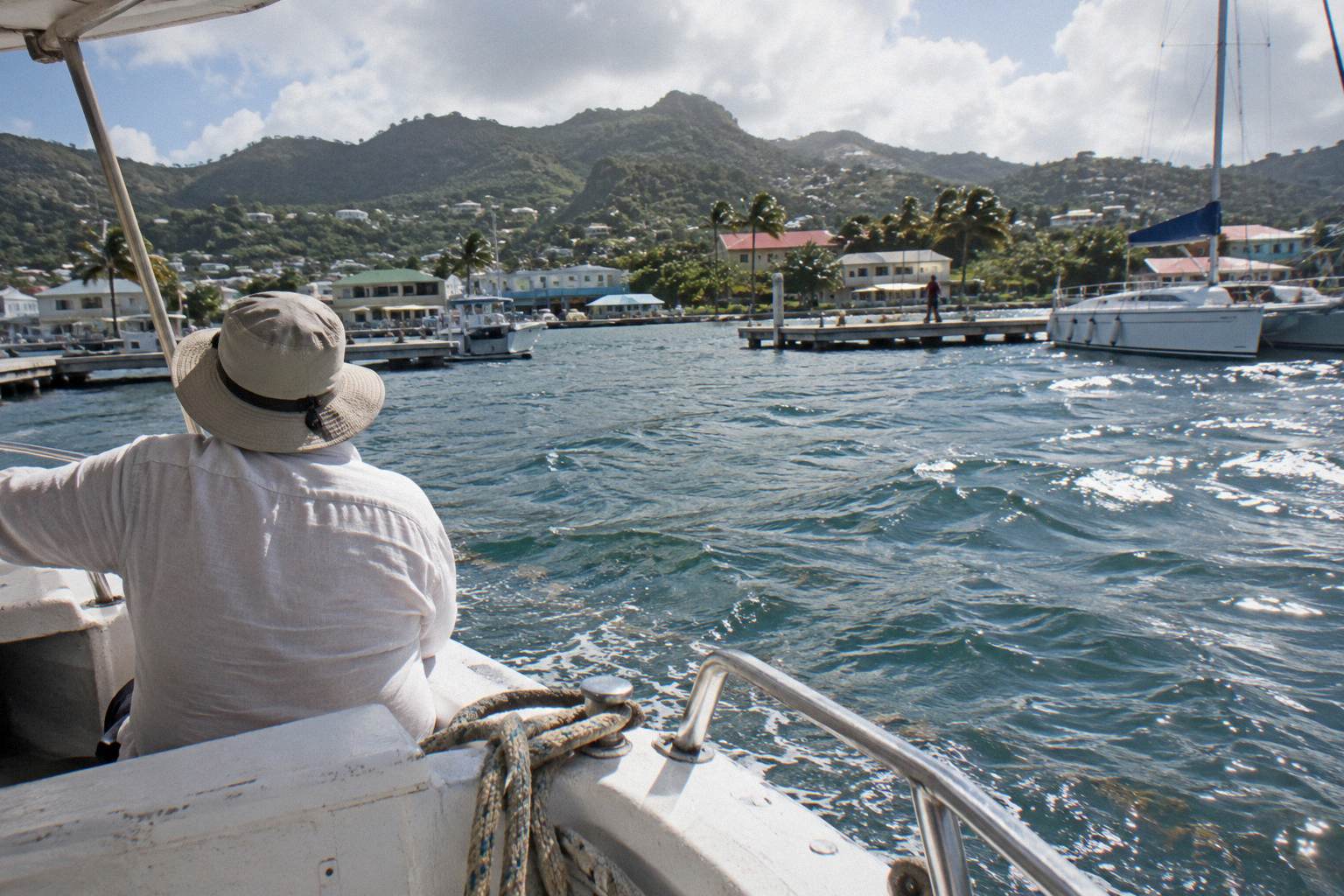
Then look at what the trip actually is. Both tours covered on this site depart Vigie Marina in Castries Harbour, run three and a half to four hours, and describe their boats: a custom 60 ft vessel for the shared cruise, a 50 ft catamaran for the private safari. A trip that names its boat, its departure point and its crew's role, a local marine expert or a dedicated guide, is a trip that is being transparent about what you will experience. Vagueness in a listing usually survives the booking and reappears on the water.
Timing and season are part of choosing responsibly as well. Trips usually leave in the morning from the north-west and last about three to four hours, following the Caribbean coast where deep water lies close to shore. Dolphins and pilot whales can be seen all year, humpbacks add a chance between about February and April, and seas are typically calmer from December to May. Atlantic hurricane season officially runs June 1 to November 30, per the Saint Lucia Meteorological Service, and a responsible operator watches conditions rather than sailing into them.
| Signal to check | Responsible | Warning sign |
|---|---|---|
| Sighting language | "Chances to see", season and weather dependent | "Guaranteed sightings" or a sighting percentage |
| Approach description | Slow approach, space for animals to move on | Chasing, herding or circling described as excitement |
| Crew | Marine expert or guide named as part of the trip | No crew role described at all |
| Briefing and safety | Life jackets and a safety briefing mentioned | Neither mentioned anywhere |
| Cancellation | Free cancellation, weather calls made by the captain | No cancellation terms, sails in anything |
| Guest conduct | Clear rules: no touching, no feeding | No guidance for passengers |
What Questions Should You Ask An Operator?
Before booking any wildlife tour, ask the operator five key questions: confirm they hold a valid license, ask how they behave around the animals, find out how long they stay with each group, request details on what the safety briefing includes, and clarify the refund or rescheduling policy if weather forces a cancellation. The answers, or the willingness to answer at all, tell you whether the responsible framework described above is real on their boat or just implied in a listing. None of these questions is confrontational; every operator running good trips has answered them hundreds of times.
The licensing question is first because everything else rests on it. The official guidance applies to licensed operators, and a licensed operator will say so readily. The approach question gets you the crew's own words: a good answer describes a slow approach and space for the animals, and a bad answer talks about how close you will get, which reverses the priority. The time question matters because limiting time near animals is one of the core practices, and an operator who has thought about it will say something concrete about moving on after a viewing period.
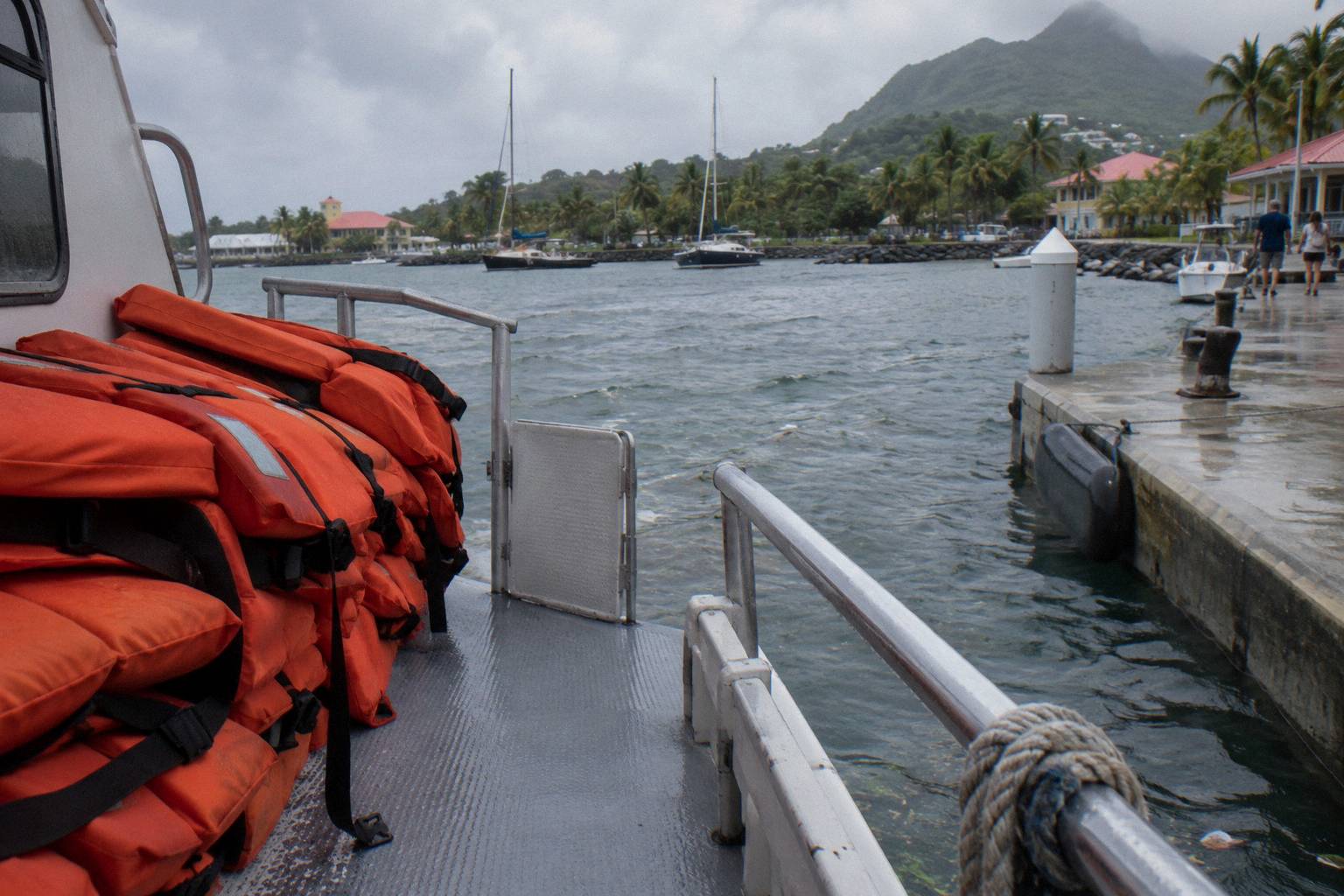
The last two are about you as much as the animals. The safety briefing and life jackets confirm the trip is run properly for passengers too, and the weather question tells you how cancellations are handled. On both tours available from Castries, free cancellation applies up to 24 hours before departure on the booking path, and the shared cruise operator says that if the captain cancels for unsafe weather there is an alternative date or a refund, an operator statement. The private safari is cancelled free for bad weather. No rebook-if-no-sighting policy exists on either, so do not assume one, and do not treat a wildlife no-show as grounds for a refund, because the animals set the itinerary.
Common Mistakes Guests Make
The common mistakes are booking on a sighting promise, asking the crew to close the distance, treating the animals as a photo prop, ignoring the safety briefing, and assuming a no-show trip deserves a refund, and every one of them is avoidable with a little preparation. Most of these mistakes come from excitement rather than bad intent, which is why knowing them in advance matters. You are going to be thrilled when a spinner dolphin pod turns up beside the bow; the trick is being thrilled without pushing the trip off its rails.
The promise mistake happens before you ever board. A trip sold as a sure sighting trains you to expect one, and the sea does not work that way. Sightings depend on weather, season and the animals' movements, every sighting is a chance, and the better mindset is that dolphins and pilot whales are seen all year, humpbacks add a window from about February to April, and anything on the day is the animals' decision. The distance mistake happens mid-trip and is easily fixed by not making the ask: trust the crew's positioning rather than requesting a closer pass.
The photo-prop mistake and the briefing mistake travel together. Leaning far out over the rail for a shot, or moving around the boat during an approach, puts you and the trip at risk and earns the crew's attention for the wrong reasons. The refund mistake is purely about expectations: no rebook-if-no-sighting policy exists, and a well-run trip that finds no animals has still run well, covered fuel, crew and hours at sea. The deeper background on what to expect on a whale watching trip from Saint Lucia covers the day itself, and the question of whether whale watching harms whales is worth reading if the ethics are your reason for caring.
| Mistake | Why it happens | What to do instead |
|---|---|---|
| Believing a sighting guarantee | Marketing that overpromises | Book trips that say sightings are chances |
| Asking for a closer approach | Photo excitement | Let the crew hold the regulated distance |
| Treating animals as props | Social media pressure | Watch first, photograph second |
| Ignoring the safety briefing | It feels routine | It is the trip's operating rules; follow it |
| Expecting a refund for no sightings | Confusing wildlife with a ticketed show | Accept the chance, enjoy what appears |
Handled this way, a whale and dolphin cruise off Saint Lucia is one of the least demanding wildlife experiences anywhere: three and a half to four hours on calm water, deep sea within sight of the coast, and animals that live there year-round. The shared cruise from Castries and the private safari both fit inside the responsible framework, and the choice between them comes down to format and budget, not ethics. Book the one that suits your group, read the guidelines once, keep your hands inside the boat, and let the animals decide the rest.
Common Questions About Responsible Whale And Dolphin Watching In Saint Lucia
Is Whale Watching In Saint Lucia Regulated?
Yes. The official tourism guidance describes licensed operators following regulated distance guidelines, limiting time near animals, providing life jackets and safety briefings, and monitoring sea conditions. No distance in metres is published, and the rules are principles a licensed crew applies with judgement.
Do The Boats Get Very Close To The Whales And Dolphins?
Boats keep to regulated distance guidelines and use a slow approach, leaving the animals space to move on. Dolphins frequently come to the boat on their own terms, especially the spinner dolphins seen year-round, so close views happen without the boat pressing the animals.
Can You Swim With Whales Or Dolphins In Saint Lucia?
No. Swimming with whales or dolphins is not offered on either tour available from Castries and is not something this site suggests. Guests watch from the boat, and the animals keep their distance and their schedule.
What Should Guests Never Do On A Whale Watching Trip?
Never touch, chase or feed the animals, never ask the crew to get closer than the guidelines allow, never throw anything overboard near animals, and never pressure the boat to stay longer once the viewing period ends.
How Do You Know If An Operator Is Responsible Before Booking?
Check the language and the details. A responsible operator says sightings are chances rather than guarantees, names its boat and departure point, mentions a marine expert or guide, refers to life jackets and a safety briefing, and offers free cancellation with weather calls made by the captain.
Is A Private Charter More Responsible Than A Shared Cruise?
Not inherently. The same viewing rules apply to both, and each format can run a model trip. A private charter gives one group control of the pace and the guide's attention, while a shared cruise with a marine expert aboard delivers the same guidelines at a lower per-person price.