Whale And Dolphin Watching In Saint Lucia: What The Boat Trip Is Really Like
Both whale and dolphin trips covered here leave Vigie Marina in Castries Harbour in the morning, run three to four hours along the west coast, and sell drinks and a marine expert as part of the ticket. Here is what the morning actually looks like.
Short answer
A Saint Lucia whale and dolphin trip lasts about 3.5 to 4 hours from Vigie Marina, Castries. The shared cruise runs from US$65 per person (4.5 from 200 reviews); the private safari runs from US$2,550.65 per boat (4.5 from 75 reviews). Dolphins and pilot whales appear year-round; humpbacks pass February to April.
Saint Lucia is one of the few Caribbean islands where the sea floor drops into deep water within sight of the shore, and that geography shapes the whole boat trip. Both tours covered on this page leave from Vigie Marina in Castries Harbour, beside the island's George F. L. Charles airport, and both run along the Caribbean-facing west coast where that deep water sits close to land. The trips last about 3.5 to 4 hours, leave in the morning, and are built around a simple bet: dolphins and pilot whales live here all year, sperm whales work the deeper offshore water, and humpbacks add a seasonal bonus between about February and April.
The St Lucia Whale Watching guide here walks the morning from dock to dock, the way a first-time guest would actually experience it: the marina, the boat, the search, the sightings or the quiet stretches between them, and the run back in. It also compares the only two trips on this site's roster, the shared whale and dolphin cruise and the private safari on a 50 ft catamaran, so the choice between a per-person ticket and a whole-boat charter is made on facts rather than guesswork.
What Happens On A Whale And Dolphin Cruise From Dock To Dock?
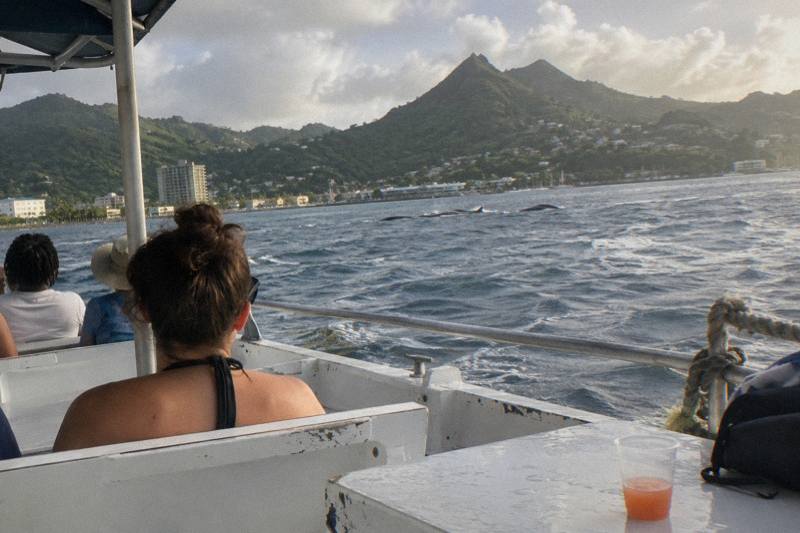
A Saint Lucia whale and dolphin cruise lasts roughly 3.5 to 4 hours from dock to dock. Departing Vigie Marina in Castries in the morning, the boat follows the Caribbean coast while a marine expert on board shares insights throughout the trip, so you get both sightseeing and expert commentary between leaving and returning to the dock. You check in at the marina, get a safety briefing and life jackets, and the boat heads out along the west coast where the water turns deep close to shore. The crew watches for surface movement and bird activity, the guide narrates whatever appears, drinks are served on board, and the boat returns to the same marina before the early afternoon.
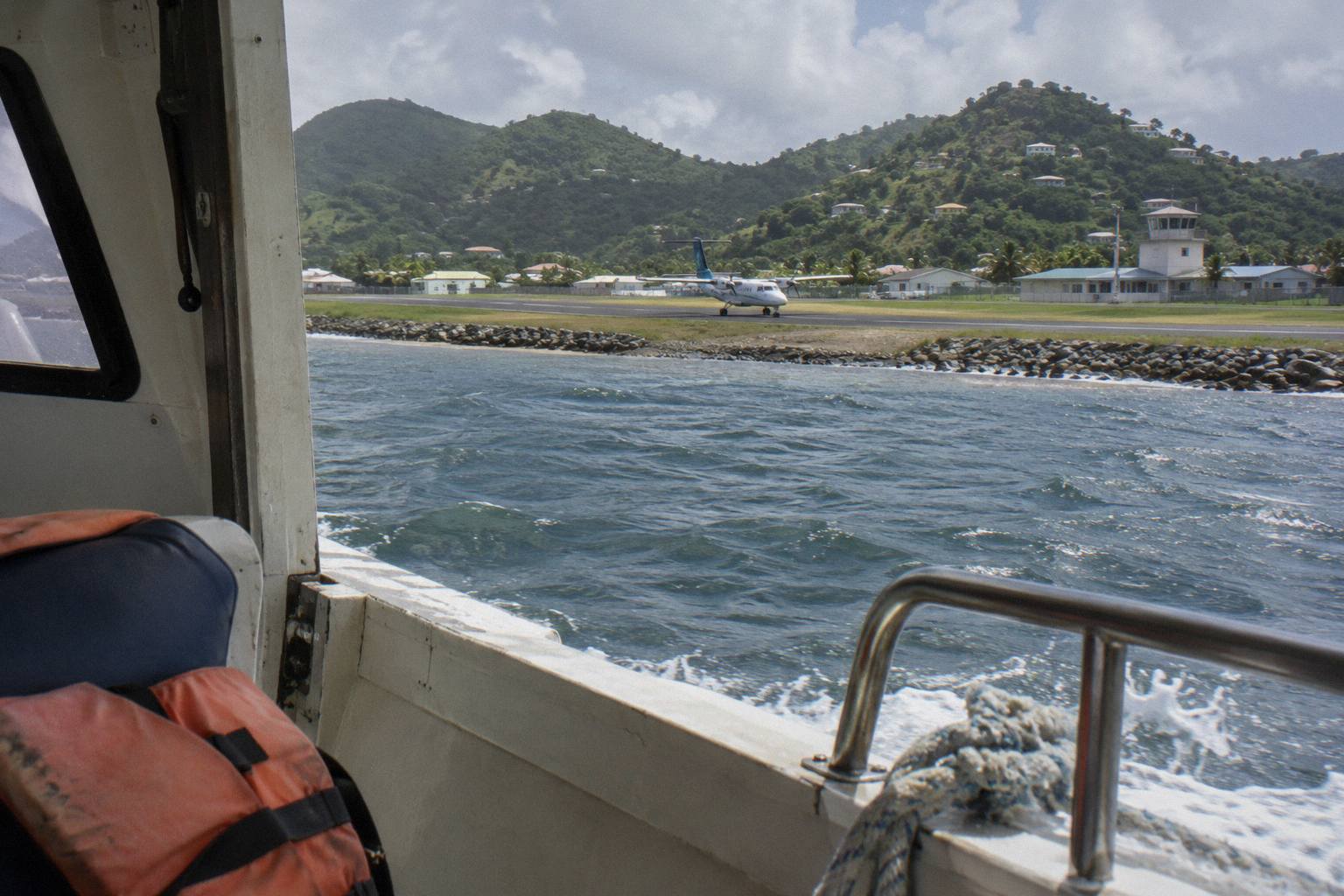
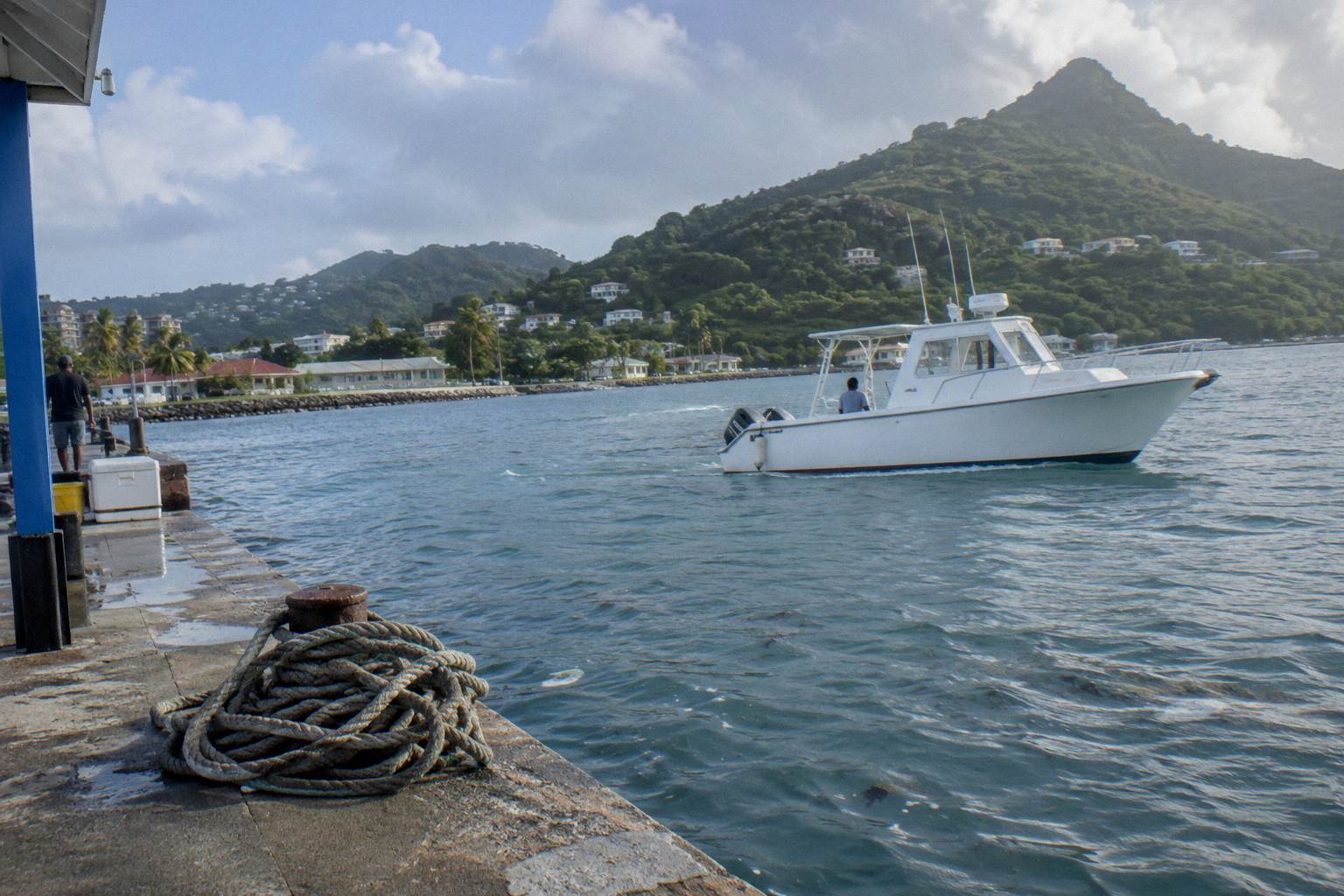
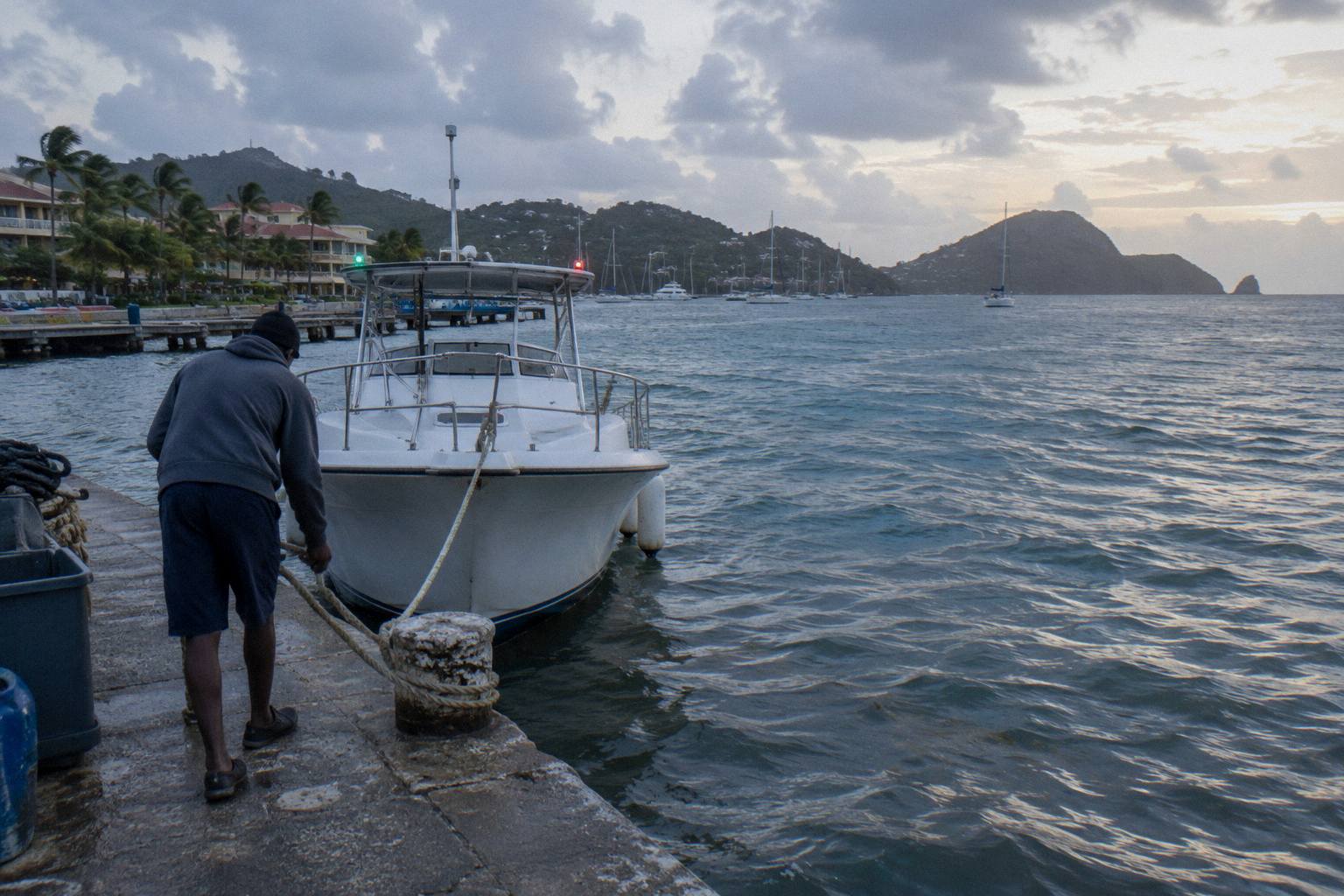
The morning starts at the dock, not on the water. Vigie Marina sits in Castries Harbour on Ganters Bay, a spot the shared cruise operator describes as convenient for both hotel guests and cruise ship passengers because it is a short distance from the Pointe Seraphine cruise terminal and beside the airport. Taxis are readily available. There is no hotel pick-up on either trip, so getting to the marina is your own arrangement. Once at the dock you meet the crew, the operator runs through a safety briefing, and everyone gets a life jacket.
The shared cruise runs on a custom 60 ft boat with a local marine expert aboard; the private safari uses a 50 ft catamaran that belongs to your group alone, with a guide and up to 40 guests. Once clear of the harbour, the boats follow the coast rather than crossing open ocean, because the deep water the animals use lies close to the west coast. The official tourism board describes the pattern plainly: trips usually leave in the morning from the north-west and last about three to four hours.
Out on the water, the rhythm is search, then watch. The crew looks for splashes, dorsal fins and seabirds gathering over bait fish; the guide identifies what is in front of the boat. Bottled water, soft drinks and rum punch flow on the shared cruise, and the private safari adds coffee, tea, light snacks and local fruit. Sightings depend on weather, season and the animals' own movements, so the boat does not promise anything; the quiet stretches between encounters are part of the format, and the west coast scenery fills them. Then the boat turns back for Vigie Marina, and the morning ends where it started.
Which Animals Can You Look For Off The West Coast?
Off Saint Lucia's west coast you can look for dolphins and pilot whales all year, while sperm whales are considered resident in the region and are occasionally sighted in deeper waters. Humpback whales also pass through the area between about February and April, giving visitors a chance to spot several different species depending on the season. Spinner dolphins are frequently sighted year-round, pantropical spotted and bottlenose dolphins are common, and Fraser's, Risso's and striped dolphins are recorded less often. Orcas are rare visitors only, and every single one of these sightings is a chance, never a promise.
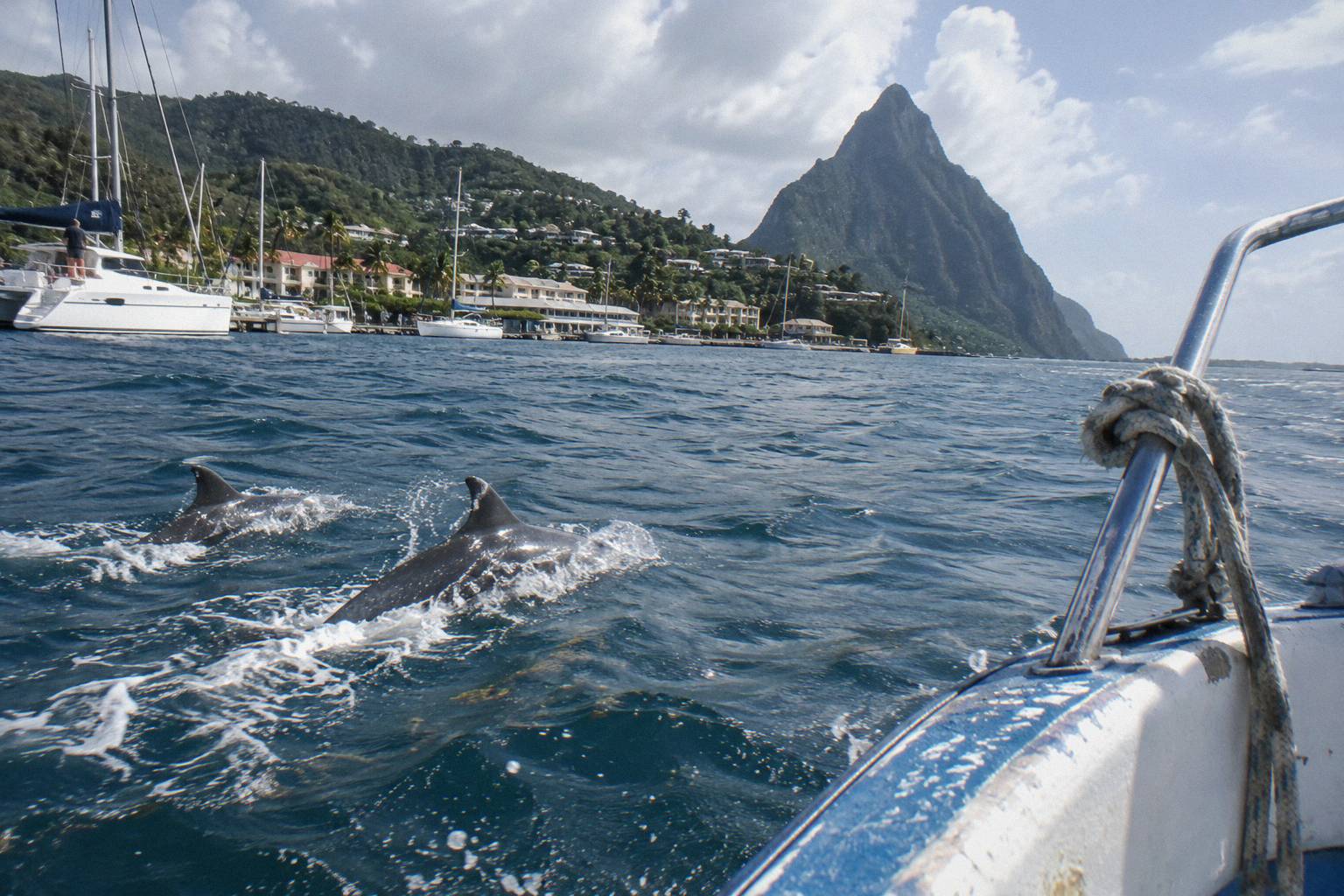
The dolphin roster is the reliable backbone of the trip. The tourism board's own species page notes that spinner dolphins are frequently sighted year-round, that pantropical spotted dolphins are common in the warm offshore water along the west coast, and that bottlenose dolphins are also commonly seen. Fraser's, Risso's and striped dolphins appear on the same official list but are recorded less often, so a guide who calls a small dark dorsal fin correctly is earning their place on the boat. The booking page for the shared cruise names spinner, spotted, Fraser's and common dolphins among the species it watches for.
Pilot whales are the other year-round residents: official wording says resident pods can sometimes be seen through the year, travelling in close-knit family groups. They are the species most often confused with false killer whales from a distance, a question covered in more depth in the site's guide to telling a pilot whale from a false killer whale; on the boat, the guide makes the call.
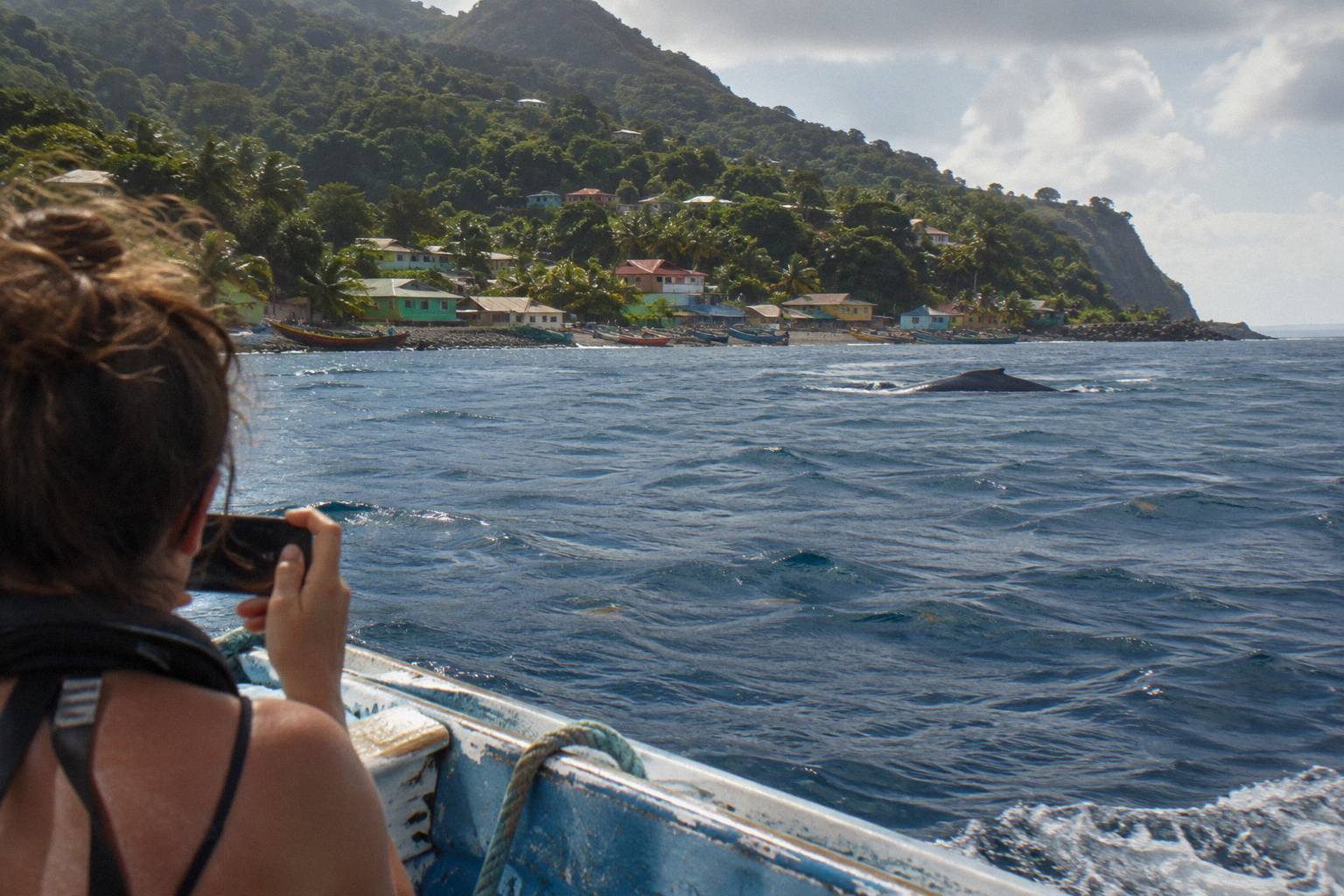
Sperm whales are the deep-water prize. The official wording is careful, they are "considered resident in the region and occasionally sighted in deeper waters", and the sperm whales off Saint Lucia belong to the wider Eastern Caribbean population that the Dominica Sperm Whale Project studies. No Saint Lucia head count exists, and none is printed here. Humpbacks are the seasonal layer: the official migration window runs about February to April, some operators report them from December, and from May to November they should be treated as unlikely. The site's month-by-month season guide covers that window in detail.
How Do The Shared Cruise And The Private Safari Differ?
The shared cruise is a per-person ticket on a 60 ft boat for about 3.5 hours, from US$65 per person, while the private safari is a whole-boat charter on a 50 ft catamaran for about 4 hours, from US$2,550.65 for the entire group of up to 40 guests. Both depart Vigie Marina in Castries, both carry a guide, and both rate 4.5, the shared cruise from 200 reviews and the private safari from 75.
The core difference is what you are buying. The shared whale and dolphin cruise sells seats next to other travellers, with instant confirmation and a morning departure, run by Captain Mike's, an operator that says it has over 60 years of experience and belongs to the Hackshaw family. Its group size is not published, and that is worth knowing before you book if a crowded deck matters to you. The private safari sells the boat: a 50 ft catamaran, your group only, a start time arranged with the operator, and cruise ship pier pick-up and drop-off included, run by Hackshaw's Boat Charters, which says it has run since 1953 and is World Cetacean Alliance certified. Its confirmation is not instant, the operator confirms the booking.
| Shared Whale And Dolphin Watching Cruise | Private Whale And Dolphin Safari | |
|---|---|---|
| Duration | About 3.5 hours | About 4 hours |
| Price | From US$65 per person | From US$2,550.65 per boat |
| Rating | 4.5 from 200 reviews | 4.5 from 75 reviews |
| Boat | Custom 60 ft vessel | 50 ft catamaran |
| Group | Shared boat, group size not published | Private, up to 40 guests |
| Departure | Vigie Marina, Castries, morning | Vigie Marina, Castries, time arranged |
| Confirmation | Instant | Operator confirms |
The price gap is structural, not a quality gap, and the two are never ranked against each other here. A per-person ticket and a whole-boat charter answer different questions. For illustration, not a quote: US$2,550.65 shared by 4 guests is about US$637.66 each; by 6 about US$425.11; by 8 about US$318.83; by 12 about US$212.55. The shared cruise at US$65 per person is US$130 for 2, US$260 for 4, US$390 for 6. Prices vary by date and group, and the booking page confirms the live figure. If the arithmetic still leaves the choice open, the site's shared cruise versus private charter comparison works through it in more detail. You can also check availability for the safari beside the cruise's own page.
In practice, the two suit different kinds of traveller. The shared cruise fits solo visitors, couples, and small parties who want a fixed morning slot, instant confirmation, and a low per-person price, and who do not mind sharing the deck with strangers on a vessel whose maximum group size is not published. The private safari fits larger parties, families, or groups celebrating something, since up to 40 guests can board one catamaran and the whole boat, guide, and roughly 4 hours on the water belong to them alone.
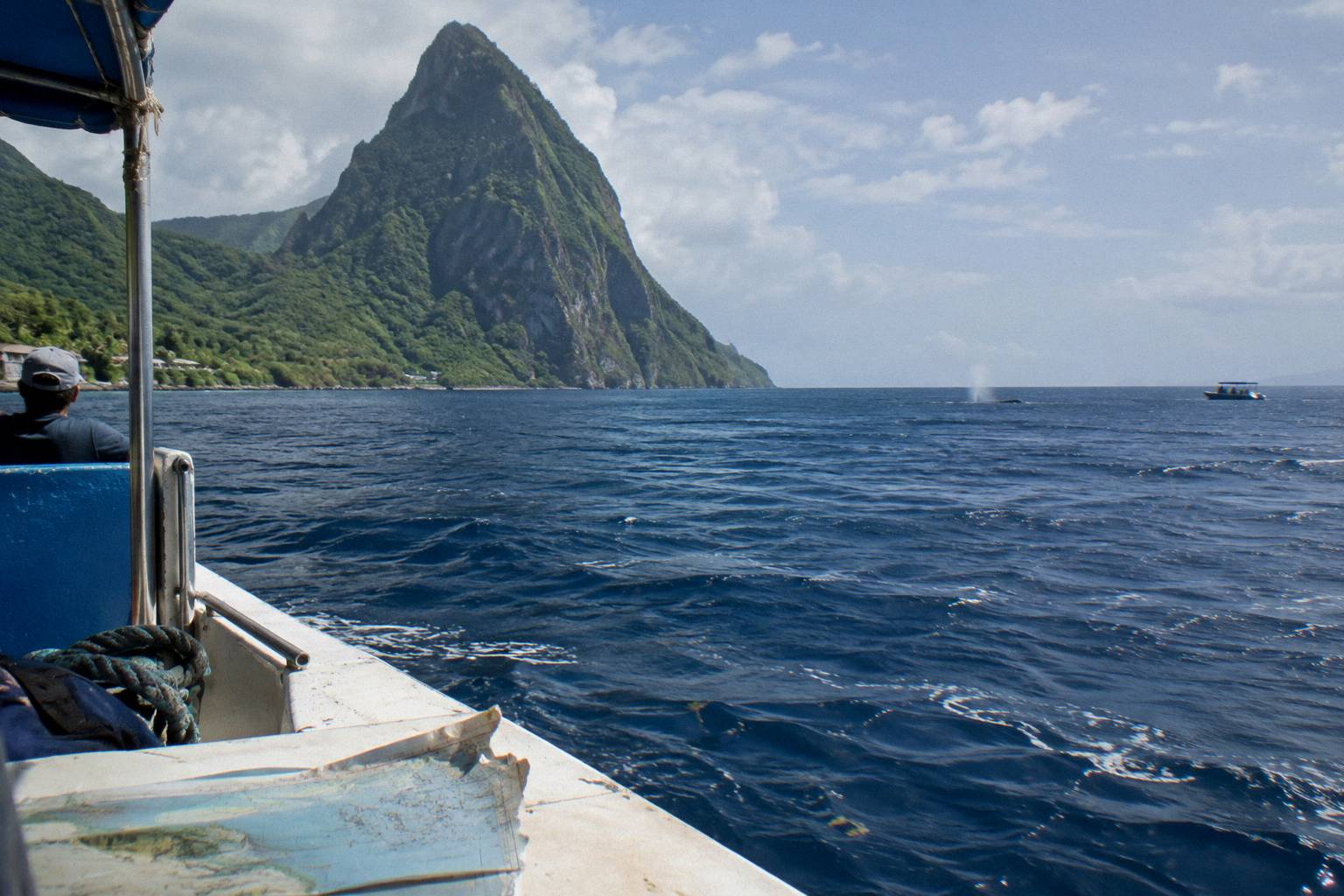
Timing and logistics also point in different directions. The private safari's cruise ship pier pick-up and drop-off, plus a start time arranged directly with the operator, make it easier to fit around a port call, whereas the shared cruise runs to its published morning departure from Vigie Marina. Note the booking flow too: the shared cruise confirms instantly, while the safari waits on the operator, so if your dates are fixed it pays to request the charter early rather than assume a same-day answer.
What Is Included And What Costs Extra?
Both trips include drinks on board and a guide or marine expert, and both leave gratuities and hotel transfers outside the ticket: the shared cruise includes bottled water, soft drinks and rum punch, while the private safari adds coffee, tea, light snacks, local fruit and cruise ship pier pick-up and drop-off. Gratuities are extra on both, and neither includes hotel pick-up, so budget for the taxi to the marina as a separate line in your morning.
The drinks list matters more than it sounds on a tropical morning. The shared cruise pours bottled water, soft drinks and rum punch from the moment the boat clears the harbour; the private safari carries soft drinks, coffee, tea, water, light snacks, rum punch and local fruit, which effectively covers breakfast on the water. The biggest practical difference is the transfer: the private safari collects and returns cruise ship passengers at the pier, while the shared cruise meets everyone at Vigie Marina, a short distance from Pointe Seraphine, with taxis readily available.
| Item | Shared cruise | Private safari |
|---|---|---|
| Guide | Local marine expert | Professional guide |
| Water and soft drinks | Included | Included |
| Rum punch | Included | Included |
| Coffee, tea | Not listed | Included |
| Snacks and local fruit | Not listed | Included |
| Cruise pier pick-up and drop-off | Not included | Included |
| Hotel pick-up | Not included | Not included |
| Gratuities | Extra | Extra |
Two fine-print items change plans if missed. Free cancellation applies up to 24 hours before departure on both trips, and the private safari is also cancelled free for bad weather; the shared cruise operator says that if the captain cancels for unsafe weather there is an alternative date or a refund. Neither trip offers a rebook-if-no-sighting policy, so the ticket buys the morning on the water, not a specific animal. Confirmation differs too: the shared cruise confirms instantly, the private safari waits for the operator to confirm, which matters if you are booking at short notice for a cruise day.
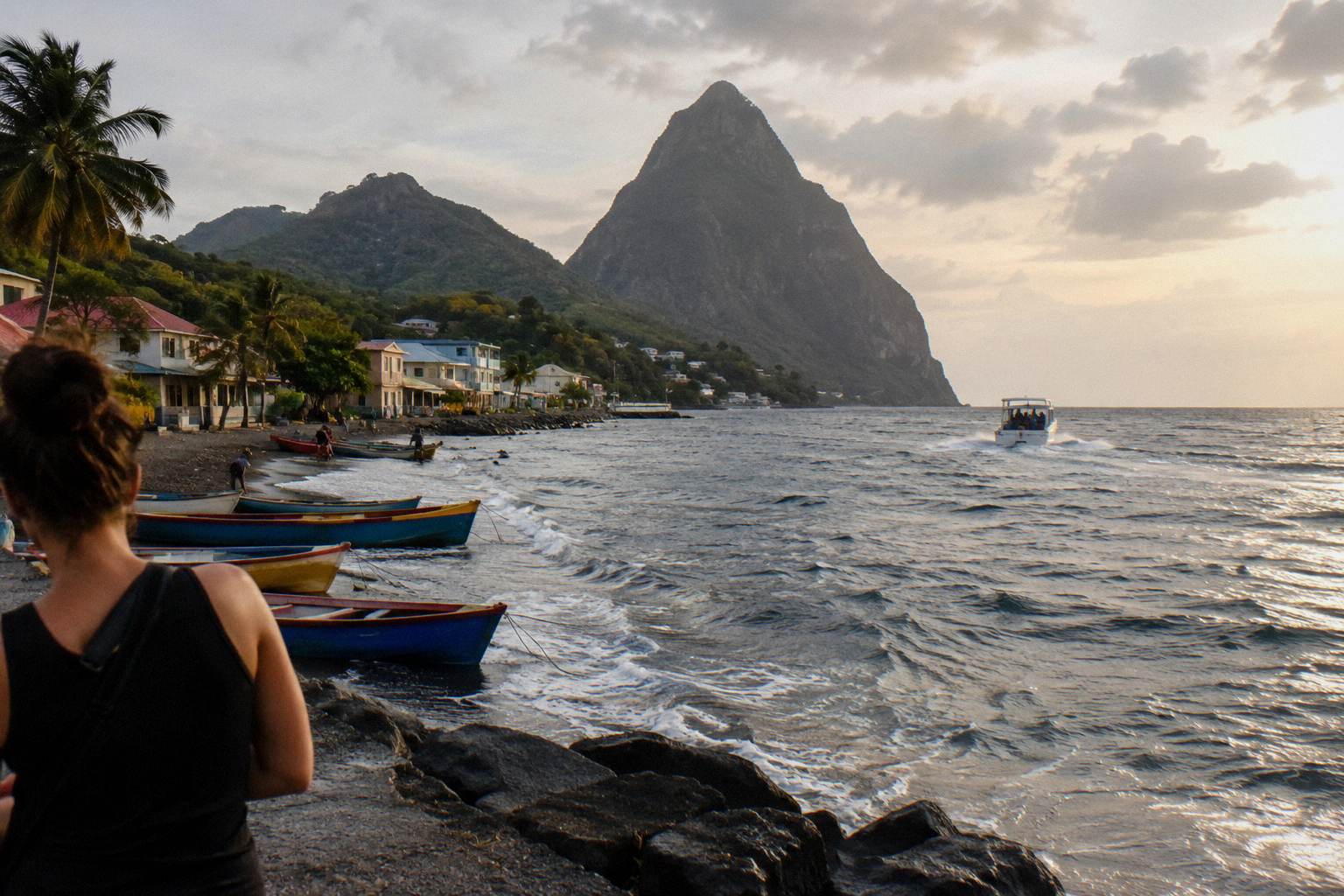
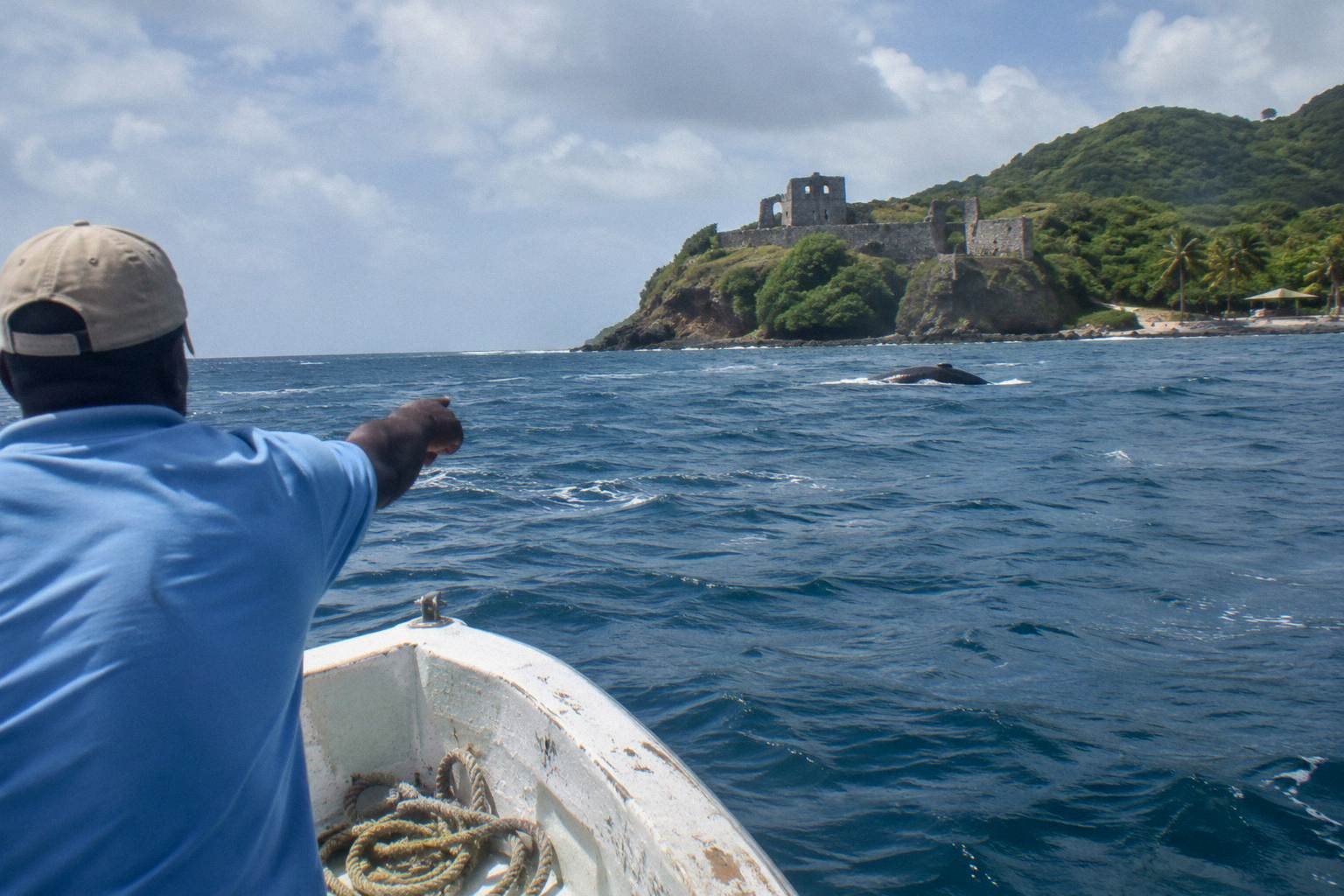
When Is The Best Season To Go?
The best time to go whale and dolphin watching in Saint Lucia is December to May, when seas are typically calmer, though dolphin and pilot whale watching runs year-round. If humpback whales are your priority, plan your trip between roughly February and April, when these whales pass through the area on their seasonal route. The official migration window is February to April, some operators report humpbacks from December, and from May to November humpbacks should be treated as unlikely. The resident dolphins and pilot whales carry the trip in every month of the year, including the quieter season.
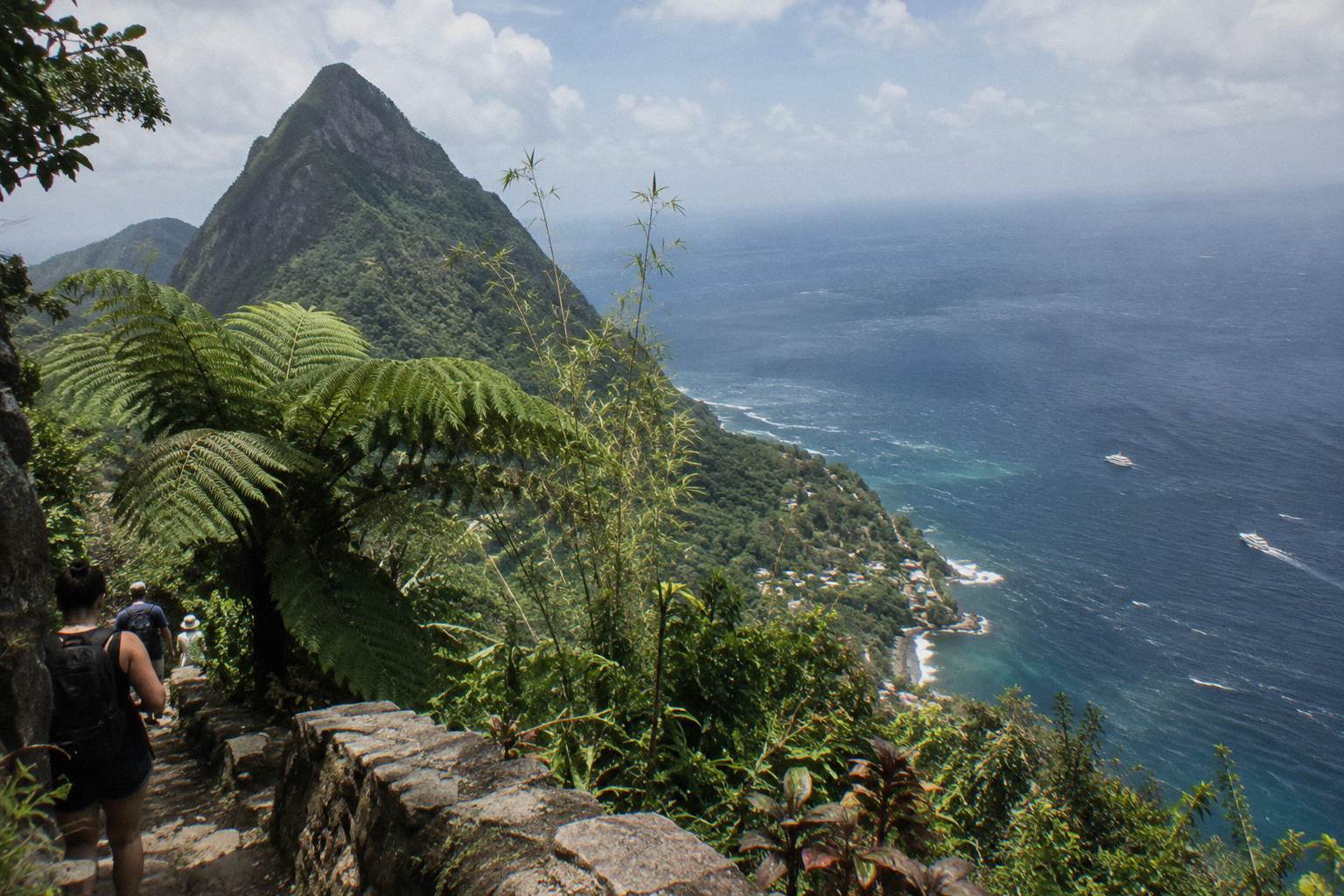
The planning logic is straightforward. If humpbacks are the goal, aim inside the official February-to-April window and treat December and January reports as a bonus rather than a plan. If dolphins and pilot whales are enough, any month works on paper, and the choice becomes sea conditions. The official tourism board whale watching page notes that calmer sea conditions are typically December to May, which is worth weighing if anyone in your group is unsure on the water, a concern the site's piece on seasickness on a Saint Lucia whale cruise takes further.
| Period | What the sources say |
|---|---|
| December to May | Seas typically calmer |
| February to April | Official humpback migration window |
| December onward | Some operators report humpbacks |
| May to November | Humpbacks unlikely; dolphins and pilot whales still present |
| All year | Spinner, spotted and bottlenose dolphins; pilot whale pods sometimes seen |
The Atlantic hurricane season officially runs June 1 to November 30, which overlaps the quieter humpback months. That is a calendar fact, not a sighting verdict: no month-by-month sighting rates exist, and this table is only what the official sources say. Sightings in every season depend on weather and the animals' movements. No sighting percentage is printed anywhere on this site, because operator claims conflict and the honest answer is that the animals decide.
Whatever the month, the shared cruise keeps the same format: a morning departure from Vigie Marina, about 3.5 hours on the water, and the drinks and marine expert already covered by the from-US$65 ticket. Season changes what you might see, not how the morning runs.
What Should You Bring And Wear On Deck?
Wear a hat and sun protection, bring a light layer for ocean spray, and pack a camera to capture the views; if anyone in your group is prone to motion sickness, ask about the boat size when booking, since smaller vessels tend to feel the swell more than larger, steadier boats. Morning sun on open Caribbean water is stronger than it feels at the dock, spray reaches the forward seats on a moving boat, and there is nowhere to buy forgotten items once the boat leaves Vigie Marina for the morning. Pack before you leave the hotel.
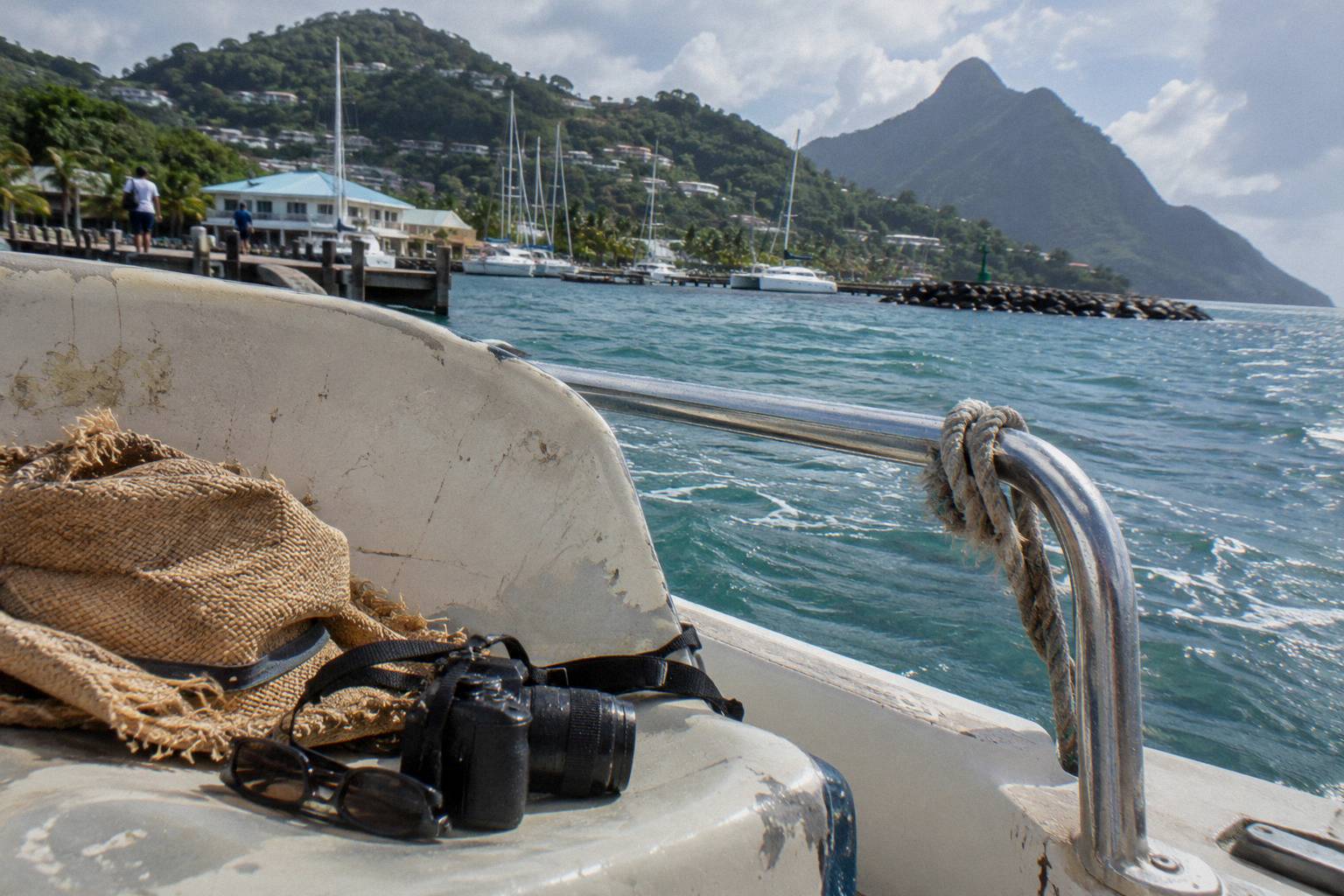
The official advice is short because the needs are short. Sunscreen belongs in the bag rather than applied once at the hotel, since three and a half hours on reflective water outpaces a morning of sightseeing on land. A hat with a brim beats a cap for the low morning sun, and a light layer handles the wind and spray on the run between sightings. Cameras and phones should have a strap or a zip pocket; dry bags are not supplied.
Footwear and clothing are a judgement call nobody prints rules for. Deck shoes or sandals with grip work on both the 60 ft shared boat and the 50 ft catamaran, and swimwear is unnecessary because neither trip offers swimming with whales or dolphins, and that activity is not suggested anywhere on this site. Responsible viewing rules apply on the water: operators follow regulated distance guidelines, limit time near the animals, and guests do not touch or feed them.
How Do You Get To Vigie Marina And Plan The Morning?
Vigie Marina sits in Castries Harbour beside the George F. L. Charles airport, a short distance from the Pointe Seraphine cruise terminal, with taxis readily available, and both trips depart from it in the morning with no hotel pick-up. Plan to arrive with time for check-in and a safety briefing before departure, because the boat does not wait, and the trip length of about 3.5 or 4 hours starts once you are aboard.
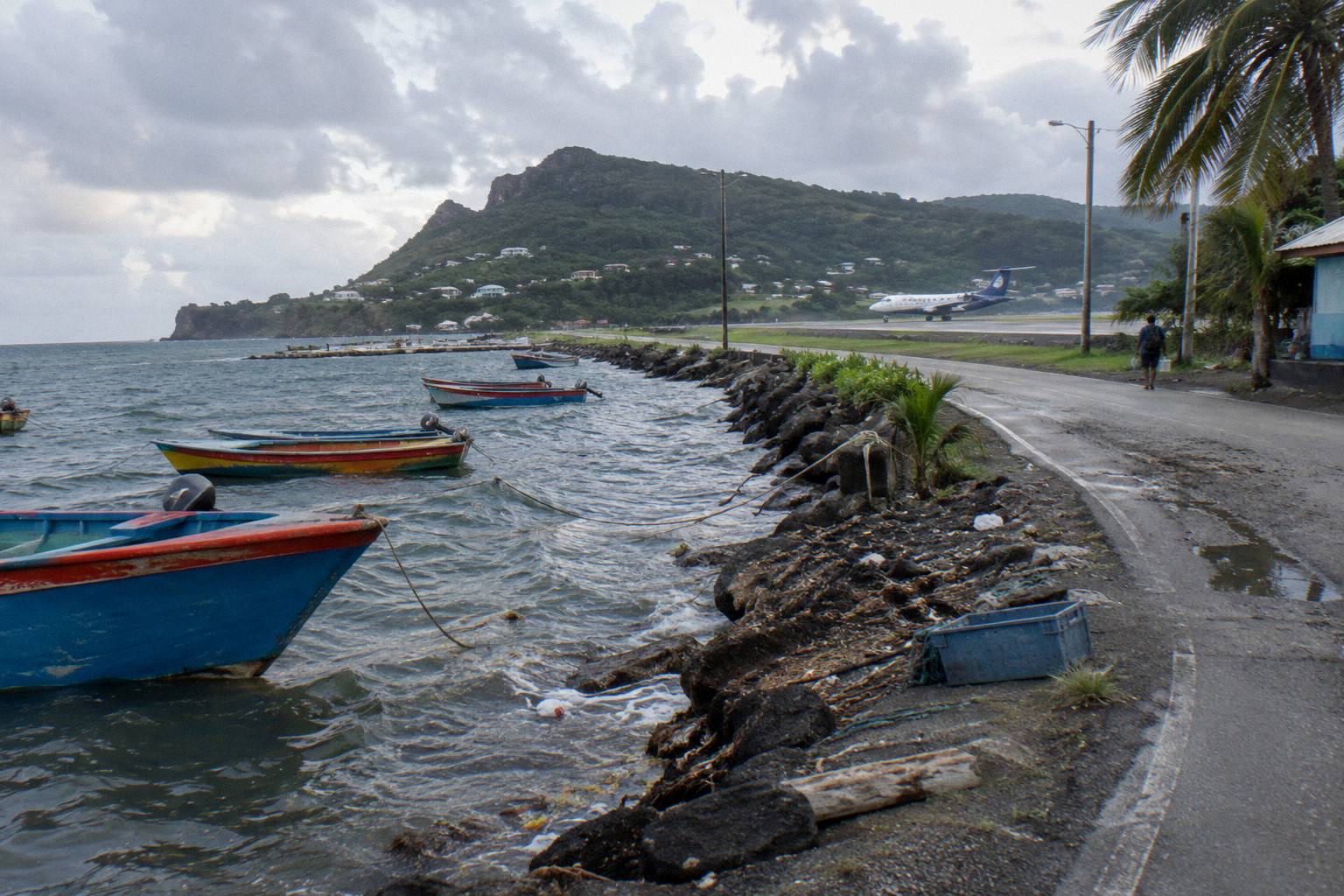
For hotel guests, the practical step is booking a taxi for a morning arrival at the marina; the operator describes the location as convenient for hotel guests, but the transfer is yours to arrange on both trips. For cruise passengers, the split is sharper: the private safari includes pier pick-up and drop-off, while the shared cruise meets at Vigie Marina a short distance from Pointe Seraphine, and taxis cover that hop easily. Cruise passengers should check the ship's all-aboard time and ask the operator about timing before booking, because no return time is promised here beyond the trip lengths. The site's page on fitting a whale cruise between ship arrival and departure works the timing question in full.
Air arrivals have a small extra list. A valid passport for the stay plus proof of onward travel is required, US, UK and Canadian citizens need no visa, and air arrivals are encouraged to complete the online immigration form up to 3 days before travel, per the official Saint Lucia trip planning page. Money is simple on board and ashore: the Eastern Caribbean dollar is fixed at EC$2.70 to US$1, and US dollars are widely accepted, so a small US cash note for the gratuity jar works without any exchange, as the official currency and tipping guide explains. Trip prices themselves are charged in US dollars on the booking page.
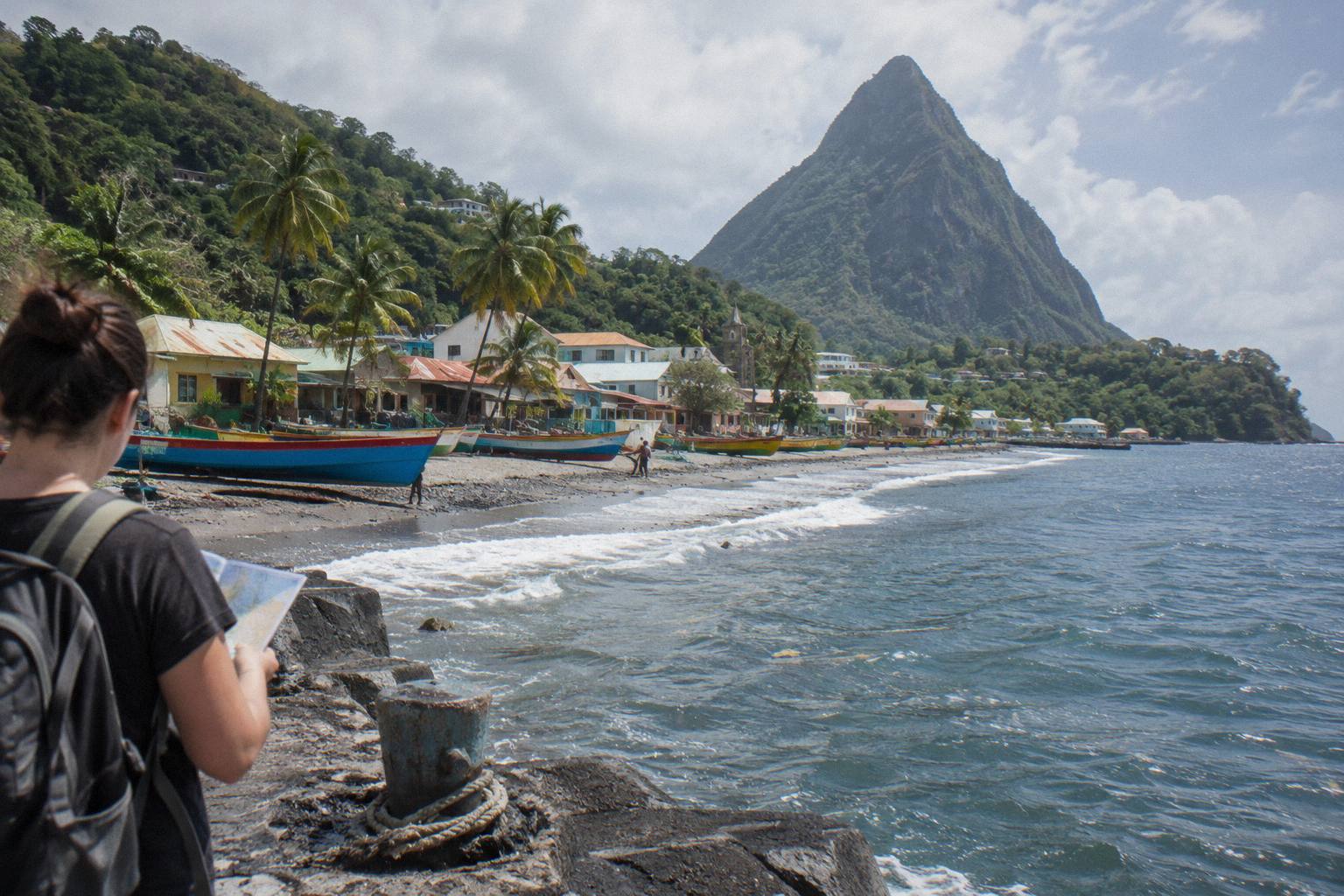
Children are welcome in principle: no minimum age is printed for the shared cruise, so the honest line is that children travel with an adult and you should ask the operator when booking, and a family guide on this site covers the day with kids in more depth.
Common Mistakes When Booking A Boat Trip
The common mistakes are expecting a guaranteed sighting, comparing the per-person and per-boat prices as if they were the same basis, assuming hotel pick-up is included, ignoring the 24-hour cancellation line, and booking a private charter without allowing time for operator confirmation. Each of these is avoidable in a minute of reading, and every one of them comes from the fine print rather than the water.
The first mistake is believing a sighting percentage. None is printed here because operator claims conflict, and the animals move on their own schedule; the ticket buys the search, the guide and the morning. The second is arithmetic: the shared cruise is from US$65 per person and the private safari from US$2,550.65 per boat, and those bases are never interchangeable. For illustration, not a quote: US$2,550.65 shared by 8 guests is about US$318.83 each. The third is transfers: neither trip includes hotel pick-up, and only the private safari includes pier pick-up.
The fourth mistake is timing the cancellation window. Both trips cancel free up to 24 hours before departure, so a same-day change of plan can cost the ticket; the private safari is also cancelled free for bad weather, and the shared cruise operator offers an alternative date or a refund if the captain cancels for unsafe weather. The fifth is expecting instant confirmation on the private safari; it is not instant, the operator confirms, so book it earlier in your planning than the shared cruise, which confirms immediately. The last mistake is forgetting the morning itself: departure is in the morning, no clock time is printed, so confirm the time with the operator or the booking page the day before, and arrive at Vigie Marina with room to spare.
Common Questions About Whale And Dolphin Watching In Saint Lucia
What Happens On A Whale And Dolphin Cruise From Dock To Dock?
You check in at Vigie Marina in Castries, get a safety briefing and life jacket, and the boat follows the Caribbean coast for about 3.5 to 4 hours while the crew searches and the guide narrates. Drinks are served on board and the boat returns to the same marina.
How Likely Am I To See Whales Or Dolphins In Saint Lucia?
Dolphins and pilot whales can be seen all year, so they are the backbone of the trip. Sperm whales are considered resident in the region and occasionally sighted in deeper waters, and humpbacks pass through about February to April. Every sighting is a chance, never a promise, and no percentage is printed.
What Is The Difference Between The Shared Cruise And The Private Safari?
The shared cruise is a per-person ticket, from US$65 each, about 3.5 hours on a custom 60 ft boat with instant confirmation. The private safari is a whole-boat charter, from US$2,550.65 per boat for up to 40 guests, about 4 hours on a 50 ft catamaran, with pier pick-up included and operator confirmation rather than instant.
Is Hotel Pick-Up Included On Either Trip?
No. Neither the shared cruise nor the private safari includes hotel pick-up, so plan a taxi to Vigie Marina. The private safari does include cruise ship pier pick-up and drop-off; the shared cruise does not.
When Is The Best Time Of Year To Go?
Any month for dolphins and pilot whales. Roughly February to April adds the official humpback migration window, some operators report humpbacks from December, and seas are typically calmer from December to May.
Can I Cancel If My Plans Change?
Both trips cancel free up to 24 hours before departure. The private safari is also cancelled free for bad weather, and the shared cruise operator says the captain's weather cancellation brings an alternative date or a refund.