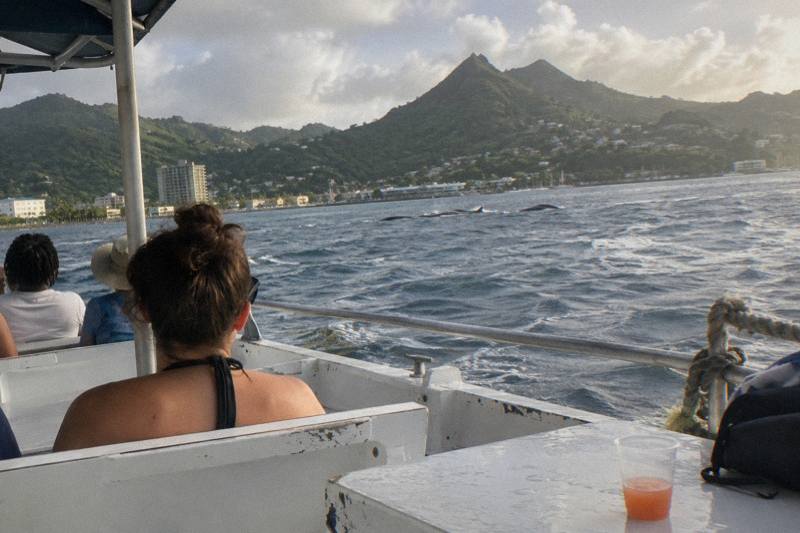
Will I Get Seasick On A Whale And Dolphin Cruise In Saint Lucia?
Motion sickness is the most common hesitation before booking a Saint Lucia whale cruise. Here is what the official sources and the two Castries tours actually say about sea conditions, boat size and what to bring.
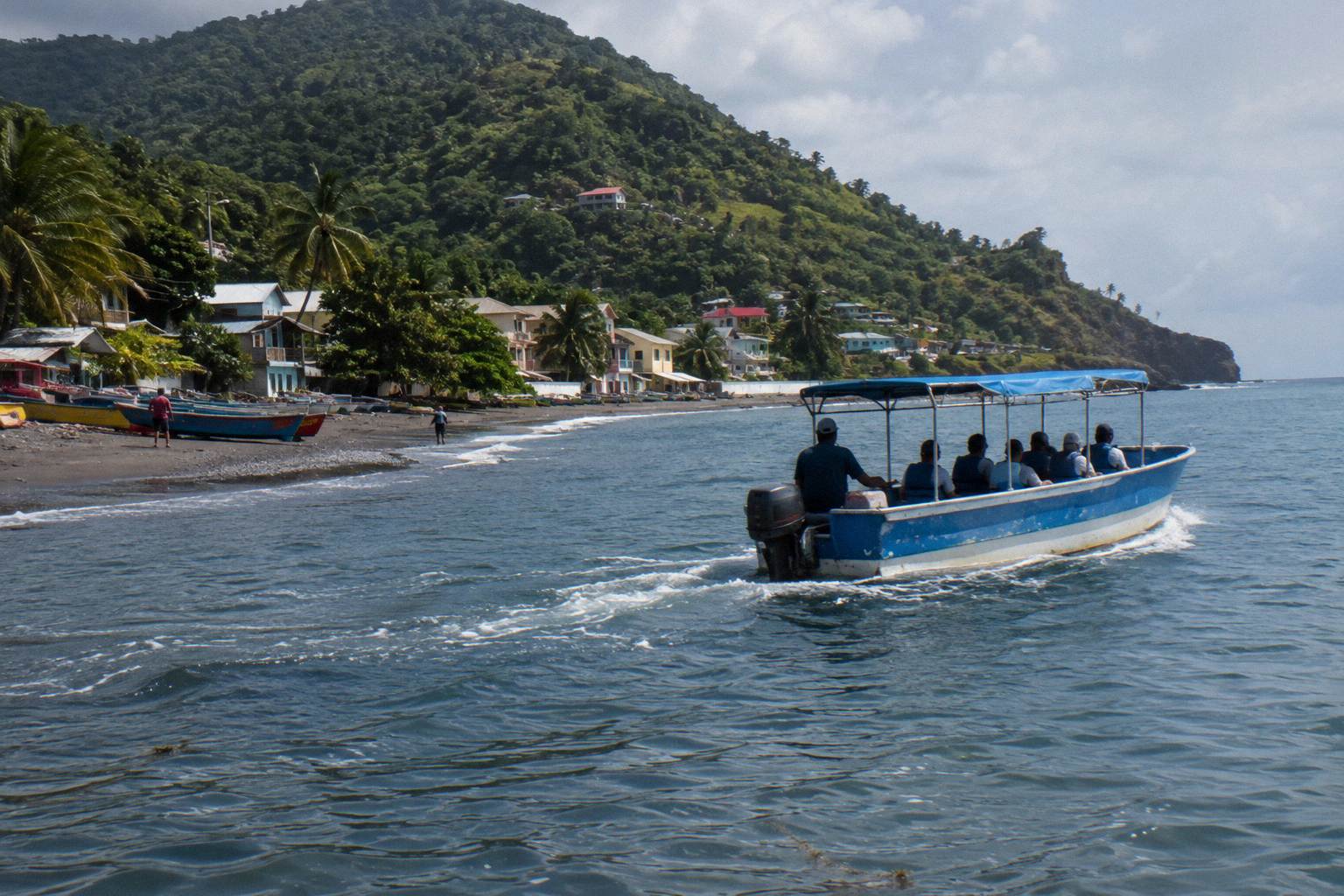
No one can promise you will not feel queasy, since sea conditions change daily and every body reacts differently, but Saint Lucia's west coast is unusually forgiving: deep water sits close to shore, so boats stay near land, seas run calmer from December to May, and both Castries tours use substantial vessels, a custom 60 ft boat and a 50 ft catamaran, with official guidance suggesting you ask about boat size if you are prone to motion sickness.
That last sentence is worth slowing down on. The Saint Lucia tourist board's own practical advice for these trips lists four things to bring, sun protection, a hat, a camera, and a light layer for spray, and then adds one instruction for nervous passengers: ask about boat size if you tend toward motion sickness. It does not tell you to take anything, and it does not warn you off the water. That framing matters. The official position treats seasickness as a manageable planning question, not a reason to stay ashore.
Geography does a lot of the work here. The Caribbean Sea sits on the island's west side, and the drop-off into deep water sits unusually close to that coast, which is exactly why whale and dolphin watching works from Castries at all. Sperm whales are described by the tourist board as resident in the region and occasionally sighted in deeper waters, and spinner dolphins are frequently sighted year-round, so the animals come reasonably near shore and the boats follow the Caribbean coast rather than fighting out across open ocean. Trips in the morning from the north-west, around Rodney Bay and Castries, typically last about three to four hours, which is a short exposure window compared with a full-day offshore expedition.
Two tours cover this ground from Vigie Marina in Castries, and they suit two kinds of nervous passenger. The shared whale and dolphin watching cruise with Captain Mike's runs about 3.5 hours on a custom 60 ft boat, from US$65 per person, with a local marine expert aboard and water, soft drinks and rum punch included. The private safari with Hackshaw's Boat Charters is a 50 ft catamaran booked for your group alone, from US$2,550.65 per boat, about 4 hours, with up to 40 guests. Neither is a small open skiff, and that is the first thing anyone who worries about motion should register.
The shared cruise also carries a safety net that nervous bookers should know about: free cancellation up to 24 hours before departure, and instant confirmation. The private safari has the same 24-hour free cancellation window and is cancelled free for bad weather. If you wake up on sailing morning to a sea that looks wrong for you, the cancellation terms are printed on each tour's live listing and you can check them before you commit.
How Rough Is The Sea On These Trips?
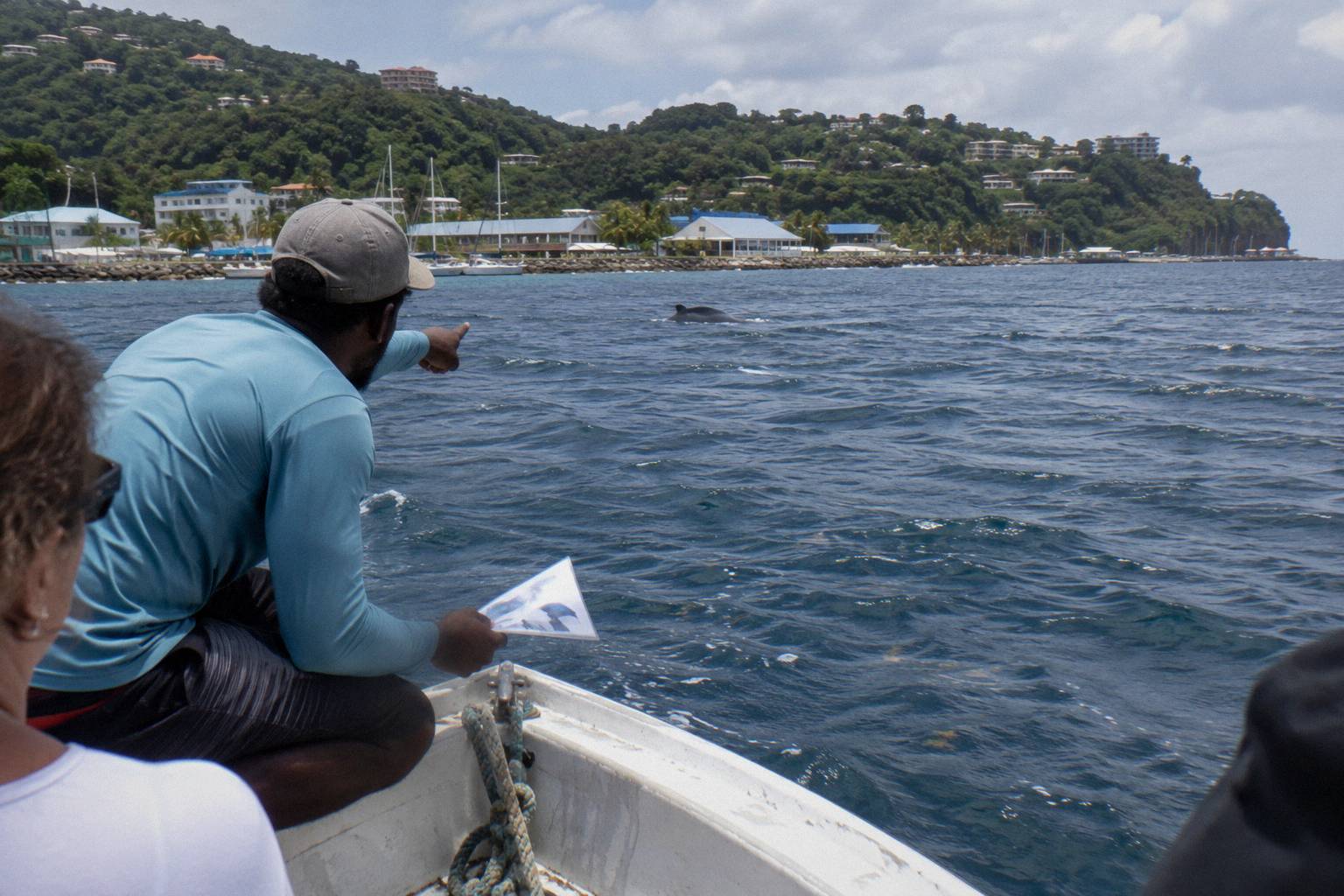
Sea conditions on these trips vary with weather and season, and no source publishes day-by-day sea states, but the structural facts are reassuring: boats sail the sheltered Caribbean side of the island, along a coast where deep water sits close to shore, and trips run about three and a half to four hours rather than all day. Licensed operators monitor conditions, with a captain reading the water before and during every trip.
Start with what roughness actually means in this corner of the Caribbean. Saint Lucia sits between the Atlantic Ocean and the Caribbean Sea, and the whale and dolphin boats work the leeward, Caribbean side, where there is no long Atlantic fetch building swell. The official description of these trips says boats follow the Caribbean coast, and that the deep coastal waters increase the likelihood of encounters close to shore. In practical terms, the boat is rarely far from land, and it is not crossing open ocean for hours to reach the whales.
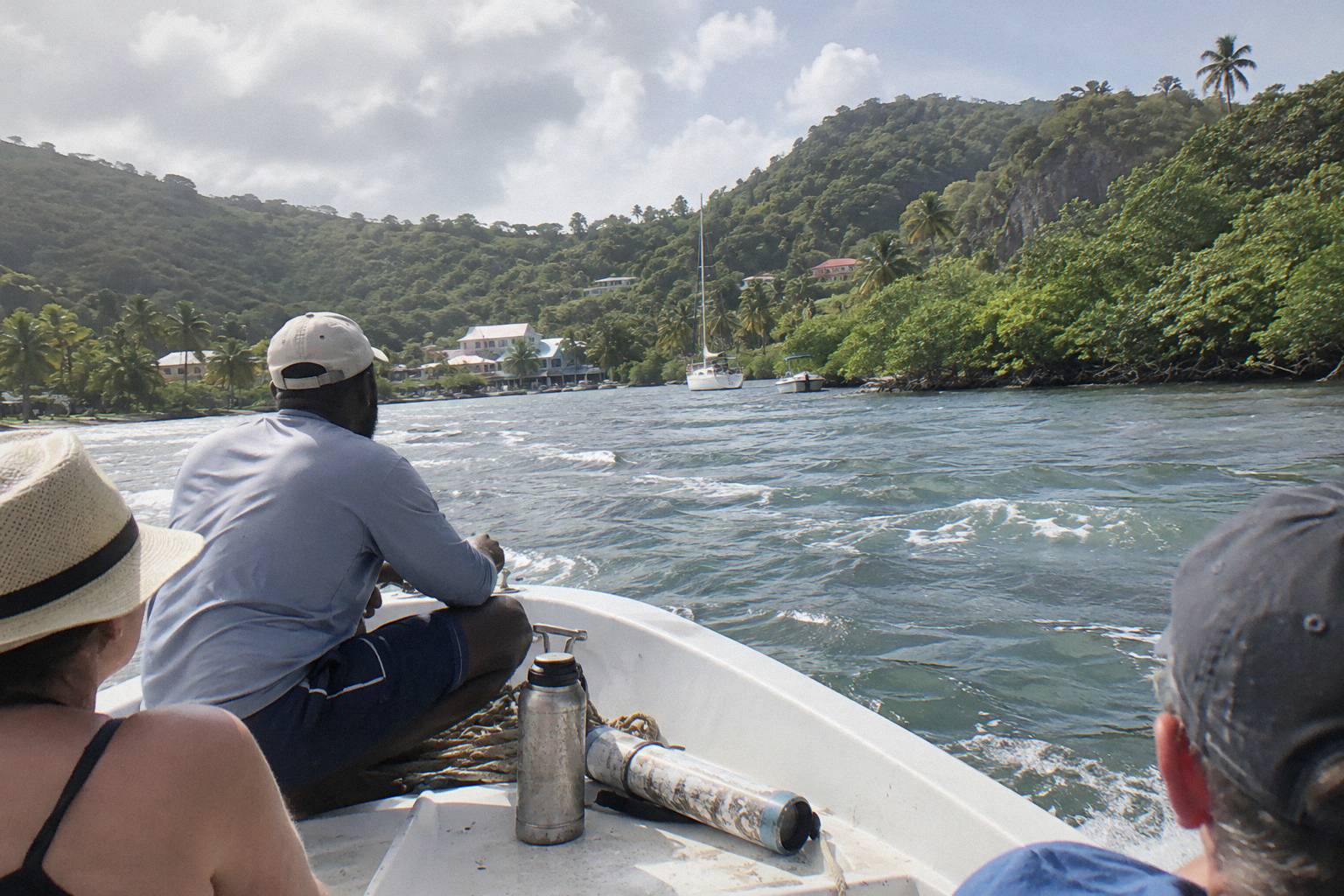
That does not make the sea flat. Wind can pick up on any day, a passing squall can churn the surface for an hour, and theAtlantic hurricane season, which officially runs June 1 to November 30, frames the rougher half of the year. The Saint Lucia Meteorological Service publishes the official season dates, and the tourist board's own trip guidance simply says seas are typically calmer from December to May. Note the word typically. A calm week in July happens; a rough week in January happens. What the sources support is a seasonal tendency, not a forecast, and nobody honest will give you a wave-height promise.
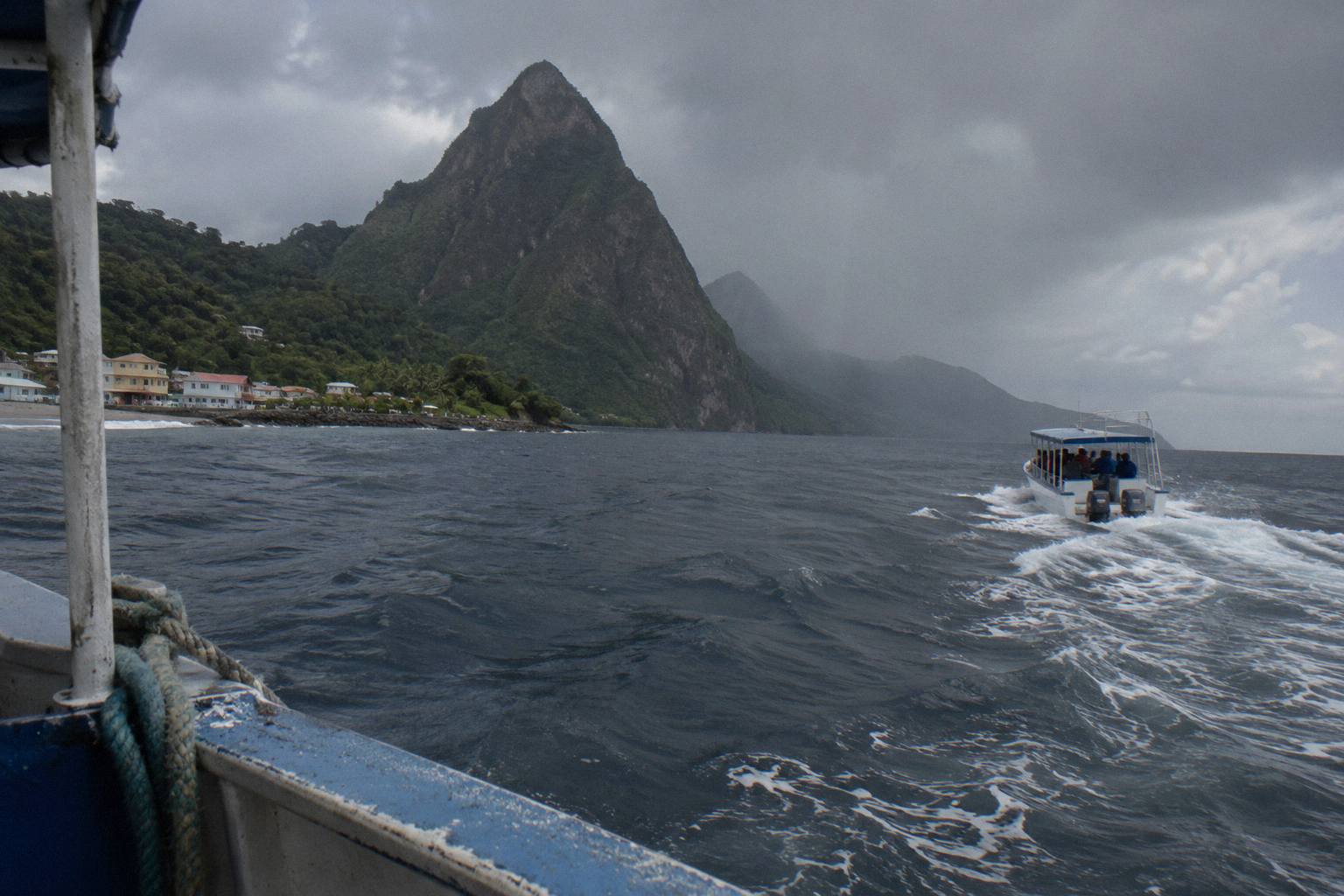
There is one more structural point that nervous passengers underrate: these are working wildlife trips, not pleasure sails. The boat moves, slows, turns and holds position while the crew watches animals, and a boat holding station can roll in a way that a boat under way does not. The tourist board's responsible-viewing guidance describes slow approaches and giving the animals space to move on, so expect the trip to feel more varied than a ferry ride. Some of that variety is the interesting part.
What no source will give you is a number. No official page publishes wave heights for these routes, no operator claims a flat-sea record, and this article will not invent either. If sea state on a specific date is the thing that decides your booking, the right move is to ask the operator directly when booking, and to remember the 24-hour free cancellation window that both tours carry. That combination, a question before you book and an exit until the day before, is the practical answer to a question the brochures do not address.
The shared cruise's own listing describes a custom 60 ft boat with a marine expert aboard, about 3.5 hours on the water, and it rates 4.5 from 200 reviews. It departs in the morning from Vigie Marina in Castries Harbour, near the airport and a short distance from the Pointe Seraphine cruise terminal.
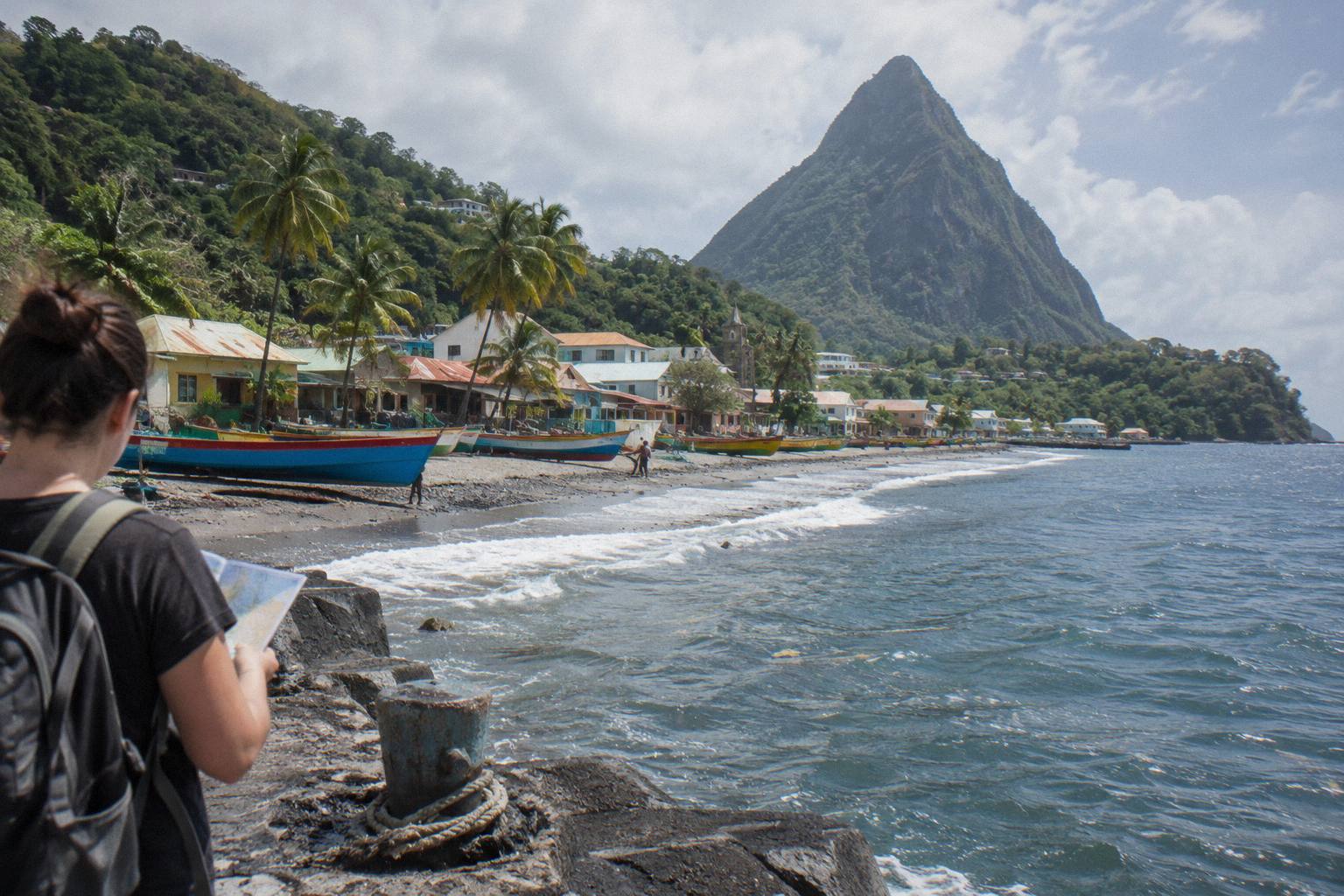
Which Months Have Calmer Seas?
The official guidance is specific: seas around Saint Lucia are typically calmer from December to May, and the Atlantic hurricane season officially runs June 1 to November 30. Neither statement is a prediction for your date, but together they give nervous passengers a clear planning window, and they line up neatly with the best wildlife months, since humpback whales pass through between about February and April.
The overlap is the part worth noticing. If calmer seas are your priority, the December-to-May window is not a compromise that costs you sightings. Dolphins and pilot whales can be seen all year, the tourist board says so plainly, so the calmer-water months lose nothing on the resident species. Humpbacks add their bonus between about February and April, with some operators reporting them from December. May to November, treat humpbacks as unlikely. In other words, the calmest sea months and the richest wildlife months are largely the same months, which is not true of every whale watching destination.
Here is what the sources actually support, month by month, as a planning table and nothing more. No month-by-month sighting rates exist, and the tourist board's own FAQ frames it the same way: whale and dolphin watching runs year-round, and February to April adds the chance of humpbacks. Every sighting is a chance, never a promise.
| Months | What the sources say about the sea | What the sources say about the animals |
|---|---|---|
| December to January | Typically calmer seas begin; some operators report humpbacks from December | Dolphins and pilot whales year-round |
| February to April | Typically calmer seas continue | Official humpback window, plus dolphins and pilot whales |
| May | Calmer conditions tail off | Humpbacks treated as unlikely from here |
| June to November | Hurricane season officially June 1 to November 30 | Dolphins and pilot whales still present |
One caution about reading that table too literally. Hurricane season is a broad official designation for the Atlantic basin, and it is not a statement that Saint Lucia's west coast is rough every day inside it, nor is it a reason that sightings fail. The tourist board's whale watching guidance mentions sea conditions only in the calmer-December-to-May framing. If you are already booked for a September trip and feeling nervous, the facts that matter are the ones you can act on: ask the operator about conditions near your date, and remember that both Castries tours cancel free up to 24 hours before departure, with the private safari also cancelled free for bad weather and the shared cruise operator offering an alternative date or a refund if the captain cancels for unsafe weather.
It is also worth saying what the season does not control. Your inner ear does not check the calendar. A flat December morning can still surprise a sensitive passenger, and a gentle July trip can suit someone fine. Use the month table to choose when to come; use the sections below on boat size and preparation to manage how you feel on the day. For a fuller month-by-month picture of the wildlife side, the best time to see whales around Saint Lucia month by month breaks the season down in more detail.
Does Boat Size Matter?
Yes, and it is the one factor the official guidance singles out for passengers prone to motion sickness: ask about boat size. The two Castries tours give you a real choice here, a custom 60 ft boat on the shared cruise and a 50 ft catamaran on the private safari, and both are substantial vessels rather than small open craft.
The tourist board's what-to-bring advice is short, sun protection, a hat, a light layer for spray, a camera, and then the instruction to ask about boat size if you are prone to motion sickness. The reason size matters is mechanical: a larger hull is affected differently by short chop than a small one, and a catamaran's twin hulls behave differently again from a mono-hull in the same water. This article stays out of engineering claims, but the official advice to ask exists precisely because the answer changes the experience.
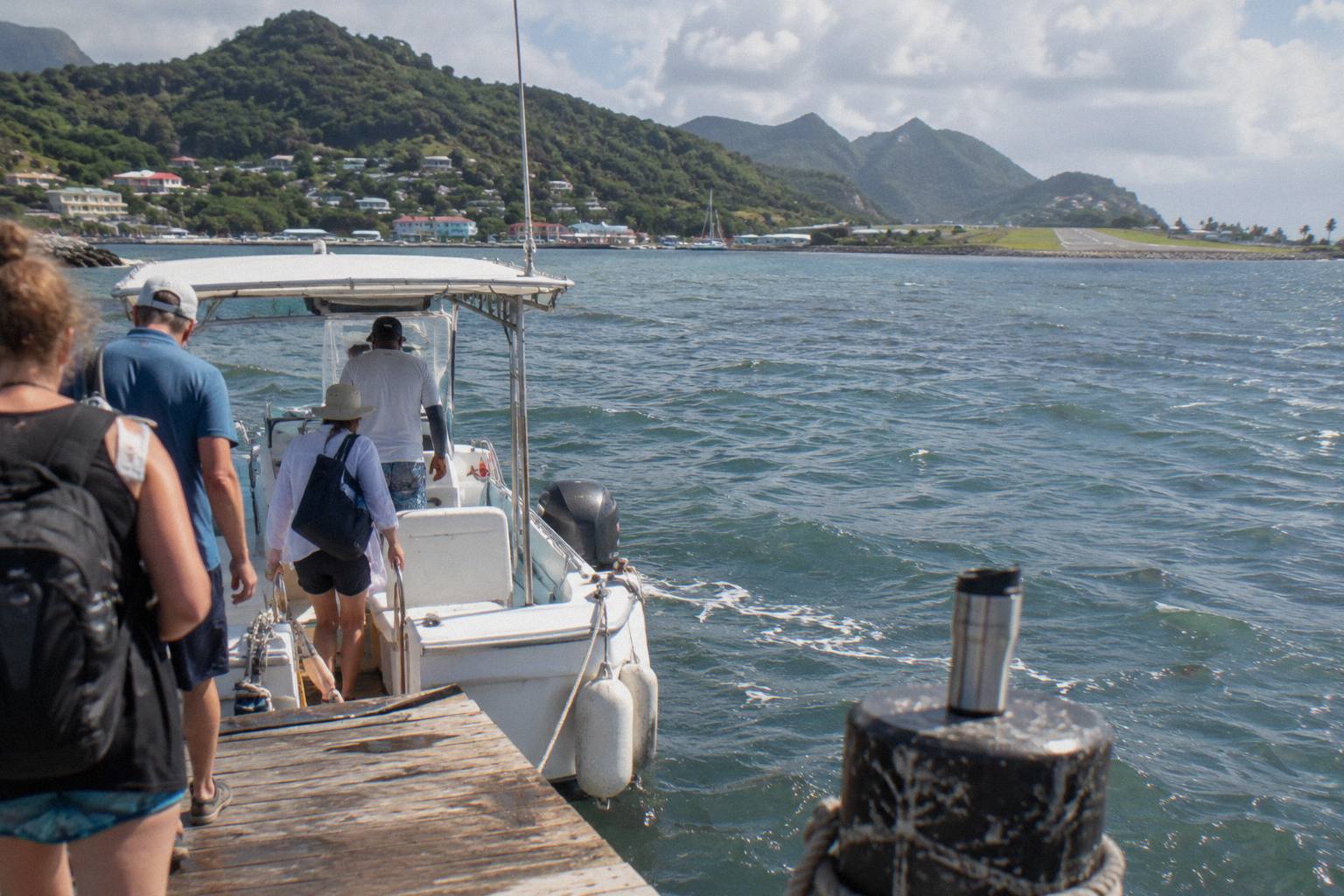
On this coast you have two published answers. Captain Mike's shared cruise lists a custom 60 ft boat, about 3.5 hours, from US$65 per person, rating 4.5 from 200 reviews. Hackshaw's private safari lists a 50 ft catamaran, about 4 hours, up to 40 guests, from US$2,550.65 per boat, rating 4.5 from 75 reviews, and remember that per-boat figure is for the whole group, never per person. For illustration, not a quote: US$2,550.65 shared by 4 guests is about US$637.66 each; by 6 about US$425.11; by 8 about US$318.83; by 12 about US$212.55. The price varies by date and group and the booking page confirms it.
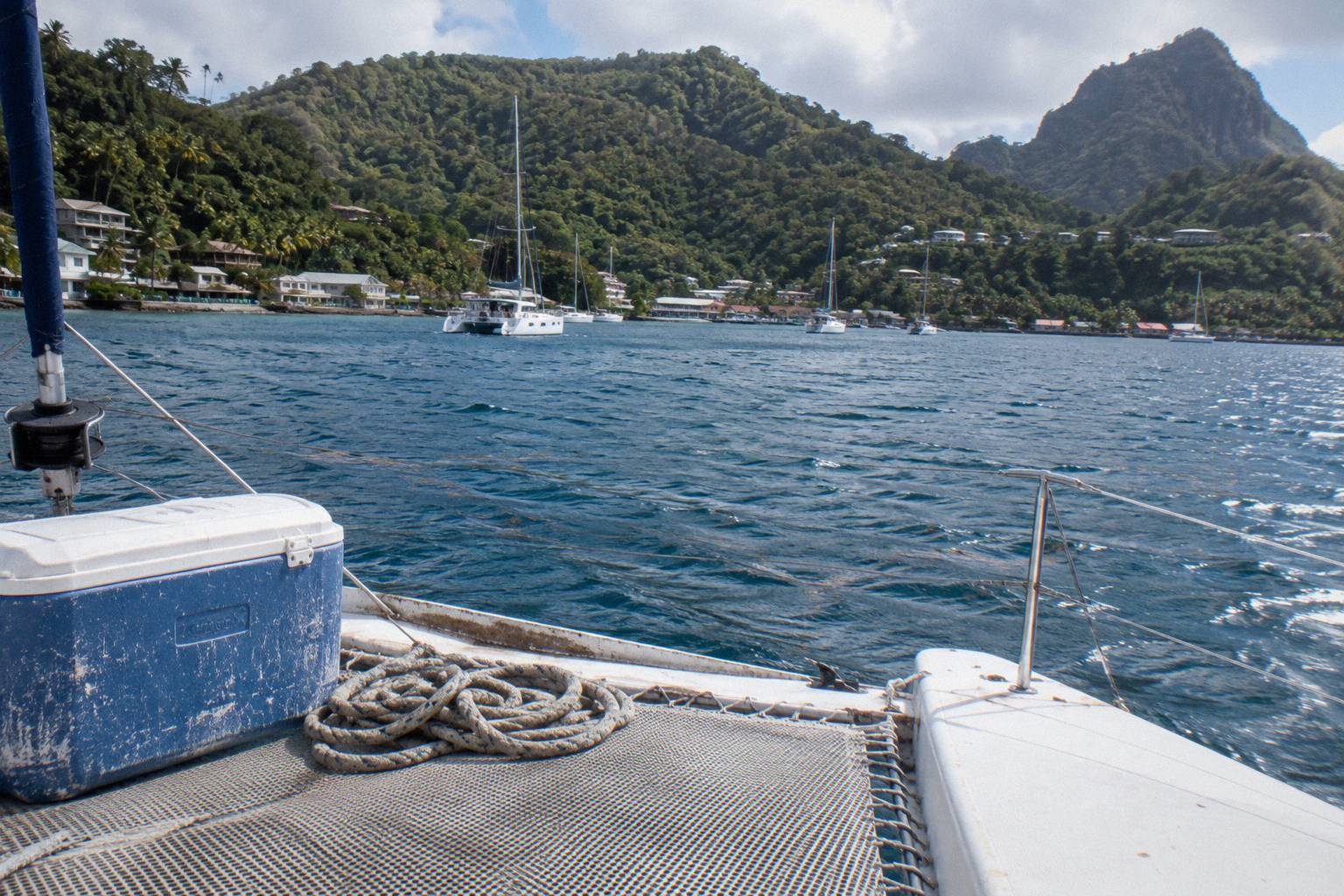
Beyond the hull, the two formats differ in ways a nervous passenger will feel. The shared cruise is a group trip: you are one of a boatload, the departure is in the morning, and the rhythm is set by the crew and the animals. The private safari is your group alone, up to 40 guests on a catamaran with a guide, soft drinks, coffee, tea, water, light snacks, rum punch and local fruit included, and the start time is arranged with the operator. Having some say over the pace and timing is a genuine comfort for passengers who want to ease into the day, though the operator confirms each booking rather than issuing instant confirmation, so plan that one a little further ahead.
One thing group size will not tell you: the shared cruise does not publish a group size, so say so plainly and ask the operator if a crowded deck matters to you. Neither should you over-read the age question; no minimum age is printed for the shared trip, children travel with an adult, and the operator can advise when booking.
| Shared Whale And Dolphin Watching Cruise | Private Whale And Dolphin Safari | |
|---|---|---|
| Vessel | Custom 60 ft boat | 50 ft catamaran |
| Trip length | About 3.5 hours | About 4 hours |
| Price basis | From US$65 per person | From US$2,550.65 per boat |
| Rating | 4.5 from 200 reviews | 4.5 from 75 reviews |
| Your group only | No, shared boat | Yes, up to 40 guests |
| Included drinks | Bottled water, soft drinks, rum punch | Soft drinks, coffee, tea, water, rum punch, light snacks, local fruit |
Whichever hull you lean toward, St Lucia Whale Watching keeps both live listings in one place so you can compare the details the operators publish before committing. The private charter question has its own deeper treatment in whether a private whale and dolphin charter is worth it in Saint Lucia.
What Should You Ask Before Booking?
Three questions cover most of the seasickness ground: what is the boat, when does it sail, and what happens if conditions or your stomach say no. Each has a printed answer on these two tours, from the 60 ft and 50 ft vessels to the 24-hour free cancellation both carry, so you can ask from a position of knowledge rather than hope.
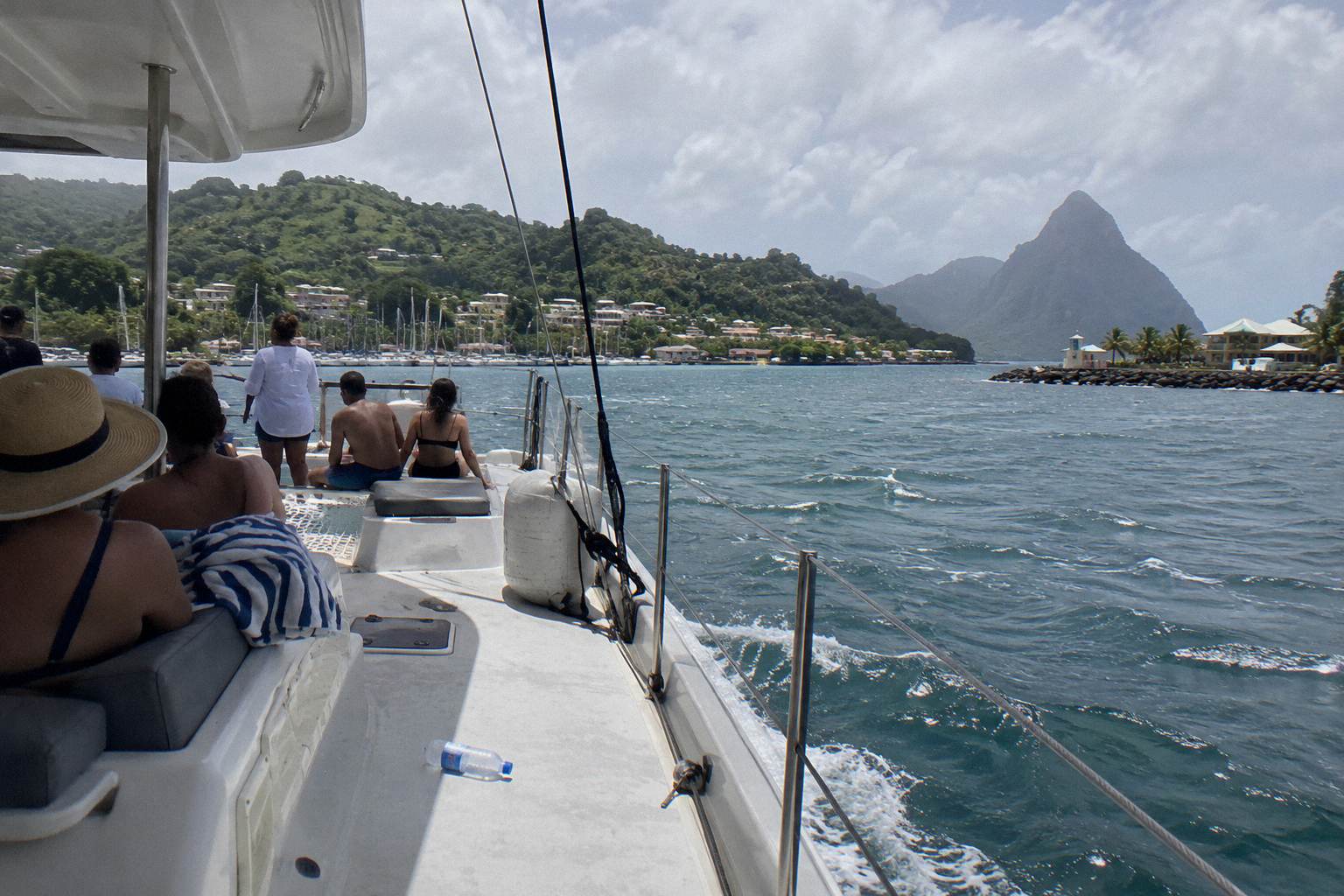
Ask about the vessel first, because the official guidance tells you to. You already know the published answers: a custom 60 ft boat for the shared cruise, a 50 ft catamaran for the private safari. What the listings do not print is where you will sit, how much of the trip is under way versus holding position near animals, and whether the crew can give you a spot with a stable horizon. Those are operator questions, and both operators answer messages through the booking path before you pay.
Ask about timing second. The shared cruise departs in the morning, and no clock time is printed, so confirm it when booking. The private safari's start time is arranged with the operator. Morning matters to many sensitive passengers, and the official description of these trips says they usually leave in the morning and last about three to four hours, which is the norm your booking should match.
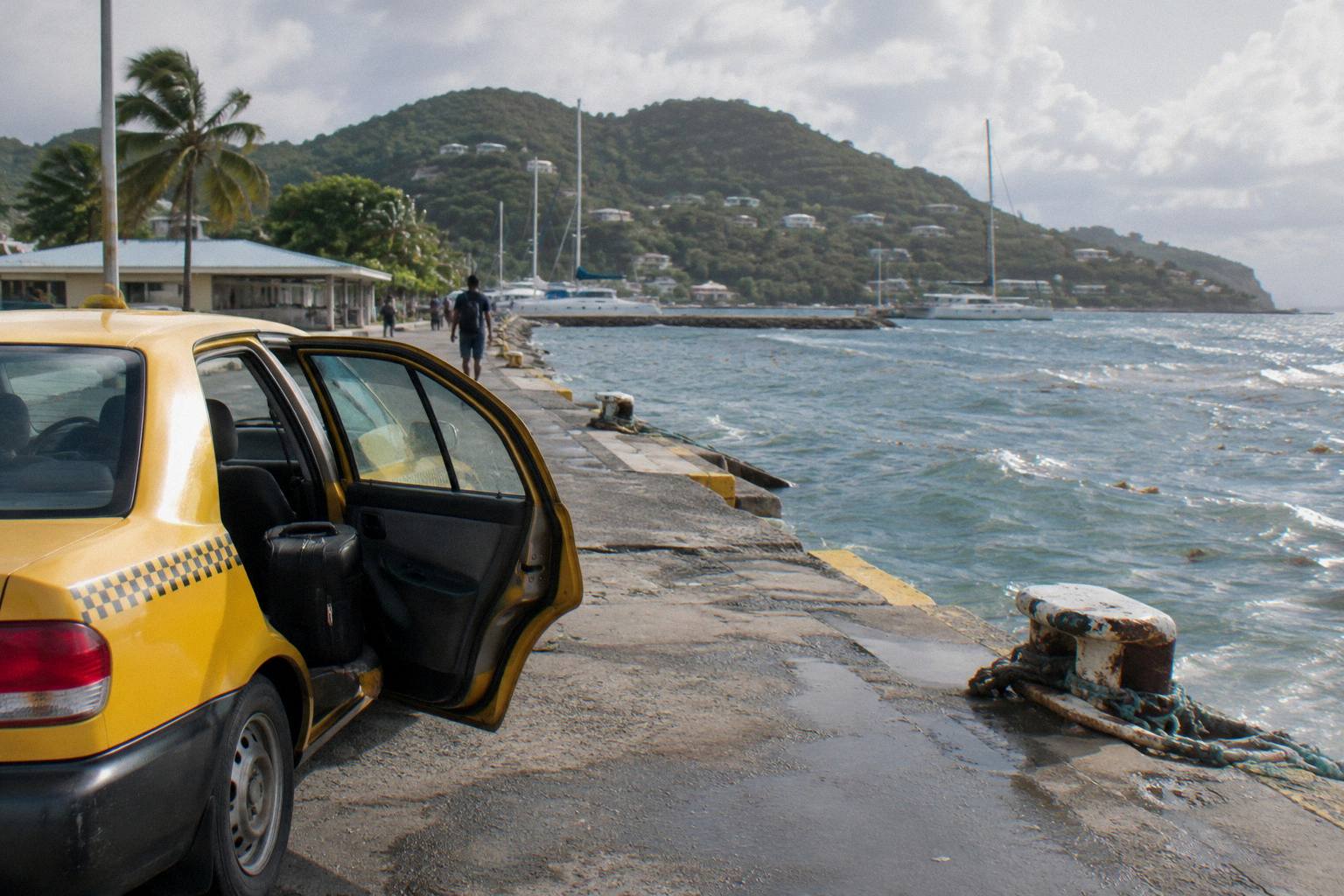
Ask about the exit third, and here the print is reassuring. Both tours carry free cancellation up to 24 hours before departure on the booking path. The private safari is also cancelled free for bad weather. The shared cruise operator says that if the captain cancels for unsafe weather there is an alternative date or a refund, an operator statement worth having in your pocket. There is no rebook-if-no-sighting policy on either trip, and none is implied here: the cancellation terms are about conditions and your plans, not about wildlife.
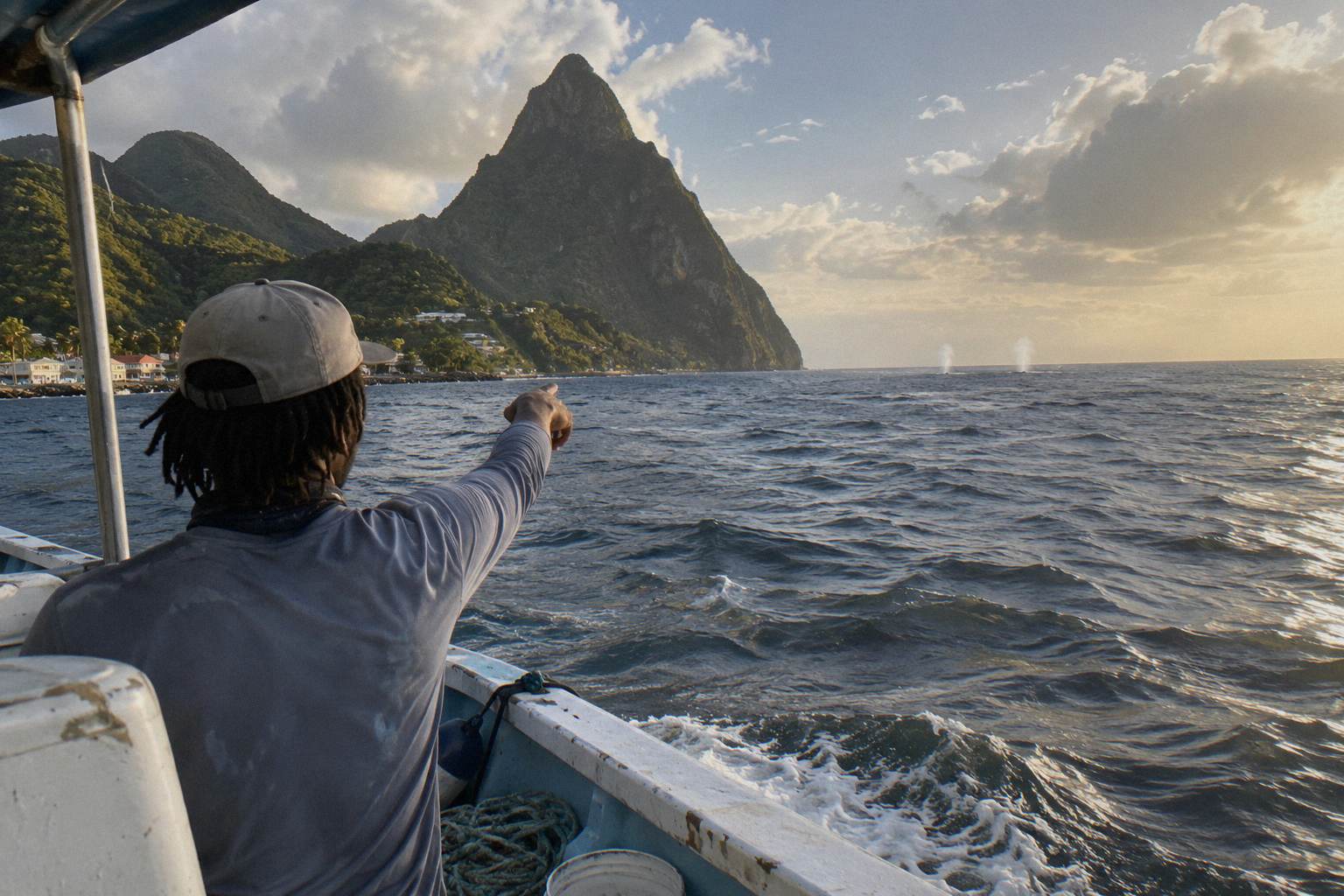
If you are sailing from a cruise ship, one more question matters. The private safari includes cruise ship pier pick-up and drop-off, while the shared cruise includes no pick-up at all and departs Vigie Marina, a short distance from the Pointe Seraphine cruise terminal, with taxis readily available. Trip lengths are about 3.5 and 4 hours not counting the transfer to the marina, so check your ship's all-aboard time and ask the operator about timing. The full logistics are laid out in the guide to doing a whale cruise between ship arrival and departure at Castries.
What Should You Bring?
The official list is four items long, sun protection, a hat, a light layer for spray, and a camera, and every one of them doubles as motion-sickness management: sun protection and a hat reduce fatigue, a light layer keeps spray chill off, and a camera gives your eyes a distant fixed point, which many passengers find steadying on any small-boat trip.
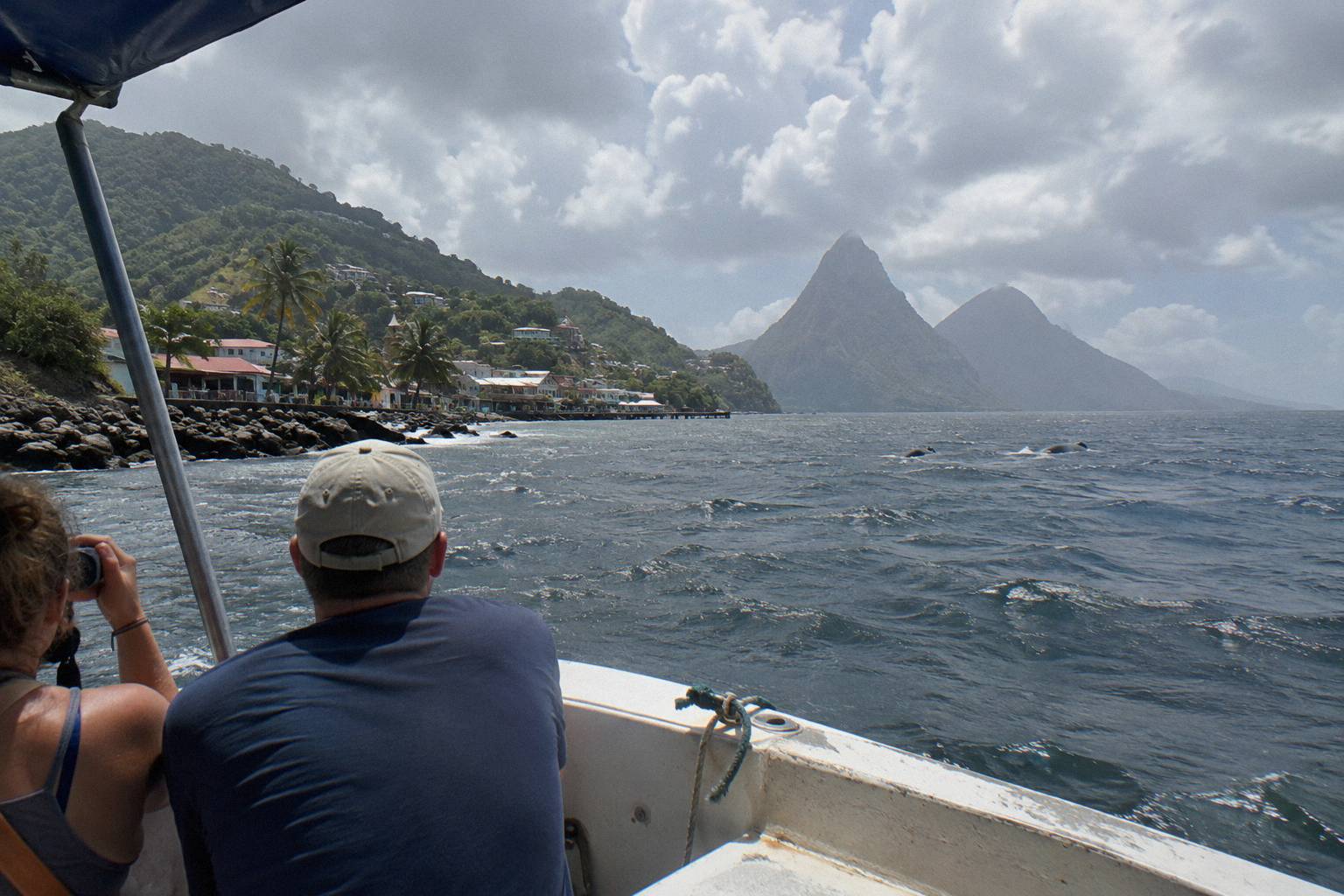
That reading of the list is interpretation, but the list itself is verbatim from the tourist board's practical guidance for these trips, and it is deliberately short. Nobody asks you to pack specialist gear. The light layer for spray deserves its moment: on a moving boat in the tropics it is rarely cold, but a wet passenger in the wind cools quickly, and feeling cold and clammy is a common preamble to feeling rough. A light layer breaks that chain before it starts.
Footwear and storage are down to you. Deck-level practicality beats fashion: flat shoes you can stand in for three to four hours, and something to keep the camera dry. The shared cruise includes bottled water, soft drinks and rum punch, and the private safari adds coffee, tea, light snacks and local fruit, so hydration is covered on both. The tourist board's currency guidance notes that US dollars are widely accepted and the Eastern Caribbean dollar is fixed at EC$2.70 to US$1, which matters for the one item not included on either trip: gratuities are extra on both.
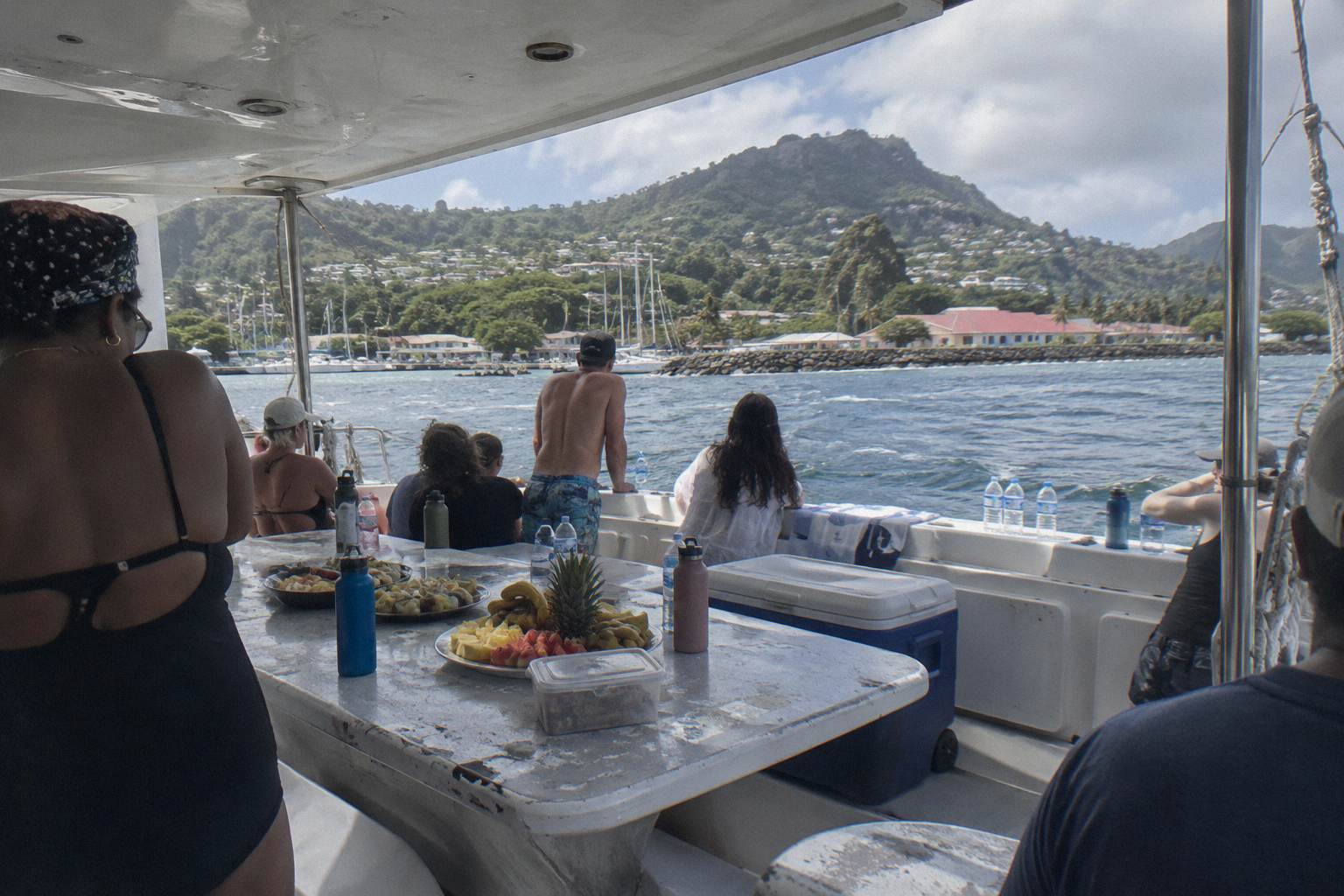
The morning-of checklist is short too. Eat something ordinary rather than sailing on an empty stomach or an experimental breakfast, get to Vigie Marina with time to spare, and say hello to the crew about your concerns. Both trips carry a local marine expert or guide whose whole job is reading the water and the animals, and a passenger who has flagged motion worries is easier to help than one hiding them. The official responsible-viewing guidance also notes that licensed operators provide life jackets and safety briefings, so listen to the briefing; it tells you where things are before you need them.
What this article will not do is recommend remedies. No seasickness medication, wristband, ginger anything or dosing schedule appears in the official sources, and inventing one would be medical advice from a travel writer. If you use something at home that works for you on boats, buses or winding roads, that is a conversation for your pharmacist or doctor, not this page. The planning facts above, calm-season timing, substantial boats, short trips, a 24-hour exit, are what the sources actually support.
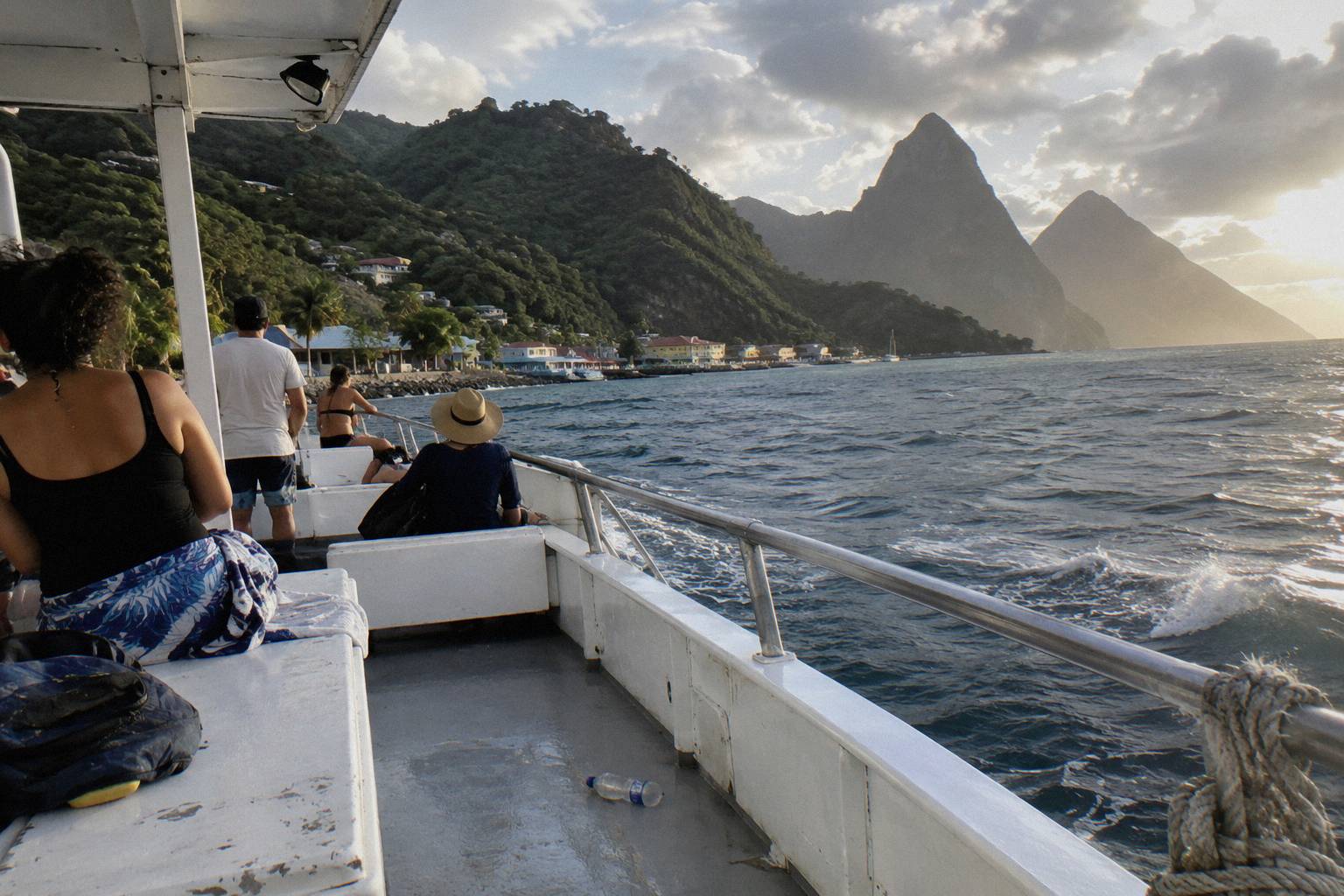
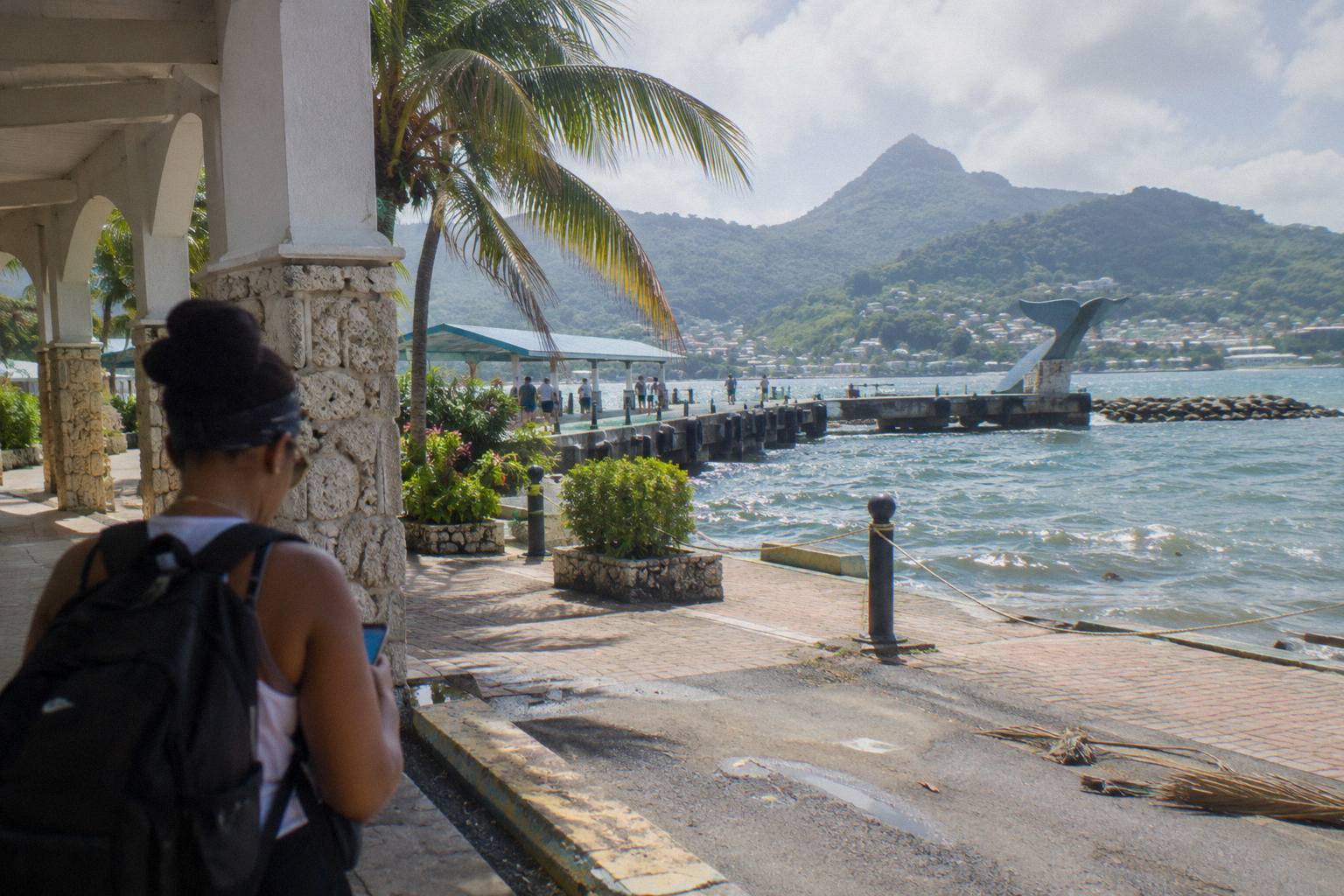
What If You Feel Unwell On The Day?
Tell the crew, move to where you can see the horizon, and let the trip's short length work for you: about 3.5 hours on the shared cruise and about 4 on the private safari, with free cancellation up to 24 hours before departure still on the table if you decide before sailing that the day is not yours. No operator promises a sickness-free trip and none should.
The crew response is the part passengers underestimate. These are not ferry crews; the shared cruise carries a local marine expert and the private safari a professional guide, and the operators' business depends on passengers having a good morning on the water. Telling them early gives them options: a different spot on the boat, a change of pace, a heading into flatter water along the coast. Suffering in silence at the stern helps nobody, least of all you.
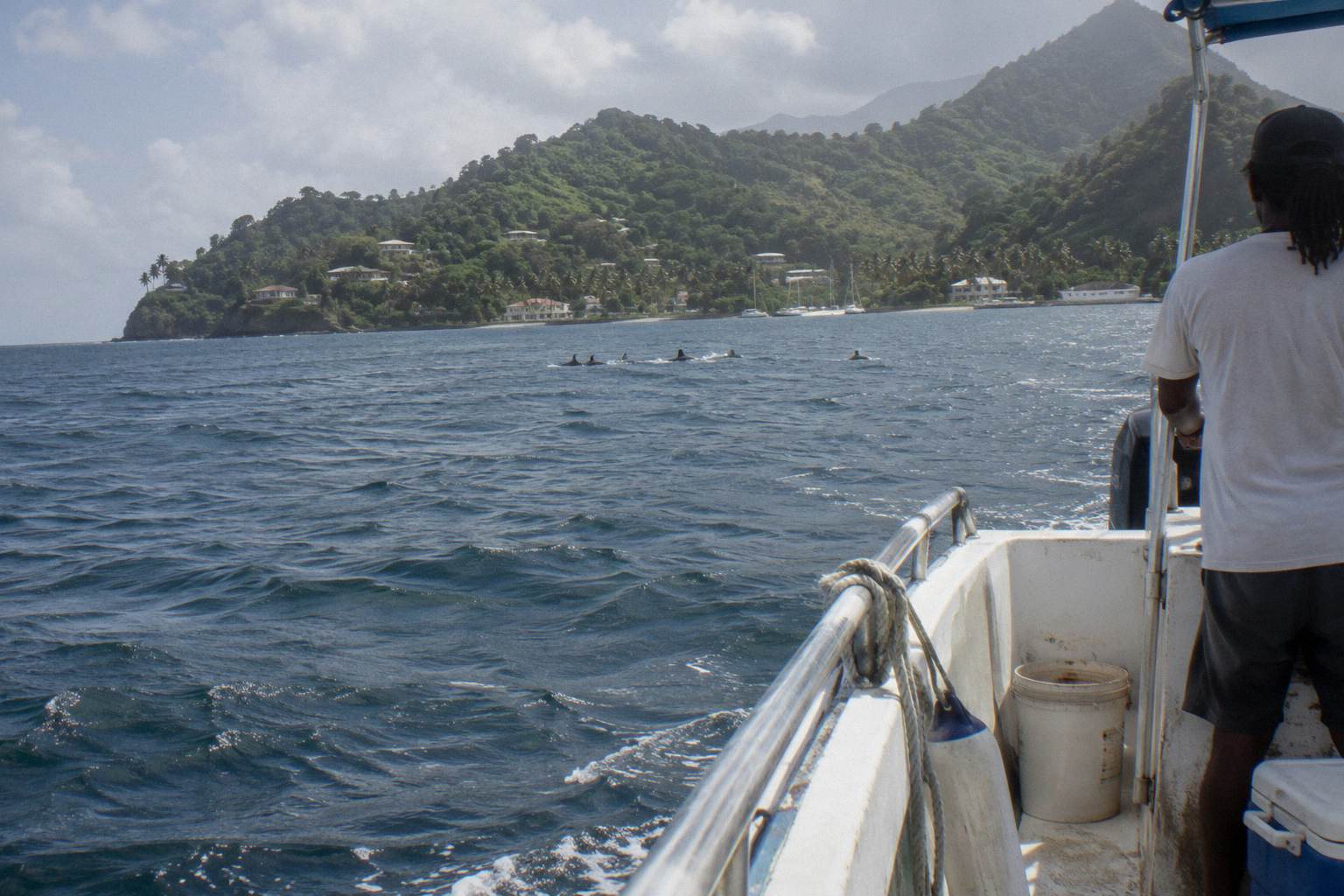
The horizon trick has ordinary observational logic behind it, even though no official source frames it as a remedy: motion sickness begins with a mismatch between what your inner ear feels and what your eyes see, and looking at the stable line where sea meets sky gives your eyes an anchor that the deck cannot. The tourist board's list puts a camera in your kit, and many passengers find the camera's job of tracking distant animals does the same work by accident. None of this is medical advice; it is what experienced boat passengers do, and it costs nothing.
If the day is genuinely wrong before you board, know your exits precisely. Both tours allow free cancellation up to 24 hours before departure. The private safari is cancelled free for bad weather, and confirmation on that trip is not instant, the operator confirms, so a last-minute change runs through them directly. The shared cruise offers instant confirmation at booking and, per the operator's own statement, an alternative date or a refund if the captain cancels for unsafe weather. There is no rebook-if-no-sighting policy, and nobody should read one into weather cancellations either; the terms are about conditions, not whales.
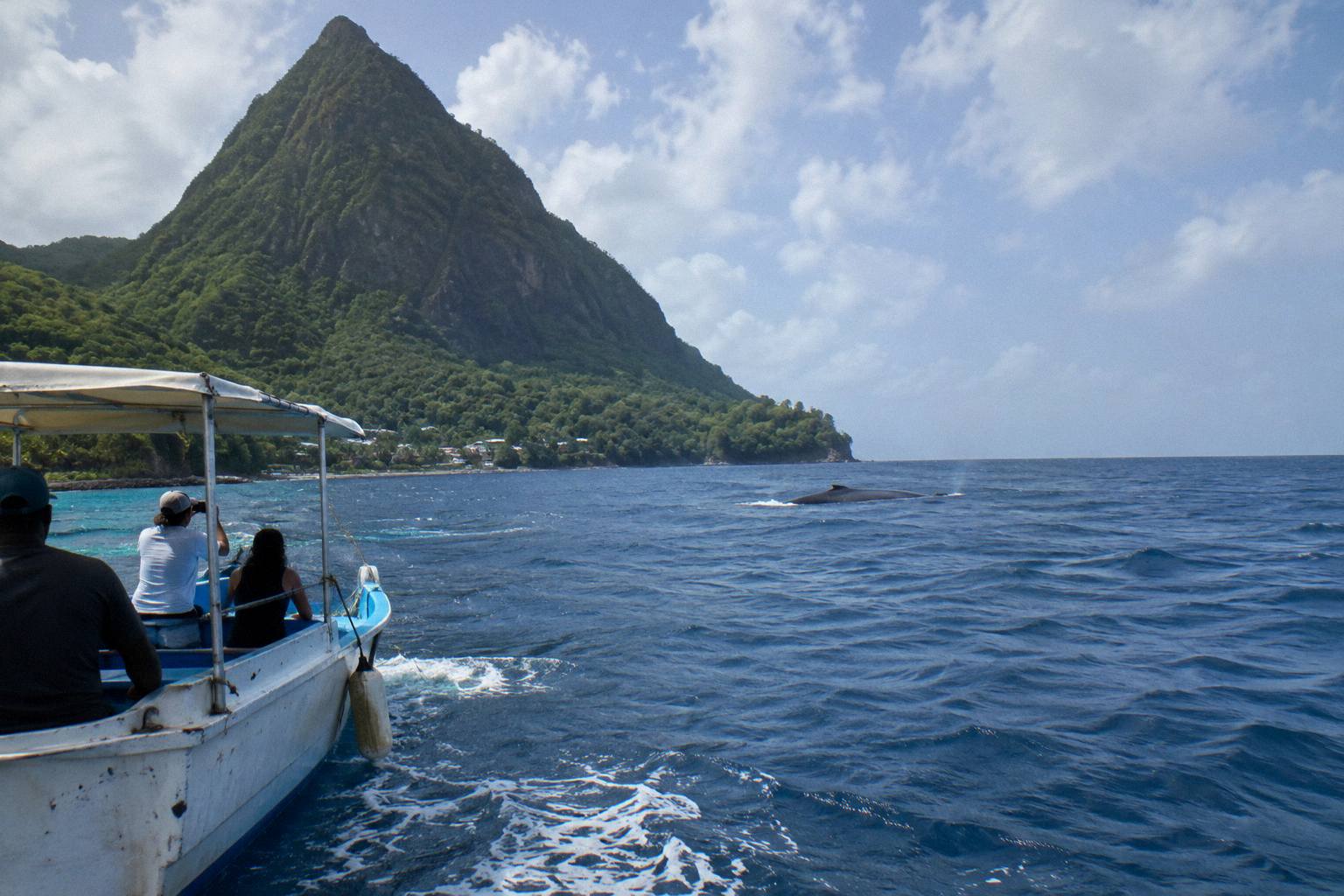
Two practical footnotes for the day. First, the sea does not care about your itinerary: the official wording says sightings depend on weather, season and the animals' movements, so a rough-ish day can be a spectacular wildlife day and a glassy day can be quiet. Second, if the morning looks marginal and you are sailing anyway, remember the light layer and the fixed horizon, and let the 60 ft boat or 50 ft catamaran do the rest. Passengers worried about the wider question of rough-season booking have a dedicated piece on whether whale watching is worth it in hurricane season in Saint Lucia.
The private safari suits the passenger who wants control: your group alone on the 50 ft catamaran, a start time arranged with the operator, and free cancellation up to 24 hours before departure. You can also check availability directly against your travel dates.
Common Mistakes About Seasickness
The commonest mistakes are treating a seasonal tendency as a forecast, assuming a tropical island means a flat sea, blaming the wrong things, and never asking the boat-size question the official guidance specifically tells nervous passengers to ask. Each mistake is avoidable with facts already in this article, and none requires guessing anything the sources do not say.
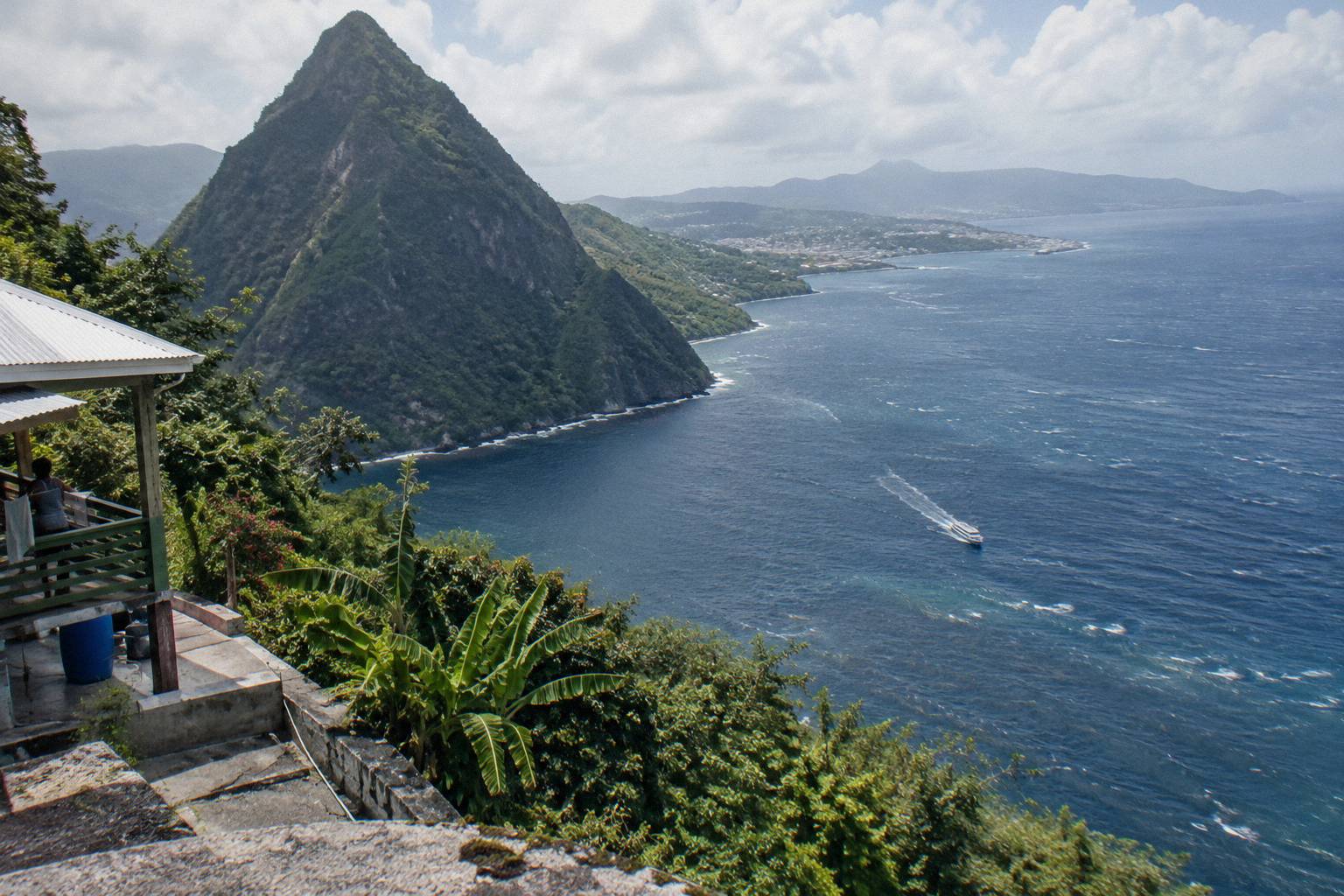
The first mistake is reading December-to-May as a guarantee. The tourist board says seas are typically calmer in that window, and typically is the operative word. Booking February and expecting pond-flat water every morning is how passengers talk themselves into disappointment before the boat leaves the marina. The same discipline applies in reverse: hurricane season's official June 1 to November 30 boundaries, published by the Saint Lucia Meteorological Services, frame a basin-wide designation, not a daily sea state for the west coast.
The second mistake is the tropics assumption. Warm air and turquoise water say nothing about the surface texture under the hull, and a light chop under a blazing sun is still a light chop. The correct inputs are the ones the sources give: the boats work the Caribbean side, close to a coast where deep water sits near shore, for about three and a half to four hours. That is a favorable setup, not a sealed one.
| Mistake | What the sources actually say |
|---|---|
| "Calm season means flat water" | Seas are typically calmer December to May, a tendency, not a forecast |
| "Small boats everywhere in the Caribbean" | These trips list a custom 60 ft boat and a 50 ft catamaran |
| "Nothing I can do about timing" | Shared cruise departs in the morning; private safari start arranged with the operator |
| "If I cancel I lose everything" | Both tours: free cancellation up to 24 hours before departure |
| "Rough sea means no animals" | Dolphins and pilot whales can be seen all year; sightings are a chance, never a promise |
The third mistake is blame drift: deciding after one bad morning that whale watching, the Caribbean or the whole species is against you, when the variable was one weather system on one day. Sightings depend on weather, season and the animals' movements, in the tourist board's own wording, and sea comfort varies the same way. A second trip in a different month is a different experiment.
The fourth mistake is silence: not asking about boat size when the official guidance names that question for exactly you. Ask it before booking, ask about where the calm-water spots are on the hull, and mention motion worries to the crew at the dock rather than an hour into the trip. The operators behind these two tours are no strangers to the question; one says it has run since 1953 and is World Cetacean Alliance certified, and the other says it has over 60 years of experience and belongs to the same Hackshaw family. Those are the operators' own statements, but longevity like that is not built by ignoring green-faced passengers.
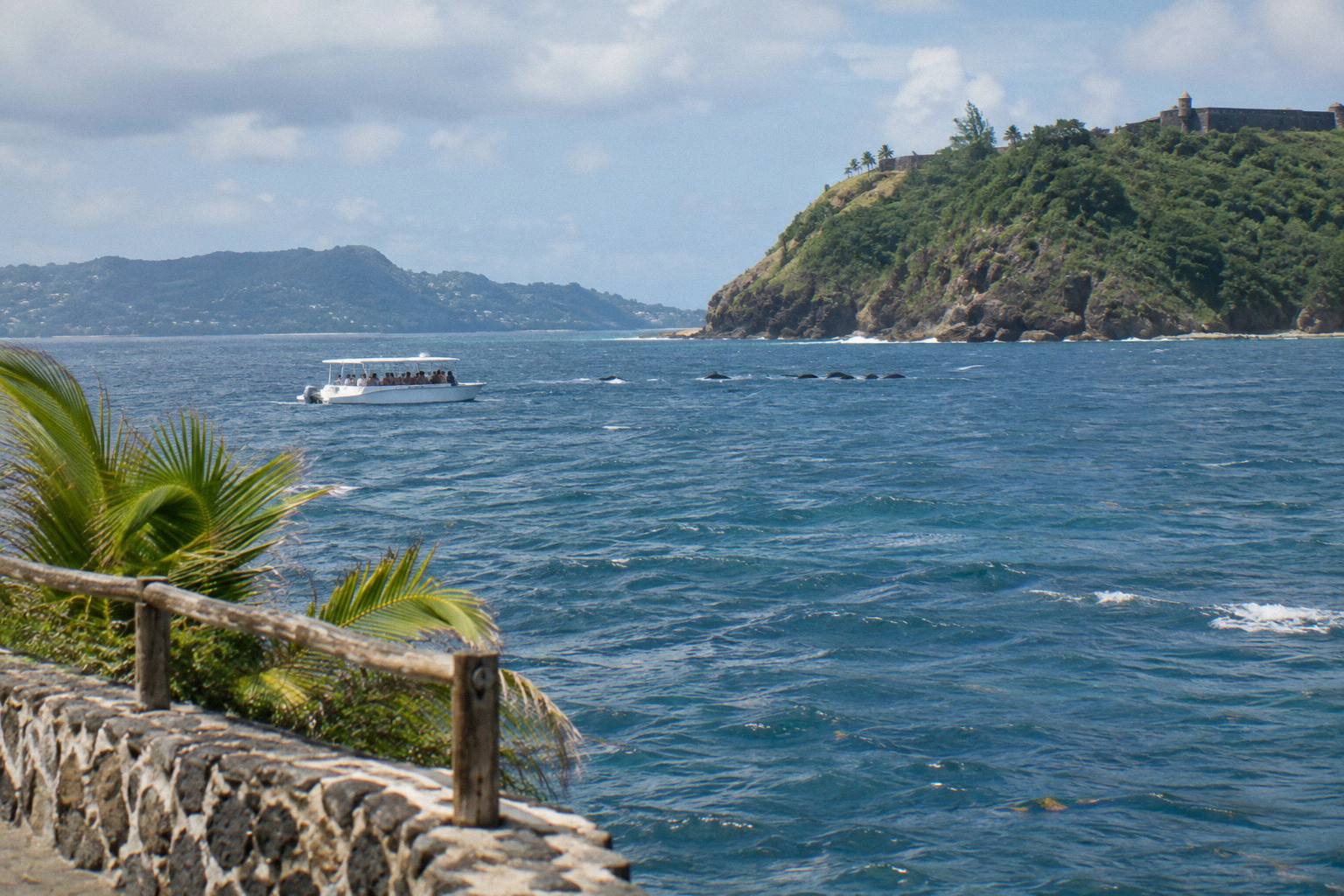
The fifth mistake is expecting this page, or any page, to promise comfort. No guarantee of sightings exists, no guarantee of flat seas exists, and neither tour offers one. What exists is a short trip on a big boat, along a coast where the deep water comes to you, in a season you can choose, with a 24-hour exit if your judgment says stop. That is a reasonable set of conditions for a nervous passenger, and it is as far as honest facts go.
Common Questions About Seasickness On A Saint Lucia Whale Cruise
Will I Get Seasick On A Whale And Dolphin Cruise In Saint Lucia?
Nobody can promise you will not, but the setup is favorable: the boats work the Caribbean side where deep water lies close to shore, trips last about 3.5 to 4 hours, and the vessels are a custom 60 ft boat and a 50 ft catamaran. Seas are typically calmer from December to May, and both tours allow free cancellation up to 24 hours before departure.
Which Months Have The Calmest Seas For Whale Watching In Saint Lucia?
The official guidance says seas are typically calmer from December to May. That window also overlaps with the humpback season, which runs about February to April, with some operators reporting humpbacks from December. Dolphins and pilot whales can be seen all year.
Does The Size Of The Boat Matter For Motion Sickness?
The tourist board's practical advice says to ask about boat size if you are prone to motion sickness. The two Castries trips list a custom 60 ft boat on the shared cruise and a 50 ft catamaran on the private safari, both substantial vessels rather than small open craft.
What Should I Bring On The Cruise?
The official list is sun protection, a hat, a light layer for spray and a camera. Drinks are covered on board: the shared cruise includes bottled water, soft drinks and rum punch, and the private safari adds coffee, tea, light snacks and local fruit. Gratuities are extra on both trips.
Can I Cancel If The Sea Looks Too Rough On The Day?
Both tours offer free cancellation up to 24 hours before departure. The private safari is also cancelled free for bad weather, and the shared cruise operator says the captain cancelling for unsafe weather brings an alternative date or a refund. There is no rebook-if-no-sighting policy on either trip.
Is There Any Remedy Advice For Seasickness?
No. This article offers no medical or remedy advice because none appears in the official sources. What the sources support is planning: pick the calmer-season months, ask about boat size before booking, bring the light layer, and tell the crew early if you feel unwell on the day.