Do Sperm Whales Live Off Saint Lucia All Year?
The official wording on Saint Lucia's resident sperm whales, what resident in the region actually means, and which trips look for them.
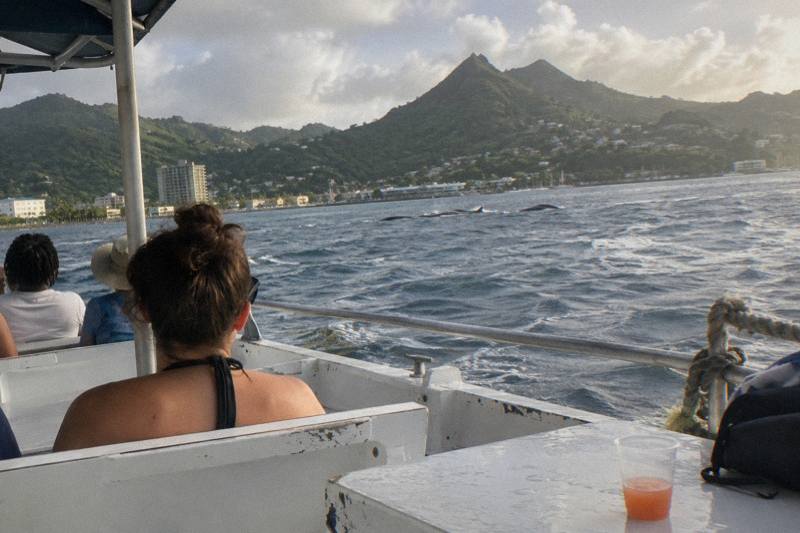
Sperm whales are considered resident in the region and occasionally sighted in deeper waters, in the official wording of Saint Lucia's tourism board, so yes, they can appear off the island in any month. Resident in the region is not the same as resident off Castries on any given morning. Encounters remain occasional, and no operator can promise a sperm whale on a particular date.
The question matters more than it first appears. Plenty of whale watching destinations are strictly seasonal: you go in a narrow window or you miss the animal entirely. Saint Lucia does not work that way for its deep water species. The island's whale and dolphin watching runs year-round because its most reliable residents, spinner dolphins, pantropical spotted and bottlenose dolphins, and pilot whales in family pods, are present in every month, and the deeper offshore water that sperm whales favour lies unusually close to the west coast.
So a traveller hoping for a sperm whale faces a different decision from a traveller chasing humpbacks. Humpbacks pass through between about February and April, and treating them as likely outside that window would be a mistake. Sperm whales, by contrast, carry no closed season in the official sources. What they carry instead is a caution: occasionally sighted. That is the honest starting point for every plan, and this page works through what the wording means, why the geography helps, how season and sea conditions shape the odds, and which of the two trips that depart Vigie Marina actually look for these animals.
There is a wider scientific picture too. The sperm whales found in these waters belong to the wider Eastern Caribbean population that the Dominica Sperm Whale Project studies, a research effort that has followed individual families across the region for years. No Saint Lucia head count exists, and no population estimate is printed anywhere in the official material. What the research does establish is continuity: these are not strays passing through once a decade, but animals whose range includes the waters around the island.
The practical takeaway, before any detail, is simple. Pick any date on the calendar and a sperm whale sighting off Saint Lucia remains possible, because the species is considered resident in the region. Pick any date and it also remains a chance rather than a promise, because the official word for encounters is occasional. The rest of this page explains how to weight that chance sensibly.
What Does The Official Wording Say?
That sentence appears on the tourism board's whale and dolphin watching page, alongside the species list for the island's trips, and the wording deserves attention because tourism boards choose it carefully. Compare the sentences used for other animals on the same page. Spinner dolphins are frequently sighted year-round. Pilot whales live in resident pods that can sometimes be seen throughout the year. Pantropical spotted and bottlenose dolphins are common. Each phrase carries a different weight, and the sperm whale line sits deliberately at the cautious end. Considered resident signals permanence at the scale of the region. Occasionally sighted signals rarity at the scale of a single trip. Deeper waters tells you where the chance lives: not on the shelf near the beach, but in the offshore blue.
This matters for anyone comparing destinations. A page that promised daily sperm whales would be selling something the official sources do not support, and Saint Lucia's material does not try. What it offers instead is a genuine year-round possibility grounded in the animals' known residency in the Eastern Caribbean. The tourism board's trip expectations blog repeats the same framing: sightings depend on weather, season and the animals' own movement patterns, and every encounter is a chance rather than a promise.
It also matters for reading operator descriptions honestly. The shared cruise's listing names sperm whales among the species it looks for, which is a statement about the search, not a guarantee of the find. Operators cannot control what surfaces beside the boat. A listing that names an animal is telling you it is in the water; only the cautious official phrasing tells you how often it comes within view.
For a fuller treatment of the species itself, see the guide to sperm whales off Saint Lucia and their year-round presence, and for how all the sighting odds stack up, the page on how likely you are to see whales off Saint Lucia. The short answer in both cases rests on the same official sentence this section unpacks.
What Does Resident In The Region Mean?
Resident in the region means the Eastern Caribbean population as a whole holds sperm whales in every month of the year, not that a fixed pod patrols one patch of sea off Castries. The animals move across a wide offshore range, and Saint Lucia's deep west coast water sits inside it. Residency is a statement about the population, and occasional sighting is a statement about any one boat trip.
Family groups tell the story. Sperm whale society is built around matrilineal units, related females and their young travelling together, and the Eastern Caribbean population that researchers study is followed through exactly those family structures. What the long running research in neighbouring Dominica has shown is continuity of individuals and families over years, which is what makes the word resident meaningful rather than decorative. The animals off Saint Lucia are part of that same wider population, moving between deep water areas across the region as prey and social needs dictate.
Region-scale residency has a practical consequence worth stating plainly. A species resident in the region can be absent from any single island's view for stretches, then appear again, without any contradiction. The official wording anticipates this by pairing resident in the region with occasionally sighted in deeper waters. Both halves are true at once. The population is always somewhere in the region; a trip from Vigie Marina sees a sperm whale only sometimes.
This is also why no honest page can print a sighting percentage for sperm whales here. Operator claims conflict, and no official rate exists, so nothing is printed. What can be said is structural: the deep habitat is close to shore, the animals are present in the region year-round, and the trips that search that habitat run in every month. For the reader deciding whether any date will do, the answer is that date alone does not rule sperm whales out, and date alone does not put them beside the boat either.
Finally, residency wording protects against the most common disappointment. Visitors who expect a Dominica-style encounter, where dedicated sperm whale trips target a intensively studied resident population, can leave a Saint Lucia trip feeling short-changed even after a good morning with dolphins and pilot whales. Framing matters: the dolphin and pilot whale sightings are the reliable core of every trip, and a sperm whale is the deep-water bonus that any date might deliver.
Why Does Deep Water Matter?
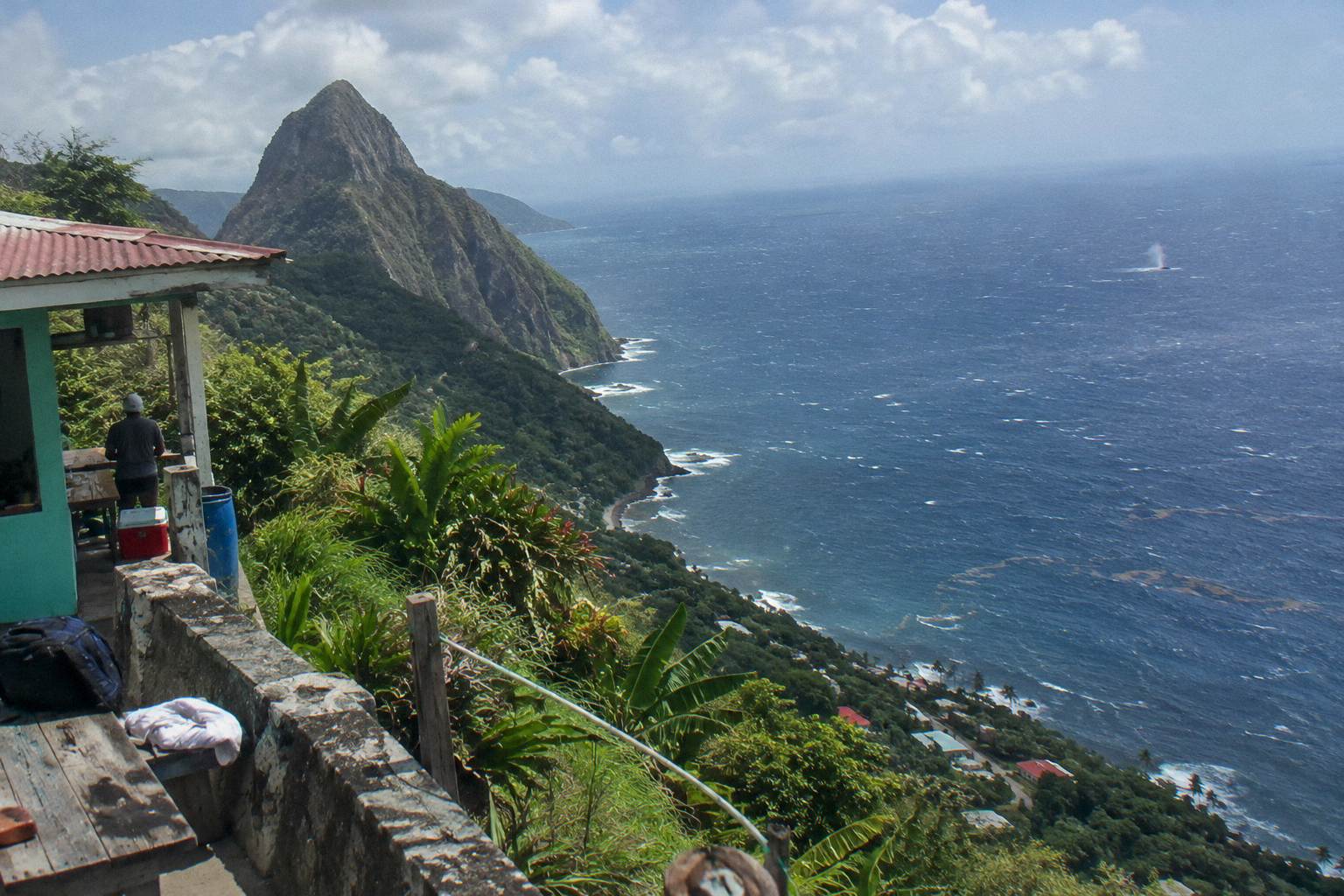
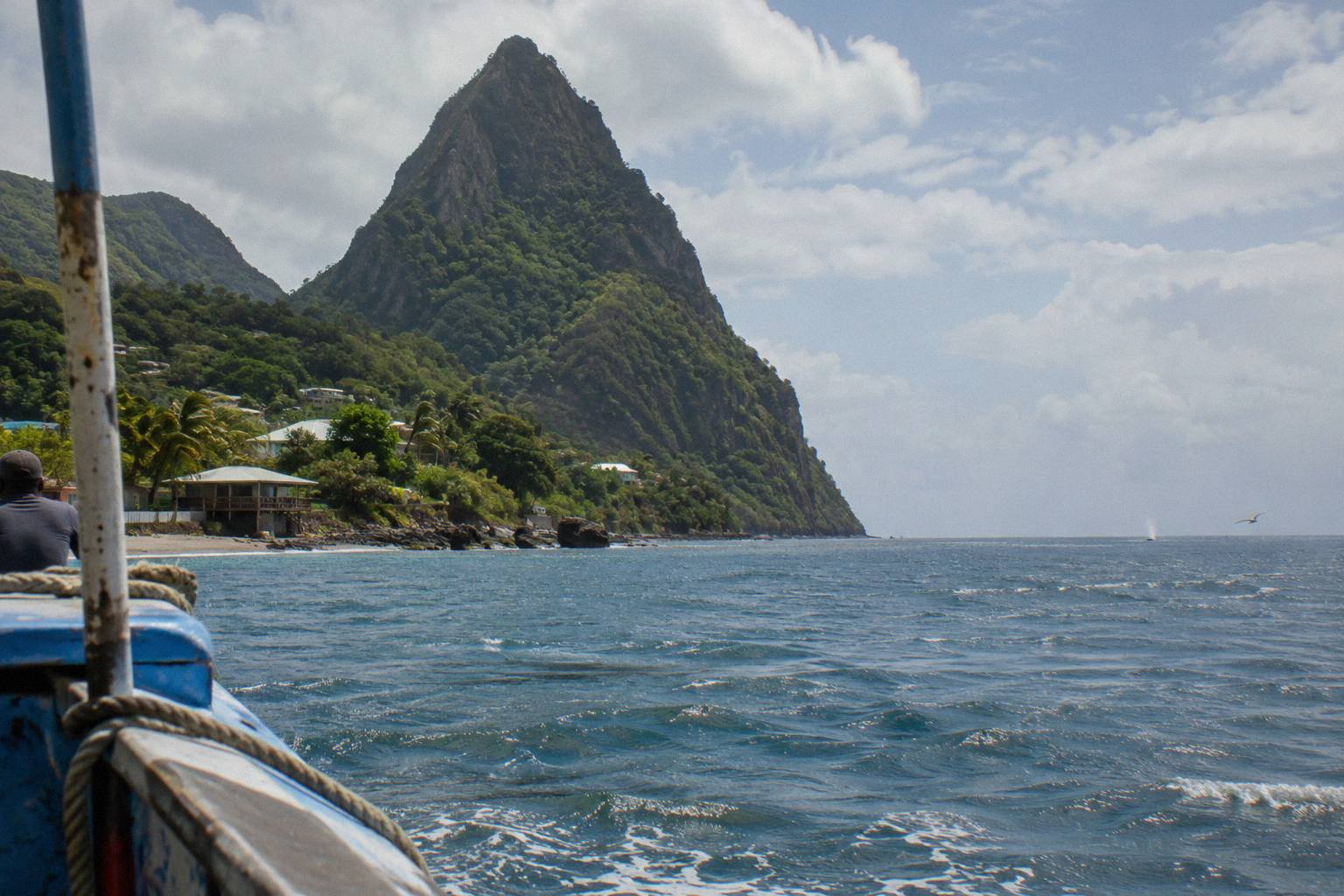
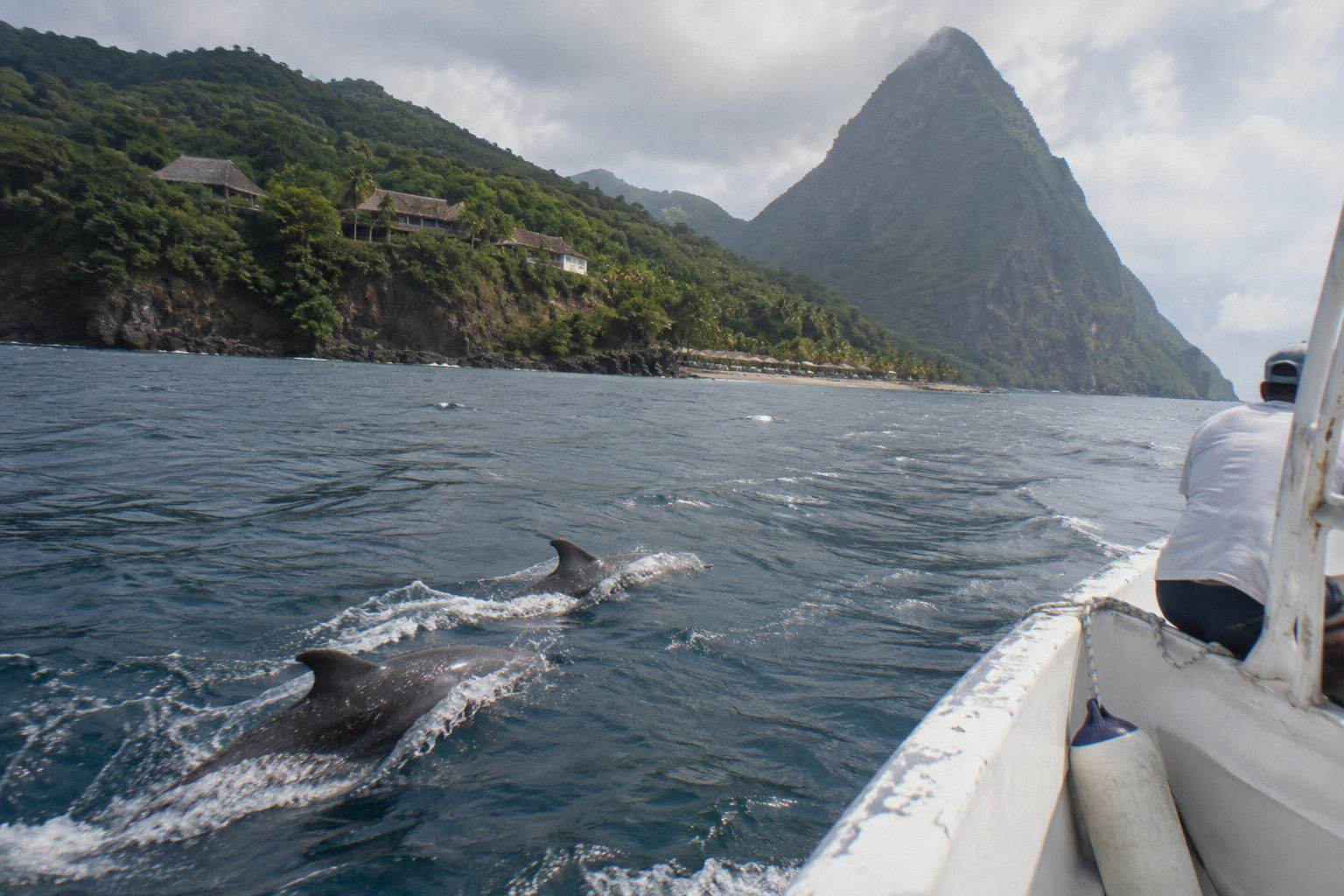
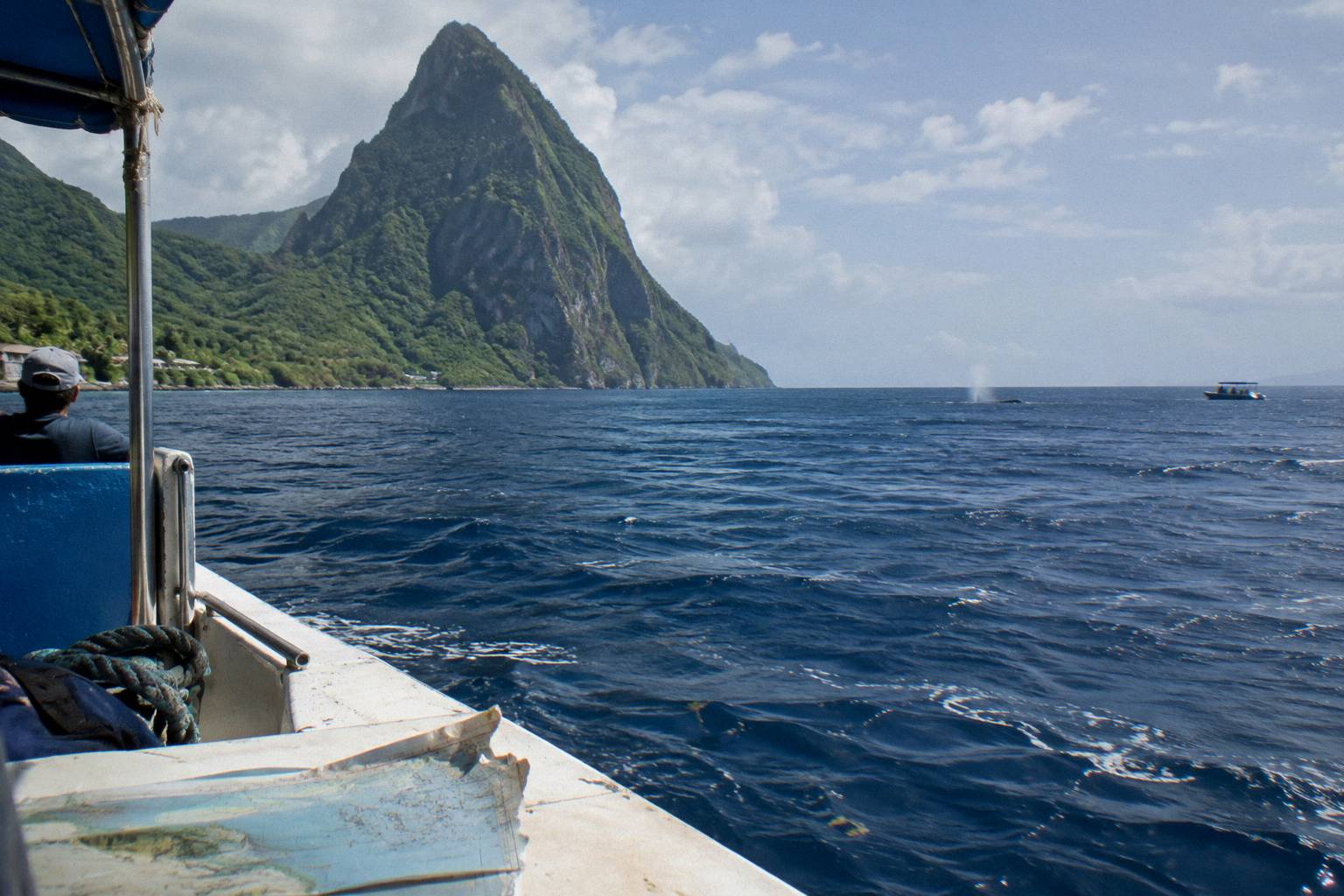
Sperm whales are animals of deep ocean habitat, and Saint Lucia's west coast is one of the places where that habitat begins unusually close to shore, so a boat leaving Castries reaches deep water without a long transit. This is the geographic fact behind the tourism board's note that deep coastal waters increase the likelihood of encounters close to shore, and it is why boats follow the Caribbean coast rather than the Atlantic side.
The island drops away steeply on its Caribbean flank. Where a shallow shelf would force whales far offshore, the west coast gives way to deep water within a short distance of land, which puts the habitat sperm whales favour, and the occasional sighting zone the official wording describes, within reach of a three to four hour trip. The Atlantic side tells a different story, and the standard trip pattern reflects it: boats work the Caribbean coast where the deep water is.
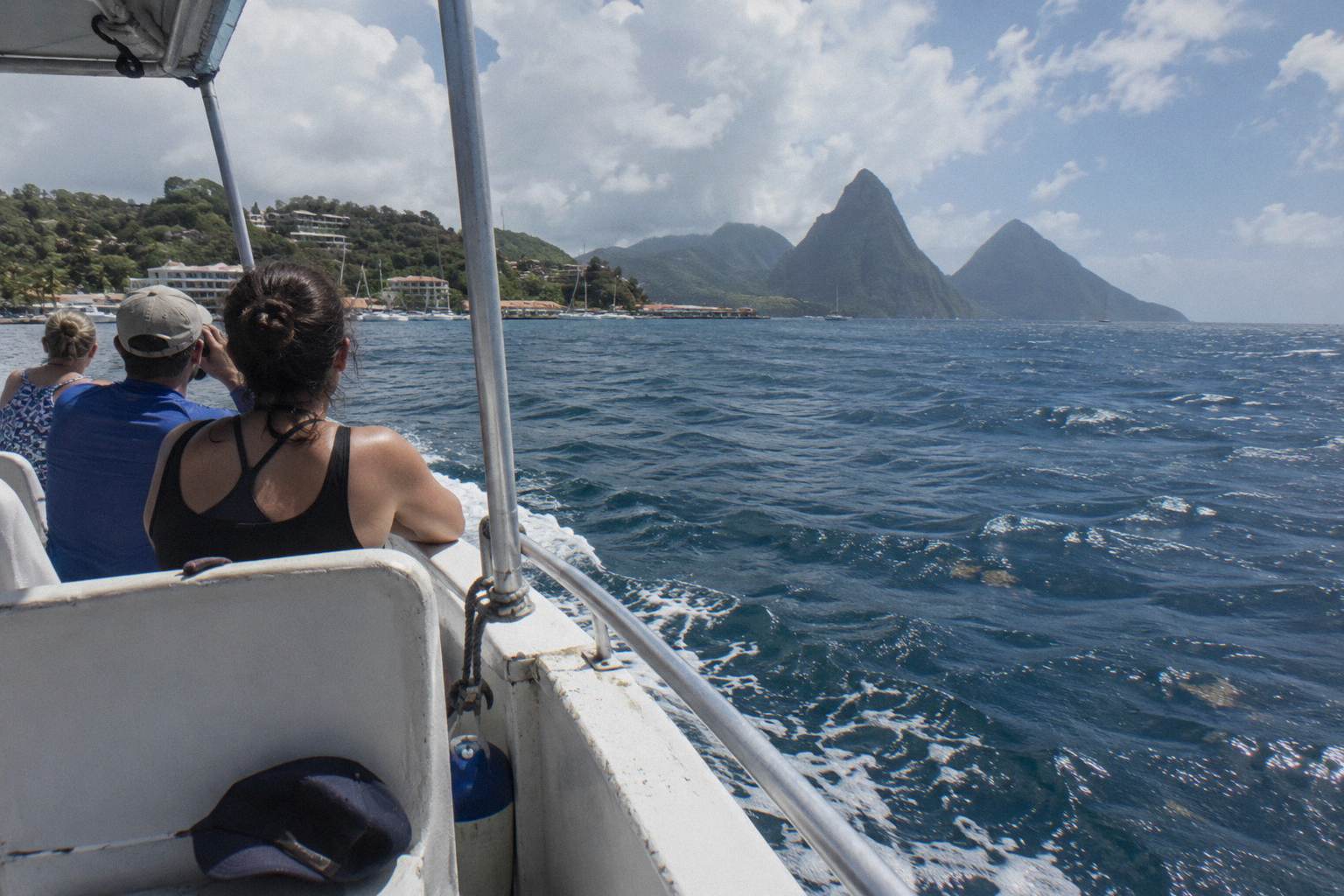
Trip logistics follow the geography. Both trips covered on this site depart Vigie Marina in Castries Harbour, beside the island's George F. L. Charles airport, and follow the coast along the deep water. Trips of this kind usually last about three to four hours and leave in the morning, when conditions are typically at their calmest and the sea surface is easiest to read for distant blows. The morning departure on the shared cruise follows the same logic.
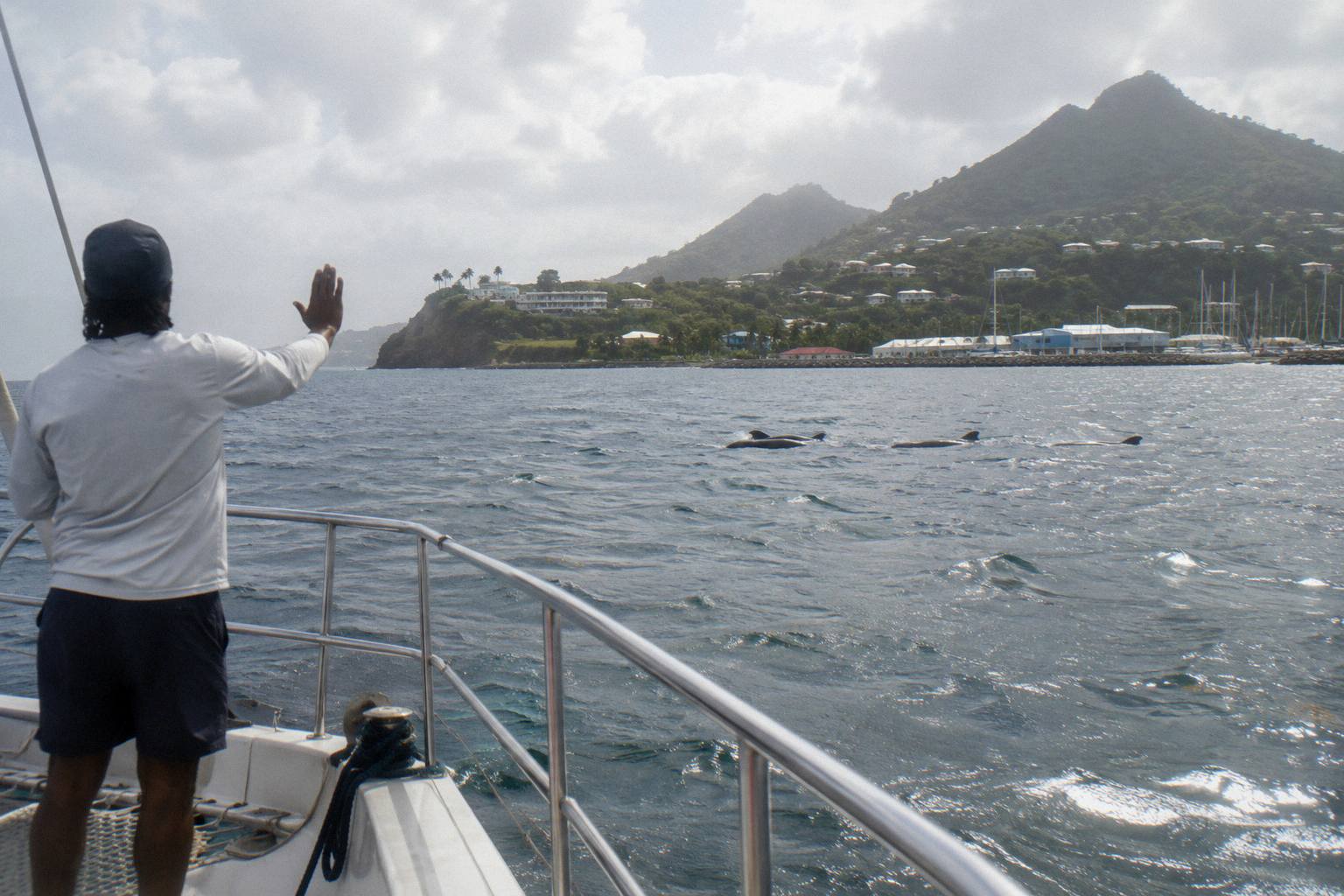
Depth also explains the species mix on any given morning. The reliably seen animals, spinner dolphins in particular, work the warmer offshore water along the west coast where pantropical spotted dolphins are also common, while pilot whale pods travel in close family groups through the year. Sperm whales sit deeper and further out in the same general zone, which is why a trip can deliver a full morning of dolphins and still treat a sperm whale as the rarer event the official wording describes.
One honest limitation belongs here rather than later. No stop by stop route is published for either trip, and none should be expected. Where the boat goes on a given day depends on where the animals are, the sea state and the captain's judgement, which is exactly how a responsible wildlife trip should work. For more on the coastal seascape, the guide to marine life along Saint Lucia's west coast covers what else shares this water.
Does Season Change Sperm Whale Chances?
For sperm whales specifically, the official sources give no season: the species is resident in the region in every month, so no date is closed to the possibility. What season does change is everything around the sighting, mainly sea conditions, which run typically calmer from December to May, and the added February to April window when humpback whales also pass through the region.
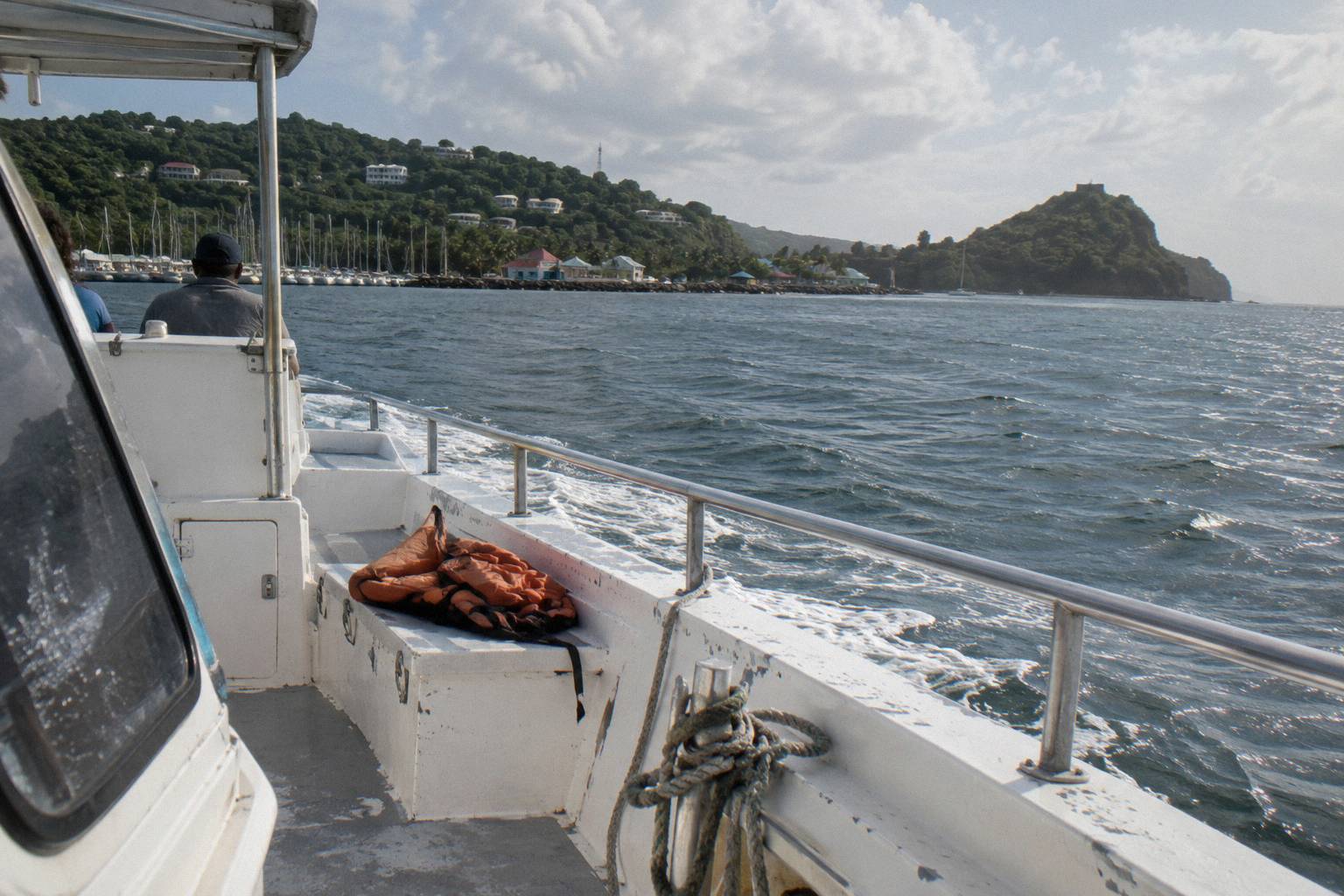
It helps to separate the animals. Dolphins and pilot whales can be seen all year, and they form the backbone of every trip regardless of month. Humpback whales are the seasonal visitors, passing through between about February and April in the official window, with some operators reporting them from December, and treated as unlikely from May to November. Sperm whales sit outside that calendar entirely. The official wording attaches no month to them, which is precisely why this page can say any date will do and no date is special.
Sea state is the real seasonal factor. The Atlantic hurricane season officially runs June 1 to November 30, and outside that period, from December to May, seas are typically calmer. Calmer water does not put more sperm whales in the sea, but it does make the searching work better: a distant blow or a logging whale at the surface is far easier to spot across glassy water than across chop. Rougher months do not cancel trips, and the shared cruise operator says a captain who judges conditions unsafe offers an alternative date or a refund, but they do make the search harder.
| Months | Sperm whale possibility | What else is in the water | Sea conditions |
|---|---|---|---|
| December to January | Possible, resident in the region | Dolphins and pilot whales; some operators report early humpbacks | Typically calmer season begins |
| February to April | Possible, resident in the region | Humpback window adds a second whale species | Typically calm |
| May | Possible, resident in the region | Humpbacks becoming unlikely | Transition month |
| June to November | Possible, resident in the region | Dolphins and pilot whales year-round | Hurricane season; conditions vary |
That table is a planning table of what the sources say, nothing more. No month by month sighting rates exist, and none should be invented. Readers weighing a specific off-peak month may find the post on the chance of seeing whales in Saint Lucia in November useful, since November is the month that most often prompts this exact question.
Which Trip Looks For Them?
Both trips that depart Vigie Marina search the same deep west coast water where sperm whales are occasionally sighted: the Shared Whale And Dolphin Watching Cruise by Captain Mike's, about 3.5 hours from US$65 per person, and Hackshaw's Private Premium Whale And Dolphin Safari, about 4 hours from US$2,550.65 per boat. Neither is a dedicated sperm whale trip, because no such product exists on the island.
The shared cruise is the natural first choice for most travellers. It runs about 3.5 hours with a morning departure on a custom 60 ft boat, with a local marine expert aboard and bottled water, soft drinks and rum punch included, and it rates 4.5 from 200 reviews. Its listing names sperm whales, humpbacks in season, pilot whales, and spinner, spotted, Fraser's and common dolphins among the species it looks for. Gratuities and hotel pick-up are not included, there is no hotel pick-up on this trip, and group size is not published. Free cancellation applies up to 24 hours before departure.
The private safari changes the shape of the day rather than the species list. It is a 50 ft catamaran chartered to one group, up to 40 guests, for about 4 hours, with a guide, soft drinks, coffee, tea, water, light snacks, rum punch and local fruit, and cruise ship pier pick-up and drop-off included. It rates 4.5 from 75 reviews, is priced per boat rather than per person, and the price varies by date and group, which the booking page confirms. For illustration, not a quote: US$2,550.65 shared by 4 guests is about US$637.66 each; by 6 about US$425.11; by 8 about US$318.83; by 12 about US$212.55. The operator confirms the booking rather than confirming instantly, and the trip is cancelled free for bad weather.
| Shared Whale And Dolphin Watching Cruise | Private Premium Whale And Dolphin Safari | |
|---|---|---|
| Price basis | From US$65 per person | From US$2,550.65 per boat |
| Rating | 4.5 from 200 reviews | 4.5 from 75 reviews |
| Length | About 3.5 hours | About 4 hours |
| Vessel | Custom 60 ft boat | 50 ft catamaran, up to 40 guests |
| Departure | Vigie Marina, Castries, morning | Vigie Marina, Castries, time arranged with operator |
| Included | Marine expert, water, soft drinks, rum punch | Guide, drinks, snacks, fruit, cruise pier pick-up and drop-off |
| Sperm whales | Named among species looked for | Searched in the same deep water |
The shared cruise at US$65 per person is US$130 for 2, US$260 for 4, US$390 for 6, which makes it the low-commitment way to spend a morning searching the sperm whale zone. Readers weighing the choice in depth will find the shared whale and dolphin watching cruise page and the private whale and dolphin safari page carry the full detail, and the guide comparing a shared cruise against a private charter in Saint Lucia works through the decision. Both search as a chance, never a promise.
What Should You Ask The Operator?
Ask the operator how the day's conditions and recent sightings shape the route, whether the trip suits your group's mobility and sea tolerance, and what the cancellation terms are, since both trips here cancel free up to 24 hours before departure. Asking costs nothing and answers the questions no listing can settle in advance, because wildlife and weather are decided on the day.
Timing questions come first. The shared cruise leaves in the morning, and no clock time is printed here because the listing confirms it and it can vary; ask when booking, especially if you are fitting the trip around other plans. The private safari's start time is arranged with the operator directly. Cruise ship passengers have a particular duty of care here: the private safari includes cruise ship pier pick-up and drop-off, while the shared cruise departs Vigie Marina, a short distance from the Pointe Seraphine cruise terminal with taxis readily available. In both cases, check the ship's all-aboard time and ask the operator about timing before you commit, and never assume a return time that has not been stated.
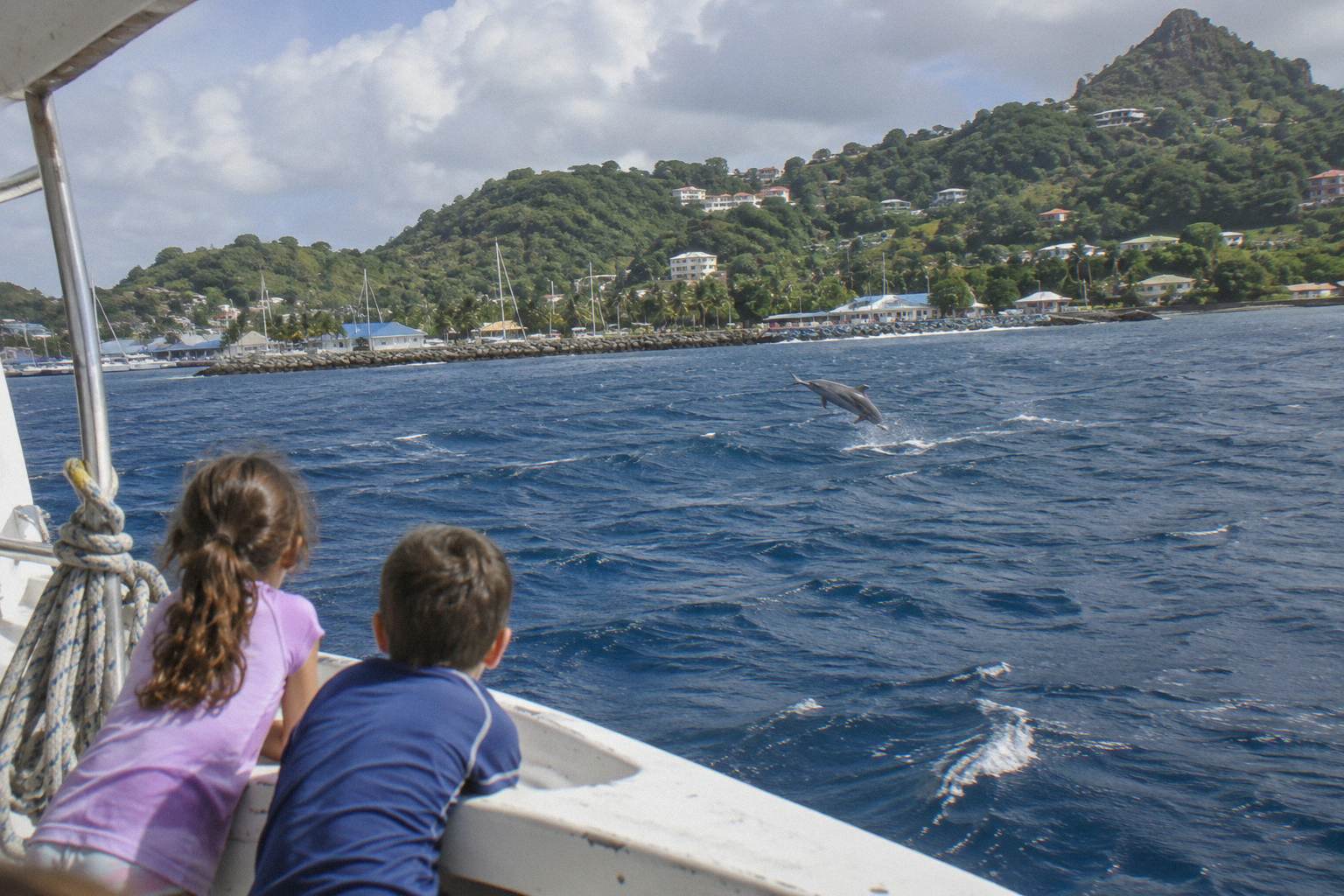
Family questions come second. No minimum age is printed for the shared cruise; children travel with an adult, and the operator can confirm specifics when booking. Group size is not published, so ask if the boat's passenger load matters to you. If anyone in your party is prone to motion sickness, ask about boat size, the standard official advice, and bring the practical kit the tourism board recommends: sun protection, a hat, a light layer for spray, and a camera.
Responsible viewing questions are worth asking too, because licensed operators in Saint Lucia follow regulated distance guidelines, limit time near animals, provide life jackets and safety briefings, and monitor sea conditions. Slow approach, no chasing, no touching or feeding, and space for the animals to move on are the norms worth expecting. Swimming with whales or dolphins is not offered on either trip and is not a thing to request. The St Lucia Whale Watching site's guide to responsible whale and dolphin watching in Saint Lucia covers the standards in full.
Finally, be direct about the sperm whale question itself. Ask whether recent trips have encountered them and what the captain will prioritise if the deep water is quiet. A good operator will give you an honest no, and that honesty is worth more than any inflated promise.
Common Mistakes About Sperm Whales
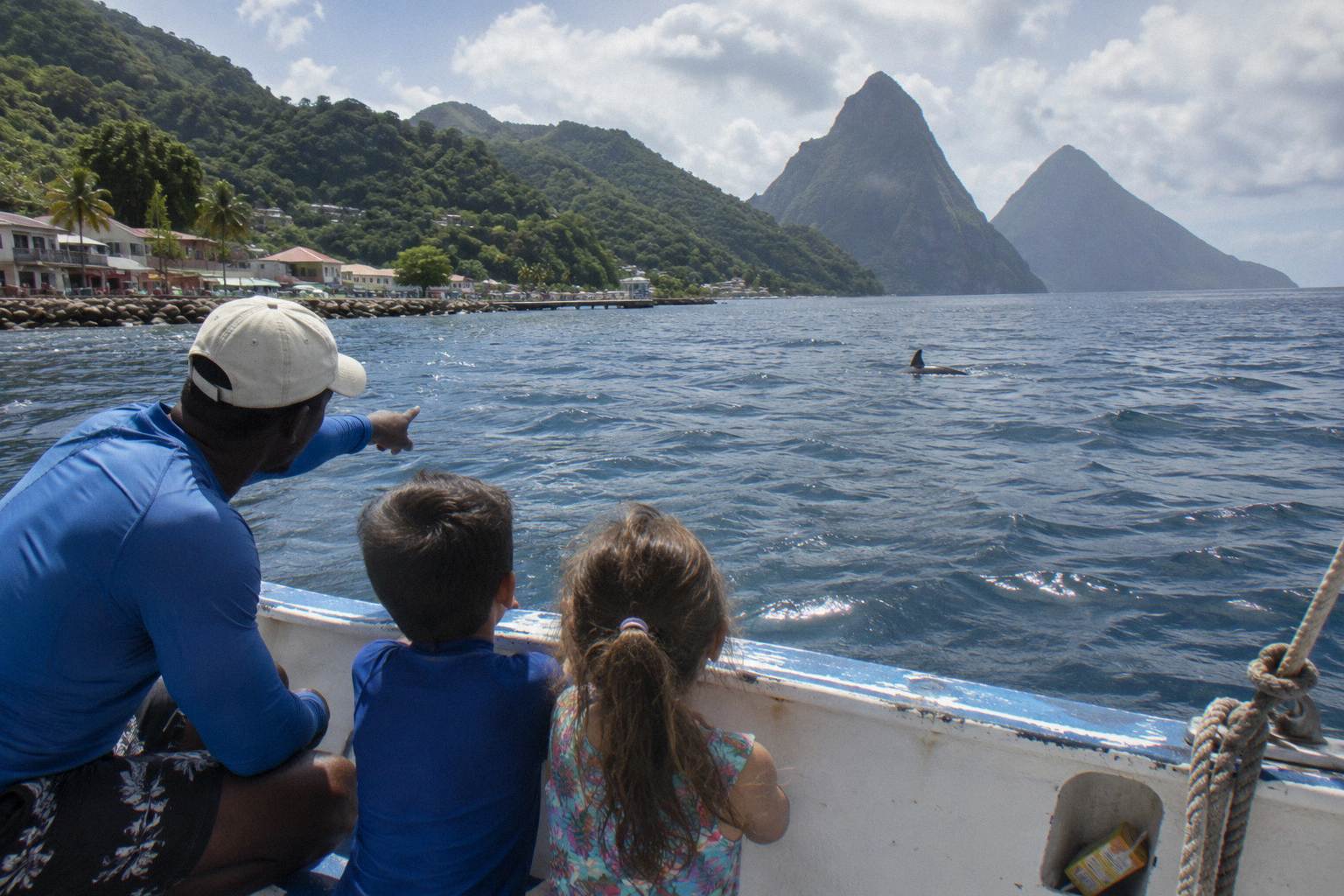
The common mistakes are treating Saint Lucia as a guaranteed sperm whale destination, assuming a closed season exists when the official wording attaches no month to the species, confusing sperm whales with the pilot whales that appear far more often, and comparing the island to Dominica as if the two offered the same product. Each error comes from reading one line of marketing and skipping the official sentence that qualifies it.
The first mistake is expecting too much. The official wording is occasionally sighted, and every honest summary has to keep that word. A traveller who books a shared cruise in July knowing dolphins and pilot whales are the likely stars, and that a sperm whale is the deep-water possibility, has set expectations correctly. The same traveller told that sperm whales live here year-round, full stop, arrives primed for disappointment. Both statements describe the same water; only one describes it honestly.
The second is inventing a calendar. Humpbacks have a window, February to April, and some visitors carry that logic over and ask when sperm whale season opens. It does not open or close. The species is resident in the region in every month, and the seasonal factor that actually matters is sea state, calmer on average from December to May, not animal absence.
The third is misidentifying what surfaces. Pilot whales travel in close family pods and can be seen through the year, which makes them the dark, square-headed cetacean most often photographed off this coast, and the identification question grows murkier where false killer whales enter the conversation. The honest answer on the water is that a guide identifies what is in front of the boat, and the blog post on telling a pilot whale from a false killer whale exists for exactly that confusion.
The fourth is the Dominica comparison. Dominica's sperm whale watching is built around a small, intensively studied resident population with dedicated trips; Saint Lucia offers general whale and dolphin cruises in water that sperm whales visit. The guide comparing Saint Lucia and Dominica for whale watching draws the line properly. Neither place promises a sighting; one of them specialises in the search.
Common Questions About Sperm Whales In Saint Lucia
Do Sperm Whales Live Off Saint Lucia All Year?
Yes, in the official sense: the tourism board describes sperm whales as considered resident in the region and occasionally sighted in deeper waters, with no closed season attached. Any date can produce an encounter, and no date guarantees one.
When Is The Best Time To See Sperm Whales In Saint Lucia?
There is no sperm whale season to time. Seas are typically calmer from December to May, which makes the search easier, and February to April adds the chance of humpback whales as a separate seasonal bonus.
Are Sperm Whale Sightings Guaranteed?
No. Sightings depend on weather, season and the animals' movements, and every encounter is a chance rather than a promise. No sighting percentage is published for sperm whales off Saint Lucia.
How Many Sperm Whales Live Around Saint Lucia?
No head count or population estimate is published for Saint Lucia. The sperm whales here belong to the wider Eastern Caribbean population studied by the Dominica Sperm Whale Project.
Which Trip Is More Likely To Find A Sperm Whale?
Both the shared cruise and the private safari search the same deep west coast water, and neither is a dedicated sperm whale trip. The choice between them is about format, group and budget, not about odds.
Can You Swim With Sperm Whales In Saint Lucia?
No. Swimming with whales or dolphins is not offered on either trip covered here and is not part of responsible whale watching on the island.