When Is The Best Time To See Whales In The Caribbean?
The Caribbean whale calendar explained with Saint Lucia's official season facts: the February to April humpback window, year-round dolphins and pilot whales, and which trip fits each month.
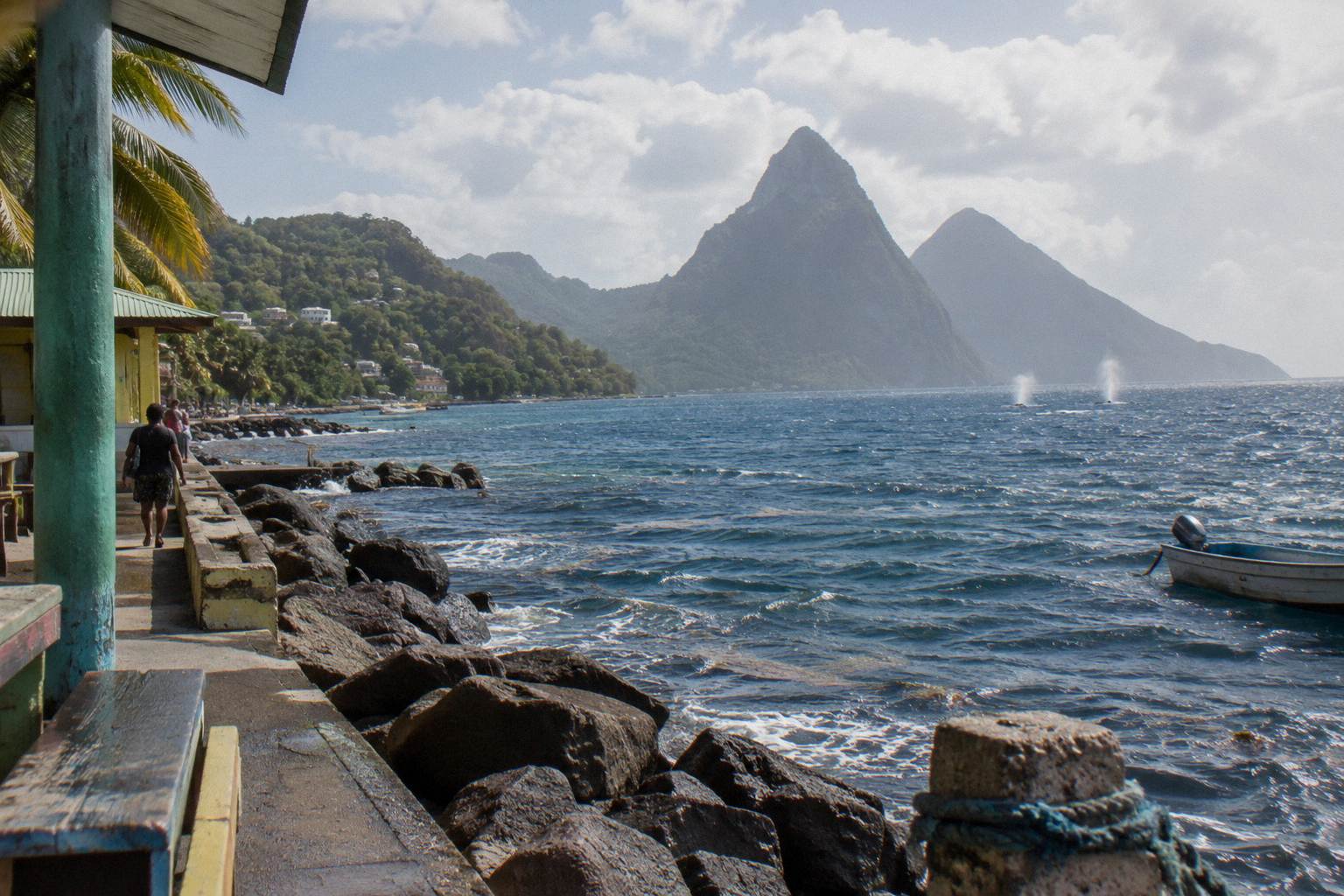
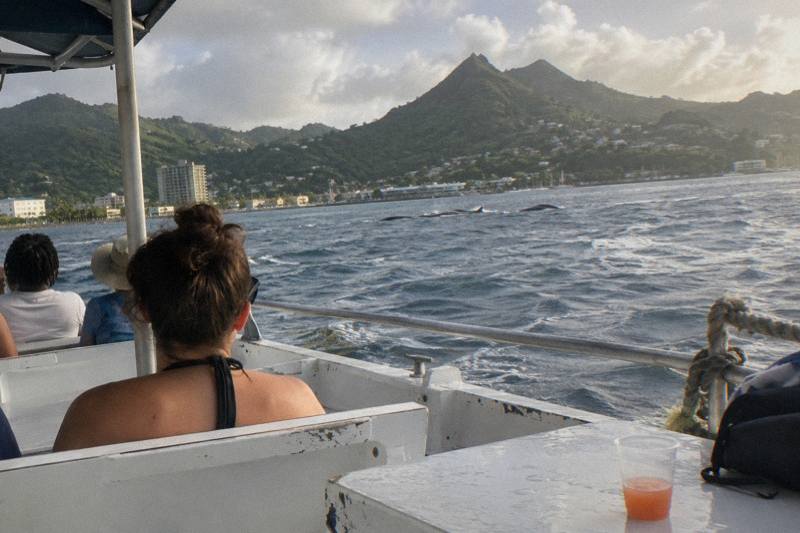
The best time to see whales in the Caribbean is February to April, when humpback whales pass through the region on their annual migration. That is the official window for Saint Lucia. Outside it, dolphins and pilot whales can be seen all year, sperm whales live in deeper offshore water, and watching trips run in every month, so the season decides which animals, not whether any appear.
Most people asking this question are really asking whether they need to move their whole trip to catch whales, or whether the week they already have will do. The answer depends on which animals they mean. Humpbacks are seasonal visitors with a defined passage. Dolphins, pilot whales and sperm whales, considered resident in the wider region and occasionally sighted in deeper water, are not going anywhere, which is why boats leave Castries twelve months a year rather than closing for an off-season.
The Saint Lucia tourism board's whale and dolphin watching page states the pattern plainly: dolphins and pilot whales can be seen throughout the year, humpbacks migrate through the region between February and April, and sperm whales are considered resident in the region and occasionally sighted in deeper waters. Some operators report humpbacks from December, which stretches the practical window a little earlier than the official one. From May to November, humpbacks should be treated as unlikely.
One caution before the detail: no sighting is ever promised, in any month. Every encounter depends on weather, season and the animals' own movements, and no honest operator or writer will hand you a percentage. What the calendar can tell you is which species are in the region when you are, and which months give the calmest boat ride.
If your dates are fixed and you want the full month-by-month planning detail for this island, the month-by-month whale season guide breaks the whole year down; this page keeps to the broader question and the season facts.
For travellers whose month is flexible, both of the island's whale and dolphin trips run year-round and can be booked for any of them:
Both depart Vigie Marina in Castries, both carry a guide, and both can be cancelled free up to 24 hours before departure, which matters when you are booking months ahead around a migration you cannot control.
What Is The Humpback Window In Saint Lucia?
Humpback whales pass through Saint Lucia's waters between about February and April, and that is the official migration window. Some operators report seeing them from December, so early-season chances exist. From May to November humpbacks are unlikely to be around, and no honest source will promise one inside or outside the window, because every sighting is a chance.
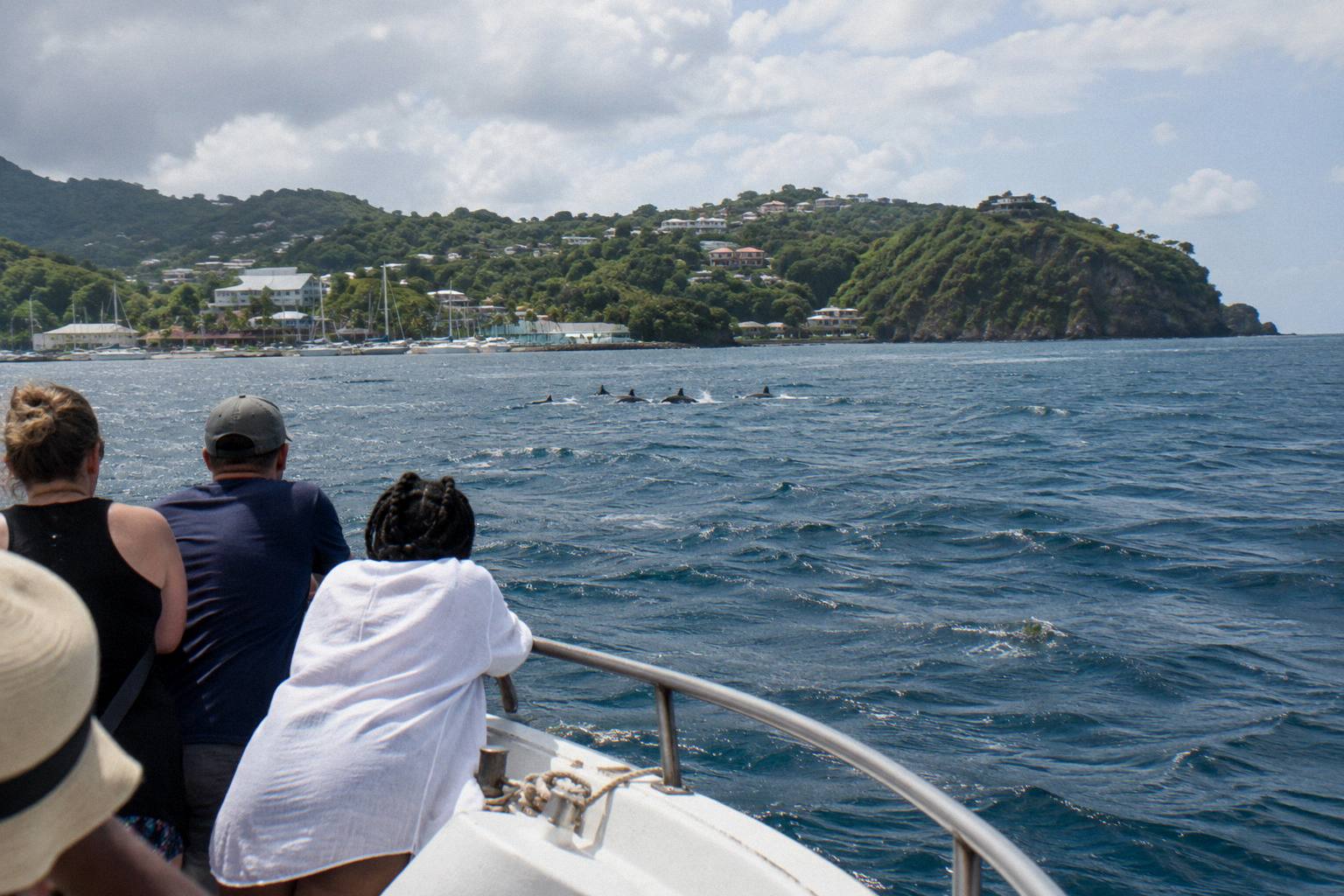
The humpback migration is the headline event of the Caribbean whale year, and it is the reason February to April is the answer most people get when they ask about timing. The whales are moving through the region on their annual journey, and Saint Lucia sits in their path. The tourism board's own blog on what to expect on a whale and dolphin watching trip repeats the same window rather than narrowing it, which tells you the passage is broad rather than pinpoint: you are choosing a two to three month window, not a fortnight.
The December edge is worth understanding rather than dismissing. The official window opens in February, but some operators on the island report humpbacks from December, which usually means early arrivals ahead of the main passage. If you are travelling over the new year and hoping for humpbacks, that is a genuine maybe. If you are travelling in July, it is not, and May through November should be planned around the year-round residents instead.
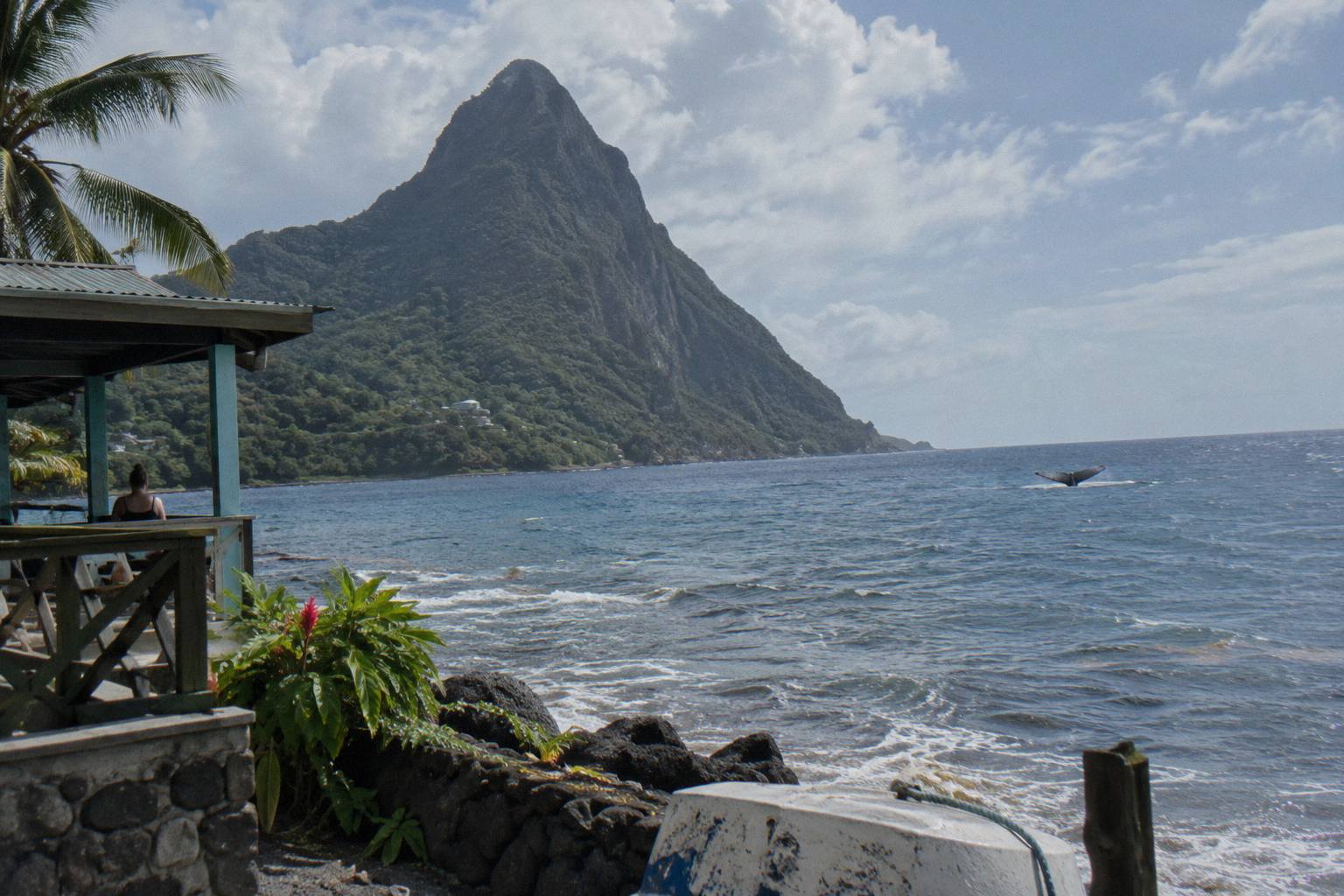
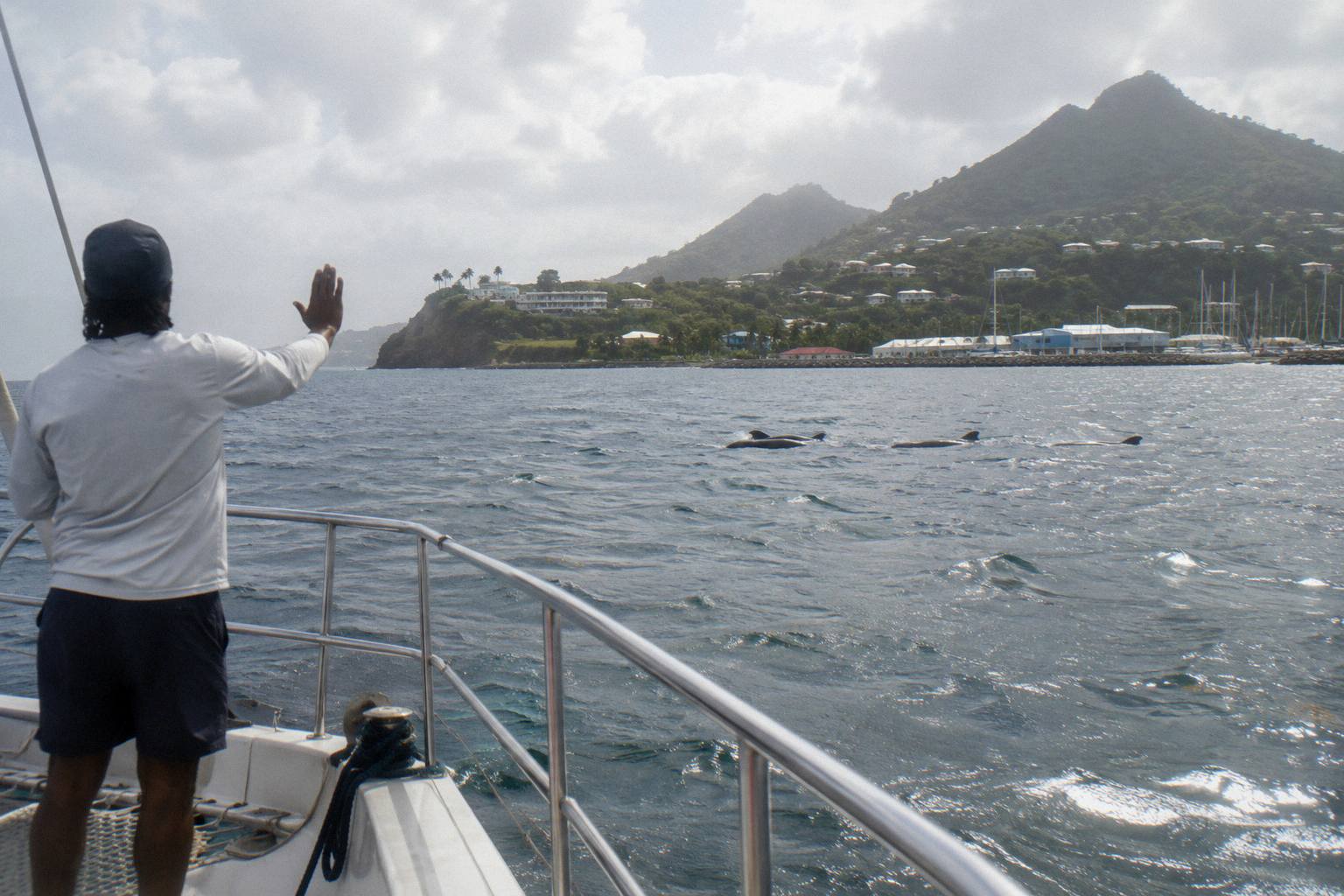
What the window does not do is turn everything else off. A February trip is not a humpback-only trip. Spinner dolphins are frequently sighted year-round, pilot whale pods can sometimes be seen through the year, and the deeper water offshore holds sperm whales in every month. The window adds a species; it does not replace the cast.
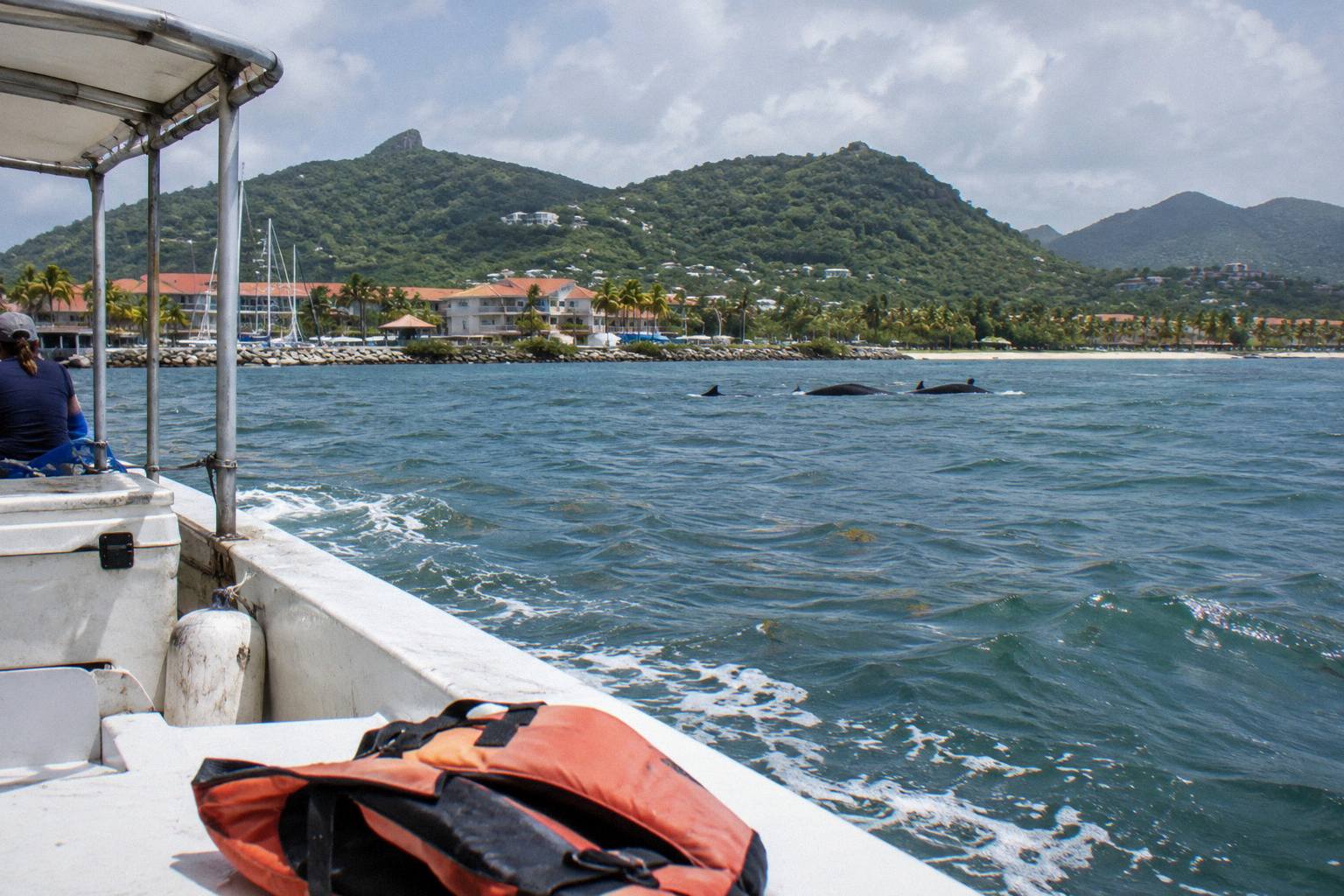
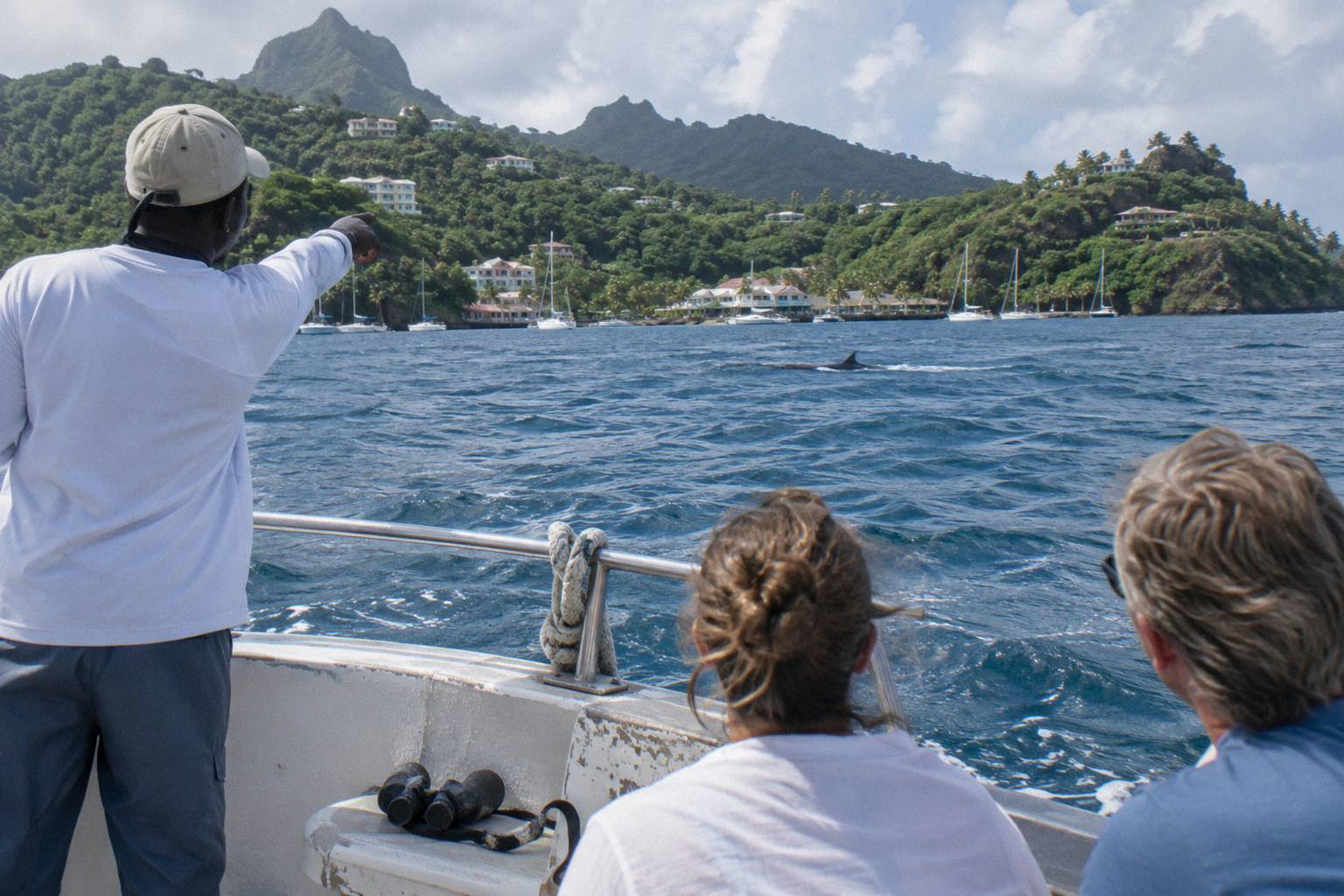
For the full species-by-species picture of that passage, the guide to humpback whales off Saint Lucia from February to April covers what the migration actually looks like from a boat. For a February to April visit specifically, the Shared Whale And Dolphin Watching Cruise, the island's shared morning trip, names humpbacks in season among the species it watches for, alongside sperm whales, pilot whales and several dolphin species, on a custom 60 ft boat with a local marine expert aboard.
What Can You See The Rest Of The Year?
Outside the humpback window the Caribbean is not empty: spinner, pantropical spotted and bottlenose dolphins are seen all year, pilot whale pods live in the region through the year, and sperm whales are considered resident in the deeper water, though only occasionally sighted. Orcas are rare visitors only, so plan around the residents.
This is the part of the answer that surprises people who assume whale watching has an off-season. It does not, and the reason is the mix of species. The dolphins are the constant. The tourism board describes spinner dolphins as frequently sighted year-round, with pantropical spotted and bottlenose dolphins common, and Fraser's, Risso's and striped dolphins recorded less often. A trip in September has essentially the same dolphin calendar as a trip in March.
Pilot whales sit between the dolphins and the deep divers. Resident pods can sometimes be seen through the year, travelling in close family groups, and the boats that leave Castries watch for them in every month. Identification questions come up with pilot whales, because they are black, medium-sized and often confused with other species from a distance; a guide aboard identifies what is actually in front of the boat, which is one practical argument for guided trips over independent viewing.
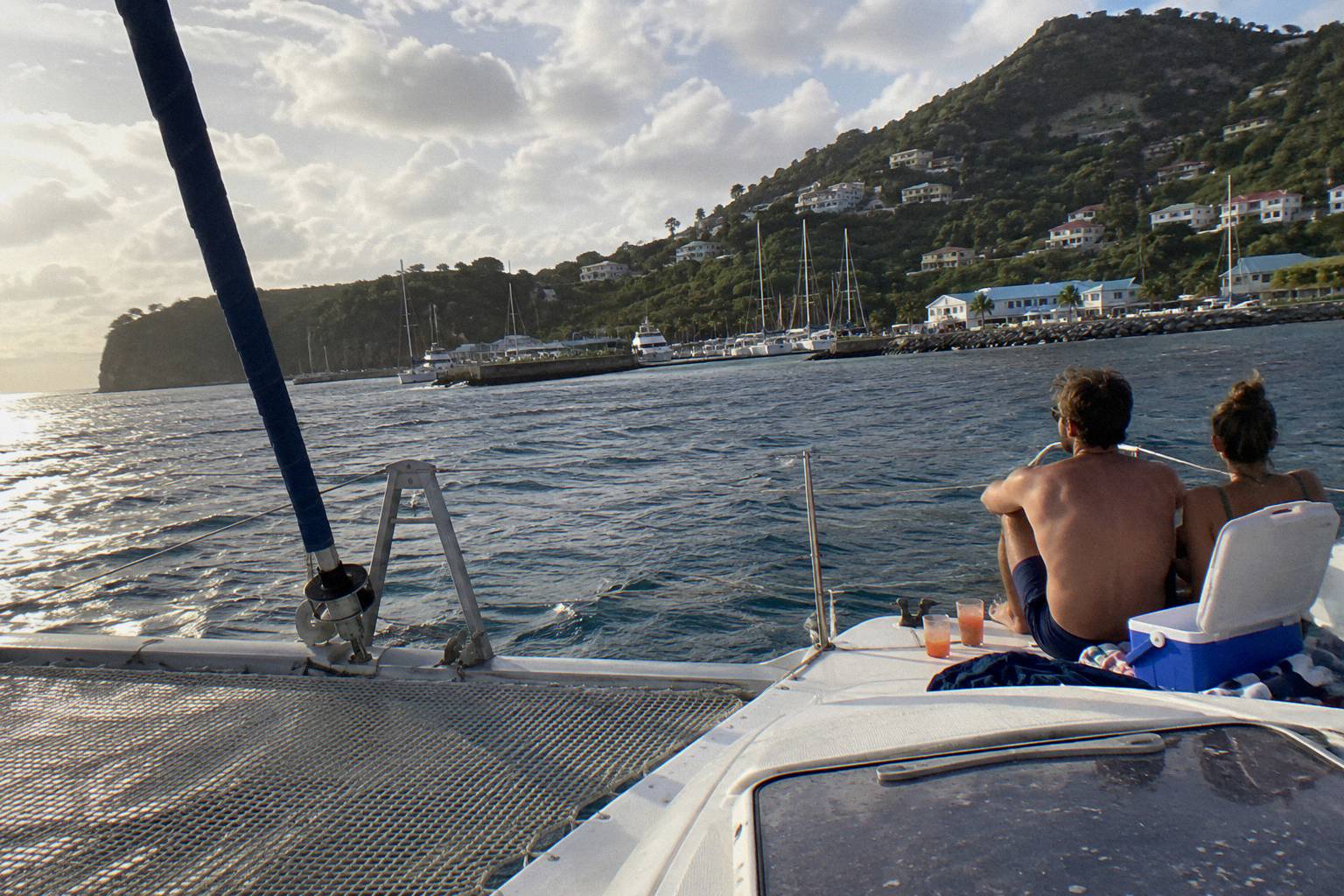
Sperm whales are the deep-water story. The official wording is careful: they are considered resident in the region and occasionally sighted in deeper waters. Those are two honest qualifiers, resident and occasional, and they describe a species that lives in the Eastern Caribbean but does not perform on schedule. These animals belong to the wider Eastern Caribbean population studied by the Dominica Sperm Whale Project, a research programme that has followed these families across islands for years; no Saint Lucia head count or population estimate exists, and any number you see quoted for the island should be treated with suspicion.
The practical summary for the off-window traveller:
| Species | When in the region | How reliable |
|---|---|---|
| Spinner dolphins | All year | Frequently sighted year-round |
| Pantropical spotted and bottlenose dolphins | All year | Common |
| Pilot whales | All year | Resident pods, sometimes seen |
| Sperm whales | All year, deeper water | Considered resident, occasionally sighted |
| Humpback whales | About February to April | Migration window, some operators report from December |
| Orcas | No season | Rare visitors only |
None of this is a promise. Sightings depend on weather, season and the animals' movements, and the sea decides a good part of it. But the year-round roster is real, and it is why a boat leaves the marina every month of the year.
Which Months Have Calmer Seas?
Seas around Saint Lucia are typically calmer from December to May, which overlaps the humpback window almost exactly. The Atlantic hurricane season officially runs June 1 to November 30, and conditions in those months are more variable, so a calm-weather planner and a whale-window planner usually land on the same dates.
The sea state matters as much as the species list, and not only for comfort. Choppy water makes spotting harder for everyone on deck and can shorten a trip's range along the coast. The tourism board notes that calmer sea conditions are typically December to May, and the Saint Lucia Meteorological Services marks the official hurricane season as June 1 to November 30. Neither statement says anything about whales, and sea conditions are never a reason a sighting fails or succeeds on their own; they simply shape the ride and how easy the animals are to see.
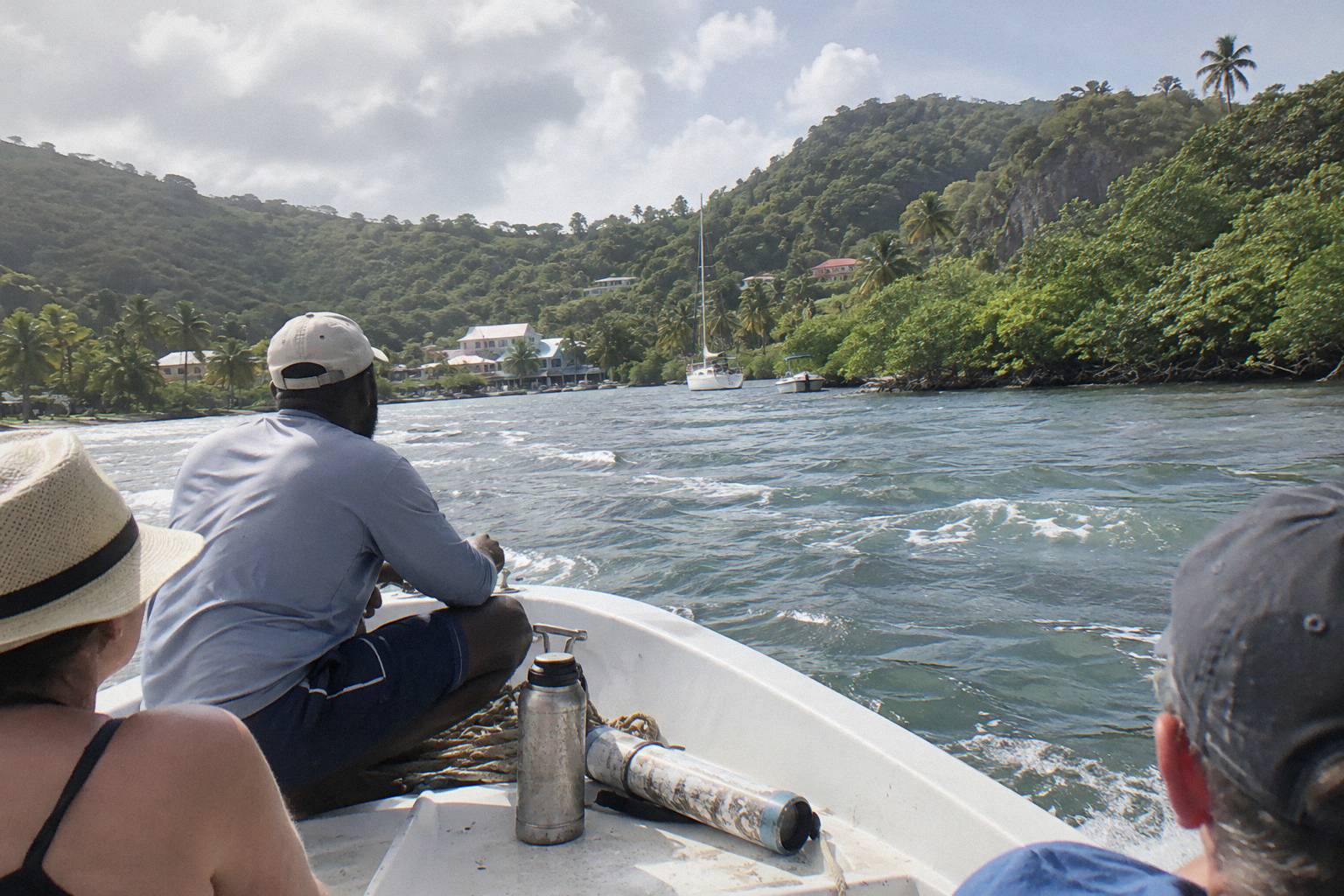
The overlap is the useful part. Someone choosing dates purely for calm water picks December to May. Someone choosing purely for humpbacks picks February to April, with a December maybe. Those two windows sit inside each other, which is why late winter and early spring are the months when the whale question answers itself: the migrating whales are passing through, the residents are in place, and the sea is at its most cooperative.
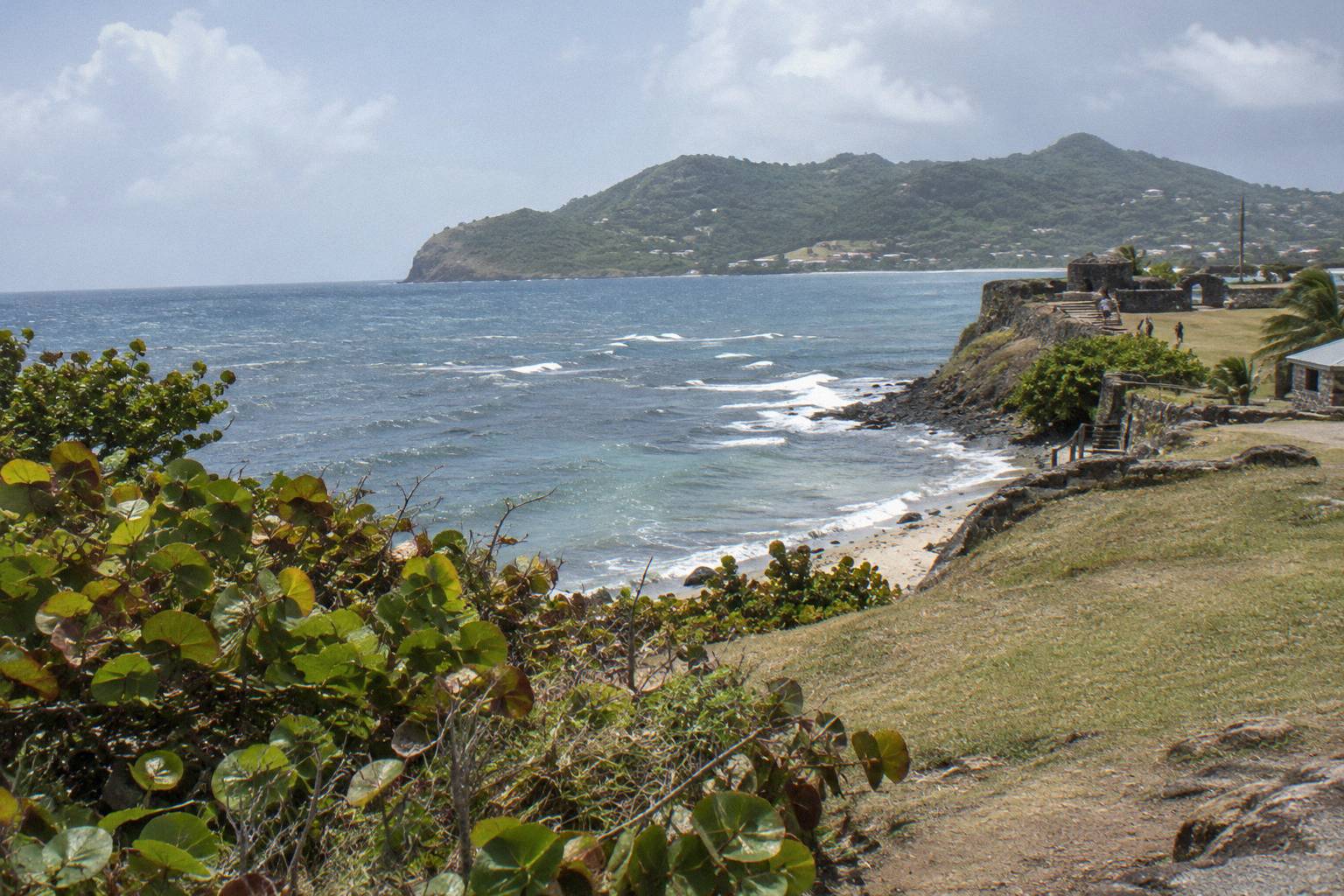
If your travel falls between June and November, the trip is still worth considering rather than writing off. The dolphins and pilot whales have not left, the boats still run, and deep water lies close to the west coast, so animals can appear not far from shore. What you accept is more variability in conditions, and a humpback absence. Bring a light layer for spray, sun protection, a hat and a camera, and if you are prone to motion sickness, ask about boat size when booking.
Here is the planning table in one view, built only from what the official sources say:
| Months | Humpbacks | Dolphins and pilot whales | Typical sea conditions |
|---|---|---|---|
| December to January | Some operators report from December | Year-round | Calmer season under way |
| February to April | Official migration window | Year-round | Typically calmer |
| May | Unlikely by late spring | Year-round | Calmer early, variable later |
| June to November | Treat as unlikely | Year-round | More variable; hurricane season June 1 to November 30 |
No month-by-month sighting rates exist, and any table that claims them is padding a guess. This one states what the sources state and nothing more.
Whatever the month, the shared cruise is the year-round default for most travellers, and you can check its dates against your own:
It runs about 3.5 hours from Vigie Marina with instant confirmation, so it slots easily into a week built around calm seas or the humpback window alike.
How Do You Pick A Month For Saint Lucia?
Pick February to April if humpbacks are the goal and your dates are free. Pick December to May if a calm sea matters most to you. Keep any month you already have, because dolphins and pilot whales appear all year and sperm whales live offshore in every season; the month you choose decides the icing, not the cake.
This is where the planning stops being about whales and starts being about you. Three questions sort almost everybody. First, are humpbacks the reason you are asking? Then the window is February to April, with December as a speculative earlier shot. Second, is someone in your party nervous about the boat? Then December to May's typically calmer conditions deserve the deciding vote. Third, are your dates already fixed by a wedding, a cruise or school holidays? Then the question is not which month is best but what your month offers, and the answer is the year-round roster described above.
For cruise passengers the third question is the common one, and the timing is tighter than for hotel guests. Trips usually last about three to four hours, both island trips depart Vigie Marina in Castries, and the shared cruise runs about 3.5 hours while the private safari runs about 4 hours, all before getting to and from the marina. The practical advice is to check the ship's all-aboard time and raise it with the operator when booking; nobody can promise a return time, and a responsible operator would not try. The cruise port whale cruise guide works through that arithmetic in detail.
For families, the season choice is slightly different again. Children travel with an adult on these trips, and neither listing prints a minimum age, so the question to ask the operator when booking is about suitability for your child's age rather than a rule on a page. A calm-water month makes the experience easier for small passengers, which nudges families toward the December to May stretch for reasons that have nothing to do with humpbacks.
Price does not change the month decision much, but it is worth knowing the shapes. The shared cruise is priced from US$65 per person, about 3.5 hours on the water. The private safari is priced per boat, from US$2,550.65 for the whole group of up to 40 guests on a 50 ft catamaran, about 4 hours. For illustration, not a quote: US$2,550.65 shared by 4 guests is about US$637.66 each; by 6 about US$425.11; by 8 about US$318.83; by 12 about US$212.55. Prices vary by date and group and the booking page confirms them.
If timing around weather and season still leaves questions, the guide to hurricane season and whale cruises in Saint Lucia covers the June-to-November half of the year specifically.
What Should You Ask Operators In Any Island?
Ask any whale watching operator, on any Caribbean island, what species are in the region in your month, what the trip length and boat are, what happens if weather cancels, and whether they follow regulated viewing distances. A serious operator answers all four without promising a single sighting.
The first question is the season question pointed at the person who actually goes to sea. What is around in the month you are travelling? On Saint Lucia the honest answer names dolphins and pilot whales year-round, sperm whales in deeper water, and humpbacks only inside the window. An operator who answers "whales" without species and season is telling you they sell boats, not wildlife.
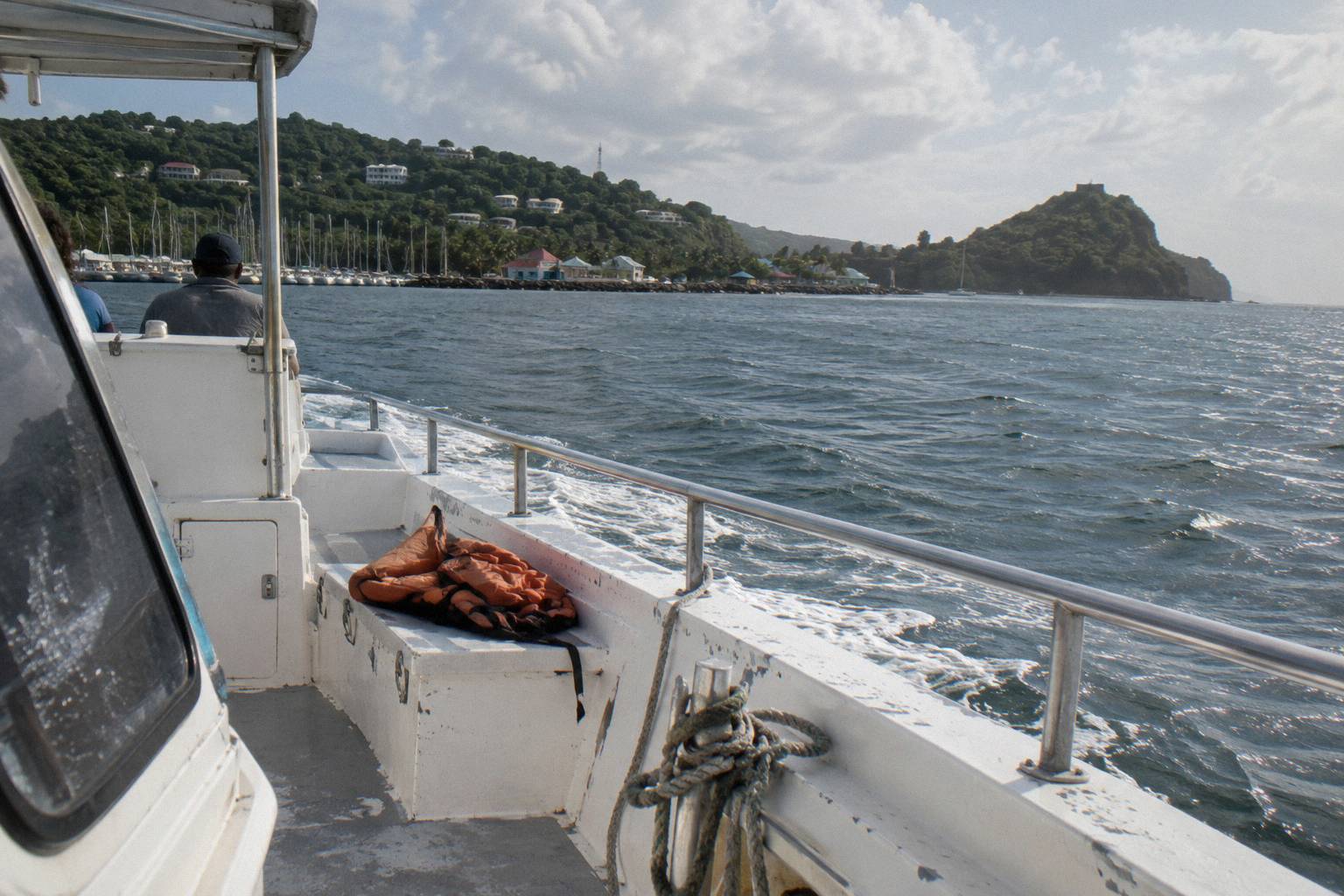
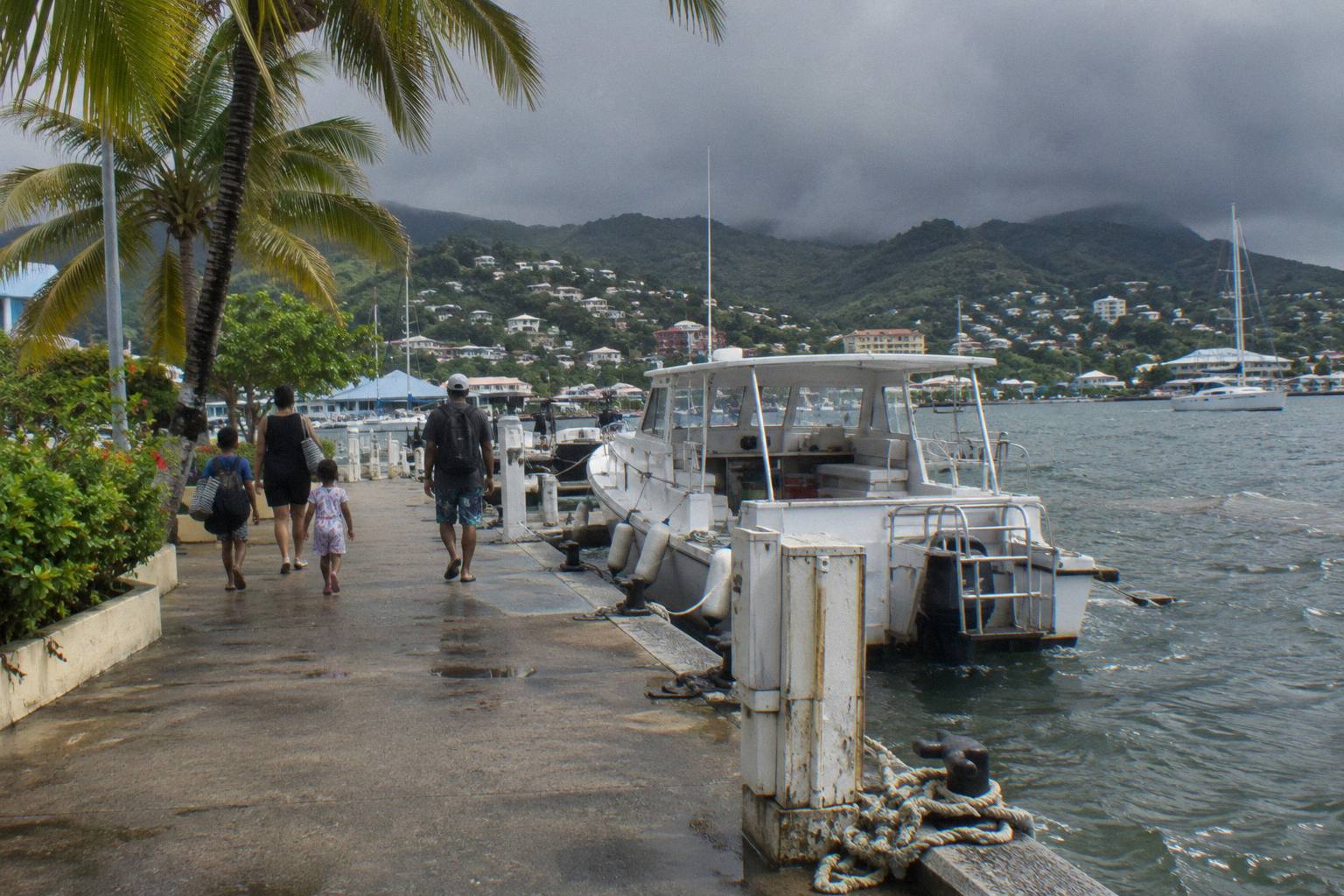
The second and third are logistics. Trip length, departure point, boat size and what is included decide whether a trip fits your day and your stomach. Ask about boat size directly if you are prone to motion sickness; a larger vessel behaves differently from a small one in the same swell. Both Saint Lucia trips depart Vigie Marina in Castries, close to the airport and a short distance from the Pointe Seraphine cruise terminal.
The fourth is the ethics question, and it has a concrete answer here. Licensed operators follow regulated distance guidelines, limit time near the animals, provide life jackets and safety briefings, and monitor sea conditions. The approach is slow, with no chasing, no touching and no feeding, and room for the animals to move on. If an operator anywhere shrugs at that list, book elsewhere; the responsible whale watching guide explains why it matters. Note that no metre figure is published for the distance guidelines, so treat any specific number quoted in marketing with care.
Cancellation is the fifth, quietly the most important when you are booking months out around a migration. Both trips here allow free cancellation up to 24 hours before departure, and the private safari is cancelled free for bad weather. The shared cruise's operator says the captain offers an alternative date or a refund if the trip is cancelled for unsafe weather. No rebook-if-no-sighting policy exists on either trip, so do not shop for one and do not believe anyone offering it; wild animals are not a warranty.
| Question to ask | What a good answer looks like |
|---|---|
| Which species are around in my month? | Named species with seasons, no promises |
| How long is the trip and on what boat? | A length in hours, a boat type and size |
| What if weather cancels? | Free cancellation terms, alternative date or refund |
| How do you view the animals? | Regulated distances, limited time, no chasing or feeding |
Which Trip Fits A February To April Visit?
For a February to April visit, the Shared Whale And Dolphin Watching Cruise from Castries fits most travellers: about 3.5 hours, from US$65 per person, rated 4.5 from 200 reviews. A group wanting the window to themselves can take the Private Premium Whale And Dolphin Safari, from US$2,550.65 per boat for up to 40 guests, about 4 hours, rated 4.5 from 75 reviews.
The shared cruise is the natural fit for the window because the window is what it is designed around. The trip's own species list names humpbacks in season alongside sperm whales, pilot whales and spinner, spotted, Fraser's and common dolphins, and it runs in the morning, which matches the official pattern of Caribbean whale trips leaving in the morning and following the coast. Bottled water, soft drinks and rum punch are included, a local marine expert is aboard to identify what surfaces, and gratuities and hotel pick-up are not. Confirmation is instant, which helps when you are locking plans around fixed February dates.
The private safari suits a different February traveller: the extended family, the celebration group, the party that wants the boat to themselves and a start time arranged with the operator rather than published. It runs about 4 hours on a 50 ft catamaran carrying up to 40 guests, includes a guide plus soft drinks, coffee, tea, water, light snacks, rum punch and local fruit, and adds cruise ship pier pick-up and drop-off, which the shared trip does not offer. Confirmation is not instant; the operator confirms, so book it with more lead time. The operator says it has run since 1953 and is World Cetacean Alliance certified, its own statement and worth weighing when you are choosing who to spend a morning with.
Neither trip is ranked above the other here, because they answer different questions. The shared cruise at US$65 per person is US$130 for 2, US$260 for 4, US$390 for 6, and the price varies by date with the booking page confirming it. The private safari's per-boat price only makes sense read against your group size, and the illustration sums above are the honest way to compare them, never as two per-person numbers. The deeper comparison, including what each format feels like on the water, is in the shared cruise versus private charter breakdown.
For groups leaning toward the private option in the humpback window, Check availability early; February to April is the island's busiest stretch for whale trips.
Whichever format fits, the same seasonal advice applies: book the month inside the window, keep the free-cancellation buffer, and hold the expectation that dolphins and pilot whales are the year-round species to look for, never a promise while the humpbacks are the reason you chose these weeks.
Common Mistakes With Caribbean Whale Timing
The common mistakes are treating the Caribbean as one calendar, expecting humpbacks outside February to April, dismissing the May to November months as empty, believing sighting percentages, and confusing Saint Lucia the island with St Lucia in South Africa. Each one wastes a trip that could have been planned around the facts.
The first mistake is assuming one Caribbean season. This page can only state Saint Lucia's official season facts, because no other island's window is printed here, and humpback timing is not identical across the region even where the species is the same. If your trip spans islands, ask the operator question list above in each place rather than carrying one answer around the sea.
The second is expecting humpbacks in summer. From May to November, treat them as unlikely. The year-round residents are the reward in those months, and a traveller who boards in August angry about missing humpbacks has been let down by whoever told them to expect one, not by the ocean.
The third is the mirror image: writing off the off-window entirely. Spinner dolphins are frequently sighted year-round, pilot whale pods live here, sperm whales dive in the deep water close to the west coast, and trips run every month. Plenty of visitors have their best morning of the trip in October.
The fourth is believing numbers that do not exist. No sighting percentage is printed here because operator claims conflict and no honest figure survives that conflict. No month-by-month sighting rates exist either, and no Saint Lucia sperm whale head count. A percentage on a brochure is marketing, not biology.
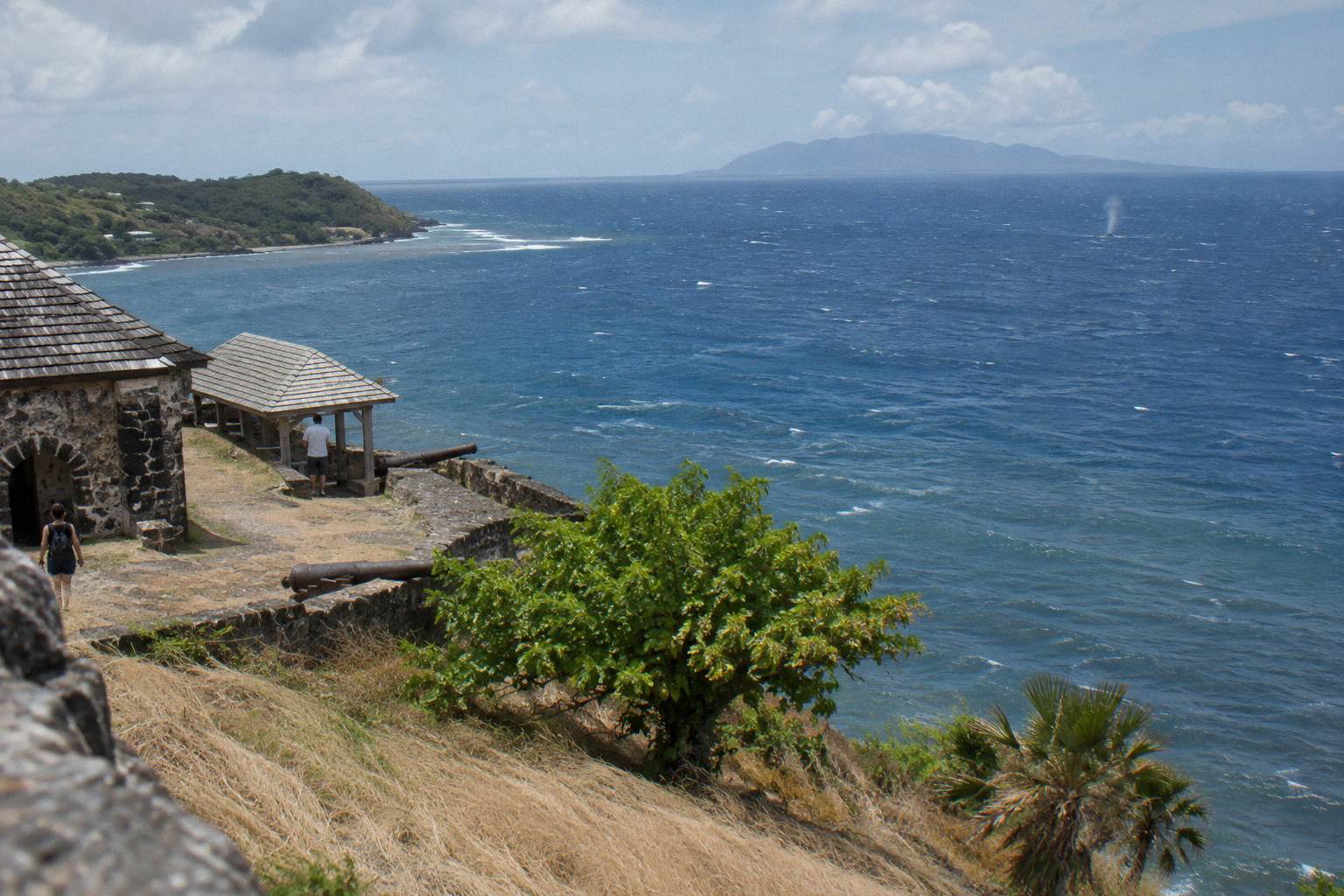
The fifth is geographic: St Lucia in KwaZulu-Natal, South Africa is a different place with a different whale season, and it mixes into search results constantly. This site is about the Caribbean island, where St Lucia Whale Watching means Castries, Vigie Marina and the deep water off the west coast.
Still deciding which month and which boat? The shared cruise can be cancelled free up to 24 hours before departure, so booking early in the window costs nothing in flexibility.
Common Questions About Whales In The Caribbean
When Is The Best Time To See Whales In The Caribbean?
February to April, when humpback whales migrate through the region. Some operators report humpbacks from December. Outside the window, dolphins and pilot whales can be seen all year and sperm whales live in deeper water, so trips run in every month.
Can You See Whales In Saint Lucia Outside The Humpback Window?
Yes, with the right expectations. Pilot whale pods can sometimes be seen year-round, sperm whales are considered resident in the region and occasionally sighted in deeper waters, and dolphins are present all year. Humpbacks from May to November are unlikely.
Which Months Have The Calmest Seas For A Whale Cruise?
Seas around Saint Lucia are typically calmer from December to May. The Atlantic hurricane season officially runs June 1 to November 30, and conditions in those months are more variable.
Do Whale Watching Trips Run All Year In Saint Lucia?
Yes. Whale and dolphin watching runs year-round, and February to April adds the chance of humpbacks. Both trips covered on this site depart Vigie Marina in Castries in every month.
Is A Sighting Guaranteed In The Best Months?
No. Sightings depend on weather, season and the animals' movements, and no sighting percentage exists that survives checking. Every encounter is a chance, never a promise, in any month.
What Do The Whale Trips Cost In Saint Lucia?
The shared cruise is from US$65 per person for about 3.5 hours. The private safari is from US$2,550.65 per boat for up to 40 guests, about 4 hours. Prices vary by date and group and the booking page confirms them.