Hurricane Season And Whale Cruises In Saint Lucia
The Atlantic hurricane season runs from June 1 to November 30, and whale and dolphin watching in Saint Lucia still runs through it. Here is what that means for the sea, the sightings and your booking.
Short answer
Hurricane season in Saint Lucia officially runs June 1 to November 30. Whale and dolphin watching runs year-round: dolphins and pilot whales are present all year, while humpbacks are unlikely May to November. Seas are typically calmer from December to May. Both local trips allow free cancellation up to 24 hours before departure.
The Atlantic hurricane season officially runs from June 1 to November 30, and the Saint Lucia Meteorological Service says so plainly each year. What that means for a whale and dolphin cruise is more nuanced than most travellers expect: the trips still run, the dolphins and pilot whales do not leave, and the main thing that changes is the sea state and your flexibility. This guide works through the whole picture, from what the season actually is to what happens if the captain calls a trip off.
Do Whale And Dolphin Cruises Run In Hurricane Season?
Yes, whale and dolphin watching in Saint Lucia runs year-round, including the June to November hurricane season. The official tourism board position is that dolphins and pilot whales can be seen all year, so summer and autumn trips go out and find animals. What changes is the weather window around the trips, not the trips themselves.
Two things are worth separating cleanly, because a lot of confused advice online blends them. The first is whether the animals are there. On that, the tourism board is clear: spinner dolphins are frequently sighted year-round, pantropical spotted and bottlenose dolphins are common, and resident pilot whale pods can sometimes be seen through the year in close family groups. None of that pauses for hurricane season. The second is whether the sea lets a boat go out comfortably on a given morning, which is a day-to-day judgement the operators and their captains make.
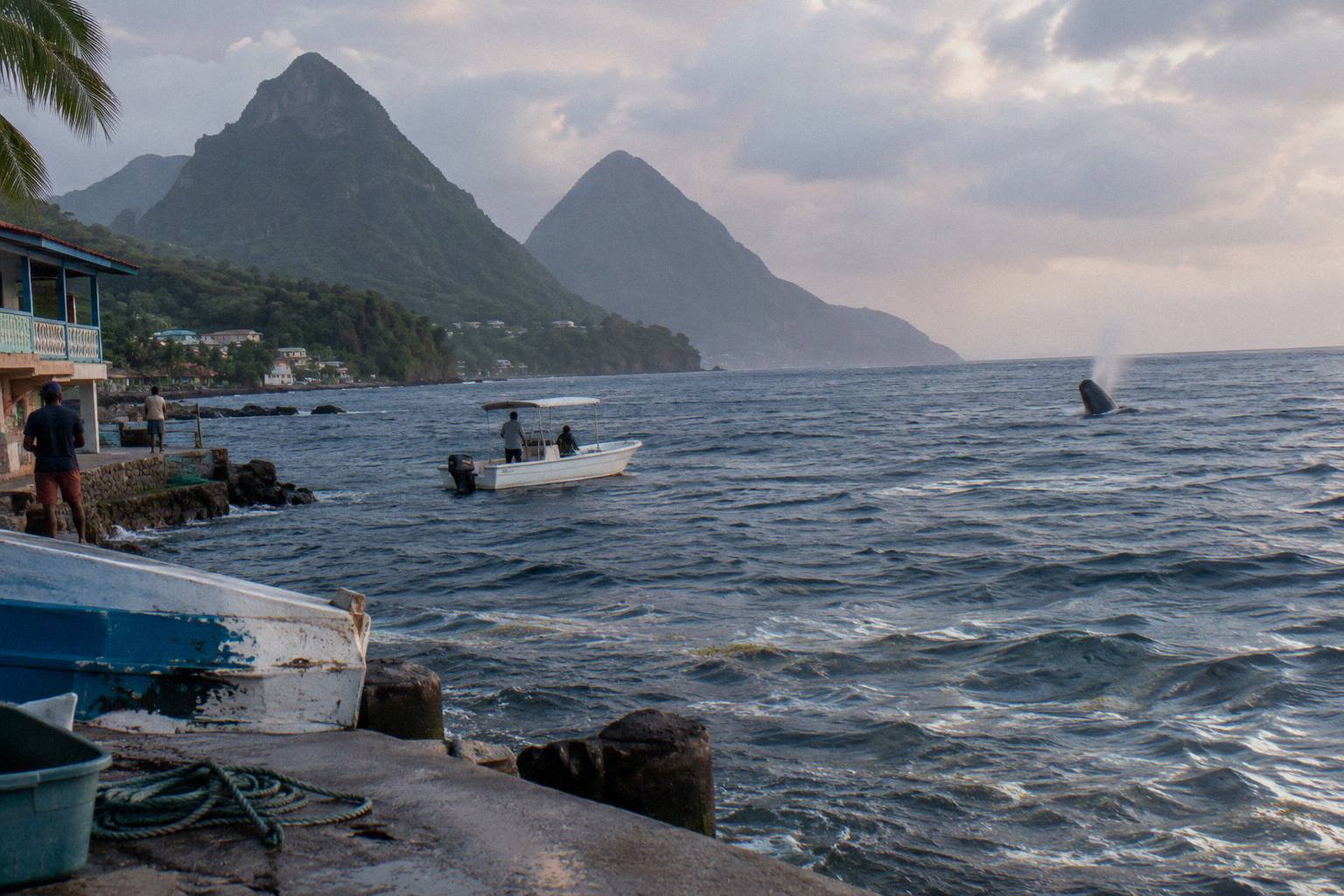
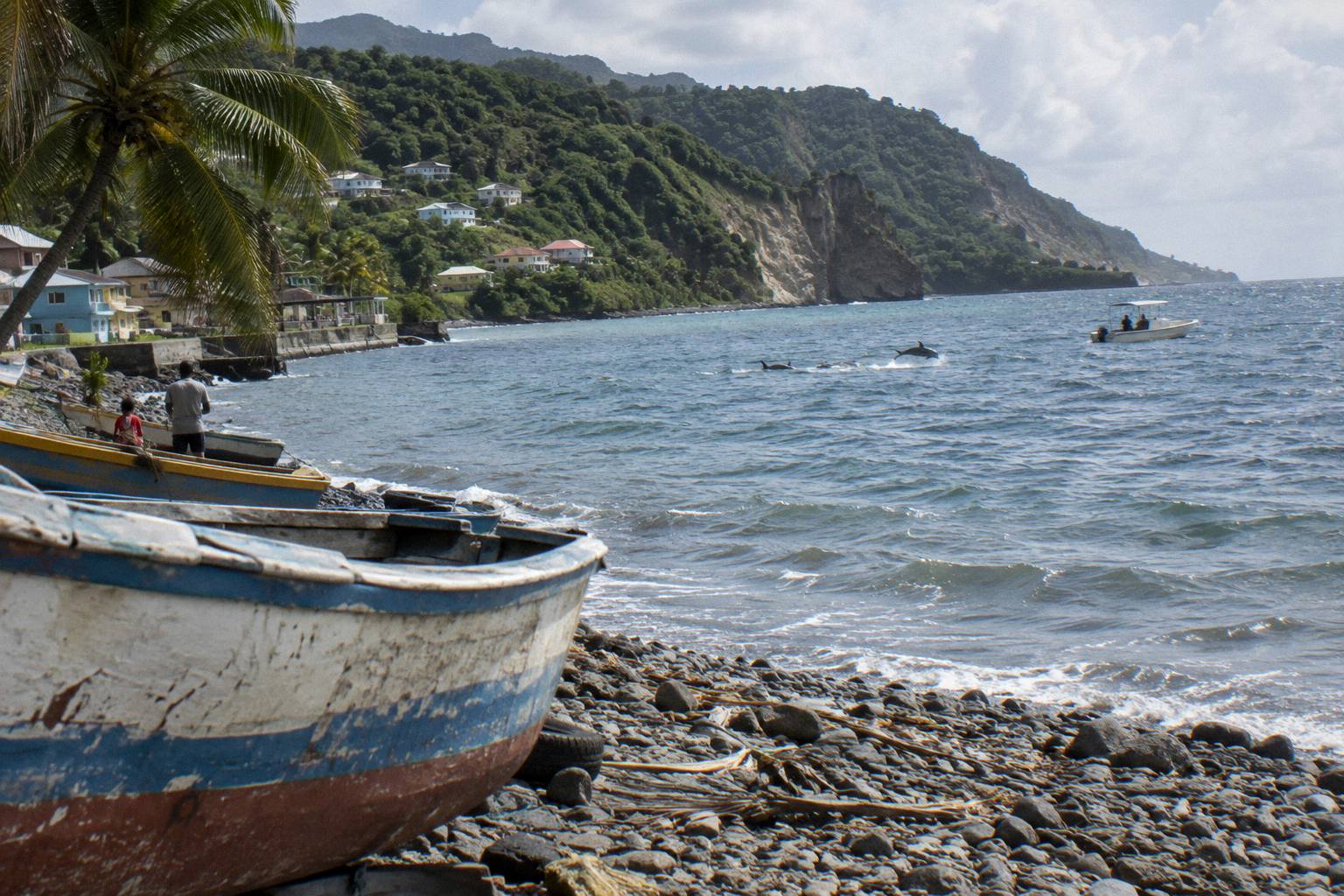
Sightings always depend on weather, season and the animals' own movements, so every sighting is a chance and never a promise, in any month. What deep coastal water does for the west coast is shorten the trip: because the deep lies close to shore along the Caribbean side, boats do not need a long run offshore to reach the water where animals feed. A summer trip can find spinner dolphins within sight of the coastline, and the boats simply follow the Caribbean coast as they search.
If you are weighing this against the peak winter months, the honest comparison is not animals-versus-no-animals. It is typically calmer seas and a humpback chance mainly from February to April, versus quieter boats and year-round dolphins and pilot whales from June to November. Some travellers prefer the low-season version for exactly that reason: fewer people on the water, lower shoulder-season hotel rates, and a sea that is often perfectly workable at dawn. For a fuller version of that trade-off, see whether the whale and dolphin excursion is worth it.
When Does Hurricane Season Start And End?
The Atlantic hurricane season officially runs from June 1 to November 30, and the Saint Lucia Meteorological Service confirms those dates each year. For whale and dolphin watching, the practical counterpart is that seas around Saint Lucia are typically calmer from December to May, which is the season many visitors plan around.
The season is a basin-wide Atlantic calendar, not a local forecast. A named storm somewhere in the Atlantic does not mean rough water off Castries that week, and most days inside the season are perfectly ordinary tropical days: humid, warm, with a chance of a passing shower. The meteorological service tracks the systems and issues warnings when they matter, and boat operators monitor sea conditions as a matter of routine, since licensed operators are expected to monitor sea conditions as part of responsible operation.
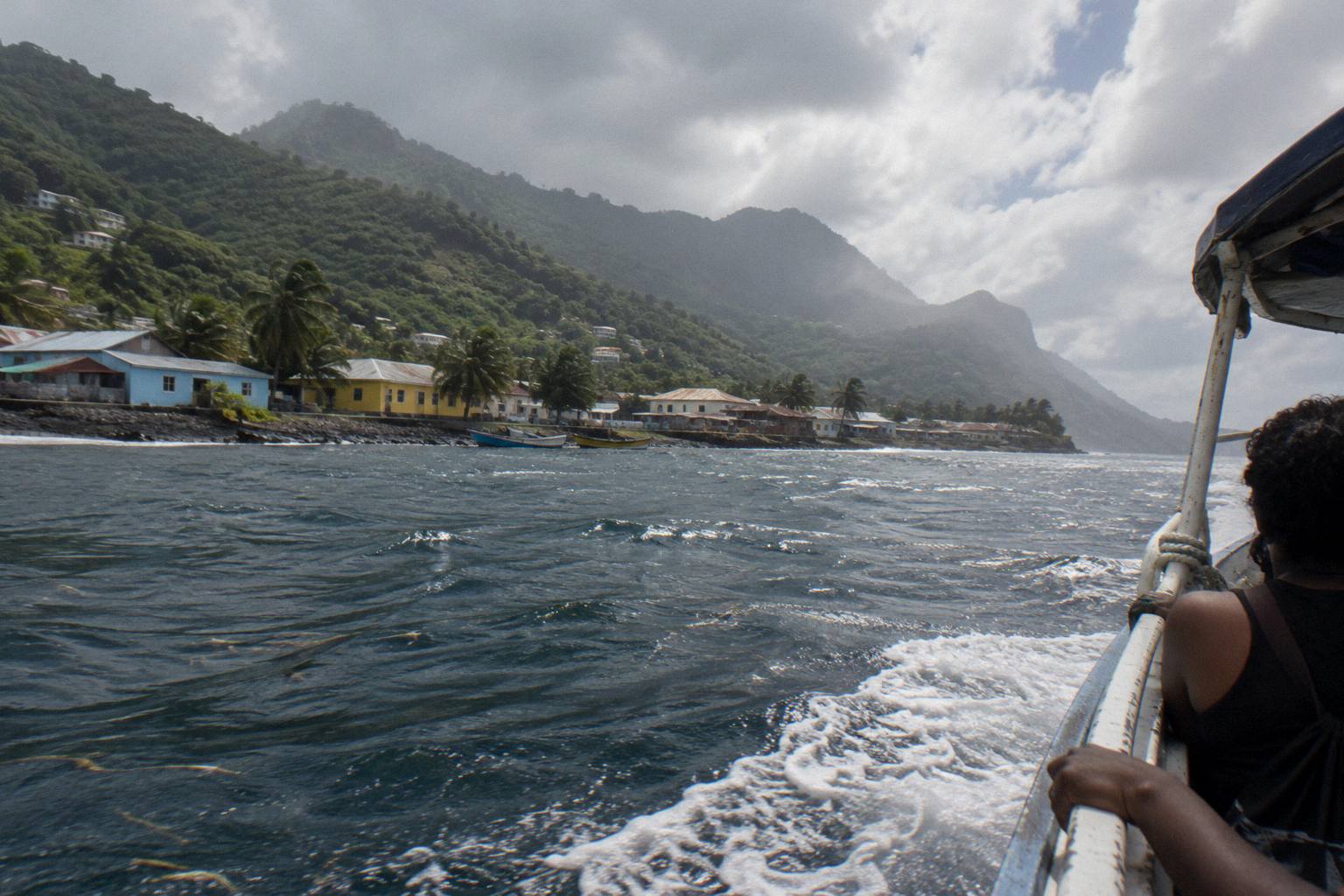
For planning purposes it helps to split the season in your head. June to August tends to be quieter within the season, with warm, flat-ish mornings common. September and October are the statistical peak of the basin season, and that is when the occasional multi-day blow or swell is most likely, though plenty of trips still run. November is a transition month: still officially in season, but with the calmer December-to-May pattern approaching, and humpback season not far behind.
One thing this guide will not tell you is that hurricane season is why sightings fail, because that claim is not supported. Sightings depend on weather, season and the animals' movements. The weather part can shorten or cancel a trip; the animals' part is simply a chance, every day of the year.
| Period | Official status | What the sources say about the sea | Wildlife picture |
|---|---|---|---|
| December to May | Outside hurricane season | Seas typically calmer | Dolphins and pilot whales year-round; humpback window about February to April |
| June to August | Inside hurricane season | Variable; many calm mornings | Dolphins and pilot whales year-round; humpbacks unlikely |
| September to October | Inside hurricane season, statistical peak | Higher chance of swell or blows | Dolphins and pilot whales year-round; humpbacks unlikely |
| November | Inside hurricane season, transition | Improving toward the calm season | Dolphins and pilot whales year-round; humpbacks unlikely |
This is a planning table of what the official sources say, nothing more. No month-by-month sighting rates exist, and none are printed here.
What Can You See From June To November?
From June to November you can see dolphins and pilot whales, both of which are present off Saint Lucia all year, and sperm whales are occasionally sighted in deeper offshore water. Humpback whales should be treated as unlikely May to November; the official migration window is about February to April.
The headline species for a summer or autumn trip is the dolphin group, and the tourism board's wording is specific. Spinner dolphins are frequently sighted year-round. Pantropical spotted dolphins are common in warm offshore water, especially along the west coast, and bottlenose dolphins are common too. Fraser's, Risso's and striped dolphins are recorded less often, so treat those as a bonus rather than a plan.
Pilot whales are the year-round whale most summer trips have a realistic chance of meeting: resident pods can sometimes be seen through the year, travelling in close-knit family groups. Sperm whales are described by the tourism board as "considered resident in the region and occasionally sighted in deeper waters." They belong to the wider Eastern Caribbean population that the Dominica Sperm Whale Project studies, so a deep-water summer morning is when a guide's watchful eye matters most. Orcas are rare visitors only, anywhere in the year.
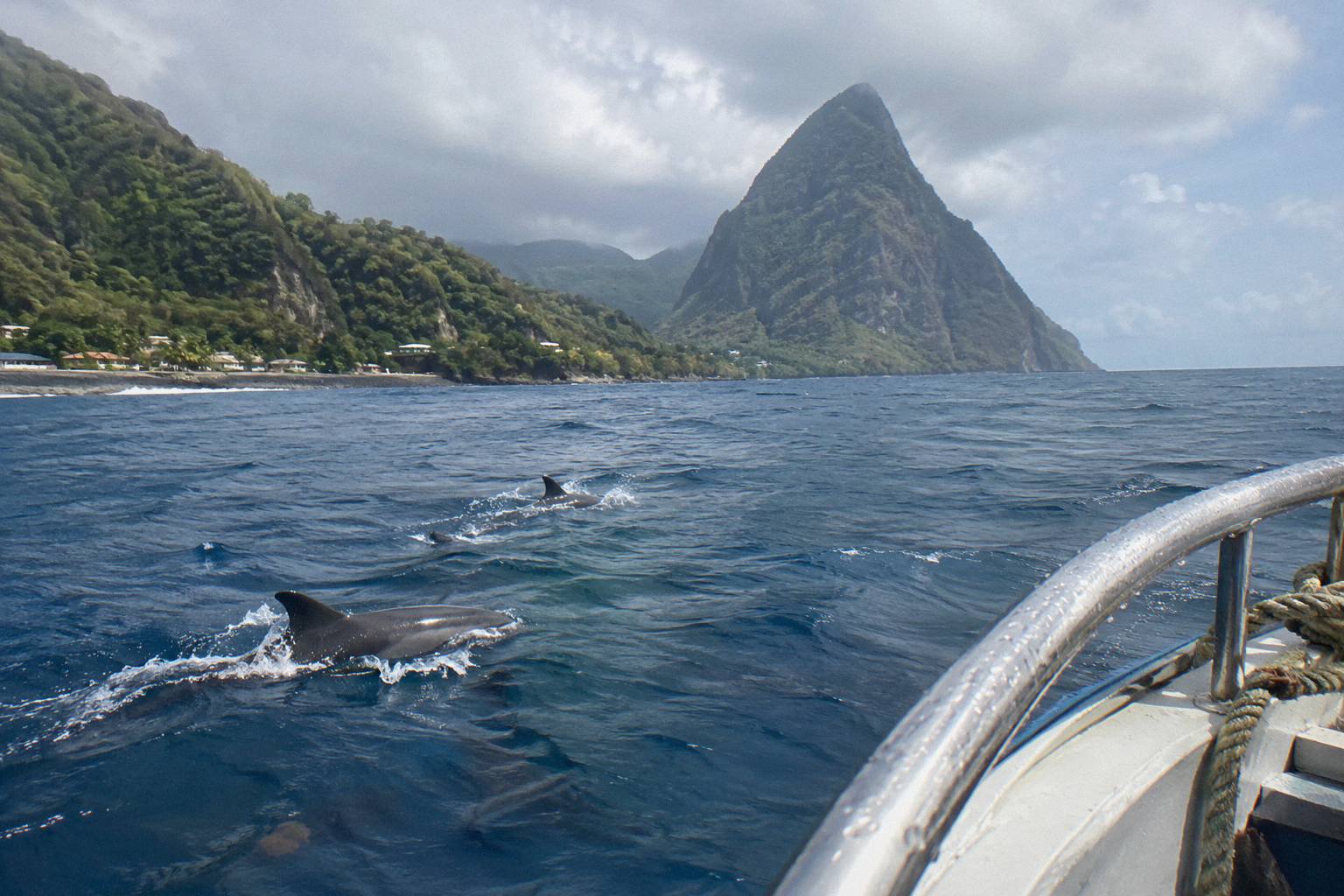
What you should not book a June-to-November trip expecting is humpbacks. The official window for the humpback migration through the region is about February to April; some operators report them from December; and May to November they should be treated as unlikely. If humpbacks are the whole point of your trip, move your dates into the February-to-April window, and read the month-by-month guide to the best time to see whales.
Both trips that serve this coast can take you out in the low season. The shared whale and dolphin watching cruise from Vigie Marina is about 3.5 hours on a custom 60 ft boat, from US$65 per person, with a local marine expert aboard and water, soft drinks and rum punch included. The private safari covers similar water on a 50 ft catamaran.
What Happens If Weather Cancels A Trip?
The terms are worth reading precisely, because they are not identical. On the shared cruise, operated by Captain Mike's, free cancellation applies up to 24 hours before departure. If the captain cancels for unsafe weather, the operator says there is an alternative date or a refund. That is the operator's own statement of its policy, and it matches what you would expect from a family operator that says it has over 60 years of experience and belongs to the Hackshaw family.
On the private safari, run by Hackshaw's Boat Charters, the booking also allows free cancellation up to 24 hours before departure, and the trip is cancelled free for bad weather. The operator says it has run since 1953 and is World Cetacean Alliance certified. One practical difference: confirmation is not instant on the private safari, since the operator confirms the arrangement, and the start time is arranged with the operator rather than printed.
What neither trip offers is a refund or rebooking because the animals did not show. No rebook-if-no-sighting policy exists, and implying one would be dishonest. A weather cancellation is a different thing from an empty sea: the first is an operator decision with defined remedies, the second is the chance that is part of every wildlife trip.
For cruise ship passengers the timing question is sharper, since a cancelled morning can be hard to reschedule within one port day. The shared cruise departs Vigie Marina, a short distance from the Pointe Seraphine cruise terminal, so the transit is short, but always check the ship's all-aboard time and ask the operator about timing before you rely on it. The private safari includes cruise ship pier pick-up and drop-off, which removes the taxi leg entirely.
Which Trip Handles Weather Better?
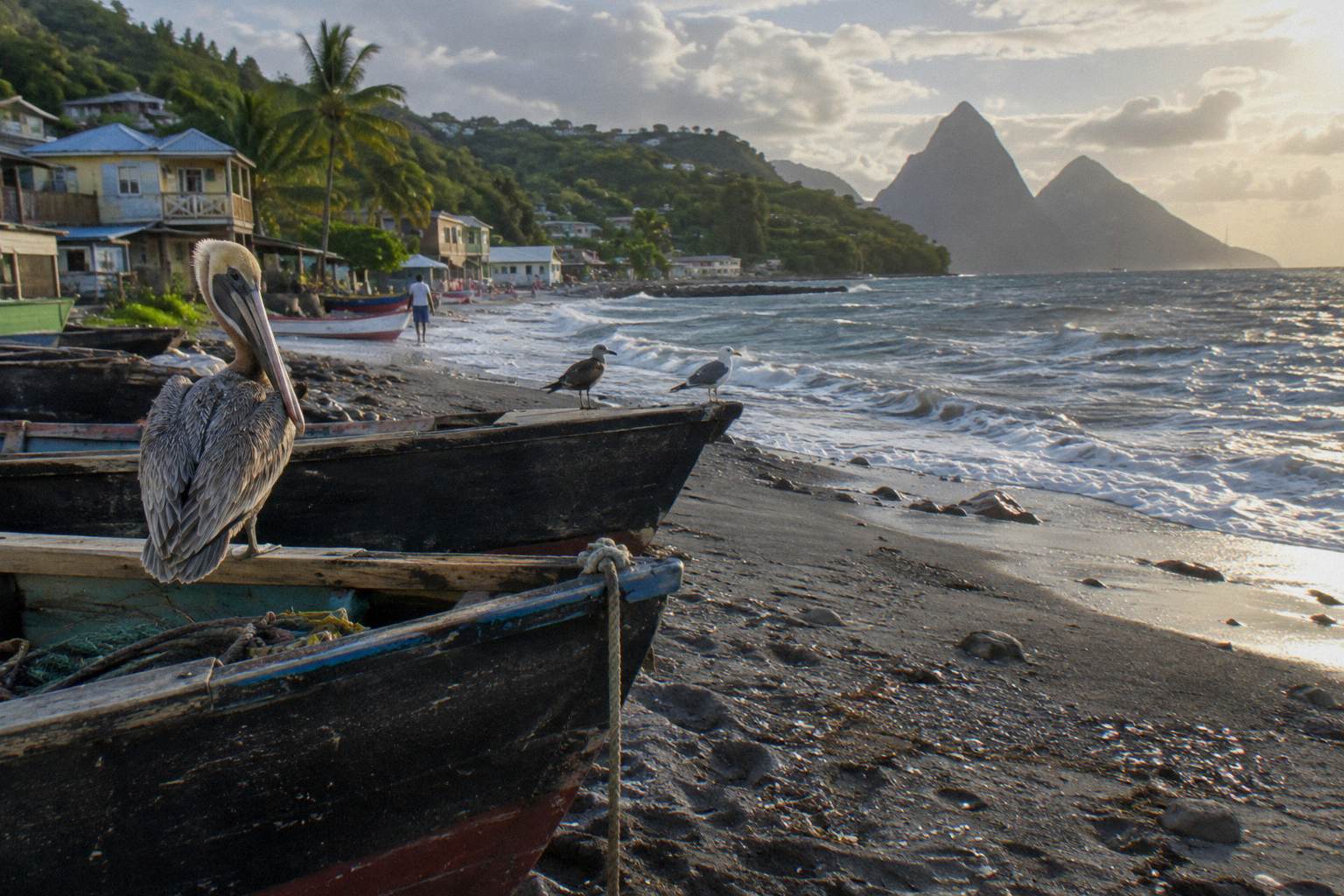
Neither trip is weatherproof, but their shapes differ. The shared cruise is a morning departure of about 3.5 hours on a 60 ft boat, priced per person from US$65. The private safari is about 4 hours on a 50 ft catamaran for up to 40 guests, priced per boat from US$2,550.65, with the start time arranged with the operator.
That last detail is the real weather advantage of the private charter. Because the start time is arranged with the operator rather than fixed to a published schedule, a private group has some room to shift a trip to the calmer part of a day, subject to the operator's judgement. The shared cruise has a morning departure, which on many low-season days is the calmest window anyway; Caribbean mornings are frequently gentler than afternoons, a pattern discussed in whether to choose a morning or afternoon whale trip.
| Shared Whale And Dolphin Watching Cruise | Private Whale And Dolphin Safari | |
|---|---|---|
| Price basis | From US$65 per person | From US$2,550.65 per boat |
| Length | About 3.5 hours | About 4 hours |
| Boat | Custom 60 ft boat | 50 ft catamaran |
| Group | Shared boat; group size not published | Private to your group, up to 40 guests |
| Departure | Morning, from Vigie Marina, Castries | Time arranged with the operator, from Vigie Marina |
| Cancellation | Free up to 24 hours before; operator offers alternative date or refund if the captain cancels for unsafe weather | Free up to 24 hours before; cancelled free for bad weather |
| Rating | 4.5 from 200 reviews | 4.5 from 75 reviews |
Prices vary by date and group, and the live listing confirms the current figure. For illustration, not a quote: US$2,550.65 shared by 4 guests is about US$637.66 each; by 6 about US$425.11; by 8 about US$318.83; by 12 about US$212.55. The shared cruise at US$65 per person is US$130 for 2, US$260 for 4, US$390 for 6.
Neither boat is sold as the better bad-weather choice, and this guide does not rank them. The honest framing is that a private charter buys you schedule flexibility and a boat to yourselves, while the shared cruise buys you a low per-person price and a fixed morning slot. Weather treats both the same way, and both operators make the go-or-no-go call on the morning.
How Should You Plan A Summer Or Autumn Trip?
Plan around flexibility: book with the 24-hour free-cancellation window in mind, favour morning departures, keep one spare day in your itinerary if you can, and set your expectations on year-round dolphins and pilot whales rather than humpbacks. Bring sun protection, a hat, a light layer for spray and a camera.
The single best structural decision is a spare day. If a morning blows out and the operator offers an alternative date, a visitor with a free Wednesday can take it; a visitor flying home Tuesday cannot. Cruise passengers have the least slack, which is why checking the all-aboard time before booking matters so much on a port call.
Entry and money are simple. A valid passport for the stay plus proof of onward travel is required, and US, UK and Canadian citizens need no visa; air arrivals are encouraged to complete the online immigration form up to 3 days before travel, per the official guidance on planning your Saint Lucia trip. The Eastern Caribbean dollar is fixed at EC$2.70 to US$1, and US dollars are widely accepted by hotels, restaurants, tour operators and taxis, with change often given in EC$, as the tourism board's currency and tipping guide explains. Gratuities are not included on either trip, so keep a little cash for the crew.
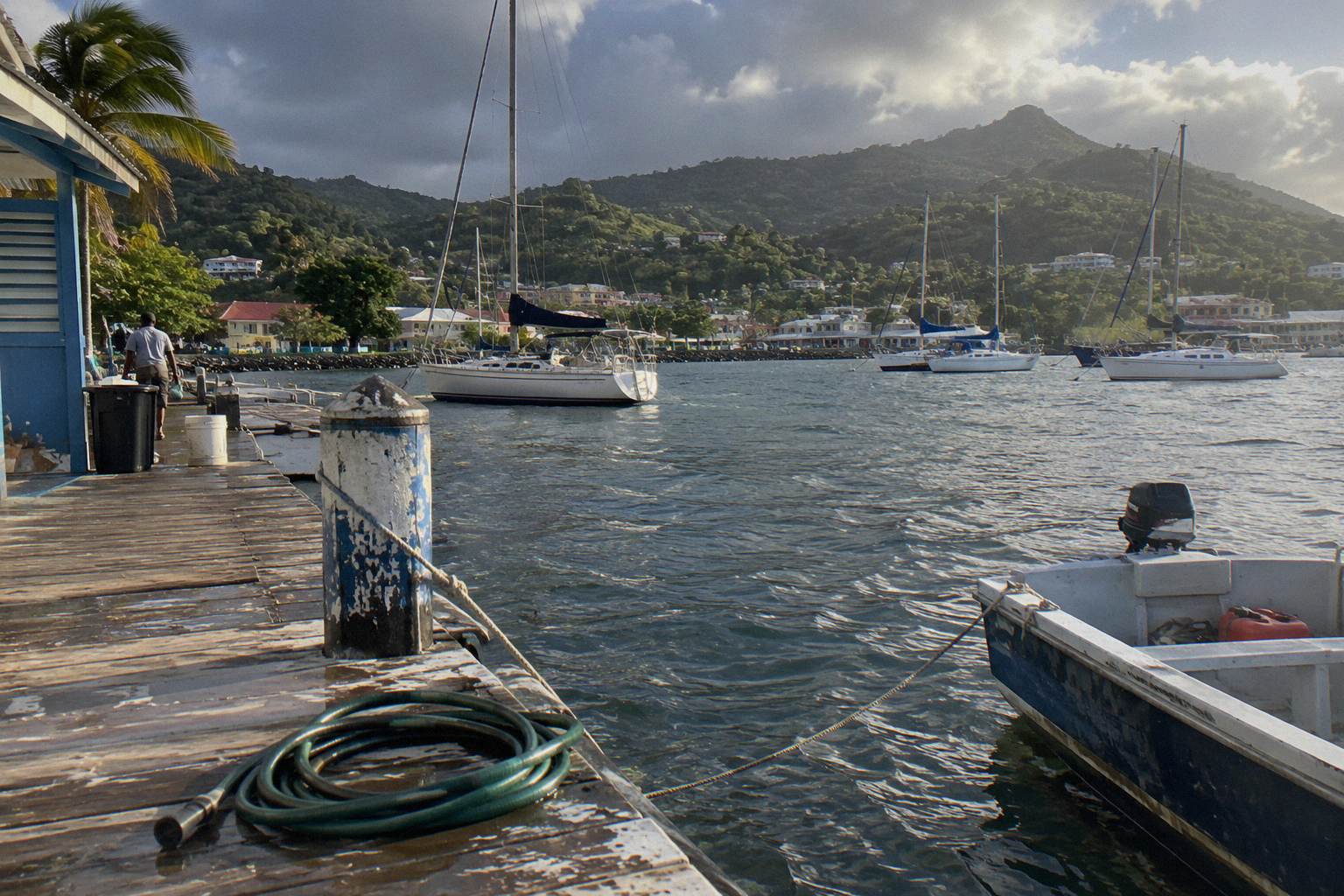
On packing: sun protection, a hat, a light layer for spray and a camera cover the essentials. If you are prone to motion sickness, ask about boat size when booking; no remedy advice is offered here, and none is needed to make that call. Beyond that, what to bring on a whale and dolphin cruise has the full list.
The shared cruise suits most summer visitors well: a from price of US$65 per person, a 3.5-hour morning on a 60 ft boat, a marine expert aboard, and free cancellation up to 24 hours before. Children travel with an adult; ask the operator about ages when booking, since no minimum age is printed.
What Should You Ask Before You Book?
Ask five things: whether the trip is expected to run given the forecast, what happens if the captain cancels, what the all-aboard time allows if you are on a cruise ship, what the sea state has been like, and what the confirmation timing is. The private safari is not instant confirmation, so build in a message or two.
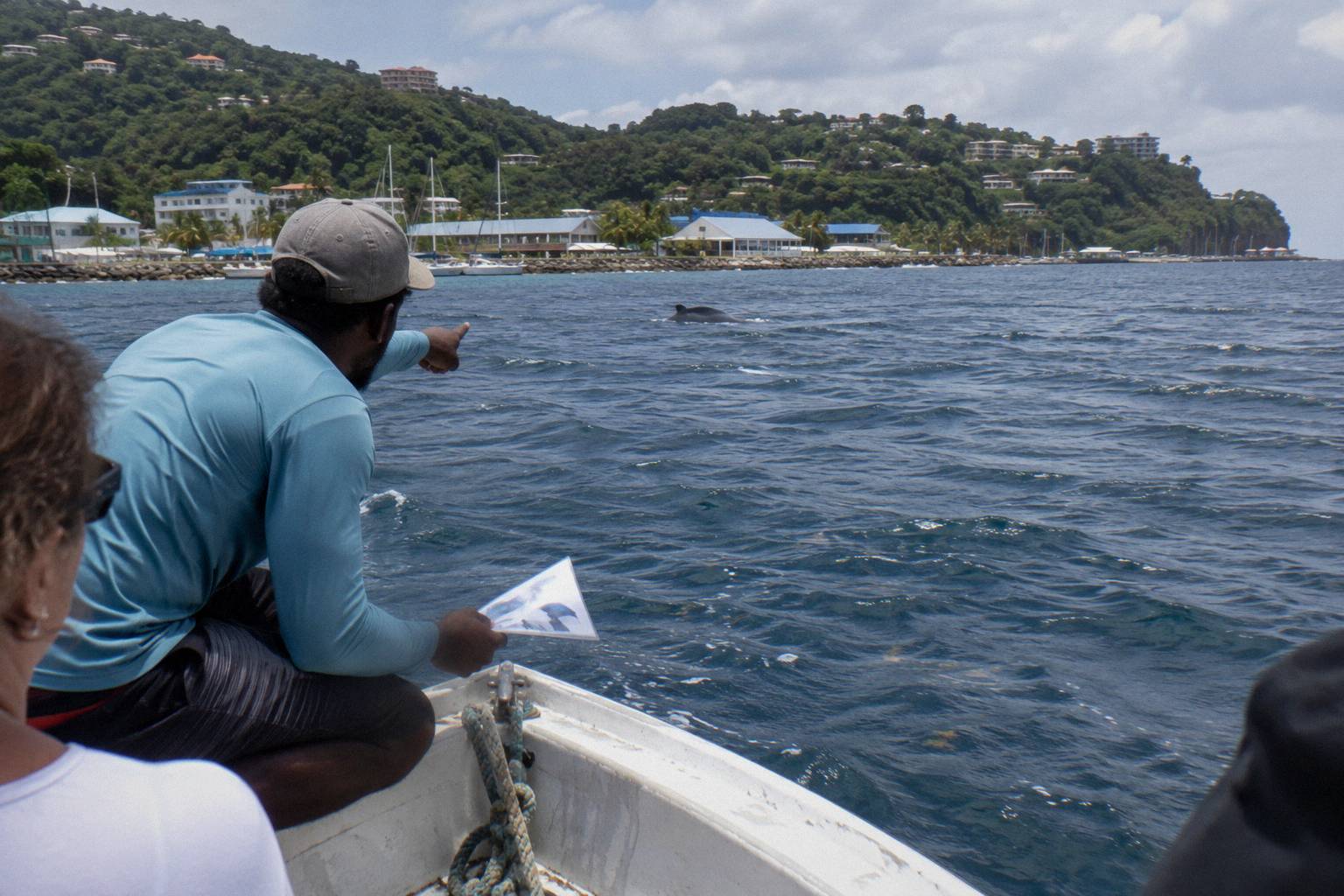
The weather question is fair to ask directly, and operators answer it plainly: they monitor sea conditions and they would rather reschedule than run an unsafe trip. Licensed operators follow regulated distance guidelines around animals, limit time near them, provide life jackets and safety briefings, and monitor conditions, which is the official description of how responsible operation works, and the tourism board's whale and dolphin watching page sets out the responsible-viewing expectations: slow approach, no chasing, no touching or feeding, and space for the animals to move on.
If dolphins are your interest rather than whales, the summer is arguably your season, and the species detail is in which dolphins and whales live off Saint Lucia's west coast. Ask the operator which species have been around lately; the honest answer will be a chance, not a promise, and an operator who promises sightings is telling you something about their honesty rather than the sea.
| Question to ask | Why it matters | Applies to |
|---|---|---|
| Is the trip expected to run given the forecast? | Operators monitor sea conditions daily and will say plainly if a morning looks doubtful | Both trips |
| What happens if the captain cancels? | Shared cruise: operator offers alternative date or refund; private safari: cancelled free for bad weather | Both trips |
| What does the ship's all-aboard time allow? | A port day has no slack; the private safari includes pier pick-up and drop-off | Cruise passengers |
| What is the confirmation timing? | The shared cruise confirms instantly; the private safari is confirmed by the operator | Private safari especially |
| What boat will we be on? | Worth asking if you are prone to motion sickness; the shared boat is a custom 60 ft vessel, the safari a 50 ft catamaran | Both trips |
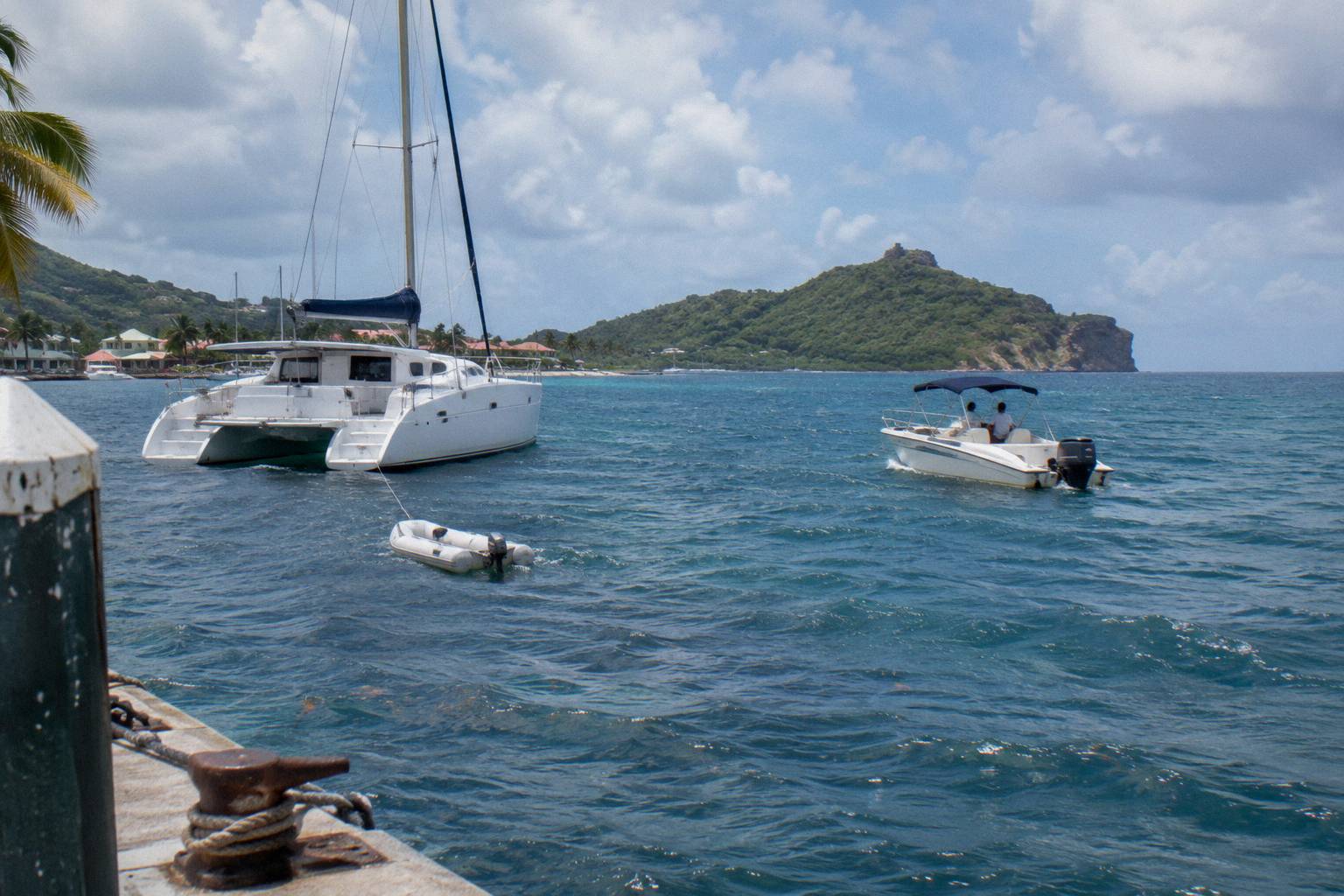
For the private safari, the questions worth adding are about the start time, since it is arranged with the operator, and about pier logistics if you are arriving by cruise ship, since pier pick-up and drop-off are included but hotel pick-up is not. Neither trip includes hotel pick-up, which surprises some visitors; both depart Vigie Marina in Castries.
If you are staying in the north of the island, ask how long the transfer to Vigie Marina will take so you can plan your arrival with a margin; departure points in Castries are convenient to the capital but not to every resort area. It is also worth confirming the total duration of about 4 hours when you book, so nobody in your party is surprised by the time commitment, and asking what refreshments are provided, since the safari lists a guide and refreshments as included but the specifics vary.
One more practical point for cruise passengers: since pier pick-up and drop-off are part of the private safari, confirm the meeting spot at the pier in advance, and keep an eye on your ship's all-aboard time when agreeing on a start time with the operator. Arranging this before you arrive saves port-day minutes that are better spent on the water.
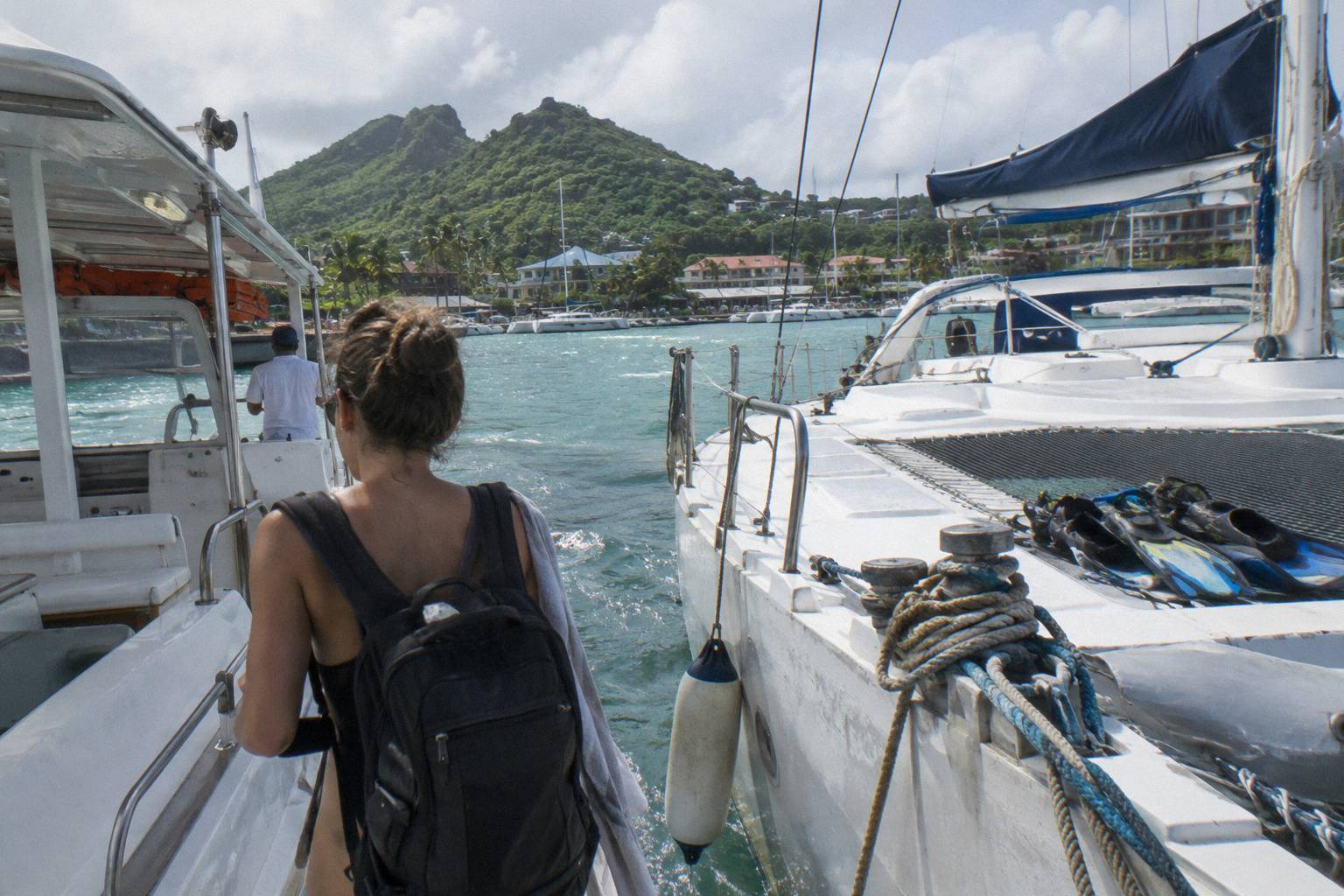
A private group of up to 40 on a 50 ft catamaran, about 4 hours, guide and refreshments included, from US$2,550.65 per boat, with free cancellation up to 24 hours before and cancellation free for bad weather. Check availability beside the full safari detail page if a charterable schedule fits your low-season plans, or see how a private charter compares on value.
Common Mistakes In Hurricane Season
The common mistakes are cancelling a Saint Lucia trip because of the season calendar rather than a forecast, expecting humpbacks in the summer months, assuming weather terms are identical on every trip, booking a port-day trip with no time slack, and treating any sighting claim as a promise. Avoiding these five is most of the planning done for you.
The first mistake is the biggest: reading "hurricane season" as a state of constant storms. The season is a defined calendar, June 1 to November 30, inside which the Saint Lucia Meteorological Service, whose end-of-season releases mark the boundaries each year, tracks actual systems. Most days are not systems. Equally mistaken in the other direction is treating a calm morning as a guarantee of whales; it never is, in any month.
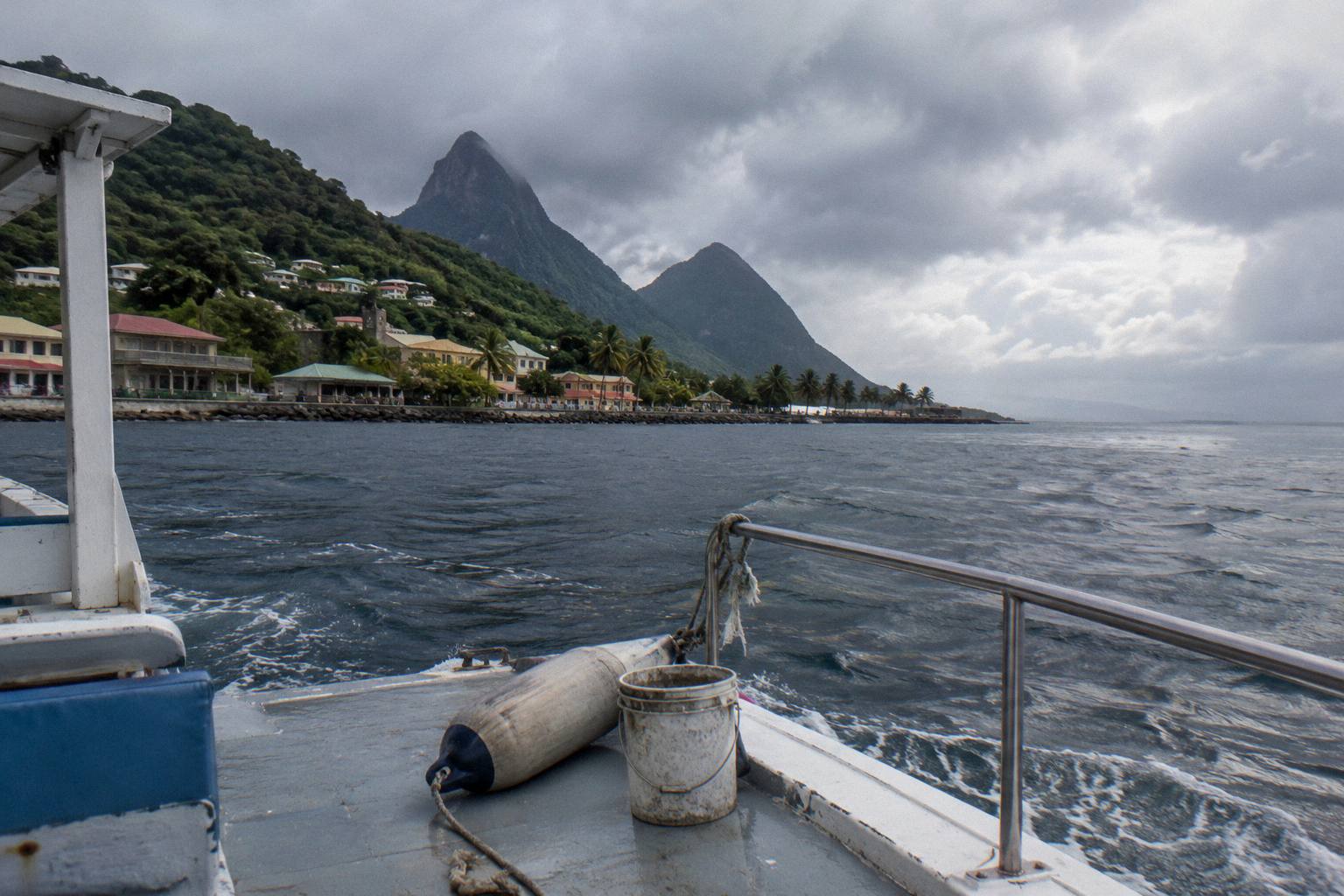
The remaining mistakes are booking-shaped. Assuming the shared cruise and the private safari have identical weather terms: they are close but not the same, and the details are set out in the cancellation section above. Planning a cruise-ship day with zero slack. And paying for a summer trip while mentally budgeting for humpbacks, which the facts do not support. This site, St Lucia Whale Watching, keeps the season picture separate from the wildlife picture for exactly this reason: the calendar affects the sea, the animals affect the sightings, and confusing the two leads to bad plans.
If the low season is when you can travel, both trips run: the shared cruise from US$65 per person, and the private safari from US$2,550.65 per boat with a start time you arrange with the operator. Free cancellation up to 24 hours before applies to both.
Common Questions About Hurricane Season Whale Cruises In Saint Lucia
Do Whale And Dolphin Cruises Run In Hurricane Season?
Yes. Whale and dolphin watching runs year-round in Saint Lucia, and dolphins and pilot whales are present all year. The season affects sea conditions and the chance of a weather cancellation, not whether trips operate.
When Does Hurricane Season Start And End In Saint Lucia?
The Atlantic hurricane season officially runs from June 1 to November 30. Seas around Saint Lucia are typically calmer from December to May, which is also the period that overlaps the February-to-April humpback window.
Can You See Humpback Whales From June To November?
Treat humpbacks as unlikely May to November. The official migration window is about February to April, and some operators report humpbacks from December. In summer, your realistic sightings are dolphins and pilot whales, with sperm whales an occasional deep-water possibility.
What Happens If Bad Weather Cancels My Trip?
Both trips allow free cancellation up to 24 hours before departure. The private safari is cancelled free for bad weather. The shared cruise's operator says that if the captain cancels for unsafe weather there is an alternative date or a refund.
Is A Refund Offered If No Whales Are Seen?
No. There is no rebook-if-no-sighting policy on either trip, and every sighting is a chance that depends on weather, season and the animals' movements. Weather cancellations and empty water are treated differently.
When Is The Sea Calmest For A Whale Cruise In Saint Lucia?
Seas are typically calmer from December to May. Inside hurricane season, mornings are often the gentler window, and the shared cruise departs in the morning; the private safari's start time is arranged with the operator.