Is Saint Lucia Or Dominica Better For Whale Watching?
An honest comparison of whale and dolphin watching in Saint Lucia and Dominica, species by species and season by season, with prices for the two Castries tours.
Neither island is simply "better"; they are different bets on the same ocean. Saint Lucia offers year-round dolphin and pilot whale trips that fit a half day, while Dominica is the research home of the Eastern Caribbean sperm whale population that Saint Lucia's sperm whales also belong to. The honest answer depends on which animals you hope for and how much of your holiday you can spend at sea.
The question comes up constantly, and it deserves a straight answer rather than a cheerleading one. Both islands rise steeply from deep water on their Caribbean coasts, which is why whales and dolphins appear relatively close to shore in both places. But the two islands occupy different positions in the story of Eastern Caribbean cetaceans, and the official sources describe them differently.
Saint Lucia's tourism board describes dolphin and pilot whale watching as a year-round activity, with sperm whales "considered resident in the region and occasionally sighted in deeper waters" and humpbacks passing through roughly February to April. Dominica, next door to the north, is where the Dominica Sperm Whale Project has studied the wider Eastern Caribbean sperm whale population for years. That single fact shapes most of the comparison people are really asking about.
The scope of this article is deliberately narrow. It uses Saint Lucia facts verified from official tourism board pages and the two Castries-based tours on this site's roster, and it touches Dominica only through what the sperm whale project itself publishes. No Dominica prices, operators or schedules appear here, because the aim is to explain Saint Lucia honestly rather than to sell you a rival island. If the odds are laid out plainly, a reader comparing islands can decide for themselves.
What Does Saint Lucia Offer?
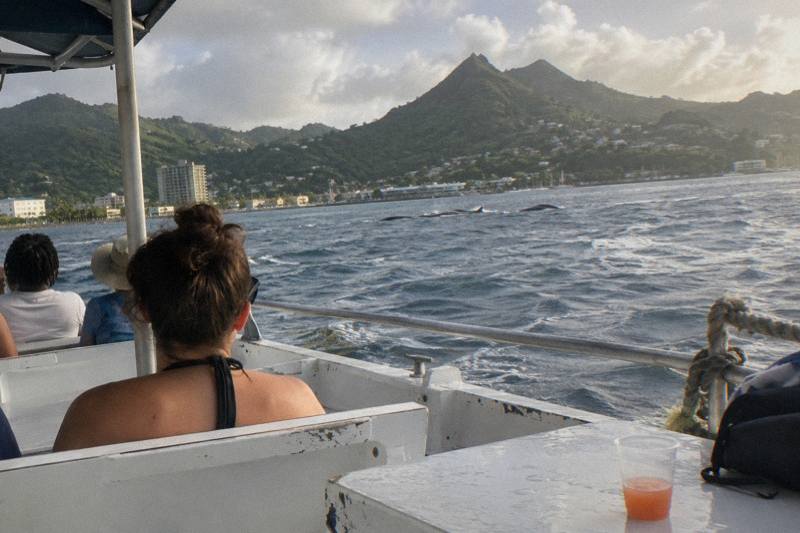
Saint Lucia offers year-round whale and dolphin watching off its west coast, with spinner, pantropical spotted and bottlenose dolphins seen commonly, pilot whales in resident family pods, sperm whales occasionally in deeper water, and humpbacks passing through between about February and April. Trips typically leave in the morning from the Castries area and last about three to four hours.
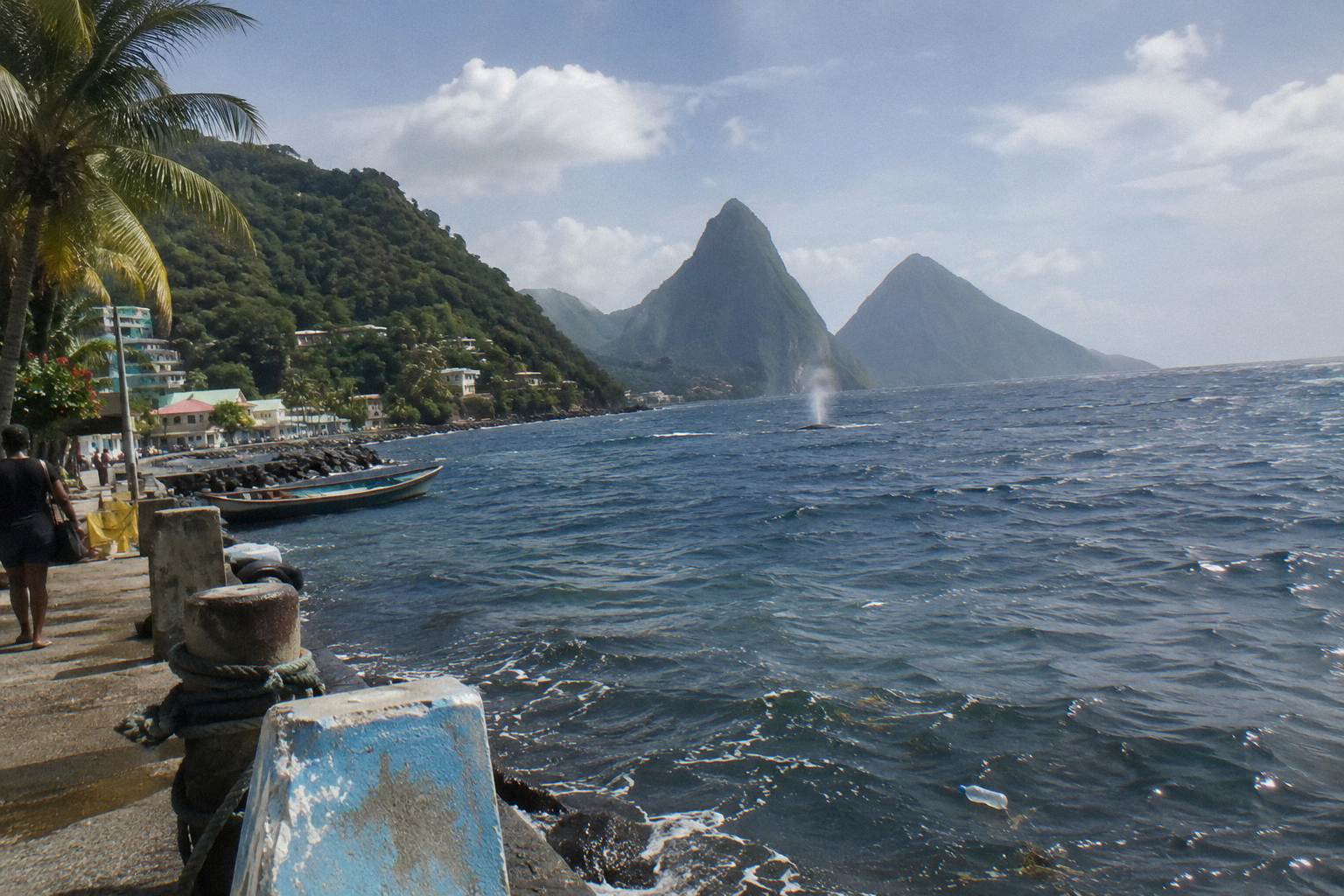
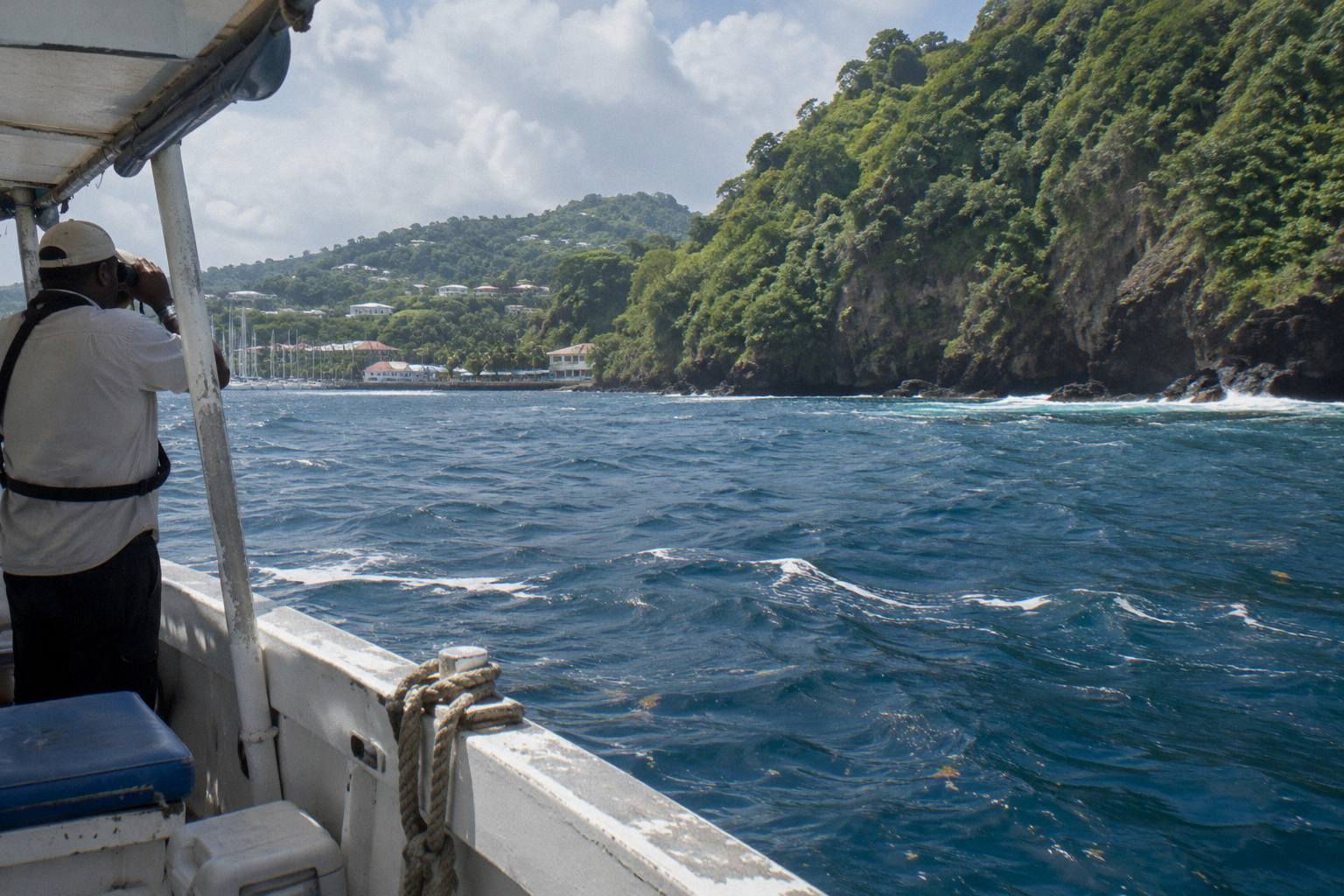
The geography does most of the work. Deep water lies unusually close to Saint Lucia's west, Caribbean-facing coast, so the animals can appear not far offshore and the boats follow that coastline rather than steaming for hours to open ocean. The official trip pattern described by the tourism board is a morning departure from the north-west, around Castries and Rodney Bay, lasting about three to four hours. Both tours covered on this site depart Vigie Marina in Castries Harbour, beside the island's George F. L. Charles airport.
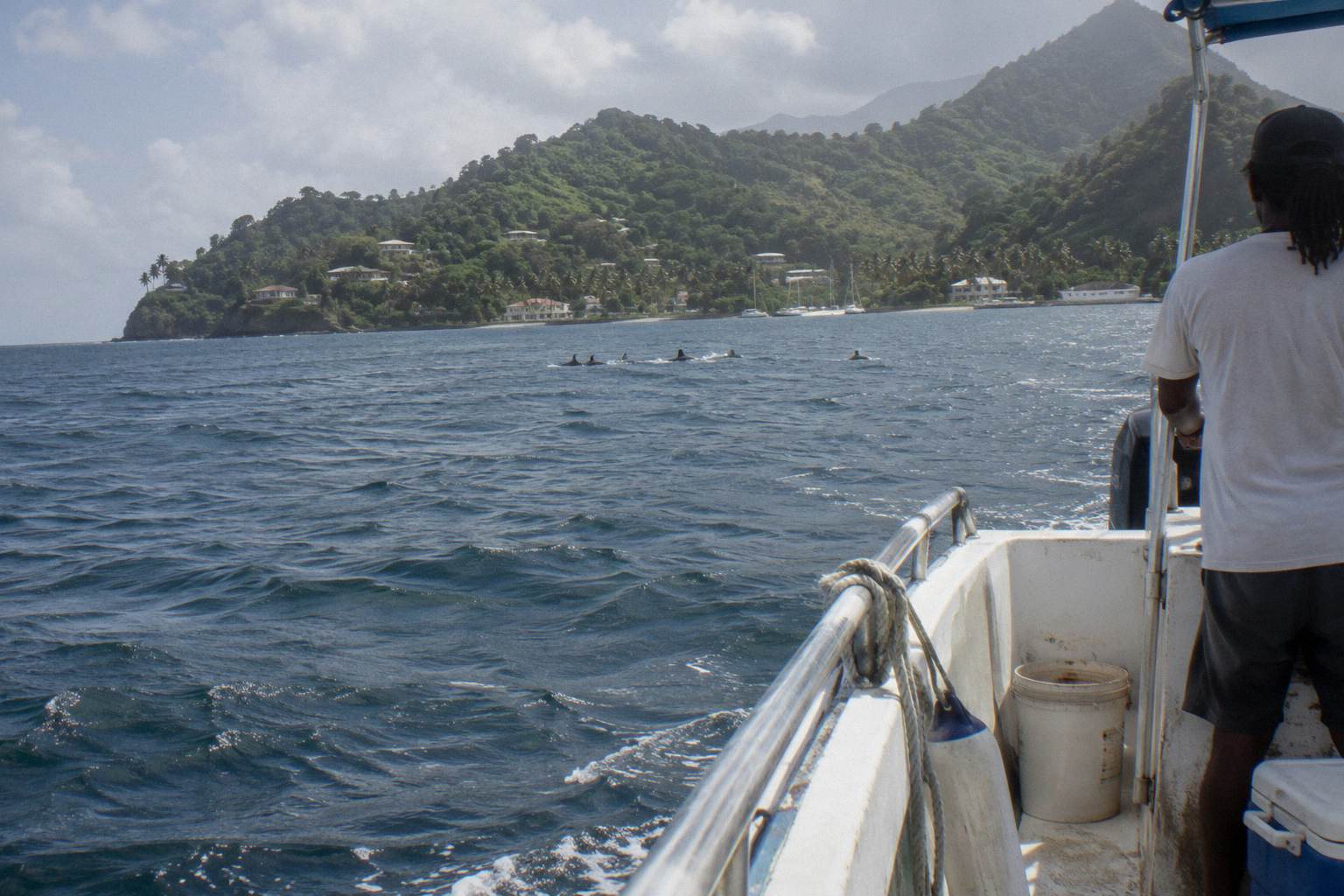
What you are watching for depends on the season. The official tourism board species page describes spinner dolphins as frequently sighted year-round, with pantropical spotted and bottlenose dolphins common and Fraser's, Risso's and striped dolphins recorded less often. Pilot whales live in resident pods that can sometimes be seen through the year, in close-knit family groups. Sperm whales are the deep-water wildcard, and humpbacks are a seasonal bonus between about February and April.
Sightings are always chances, never promises. The tourism board is explicit that encounters depend on weather, season and the animals' own movements, and no honest source prints a sighting percentage for either island. If a comparison of two islands ever hinges on someone's claim of near-certainty, that claim is doing the deciding for you.
What Is Dominica Known For In This Study?
Dominica is known in this context as the base of the Dominica Sperm Whale Project, the long-running research programme that studies the Eastern Caribbean sperm whale population, the same population Saint Lucia's occasional deep-water sperm whales belong to. It is a research hub, not a destination this article prices or schedules.
The reason Dominica's name keeps coming up in whale conversations is sperm whales. The Dominica Sperm Whale Project has followed families of sperm whales across the Eastern Caribbean for years, and its work is why the region's sperm whales are understood as one connected population rather than island-by-island stocks. A sperm whale seen off Saint Lucia is, in that sense, part of the same population the project studies off Dominica.
That matters for expectations. The project's focus reflects where sperm whales are most reliably found and most intensively studied in the region, and that is Dominica's deep leeward waters. Saint Lucia's own official wording is more reserved: sperm whales are "considered resident in the region and occasionally sighted in deeper waters." Occasional is the operative word, and no Saint Lucia head count or population estimate exists to print.
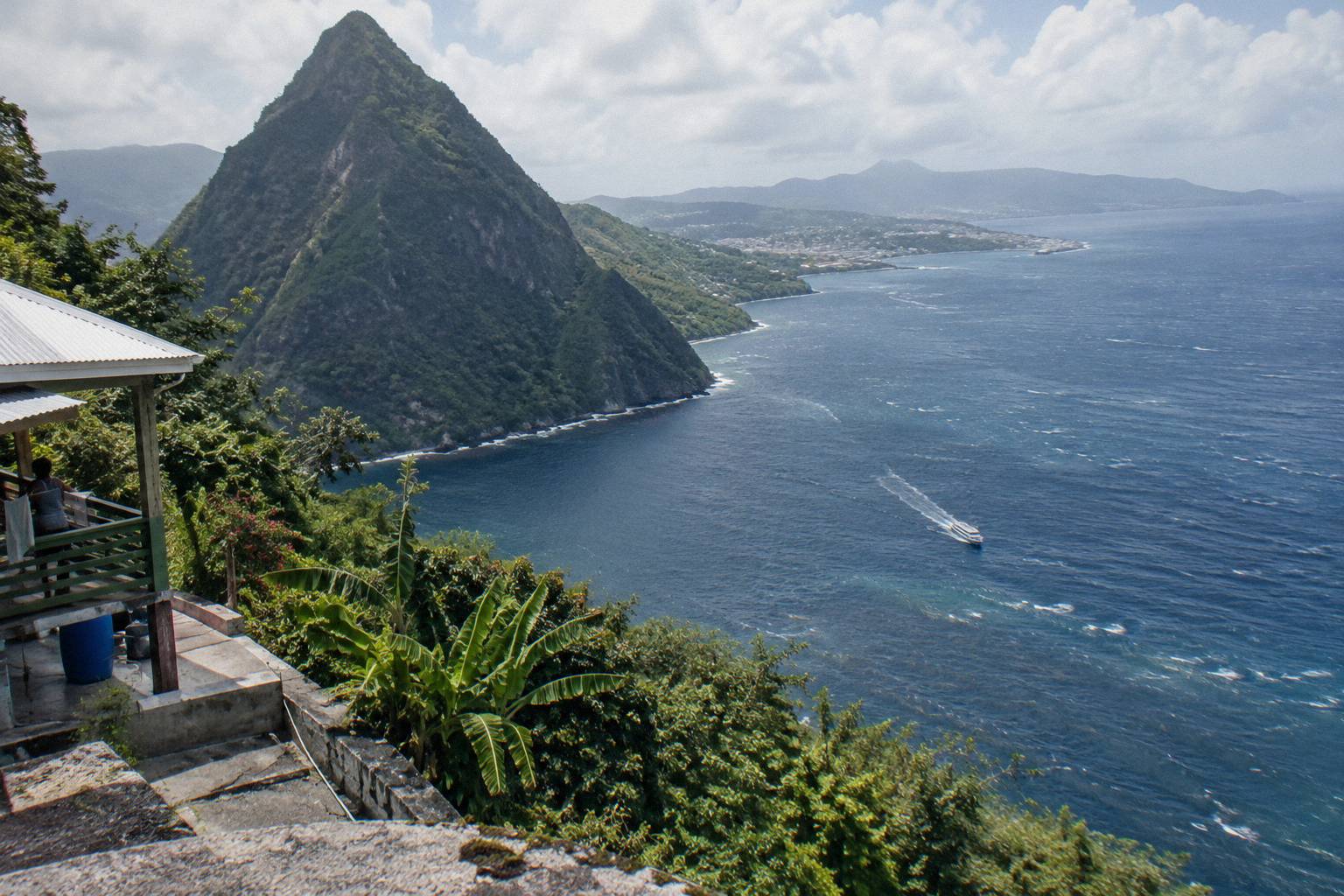
None of this ranks the islands, and this article will not pick a winner. What it does mean is that a traveller whose heart is set specifically on sperm whales should understand the difference between a researched stronghold and an occasional-sighting coast, and weigh how central that one species is to the trip. For everything else on the list, dolphins, pilot whales and the February-to-April humpback passage, both islands sit on the same migratory stage.
How Do You Compare Two Islands Fairly?
A fair comparison looks at four things: which species each island's official sources actually name, what the seasonal windows are, how much of your holiday a trip consumes, and what the honest sighting language is. Ranking islands by review scores or marketing claims produces a false answer, because no comparable verified statistics exist for either island.
The first honest rule is to compare official wording, not operator enthusiasm. Saint Lucia's tourism board names its species and seasons plainly: dolphins and pilot whales year-round, sperm whales occasionally in deeper water, humpbacks roughly February to April, calmer seas typically December to May. Any comparison should start from statements like those on both sides, and the tourism board's trip expectations blog is a good model of the genre: chances, seasons and practicalities with no promises.
The second rule is to compare time costs on the same scale. A Saint Lucia trip is a morning: about 3.5 hours on the shared cruise, about 4 hours on the private safari, not counting the transfer to the marina. If you are already staying in or near Castries, that is a half-day decision rather than an itinerary centrepiece. A fair comparison asks the same question of any island: how long is the boat out, when does it leave, and what else could you do that day.
The third rule is to refuse invented numbers. There are no verified sighting rates for either island, no species totals worth printing, and no month-by-month tables of likelihood. What exists is a planning picture: which animals are named, in what official language, over which months. That is thin, but it is true, and a decision built on it will not collapse on the water.
| Comparison factor | Saint Lucia (official wording) | What to ask of any island |
|---|---|---|
| Dolphins | Spinner frequently sighted year-round; spotted and bottlenose common | Which species does the official source name? |
| Pilot whales | Resident pods sometimes seen year-round, family groups | Are they resident or passing? |
| Sperm whales | Resident in the region, occasionally sighted in deeper water | How strong is the official language? |
| Humpbacks | Pass through about February to April | What is the stated window? |
| Trip shape | Morning departure, about 3-4 hours, west coast | How much of the day does it take? |
The practical arithmetic between the two Saint Lucia options is worth spelling out, because it changes what a fair comparison means for different groups. At US$65 per person, the shared cruise becomes more expensive than the private safari once your group exceeds roughly 39 people, which is why the private boat, at up to 40 guests on a 50 ft catamaran, is effectively a large-party or split-with-friends product rather than a luxury upgrade. For a couple or a family of four, the shared cruise is the only option that makes sense on cost, and the comparison question shifts to comfort and crowd tolerance rather than price per head.
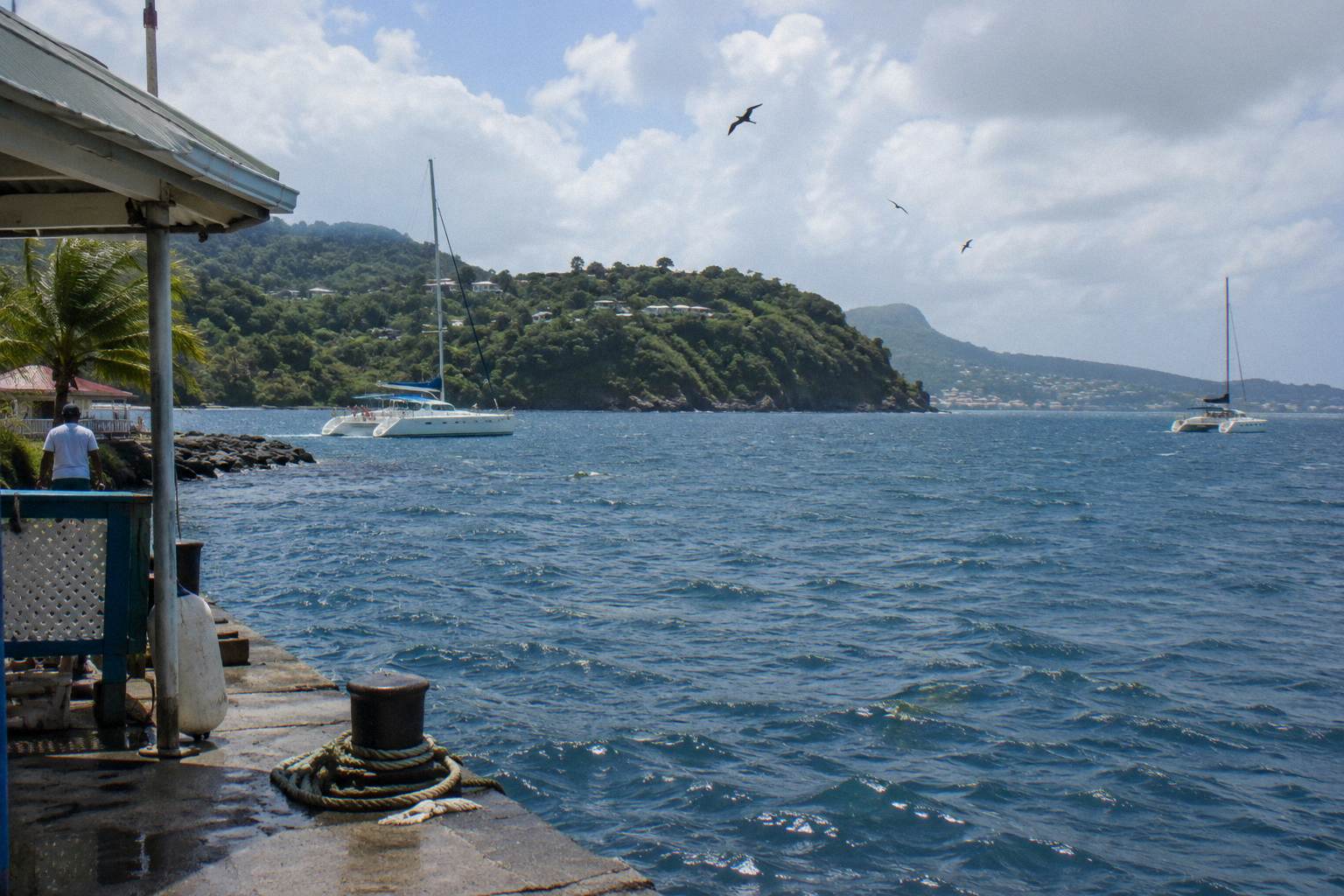
The cancellation terms also feed into a fair comparison, because they affect how you sequence the trip. Since both tours can be cancelled free up to 24 hours before departure, you can book the morning slot early in your stay and rebook if the sea state looks poor, rather than gambling your one free morning on the last day of the holiday. Pairing the December to May calmer-sea window with a mid-trip booking gives you a second chance if the first attempt comes back with dolphins only and no whales, which the official wording treats as a normal outcome rather than a failure.
Finally, apply the same honesty test to your own expectations. The official language names resident dolphins and pilot whales as the reliable possibilities, with sperm whales occasional and humpbacks a February to April passing window. A trip booked outside that window that hopes for humpbacks is not a fair test of the island; it is a mismatch between plan and season, and no comparison method can fix it.
Which Season Suits Which Animals?
Dolphins and pilot whales suit every season in Saint Lucia, since both are year-round. Humpbacks suit about February to April, the official window, with some operators reporting them from December. Sperm whales have no printed season; they are an occasional deep-water chance at any time of year. Seas are typically calmer from December to May.
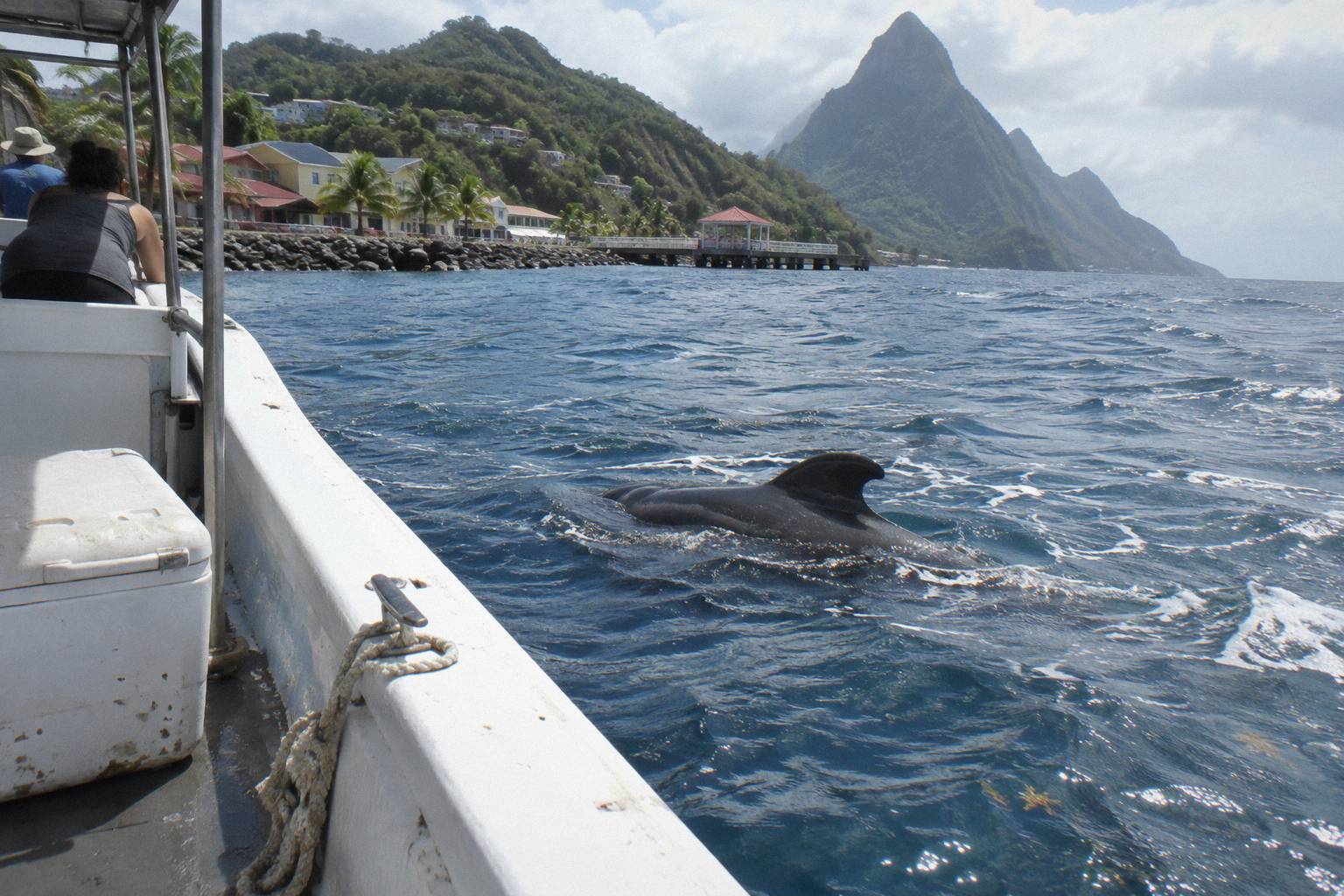
The season question is really two questions: which animals, and how comfortable the sea is. The animals divide cleanly. Spinner dolphins are described as frequently sighted year-round, and pilot whale pods are resident, so a trip in any month has a genuine cast to watch for. Humpbacks are the seasonal headline, passing through the region between about February and April; some operators report them from December, and between May and November they should be treated as unlikely. Sperm whales carry no season at all, only the quiet official phrase "occasionally sighted in deeper waters." More of these guides are collected on St Lucia Whale Watching.
Sea state is the second half. The tourism board notes calmer conditions typically from December to May, which overlaps neatly with the humpback window; that December-to-May stretch is the season that maximises both variety and comfort. The Atlantic hurricane season officially runs June 1 to November 30, per the Saint Lucia Meteorological Service, and within those months seas are simply more variable, which affects comfort more than it predicts anything about the animals.
A planning table keeps this honest, because no month-by-month sighting rates exist for either island. What follows is what the sources say, nothing more.
| Months | Humpbacks | Dolphins and pilot whales | Typical sea conditions |
|---|---|---|---|
| December to January | Possible; some operators report from December | Year-round chances | Typically calmer |
| February to April | Official passing window | Year-round chances | Typically calmer |
| May | Treat as unlikely | Year-round chances | Transition month |
| June to November | Unlikely | Year-round chances | More variable; hurricane season ends November 30 |
The same logic travels to any island comparison. Ask what the official source says about each species, in which months, and treat any smoother-looking chart with suspicion.
What Does A Saint Lucia Cruise Cost?
A shared Saint Lucia whale and dolphin cruise costs from US$65 per person for about 3.5 hours, and a private safari costs from US$2,550.65 per boat for the whole group for about 4 hours. Both depart Vigie Marina in Castries with free cancellation up to 24 hours before, and prices vary by date and group, with the booking page confirming the live figure.
Two tours exist on this site's roster, and they represent the two formats worth knowing. The shared whale and dolphin watching cruise from Captain Mike's runs about 3.5 hours on a custom 60 ft boat with a morning departure, a local marine expert aboard, and bottled water, soft drinks and rum punch included; gratuities and hotel pick-up are not. It carries a 4.5 rating from 200 reviews, from US$65 per person. Group size is not published, and children travel with an adult, with the operator the right one to ask about ages when booking.
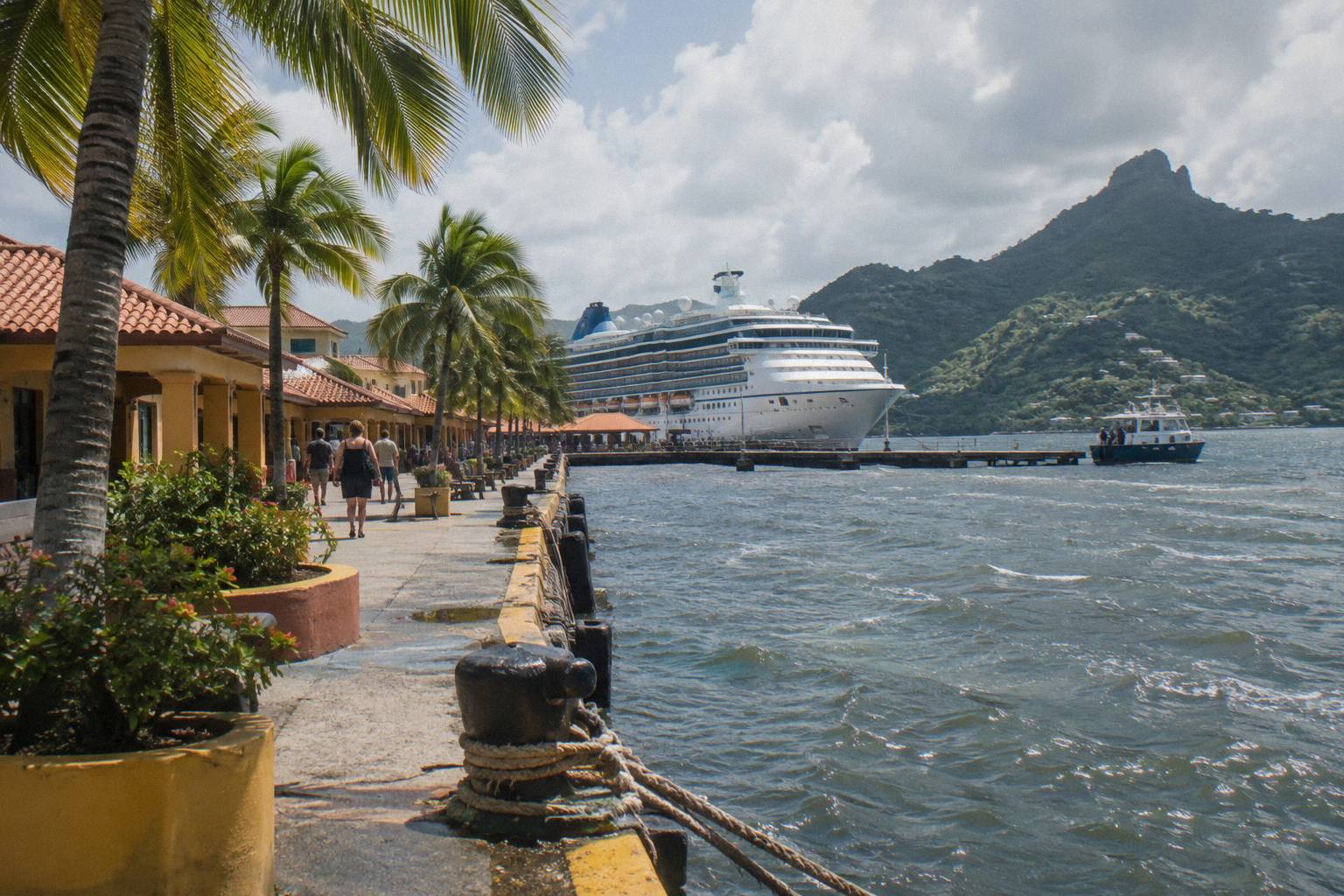
The private whale and dolphin safari from Hackshaw's Boat Charters is priced per boat, never per person: from US$2,550.65 for the whole group, up to 40 guests on a 50 ft catamaran, about 4 hours, with a guide, drinks, light snacks, local fruit and cruise ship pier pick-up and drop-off included. It rates 4.5 from 75 reviews. For illustration, not a quote: US$2,550.65 shared by 4 guests is about US$637.66 each; by 6 about US$425.11; by 8 about US$318.83; by 12 about US$212.55. The shared cruise at US$65 per person is US$130 for 2, US$260 for 4, US$390 for 6.
This article does not print Dominica prices, operators or schedules, so no island-vs-island price table is possible or honest here. What can be said is that Saint Lucia's entry cost is a per-person half-day figure, and the private option only makes sense read as a whole-boat number. More detail sits in the guide to what a whale and dolphin cruise costs in Saint Lucia.
Can One Trip Be Enough?
Yes, in the sense that one Saint Lucia morning covers the year-round cast: dolphins, pilot whales and the offshore chance of sperm whales, with humpbacks added if you travel between about February and April. No trip is enough if the goal is a guaranteed sighting of one specific species, because no such guarantee exists on either island.
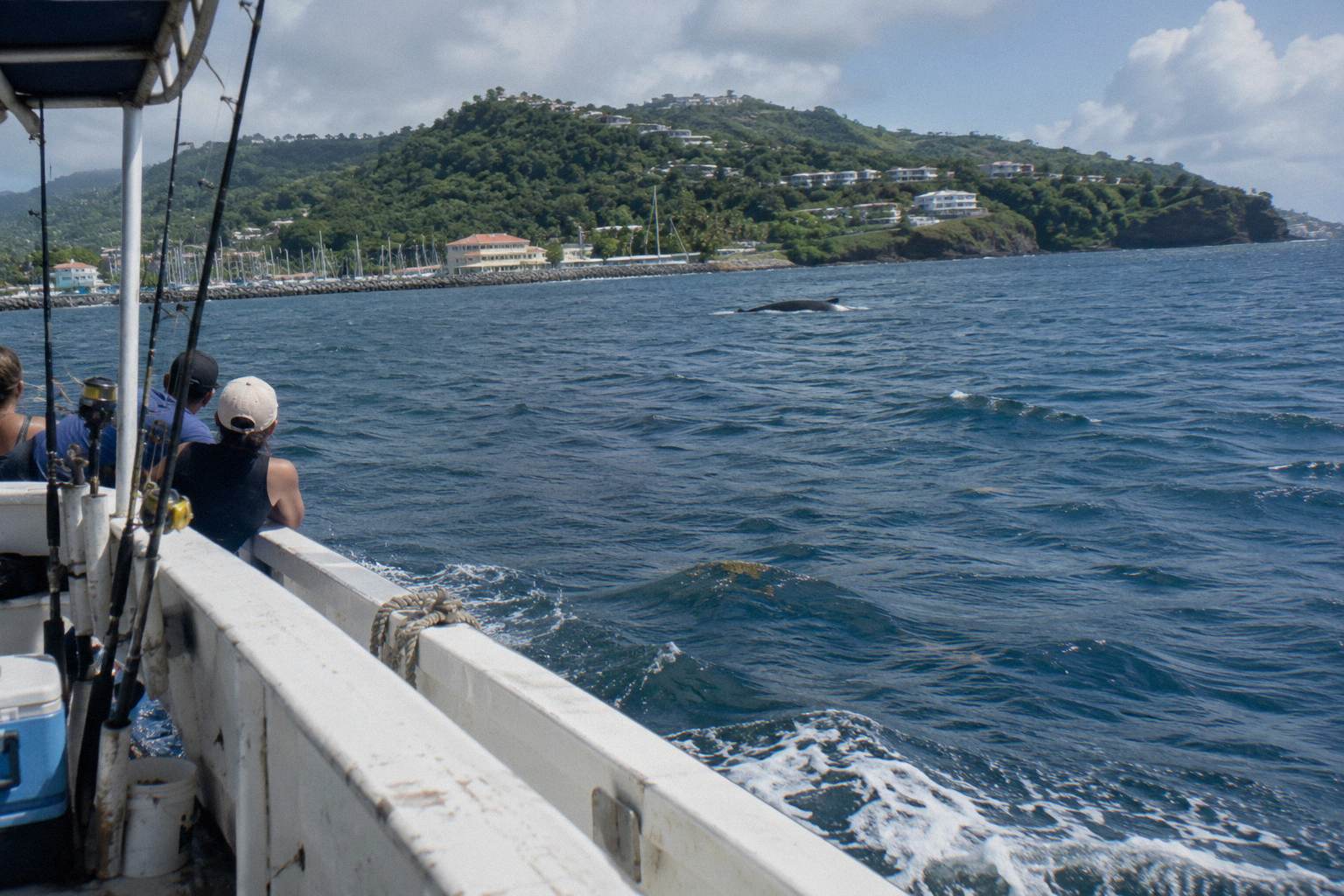
A single well-chosen trip does a surprising amount of work. The shared cruise's own species list includes sperm whales, humpbacks in season, pilot whales, and spinner, spotted, Fraser's and common dolphins, along the west coast. In the February-to-April window that list is at its longest; in any other month it still contains dolphins and pilot whales. The marine expert aboard is there partly to identify what is actually in front of the boat, which matters more than any brochure list.
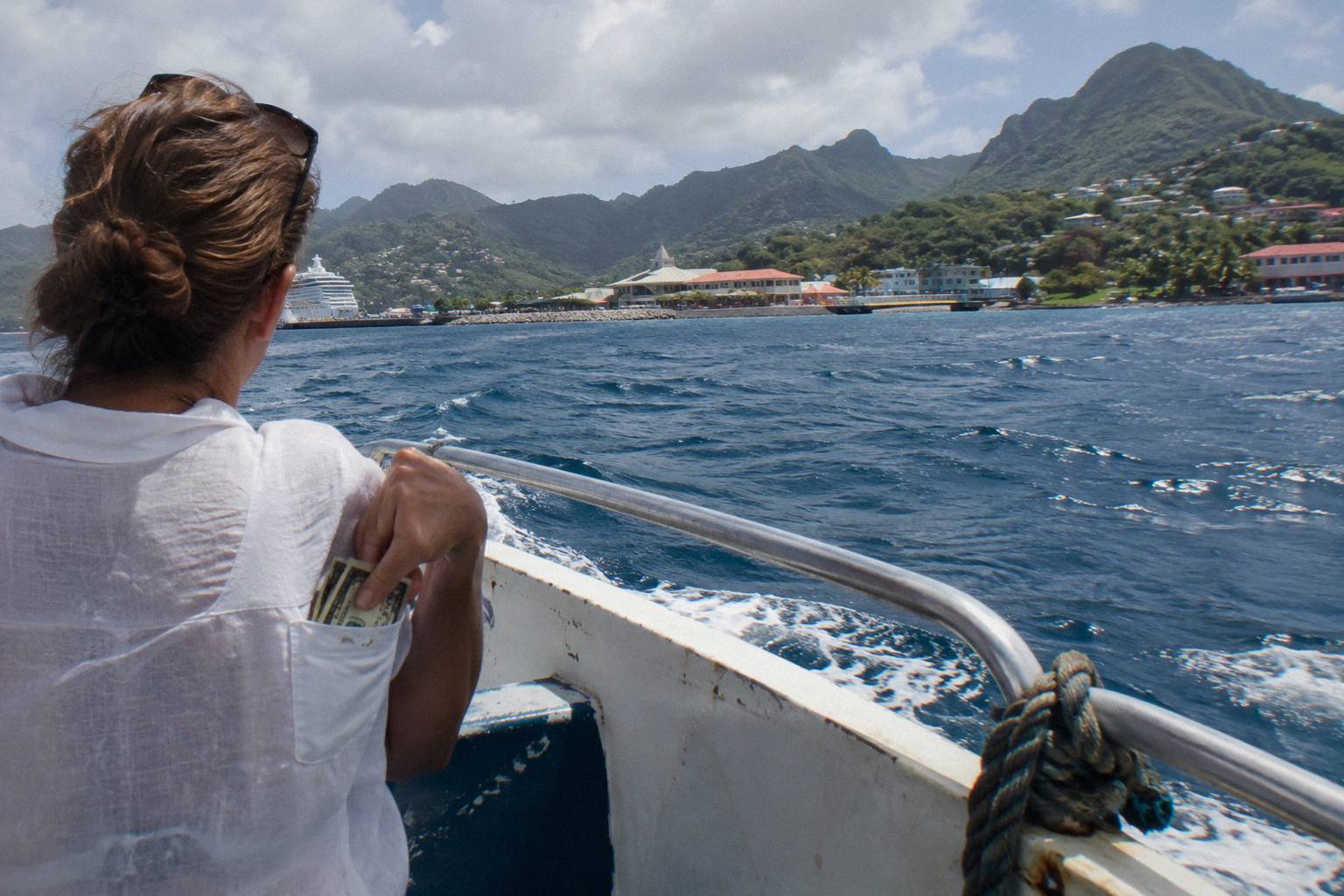
One trip is also enough logistically. A morning departure of about 3.5 hours leaves the rest of the day intact, and the marina sits beside the airport and a short distance from the Pointe Seraphine cruise terminal. Cruise passengers can weigh the timing question in more depth in whether a whale cruise fits between ship arrival and departure in Castries; the honest version is to check the ship's all-aboard time and ask the operator about timing rather than trust any printed return promise.
What one trip cannot do is bend the odds on a single animal. Sperm whales stay occasional, humpbacks stay seasonal, and no rebook-if-no-sighting policy exists on either tour. If seeing a specific whale matters more than seeing whales, that is the one situation where thinking harder about which island, and which week, genuinely changes the answer.
Common Mistakes When Choosing An Island
The common mistakes are comparing per-person and per-boat prices as if they were the same thing, trusting sighting percentages that no official source publishes, assuming humpbacks in the May-to-November months, and expecting one island to guarantee what the other only occasionally offers. Each mistake has an honest correction grounded in the official wording.
The first mistake is arithmetic. Comparing a US$65 per-person ticket with a US$2,550.65 per-boat charter as though both were per-person prices produces a nonsense gap, and the reverse flatters the charter. Prices are written with their basis, per person or per boat, and the booking page confirms the live figure for your date and group.
The second mistake is believing rates. No verified sighting percentage exists for Saint Lucia or for any comparison with its neighbours, because operator claims conflict and none is printable. Sightings depend on weather, season and the animals' movements; every sighting is a chance. A source that says "almost always" or "guaranteed" has stepped outside what any official body states.
The third is season blindness. Humpbacks pass through about February to April; May to November, treat them as unlikely. Dolphins and pilot whales carry no such caveat, so an off-season trip is still a real trip, just with a different cast. The fourth mistake is treating the sperm whale question as settled by geography: the Eastern Caribbean population is one population, studied from Dominica, occasionally seen off Saint Lucia, and no head count exists for either. The fifth is forgetting the practical layer entirely; the essentials are covered in what to bring on a whale and dolphin cruise in Saint Lucia, and responsible viewing norms, slow approach, no chasing, no touching or feeding, apply regardless of which island you choose.
Common Questions About Whale Watching In Saint Lucia And Dominica
Is Saint Lucia Or Dominica Better For Whale Watching?
Neither is simply better. Dominica is the research base for the Eastern Caribbean sperm whale population; Saint Lucia offers year-round dolphin and pilot whale watching, occasional sperm whales in deeper water and humpbacks about February to April, on half-day trips from Castries. The right choice depends on which animals matter most to you.
Can You See Sperm Whales Off Saint Lucia?
The official wording is that sperm whales are considered resident in the region and occasionally sighted in deeper waters. They belong to the wider Eastern Caribbean population the Dominica Sperm Whale Project studies. No Saint Lucia head count or sighting rate is published.
When Are Humpback Whales Seen In Saint Lucia?
Humpbacks pass through the region between about February and April, which is the official window. Some operators report them from December. From May to November, treat humpbacks as unlikely.
Is Whale Watching In Saint Lucia Possible Year-Round?
Yes. Dolphins and pilot whales can be seen all year, so trips run year-round; February to April adds the chance of humpbacks. Seas are typically calmer from December to May.
How Much Does A Saint Lucia Whale Cruise Cost?
The shared cruise costs from US$65 per person for about 3.5 hours; the private safari costs from US$2,550.65 per boat for the whole group for about 4 hours. Prices vary by date and group, and the booking page confirms the live figure.
Is A Sighting Guaranteed?
No. Sightings depend on weather, season and the animals' movements, and no operator or official source guarantees them. There is no rebook-if-no-sighting policy on either tour covered here.